
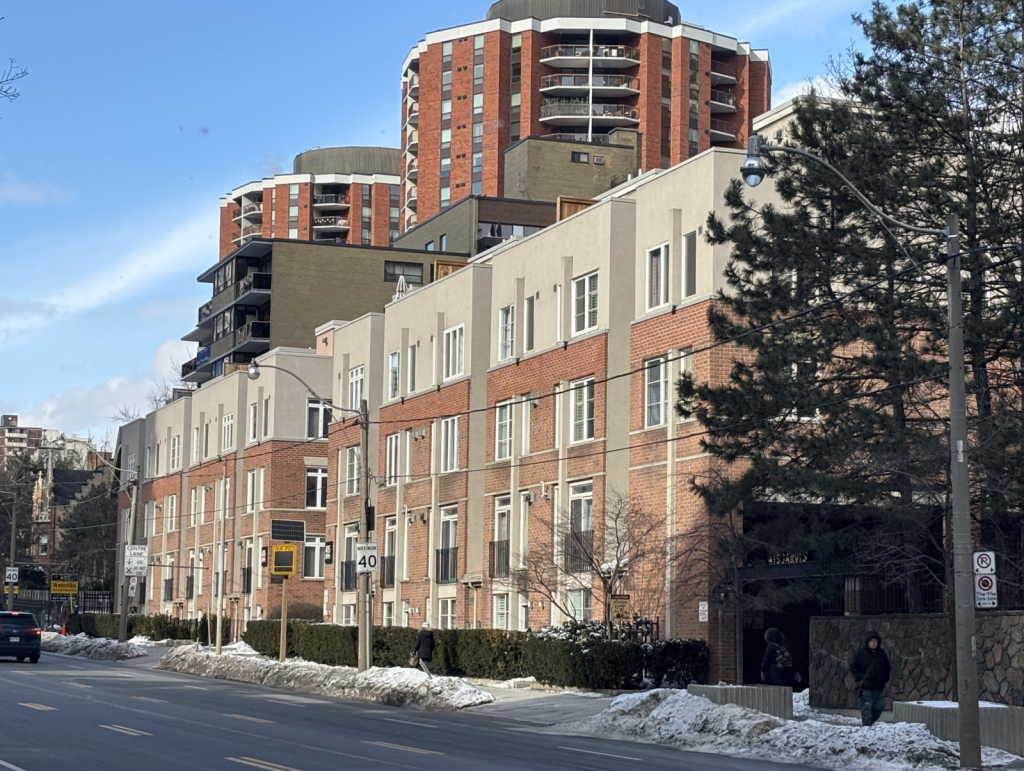

If you’re one of 1.5 million Torontonians who rent their home, this tool’s for you.
Use this tool as a starting point for exploring resources and organizations that can help you find, manage and keep your rental home in the city.
We compiled all the helpful resources you can access from the City of Toronto, local organizations and The Green Line’s own handy guides.
Check out the list, below, of everything you need to be aware of. If you’d like to explore how each resource listed can help you, just click on it to go directly to the detailed explanation.
City of Toronto resources
- Toronto Rent Bank
- Rent Adjustment Following Property Tax Reduction
- Random Draws for Affordable Rental Homes
- Rent-geared-to-income housing
- Housing Stabilization Fund for people in Ontario Disability Support Program
- Housing Help and Support Services map
- Toronto Rent Bank
- Rent Adjustment Following Property Tax Reduction
- Random Draws for Affordable Rental Homes
- Rent-geared-to-income housing
- Housing Stabilization Fund for people in Ontario Disability Support Program
- Housing Help and Support Services map
Non-governmental organizations
- Federation of Metro Tenants Association
- Advocacy Centre for Tenants Ontario
- Steps to Justice’s Housing Law
- The Housing Help Centre
- Toronto Tenant Union
- Toronto Association of Community Organizations for Reform Now
- Area-specific tenant associations
- No Demovictions
- RenovictionsTO
- Canadian Centre for Housing Rights
- Community legal clinics
- Condo Authority of Ontario’s Tenant Guide
TGL resources
If you’re looking for a breakdown of specific scenarios — from looking for a new home to fighting against an eviction notice — check out these step-by-step guides from The Green Line team. The headlines are pretty self-explanatory, so you can go ahead and click on each to find all the answers you need.
- Toronto apartment hunting checklist
- How to deal with maintenance issues in your Toronto rental
- Need help paying utility bills? Check these grants for Torontonians
- Do tenants have rights? Understanding Ontario’s Residential Tenancies Act (RTA)
- Do you have to get tenant insurance in Toronto?
- How to fight an above-guideline rent increase in Toronto
- What happens after you get an eviction notice
- Dealing with N4s: What happens when you’re behind on rent
- Dealing with N12s: What happens when your landlord wants to sell or move into your unit
- Dealing with N13s: when your landlord wants to renovate or demolish your building
- The Green Line‘s evictions resource list
- Toronto apartment hunting checklist
- How to deal with maintenance issues in your Toronto rental
- Need help paying utility bills? Check these grants for Torontonians
- Do tenants have rights? Understanding Ontario’s Residential Tenancies Act (RTA)
- Do you have to get tenant insurance in Toronto?
- How to fight an above-guideline rent increase in Toronto
- What happens after you get an eviction notice
- Dealing with N4s: What happens when you’re behind on rent
- Dealing with N12s: What happens when your landlord wants to sell or move into your unit
- Dealing with N13s: when your landlord wants to renovate or demolish your building
- The Green Line’s evictions resource list
Toronto Rent Bank
If you’re behind on rent or need help with the first or last month’s rent deposit, you can apply for a grant through the Toronto Rent Bank.
- Apply for a rent grant online or at a local access centre.
- Online applications are submitted through a Toronto Rent Bank account. Here’s a quick guide on all the required documentation and steps.
- Find a list of local access centres here.
- To qualify, you must:
- live in Toronto,
- provide proof of income,
- not currently receive social assistance, such as Ontario Works or Ontario Disability Support Program,
- spend no more than 85% of your household income on rent
- are on the lease as a lease holder or an occupant (if this isn’t the case, you should still apply and an intake worker will help you),
- have a total household income that is the same as or less than the amounts listed on the City of Toronto’s page for the Toronto Rent Bank program.
- If approved, you can receive up to $5,000 for overdue unpaid rent or a maximum of $2,000 to $3,500 for rent deposits.
- Processing time for every application is at least five business days.
- You don’t need to repay the grants.
- You can reapply every 12 months.
- You can reapply even if you’re rejected the first time.
- The Toronto Rent Bank offers services in English, Arabic, Cantonese, French, Lingala, Mandarin, Italian, Serbian, Spanish, Tamil, Tigrinya and Twi.
- Find answers to frequently asked questions here.
Rent adjustment after landlord’s property tax reduction
Under the Residential Tenancies Act, tenants are entitled to an automatic rent reduction when their landlord’s property taxes are reduced by more than 2.49% from one year to the next.
- When this happens, the City of Toronto sends notices of rent reduction to landlords by Sept. 15 and to tenants by Dec. 15 of that year. The notice includes a calculation of the reduction.
- The rent reduction goes into effect on Dec. 31 of that year.
- Find a list of properties that qualify for rent reductions here.
- If you get a notice of rent reduction from the City, you can automatically start paying less rent on Jan. 1, according to the calculation on your notice; you don’t need permission from your landlord. However, the Landlord and Tenant Board (LTB) recommends that you talk to your landlord and give them a heads-up.
- If the landlord or the tenant thinks the rent reduction should be higher or lower, they can apply to change it at the LTB. There’s no guarantee that the LTB will approve the change. The rent reduction still applies until the LTB issues a written hearing. Learn more here.
Random draws for affordable rental homes
The City of Toronto works with housing developers to create new affordable rental homes (at or below average market rent) in purpose-built rental developments. When new affordable rental homes become available, the housing developer — which could be a private, non-profit or co-op provider — opens an expression of interest (EOI) period.
- During this time, you can apply to get on a list that’s shuffled at random.
- The shuffled list becomes like a wait list in that people on the list are invited to apply one after the other; your order on the list is totally random.
- If your application is successful and you accept a home, you’ll be matched.
- This process usually takes 60 to 90 days after the EOI closes.
There are no active draws at the time of publication. You can subscribe to this mailing list to get notified when the next affordable housing opportunities are available.
Rent-geared-to-income housing
Rent-geared-to-income (RGI) is a type of housing assistance or subsidy for low-income households in Toronto. Through the program, tenants pay on average 30% of their income on rent. Eligible applicants join the City’s Centralized Waiting List for RGI housing.
- Average wait times are long – from 10 to 15 years, depending on the type of apartment.
- Eligibility requirements are listed on the City of Toronto’s website and include:
- Being age 16 or older and the ability to live independently,
- Having an income below the Household Income Limits and assets totalling less than $150,000.
- To apply for RGI housing, you need to create an account on MyAccesstoHousingTO; the City of Toronto has all the details, including a list of required documentation.
- Average wait times are long — from 10 to 15 years, depending on the type of apartment.
- Eligibility requirements are listed on the City of Toronto’s website and include:
- Being age 16 or older and the ability to live independently,
- Having an income below the Household Income Limits and assets totalling less than $150,000.
- To apply for RGI housing, you need to create an account on MyAccesstoHousingTO; the City of Toronto has all the details, including a list of required documentation.
Housing Stabilization Fund for people in the Ontario Disability Support Program
The Housing Stabilization Fund (HSF) provides money for housing emergencies to Torontonians who receive income assistance from the Ontario Disability Support Program or ODSP.
- You can apply by speaking to your Ontario Works or ODSP caseworker.
- The HSF can help cover rental and moving costs, rent or energy arrears, as well as the costs incurred if your unit was damaged by fire, flood or bed bugs.
- To be eligible, ODSP recipients must be:
- homeless and leaving an emergency shelter or the street,
- housed and moving within Ontario because of eviction, high rent, domestic violence, fire or flood, or to accommodate a change in family size.
- Learn more here.
Housing Help and Support Services map
The City of Toronto’s Housing Help and Support Services map lists centres and organizations that can help you find and keep a housing unit. Services include support with rental applications, eviction prevention and free legal advice for housing-related issues.
Federation of Metro Tenants Association
The Federation of Metro Tenants Association or FMTA is a non-profit organization that provides education, advocacy and legal advice to tenants. Here’s how FMTA can help you:
- You can call the Tenant Hotline at 416-921-9494 for any questions about tenant-landlord relationships, eviction notices and rent increases. Learn more about the hotline here.
- You can also send an email by filling this form.
- If you’re interested in organizing a tenants association in your building, you can request an FMTA organizer to help.
- If you have specific questions about AGIs in particular, you can also contact the FMTA about that.
- The FMTA hosts monthly general workshops and Tenant School, which is a series of in-depth, multi-day workshops, three times a year.
- You can consult various resources, such as its Guide to Tenants Rights and Tenant Survival Manual in 12 languages.
For more information, visit torontotenants.org.
Advocacy Centre for Tenants Ontario
The Advocacy Centre for Tenants Ontario or ACTO is a provincial community legal clinic that’s non-partisan and non-governmental. It works on protecting low-income tenants. Here’s how ACTO can help you:
- If you have a hearing at the Landlord and Tenant Board, ACTO offers free legal advice through a Tenant Duty Counsel; sign up here.
- If you have maintenance issues or questions about your utilities, check out ACTO’s resource page for tips.
- ACTO has articles breaking down what your rights are in every renting scenario you can think of, including if you’re a first-time renter, live with roommates and pets, or want to host guests.
For more information, visit acto.ca.
The Housing Help Centre
The Housing Help Centre (THHC) is a non-profit agency that helps people access and maintain affordable and safe market-rent accommodation.
- If you need help finding a home, THHC can work with you one-on-one to determine your needs, and find you affordable market-rate housing or subsidized housing.
- THHC can help you fill out or update applications for subsidized housing in the GTA.
- It offers mediation services between renters and landlords, and can help you if you need to contact the Landlord and Tenant Board.
- THHC also provides financial assistance if you’re behind on your rent or utilities, and live in the City of Toronto.
- Services are available in different languages, including Arabic, Amharic, Cantonese, Farsi, Hindi and Urdu.
- THHC’s main office is in Scarborough and can be contacted by phone at 416-285-8070.
Learn more via THHC’s website.
Steps to Justice
Steps to Justice is a website that provides “guided pathways” or step-by-step guides to dealing with legal matters in Ontario. It’s run in partnership with the Ministry of the Attorney General, Legal Aid Ontario, community legal clinics, the Law Society of Ontario, the Superior Court of Justice, the Ontario Court of Justice, The Action Group on Access to Justice and many others.
- Check out its Housing Law page for information on renting topics, including dealing with evictions, harassment from landlords and hearings at the Landlord and Tenant Board (LTB).
- You can use Housing Law Guided Pathways for step-by-step guidance on filling out LTB forms.
- You can also watch videos on housing law.
- Check out its Housing Law page for information on renting topics, including dealing with evictions, harassment from landlords and hearings at the Landlord and Tenant Board (LTB).
- You can use Housing Law Guided Pathways for step-by-step guidance on filling out LTB forms.
- You can also watch videos on housing law.
Toronto Tenant Union
The Toronto Tenant Union or TTU started out as a group of tenants and tenant associations in York South-Weston under York South-Weston Tenant Union. It recently merged with Climate Justice TO to form one big umbrella organization.
The new union will share resources between three branches covering York South-Weston, the Don Valley and Scarborough areas, and the downtown core to advocate for full rent control for tenants, an end to evictions, the right to organize, the right to strike, public homes in public hands, to live in safe and dignified homes and landlord transparency.
The union can help tenants organize strikes, rallies, workshops and more.
Check out The Green Line’s story, “How the new Toronto Tenant Union supports renters,” to learn more.
Association of Community Organizations for Reform Now
The Association of Community Organizations for Reform Now (ACORN) is a national advocacy union made of f low- and moderate-income members. It fights for social and economic justice through collective mobilizing.
ACORN has a Toronto chapter that’s been active since 2004.
“We’ve been building tenant unions across the city and fighting for changes, like the renovictions bylaw and colour-coded signs, and are also a membership based organization that will help tenants organize their neighbours,” ACORN says.
You can check ACORN’s website for reports and resources on housing and you can also follow Toronto ACORN on Instagram for city-specific actions.
Area-specific tenant associations
A tenant association is a group of renters in a specific building, complex or neighbourhood. Tenants work together to improve living conditions, including maintenance and safety, or to fight collectively against evictions and rent increases. The association is a formal structure for collective negotiation with landlords.
Tenant associations have an elected committee that sets a vision, and organizes activities and meetings. Some associations have a membership fee.
Sometimes, multiple associations can come together to form tenant unions, which are also structures that help negotiate collectively, and apply pressure on landlords publicly.
Here are some examples of tenant associations across Toronto:
- Leaside Towers Tenant Association,
- Keele Area Tenants Committee,
- Toronto Centre Tenant Union,
- East Scarborough Tenant Union,
- High Park Tenants Association,
- East York Tenant Group,
- Plus, more from FMTA here.
- Leaside Towers Tenant Association,
- Keele Area Tenants Committee,
- Toronto Centre Tenant Union,
- East Scarborough Tenant Union,
- High Park Tenants Association,
- East York Tenant Group,
- Plus, more from FMTA here.
If your building isn’t covered by a tenant association, you can talk to your neighbours to start one. The FMTA and Toronto Tenant Union can help you.
No Demovictions
No Demovictions is a tenant collective that advocates against harmful demovictions by supporting tenants through education and advocacy.
- No Demovictions can help you form tenants’ associations, and teach you how to navigate the process.
- It can share concrete examples of buildings that have faced similar challenges, so you can make an informed decision about your next steps.
- It can help you prepare for community council meetings related to your demoviction by organizing a position paper.
- Representatives from No Demovictions can depute in public meetings on your behalf.
- No Demovictions tracks and monitors municipal, provincial and federal policies related to demovictions and tenant rights. It also writes suggestions for policy changes informed by tenants who have experiences with demovictions.
Learn more on No Demovictions’ website.
RenovictionsTO
RenovictionsTO is a volunteer-run project that asks tenants to anonymously report their landlords who try to increase rent above legal limits (i.e. AGI), try to evict tenants for major renovations (i.e. renoviction) or to move in themselves (i.e. own-use eviction).
- Report an AGI, renoviction or own-use eviction via the RenovictionsTO form here.
- Learn about your rights and what to do in each of the above cases on RenovictionsTO’s website.
Canadian Centre for Housing Rights
The Canadian Centre for Housing Rights or CCHR is a non-profit organization that provides education and training about housing rights, as well as free legal advice or representation, to renters in Ontario who are facing housing challenges. It also works on advancing rights-based housing policy through research, advocacy and law reform.
- Lawyers at CCHR can provide advice or representation for Torontonians facing no-fault evictions or above-guideline rent increases (AGI); they can also help with maintenance applications and issues with rooming houses.
- To be eligible, your rent and income level need to be below certain amounts detailed on this page.
- If you need CCHR’s legal services, fill out this form; you’ll typically receive a response within three days.
Check out their website for more information, including guides and resources about your rights as a renter.
Community legal clinics
A legal clinic is a community-based organization funded by Legal Aid Ontario that provides legal information and advice, and in some cases, representation in hearings. Beyond housing issues, legal clinics can also take on immigration cases, employment cases and more. Generally, they’re a good place to look for legal help if you receive an eviction notice.
However, each clinic has a different set of eligibility rules to determine who can get free legal help. These rules usually include income level and catchment area, which is a defined geographic area you have to live within to access the clinic’s services.
Here are some examples of community legal clinics across Toronto:
- Don Valley Community Legal Services, based in Thorncliffe Park and spanning many East End neighbourhoods,
- Kensington-Bellwoods Community Legal Services in downtown Toronto,
- Parkdale Community Legal Services in the west end,
- Plus, more from Legal Aid Ontario here.
- Don Valley Community Legal Services, based in Thorncliffe Park and spanning many East End neighbourhoods,
- Kensington-Bellwoods Community Legal Services in downtown Toronto,
- Parkdale Community Legal Services in the west end,
- Plus, more from Legal Aid Ontario here.
You can also call 211 to be connected to a clinic that services your area.
Condo Authority of Ontario’s Tenant’s Guide
The Condominium Authority of Ontario (CAO) is an organization that provides online guides and training material to condo owners, renters and management. It also runs an online tribunal to help condo owners and corporations resolve disputes conveniently, quickly and affordably.
As a tenant, you can check CAO’s Tenant’s Guide for information about your rights, how renting a condo is different from other apartment types and who to contact if you face different issues, such as infestations, noise, condo management and others.
Toronto’s a lot — we get it. Subscribe for smart, no-BS tips to help you crush city life, one TTC delay at a time.



Join the conversation