

If what you care about isn’t on the list of priorities for your next mayor or councillor, you can — and should — bring it up.
Elected representatives are meant to serve their constituents, respond to their requests and try to shape the conversation at city hall in a way that benefits the local community. That’s really the gist of what a councillor does.
But what happens when there are conflicting interests and opinions? When a councillor isn’t aware or attuned to causes that residents care about?
BECOME A GREEN LINE MEMBER TODAY
Well, Torontonians can take it into their own hands to put their issues on the agenda.
How to put your cause on a candidate’s radar
1. Communicate your needs directly to the candidate
Most municipal candidates list contact information on their websites. You can usually email, text or call to share what it would take to win your vote. You can also comment on their social media posts or tag them in one of your own posts to share your opinion more publicly.
You can also take advantage of candidates or campaign members canvassing or hosting events near you.
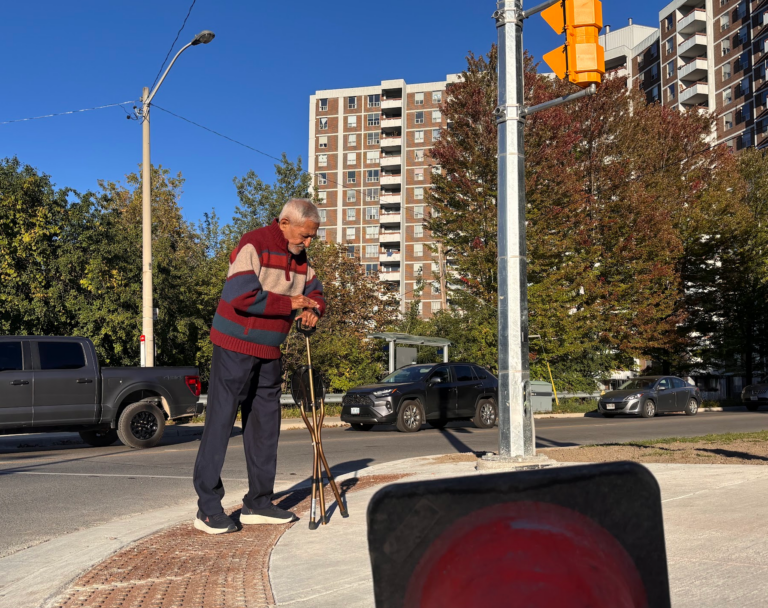
Eric Vanderwal and his neighbours in Mimico-Queensway spent around a decade advocating for a road safety plan. This included many municipal elections, which Vanderwal used to reach out to candidates and ask for support for their cause.
“When representatives or candidates themselves come to your door to speak with you and to ask for your vote, that’s absolutely an opportunity to share with them, ‘this is what my interests are, and this is what it would take to get my vote,’” he told The Green Line.
Ahsen Bhatti, a community development specialist in Moss Park, recommends asking candidates for a plan when they promise to solve your problems.
“Ask for specifics. They should understand the policies, they should understand the budget, they should understand how they’re going to make the things that they want to do happen and they should be able to explain all of those things to you in a few simple sentences,” he says.
2. Share a pledge for candidates to sign on
One way to formalize a candidate’s support for a cause is by asking them to sign a pledge. A pledge is a commitment to pursue policies or frameworks once elected. It helps citizens understand candidates’ values and hold representatives accountable once in office.
Many Toronto groups are already circulating pledges and asking councillor and mayor candidates to sign on to signal their support for a cause. For example, the Coalition for Responsible Community Development (CRCD) developed the “Community-led planning champion pledge,” which asks candidates to commit to funding a program through which local coalitions can address displacement, build affordable housing and inclusive economies. As candidates sign the pledge, CRCD sends updates to residents to inform them who’s on board with this vision.
Other pledges also exist, like TTC Riders’ transit pledge and Cycle Toronto’s Municipal Election Pledge.
If there aren’t any pledges about the causes you care about, you can start one. You don’t have to do this alone.
- First, find like-minded organizations or neighbours who want this issue addressed as you do.
- Draft the vision you’d like to see carried out in city hall.
- Gather support from your local community to demonstrate that this is an issue the neighbourhood as a collective cares about.
- Send the pledge to candidates and ask for their signature.
- Keep the community updated with newsletters, WhatsApp broadcasts or social media posts.
To get a councillor’s attention, you’ll also need people power.
“There’s always strength in numbers,” Bhatti says. He explains it’s very difficult to make meaningful change alone and recommends gathering a group of like-minded people, including neighbours, local organizations, City staff and even other elected representatives to rally behind a cause. “The broader your coalition, the broader your base of support is, the easier it is to really push for the things that you want.”
3. Create a petition among fellow constituents
A straightforward way to demonstrate “people power” is to create a petition from constituents in your riding or ward pledging to not vote for a candidate unless they commit to a cause.
For Dasha K., a community organizer in Spadina-Fort York, leveraging the fact that citizens vote elected representatives into power — and can remove them from it — is a universal pressure tactic that works well.
K., who only wanted to use her last initials to protect her employment, added that the No Jets T.O. campaign was a great example, as the federal government halted the expansion plans of the Billy Bishop airport after a coordinated opposition campaign that included big public demonstrations, mass emails to MPs and more.
“What my assessment is that the Liberal government thought it could get away with this, but then realized that the future voters, whenever the next election is, many lifelong liberal people are like, ‘I’m never voting Liberal again,’ and I think that’s what made the federal government back down from this plan, at least for now. It’s that they got threatened that they won’t hold that power,” she says.
But it’s important to note that petitions and pledges don’t always work. In 2024, Toronto – St. Paul for Palestine organizers collected 550 signatures from constituents pledging not to vote for candidates for the local MP seat unless they condemn “the decades-long injustices perpetrated by Israel against the Palestinians.” Eventually, a conservative candidate who hadn’t committed won.
“The worst-case scenario is what happened — and we had put a lot of work into that. I don’t want to speak for the other riding groups, I think there was…not sobering, not cynical, but just a realistic reassessment of the limits of hanging all of your hopes or all of your efforts in electoral projects, so we’ve been working on shifting from that,” Dani Mitrovic, an organizer in the Toronto – St. Paul ward, says. You can learn more about non-electoral ways to advocate for your neighbourhood’s needs here.
At the same time, organizers continue to mobilize with neighbours, even keeping their causes top of mind during municipal elections.
4. Organize public demonstrations
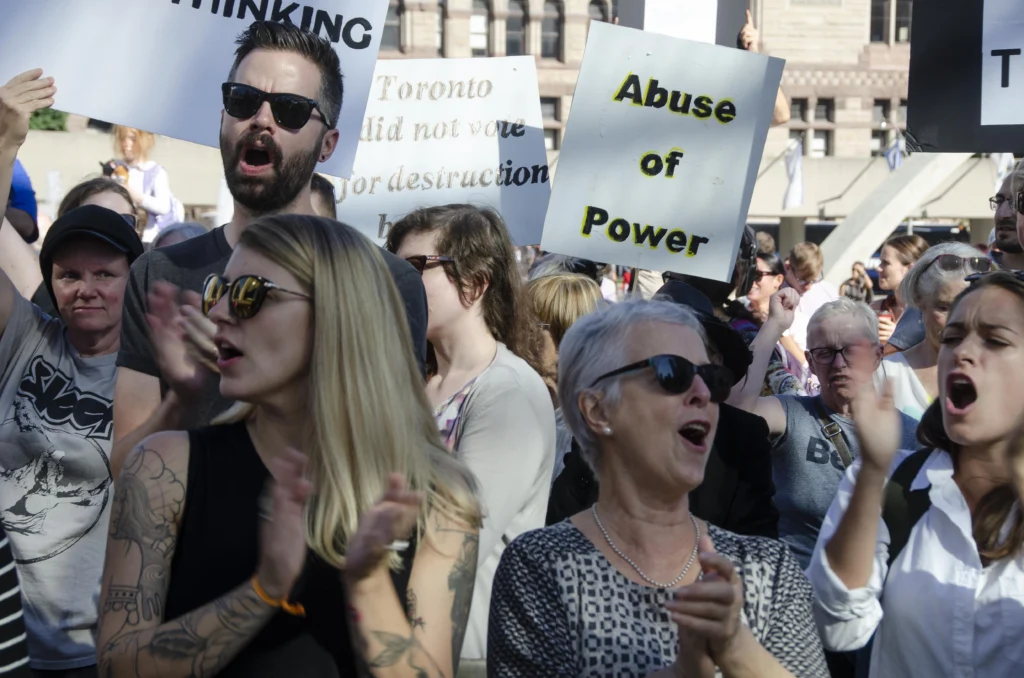
Protests, marches and demonstrations are another common way to pressure candidates to support a cause or vote a certain way on a bylaw.
For example, the No Jets T.O. campaign included a march and rally at the waterfront.
Another example includes a rally for a moratorium on AI datacentres in front of City Hall last July, which you can learn about through this Documenters note. When council is in session, protests in front of City Hall are a common tactic to pressure elected representatives to vote a certain way.
Block parties are another way to protest. Learn how with this Green Line story, with tips.
Want more tools and guides to navigate election season? Come back on Thursday to learn how and where to find your incumbent candidates — in case you need to get them on board for your causes, too.
Fact-Check Yourself
Sources and
further reading
Don’t take our word for it — check our sources for yourself.

Join the conversation