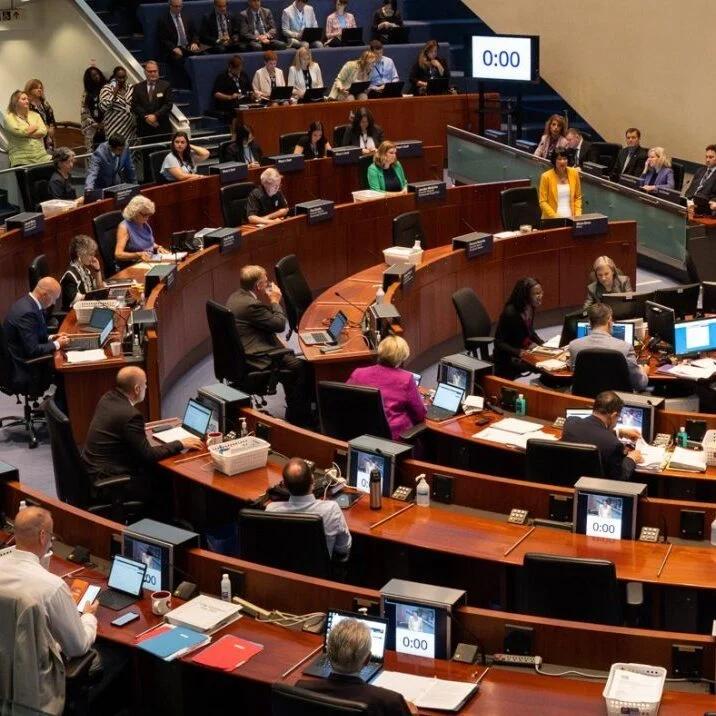
So the Toronto municipal election is coming up and you need to vote for a councillor…but what do they even do?
In this explainer, we’ll break down who’s who, their responsibilities, how the municipal government even works and how to contact your local representative to tell them your needs and wants.
Since the municipal election is happening Oct. 26, this is a way to help gauge what criteria is important when choosing which candidate gets your vote.
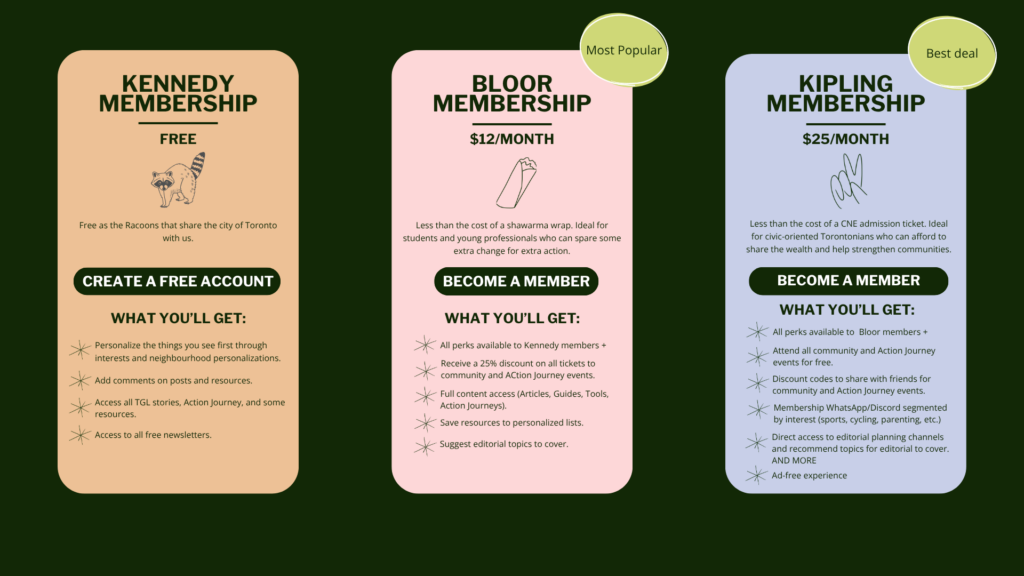
BECOME A GREEN LINE MEMBER TODAY
Who makes up Toronto’s City Council?
You probably know who the Mayor of Toronto currently is — Olivia Chow. She’s held her position since 2023 and is the first person of Asian descent to do so. Terms are usually four years, but Chow was elected in a by-election after former mayor John Tory resigned. The most recent general election was in 2022, which makes 2026 the next election cycle.
At this point, Mayor Chow could be considered a celebrity the way non-Torontonians are familiar with her. Matter of fact, and embarrassingly so, I can name her, but forgot the Mississauga mayor, even though I’ve spent most of my life there.
But despite knowing the names and faces of Canadian political figures, how many of us can truly say we know our local councillors? Or what they do?
The mayor doesn’t decide the fate of the city alone. Rather, they’re one gear in a larger machine that also includes the city councillor for your ward. While the mayor represents the city as a whole, city councillors are responsible for the specifics. That includes you, as an individual, and your neighbourhood.
What do city councillors do?
The Province of Ontario website outlines some of the roles councillors play in their municipality: representative, policy-maker and steward. It says councillors have to make difficult decisions based on complex policies that may extend beyond their term, but that it’s important they choose based on the long-term benefit of the community.
Councillors will take concerns from residents within their ward, vote on policies and bylaws, engage with community members, give direction to staff to do research, as well as shape decisions that affect how the city runs. They don’t act alone, they’re part of the larger group that decides what’s approved, changed and rejected in the City of Toronto.
Your city councillor is your direct line to City Hall. Each ward constituents — the people in your very neighbourhood — elect one councillor to represent them at Toronto City Council. City Council is the main decision-making body for Toronto.
Councillors’ decisions often shape the entire city. Alongside addressing neighbourhood concerns like potholes, they vote on city-wide issues such as transit, developments and budget.
Keep in mind that councillors don’t control health care or education since those are provincial responsibilities. Confused? Check out our guide that breaks down what each level of government actually has control over.
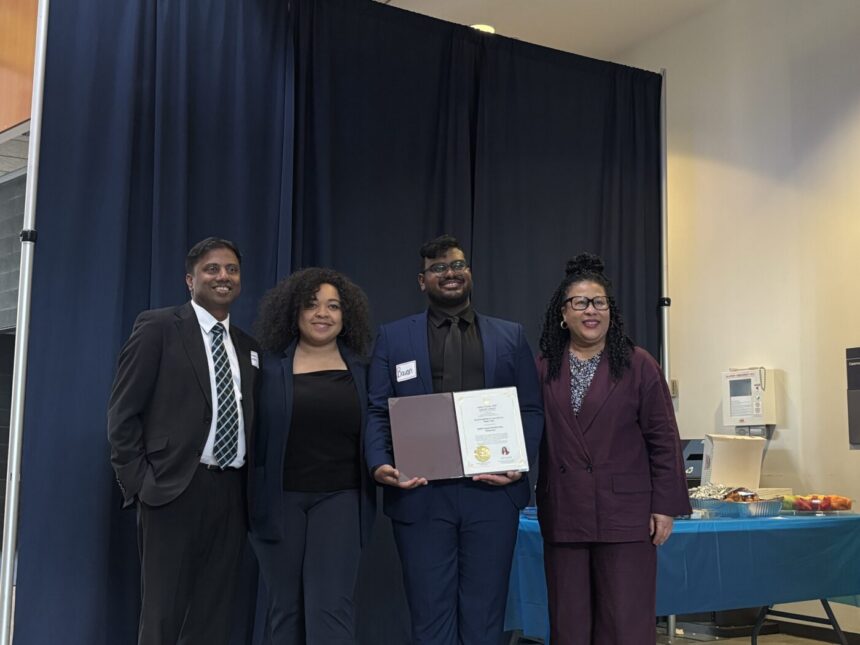
📸: Aia Jaber/The Green Line.
What’s a ward?
Toronto is divided into geographic areas called wards, where one city councillor represents the people living there. They can also be thought of as political districts.
Each ward has a ward profile that has information from the Statistics Canada Census of Population, which includes some insight on the people who live within them. This information includes:
- Ages of residents
- Building types and period of construction
- Family structures and marital status
- Languages spoken
- Immigration status
- Ethnic origins and visible minorities
- Education and labour force
- Income and shelter cost
Each ward has new data that comes out every five years. The ward profiles also have construction notices, road classifications and apartment building audits.
In the City of Toronto, there are 25 wards, which means there are 25 City Councillors, in addition to Mayor Olivia Chow.
What are the City of Toronto wards and current councillors?
This list includes current councillors, many of whom are running for re-election this fall, with few who will be stepping away.
- Etobicoke North – Vincent Cristani
- Etobicoke Centre – Stephen Holyday
- Etobicoke-Lakeshore – Amber Morley
- Parkdale-High Park – Gord Perks
- York South-Weston – Frances Nunziata
- York Centre – James Pasternak
- Humber River-Black Creek – Anthony Perruzza
- Eglinton-Lawrence – Mike Colle
- Davenport – Alejandro Bravo
- Spadina-Fort York – Ausma Malik
- University-Rosedale – Dianne Saxe
- Toronto-St. Paul’s – Josh Matlow
- Toronto Centre – Chris Moise
- Toronto-Danforth – Paula Fletcher
- Don Valley West – Rachel Chernos Lin
- Don Valley East – Jon Burnside
- Don Valley North – Shelley Carroll
- Willowdale – Lily Cheng
- Beaches-East York – Brad Bradford
- Scarborough Southwest – Parthi Kandavel
- Scarborough Centre – Michael Thompson
- Scarborough-Agincourt – Nick Mantas
- Scarborough North – Jamaal Myers
- Scarborough-Guildwood – Paul Ainslie
- Scarborough-Rouge Park – Neethan Shan
How can people contact their city councillor?
The City of Toronto has a tool that lets you look up your city councillor and their contact information. There are a few methods you can use to reach out to them.
- Call the office phone number
- Email your city councillor
- Plan an in-person visit — in most cases, you’ll have to book an appointment ahead of time. At City Hall, reception will sign you in and give you an identification badge before you proceed.
The information above is the typical process for finding and contacting your councillor. At the moment, councillors are in a blackout period as they campaign and prepare for the upcoming Toronto Municipal Election. You can still contact your local candidates, but you’ll have to do so through their campaign rather than the councillor’s office. Stay tuned for next month when Julia Lawrence comes out with a guide on how to go about it.
Still got questions? Don’t fret. You can reach out to us to answer all your civic needs.
Fact-Check Yourself
Sources and
further reading
Don’t take our word for it — check our sources for yourself.