


This article was produced as part of the Local Journalism Initiative.
We’ve been in conversation with York South-Weston residents for over six months about their top issues and concerns.
It’s election day, and The Green Line used the crowdsourced questions to interview every councillor candidate running in Ward 5 York South-Weston.
BECOME A GREEN LINE MEMBER TODAY
Our questions focus on issues residents have identified as important to their lives, including food insecurity, housing affordability, support for newcomers, youth violence and programming and flood prevention.
We conducted the interviews, transcribed the answers and edited for length and clarity. We reached out to all candidates with contact information on the City of Toronto’s website and sent follow-ups; the following candidates responded. You can dive into the full responses by clicking on the questions you’re interested in under each candidate’s section.
Frances Nunziata
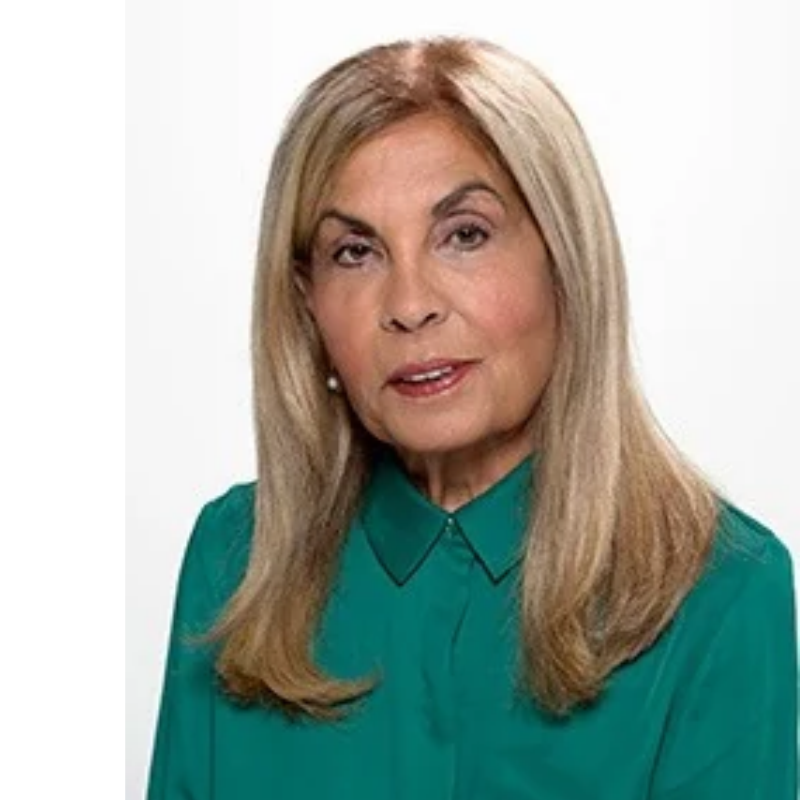
Coun. Frances Nunziata is Ward 5’s current councillor. She has been in the position since 1997, but prior to the amalgamation of Toronto, Nunziata was the Mayor of York from 1994-1997 and a City of York councillor from 1988-1994.
Her top priorities are finishing what she started by getting shovels in the ground for ward projects she’s gotten funding for.
Read her full answers to our questions below.
What would you describe as your top priorities if re-elected?
Well, I want to finish what I started. I have a number of projects, main projects in my ward where I’ve received millions of dollars. I want to get a shovel in the ground, and the project started because it’s taken years to get the funding and years to get it approved. So I want to see shovels in the ground and things happening in my ward.
For more park improvements, I’ve done, I’ve received a lot of funding for park improvements, and I’m working with the youth in my community to get an indoor sports complex where some of our youth, you know, unfortunately, parents can’t afford the programming, to have free programming for youth indoor sports, job opportunities.
And so I want to work on a facility where we are able to, you know, to support our youth in the community, which is very important to me.
What concrete actions will you take to tackle the food insecurity crisis from a policy perspective? And how will you help people now?
Developers in my ward where they’ve received approval on applying for funding to build affordable housing. And I’m pleased to say two or three of them have actually put a shovel in the ground. So I’m working to get more affordable housing in my ward, which is a priority for York South-Weston.
What concrete actions will you take to tackle the food insecurity crisis from a policy perspective? And how will you help people now?
Well, when it comes to North York Harvest, they were in my ward and now they have a new location, which is outside my ward. So I helped them, and with the report coming to council, with their new facility, we can waive the taxes. So they’re able to save a lot of money, which is very difficult for them, to pay property tax and also pay the rent.
Then I have a food bank in Weston, which is WAES. I was able to get $40,000 donation to them for the food bank.
What investments will you make in youth programming, mentorship and opportunities for young people in York South-Weston?
That’s why I mentioned getting a facility for them where they can have recreation for youth. And I’ve hosted a number of job fairs in my ward. The last one that I hosted, we had over 800 youth that attended the job fair.
Quite a few of them were actually hired by some of our employers. It was one of the biggest, and it was just amazing. You had some of these youth come with job resumes, and they were all dressed up in suits. It was very exciting to see that, you know, and the interest and we had a number of employers that contributed to it. And so it’s good, and I think we have to do more of that.
It’s important to me that I get a facility for youth because of the youth violence that we have. If we get them into safe places, because I sat down with a number of youth in the past couple of years, and what they tell me is that there’s no place for them to go; they need space. And that’s what I’m working on.
I’m also on the mayor’s task force for youth. We’ve been accommodating some facilities for them to have access to.
Half of Ward 5’s population, according to the 2021 Canadian census, are immigrants. What concrete actions will you take to support newcomers (including undocumented people, PR holders, international students, refugees, migrant workers, etc.) as they navigate health care, employment, education and other settlement needs
I’ve been working with a number of agencies that we have in my ward that deal with immigration, and I’ve been helping them access some of the services. I get a lot of requests that they need space, and I’ve been able to accommodate that. I have a lot of businesses in the area that actually are working with me and providing that space.
Flooding is a big issue in Rockcliffe-Smythe and other parts of the ward. How will you help residents with flood protection investments and infrastructure and address concerns over the Rockcliffe Flood Mitigation Projects?
Well, I’m very pleased to say that I’ve received $300 million from the federal government for the project. We’ve done a number of environmental assessments.
The project, I’m pleased to say, will be starting very shortly. What I did for some of the residents in the Rockcliffe area that I moved to a motion a couple of years ago, where some of these homes get repeat flooding, is that I moved a motion that was passed; actually, I was very surprised that got passed because some didn’t want to support it. We would give a rebate, and we would give funds to individuals if they apply for it, if they get flooded.
There are other parts in the northern part of my ward too; they have received, they’ve had to experience some flooding.
There was a project that was done before my time that I represented that area. But we do have the Keele Street trunk (Black Creek Sanitary Trunk Sewer Relief System)that has been funded, and that project is starting shortly. So that should accommodate all of Keele Street, that whole area in my north, the north of my ward.
What neighbourhood do you live in and what’s your favourite spot to eat or hang out in the ward?
Well, I live in the south end of the ward. I’ve always lived in that area, in the Jane and St. Clair area. The favourite place for me to eat would be Speducci’s.
Chiara Padovani
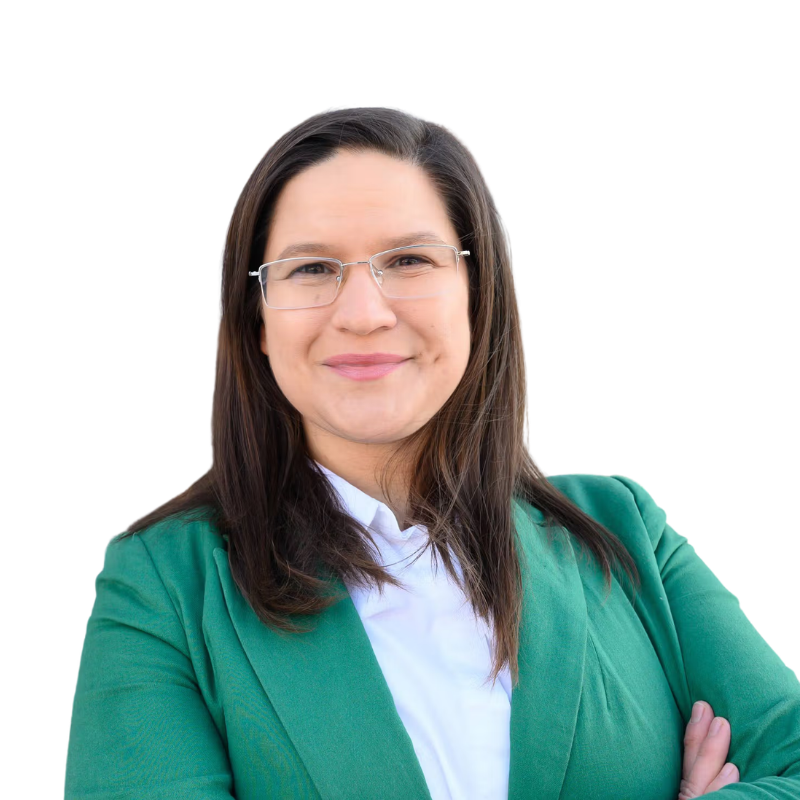
Chiara Padovani founded the York South-Weston Tenant Union (now Toronto Tenant Union) and previously worked as a social worker for North York Harvest Food Bank. In the 2022 municipal election, she came in second place with Coun. Nunziata in first place, with only 94 votes between them.
Her top priorities are safe roads and better transit, flood protection, housing and tenant rights, opportunities for youth and mainstreet revitalization.
Read her full answers to our questions below.
What would you describe as your top priorities if elected?
- Safe Roads and Better Transit
- Protecting Homes from Flooding
- Opportunities for Youth
- Housing and Tenant Rights
- Mainstreet Revitalization
What concrete actions will you take to tackle the housing affordability crisis from a policy perspective? And how will you help people now?
I’ve spent the last four years building a tenant movement that has stopped hundreds of evictions, won over $5 million for tenants fighting unfair rent hikes and saved seniors money on their property taxes and utility bills. While many levers for housing affordability are under provincial jurisdiction, the City can still do a lot to make housing more affordable and protect renters, who make up half of Toronto’s population. I’m committed to bringing back rent control for all residences on City-owned property and proposing a bylaw that will ensure landlords won’t just pass the cost of building upgrades onto tenants. I’ll also move to get the City involved in buying up empty units – in bulk and at a discount – to turn them into Rent-Geared-to-Income units as well as expand the City’s Multi-Unit Residential Acquisition (MURA) Program.
What concrete actions will you take to tackle the food insecurity crisis from a policy perspective? And how will you help people now?
As a social worker at a local food bank, I know firsthand how broken the system is and how much people are struggling to put food on their tables. I also know the biggest obstacle to affording groceries is the high cost of rent. By making rent more affordable, we can put money back in people’s pockets so they can properly feed themselves and their families. I’ve already been doing this for years as a tenant organizer with the tenant union I co-founded. As City Councillor, I’ll have more tools at my disposal, like supporting the public grocer pilot project to provide an affordable alternative to private grocery chains.
What investments will you make in youth programming, mentorship and opportunities for young people in York South-Weston?
Access to safe, healthy and affordable sports and recreation programs is hard to come by in our communities. We have some beautiful spaces like the York Recreation Centre, but it took decades to build, cost a fortune and had lineups out the door within minutes of opening. The demand is still high, and the waitlists are still way too long. I want to start a partnership between the City and local school boards to immediately unlock our school facilities for sports and recreation, after hours and on weekends, when our young people need them most. I’ll also pair this with a youth jobs program so young people can gain valuable experience while earning an honest wage.
Half of Ward 5’s population, according to the 2021 Canadian census, are immigrants. What concrete actions will you take to support newcomers (including undocumented people, PR holders, international students, refugees, migrant workers, etc.) as they navigate health care, employment, education and other settlement needs?
Aside from my platform proposals for tenant rights, affordable housing and youth opportunities – which will directly benefit newcomers and their families – I’ll continue to support the City’s AccessTO policy, so that nobody is refused service due to their status.
Flooding is a big issue in Rockcliffe-Smythe and other parts of the ward. How will you help residents with flood protection investments and infrastructure and address concerns over the Rockcliffe Flood Mitigation Projects?
First and foremost, we need to prepare our homes and fortify our communities before the next flood. I’ve already mobilized hundreds of my neighbours in these parts of York South-Weston. As City Councillor, I’ll move to make sewage ejection pumps legal in the floodplain, providing an immediate added layer of protection for homeowners to avoid disaster when the infrastructure is overwhelmed. I’ll also ensure the City funds set aside to help residents invest in upgrades like these are better distributed and cover ejection pumps once they become legal, and propose regular debris-clearing and maintenance of our canals and sewer systems.
We must upgrade our public infrastructure to keep up with a changing climate and growing population, but we need to do things right – so we don’t pave over what limited permeable soil and green space we have left – and we must consult with local residents and the community. As City Councillor, I’ll order a peer review of the Black Creek Canal Project, propose immediate Upgrades to the Rockcliffe-Smythe combined sewer system and move to ban new development on the floodplain.
What neighbourhood do you live in? What’s your favourite spot to eat or hang out?
I live in Weston, and my favourite spot to eat is Comal y Canela, at Jane & Lawrence. I love their veggie burrito. My favourite place to spend time in the ward is the beautiful Humber River Trail.
Matthew Boateng
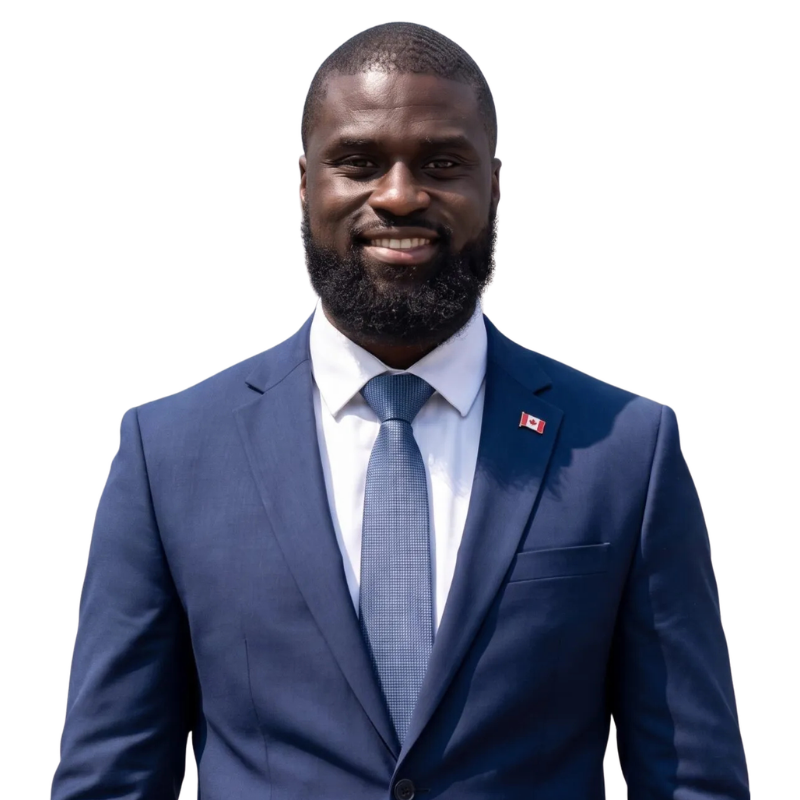
Matthew Boateng is a music teacher, an ordained Reverend-Minister and a community volunteer.
His top priorities are protecting families and investing in people through resources for seniors, creating more jobs and working with local businesses.
Read his full answers to our questions below.
What would you describe as your top priorities if elected?
So I’m running on a campaign platform of protecting families and investing in people. I believe that we can do it with a five-pronged approach.
So my campaign, I simplified it into five key points, which center around affordability, youth investment, making sure our seniors are living in dignity and have the right resources around them, whether they’re living in a long-term care home or they’re living in seniors’ residence or in their own home. As well, community safety, which is a big issue now throughout Toronto, even though I know the numbers have been down in the last year or so, but people are still feeling it when they go on the TTC, when they’re walking in their local neighbourhoods and streets.
And then lastly, creating good jobs through skilled trades and working with our local businesses and BIAs to increase infrastructure projects in the community and also to generate more jobs.
We want to bring more jobs to Ward 5 and to make sure that people who are living there can also work there as well.
What concrete actions will you take to tackle the housing affordability crisis from a policy perspective? And how will you help people now?
I believe now we want to look at it in this way: the City of Toronto has land. We have city-owned land, and we have housing, rental affordable housing that could be built on city-owned land. So I want to measure against local incomes in the community, not necessarily on a citywide average.
So for example, if we’re building in a specific area, we look at the income of that area and we can say, okay, these people are making this amount per year, maybe it’s 50,000 a year, 60,000 a year, and we can use that to gauge and say, okay, these are the amount of homes that need to be built in the next five to 10 years. I think it’s cool to also look at the waitlist. We have TCHC and other housing waitlists that shouldn’t continue to grow, but they should shorten over time.
So also looking at the waitlist and making sure that we can shorten the waitlist.
Then also we want to strengthen enforcement. We have illegal rent increases. We have people living in places where repairs have been neglected. Renovictions are up. I believe that we need to have more tenant support, but we want to do it in a practical way as well.
There are organizations, grassroots organizations, that are already on the ground. I believe we need to work with these organizations, bring them to the forefront, and work with the City of Toronto so that we can make sure that we’re actually hearing what is actually happening on the ground and not just punching numbers and saying, okay, we’re going to build this high-rise. We’re going to build this mixed-use building, but actually find out, hey, what type of housing do people need? What are they interested in? And even when we build this housing, what type of resources and amenities and services should we provide in the community so that it can also help them to live dignified lives as well?
What concrete actions will you take to tackle the food insecurity crisis from a policy perspective? And how will you help people now?
So, when I hear the conversation about food insecurity, a lot of people point to the fact that we have all these provincial and federal taxes.
And on a municipal level, even for the mayoral candidates, the two main mayoral candidates that are running right now, there are very minimal revenue-based options that they have to bring money into the city. But I believe a community that helps the community is a community that is a thriving community.
So, for example, whenever there’s some type of disaster relief effort that is put in place, why do we always have to wait for a disaster to happen before we can be proactive? Hey, can you bring your non-perishable food items? Hey, does anyone want to donate this? I believe that the food banks work well when the community is involved in their day-to-day activities. So, whether it’s our local food markets that we can bring into the fold, which helps a lot. I know we have the Western food market in our community, or our food banks.
I believe that the community can help the community, especially in this time of food insecurity. I know that the idea of a government-owned grocery store is a little bit new for people. I have a policy that I use and I follow in my life. If somebody brings up an idea, let’s try it. If it works, it helps. If it doesn’t work, then we get back to the drawing board, and we see how we can move on from there.
I believe that our grocery stores, especially the four or five main grocery stores, have monopolized the grocery industry. I believe that if we have other options, it will help make sure that people can get more affordable food and feed their families and their children.
What investments will you make in youth programming, mentorship and opportunities for young people in York South-Weston?
We have youth programming, but it’s limited.
And I believe that it could become more versatile in the sense that we have people with different interests, different passions. Whenever you’re putting together a program, I went to the York Recreation Center, and I asked them, hey, what kind of programming do you have? And they have different sports and different things like that.
But it is hard to find certain niche resources that, hey, let’s say there’s a comic book club or anime club. We have a lot of young people that are into anime. That could bring, let’s say, 30, 40, 50, 100 young people together for a time, maybe an hour, an hour and a half.
You can come and participate just through your love for anime. But if we don’t have that type of space for niche passions and hobbies, then we’re only focusing on volleyball or basketball. If I don’t play basketball or volleyball, then I’m not going to go to that resource or go to that programming.
I want to pilot a program actually with our seniors to have our young people go into our community centers, our long-term care homes, some of our buildings that have recreational space, to partner with our seniors. I went to a long-term care home the other day, and a couple of the nurses were telling me that some families haven’t visited their mothers, their fathers, uncles in over 10, 15, 20 years. So I was actually there to visit my mom, and people were so happy to see me because, hey, you’re here for your mom, but you’re also here for us, too.
So I said, hey, it would be great if we could have our young people come into those spaces, our seniors who have a wealth of knowledge, who help build our communities. That would be their way to also give back, to help advise on, hey, if you’re going into university, this is how you start a family, this is what marriage is about, and then our young people can also help. I call it the loneliness crisis, where a lot of people, especially our seniors, are lonely; they don’t have anyone to talk to.
I find that the longest I’ve spent this whole campaign season outdoors has been with seniors.
Those are some of the programming that I’d like to spearhead, but also entrepreneurship, youth entrepreneurship, to also have businesses come in, professionals come in, to help our youth with startup grants, business mentoring, and affordable space to also work as well.
Half of Ward 5’s population, according to the 2021 Canadian census, are immigrants. What concrete actions will you take to support newcomers (including undocumented people, PR holders, international students, refugees, migrant workers, etc.) as they navigate health care, employment, education and other settlement needs?
So back in 2023, I was working with a couple of organizations during the African refugee crisis, where we had a lot of African refugees and asylum claimants who came. Some ended up in Whitby, some in Brampton, and a few organizations such as Miracle Arena and Anchor Canada, also I believe COSTI also came together and deputized at local city halls, regional councils to provide funding and wraparound services for these individuals.
At Miracle Arena, we ran a shelter there where I was a supervisor for about two and a half years. Before any money was allocated to us, we were on the ground. I actually quit my job, and I was volunteering for two years.
I realized that advocacy goes a long way. You can have all the government programs, and you can put a nice name to it, a nice ring or spin to it, but who is willing to do the work? And I believe that no person should be turned away because of the colour of their skin, their culture, their sexual orientation, whatever their background is. Providing services should be a human right and a human responsibility. So I would actually champion the local organizations, grassroots organizations, but also local residents to help.
Flooding is a big issue in Rockcliffe-Smythe and other parts of the ward. How will you help residents with flood protection investments and infrastructure and address concerns over the Rockcliffe Flood Mitigation Projects?
So first off, there are organizations. I believe that some of, and I’m a big believer in community.
So even if my opponents have brought forth some type of initiative that helps the community, I’m not going to try and tear them down or say I disagree because, at the end of the day, it’s what helps the community that’s most important to me. It’s not about scoring political points or about winning or anything of that nature, but it’s about how we can mitigate issues and help the next generation coming forward.
So the City of Toronto has a mitigation project. I believe there’s certain areas that they want to focus on in terms of to replace the culverts and also to channel the water in the directions to make sure that we can make sure that our homes are protected, our properties are not damaged. And I believe that mitigation is one aspect, but also City Hall has a part to play; when I look at the city budget, a $19 billion budget was allocated to the operating budget this past year.
When I went in to look, and maybe it’s a city-wide thing, I believe it’s about time we have specific money allocated to specific wards. So, whenever there is a need, you would see that, okay, hey, we’re going to put together this project; there’s phase one, phase two, phase three, phase four, but we need an actual dollar amount. And a specific allocation is saying, okay, Ward 5 has this flooding issue at the Rockcliffe-Smythe location; $3 million, if that’s the amount, is allocated. It will be done in this period of time. This is the beginning, this is the end, and then we move on from there.
Because, for example, if we’re going to say that the Government of Canada is putting up $140 million for a disaster mitigation fund, that’s just a broad number, but how much of that money is actually being allocated towards Rockcliffe-Smythe? So that’s one aspect of it.
And then the second aspect of it is what I was talking about with some of my opponents. There are flood prevention measures that have been put in place that some people have started already to protect their homes. I will champion that.
And to hold town halls, to hold community meetings, to actually educate people because everyone is not going to see my social media video, or everyone is not going to see my pamphlet that I post on the bus stop or on a tree. But if I can get the word out there, just like how I’ve been canvassing for the election, we can also canvass and say, hey, we’re doing a community meeting about flooding. You want to come in here and bring in the professionals, bring in the experts, so they can help educate the people to hopefully protect their property and mitigate the flooding.
What neighbourhood do you live in? What’s your favourite spot to eat or hang out?
So I live in Mount Dennis. So I have a couple, but everyone who knows me knows that I love 244 Pizza and Wings. 244 Pizza and Wings, I’ll say this: when it comes to the model of a small business, that is 244 Pizza and Wings. They’ve been there probably longer than I could even remember. It could be early 2000, could be late 80s, late 90s. But since they’ve been there, they’re just amazing.
Their food is, even now their food is cheap, but their food was cheaper before inflation, before COVID-19, before costs rose.
And then for a place to hang out, well, there are a few spots that I could say, but definitely nothing beats Eglinton Flats. It’s a nice open space. You can see the trees and feel the nature and the embrace of the community. It’s a nice open space. I actually would love to, over time, get more programming into Eglinton Flats. We have a city-owned golf course and some soccer goals and stuff.
But I believe if we can have more events come to the Eglinton Flats, it would really revitalize and uplift the community as well. There are more spots too, but that’s what I have for now.
Sileen Phillips

Sileen Phillips works in federal public service and also as a child, youth and family coordinator at the Church of St. Peter and St. Simon.
His top priorities are communication between constituents, creating a community priorities table, establishing quarterly progress reports and a rapid response constituent support team.
Read her full answers to our questions below.
What would you describe as your top priorities if elected?
A bit of a disclaimer that I do want to make before I state my priorities or even go further in this discussion, and it is that, given the limited access I have to information from inside city council and my limited view of what to anticipate, and also in the absence of other factors such as fiscal implications, everything I say has to be hypothesized in the absence of having everything that we need.
In terms of top three priorities, number one, I believe in communication. I believe that as a city councillor, before I can be a voice for the people, I need to be ears for the people first.
I need to listen.
I don’t believe in anyone going into a community, even if they live in that community, and making assumptions about what they think is needed, despite what might seem to be evidence. I believe in having a discussion, and that should be ongoing.
So in becoming councillor, and while councillor, the communication should never stop. In doing so, I would like to establish a Ward 5 community priorities table. That would consist of essentially bringing together resident groups.
There are a number of them, like Western Village Association, for example, are so very active in the community. There’s the Smythe Park group; there are a number of them. So bringing all of those groups along with youth agencies, faith communities, there’s an abundance of them, not-for-profit organizations. So both the faith-based and the non-faith-based not-for-profit organizations are coming together to coordinate action, which will avoid duplication. Because I think sometimes we create things because we don’t see them, not knowing that, well, someone else someplace else has created something similar.
So bringing together everyone, and also seniors associations and seniors groups, we cannot leave out our seniors. Ward 5 community priorities table, where everyone can bring their concerns, and not just their concerns, but their efforts. What is it that you have been doing over the years? How has it been working for you? And finding ways that we can pool those resources together and streamline them effectively.
So that would be my number one priority: avoiding reinventing the wheel. Second priority would be to introduce quarterly public progress reports. And the purpose of that would be so that residents can track commitments and hold the office accountable.
I strongly believe in accountability. The best way for residents to know what’s happening is quarterly progress reports. And that way, at least they’ll be able to see the direction that the ward is going in on a more regular basis. As opposed to after four years, after an election is finished, then you realize two or three years ago, this person said that we’re going to do this. We said we were going to do that. And it’s not done.
So quarterly public progress reports are the second thing. The third thing would be to create a rapid response constituent support team. And the purpose of that would be to help residents navigate housing, TTC, flooding, and safety issues, which have been the four most consistent issues that constituents have mentioned when I have spoken to them.
What concrete actions will you take to tackle the housing affordability crisis from a policy perspective? And how will you help people now?
In terms of practical steps, we would definitely need to work with municipal licensing to increase proactive inspections of rental buildings and repeated complaints. Because lowering rent is going to be a challenge. In the meantime, we can support the renters through something similar to the RentSafe TO program. And ensure rental buildings are properly maintained while we are working on the issue of the cost.
It’s bad enough that you have to pay so much money for it. It should at least be livable. And I’ve seen some very filthy buildings as I’ve been canvassing; the common areas look dreadful.
So that’s one of the first things in terms of housing affordability. The second thing would be to expand access to the Toronto Rent Bank and eviction prevention in the community by hosting ward-specific clinics. It’s citywide, and I appreciate that, but not every ward is struggling equally, so to speak.
I would also seek to partner with non-profit developers to fast-track deeply affordable units through the Open Door Program and advocate for a renter support navigator in the ward to help residents with forms, disputes and landlord communication. And lastly, certainly look more into TCHC in terms of turnover rate. What is causing the backlog of the turnover? And I mentioned this because I know someone personally who has been living in a shelter with her child for 15 years, still on the waiting list. So those are things that we would need to definitely look into.
We need to get back rent control and also develop more of a partnership with developers. I know we have this us versus them relationship to some extent, but it does not have to be like that. So I certainly would like to try to improve that relationship between the city and developers to come to an agreement in terms of a percentage of housing that has to be dedicated to affordable tenants based on what structure they’re putting up.
So whether it’s 30% of your development has to go to affordable or whatever we can negotiate, but just sitting at the table with developers and seeing what can be worked out policy-wise for their new developments.
What concrete actions will you take to tackle the food insecurity crisis from a policy perspective? And how will you help people now?
Well, by supporting expansion of mobile food markets and subsidized produce programs in neighbourhoods with limited grocery access, one of the things that I am very cognizant of is wastage. It is extremely high. My personal belief is that if we have food to throw away, we have food to give away. So we need to be able to identify, first of all, the source of the wastage. Is it coming from consumers or is it coming from the retailers? Is it coming from the wholesalers? Where is this wastage coming from? And be able to tap into that and access that food essentially before it ends up in the garbage.
There’s also the idea of providing small grants to community fridges, meal programs, and faith-based food initiatives to stabilize operations. My church, for example, we do have a food bank that we run about one of the issues we have. So we get an abundance of food, but not enough people know about it.
I think that by identifying all of the food banks that are there and literally just sharing our resources, because one food bank might have an abundance while the other is running on empty. So I think there needs to be better networking amongst those who have those resources. I also like the idea of working with Parks and Rec to increase community gardens to get some more plots and explore rooftop vertical growing spaces. In my neighbourhood, they started experimenting with that, I think, maybe about eight or nine years ago. But it is wonderful having rooftop growing spaces. The food is healthier because you’re growing it yourself.
It’s also therapeutic for residents that get to go there and garden and look after these vegetables. The other thing I’ll mention is integrating food access into shelter and supportive housing by ensuring on-site meal programs and partnering with local kitchens.
What investments will you make in youth programming, mentorship and opportunities for young people in York South-Weston?
First of all, expand youth hubs that offer mentorship and mental health support. Much of the issues that our youth are facing, sometimes it’s due to the climate at home, which we have no control over. Not to say they have parents who are not taking care of them. But a lot of them come from homes where parents have to be working two, three jobs. So they can’t get to be there. They can’t get to be as present as they need to be for their children, because they’re busy trying to keep a roof over their heads.
And I know a thing or two about that, because I am a single parent, and I’ve always had to work two or three jobs while studying full time, while raising my son. And one of the things that really helped me as a mother is those youth spaces. We have MLSE Launchpad. We have Community Music Schools of Toronto. In the absence of that, I truly don’t know what I would have done. So I can speak very firmly when I say one of the most practical steps to youth violence prevention is youth programming.
So the youth hubs that offer mentorship, mental health supports and employment pathways, as well as safe spaces. The second thing is funding violence interruption and mediation programs led by trained community workers as opposed to police. Given the demographics in York South-Weston, there is a need because there are some systemic issues. I want our relationship with the police to be better. I want the view and the perception to improve.
The other thing is to increase access to after-school programming, including arts, especially the arts, sports, and leadership development. Partner with Covenant House Toronto and similar agencies to build trauma-informed interventions for at-risk youth. Treat more than the symptom. Let’s address the cause. And lastly, advocate for redirecting a portion of community safety funding toward mental wellness. It needs the attention, and it needs the funds.
Half of Ward 5’s population, according to the 2021 Canadian census, are immigrants. What concrete actions will you take to support newcomers (including undocumented people, PR holders, international students, refugees, migrant workers, etc.) as they navigate health care, employment, education and other settlement needs?
So an answer to this question would pretty much go back to my initial statement about the top three priorities about bringing different groups together and identifying our resources. Because, for example, COSTI is very active in the neighbourhood, and they do provide services for immigrants, especially those who are trying to navigate employment.
And not just employment, but they also help them find information about getting their education upgraded if it needs to be upgraded, that sort of thing. So again, the first thing would be to identify organizations that are already offering these services and pool our resources together. Ensure all immigrants know where they can go for information, because it’s one thing to have something available, but if the people who need it don’t know that it’s there, that will make it rather challenging.
I think this is also where partnership with faith-based communities comes in particularly handy. Because a lot of the immigrants, and this is based on the information from the research that I’ve done, do come from ethnic groups that are devoted to a specific faith. And so when they come here, it’s usually their faith-based groups that they go to for support.
So by partnering with those faith-based groups and connecting them to organizations such as COSTI, we can ensure that the information is streamlined. This is where you go for worship, but by the way, the place of worship has information about where you can go to find housing and that sort of thing. And I don’t see anything wrong with even forming a committee of some sort where you have a representative from groups like COSTI and the faith-based groups to just ensure that the immigrants are taken care of.
So it’s just a matter of what their needs are and having each group that takes care of employment, another group probably from those who come from the education group. But I think that there are a lot of resources already in the ward, and it’s just a matter of identifying them and bringing them together.
Flooding is a big issue in Rockcliffe-Smythe and other parts of the ward. How will you help residents with flood protection investments and infrastructure and address concerns over the Rockcliffe Flood Mitigation Projects?
So I am aware that there is a mitigation process that’s to be launched soon and in following the group, no, they’re not too trusting of what has been presented to them. And I think from my perspective, one of the things that we can do is, number one, publish ward-specific flood risk maps and host workshops on property-level mitigation. Because education, I think, is also important.
I believe everyone needs to understand what is happening there. And in terms of the practical steps for flood prevention, if this is not already covered in the mitigation that is to happen, because I have not read it in detail, ensure that at least it will accelerate stormwater upgrades in those high-risk areas by pushing for priority scheduling in the capital plan. Expand backflow valve and sump pump subsidies for homeowners and landlords, so at least they have those things that they can help themselves with while we’re in the process.
Increase permeable surfaces through green infrastructure, tree planting and naturalized boulevards. Again, this is what I’m looking for in the mitigation plan that has been set. And beyond that, require new developments to include on-site stormwater retention and climate-resilient design.
What neighbourhood do you live in? What’s your favourite spot to eat or hang out?
So I no longer live in the ward; I used to live at Keele Street and Trethewey Drive. My favourite place to eat is Top Chef.

Join the conversation