

What if a food-insecure community could pick fresh food right in its own neighbourhood? These seven urban farms make it possible for residents in and around Rexdale.
Located within a five-kilometre radius of the Rexdale Community Hub at 21 Panorama Ct., these produce gardens span a range of urban models that turn underutilized green spaces into food-growing hubs for students in a school, farmers working behind a horse racing track, community members in and around a shelter and more.
The common thread connecting the seven farms is SNAP, or Sustainable Neighbourhood Action Program, which was developed by the Toronto and Region Conservation Authority (TRCA) in 2009 to help municipalities, residents and local organizations come up with and carry out a plan that puts climate resilience, green infrastructure and community participation front and centre.
BECOME A GREEN LINE MEMBER TODAY
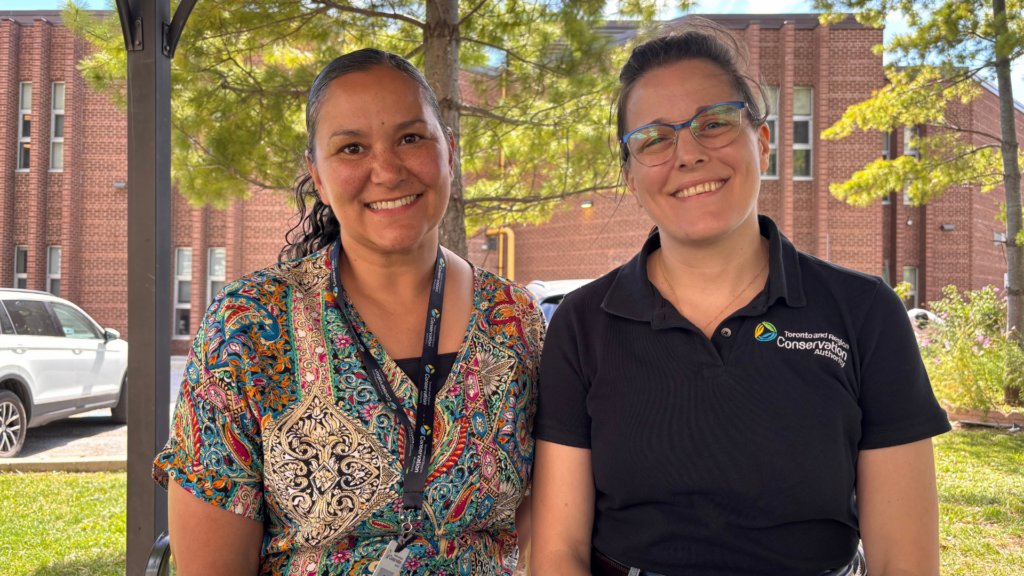
“We go in, and we do a lot of listening and engagement with community leaders to find out what’s important to them and what they’re trying to accomplish. Here in Rexdale, one of the themes that really came to the forefront was food security,” Jennifer Taves, Sustainable Communities senior manager at TRCA, told The Green Line during a tour of the organization’s SNAP programs on Sept. 10.
📸: Yara El Murr/The Green Line.
Since 2024, the TRCA, with money from Toronto Pearson International Airport, has funded and supported Rexdale groups working in the neighbourhoods to increase food production and access, as well as provide skills, training and opportunities for youth to learn about how to grow their food, she explained.
“[It’s also] reclaiming spaces for the community to be able to have that land sovereignty piece, a little bit of food sovereignty — for people to be able to come and have access to the areas that they live around, to be able to grow food, beautify the area, have that sense of ownership in their communities,” Holly Shaw-Lopez, TRCA’s SNAP manager, added.
So, join us for a sneak peek of what we saw, learn more about each farm — and find out how you can get an ecosystem of agricultural and environmental projects in your own neighbourhood.
Thistletown Collegiate Institute Garden
Beside the parking lot of Thistletown Collegiate Institute at 20 Fordwich Cr., farm manager Fiona Smith, students — and members of the local community — take care of veggie beds planted with spicy peppers, eggplants, ground cherries, a “three sisters” corner (beans, squash and corn), as well as companion crops, such as kale and onions to manage aphids and tomato, basil and marigolds to attract good pollinators. The garden also has raised accessible planters by a paved road for wheelchair users to try their hand at seeding, weeding and harvesting too.
Part of the PACT Urban Peace Program’s Grow-to-Learn projects, the garden serves as a living, hands-on classroom for students at the institute. When students aren’t around, community members are welcome to volunteer.
The garden shares produce with the local community and donates it to nearby meal programs and pantries.
Rexlington Community Garden
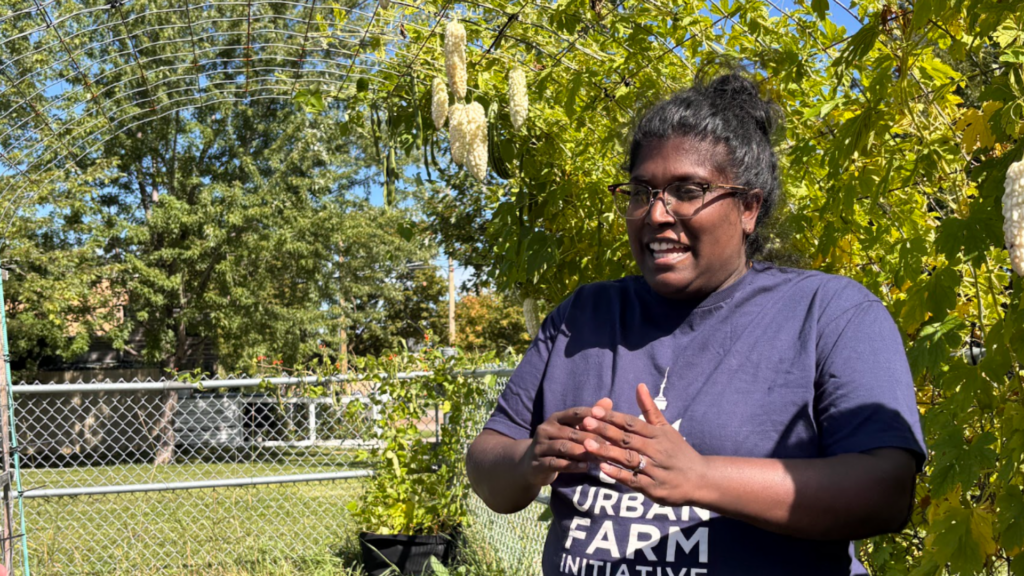
A bocce court-turned-community garden, this 5,000-square-feet spot has unusual crops that are dear to the local community’s heart. Hanging white bitter melons, tall tomato plants and bright flowers punctuate the space.
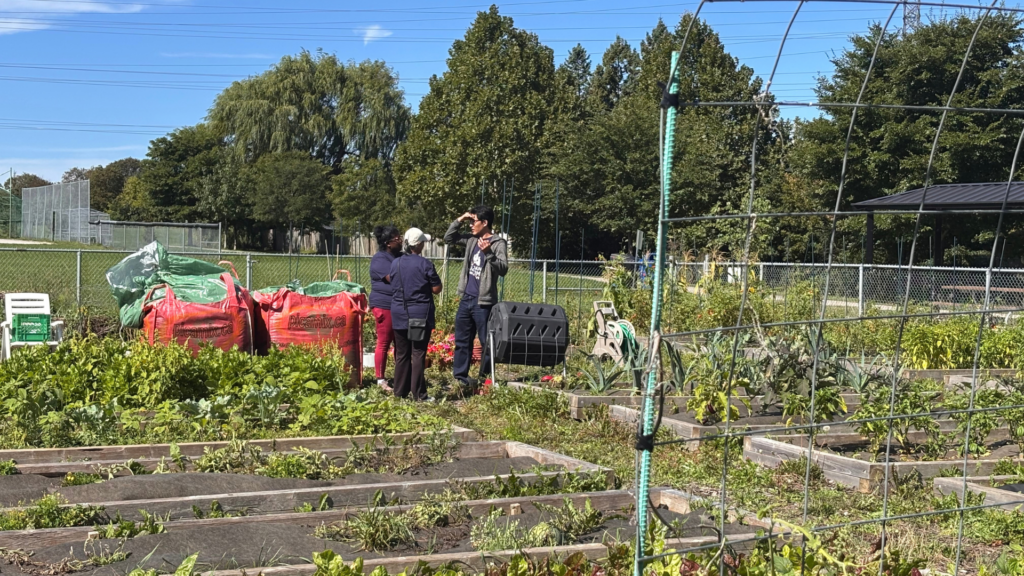
For the last couple of years, Januja Jeyarajah and Taeyoon You of the Urban Farm Initiative have given new life to the shallow, packed soil in this corner of Rexlington Park at the end of Torbolton Drive with the help of volunteers and local community members.
They grow what they can in this challenging environment — the past bocce court makes it impossible to grow root vegetables, for example — and they have a focus on ethnic crops that locals like to eat.
📸: Yara El Murr/The Green Line.
“We grow more ethnic food such as long Indian sake gourds, bottle gourds, Indian spinach, Indian chillies and bitter melon, all of which are used by the immigrant families in the surrounding areas,” You told The Green Line.
The group also shares seeds with a nearby YMCA women’s shelter and donates extra produce to local food banks.
Their top goals are to restore the garden’s biodiversity and provide employment and food-growing opportunities to residents. One of those residents is Roxana Khan, who started as a volunteer and is now employed through the initiative to help run the garden.
The Urban Farm Initiative often needs volunteers throughout the summer and at the end of fall. If it piques your interest, check out the details on their website.
Sundance Farms
Unassuming behind the Woodbine Racetrack is the Sundance Farms at 4078 Entrance Rd. This unique project merges a non-profit, Sundance Commons, which provides land, tools and resources for people with barriers to grow their own food, and a commercial farm, Sundance Harvest, which boasts itself as “an ecological farm and living wage employer.”
The farm features many areas tended by different farmers. Among lush bushes, neat plant beds and a greenhouse, you’ll find eggplants, beans, raspberries, currants, medicinal herbs, parsley, tarragon, catnip, turnips, ground cherries, radishes, cucumbers, tomatoes, sunflowers and more.
While the farm isn’t typically open to community members, it often hosts free workshops — some specialized for professional farmers and some open to the public, covering a range of topics from beekeeping to edible mushrooms to medicinal herbs and more.
Produce is sold at the Dufferin Grove farmers’ market or in season-specific farm baskets.
More farms in the program
- Panorama Community Garden
The Panorama Community Garden at 31 Panorama Ct. was created through efforts of the local community, with the support of City staff and local non-profit, The Etobicoke Master Gardeners. Since 2014, it’s been a space for community building through 60 individual plots and four shared plots, where residents of all ages come together to grow food, share tips, socialize and learn about environmental issues.
- Zawadi Stewardship Initiative
Another school-based initiative, this time out of the North Albion Collegiate Institute at 2580 Kipling Ave., the Zawadi Stewardship Initiative leads educational programs for urban agriculture and ecosystem restoration. You can be part of the initiative by becoming a Community Supported Agriculture member, which means that instead of buying produce at the grocery store, you get a share of farm harvests from this site and others. You can learn more here.
- Mama’s Healing Garden
Mama’s Healing Garden focuses on Black, Indigenous and marginalized communities by providing locally grown food and holistic healing practices rooted in African ancestral traditions. You can volunteer, donate and receive produce from the garden.
- Braeburn Neighbourhood Place
Another farm in Rexdale’s SNAP is a community and balcony gardening initiative at Braeburn Neighbourhood Place at 75 Tandridge Cr., a local, grassroots organization that provides social services to residents.
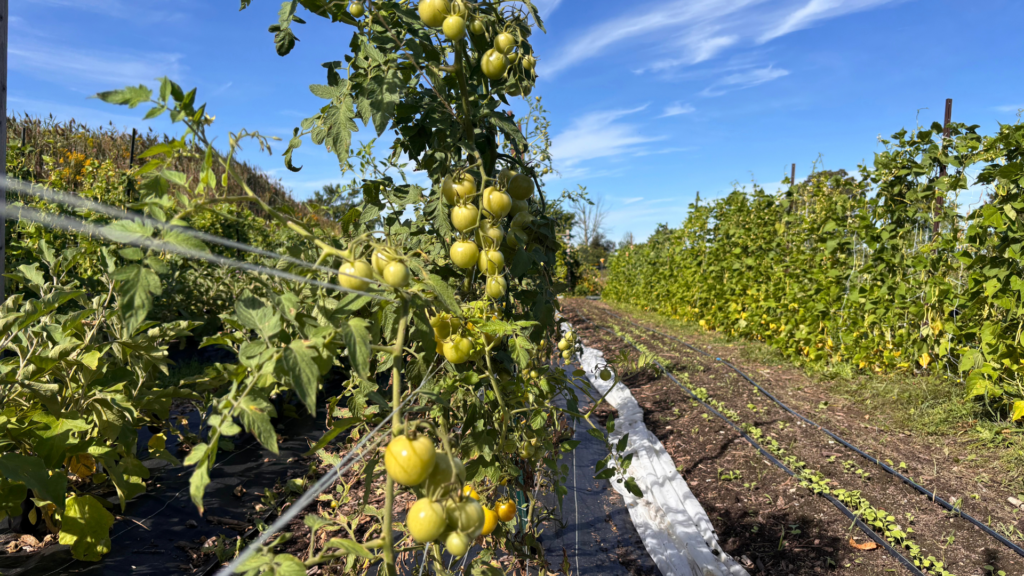
📸: Yara El Murr/The Green Line.
The SNAP program — and staff at TRCA — connect farmers from all these programs to create an overarching ecosystem, where people can learn from each other and work together.
“When you bring these lighthouses, firecrackers of people together, sparks really can fly and new projects can happen and new collaborations can happen,” TRCA’s Taves said. “We always say we can do more together than we can apart.”
Shaw-Lopez added that TRCA also applies a place-based and social equity lens to SNAP.
“So if we’re looking at the programs we have running and there’s a gap for seniors or there’s a gap for children or a different segment of the population, we want to say, how do we get those people involved,” Shaw-Lopez explained. “So we like to see a variety of different projects represented for people who live in towers, also people who have backyards, institutional properties, commercial, residential areas, all sorts of projects together. We’re hoping to create that network so that they can rely on each other, grow together.”
How to get SNAP for your community
“I always say that every neighbourhood could use a SNAP. We could always do that, and we’re always looking for additional partners to work with in order to make that happen,” Taves told The Green Line.
She suggests that residents reach out to their local councillor to get the ball rolling.
Then, you’ll need to identify the area’s needs and priorities as well as local organizations or community leaders who already have or could set up farms.
You can check out TRCA’s SNAP webpage to see if there’s one near you and learn how you can get involved.
For more information, you can email jennifer.taves@trca.ca.
Fact-Check Yourself
Sources and
further reading
Don’t take our word for it — check our sources for yourself.


Join the conversation