
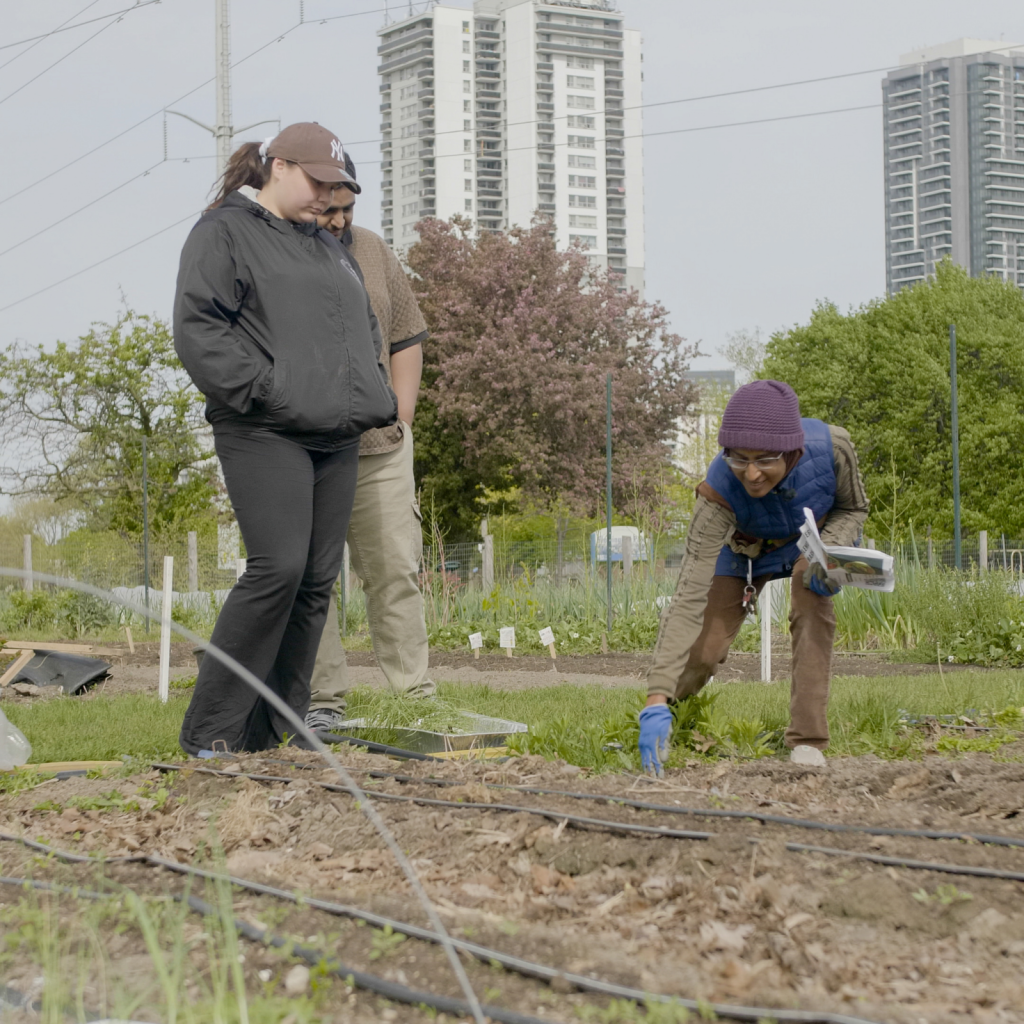


What if you could pick a few radishes for your next salad right out of the soil instead of a supermarket display?
Here’s your guide to making it happen.
Growing produce in cities isn’t just a hobby for outdoorsy urbanites; it can be a great way to ensure you and your neighbours have access to fresh, healthy, affordable and sustainable fruits and veggies — a pretty big deal when we’re in the middle of a food insecurity crisis.
Today, Toronto has more than 300 urban farms you might be able to join or buy from, plus 69 community gardens to grow food and flowers with neighbours, as well as many allotment plots for personal use. All these green spaces are in high demand with limited capacity — so waitlists can be long for many of them.
So, if you’re not a lucky Torontonian with a nearby garden you can join, don’t get discouraged. There are many ways to start your own urban farm in the city. We asked farmers who’ve grown their gardens from scratch to share their step-by-step guidance and best tips so you can get your hands in the soil.
STEP 1: Talk to interested neighbours
Farming is a team sport. Talk to neighbours, local leaders and community organizations — you’ll need support to get a farm or garden going.
“Learning to work with and to support the voices and the work that’s already happening there and bring them in to collaborate with us at the farm has been a process of building relationships, but it’s been like a really wonderful journey,” says Tara Ramkhelawan, farm coordinator at Flemo Farm.
You never know who might have a green thumb — it could be excited teenagers who need a volunteering opportunity or older immigrants who used to farm in their countries before moving here. Creating ways for more people to get involved can help you find diverse skill sets and a core team who can take up some of the labour.
Here are some questions to discuss to get you started:
- Who wants to be involved? What’s their capacity to lead or help? Do you have experienced farmers in your community?
- What’s the goal? Do you want to be able to sell your produce, or are you just growing to eat and share locally?
- Who wants to be involved? What’s their capacity to lead or help? Do you have experienced farmers in your community?
- What’s the goal? Do you want to be able to sell your produce, or are you just growing to eat and share locally?
As you decide what your community needs, it’s important to remember that farmers aren’t allowed to sell produce grown in community gardens or allotment plots owned and operated by the City of Toronto. If that’s something you want to do, you’ll need the correct status as an urban farm.
STEP 2: Identify space in your community
As you look around to find space for a new urban farm or garden, you should keep some criteria in mind:
- Who currently uses this space and what for?
- Does it have adequate water access?
- Does it get at least six hours of sunlight per day?
- Who owns it?
The answer to the last question will dictate your next steps:
- If the plot is in a hydro corridor or on City-owned land, you’ll have to go through the official channels to get your project approved.
- If it’s on private land owned by a real estate company, church, organization or person, you’ll have to figure out who you need to talk to.
Whichever your scenario, keep on reading for general guidance on what comes next, and some specific tips for your situation.
Step 3: Make a plan and be ready to defend it
Your initial farm plan can be as simple as a vision board or sketch on a napkin.
“Walk around the area, take photos and start dreaming how you want to see those spaces,” says Orlando Martín López Gómez, community food growing senior manager at Foodshare.
As you refine your vision, prepare to make your case to the landowners and convince them why you need the garden.
- Find the data that backs you up, including food access statistics in your neighbourhood.
- Create a petition and get it signed to show community support.
- Reach out to your local councillor to get their backing.
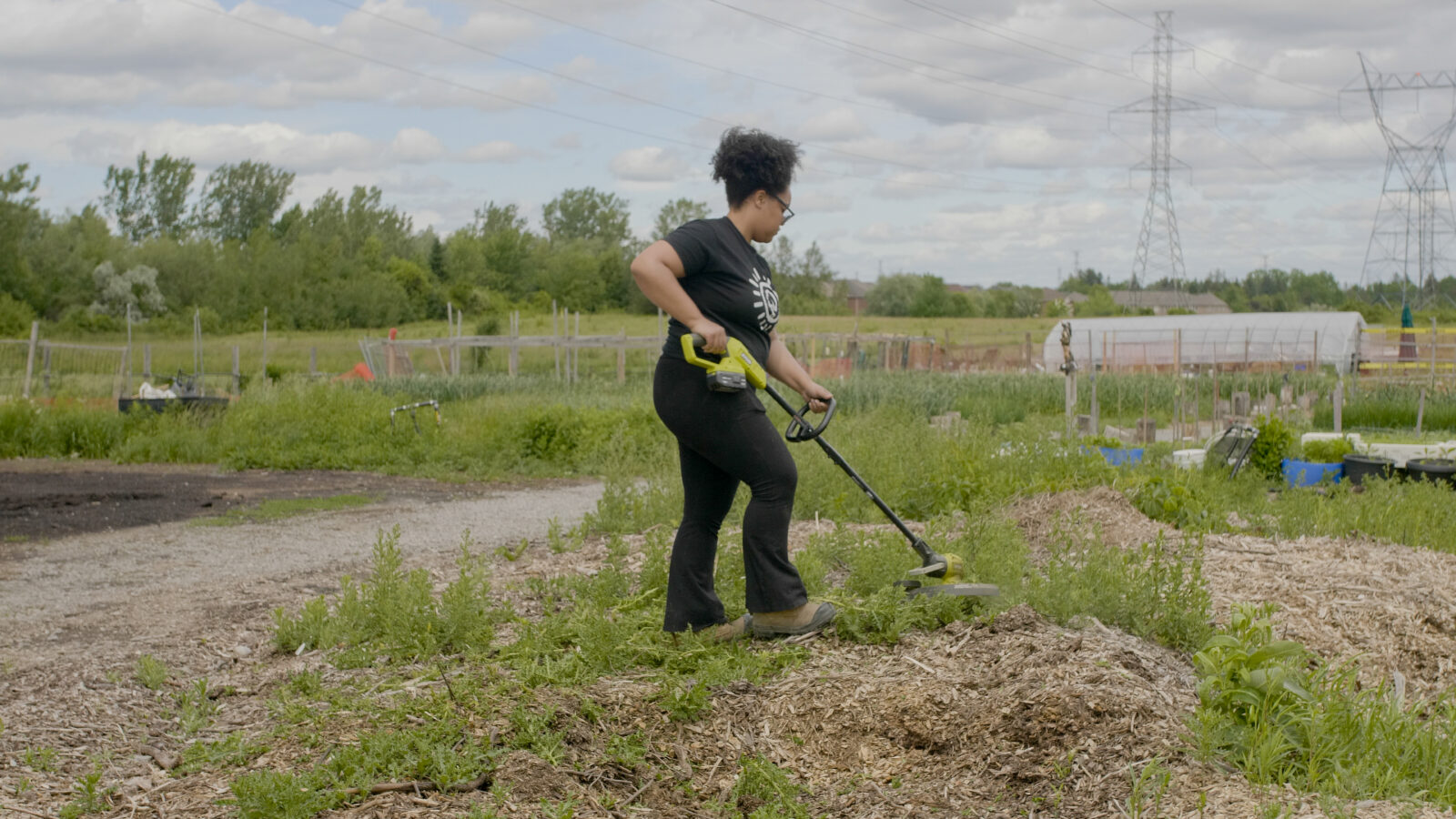
📸: Anthony Lippa-Hardy/The Green Line.
Step 4: Get the needed permissions
If you’re hoping to turn empty space in your residential building into a garden like the Thorncliffe Park Urban Farmers did, you’ll have to get buy-in from the landlord. It helps build a good relationship, gain their trust and demonstrate that you have the skills, interest and capacity to implement the project successfully.
If you’re going through the City of Toronto, you’ll have to defend your cause more formally — and be ready for a long haul.
“We put a documentation and request to the City of Toronto. As always, our process takes time, and takes a lot. The conversations took almost ten years for [the City] to give the permit to us to open this space and have the farm,” Gómez says.
If you’re looking at land specifically in the hydro corridor, check out “Farmingthe Hydro Corridor: A guide to starting an urban farm in Toronto’s Hydro-Corridors, inspired by Malvern Urban Farm.” This extensive and detailed resource by Malvern Family Resource Centre and the Urban Just Transitions Research Cluster at the University of Toronto Scarborough lays out the bureaucratic steps, a model budget and information on farm operations.
If you want a community garden in your neighbourhood, the City of Toronto also has a guide on starting one.
STEP 5: Create a budget and financial plan
The budget you need really depends on the garden you want.
For the Malvern Urban Farm, the start-up cost was approximately $104,600 — including fencing, irrigation, tools, seeds and more. It’s all broken down here.
The City might help install some infrastructure for community gardens, but many urban farms rely on grants and donations to operate.
If you’re a farmer just starting, joining an existing urban farm can really help. At Flemo Farm and Thorncliffe Park Urban Farmers, community farmers are provided with almost everything they need, so they don’t have a lot of out-of-pocket costs to grow and harvest produce.
“You want to have enough support to be able to cover all of the needs for a garden and to make sure that people of a community like mine can just show up and just donate their time and efforts,” says Michelle Delaney, founder and executive director at Thorncliffe Park Urban Farmers.
Step 6: Gather donated tools and equipment
A lot of garden and farm tools can be borrowed from the Toronto tool library. You can also ask your local community, relevant organizations and even some corporations to donate items or money to support the farm.
“There are a lot of shared resources, and there are a lot of gardeners in Toronto that are really nice people,” says Delaney.

📸: Anthony Lippa-Hardy/The Green Line.
Step 7: Set up the farm infrastructure
This includes putting up fencing, setting up irrigation infrastructure, defining plant beds or building raised beds, creating compost bins and placing fridges or storage spaces for harvested produce. You might also need netting, trellis poles and set-ups tailored to each plant you want to grow.
STEP 8: Organize training sessions
Malvern Urban Farm, Flemo Farm and Thorncliffe Park Urban Farmers all host training sessions for the community. Some are specialized and tailored for more serious farmers, but many welcome any community member who’d like to learn about growing food.
A lot of garden and farm tools can be borrowed from the Toronto tool library. You can also ask your local community, relevant organizations and even some corporations to donate items or money to support the farm.
“There are a lot of shared resources, and there are a lot of gardeners in Toronto that are really nice people,” says Delaney.
Step 10: Engage the local community
Many urban farms and community gardens function as third spaces for the community to gather, feel closer to nature and socialize with neighbours. They’re also great employment opportunities.
Aside from opening the garden or farm to community members who want to grow food, there are many ways to engage residents of all ages and interests.
Flemo Farm has a community compost program that invites people to bring in kitchen scraps in exchange for coupons they can use to get produce at the farmers’ market. Aside from the general compost program, the farm also partners with a local environmental group, Lovers of Planet Earth, to help educate local women on the benefits of composting through a program called Khad Banana (or making compost in Urdu).
Connecting with like-minded community organizations can be a great way to expand your farm’s impact in the neighbourhood.
You can also set up volunteering opportunities for people to assist lead farmers, and you can enroll students in Canada Summer Jobs.
Keep in mind: Not all community programs need to be food-growing related. The Thorncliffe Park Urban Farmers hosts poetry workshops, for example.
Groups to connect with
“If you need any support at any time, you’re free to reach us. You know, we share and we’re happy to support you,” Gómez says.
Want to dig deeper into where our food is from, why urban farming is important and how it already exists in Toronto? Check out our Action Journey, “How to grow your own food in Toronto,” for answers to all these questions.
Fact-Check Yourself
Sources and
further reading
Don’t take our word for it — check our sources for yourself.

Join the conversation