
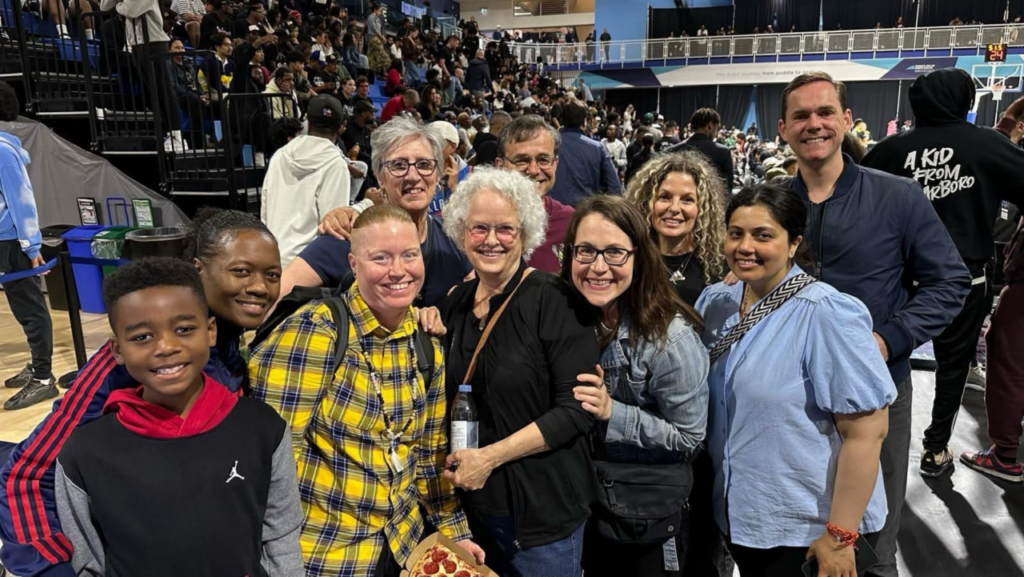

Based out of Scarborough, founders Janice Waugh and Bryceson Dodge are devoted to making entrepreneurship accessible for all.
With Waugh’s experience running two successful businesses and Dodge’s knowledge of non-profits, the two co-founded Northstar Startups, a non-profit that delivers free programming to aspiring entrepreneurs.
But they’re not just passing on their own business skills, Waugh and Dodge are dedicated to helping Torontonians achieve financial security through side hustles, self-employment and entrepreneurship. At the core of it all is also community building.
BECOME A GREEN LINE MEMBER TODAY
Today, they’re using their passion and experience for this platform that they say has already helped entrepreneurs get started in the business world while making connections with others in the program.
What was your driving force to create Northstar Startups?
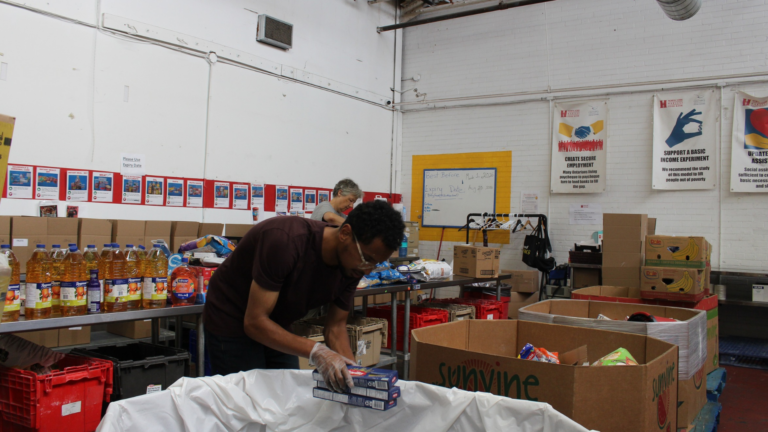
Waugh: Bryceson and I met through volunteering at a food bank, where my role was giving out the fruit and vegetables on a weekly basis.
I was meeting people that clearly would always need a food bank unless they got a guaranteed minimum wage. These people are quite capable and have skills.
I also knew of the challenges that people who are dealing with ADHD or learning disabilities face, as well as the challenges of child care and single parenthood. It struck me that there were a lot of people with talent, but from my life experience, employment wasn’t necessarily the solution for everyone.
So, we thought that entrepreneurship just might be the solution for some.
Dodge: Much of our education system and our society gears people towards employment. You know, you go to school, you graduate, and either go to university or college, or you go and get a job and you work for somebody. You retire, you get a watch, and then you sail off into the sunset.
But that’s not how everybody’s wired. For us to see that was the impetus for Northstar Startups.
One of the entrepreneurs that we worked with early on had a minimum wage job, but he had to travel to three different locations throughout the city in order to earn a minimum wage. In this case, he would’ve spent upwards of six hours in transit in order to earn maybe six hours at minimum wage. When you think about that minimum wage of 12 bucks an hour, you’ll never break out of that cycle trying to just get a job and work for somebody. But that’s what the system hands people.
For us, to work with individuals who’ve got passion and see them turn those skills or talents or hobbies into a small business, you really can make a huge difference — not just in their financial situation, but in their confidence and their ability to contribute to their community and to inspire their family and to break that poverty cycle.
What does your program look like for the entrepreneurs involved?
Waugh: Our programming involves a number of things. It begins with an online course called the Business Basics Course. It kind of lays out the, “what are you doing? Who are you doing it for? Why are you doing it? How are you gonna reach the people that are gonna buy?”
Once people are into the program, they have workshops twice a month. One is on business skills, the second is on mindset. We introduced the mindset workshop about a year ago, because it became clear that mindset is what can unlock our entrepreneurs’ ability to actually use the skills that they’re learning.
Our entrepreneurs get a mentor to support them on a weekly or biweekly basis. They make the decision. They also get financial support for their initial startup costs and can attend marketing events that we book.
Then, they take it from there. They do the logistics, right? They schedule themselves and collaborate to promote their businesses.
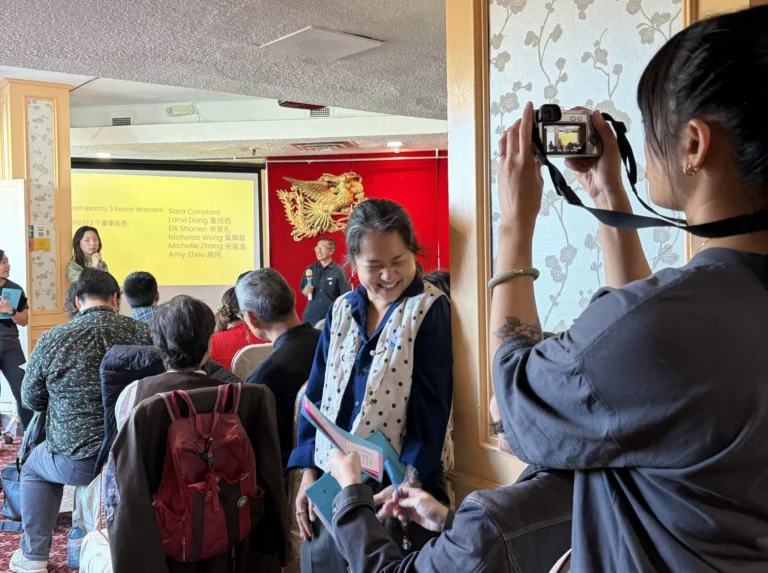
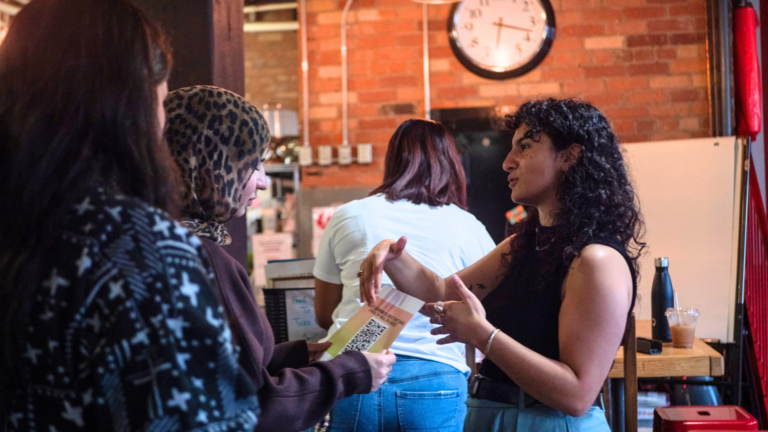
One Thursday night a month, we do meet in person, and that’s because of the necessity of community building. Throughout the rest of the month, we have a WhatsApp group that people participate in every day. They put up, you know, memes of positivity or encouragement or tips and advice or comment on someone else’s success.
Dodge: The overall approach that we take to entrepreneurship is not necessarily a one-size-fits-all model, right?
When Janice and I were starting this, we looked at a number of different business incubator models. Often, they’ll have a specific engagement period of, say, six months or nine months or whatever it is, and you start, you do X, Y, Z pieces of curriculum.
And, you know, as Janice mentioned earlier, that just doesn’t work for the folks that we wanna help. And the people that we wanna help are often the ones that get forgotten about in society, because they have other things going on. They’re not often loud, and out in the limelight because they’re busy just taking care of the home, or they’re busy taking care of family members or whatever it would be. And so when our business basics course is set up, it’s done in modules, and they can do it whenever they want. And if they need support, we’re there.

📸: Provided by Northstar Startups.
What are the most important parts of building a nonprofit like Northstar?
Dodge: One of the things that we talk to our entrepreneurs about is: in the small business world, when you’re an entrepreneur, there’s nobody who says, “congratulations, you’re now an entrepreneur.” You don’t sign a contract. There’s nobody that’s gonna shake your hand and tell you you’re doing a great job.
You need to find that intrinsically within yourself. And so I’d say that that community that Janice referenced earlier is also partly what we lean on; and we’ve learned the importance of building community for small business. That allows us to have the courage to continue to build and understand where this is gonna go. But, you know, the learning never ends.
Waugh: That’s for sure. I mean, I was actually just writing an email to a funder and looked at the things that we’d done just in the last four months. It was like, “Oh, my God. We’ve done so much,” because there’s this always learning element which makes it very exciting.
In September, we had an election process for an entrepreneur council, which we hadn’t had before. This is a small addition to the programming that provides a different communication path for the entrepreneurs. Possibly in some cases, one that feels safer. It’s a communication path for, “Hey, could this be built? Could this be part of what we have?” It’s not like we’ll be able to say yes to everything, but let them come up with ideas, right? So that’s just one example of the many things that we adjust all the time.
We’re entrepreneurial as we build Northstar because that’s what it is. You keep on tweaking and moving and changing to get it right.
What lessons would you share with aspiring entrepreneurs?
Dodge: When we talk to the entrepreneurs about what it takes to be successful, it’s that notion of you’ve gotta be comfortable not knowing exactly what the path is. Nobody’s gonna tell you yes or no. You’ve gotta be tenacious, you’ve gotta really want something and be able to fit it in around your other responsibilities in your life to be able to make something happen.
How can people get involved and support your work?
Waugh: There are multiple ways. There are very specific volunteers that we need at different times.
At the moment, we’re looking for two different IT people at the moment to help us with our CRM [Customer Relationship Management] and the integration of our CRM into other systems. We’re also looking for a bookkeeper. So look for us on Volunteer Toronto, because there are some positions that we really need help with.
Dodge: Folks can go onto our website, and they can donate directly to us and be issued a tax receipt.
At this point, we don’t have any government funding. We’re entirely funded by the good graces of the communities that we serve. So we’re absolutely looking for donors who wanna support Scarborough, who wanna support entrepreneurship and who wanna see a really positive change in the community.
I’d also love to try to get the message out to more folks who are considering entrepreneurship or who may even consider entrepreneurship.
If you’re a food bank user or if you find that your financial position is just not necessarily where it needs to be or perhaps you’re losing a job or there’s some other sort of circumstance that has put you into dire straits, we wanna talk to those people and see if we can support them through this transition period for their life.
This interview was edited and condensed for clarity.
Fact-Check Yourself
Sources and
further reading
Don’t take our word for it — check our sources for yourself.

Join the conversation