
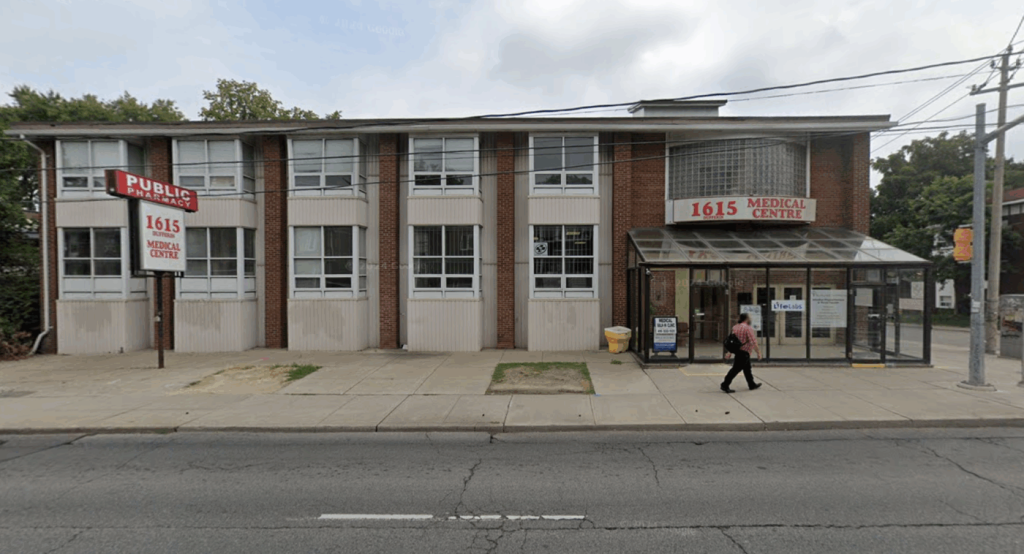



📸: Google Street View.
These meeting notes are part of Documenters Canada, which is partly funded by the Social Sciences and Humanities Research Council of Canada (SSHRC). Learn more about our program here. The Green Line maintains full editorial independence to ensure journalistic integrity.
Toronto wants to build new shelters — not everyone’s on board.
Homelessness is a growing crisis in Toronto. Close to 10,000 Torontonians accessed a city shelter in the three months prior to January 2025 — that’s up by over 2,000 individuals from 2021. However, the shelter system can’t keep up with demand, meaning those experiencing homelessness are often turned away.
BECOME A GREEN LINE MEMBER TODAY

In response, back in November 2023, City Council approved The Homelessness Services Capital Infrastructure Strategy, which recommended a long-term, proactive approach to improve the shelter system and address the high demand for shelter beds.
On July 15, the Planning and Housing Committee met to vote on advancing six sites for the strategy. That means approximately 420 new shelter beds across the city.
The six shelters have been approved for the following locations:
- 1615 Dufferin St.
- 2204-2212 Eglinton Ave. W and 601 Caledonia Rd.
- 2535 Gerrard St. E.
- 68 Sheppard Ave. W.
- 66 Third St.
- 1220-1222 Wilson Ave.
- 1615 Dufferin St.
- 2204–2212 Eglinton Ave. W and 601 Caledonia Rd.
- 2535 Gerrard St. E.
- 68 Sheppard Ave. W.
- 66 Third St.
- 1220–1222 Wilson Ave.
Committee Chair Councillor Perks opened by reminding deputants that they could only speak on what the committee was actually voting on: zoning, not the residents of the shelters.
- Roman Baber, Member of Parliament for York Centre — where one of the proposed shelters would go — raised concerns for the safety of surrounding residents. But Perks cut in reiterating the meeting’s purpose was only focused on zoning.
- Several attendees spoke both for and against the shelters in their neighbourhoods. Those in support pointed out the unmet needs of homeless people in their communities. Those against spoke about the apparent threat homeless people would pose to local residents.
Ultimately the six sites were approved to move forward to a vote by the City Council. The following week, on July 24, the vote passed with some amendments.
Fact-Check Yourself
Sources and
further reading
Don’t take our word for it — check our sources for yourself.


Join the conversation