
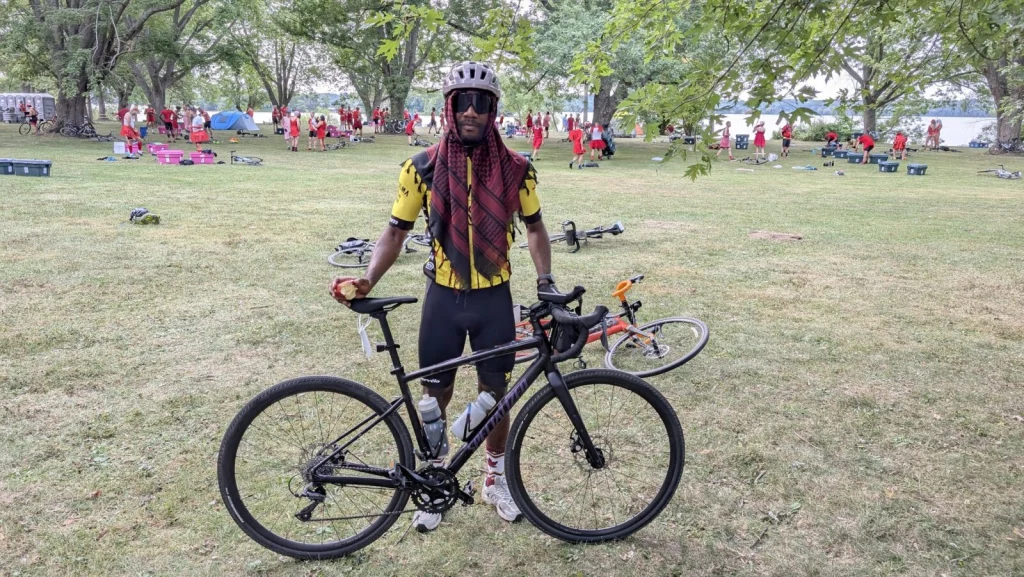

Did you know that there are more than 3,000 bikes stolen in Toronto annually?
This number includes the registered cases of bike theft in the city — not the thousands more that are undocumented.
It also doesn’t include cases where someone’s wheels are stolen, but the frame survives — and the owner is left to remake their bike with new wheels.
BECOME A GREEN LINE MEMBER TODAY

At least, that’s what happened to me, so I didn’t bother reporting my bike as stolen.
Walk past any major intersection — especially on the Yonge-Bay corridor — and you’ll see the grim evidence: bikes completely stripped down to the metal frame with wheels stolen, sometimes referred to as skeleton bikes. If you live in Toronto and you are wondering how to protect your bike from opportunistic thieves, here are a few tips.
how to protect your bike in the city
To avoid bike theft in Toronto, you have to think like a thief. Before you walk away from a standard city bike lock post, ask yourself these questions:
- Is the spot isolated? If you leave your bike by itself in an unwatched and isolated place, it gives thieves the privacy and time to work, sometimes allowing them to use angle grinders to cut your locks.
- Can the theft be done quietly? Your goal is to make a theft attempt look loud, awkward and highly suspicious. This means locking your wheels and frame tightly using extra locks and cables so that if someone tried to steal your bike, it would draw too much attention for the thief to successfully do it.
- Are your parts easy to detach? If you are relying on standard factory quick-release levers on your wheels and seatpost, you are essentially handing your components away.
Protecting your favourite bicycle in Toronto requires moving past basic cables and upgrading your hardware.
That means swapping out quick-releases for dedicated security bolts and layering a heavy-duty hardened steel U-lock with a secondary chain lock.
Some products to consider for bike safety:
- Affordable, strong bike locks
- Pinhead locks for your wheels, frames, and seatposts
- Bike tracking devices
- Affordable, strong bike locks
- Pinhead locks for your wheels, frames, and seatposts
- Bike tracking devices
Finally, and perhaps the most important tip, is to always shake the bike rack first. The most persistent thieves frequently target and fidget with loose municipal infrastructure — think bike loops, racks and other bike parking stations — so they can slide a locked bike right off the top.
What other ways are you protecting your bike in Toronto?
Fact-Check Yourself
Sources and
further reading
Don’t take our word for it — check our sources for yourself.


Join the conversation