Do you live in a food desert or food mirage in Toronto?
That’s an area, usually in low-income neighbourhoods, where nutritious food sources are hard to find or where healthy food options are really expensive.
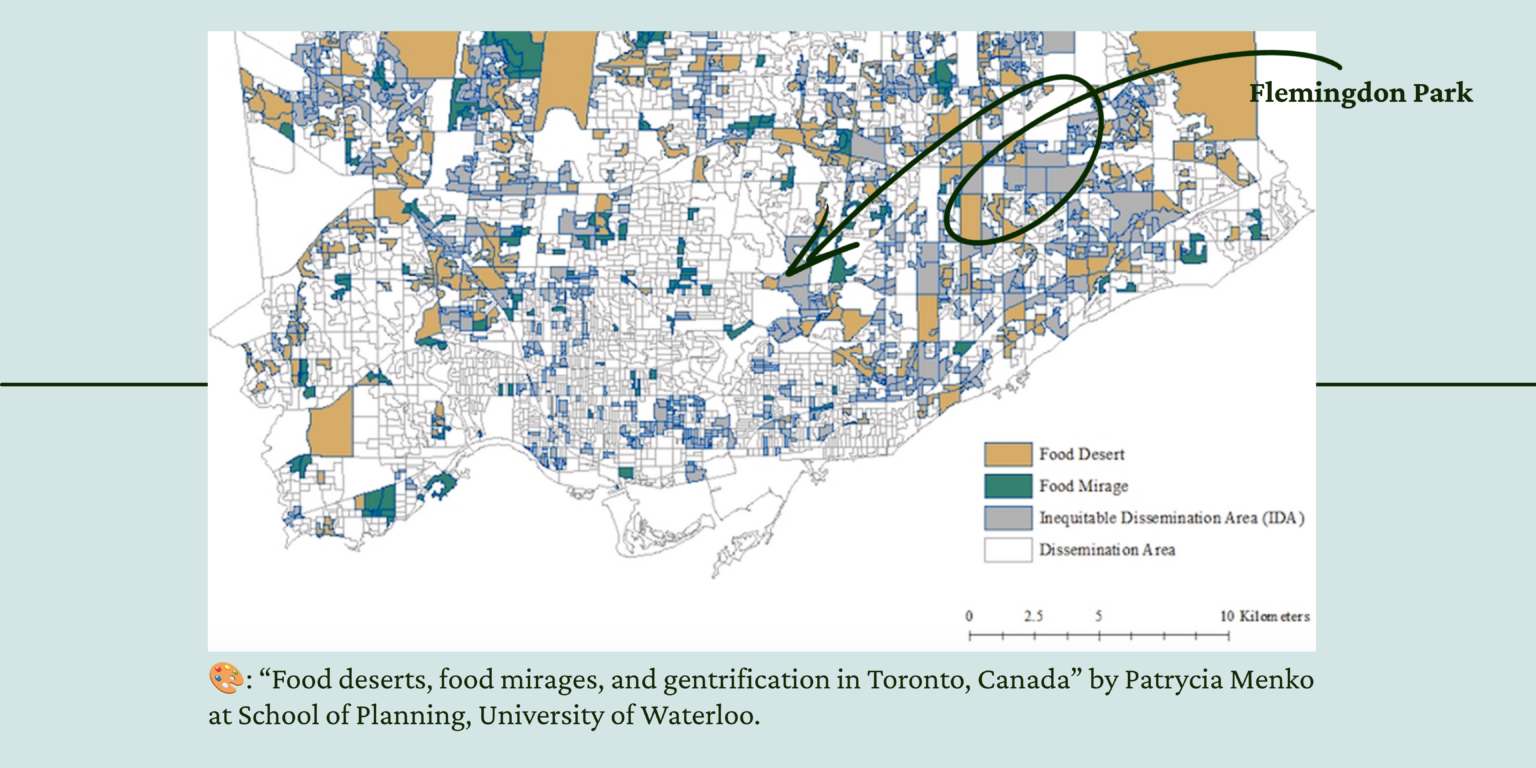
Researchers from the University of Waterloo recently identified 346 food deserts and 155 food mirages in Toronto. That means 19% of all Torontonians live in a food desert or mirage. Most of them are around Scarborough, Etobicoke and North York, and encompass Neighbourhood Improvement Areas (NIA).
Flemingdon Park, a North York neighbourhood of around 22,000 people, is one of them — and that’s no surprise.
It has just one supermarket, Sunny Foodmart, in addition to a Shoppers Drug Mart and a convenience store. Residents also have the option of shopping in neighbouring Thorncliffe Park and Don Mills, which have Costco, FoodBasics and C&C Supermarket.
Locals in Flemingdon Park and Thorncliffe Park have been struggling with food insecurity for a long time. Along with housing, it’s one of the top two concerns that staff at The Neighbourhood Organization (TNO) in Thorncliffe Park hear from residents seeking services.
Last year, the TNO Food Collaborative served 3,033 local households — nearly three times the number of households served in 2021. In 2024, a research group called Flemingdon and Thorncliffe Food Justice published a study on food access in the neighbourhood that said, “Food insecurity is increasing in prevalence and deepening in severity.”
Even 10 years ago, a study conducted by Flemingdon Health Centre found that 76% of the Flemingdon Park residents interviewed felt they couldn’t find the food items they needed to stay healthy. In both Flemingdon and Thorncliffe, half of the participants shared that even if the food they needed was available, they couldn’t afford it after all of their regular monthly expenses had been paid.
But it’s not just the price tag. Multiple residents told The Green Line that the produce they find at grocery stores are of poor quality.
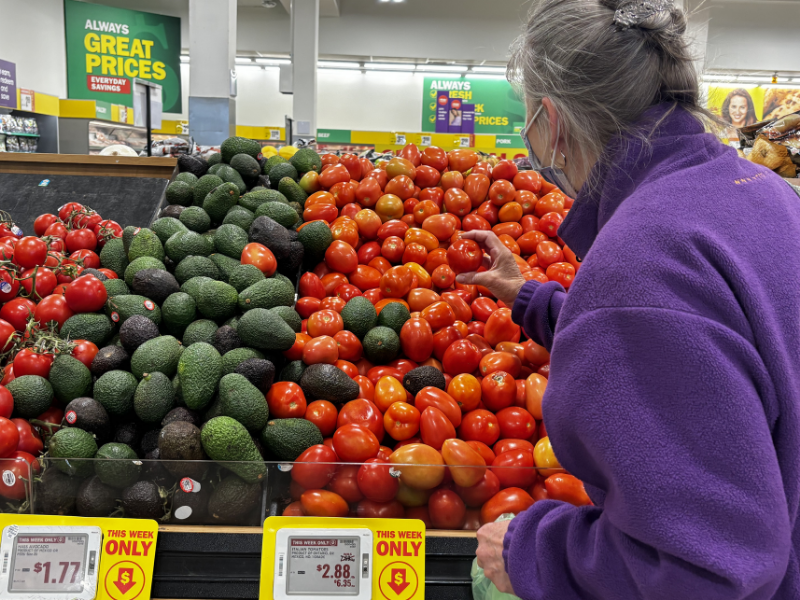
A shopper picks a tomato at Food Basics in Thorncliffe Park. 📸: Yara El Murr/The Green Line.
“I realized when I was shopping in Thorncliffe — this is like a really long time ago, like 12, 13, 14 years ago — there was no access to locally grown food, and there definitely was no access to organic food. So, I thought that was a little bit of an injustice,” says resident Michelle Delaney, who also founded Thorncliffe Park Urban Farmers, a grassroots group that grows its own produce.
Today, there are more options in Thorncliffe; residents can shop at Longo’s, Costco, Food Basics, Farm Boy or Iqbal Halal Foods, for example. But Delaney, as well as other locals and shoppers interviewed by The Green Line, say it’s still hard to balance affordability and quality. They often have to sacrifice one for the other.
So, where does our produce come from?
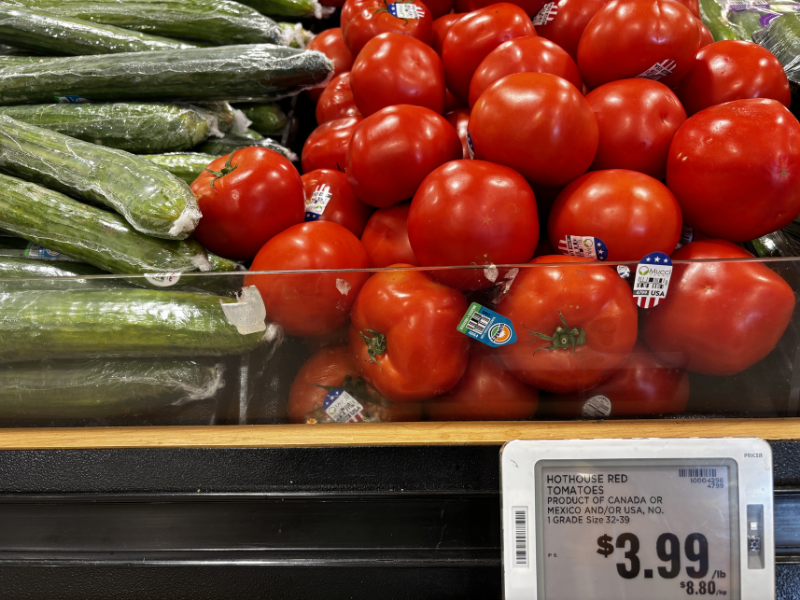
If you rely on big supermarket chains to tell you…you might not always get a straight answer. In the Food Basics in Thorncliffe Park, a stack of hothouse red tomatoes was marked as from “Canada or Mexico and/or USA.”
Even food and agriculture experts say it’s hard to tell exactly how much of the produce we eat comes from our immediate surroundings.
Overall, about half of all Canada’s fruits and veggies are imported from the U.S. In 2024, in Ontario, we imported $41.1 million worth of agricultural food products — an amount that’s been steadily increasing since the 1990s.
Locally in our province, there are over 3,500 fruit and vegetable growers. According to the Ontario Fruit and Vegetable Growers Association (OFVGA), these growers produce over 125 different fruit and vegetable crops, with an estimated annual value of more than $3.63 billion.
Why does it matter where our food comes from and where we buy it?
When food is imported, what’s on your supermarket shelf and how much it costs is closely tied to global events.
According to the 2026Canada’s Food Price Report, Canada’s “trade war” with the U.S., tariffs and counter-tariffs increased grocery costs. In 2023, Russia’s invasion of Ukraine and supply chain disruptions contributed to hikes in food prices, according to Canada’s Competition Bureau. Beyond these conflicts, climate change’s impact on agriculture in Canada and in countries where we import food also affect the price of our groceries.
A stack of hothouse tomatoes as “product of Canada or Mexico and/or USA” in Thorncliffe Park’s Food Basics. 📸: Yara El Murr/The Green Line.
Other factors include big supermarket chains, which have been accused of “greedflation” or increasing prices to max out profits while shoppers struggle to afford groceries. That’s hard to prove or disprove, but you may have heard of well-documented cases of shrinkflation and skimpflation (i.e. keeping the same price tag for a slightly smaller quantity of food), as well as price gouging (i.e. increasing prices to unreasonable amounts during real or exaggerated emergencies and periods of shortage).
In Toronto, and across Canada, most grocery prices are dictated by three conglomerates that control roughly 75% of all food retail. Canadian parent companies own both premium supermarkets and their discount rivals; for instance, Loblaws owns No Frills, Sobeys owns FreshCo and Metro owns Food Basics). This “captive market” reduces the incentive to offer the lowest possible prices because there is less independent competition. Canada’s Competition Bureau published an extensive report on this topic in 2023.
In food deserts, the problem can be worse. “The fewer stores you have, the more likely you’ll see prices go up,” says Sylvain Charlebois, a researcher of food distribution and policy at Dalhousie University and co-author of Canada’s Food Price Report.
In this report, Charlebois and his colleagues found that the average family of four is expected to spend $17,571.79 (or half a full-time minimum wage income) on food in 2026 — an increase of almost $1,000 from last year. Food prices are 27% higher than they were five years ago, the researchers say.
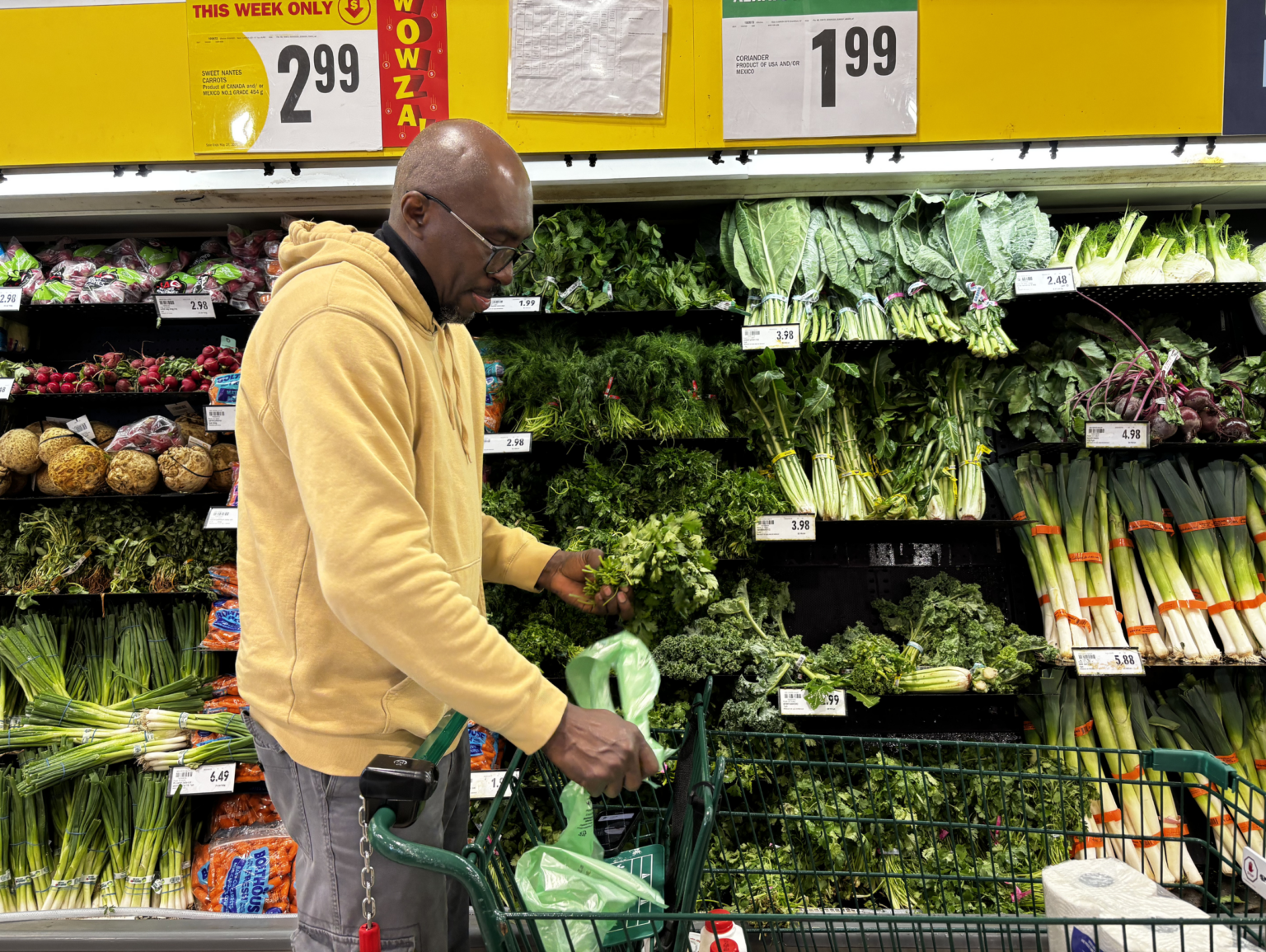
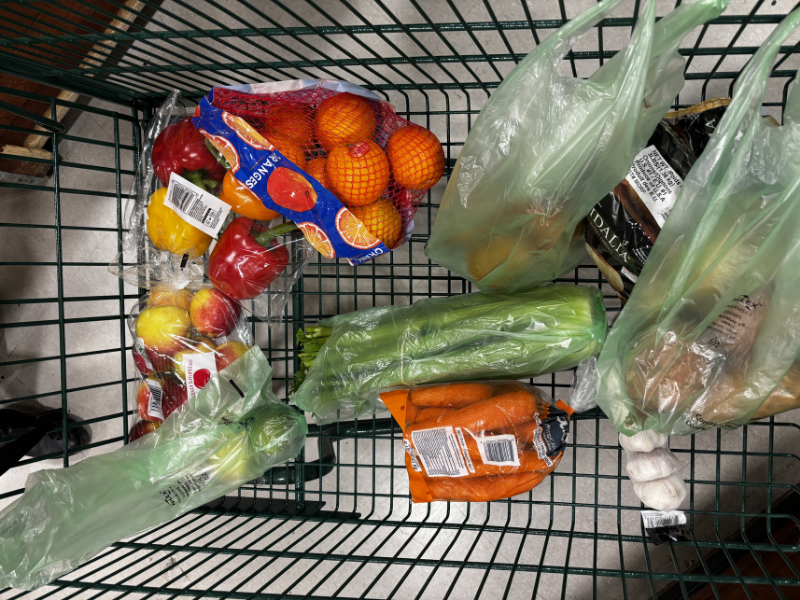
A shopper’s grocery cart. 📸: Yara El Murr/The Green Line.
According to the StatCan Consumer Price Index (CPI), which is Canada’s primary measure of inflation, as of March 2026, the 12-month grocery inflation rate is tracking at 4.4%. That’s significantly higher than the rate seen two years prior when it was only 1.4% in March 2024. This means that while prices were rising slowly in early 2024, the pace of price increases accelerated sharply over this past year.
Torontonians are feeling the impact. According to Daily Bread Food Bank’s Who’s Hungry Report 2025, food bank visits in Toronto reached 4.1 million last year — a 340% increase since before the pandemic and the highest ever recorded. More than one in 10 Torontonians now rely on food banks, compared to one in 20 just three years ago. What’s more, 71% of them are 44 and younger.
With this stark reality in mind, many grassroot groups and farmers across Toronto are growing their own food to share with friends, family and neighbourhood food banks, as well as to sell locally.
“We’re seeing so much instability in global trade. Just think about how disrupted people were when they couldn’t get toilet paper,” says Tara Ramkhelawan, a farm program coordinator with FoodShare. (If you need a refresher, read this Statistics Canada article about the great toilet paper scare of 2020.)
“What about when we can’t get the food that we need?” she says. “So, it’s important that people have access to local ways to produce their own food.”
Dive into Part 2 of our Action Journey to learn how farmers in Flemingdon Park and beyond are growing their own food.
With files from Anthony Lippa-Hardy, and fact-checking by Nathan Abraha.
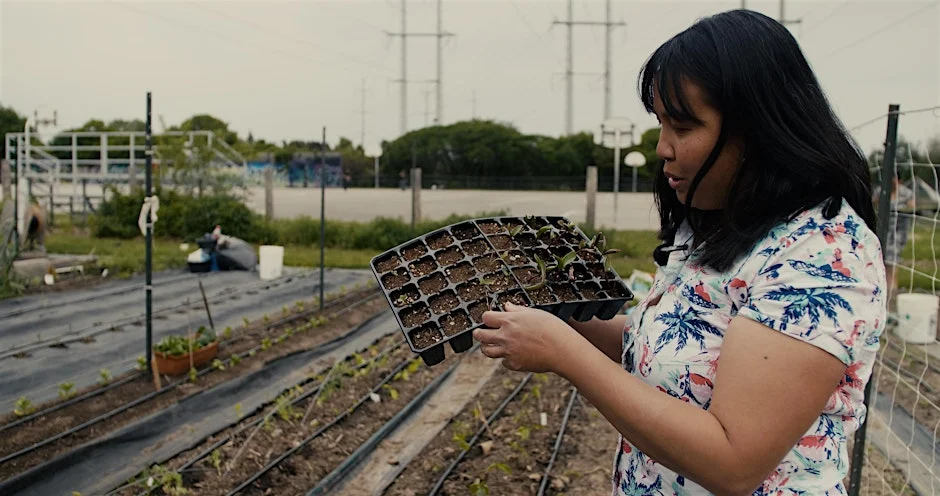
On a chilly May morning, Ayn Regalado weeds three plant beds under the high-voltage towers of Toronto’s hydro corridor in Flemingdon Park.
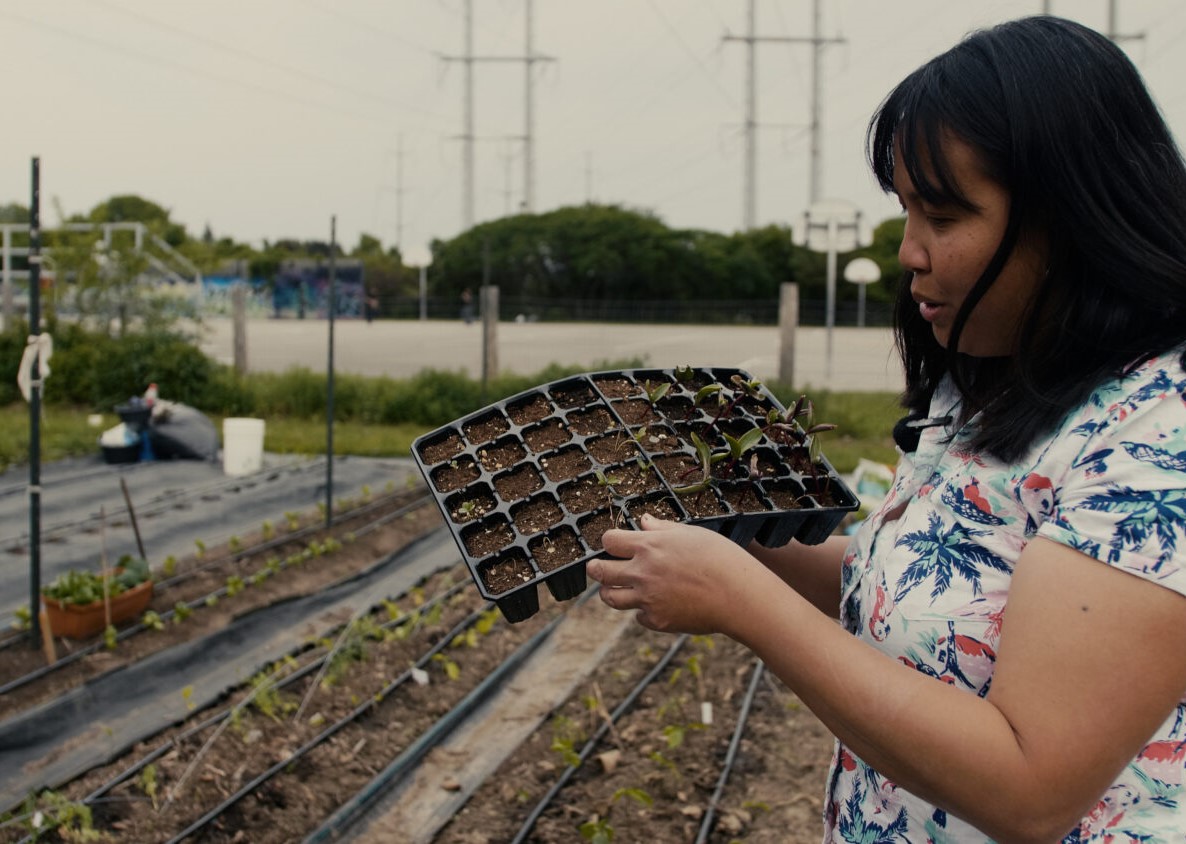
Regalado is preparing the soil to be planted with seedlings she’d been nurturing in her apartment. She’s particularly excited about saluyot, a leafy plant popular for stews in the Philippines (also called mulukhiyah in the Arab world). It’s one of those comforting dishes Regalado remembers her mother making her back home. In Toronto, she never finds saluyot in grocery aisles; it’s only ever in the frozen veggie section, and doesn’t taste as good.
“When I learned that there’s a farm here, I was like: Why don’t I grow things that I remember from home?” Regalado wondered.
“Food is so important to culture and identity and also just a necessity of life, and urban agriculture gives people the opportunity to meet all of those needs and to build connections with each other.”
Claire Perttula, Urban agriculture and food programs manager · Malvern Family Resource Centre
Regalado and 10 other community members grow and sell produce out of a half-acre plot by 150 Grenoble Dr. in Flemingdon Park. One of their goals is supporting food security in the neighbourhood — and they’re not the only ones.
In Flemingdon Park and the adjacent Thorncliffe Park, areas with high density and poor food access, residents grow their own fruits and vegetables in four types of community farms and gardens. Watch our short doc to learn how and why they do it, then keep reading for a breakdown of how all of Toronto can benefit from similar models.
How to create an urban farm in your Toronto neighbourhood
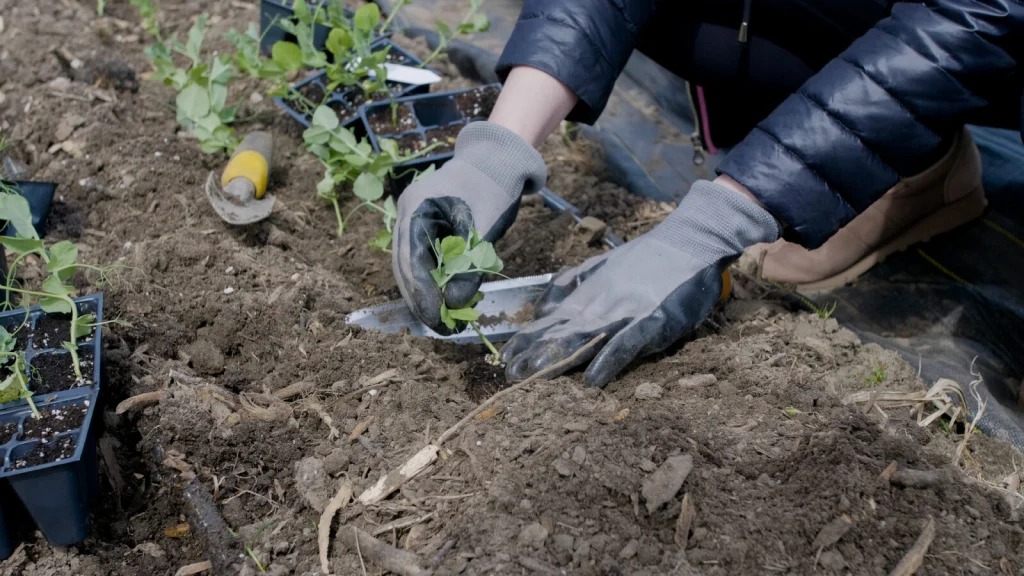
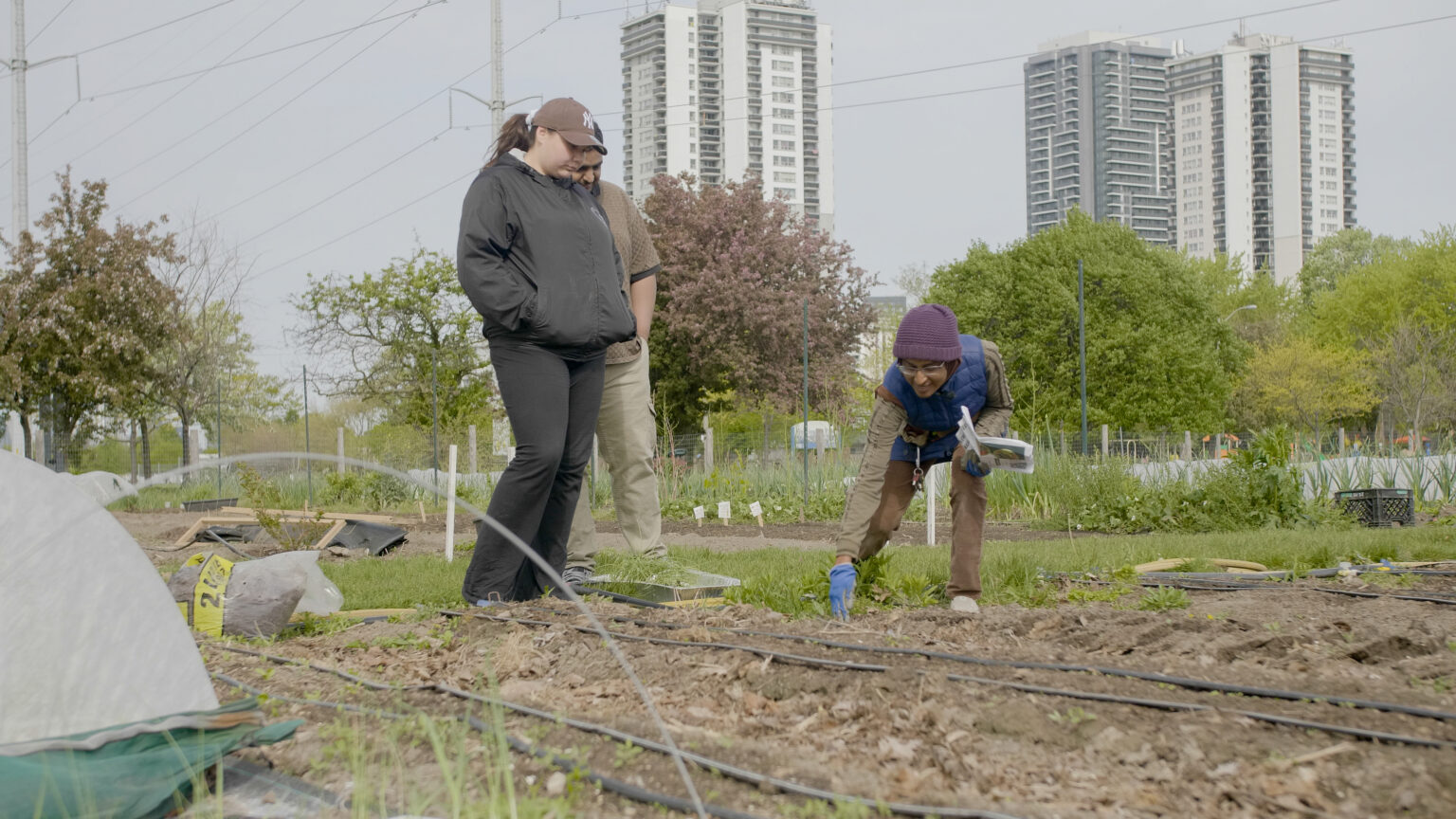
Tara Ramkhelawan shows volunteers how to seed a plant bed. 📸: Anthony Lippa-Hardy/The Green Line.
What if you could pick out a few radishes for your next salad right out of the soil instead of a supermarket fridge?
Here’s your guide to making it happen.
Growing produce in cities isn’t just a hobby for outdoorsy urbanites, it can be a great way to make sure you and your neighbours have access to fresh, healthy, affordable and sustainable fruits and veggies — a pretty big deal in the middle of a food insecurity crisis.
Join us as we explore urban agriculture in Toronto with a doc screening, followed by a hands-on vermicomposting demonstration.
Read more about this event
What does it actually take to farm food in a dense city? And how can Torontonians participate — even if they don’t have much space or gardening experience? 🌱🥕
The Green Line is hosting Farming Food in Toronto: Documentary Screening and Vermicomposting Demonstration on Tuesday, Aug. 18 from 6 to 9 p.m. at Carrot Green Roof (348 Danforth Ave.).
We’ll begin the evening with a screening of The Green Line’s new documentary about the residents, farmers and community organizations growing food across Toronto. The film visits urban farms and community gardens in Flemingdon Park and Thorncliffe Park, where residents are transforming hydro corridors, apartment grounds and other underused spaces into places to grow, harvest and share fresh, culturally relevant food.
Through the experiences of local growers, the documentary explores whether Toronto could produce more of its own food and how urban agriculture can address food insecurity, supplement household grocery budgets and create opportunities for employment and community connection. It also looks at the environmental and health benefits of growing food closer to home — from shortening supply chains and reducing emissions to improving biodiversity, mental health and access to fresh produce.
Afterward, the lovely staff at Carrot Green Roof will give a vermicomposting demonstration, and we’ll learn how worms can transform everyday food scraps into nutrient-rich compost.
Whether you’re an experienced gardener, curious about sustainable living or just looking to connect with your community, you’ll leave with insights about how Toronto’s local food system works, the role urban farming can play in creating a more sustainable city, and practical ways to reduce food waste and start composting at home.
Our event is Pay What You Can, as we want to include as many Torontonians as possible in this conversation.
If you’d like to support our team in continuing to host community-focused events like this, we’d appreciate a contribution of $30 to help us fully cover labour costs, as well as refreshments and snacks. If this is above your budget, we’d appreciate a payment of $15. If that’s still a barrier to you joining us, you can contribute as much as you’re able.
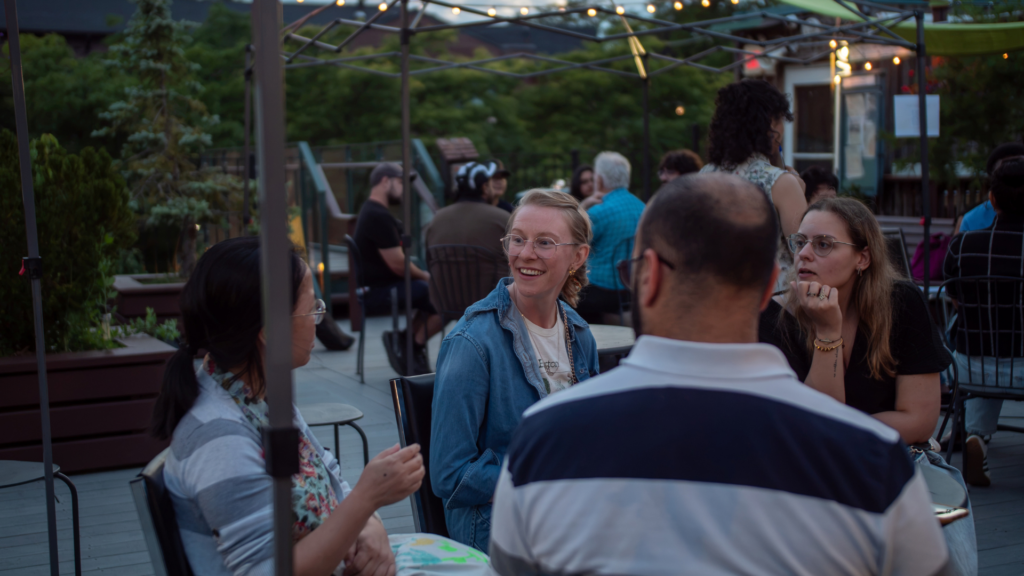
Finally, here’s a sense of the vibe at our events:
Pick a billing period. After payment, you'll be brought back here to RSVP at your new tier's price.
Confirm your RSVP
Ticket—
Price—
Step 4
How to start your food-growing journey in Toronto
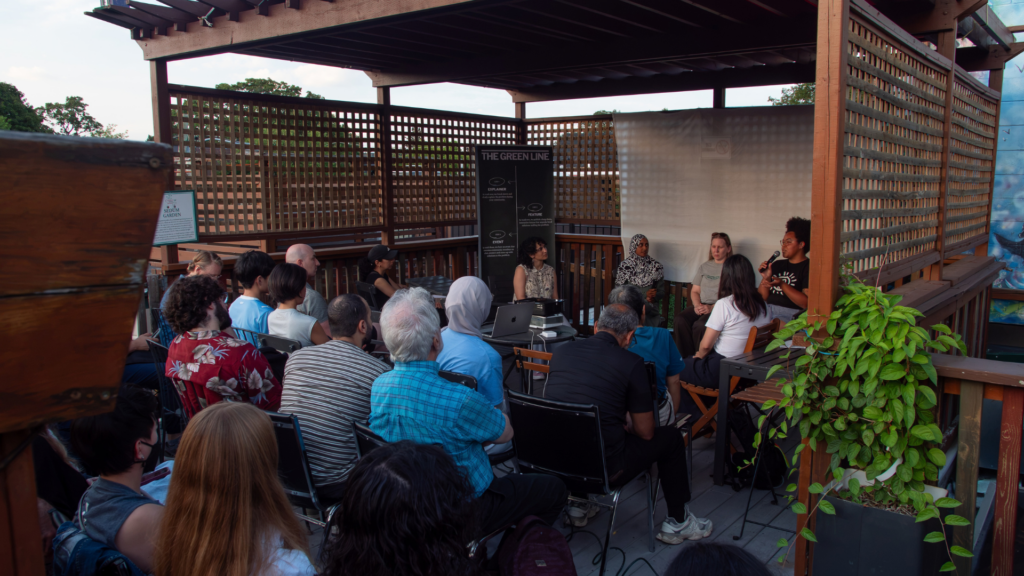
Event attendees at our August Action Journey Event watch The Green Line’s documentary about growing produce in Toronto. 📸 Anthony Lippa-Hardy/The Green Line.
Our community members brainstormed solutions for growing food in Toronto.
On Aug. 18, 2026, The Green Line hosted “Farming food in Toronto,” where we showed our Action Journey documentary and watched in a vermicomposting demonstration by Carrot Green Roof and Garden.
During Story Circles, we asked event attendees about the challenges they face in accessing good produce in the city, their go-to food spots and their tried-and-true solutions that helped them either shop affordably or grow their own food in and around their homes. Then, we compiled the best and most common answers.
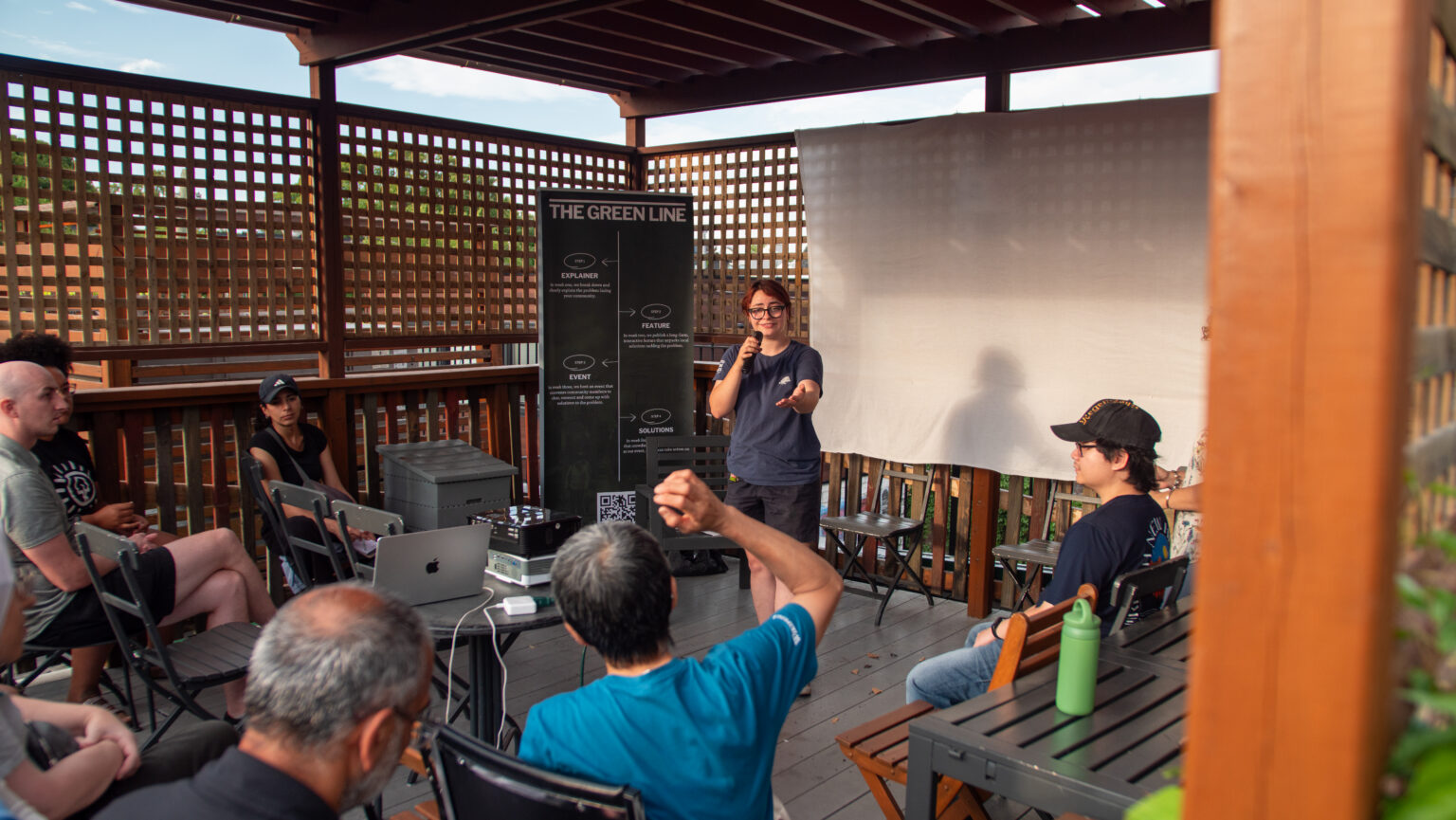
Adelaide Humphreys from the Carrot Green Roof and Garden shows attendees how vermicomposting works and answers questions. 📸: Anthony Lippa-Hardy/The Green Line.
SOLUTIONS
Learn about the strategies that worked for other community members facing similar issues.
Community knowledge
Many gardeners and farmers attending the event echoed the same sentiment: it’s easier to learn together.
“Learning from other people can really be helpful, because they can tell you the easiest way to get started, because online there’s a lot of information and it can be hard to sift through it,” says Adelaide Humphreys, who helps run the Carrot Green Roof and Garden.
If you’d like to try your hand at gardening, you can explore different set-ups suitable for apartment buildings and condos.
Identify your space and how much sun you get; start with beginner crops that are easy to grow and suitable for the conditions you’re working with.
Trevor James Curran started his journey with 20 buckets on his balcony in St. Jamestown. He managed to get 20 lbs of produce, mainly cucumbers, pumpkins, sweet potatoes and potatoes. His cheap DIY strategies: drilling holes in the bottom of Mastercraft buckets for drainage, and a big compressed bag of Promix from Canadian Tire. (Curran now rents land in Downsview Park to grow and sell veggies at Allan Gardens.)
Ana Brito, his partner, suggests starting with basics like lettuce or other leafy greens, as well as beans. “They don’t need much sunlight. So, they would do well in East-facing or North-facing [spaces].”
If you have limited space, look into bushy versions of plants (such as golden tomatoes), container-friendly herbs (basil, rosemary, thyme and mint) or climbing crops (peas, pole beans, cucumbers) that can grow vertically on trellises or stakes. Attendees also mentioned hydroponics and aquaponics as space-efficient methods to explore.
University gardens
Attendees recommended checking out vegetable gardens run out of local universities.
For example, the University of Toronto (UofT) St. George campus has a community garden, Dig In, located behind 80 St. George St. and also accessible through Huron Street. “It’s free to access the gardens and, frankly, you can go in there and you can pick little tomatoes; I think sometimes, we even have peppers as well,” one attendee shared. On Mondays, Thursdays and Saturdays, the Dig In team invites people to help water, prune and care for the plants. Anyone is welcome, regardless of experience. It’s open to all community members and not just students.
Toronto Metropolitan University (TMU) also has two rooftop farms. The Urban Farm is home to The Indigenous Foodways program, which celebrates Indigenous crops and agricultural ways, as well as The Harvest Collective and Learning Circle, which works with the Black Food Sovereignty movement. You can book a tour, or check out scheduled events here.
Event attendees discuss the challenges of accessing good produce in Toronto and their strategies to deal with it. 📸: Anthony Lippa-Hardy/The Green Line.
ACTIONS
Do something about the problems that impact you and your communities.
Learn with Homestead T.O.
Homestead T.O. offers a 30-week hands-on training program to help you grow veggies out of Downsview Park. Two event attendees who’ve done the program spoke highly of it and shared they grew both their skills and their food-growing community. The program costs $480, but if it’s out of your budget, Homestead T.O. has a library of gardening guides and a free monthly newsletter with tips, gardening reminders and updates.
Vermicomposting, or using worms to create compost, can be an accessible DIY tool for home gardeners. It doesn’t stink like other composting methods and can be done in something as small as a yogurt container. Carrot Green Roof and Garden’s Humphreys recommends this guide. P.S.: You can get worms from the Carrot Green Roof and Garden or online.
Want to start your own community garden or urban farm, but don’t have the money? Michelle Delaney, executive director of Thorncliffe Park Urban Farmers, recommends using the Toronto Public Library’s Grant Connect tool. It’ll help you find your match from a database of thousands of foundations, corporations and government funding programs.
The Green Line uses cookies so the site works, to remember your reading progress, and (with your consent) to understand which stories resonate. You can accept all, reject everything non-essential, or pick what you’re comfortable with. Privacy policy
Welcome back👋
New here or returning? Same flow. Drop your email — we'll handle the rest.


Join the conversation