
This article was produced as part of the Local Journalism Initiative.
For over six months, we’ve been asking Flemingdon Park residents about their top issues and concerns.
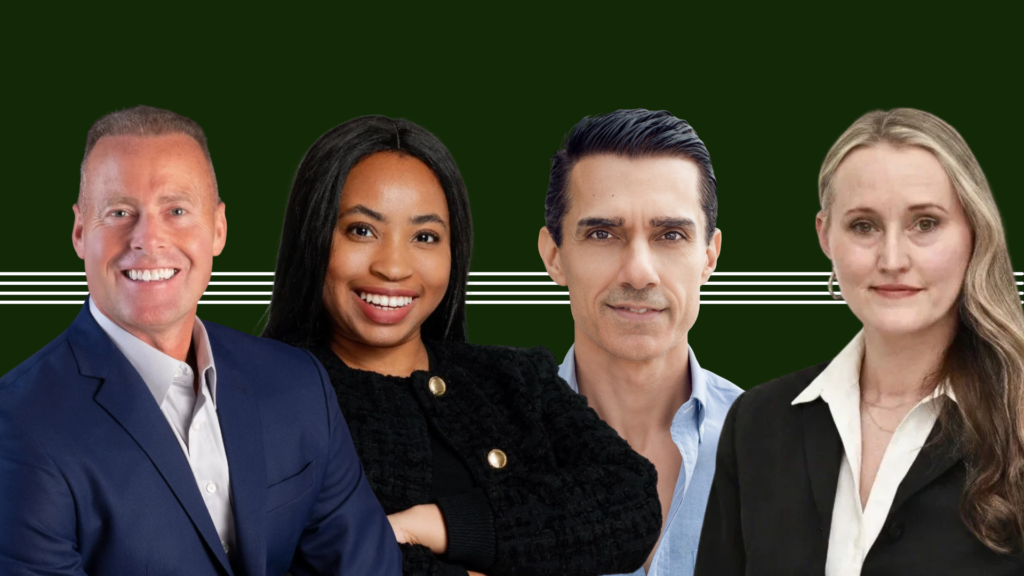
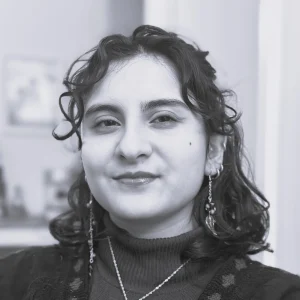
In the lead-up to the 2026 Toronto municipal election, The Green Line set out to use this crowdsourced knowledge to interview every councillor candidate running in Ward 16 Don Valley East.
BECOME A GREEN LINE MEMBER TODAY
Our questions focus on issues residents have identified as important to their lives, including food insecurity, housing affordability, health care and essential services, public consultation, newcomers, recreational programming and employment.
We conducted the interviews over Zoom, transcribed the answers and edited for length and clarity. You can watch a video sneak peek and then dive into the full responses by clicking on the questions you’re interested in under each candidate’s section.
Jon Burnside
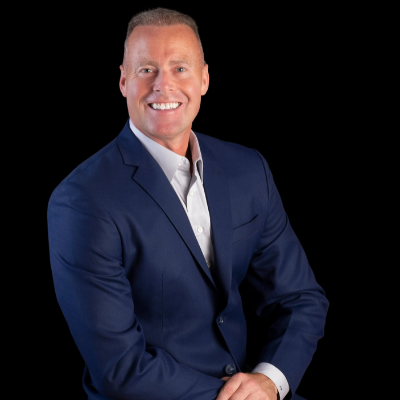
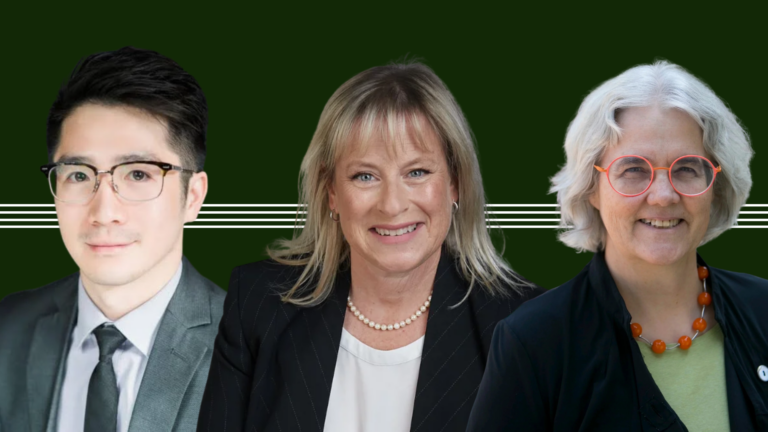
Jon Burnside is Ward 16’s current councillor. He was elected in 2022 and previously served as councillor for the former Ward 26 Don Valley West between 2014 and 2018 before the ward amalgamation. He’s a former police officer and business owner.
Burnside didn’t respond to our request for comment. We’ll update this page as we receive his responses.
Sinan Erdemir
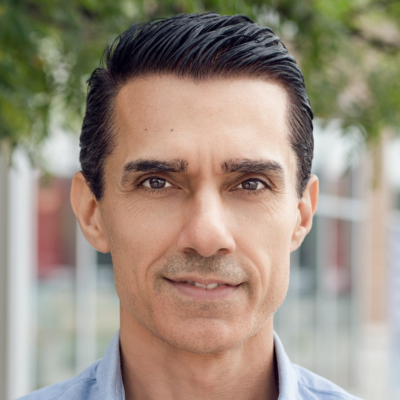
Sinan Erdemir is the co-founder and co-owner of a consulting firm that helps students, newcomers, refugees and visitors build their lives in Canada. He’s also been involved with Turkish-Canadian cultural organizations and community policing initiatives with Toronto Police 32 Division.
His top priorities are cleanliness, equitable management of the ward, traffic management and commuting, as well as general safety.
Read his full answers to all your questions below.
What would your top priorities be if you are elected?
I’m planning to take care of the ward first: cleanliness and getting around in a better way — these are my priorities. But when I spoke with community members, their priorities were different, so I changed my priorities because their priorities are the real ones.
With Flemingdon Park, I’ve heard from many residents that they feel like their voices are not heard, not valued and decisions are being made without even having consulted with them.
So my priorities, after speaking with many residents, are maintenance and management, which means managing the whole ward better, not just the nicest areas. I feel at home, even in Flemingdon Park, even in Post Road, in Don Mills, in Lawrence. I see the whole ward as one community. So if we do something for one community, one area, one part of our ward, we should be able to take care of the other as well.
Another top priority is how we get around in our ward. So people talk about a lot of traffic. I do understand why. If we keep getting more people into the ward and we don’t make the roads wider, or infrastructure ready for the new members of the community, we’ll keep getting traffic issues.
We should build bike lanes properly, like they do in Sweden, for example, where they have elevated sidewalk-style bike lanes, which will definitely take care of this issue.
Safety is also another thing.
What concrete actions will you take to tackle the housing affordability crisis from a policy perspective? And how will you help people now?
For housing affordability, I think we need to go deep down into the bottom of the issue and see why it’s not affordable to live in our city.
If we keep bringing more people and we don’t have enough supply for all these new community members, we’re going to be talking about the same thing.
My solution is to communicate with the City to find out why it takes this long to be able to sign a few papers. I do know, of course, that we need to think very carefully before making any decision, but it shouldn’t be taking two years to sign a piece of paper and talk about what colour this water fountain is going to be. We could bring in digital tools to ease communication between departments and solve the bureaucracy issue.
Coming back to affordable housing, I think we do have more demand than supply. I believe about 3000 people are waiting for a place in affordable housing that’s popping up here and there. I don’t know if that’s going to be the solution.
I believe we should be looking into the core issue, and we should help people be able to afford housing.
I’ve also noticed that we have many houses [with] an empty basement, an empty room or some space in that house that they may be able to rent out. We could give them a tax break or some incentive to be able to make it more attractive for them to help people who in need of a space. That way, I believe we may be able to ease this demand, along with not allowing new developments to take forever to be built.
Flemingdon Park has a lot of renters, and many have expressed concerns about tenant-landlord relationships. What concrete actions can you take to help?
It’s an area in which I love advocating for people. We understand that this is an area where one person is saying, “This is my right,” and the other person is also saying, “That this is my right.” So we do have the Landlord and Tenant Board or a reason.
In my work, I always help newcomers understand they have rights, but they have responsibilities. The same goes for the landlords. So, when it comes to these issues, sometimes it’s very easy to see if a landlord isn’t complying with whatever they’re supposed to be doing. In certain cases, the tenant is not doing what they’re supposed to be doing, like taking care of the home, paying the bills, paying the rent.
I know the Landlord and Tenant Board is working well so far, but as a city councillor, I would be looking at what the issue is and going deep down to find out what happened. Then, we can defend the tenant if they’re not receiving what they’re owed, or help the landlord if it’s the other way. I’m not there only for the landlords or tenants.
If we all understand what the rights are, then we will be able to respect each other and take care of these types of issues in a civilized manner.
What concrete actions will you take to tackle the food insecurity crisis?
I’ve been delivering food to many people, but I don’t want to go into these meetings and talk about that.
I don’t think we should have anyone, any child or any family member, be hungry while the rest of the country is just having a normal meal. Food accessibility is something that we definitely have to ensure.
One issue is food banks. When I look at the hours of operation of these food banks, some places are only open two days a week, or one day a week for just a few hours. I don’t understand how it can be a very effective solution. Even myself, when I wanted to get some food from these food banks for people who I knew needed it, I was told to wait until Wednesday next week even though it was Thursday. What do you think that this person is going to eat until next Wednesday? I had to buy some food from a grocery store.
It’s a temporary solution, but this shouldn’t be happening. I’m definitely going to look into operating hours with these food banks and see if we can get more community volunteers, more city workers or even more donations to expand them.
It’s also about relationships. It’s about networks. I’ll definitely build more relations with potential donors to make sure we are definitely going to have something for the people who are in our ward that are in need of food.
How will you ensure residents have equitable access to health care, especially those who face barriers navigating these systems?
The barriers sometimes come with the language or not knowing the customs and understanding the system, especially for newcomers.
We do have 311 and 211 that people can reach out to for help. But how will these people know how to call these places and find out these solutions for their needs?
In some countries, when a newcomer arrives, we don’t just assume they will find their way to be able to support themselves and find out about our customs and understand everything we do here. I think that creates problems. We should be talking to them about health care, which should be very available for everybody.
We have to make sure we have enough walk-in clinics or hospitals, where we have enough doctors and nurses, so we don’t just wait hours in the emergency.
If we’re talking about Ward 16, I do support the new developments, but they have to come with more hospitals, more clinics. I always say that growth must pay for growth.
How will you ensure residents get more access to local recreational facilities and programming in an equitable way?
It’s a concern that many residents have raised.
Before the new developers were okayed for the high-rise buildings right within the shops in the Don Mills area, we were told that within ten years, we will be receiving a community centre where that hockey rink is. The high-rises happened, and now we have many more units and many more people living in the Don Mills area. But no community centre. Now, we’re told that the new community centre is going to be built elsewhere.
It looks like we have the space, and we’re told that, “Look, we have a bigger space for a bigger community centre for our community,” but now we are also getting a bigger project, which brings more people into the community in addition to the current ones as well.
These things shouldn’t be happening, and we should be planning according to how fast we are growing as the city, as the province, even as the ward itself. When we make decisions, we have to have the baseline ready for the new community members.
In the Flemingdon Park area, I’ve heard that we had four tennis courts which will be taken away, and there will be a fire station. We are taking away some things that people have been using for years. So, I am definitely against making decisions without listening and understanding what the community needs and just saying, “I know what you need, and you need a fire station here.”
As a city councillor, when I am elected, I have a duty to advocate for the community members in the city. How do I do that without listening and consulting with all these community members?
I heard, during that [all candidates forum] meeting we had in Flemingdon Park, that people lost their trust. They think that nobody’s being heard and their voices are not as valuable as the people in other areas in our ward. It was sad to hear.
We’re going to have to work on building that trust between the city and the community.
What investments will you make in youth programming, mentorship and opportunities for young people in Thorncliffe Park?
I’m telling people that we have no luxury to lose the communication, the connection with the youth, because you close your eyes and then you open them and you’re ten years older, and all of a sudden, you’re the ones who are running the communities; you are supposed to be working and supporting the community. But if you haven’t been able to be there with them, teaching them the correct values, rules, responsibilities and right and wrong, what do you expect from the youth to become after ten years?
I think instead of just having a program, we need proper mentorship and we need role models. We need real hands-on experience for the youth to be able to understand the values of knowing what is right, what is wrong, and doing the right things, even starting with love, respecting the elderly or even the younger ones; it all starts with this type of communication and connection.
Knowing that youths are communicating with people that they look up to and that they understand what the real value of this life is, I am sure that we are going to have fewer things to think about in the future.
With these programs, we need to look at the result as well. We can’t just say I spent half an hour or 12 lessons and then, done, here we go, a piece of paper saying good job. We need to look at the results and actually take it seriously and make sure that it has worked.
Flemingdon Park residents complain about traffic. What concrete action can you take to help?
Traffic, it’s about respect.
Also, with the traffic, we’re seeing that more and more people are coming to the ward, to the city, to our country. More people means more vehicles, and more vehicles means traffic. So we can’t just bring more people into the community, not take care of the roads to make them wider or add in bridges, and wait for a miracle to happen.
So, first of all, how the road is planned and how vehicles are running on the roads with the traffic lights and the sidewalks — this might need to be redesigned.
We could add elevated bike lanes, the same level as the sidewalk. I believe that can also help families. You’ll be able to take your child to the school or school bus area by walking ten minutes instead of taking the car, or maybe by biking there. There you go: you have less vehicles on the road, and it’s definitely going to help with traffic a lot.
We could add a shuttle service — which many countries, including Turkey, have had for decades, where a shuttle takes in more than 20 people working at the same location, whether it’s a big corporation, libraries or hospitals and whatever, you name it. You’re taking 19 vehicles out from the road and having one shuttle bus collect people in the morning and drop them in the evening. I think it’s definitely going to help the traffic as well.
What concrete actions will you take to support newcomers (including undocumented people, PR holders, international students, refugees, migrant workers, etc.) as they navigate health care, employment, education and other settlement needs?
I’ve been working with many people for years; even after five or ten years, I can still see that some don’t feel like they’re home and they still don’t understand the system fully. People keep asking themselves if they should stay here or leave, and they are still struggling with many areas.
We don’t have the luxury of leaving people on their own to learn everything that we just talked about. We need to give at least 100 hours of coaching to each individual to teach our customs, values, roles and responsibilities, rights and wrongs and everything. We can’t just assume that people are going to find this information on their own and then, later on, say we don’t like this or that about newcomers.
We have a big role, and I think these things are supposed to be happening at the municipal level. Let the provincial and federal handle other areas of government. We don’t have the luxury to lose the communication or connection with the newcomers. We have to make sure that we have given them enough time before we expect them to understand and do things the way that we do them.
Residents repeatedly told me that they feel the City’s current consultation process isn’t working. What will you do to make sure their feedback is actually reflected in the process and final outcome of local developments?
It’s very logical: to be able to understand people, you have to be there and see with your own eyes. Then, we’ll make decisions based on this information that we’ve collected.
I don’t see my role as sitting in the office and signing some papers and then, after four years, coming back and asking to be re-elected. I think I need to be out there, show people that I am there for them, listen to them, and see the issues for myself.
After consulting with all the key people in the community, as many residents, as many people as possible, we can come up with a solution with them. We actually have the resolution from the people in the community. Finding out the problem is one step, but the other step is also very important, which is showing the real result that you can see and feel, not just sending some papers every three months saying that these are the numbers that I’ve worked on, and these are the things that I’ve done.
Whenever we do major work in our ward, I will make sure that people are going to see it. That’s how I will be able to build that trust again, and people are actually going to see that this is not a miracle nor magic. Somebody can actually come in, listen to them and take care of the job and show that this is what we’ve done.
Residents told me that they’re not accorded as much importance as richer neighbourhoods in the ward. How do you respond to this statement? And how will you ensure their needs and issues are represented?
I think every day we talk about equality. I see our ward as one community, even though we have people coming from all over the world.
We just need to be able to be democratic.
We have a lot of areas which are still in our ward — rich or not rich, I think we just have to take care of every neighbourhood the same way.
I think people are going to see that we were not born yesterday; we do have eyes. I don’t want to look into people’s eyes and then talk to them about how much we have done, and then they feel like, “Look at how much they received, and then look at how much I received.”
We do have the space. We have the budget for the whole ward.
When it comes to city work, I think the rules are very simple. I’m going to be representing everybody, not just one portion of the ward.
What neighbourhood do you live in? What’s your favourite spot to eat or hang?
I’ve been living here, in the Don Mills area, for almost 20 years.
I’ve been looking around at other areas; my wife was telling me to choose another area to live in because of the schools for the kids. But I want to stay here because I’m in the middle of the city — you want to go downtown, it’s 20 minutes; uptown is 10 minutes. I think this is a very nice area to live in, and we do have many things.
There are certain countries’ foods in every pocket. I think this is another beauty of our ward too, as well as the whole country: the newcomers are bringing their culture and food culture as well into these areas.
I was born in Istanbul, and I also lived in Sweden and Ireland. I’ve seen many different countries, and I’m seeing many different countries’ foods here in our ward. I can’t tell you just one favourite, because I love food, even though I’m kind of skinny.
We have many places within our ward. Just go to Flemingdon Park; we have Middle Eastern food, Balkan food and many cuisines. If you go to the shops at Don Mills, you see American food and others. We have this coffee store near Don Mills in Lawrence, next to a medical lab. You just drink the coffee and just feel like you are in Italy, then you go to some locations in Flemingdon Park, it feels like you’re in Egypt, Saudi Arabia, Turkey, the Philippines.
Didi Moffat
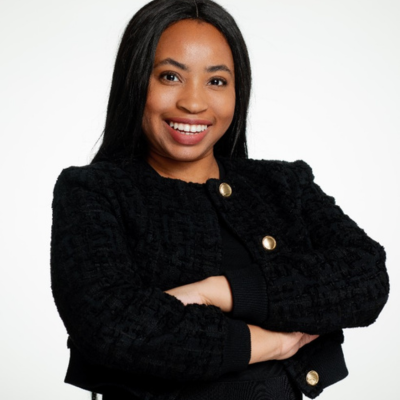
Didi Moffat is a software engineer and entrepreneur. She also studied International Affairs and Economics at the University of Toronto Mississauga, where she served on residence council.
Moffat said her priorities are increasing accountability and transparency, supportive housing to end homelessness, preserving local spaces and increasing police availability by having mental health workers attend to cases where police don’t need to be involved.
Read her full answers to all your questions below.
What would your top priorities be if you are elected?
One of the main things that I’m running on is transparency and accountability.
So one of the main things I want to do in office is to have a platform where I can show people the agenda and different things being discussed, so they can give their ideas, suggestions, questions and comments. I can collate all of those and get a summary of it so I can better represent the voices.
Apart from that, based on talking to residents, I feel like one of the main things I need to address is homelessness. I want to support more supportive housing, and also do other initiatives.
It’s also preserving all of the local spaces. I know that that’s very important to our constituents.
I want to increase the availability of police resources by taking them from things they don’t need to attend to. For example, having dedicated mental health workers to deal with those issues, so the police can deal with more serious crime.
What concrete actions will you take to tackle the housing affordability crisis from a policy perspective? And how will you help people now?
In addition to supportive housing, I want to deal with property taxes, keeping them at a stable level.
In addition, I want to increase the availability of shelters.
I also want to grow municipal legal clinics, so they can support people in landlord tenant disputes.
When redevelopment happens, I want to ensure people have the right to go back. First of all, give them a substitute, an appropriate temporary resolution. But also ensure they have the right to go back at a rent price that is not so high.
Flemingdon Park has a lot of renters, and many have expressed concerns about tenant-landlord relationships. What concrete actions can you take to help?
In addition to the municipal legal clinics, I also want to invest in RentSafeTO to better support people in their different living conditions, keeping landlords accountable and protecting tenants.
What concrete actions will you take to tackle the food insecurity crisis?
I would advocate for an increase in food banks and low-income food provisions.
How will you ensure residents have equitable access to health care, especially those who face barriers navigating these systems?
I would advocate to the provincial government to try as much as possible to decrease the wait times in our hospitals. I also want to increase the availability of family doctors.
With the wait times, for example, I know they’ve built new hospitals like Cortellucci in Vaughan. So maybe, seeing if there are different areas where we can invest to build more hospitals.
And then also, in terms of the family doctors, I know most Toronto residents cannot have family doctors. Most of them are full. But I’ve noticed that there are new doctors coming up, so just working with the provincial government to increase the availability of family doctors, working with them to do measures that would encourage more family doctors to start up and take in more clients.
How will you ensure residents get more access to local recreational facilities and programming in an equitable way?
I would increase program availability.
So I think what would make sense is to increase the availability of staff, and maybe work more with university students who are okay with being paid minimum wage while they attend school. So maybe having more of those people as staff, especially because, you know, a lot of university students are knowledgeable about different things and have different interests that they could share in the community.
What investments will you make in youth programming, mentorship and opportunities for young people in Thorncliffe Park?
For youth, I think what we need to do is programming. But also, I want the programming to equip them with skills that they could use, for example, for side hustles to make income on the side. So I don’t want it to just be a thing where they come on, they hang out and they play.
I want it to be meaningful. So getting the support of maybe volunteers who can teach them skills so they can use it meaningfully in their lives and even to support their families and so on.
Flemingdon Park residents complain about traffic. What concrete action can you take to help?
As it pertains to construction, what I want to do is have them do it in steps to avoid completely blocking off roads. I also want them to do it at less busy times.
What concrete actions will you take to support newcomers (including undocumented people, PR holders, international students, refugees, migrant workers, etc.) as they navigate health care, employment, education and other settlement needs?
I know there are organizations, like Achieve, Access and a few others, that the government has funded. So I would say probably increasing funding for those organizations, but also making people more aware that those organizations exist and can actually help them. I think a lot of people aren’t even aware of how to get support. So maybe, as soon as they land, give them materials that list the different organizations that can help them in becoming integral residents of Ontario.
Residents repeatedly tell us they feel the city’s current consultation process isn’t working. What will you do to make sure their feedback is actually reflected in the process and final outcome of local developments?
So the issue that I wanted to recognize with my residents, they really want to preserve local spaces and also don’t really want as much redevelopment of spaces.
One thing that can make a difference is advocating more where it matters, and that’s why I’m so invested in building that platform.
I spoke about where residents can give advice, give suggestions, give comments, give questions and just everything so that I can know what they’re trying to say and be that voice and represent them where it matters.
I think in the past, we’ve had inadequate representation of the voices of the people, and that’s what I’m trying to solve primarily with my candidacy.
Residents told us that they feel they are not accorded as much importance as richer neighbourhoods in the ward. How do you respond to this statement? And how will you ensure their needs and issues are represented?
It all goes back to being able to get information from people. Most of my campaign is transparency and accountability.
But also I think we need to invest more in Flemingdon Park generally. So looking in our different communities and seeing what’s lacking in that community and pouring some funds into growing the community.
How would you describe the neighbourhood you live in? What’s your favourite spot to eat or hang?
I live on Wynford Drive. It’s a nice community. You have people there who are in retirement, and you have families, and you have different people there. I get to engage with my neighbours, and it’s just a nice atmosphere.
I’m also getting to walk around, and it’s close to the Aga Khan Park and Museum, which is why I know we need to work on having nice things in our community. At Thanksgiving, I took a walk there with my siblings, and just getting to explore it was so nice.
Places I like to eat are at CF Shops at Don Mills, which has different foods and restaurants there. They have, you know, your Chick-fil-A, Chipotle or you can go as far as Scaddabush or something like that.
Stacey Moffatt
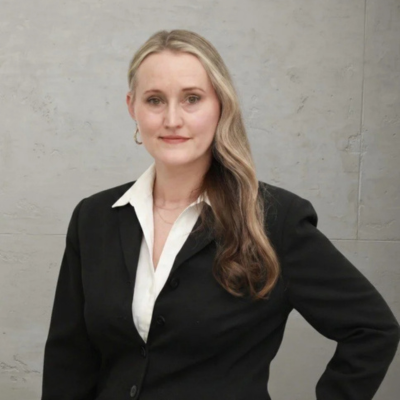
Stacey Moffatt is an office operations manager and executive assistant in North York
She said she couldn’t schedule a time for an interview before the election.
Join the conversation