
This article was produced as part of the Local Journalism Initiative.
For over six months, we’ve been asking Thorncliffe Park residents about their top issues and concerns.
In the lead-up to the 2026 Toronto municipal election, The Green Line set out to use this crowdsourced knowledge to interview every councillor candidate running in Ward 15 Don Valley West.
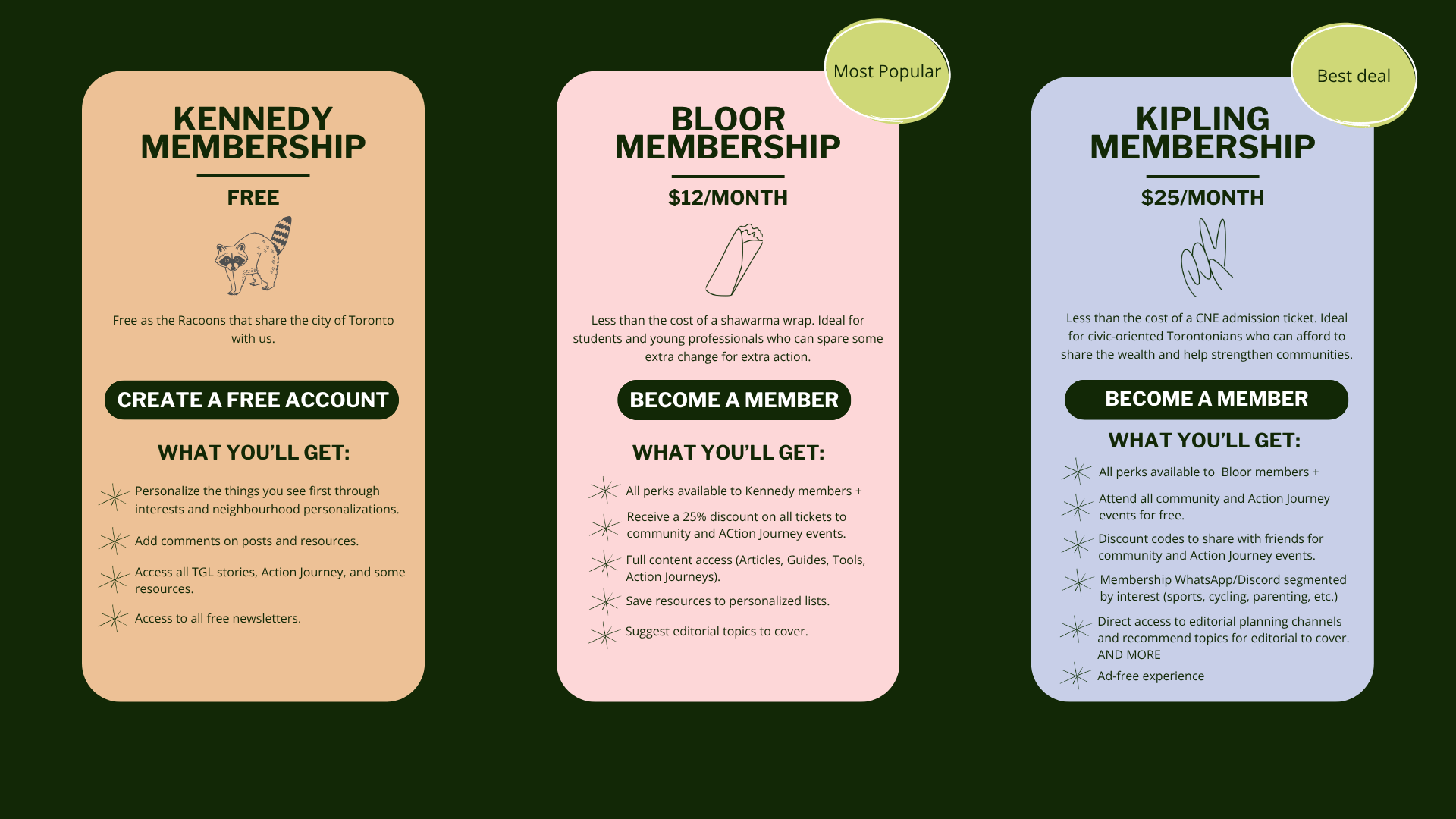
BECOME A GREEN LINE MEMBER TODAY
Our questions focus on issues residents have identified as important to their lives, including food insecurity, housing affordability, health care and essential services, public consultation, newcomers, recreational programming and employment.
We conducted the interviews over Zoom, transcribed the answers and edited for length and clarity. You can watch a video sneak peek and then dive into the full responses by clicking on the questions you’re interested in under each candidate’s section.
Rachel Chernos Lin

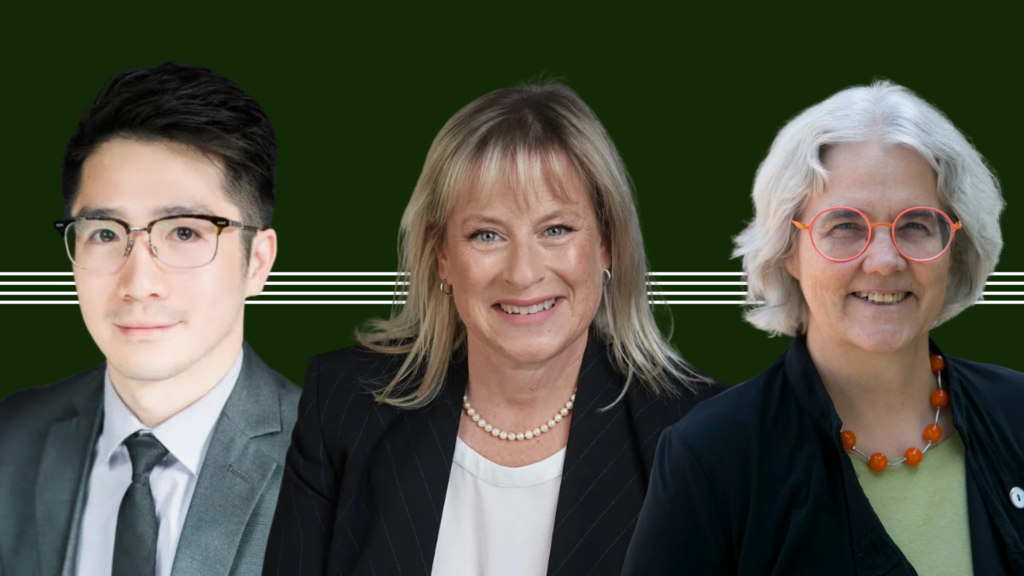
Rachel Chernos Lin is Ward 15’s current councillor. She came into office in a 2024 by-election, and served as an elected trustee for the Toronto District School Board (TDSB) for six years before that.
Her top priorities for Thorncliffe Park include safety and security, maintenance and RentSafe enforcement in rental buildings, as well as equitable access to amenities and benefits with the construction and densification coming with the Transit Oriented Community planned for the neighbourhood.
Read her full answers to all your questions below.
What would your top priorities be if you are re-elected?
There are a couple of different areas that need to be focused on as priorities in Thorncliffe Park.
The first one is safety and security. There have been a number of incidents recently that have unnerved the community. As we talk to community members, they’ve raised a number of questions around the safety and security of the buildings that they’re living in. So we’ve been pushing together with the Violence Intervention Unit from the City of Toronto to work with landlords, in particular with Morguard, to ensure that we can do a safety audit. We need everybody to come to the table together to get that done. That way we ensure that there are cameras in the right places, that doors aren’t left open so that unauthorized visitors can’t get into buildings.
We’d also like to really explore with Toronto Police Services about putting in a community hub in Thorncliffe Park. We do have neighbourhood officers, but there isn’t any sort of one location where people can go to find them on a regular basis. If we could consistently have that let’s say an East York Town Centre — the way they have it at the Don Mill Shops or Fairview Mall — I think would be really, really productive for the community and for Toronto police to build stronger relationships and really work to minimize crime.
The second one is that when you go into buildings in Thorncliffe Park, some are well maintained, but others have a lot of challenges. We hear that from a lot of residents, but not those who don’t know how to work the system or reach out to us, but who are also experiencing challenges. So we’ve tried to do a lot around tenant rights and making sure RentSafe is holding landlords accountable. But there’s a lot more work to be done there.
Issue number three is one that’s a longer-term project, but there is going to be a Transit Oriented Community that’s built around the Ontario Line. That growth is coming to Thorncliffe Park, and the question right now is that existing recreational amenities and community resources aren’t sufficient for the scope of the current population. What happens when that Transit Oriented Community is built? How do we make sure that we’re getting additional recreational amenities that will serve that population, as well as the existing population? How do we ensure that all of that is connected, so that the older part still has investment done there to ensure that buildings are renovated and brought up to a nicer standard, and that we don’t end up with a community of “the new haves” and “the old have nots.” How do we ensure that we harness what is being built there for jobs that benefit the community that’s currently there? I made a big motion around it at the end of the spring and we’re trying to put all those pieces together to make sure we’re planning for the future that will benefit everyone in Thorncliffe Park.
What concrete actions will you take to tackle the housing affordability crisis from a policy perspective? And how will you help people now?
We always need to focus on things like the Rent Bank to make sure that it has enough funding to make sure that we’re helping people who really need it in emergency situations.
There are pieces around affordability, like the school food program that we’ve been investing in, that help around those sorts of pieces in terms of affordable housing.
This has been a real challenge, because the city originally had targeted 20% of all new housing should be affordable, particularly around transit-oriented communities, and the province removed the ability to mandate that. It’s not even clear whether we’ll get 5%. I think that’s a main area of focus for us to ensure that we’re getting some affordable housing.
But I would say we also need things like deeply affordable housing for some people, because even affordable housing for many people is out of reach. So I think there are opportunities for the City to partner with other levels of government and sometimes with NGOs and non-profits to actually fund concrete projects around affordable housing. And I will be looking for opportunities like that.
How will you help renters navigate landlord-tenant relationships?
We’re always looking to see where we can help facilitate those relationships in the best way possible. Ultimately, we want individuals to have the best relationship they can directly with their landlord because RentSafe isn’t able to help them until they’ve first established a complaint to their landlord about what’s not working.
We’ve done a lot of outreach with constituents around how RentSafe works, how you have to initially work with your landlord and then, if they’re not getting resolution, we can step in.
In our experience, there are a lot of people who don’t necessarily know how all of that works, so we always look to bring the resources to them and to have RentSafe, for example, present to tenant groups and tenant organizations, so that they understand that they can develop the relationships. They can ask for advice on how to deal with it. And we do step in where we’re needed to try and help facilitate that.
What concrete actions will you take to tackle the food insecurity crisis?
We do have a pretty active food bank in Thorncliffe Park and in neighbouring communities, but we always have to make sure that we’re meeting people where they are.
I’d say one of the things that we have focused on was making sure we had the mid-morning snack program in this community. I think there is a desire — certainly of some council and some mayoral candidates — to see this go towards a larger lunch program. And I’d say that Thorncliffe Park would probably be an ideal place to start something like that. I think it’s important we focus where we need it the most, because we don’t have unlimited resources.
I would also say I’m deeply supportive of things like the Thorncliffe Park Urban Farmers and FoodShare, who are doing a lot of different programs in the community that help address some of the food insecurity and provide residents with access to healthy, whole foods.
I think there are opportunities to grow programs like that and to look at what other spaces we might have available, particularly in areas that maybe can’t be developed in other ways, so under hydro lines, for example.
How will you ensure residents have equitable access to health care, especially those who face barriers navigating these systems?
Even though it really isn’t our mandate, we’ve been doing quite a lot of outreach together with some of the local health units and hospitals that are doing the expansion of primary care by postal code. We help amplify their message to anyone who needs a family doctor. We’ve had them come to our town halls and our coffee chats so that they can actually share their information with residents to make sure people are getting family doctors, because there are a number of family doctors accepting new patients.
I’d also add that in Thorncliffe Park, we’re really lucky to have the development of Thorncliffe Park Community Hub, where we’ve got all these services in one location. So, together with the Flemingdon Health Centre, Health Access Thorncliffe Park and Michael Garron [Hospital], we’re really trying to provide all these different services and give people access under one roof. That also includes even a City of Toronto dental clinic that opened last year.
So, we actually have a lot of those services that we’re doing, and it is multi-government layered, but I see it as part of our work to ensure that we’re making people aware of the access to services that they have right in their community.
How will you ensure residents get more access to local recreational facilities and programming in an equitable way?
We do have a community centre in Thorncliffe Park. It’s the only place where we have a relatively large community centre under one roof because everything in Ward 15, for historical reasons, is a small building.
But even that community center isn’t big like the ones you have in some other areas of the city. It has a library and a gym, but it doesn’t have an indoor pool, a track to walk indoors in the winter, or other amenities like child care and things you might find in a modern community centre.
There is one slated to be built at Don Mills and Eglinton, but I feel that’s far away for the local community. When you consider from an equity lens perspective the number of people in Thorncliffe Park, we have currently roughly 25,000 people living there. It’s unrealistic to expect people who don’t necessarily have access to vehicles to go all the way up to Don Mills and Eglinton to access those kinds of things. You have to be able to provide things where people can ideally walk to it, where they’re not going to have to pay to get to it, especially from an equity lens.
So I think it’s really essential that we build a proper community centre, scaled not just for the community of today, but also for the community of tomorrow. I’d like to see it be somewhere central between the Transit Oriented Community and the older part of Thorncliffe Park, so it’s a meeting place for everyone.
In addition, one of the things that’s been good that the City of Toronto has done from an equity lens is that they’ve looked at priority neighbourhoods, including Thorncliffe Park. If you have a postal code from Thorncliffe Park, you can access programs in Thorncliffe Park earlier than when it goes to the wider public. However, because there is no indoor pool in Thorncliffe Park for example, it means that kids in Thorncliffe Park don’t have access to swimming lessons in that early round. So I think if we’re really considering looking at this from an equity lens, we have to think about some of those challenges and there isn’t an easy way to solve that. We’ve raised it with staff as one of the things we’d like them to look at. But so far, we haven’t gotten anywhere concrete yet. So it’s a work in progress.
What investments will you make in youth programming, mentorship and opportunities for young people in Thorncliffe Park?
This is one of the most critical pieces that we need to be looking at. It’s things like offering young people mentorship opportunities, skills training and sports programs.
It has to be either free or low-cost, prioritized by areas, certainly in Thorncliffe Park.
I think on Saturdays we should be opening Marc Garneau High School to have full-day programming for young people to access tutoring and mentorship. Sometimes you can offer skills certification programs, so things working on ladders and food handling. We can also offer programs to help with things like resume building.
One thing we really see in young people is they’re having trouble getting jobs, particularly summer employment, but ideally they should be able to get part-time employment throughout the school year. That predictable part-time job gives kids something to do, but also something to build on their resume. It gives them hope for the future.
So this is a really key piece in terms of youth violence prevention programming. We know this works, but it does cost money.
Do I think it’s entirely up to the city to do? No, I think this is something that, yes, the city can put some funding towards; I think it also has to be worked out together with the school board, together with the provincial government that’s responsible for education funding and even the federal government, in terms of youth prevention funding.
When I was chair of TDSB, we were able to access $1.8 million through not just the City of Toronto, but some of that was grants from the federal government earmarked for youth violence prevention. And it’s the same with the provincial government. But a lot of that, particularly from the province, has been cut in recent years. So I think we need to see a reinvestment in that if we’re to actually change trajectories.
The neighbourhood recently saw three gun violence incidents. Many residents were displeased by the response. How do you plan to engage with all stakeholders, homeowners, at-risk youth, their parents and neighbours to respond and prevent this in the future?
There has been a significant investment in terms of policing by the City of Toronto. We have done a five-year hiring plan, which I supported, to add over 500 officers over five years.
Thorncliffe has seen an investment made. They have neighbourhood officers, unlike many other parts of the city. So I don’t know that it’s exactly a lack of investment. I think sometimes the officers are pulled from there to other things when there are other priorities that come into play. I would like to see that happen less, or not at all.
As I said before, I think there has been a lack of investment by landlords in the security of their buildings. There were a lot of people who’ve spoken about the basements and the parking lots not being safe or secure in the buildings in Thorncliffe. So you need landlords who are going to invest in the buildings to ensure that there are cameras in the right places, doors close properly and perhaps add a central security desk at the front of the building. It also takes people who live there making sure that they’re also closing the doors, not letting people in who don’t have a key or have access.
Then, I think it also takes all levels of government to be working on the challenge we have in front of us in terms of crime.
The City and Toronto police don’t necessarily determine the rules around bail. What happens when people are let out on bail who might potentially even live in some of these buildings? Toronto police also don’t necessarily determine all the levels of charges that are laid sometimes — that’s the attorney general. And they don’t control some of the pieces of enforcement around car theft. You need the federal government managing the ports and making sure they’re cracking down to ensure that cars aren’t being sent out of the ports in Montreal, because that’s what really fuels the car theft ring.
Then, there’s also this other piece of investment in young people to ensure that we don’t have members of the community choosing a path of joining gangs and participating in things like car thefts. We have to have more skills training and opportunities for young people where they feel like they have a chance and a future that they look forward to
There’s also a number of people who don’t know about everything that’s being done. We need to make sure that people know about things, like the town halls that we’ve run. The town hall after the shootings was not the first town hall on safety. But if we don’t have people’s email addresses, we can’t even let them know about it. So there are additional pieces around communication that we have to improve and work with community agencies so that everybody knows about what is happening and people who, when they see something, speak up and do something about it and reach out to the right people.
Thorncliffe Park residents complain about traffic. What concrete action can you take to help?
It’s been a huge challenge in Thorncliffe Park as well as throughout our ward.
One of the biggest challenges in Thorncliffe Park is that you don’t have different ways in and out of the community, right? You have either the end of Overlea up to Don Mills or out at Millwood, and right now, we don’t have access through Beth Nealson Drive because that’s been closed for an extended period of time due to the construction of the Ontario Line.
The Ontario Line has certainly made traffic considerably more challenging in Thorncliffe Park, but I think in the long run, if we’re really talking about dealing with the traffic in the City of Toronto, public transportation is something that we have to be investing in. Having the connection between Thorncliffe Park and downtown and Don Mills, easily connected through the Ontario Line one day, is going to be a wonderful thing.
Realistically, building more roads is very challenging in a city that’s already established. And the data already shows that when you put in new lanes, if you even have the space to, they fill up immediately with cars. We have so many Ubers on the street; those are essentially one-person cars, and sometimes nobody’s in them because they’re just driving around waiting for a fare, taking up space.
So we need to offer multiple modes of transportation so that people, when they can take public transportation or can take active transportation, will choose to do so. That’s probably the number one thing we can do to actually ameliorate the congestion that we experience in Toronto. We didn’t invest in public transit for many, many years, and we’re paying the price of that now.
That said, there are other things we can do.
Signal timing makes a huge difference. Putting in intelligent, smart signals that actually change with the traffic in real time — those make a difference. And we’re currently in the testing phase of some of those, and we’ve got some already in where they can monitor it and they can change it from central locations. We’re actually trying some that are AI-generated, where they can see if there are pedestrians and how many cars there are.
One of the things that we’ve done is we’ve begun utilizing traffic agents at key intersections where they are doing construction — and sometimes this is at the cost of Metrolinx having to pay for it. So, for example, in Overlea and Millwood, there are often traffic agents, particularly at rush hour, managing that intersection and making the traffic run more smoothly.
What concrete actions will you take to support newcomers (including undocumented people, PR holders, international students, refugees, migrant workers, etc.) as they navigate settlement needs in the city?
We work collaboratively with a lot of local organizations in the community, so that is probably our number one way to ensure support.
The City does have a settlement office, and we do help coordinate it. But ultimately, for a lot of this, we work very closely with TNO [The Neighbourhood Organization] and the Afghan Women’s Organization and many of the other local groups who are working in that sphere in terms of settlement, in terms of making sure people know about the support systems available to them.
One of the first things we did when we came in was a big town hall, ensuring that we had tables from many different providers who work in this realm at that town hall. So we had TNO, Don Valley Community Legal Services — very important in terms of tenant issues, challenges that come up around that — and then groups that do a lot of settlement work. And then, we were also making sure that we have information around groups like Go Green, which offers a lot of community programming and kids’ programming over March break, which is all free; summer camps are all free.
It really is making sure that we bring information to the community. I know there are areas where we could improve, like making sure that we have translation services always available.
So still more work to be done, but definitely something that we’re committed to.
Residents repeatedly tell us they feel the city’s current consultation process isn’t working. What will you do to make sure their feedback is actually reflected in the process and final outcome of local developments?
It’s a challenge. I think there are many times when the City has a process in place, and they think, “Okay, we’ve done this one meeting, and that’s the consultation,” but we have to look at what that format looks like. How are we making this as barrier-free as possible? Are we getting as many voices as we can? Quite often you see the same people who come out to consultations; it’s the people who are already engaged. How do we reach those whose voices we’re not hearing, and make sure that those voices are also considered as part of the decisions that are made?
It’s also the way in which we do consultation, so making sure that it’s not just a survey or something that not everybody has access to because of language challenges; making sure that we’re doing them at times of day or in locations that work for people. It’s a whole host of different things that we have to consider, and it’s sometimes doing it in more than one way, so that you reach people where they’re at.
Finally, the most important thing for me is to make sure when we’re doing a consultation, it’s not an information session, because sometimes, in my experience, when people call something a consultation, that’s not a consultation. There’s nothing that upsets people more than feeling like their time is being wasted and not valued when they’re basically being consulted on something where they feel a decision has already been made.
The reality is that not everything will be on the table. But what are the pieces that we can genuinely affect change on or can take community consultation on?
When I was a trustee at TDSB, we had a retrofit of a school with a very large addition and the community wanted to be able to have their voice heard on whether the school kids would get moved to a holding school while the build was done, or whether they could stay on site. But ultimately, the TDSB didn’t feel that they could do it safely on site. So to hold a consultation on whether we should move or not is disingenuous if the decision has already been made. You have to find the pieces where you can do consultation on, where genuinely people’s voices will be heard and we could actually effect change on. How about: could there be different bus times that leave so that kids could do sports in the morning before school, but still catch the school bus? Could there be an early bus and a late bus? What’s important to the community that they want to ensure they still have at the new school that they’re worried about losing by having to move? How can we consult on those and make sure that we’re actually taking into account the feedback that we get and actually making good on that?
Residents told us that they feel they are not accorded as much importance as richer neighbourhoods in the ward. How do you respond to this statement? And how will you ensure their needs and issues are represented?
I think historically that may be a fair statement. I don’t think that’s the case in the two years I’ve been here, and certainly not when I was at the TDSB. We actually spent a lot of time in Thorncliffe Park.
When you look at the challenge in this neighbourhood, and you look at the size of the amenities that are here, I don’t think there’s been enough investment in that sense. So that’s part of why I’ve done a motion calling for a new community centre — and I haven’t done that anywhere else in my ward, because I do think that is of primary concern here.
I think it’s a matter of making sure we are connecting with enough people in Thorncliffe Park and ensuring that enough resources are being focused on a prioritized neighbourhood. For example, one of the things we did in the last budget was that we allocated more funding for municipal licensing and services. One of the things that we were looking for out of that was to ensure that we had more staff who could work in the evenings and on weekends, because when you look at this from an equity lens, that’s really what needs to happen in these cases. It’s not a one-size-fits-all situation, and we have to talk about the resourcing from that lens.
How would you describe the neighbourhood you live in? What’s your favourite spot to eat or hang?
I live in Leaside. One of the things I like about it is that I can walk to cafes and restaurants and now the subway. We certainly lived through all of the construction, but now we’re a few blocks from the Crosstown, which is a wonderful thing.
Plus, we have access to ravines. We have that running through Thorncliffe Park, Leaside, York Mills and Lawrence Park. I think the gateway to having those spaces really takes you away from the hustle and bustle and congestion of the city, and being able to have nature at our doorsteps is wonderful.
My favourite thing about living in this ward, and in Toronto in general, is all the ethnic food. Hands down. It’s represented in my ward all over the place, and I think it’s a microcosm of Toronto.
One of my favourite restaurants is Darna on Bayview, and they make this rice and fish dish…it’s like one of the greatest things.
Sheena Sharp
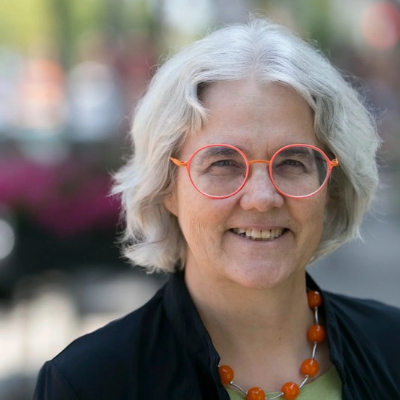
Sheena Sharp is an architect with a focus on climate action. She ran for Ward 15’s council seat in 2022 and 2024. In 2022, she was the runner-up by a difference of almost 14,000 votes. She came fourth out of 16 in 2024. She also ran as the Green Party candidate in the ward’s 2022 and 2025 provincial and federal elections.
Her top priorities are ending homelessness in five years and electrifying the city’s heating and transportation in 15 years.
Read her full answers to all your questions below.
What would your top priorities be if you are elected?
I have two priorities.
One is to end homelessness in five years. I know that sounds very much like “Miss America”; however, I am an architect and I do development consulting.
According to the City website, we have 15,400 homeless people on the streets; that’s probably between $4 billion and $6 billion worth of capital costs.
But when you do housing, a lot of it is a loan because people pay rent and rent pays for the operating expenses and the mortgage. For people making less than $40,000, you need grants. So we would need perhaps $1 billion to $2 billion in order to do this.
Toronto is not responsible for paying for housing. Toronto is responsible for delivering it. And upper-level governments are responsible for paying. But for comparison, our city budget is $18 billion. The Crosstown cost $15 billion. And the new science centre costs $1 billion — that’s half the cost of solving housing.
And why do I think homelessness is the thing that we should focus on for the next five years? Because it’s the linchpin, because we can get a coalition, because many people are concerned about people sleeping on the subways that have become shelters.
Number two: we need to electrify the city in 15 years. We need to get rid of gas in our heating and our transportation.
The Intergovernmental Panel on Climate Change says that there is still a chance of stabilizing the climate where it is right now throughout the rest of the century. Where would we be if we had twice the wildfires, twice the floods? Where would we be with extended heatwaves? That kills people. If we don’t hit any inflection points and things start spiralling, these 15 years are critical. And those of us who are doing it, many of us will be dead in 50 years. I certainly will be, barring some kind of miracle. So it’s really something we have to do that we probably won’t see the outcome of. But it is really important to do that.
People will say, like, how do we even do that? I’m the chair of a small NGO that does research into decarbonizing trials called the Toronto 2030 District. The one thing we have to do is when our furnaces die — and they will all die in the next 15 years — we replace them with a heat pump.
Our research shows that it costs a little bit more now, but not a lot — we can afford it. It’s not going to kill our economy. In fact, it’ll make it go stronger. It’s an opportunity for innovation, for our industries, for jobs.
Where does the money come from for the infrastructure? I own a semi in Mount Pleasant and Eglinton, and I used to pay a utility bill of about $2,000 a year, and now I pay slightly less, but I used to pay a third of it to Enbridge and two-thirds to Toronto Hydro. Now I pay 100% to Toronto Hydro. So our hydro just got a 50% raise. We can see speed bumps in the future, as Enbridge can actually pull out and stop providing service when their line has below 20% of their original customers, which will mean the poorest people are going to be left suddenly without heat. So, we have to have a plan for this going forward.
It’s not so much money that’s lacking. It’s leadership. Because if we stood up and said, ” This is where we’re going; we are preparing to run our hydro to do this.” This is what these are the types of deals we’re going to be looking for. That gives a signal to people who might want to invest in heat pump research.
What concrete actions will you take to tackle the housing affordability crisis from a policy perspective? And how will you help people now?
I think immediate relief has to come on the income side. And that’s not really something that the municipality can do.
Not raising rent between tenants would be something we could do immediately.
The problem with housing is what we’re suffering through right now is a result of decisions that were made in the 1990s to cut the Ministry of Housing, like Mike Harris did when he was a premier in the 1990s, and a lot of the co-op housing, which was sort of like renter or managed housing, stopped at that point.
I was president of the Ontario Association of Architects for a while. We did a study in 2014 and found the cost of a single city approval for a new condo was $40,000. I’m not saying we should get rid of approvals, but I’m saying that I have done enough of them that I understand we have to keep the protections, but we can wipe a lot of this out.
The cheapest buildings to build are buildings up to six storeys, up to eight storeys. We can go up to 18 storeys with wood buildings, which also helps all this extra lumber we have because of the trade war with the US. Those buildings should be “as of right.” And when we say “as of right” in the construction industry, we mean two approvals are cut out, two approvals that can cost up to like $400,000.
What I’m saying is: six-storey buildings on all of the main thoroughfares or up to 18 on the corners could be “as of right,” and remove the need for planning approvals.
We, the citizens, cannot go out with our little placards and say, “This is horrible.” No, we get to say that once we decide where these are going and after that, it’s done. And that would mean that the only permit you need is a building permit for health and safety.
That might also allow us to start building larger units. And I also agree with the approval that’s already in place, where if your lot is big enough, you can take down a single-family home and put up three apartments. So this is not a solution to poverty, but you can go from a $1.5 million house to three $800,000 houses, which starts to mean that we’re reaching down to the top of the people who can’t find housing.
The fastest-growing demographic that is leaving the city is under 18. So obviously they’re not going by themselves; their parents are deciding to buy a house in Oshawa or Peterborough or Guelph. I’m not saying those are bad places, but we as Toronto need to be able to keep our kids if we want a vibrant city.
So that’s what like those are two those are two examples for two different housing problems at different ends of, an economic crisis, shall we say. There’s a bunch of in-between little things that we can do to move things forward listed on my website.
The other thing I think the city should do is favour non-profits. Vienna, the favourite poster child for this, has 50% of its housing as non-profit. And so even when there is a crisis of the amount of housing you have, housing does not go up. Because there’s enough space for people to say, “Oh, if I’m in a private apartment and they want to double the rent, there are spaces in nonprofits that people can start to move over.”
How will you help renters navigate landlord-tenant relationships?
Part of the issue is the rents and tax incentives that the federal government put in to make housing a commodity and to throw it onto an open market with a limited number of players.
Actually, about half of landlords are little landlords, by the way. I’m a little landlord, and that’s how I afforded this house. Little landlords are their own thing.
But big landlords have become a business that sets the tone for the market. They can charge whatever they want because housing is a need. So this idea of market and supply and demand: if you can’t buy something and you have no alternative, then you pay what you need to pay. That has been what has been governing our markets for a long time.
So I do think again, the structure matters; non-profit matters. And from the point of view of the city, you know, enabling people to buy their own buildings, to turn buildings into non-profits because you don’t only have to build them new. You can, and there are CMHC programs; one of them is called MLI Select. Maybe it’s because I’m a small business person. I look at this and say, I don’t want to play that game. It just feels like an unending battle. I want to have more control over my life, and I think I would have more control over my life if I owned the building.
My orientation is not towards giving tenants control through rules and regulations, but by giving tenants control through ownership.
What concrete actions will you take to tackle the food insecurity crisis?
I don’t believe in municipal grocery stores.
When you look at a place like Iqbal’s, and you see independent grocers all across our city, to start a municipal grocery store is to start a competitor.
These small grocers’ problems are that the big five oligarchies control so much shelf space that they can say, “You can only sell your product to me at this price, but you sell it to everybody else at a different price.” And so that means that it’s an unfair advantage.
For Iqbal, for example, they’ve been competing with FoodBasics in East York Town Centre and I think they keep FoodBasics in check.
What can help at the municipal level is zoning.
For example, there’s a landlord-tenant agreement with FoodBasics, and it will say no other food stores in the centre. That should be illegal. We can’t do that at the City of Toronto level, but we shouldn’t then go the easiest way because we ran into a government that may not be friendly and add to the oligopolies that are a weight on small businesses’ backs.
The Thorncliffe Park Urban Farmers and all of those guys tackle food insecurity through growing food, but if you look at it from a realistic point of view, they’re not exactly feeding very many people right now.
I think the crisis itself should be laid at our federal government’s feet. We should make them wear it. We should not be trying to put Band-Aids on this thing.
How will you ensure residents have equitable access to health care, especially those who face barriers navigating these systems?
I think the city delivers crisis health care. The city delivers the paramedic system, which gets increasingly expensive as you only deal with emergencies, as opposed to dealing with health problems before they’re emergencies.
But again, I do not believe in the municipality taking over the things just because another level of government is doing it really poorly. I don’t think that helps anyone.
I think to the extent that the city runs public health, all the vaccinations and all of those kinds of things, we need to do more of, and we need to make sure that it’s available equally across the city.
But, I do think we have to lay the blame where it belongs.
How will you ensure residents get more access to local recreational facilities and programming in an equitable way?
There is an amount of money that the City has been collecting from developers for the purposes of providing services, but it hasn’t been providing them — the money is in reserve funds, earning interest.
In The Planning Act, the development permit system is all about identifying the level of services that are within a community, how much access and capacity there is and what has to be built when you develop a community.
Thorncliffe Park and Yonge and Eglinton are some of the most developed parts of our ward. We can’t let what happened at Yonge and Eglinton happen again.
For Yonge and Eglinton, a decision was made in the 1990s that we’re going to put all of the density here. But if you go to the new buildings just beside me, they say, “Oh, your kids can’t go to school there. We’re going to bus them to God knows where.” There are no parks.
As Thorncliffe Park is becoming more dense, these things have to be planned. We can talk to the Ministry of Education and say, “We’re planning this, and there’s going to be a need for a new school. How do we figure this out? We’re planning this, and we need an arena.”
In the short term, the current city council did something great, like opening the libraries.
Rachel [Chernos Lin] brought it up, so I credit her, but the city used to cooperate with the schools to open them at night and on weekends because you have a building that’s already built. It’s got a footprint, and it’s got a gym, right? We can use that very valuable capital asset and get more use, more programs.
Even the Thorncliffe Park Community Hub. When it first moved, the hub was like an empty space up there. And now that space has been truly utilized and moved into.
Start with those kinds of measures, but never forget the long-term measures. If you’re going to be able to take down 2 Milepost Rd. and we’re going to put this up, we need money for new and expanded facilities.
What investments will you make in youth programming, mentorship and opportunities for young people in Thorncliffe Park?
You know what, I’m 65 years old. I feel like I’m a very bad person to answer that question. I think it would be important to figure out what the youth are doing today and give them money.
I had the opportunity to talk to Jon Burnside, who’s running for council in Ward 16 Flemingdon Park. That’s the Science Centre. As an architect, the Science Centre inspires me in so many ways. The fact that it was like $200,000 to do the emergency repairs so the building would not collapse. I think we should start to imagine something for the Science Centre. I think we need actual business plans with organizations that want to put the time into it. What if it was a centre for music for children? What if it had instrument making and an instrument library? What if it had practice spaces? What if it had a restaurant and a bar, so that at night it could become a venue for adults? And what if it became the headquarters?
There’s a whole greenhouse down there that they haven’t used in ages. If it were refurbished, what if that became the headquarters for organizations like Thorncliffe Park Urban Farmers and The Stop?
I know I’ve stopped talking about youth, except they eat too, but the Science Centre is a huge building and it’s perfectly sound. I think it would be an amazing community asset, and we have to fight for it.
The neighbourhood recently saw three gun violence incidents. Many residents were displeased by the response. How do you plan to engage with all stakeholders, homeowners, at-risk youth, their parents and neighbours to respond and prevent this in the future?
I think, from reading research, that it’s not about having more cops on the street, but about having a good relationship with the police.
They have their guns and gangs group. I understand that that is a pretty effective way because there’s kind of the carrot and the stick. And so the police are definitely the stick. But they cannot solve this problem by themselves. They’re a bit of a backstop kind of thing, and having that is important.
The City of Toronto was there with the soft side, like signing kids up for programs, keeping them off the streets. I think the City of Toronto got less airtime at that meeting than the police did, which was perhaps unfortunate.
Security cameras — if you know where the data is going and all that kind of stuff —they do provide evidence and a deterrent.
I think some people are angry because they felt violated. But that doesn’t mean that their ideas would actually work. Just because you are justifiably angry and scared…you have to come to a point where you sort of say, “okay, you know, let’s take the temperature down a bit and let’s look at solutions.”
After the town hall, I was thinking about when I was a kid in the suburbs of Montreal, and they had a neighbourhood watch. In the streets of Winnipeg too, which was my home for many years, there’s a very heavy Indigenous presence and they have patrols that people trust. My sense of it is that they do give the community some sense of security.
This is kind of like a Canadian tradition. It has worked in other places, getting the neighbourhood together. It was partly a group of parents who knew each other, and it was a signal for children that when you are in trouble, you could go to one of the places with the neighbourhood watch and they were friendly and ready to accept you. Today’s world is so much more complicated, and I’m not even sure that would work today. But we can update those types of programs that pull communities together.
There’s a lot of strength there that doesn’t exist to nearly the same at Lawrence Park. Thorncliffe Park has more connectivity, and I think that is something that obviously needs to be built on.
Thorncliffe Park residents complain about traffic. What concrete action can you take to help?
It’s a minefield. What happens is you get citizens who are passionate, saying, “It should be this way; it should be that way.” That’s really kind of listening and an attempt to referee people into a single solution, but always following the science.
The idea is to take 30% of the traffic onto bikes. It’s cheap. It’s point to point. I just got my front wheel on my bicycle changed into a motor. And so, Toronto doesn’t have any hills anymore. It’s excellent.
We need to figure out how to regulate the scooters. I think it should be speed; if you’re going under 25km an hour, you’re in the bike lane, and if you’re going over, then you’re in the car lane.
But don’t let people do things because they strongly believe in it. “We want stop lights every 50 ft.” No. But things that actually make sense, like speed bumps and those kinds of things, that’s a possibility.
Even bike lanes in Thorncliffe Park, I have stood and heard and listened to people rant at me about the fact that it’s a rich people’s plot to put bike lanes and all. All I’m thinking is, “Oh my God, like, no, it’s not a plot, okay?”
But just trying to keep putting the actual data out there and try to say, “Guys, these are the things that actually work and that it’s a balance.”
Just as an interesting fact: cars have gotten 20% longer in the past, like 20 years. Nobody talks about that. Nobody talks about cars. We can fit 20% fewer cars in the same space because they’re bigger right now. We can’t really solve that at the city level. But to all the people who are pooping on cyclists, I just like to point out that maybe if they got smaller cars, we would get there faster.
What concrete actions will you take to support newcomers (including undocumented people, PR holders, international students, refugees, migrant workers, etc.) as they navigate settlement needs in the city?
I work a full-time job, so it’s very difficult to engage broadly, but part of the job of councillors is to engage.
I don’t think I would do very much other than participate and get to know people.
I was looking at TNO’s budget, and they get funding from all levels of government, including a good chunk from the City of Toronto. I think that those are organizations that are in a good place to deliver these sorts of things. So let’s not reinvent the wheel. We need more of it. Let’s give more money to TNO, because they’re already doing it and they’re doing it well.
Residents repeatedly tell us they feel the city’s current consultation process isn’t working. What will you do to make sure their feedback is actually reflected in the process and final outcome of local developments?
I would absolutely agree that consultations are like a checkbox. I also know the process of designing.
Designers often start with a blank piece of paper. You can’t show someone a blank piece of paper and say, what do you want? You have to show them something, and they can say, “not that.”
That’s the process that we go through with our clients. But our clients have responsibilities; they have to make it work monetarily. So part of the problem with the whole consultation process is that the cost of doing something and the value of it are totally divorced from the people who are making the comments.
In a practical society, they should be in the same hands.
From a guerrilla point of view, I never go to a public hearing without a written deputation. You can stand up and say the most impassioned thing, the most brilliant thing in the room…but I have read public hearing minutes that did not reflect the meeting that I attended. But if you write it down and send it in, even if you’re going to talk, they can’t ignore it.
I think in the development permit process, you can start with community consultation that says, “What are we going to do? How big is it going to be? Where is it going to be?” You do not get to comment on the colour of the brick.
Many, many years ago, to graduate from architecture school, I wrote a book on the consultation process in Seattle. The question that I wanted to answer was: is it actually possible to represent what people want? One of the insights of that research that I did was that the buildings themselves almost don’t matter.
The people reacted to the buildings according to how they felt about the person building it. The fact that people feel impotent is not actually the buildings or the process. It is the structure of how we own and maintain buildings that makes them impotent. Not what we’re building itself.
That gets back to the idea of the city favouring community-owned nonprofits and residents being able to own, acquire and build. I know the economics don’t always work out, certainly for the poorest of us, but when you have some agency, you start to connect the cost of something with what you’re building.
Residents told us that they feel they are not accorded as much importance as richer neighbourhoods in the ward. How do you respond to this statement? And how will you ensure their needs and issues are represented?
There is a grain of truth, but a small grain of truth.
I stood on a porch on Lawrence Avenue at a house that is probably worth $3 million, looking at a park that had been devastated by a windstorm, and the resident was ranting at me about how the city doesn’t pay attention to Lawrence Park. It has been like this for six weeks. We could see the trees that were down across the path. We could see the overflowing garbage cans. And they say cars are being stolen. The police didn’t come.
Not four weeks later, I was standing in front of Iqbal’s with a guy who was saying the garbage is overflowing. They’re not looking after the parks. They’re stealing the catalytic converters out of the parking garages. And the police never come.
Many people say, “How would you reconcile these two very different neighbourhoods?” I’ll say human nature. It’s human nature to believe that someone else, like my kids, you know, my brother, got more cake than I did, right?
So there is a little bit of that in truth. But I think that we will find that there are actually similar problems across the neighbourhoods.
I think it is just supporting different neighbourhoods and trying to not feed the idea that other people are getting more than you. We should look at where the money is going, how it’s going per capita and ask if we’re putting the right amount of money in there.
How would you describe the neighbourhood you live in? What’s your favourite spot to eat or hang?
I live almost exactly at the corner of Mount Pleasant and Eglinton. I was sleeping in the construction zone for 15 years. But I love the fact that I can practically just throw on a coat and go around the corner and buy fresh raspberries from the little stores along Eglinton.
There are so many great restaurants on Mount Pleasant. I have to admit, sometimes I just do the easy thing and go to the Granite Brewery. I love At Origins coffee shop. There’s another one across the street, two blocks south of Eglinton on the west side of Mount Pleasant and whose name I can’t remember, but they have great baklava, and it’s always really, really fresh. There’s also the bar that used to be called the Last Mile. And there’s a falafel shop called Royal Shawarma, where I always get the falafel.
Denis Tsang
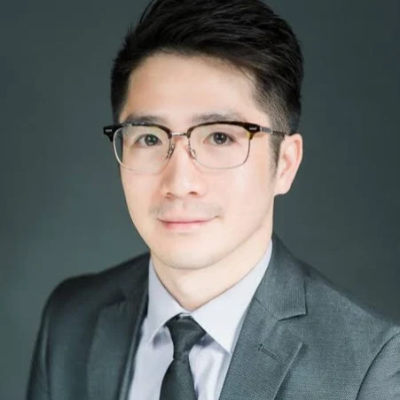
Denis Tsang is a registered dietitian who’s worked in primary care for over a decade. He’s also been chair of the board of the College of Dietitians of Ontario since 2024.
Tsang expressed interest in participating in the interview, but didn’t respond to follow-ups to schedule a time to share his answers before the publication date. We’ll update this page as soon as we receive his responses.
Join the conversation