


Sometimes I feel like throwing a cute little party at a park, and I often run into words like “parking permits” and “noise by-laws.” But how do these rules even come into effect?
There’s a process — and even rules to make those rules — that city council has to go through in order for something to become a by-law.
So, let’s break it down.
It starts with an idea
The introduction of a new by-law, or even a change to an existing one, can start with an issue or request brought up by residents. It can also be shaped by their behaviours and needs. Take throwing a party at a park, for example: you can do it, but noise by-laws ensure you don’t disturb others by blasting music at midnight.
It all starts with City staff researching the problem and preparing a report with information and recommendations for elected officials. The report explains why a by-law is needed, how it would work, what it would cost and how it would be implemented.
If you’re interested in learning about what City staff do and how they support council in making decisions, you can check out our explainer.
Then, it passes by a committee
Proposals that eventually become by-laws are often considered by a committee before they even reach the full city council.
In this phase, committees look at reports and recommendations from City staff, as well as other communications and information related to an issue.
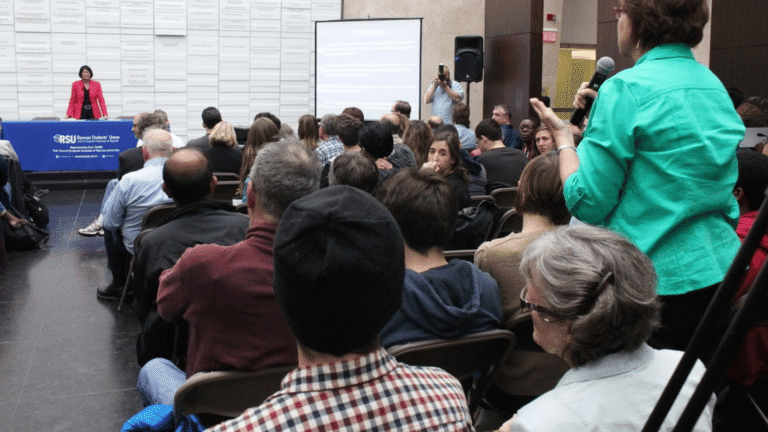
This is also where people affected by the proposed change or item, including organizations that work within that field, make speeches and deputations to influence the councillors in their decision-making process. If you’re curious to learn more about making a deputation in Toronto, you can look into our explainer.
Deputations and public input are an essential part of the decision-making process, which often happens alongside everything else.
Committee members might make a recommendation and move the proposal to city council, or they might determine that they don’t have enough information. In that case, they send the item back to City staff for more research and the cycle repeats.
Last comes city council
After a committee considers an item, it can make a recommendation to city council based on the findings, deputations and discussion. Then, council will look into it, discuss it, look at reports and communications, hear from other City officials, as well as members of council.
At this point, city council can do a few different things. It can adopt or amend the recommendations, or it can reject the motion entirely.
But even after council makes a decision, that’s not all there is.
From city council decision to bill to by-law
If a decision made at City Hall requires a by-law to put it into effect, the City Solicitor will prepare a bill — which is a draft by-law. That bill is brought to city council, where a councillor moves to introduce and pass it. If council passes it, the bill becomes a by-law.
Now, let’s talk about the Toronto Municipal Code, which is a bunch of selected City by-laws organized by subject. Not every by-law is in the code. By-laws that affect most Torontonians are usually included, but a by-law that deals with a specific person, place or one-time situation isn’t.
The Municipal Code is updated after every city council meeting.
So, what happens after?
Once a by-law has been enacted and comes into effect, the City needs to implement it. That process looks different for each by-law.
It might look like changing how a City service operates, enforcing a new regulation and more.
If you’re looking for the quick explanation of everything I’ve said, this is how I visualize the process:
Idea/request → Staff research/report → Committee meeting and public input → City council votes → Bill → By-law → Implementation
And remember, public input doesn’t happen at just one stage of the process — though deputations can’t be made at city council. Depending on the issue, residents can give their feedback as the item moves through the process.
Is there anything else you folks want to know about how Toronto works? Let me know at aia@thegreenline.to.
Fact-Check Yourself
Sources and
further reading
Don’t take our word for it — check our sources for yourself.


Join the conversation