


- Gather a group of like-minded people to start small-scale farms and gardens in the neighbourhood.
- Find unused lawn space that can be converted into communal gardens to grow fruits, vegetables and trees for residents.
- Use FoodShare’s Supportive Partnership Platform to get training, mentorship and resources to improve the garden.
- Reach out to local environmental advocacy groups to talk to members of the government about planting more trees in the neighbourhood.
- Conduct tree walks to raise awareness about the importance of native trees in the neighbourhood and empower residents to join local groups that take action.
Summers in the city can get dangerously hot with concrete trapping heat.
Trees are a natural and effective way of cooling down the area around them — but not every neighbourhood has enough canopy cover to feel the benefits.
So, one group in Thorncliffe Park went on a walk to get to know the species around them and to advocate for tree equity.
BECOME A GREEN LINE MEMBER TODAY
📸: Mary Newman/THE GREEN LINE.
Thorncliffe Park is one of Toronto’s first high-density residential neighbourhoods, built in the 1950s. Today, over 20,000 people live in just over three square kilometres.
The City of Toronto’s Tree Equity Score Analyzer shows that some parts of the neighbourhood have as low as nine per cent tree canopy cover, and is on average 2.3 °C hotter than the rest of the city, causing residents to experience intense heat.
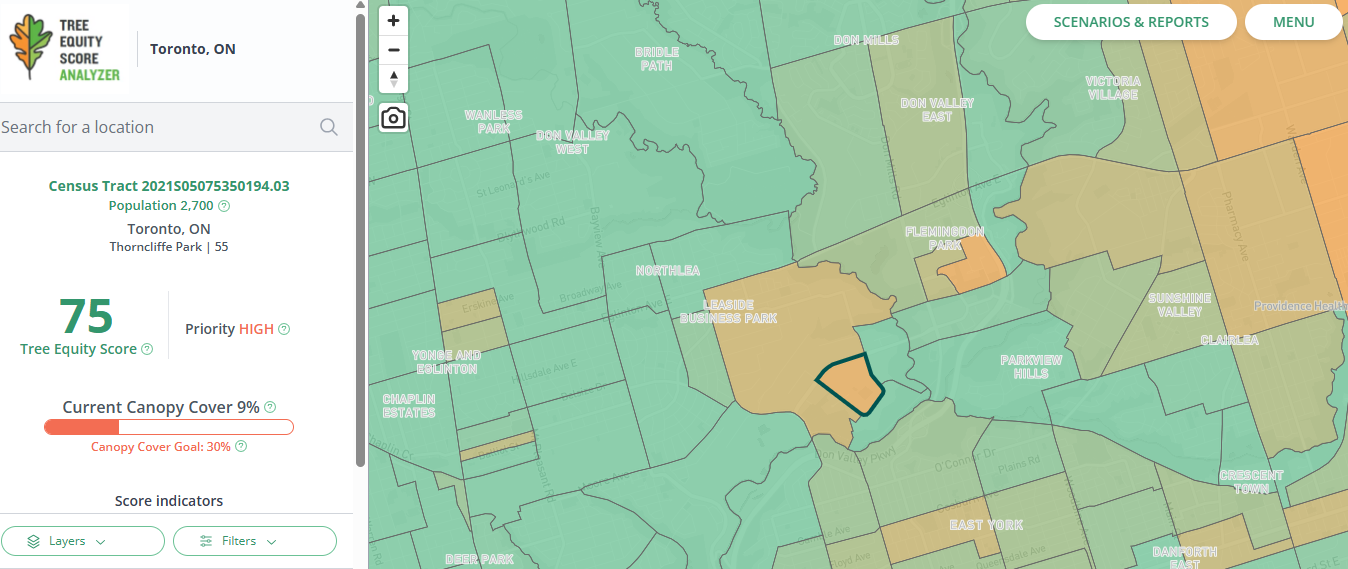
📸: City of Toronto’s Tree Equity Score Analyzer.
So, what is tree equity? It’s the fair distribution of trees in all neighbourhoods. A 2023 study on urban forestry shows that Toronto has an unequal distribution based on socioeconomic factors like income and race.
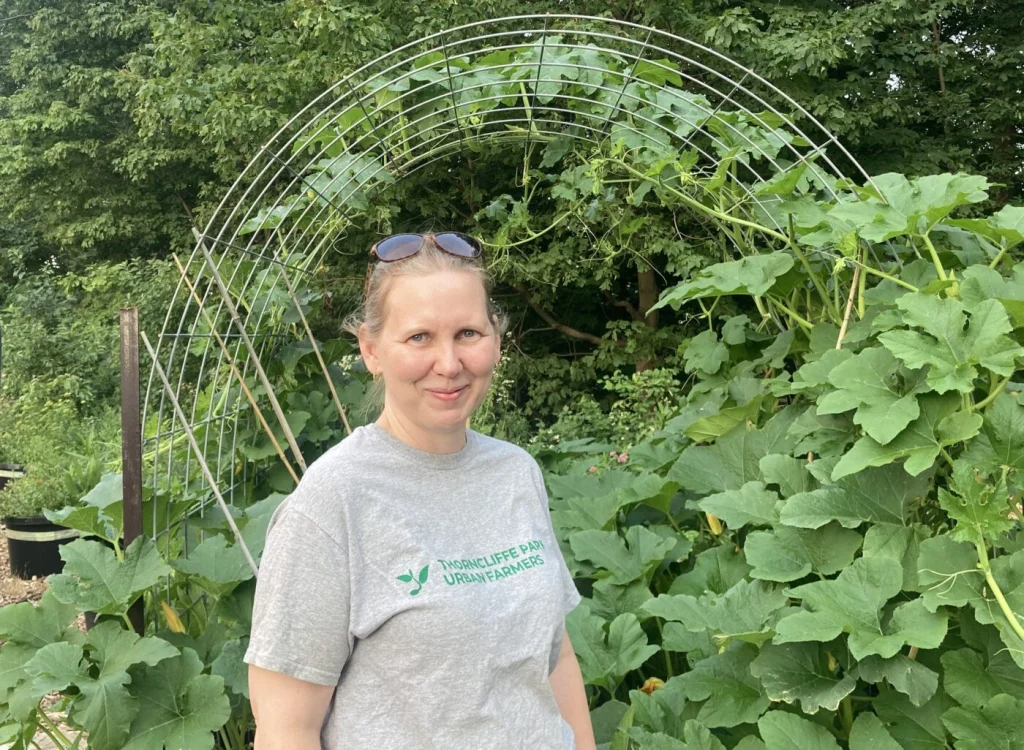
Michelle Delaney, project lead of Thorncliffe Park Urban Farmers, says that the high-density neighbourhood lacks spaces for people to cool down. So, it’s important to have a broad canopy cover to increase places of micro-cooling.
“We have a lot of high-rise buildings that are overcrowded and because of that, we have a lot of power outages. [There are] people who don’t have air conditioning, so you know those people can come outside and cool down under trees, but we need those types of spaces for people.”
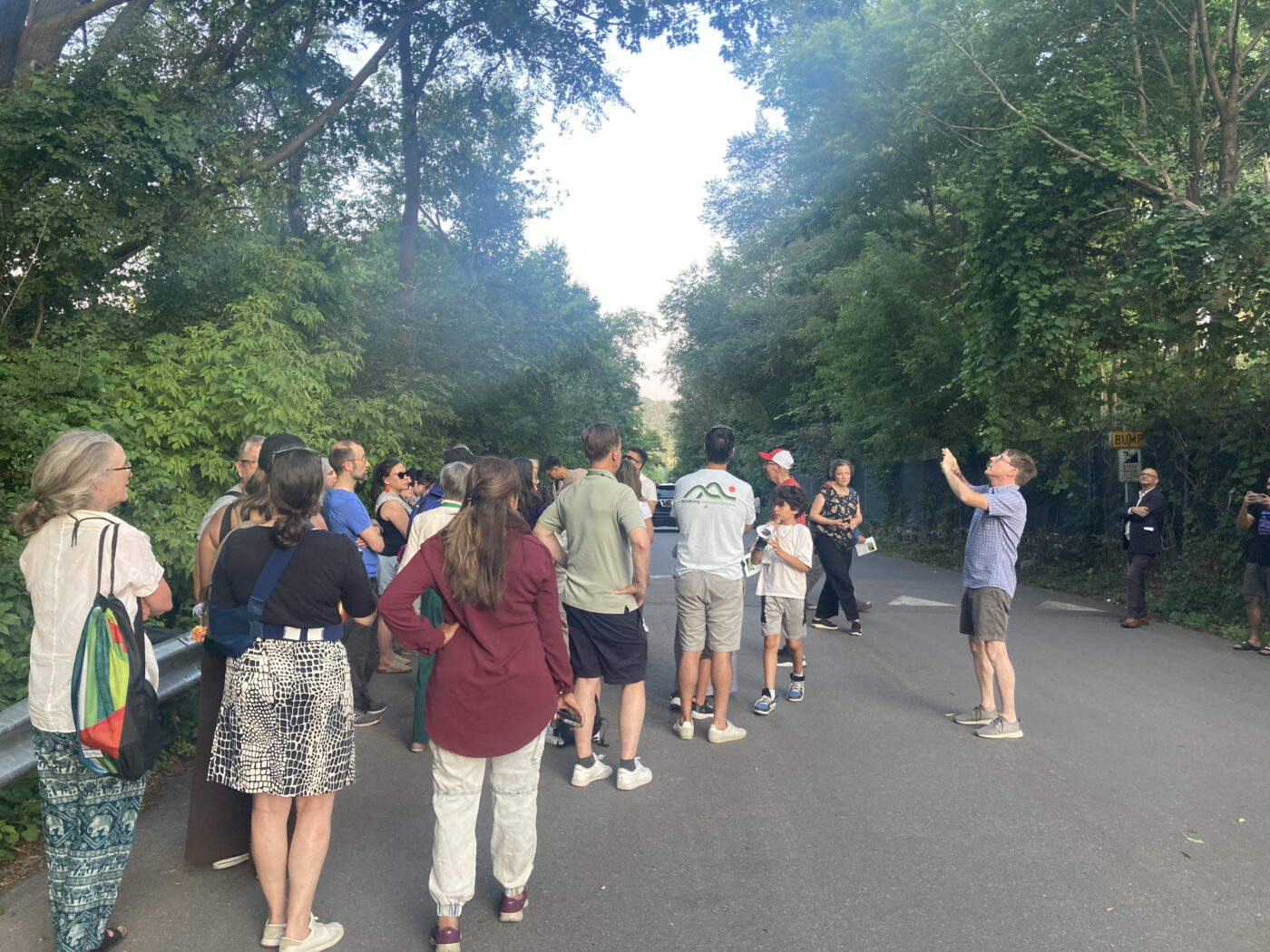
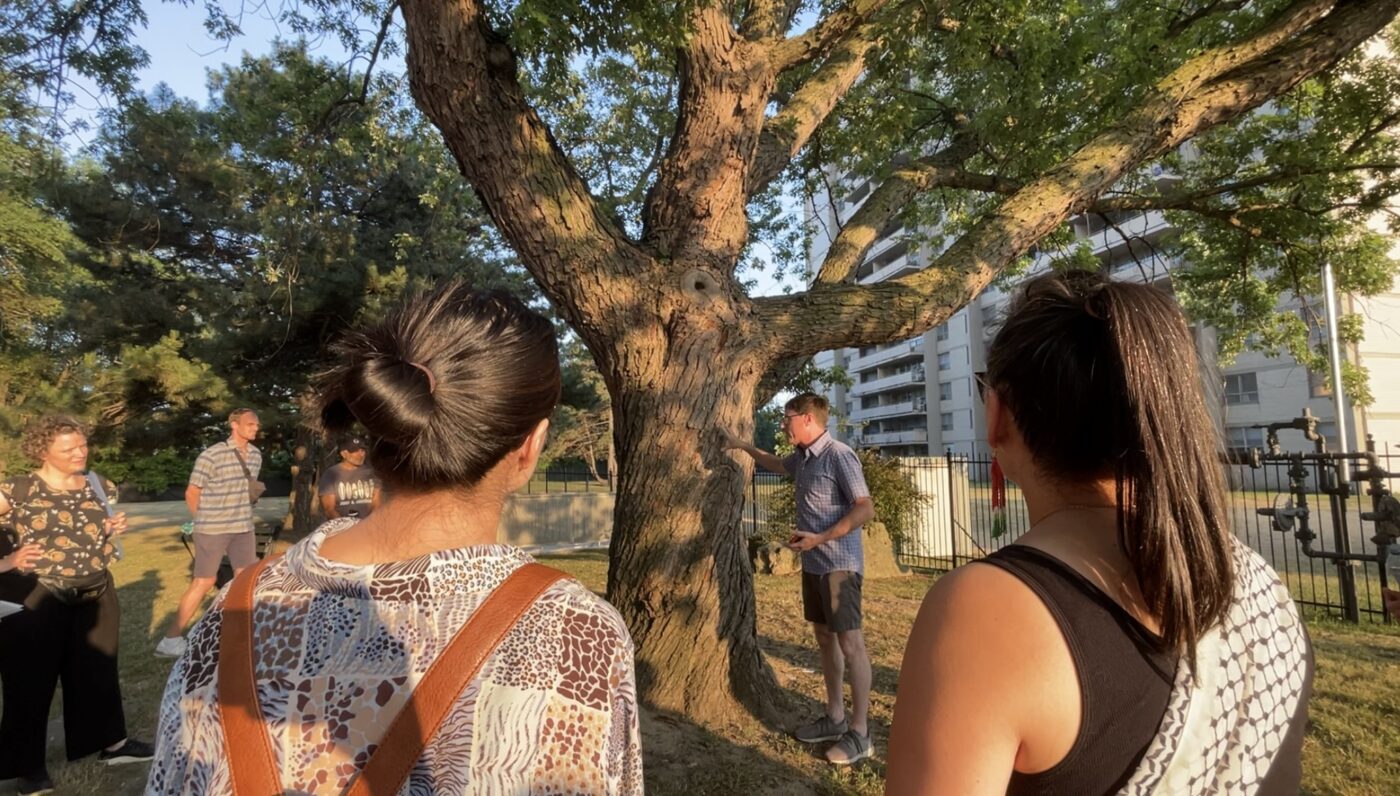
To address the lack of tree cover in the neighbourhood, the Toronto Environmental Alliance (TEA) teamed up with Thorncliffe Park Urban Farmers and Don Valley West for Environmental Action to host a tree walk, teaching residents about existing trees and empowering them to join local advocacy groups.
📸: Mary Newman/The Green Line.
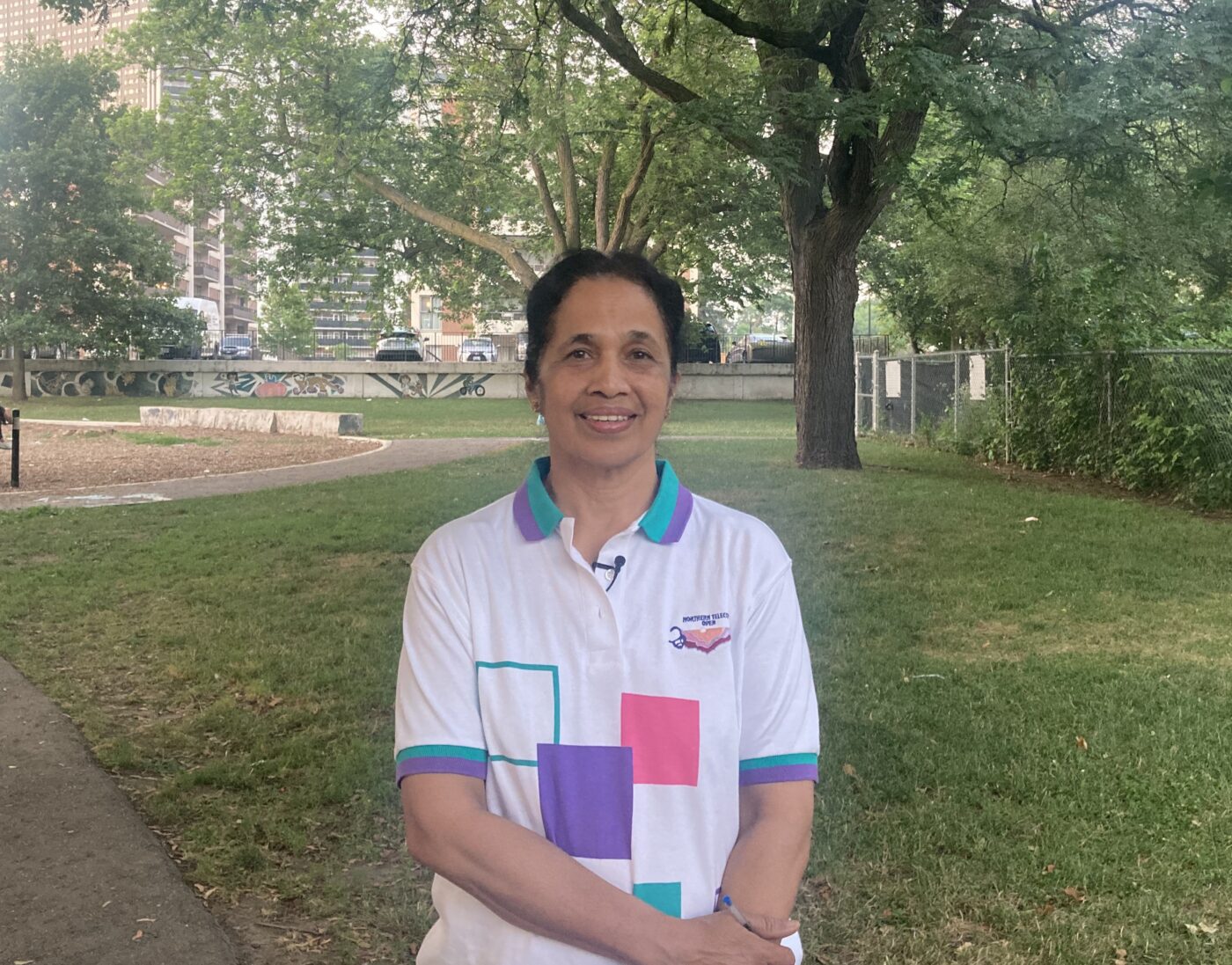
Aruna Samant, a new immigrant in East York, went on the tree walk and found the experience insightful. Having a PhD in botany from Mumbai University, the walk inspired her to volunteer for local organizations like the Thorncliffe Park Urban Farmers and contribute to community development.
“I realized the different ways through which you can bring change. People here are putting in effort. Organizations like TEA or the Urban Farmers have already traveled a path, they have set an example which I found in this community most suitable.”
📸: Amanda Seraphina/The Green Line.
Emily Alfred, a waste campaigner at TEA, says that all Torontonians can take care of trees in their neighbourhoods, but it’s also important to push municipal, provincial and federal levels of government to take action.
“To improve the urban forest, we really need to look at solutions on every level. We need to get more trees planted on private property around the rental buildings,” she explains. “We need more trees on public property like the boulevards on the street and in public parks, and we can also look at schoolyards and other community spaces.”
While the TEA hopes to conduct tree walks with local groups in other low-income neighbourhoods, the Thorncliffe Park Urban Farmers group is continuing their work to revitalize unused lawn space into communal gardens and plant more fruit trees in their neighbourhoods.
Fact-Check Yourself
Sources and
further reading
Don’t take our word for it — check our sources for yourself.

Join the conversation