
TL;DR
- Hannia Cheng, a Chinatown superstar, is a serial entrepreneur using arts as activism.
- The spark for advocacy and change can start in art workshops and neighbourhood events, which act as meeting places for people to build trust and create a shared understanding of belonging.
- Diverse, accessible cultural art programming acts as a gateway for community organizing and friendship.
📸: Lucas Bustinski/The Green Line.
Hannia Cheng, a Chinatown superstar, uses their art skills and passion to honour the iconic Toronto neighbourhood’s legacy.
Identity and art has always been at the core of what Cheng does. In 2019, they co-founded a DIY, queer Asian art space called Tea Base in Chinatown Centre, located at 222 Spadina Ave. They also helped establish Unit 270 Gallery, another art space in the mall, and All Flowers Mahjong which is a social club to play the game.
Cheng was also part of the group of people that founded the Toronto Chinatown Land Trust, a non-profit organization that stewards land and takes property off the speculative market so it stays in the hands of Chinese immigrants and their children.
BECOME A GREEN LINE MEMBER TODAY
But Cheng’s work isn’t simply about celebrating Chinese culture — it’s an act of resistance against displacement. Their art is a means to ensure Chinatown remains a place where future generations can build relationships, learn their history and collectively shape the community’s future.
Neighbourhoods only disappear when the cultural traditions and stories are no longer told — forgotten and abandoned by community members and next generations.
But in Toronto’s Chinatown, residents, like Cheng, refuse to be erased off the map as gentrification-driven displacement threaten their cultural identity and existence. Many people, especially younger generations, protect their Chinese heritage and their neighbourhood’s mapping by engaging in long-standing cultural traditions and programming.
Storytelling keeps neighbourhoods alive
The challenges, history and successes of Toronto’s Chinatown aren’t taught in schools. You don’t typically sit in a classroom and learn about the three Chinatowns, stories of displacement or the making of City Hall.
It’s through conversation, oral history, family traditions and art that these stories and the larger culture stay alive.
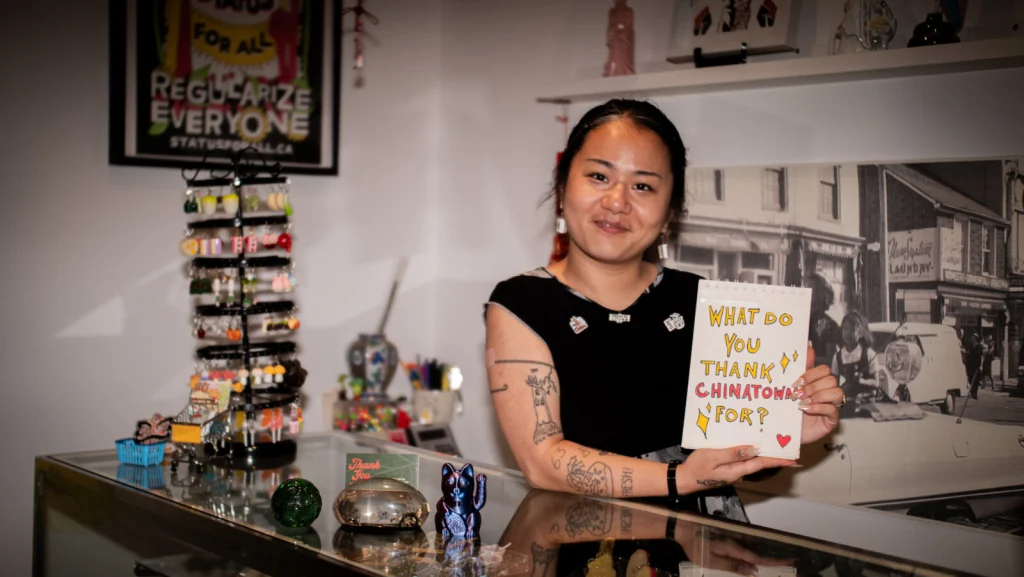
That’s why one of Cheng’s newest projects, Thank You Chinatown, is more than just a gift shop with culturally-relevant jewelry, stickers and postcards.
“[It’s] a gift shop about Chinatown, kind of documenting, acting as a living archive and a memory holding and storytelling space,” says Cheng.
Each item in the shop, which is tucked on the second floor of Chinatown Centre, is purposefully chosen to represent a fragment of Chinatown’s long history.
Behind the counter is an image of Old Chinatown’s anti-displacement efforts in the 1960s when City Hall was initially proposed. In a rack in the corner of the store, there’s a postcard of Yueh Tung — the oldest Hakka restaurant in the neighbourhood and one of the last remaining original businesses of the original Chinatown.
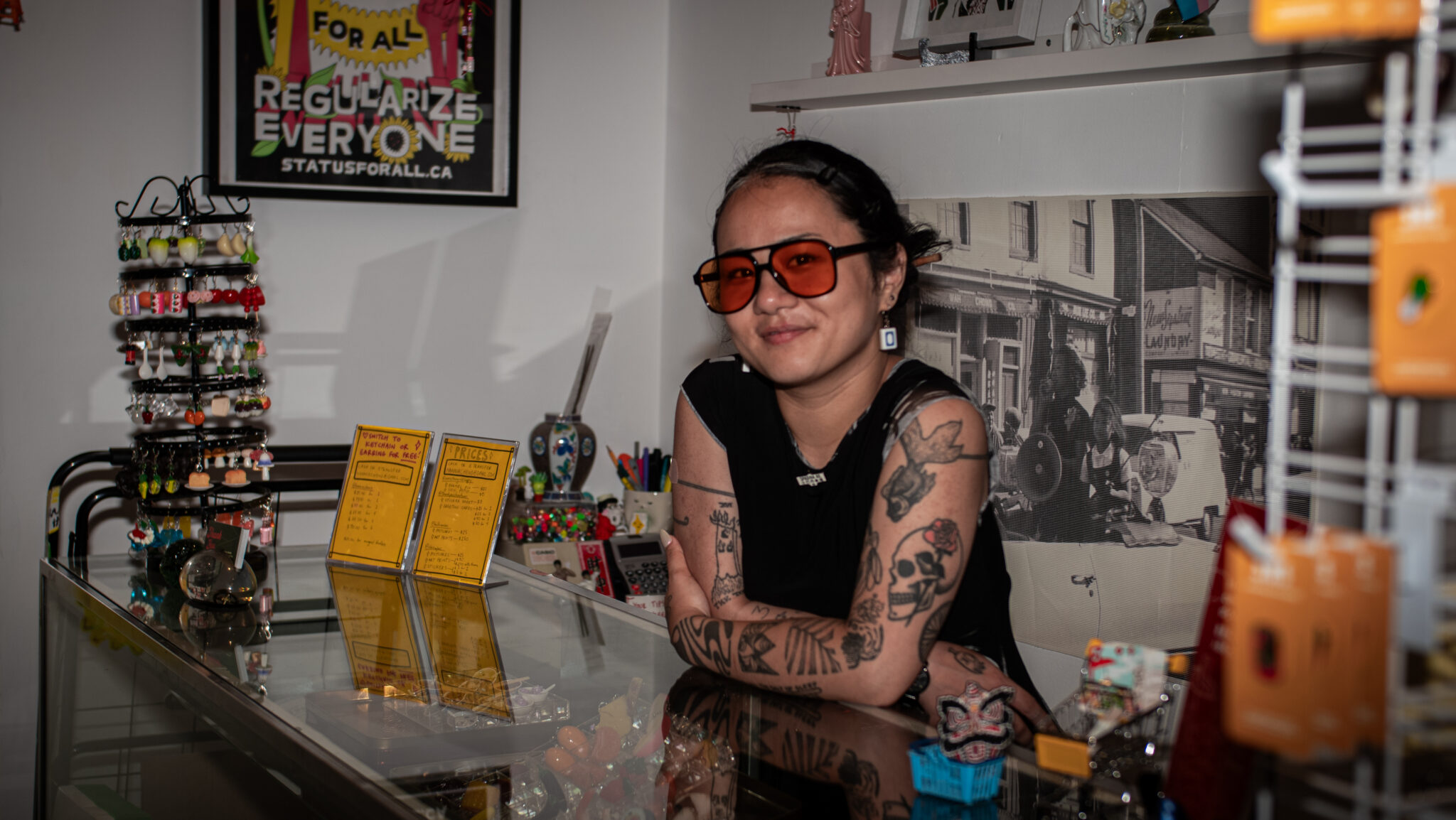
📸: Lucas Bustinski/The Green Line.
Cheng says the gift store is also a resting spot to connect and reflect.
They add that it’s important to honour Chinatown ancestors through storytelling and art, because keeping the neighbourhood alive is a generational effort. They explain that preservation strategies and civic engagement aren’t new — they’ve been used by older generations as they fought the first waves of gentrification-driven displacement.
Having spaces to learn about that history and carry lessons from one generation’s fight to the next helps people of all ages connect and mobilize together.
Cultural expression moves communities towards advocacy
For many, the road to advocacy is tied to public meetings and protests. What most people don’t see is that the path to change starts with community building, cultural programming and even fun.
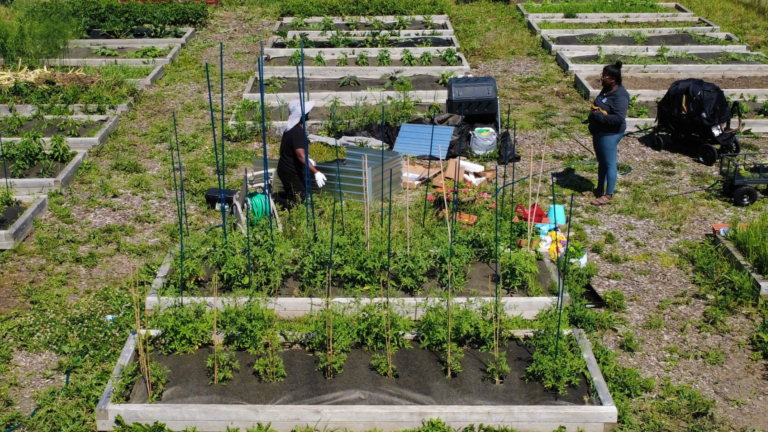
It begins around circular tables where community members play mahjong on Wednesdays, or in community gardens where they plant culturally-relevant crops. The spark for advocacy and change can start in art workshops and neighbourhood events, which act as meeting places for people to build trust and create a shared understanding of belonging.
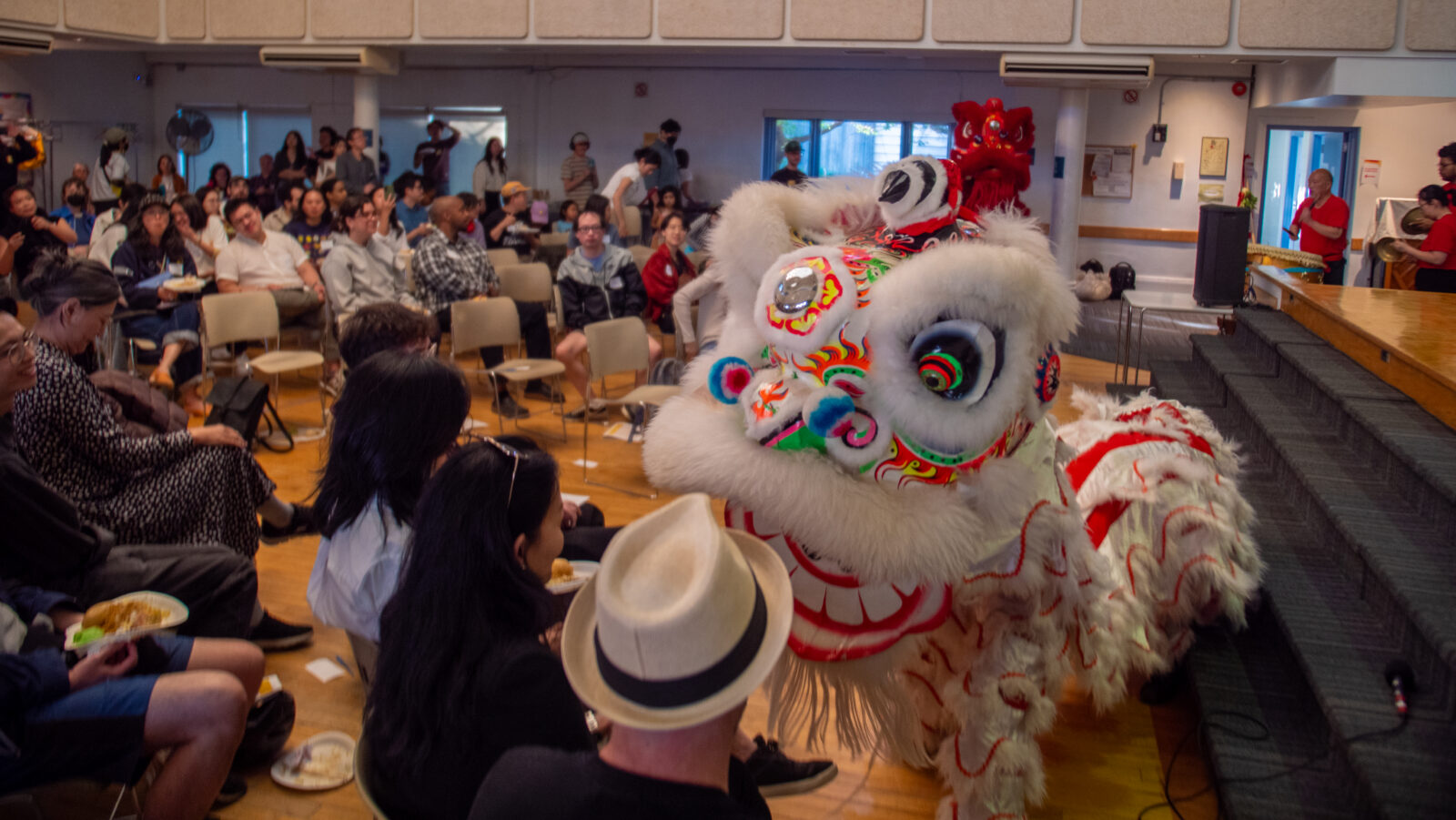
Chinatown has different cultural programming groups that people can join based on their interests. For example, there’s Long Time No See, which is an arts-based collective that documents the neighbourhood’s untold stories. There’s also the local Lion Dance Club, which features traditional Chinese dancing and many other groups.
There’s the Anti-Displacement Chinatown Garden, a community garden created during a coast-to-coast Chinatown Week of Action in 2019. This specific initiative led to Friends of Chinatown Toronto (FOCT), which then led to the creation of the TCLT.
“These are all low-barrier, free, accessible programming and it just creates a consistent gathering point for organic friendship, informal socialization, the yapping, the gossip — all of these soft things that happen, these ripples and interactions add up,” Cheng explains.
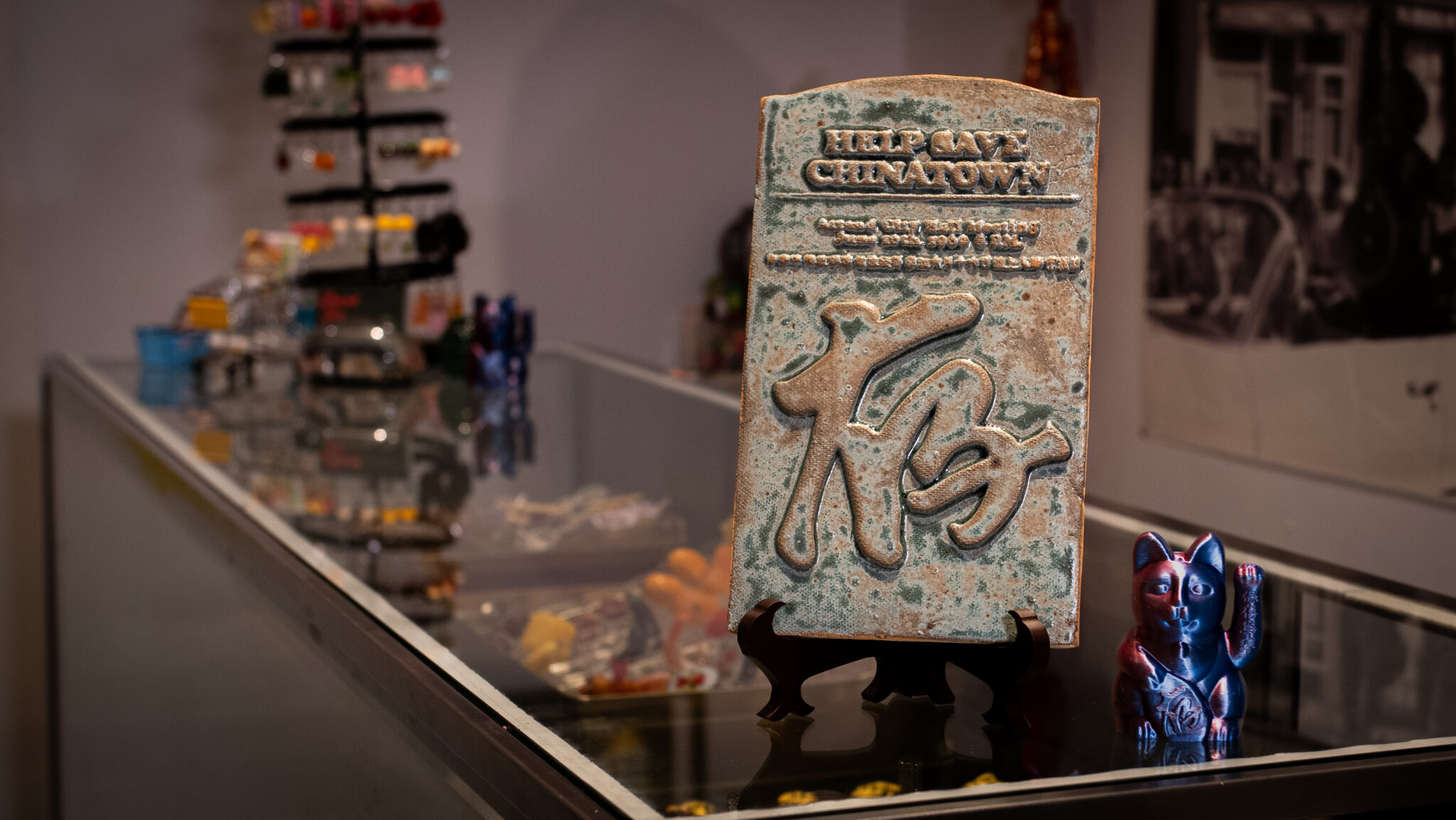
📸: Lucas Bustinski/The Green Line.
They add that these cultural spaces and events are an opportunity to announce any local movements or needs for support to mobilize community members. They say it’s a consistent gathering space rooted in cultural practices and it makes people invested and involved.
“It’s a beautiful way to build community,” they say. “It’s not based on just constantly reacting. We’re actually bringing people into the neighbourhood, we’re bringing people into the movement and it’s often through dancing or art or language.”
Brian Chang, co-treasurer of the TCLT, says that deputations and civic engagement are important but it’s not the kind of work that brings people in.
“It’s the gardening, the lion dance, the kung fu, the mahjong and all of these things help us to build our base and help us to engage with people meaningfully,” he says. “When we say by the community, for the community, it has to mean something and it has to come from a place where we can meet people and understand people and make people feel welcome.”
For Cheng, that’s why cultural expression and programming is essential for preserving Chinatown. Long before residents advocate for policy, these arts spaces and opportunities provide connection, awareness and strength in numbers.
Culture needs physical spaces to thrive
Community members need physical spaces in order to play mahjong together or rehearse lion dancing.
Cam Wong, acquisitions and stewardship manager of TCLT, and Cheng both stress how owning land and space is important for maintaining agency and freedom in the kinds of programming and gathering that happen in the neighbourhood.
“There’s a bunch of cultural programming that has been the result of community stewardship of lands,” says Wong. “Every single Wednesday, there’s a traditional lion dance club that happens. There’s kung fu in the park. There’s a mahjong club that runs out of a traditional family association.”
Community land stewardship is a strategic and important tool in keeping land in the hands of Chinatown residents to avoid developers coming into the neighbourhood, displacing people and programs. You can learn more about it in the first part of our Chinatown videoseries.
How to use the arts to preserve a neighbourhood’s cultural heritage
1. Create accessible spaces at low-costs
By making cultural programming accessible and welcoming, you increase the number of people that participate and attend these opportunities and events. And when people feel connected to each other and a cause, mobilization becomes quicker.
2. Share community stories
By inviting people to share their histories and experiences through art, you create opportunities for Chinese and non-Chinese people to learn the stories and cultural traditions of a diaspora.
In 2025, Cheng and Annie Wong — another artist — prepared a performance for Nuit Blanche, an annual, Toronto-based celebration of contemporary art that happens all night.
The project called “The Sounds of Lions in Chinatown,” shut down Dundas Street with a three-hour long procession that had over 60 community members.
The demonstration had speeches from intergenerational activists and featured two gates — because Chinatowns across Turtle Island often have them. The two pillars were actually fliers from the Save Chinatown campaign in the 60s since West Chinatown doesn’t have its own.
“And so, to see thousands of people take up space on Dundas Street to be able to connect with our local history, but also more important, to see that we could organize and facilitate an installation and performance that had the involvement of over 100 people — like that was a really big deal.”
3. Diversify the cultural programs available
Cam Wong says that the kinds of cultural programming they listed earlier doesn’t even scratch the surface of the diversity of opportunities there are in the neighbourhood. The variety of programs is important to meet the needs and curiosities of different kinds of people.
If you look at the Toronto Chinatown Land Trust’s website, you can look up different initiatives, groups and clubs that peak your interest.
If you want to join arts-based programming in the neighbourhood, you can also visit the Cooperation Chinatown page — an informal network of loosely Chinatown-based projects and collectives.
Fact-Check Yourself
Sources and
further reading
Don’t take our word for it — check our sources for yourself.
Join the conversation