
On a sunny and breezy Friday afternoon, residents of 3000 Queen St. E. gathered in the parking lot to enjoy a BBQ hosted by their landlord.
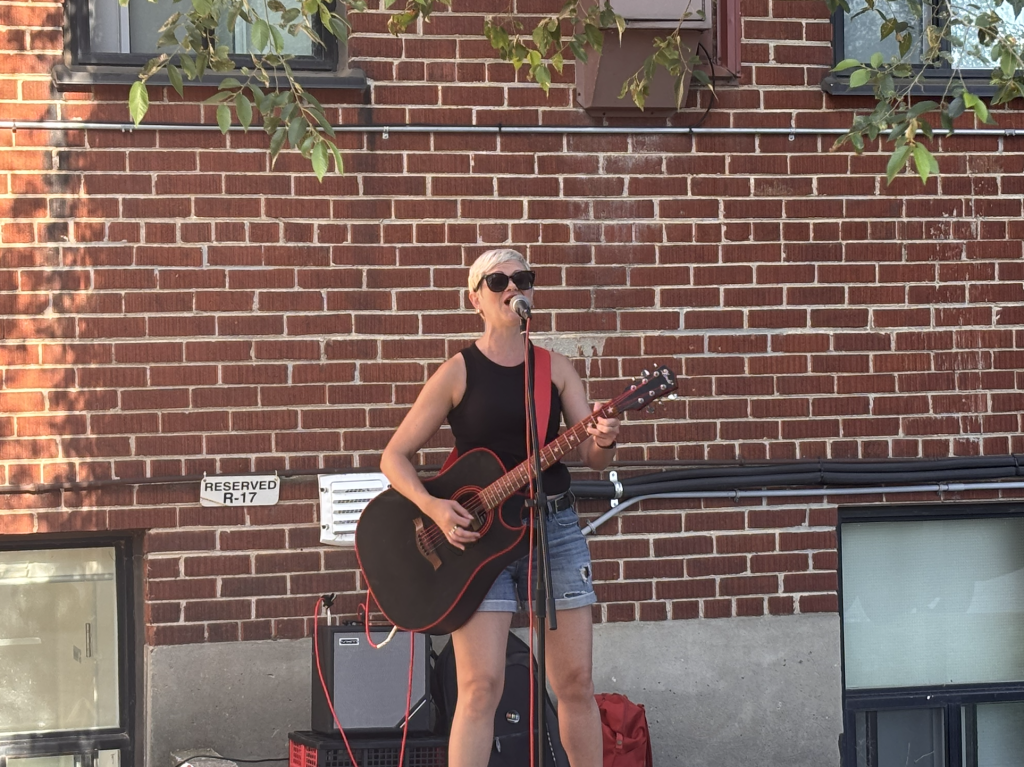
As people were grabbing burgers and hot dogs, a resident, Nikkole Stone, entertained the small group with original songs and popular covers.
Her partner, Andrew Harris, had decided to skip the event even though the two had been excited to attend together. He’d agreed to cook for his neighbours and cancelled a work shift to honour his commitment, only to be told a day before that his help was no longer needed.
But Harris’ discomfort with building management was deeper. He’d been struggling to make ends meet and the landlord had threatened to move forward with the eviction process a few days later on Sept. 1.
What stung most is that his building is supposed to be run as non-profit affordable housing.
Harris’ apartment building is owned and operated by Fred Victor, a social service charity with a focus on ending homelessness. The organization purchased the building in early 2025 via the City of Toronto’s Multi-Unit Residential Acquisition Program (MURA), a program that turns units into “permanently affordable non-profit rental housing.”
Harris, 47, had been paying rent above the affordable limit set by the City up until September 2025, when he started falling behind on payments due to unstable employment. He can now face eviction hearings and lose his home.
“My blood pressure was 174 over 108, and [the doctor] gave me medications to calm me down,” Harris told The Green Line on Aug. 28, the day of the BBQ. “I’ve always felt bad for street people and I know how easy it can happen.”
“That’s the one thing that terrifies me: coming home one day and the doors are locked or the locks are changed, all my shit is inside.”
MURA’s affordable housing goals
In 2021, the City of Toronto launched MURA to “provide dedicated funding to facilitate the purchase and conversion of at-risk private market rental housing to create permanent affordable homes owned by non-profit and Indigenous housing organizations.”
One of MURA’s objectives is to improve housing stability for current and future tenants.
Eileen Wennekers, a licensed paralegal and local housing advocate who’s offered to help Harris pro-bono, says MURA is a good system to meet the challenge of dealing with Toronto’s housing crisis. “There are a lot of solutions that need to be deployed. No one solution is perfect, but this is a pretty good tool,” she explains.
Maintaining affordable housing, especially in older buildings that need a lot of repairs and may have been neglected, is a difficult and costly proposition for any owner, Wennekers explains. MURA makes it feasible by providing loans or grants to non-profits to purchase, repair and maintain these buildings. It also provides exemptions from municipal and school taxes that can be hefty.
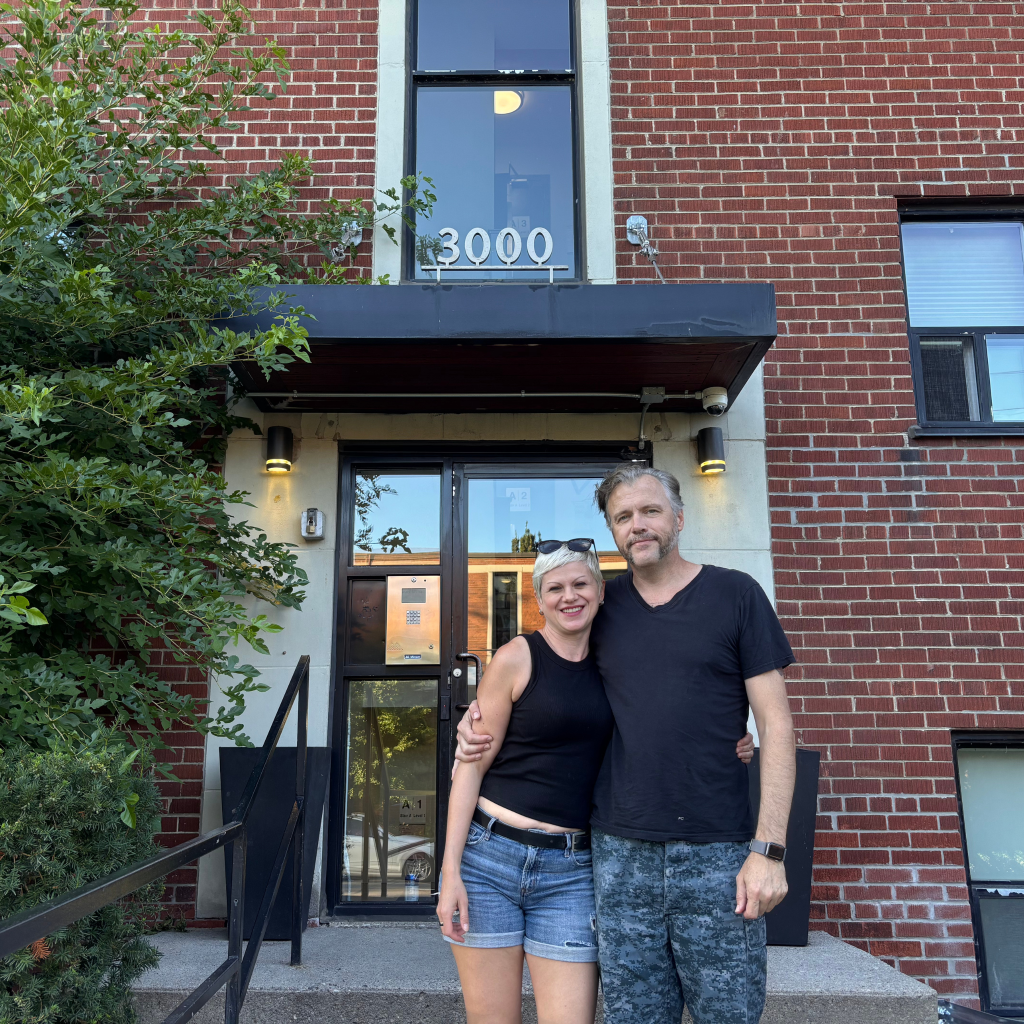
Since 2021, the City of Toronto granted $165 million to 21 housing providers to buy and operate more than 1,300 units. This includes $6 million and tax exemptions granted to Fred Victor in 2023 for the organization to take over 3000 Queen St. E., the 30-unit building where Harris and Stone live.
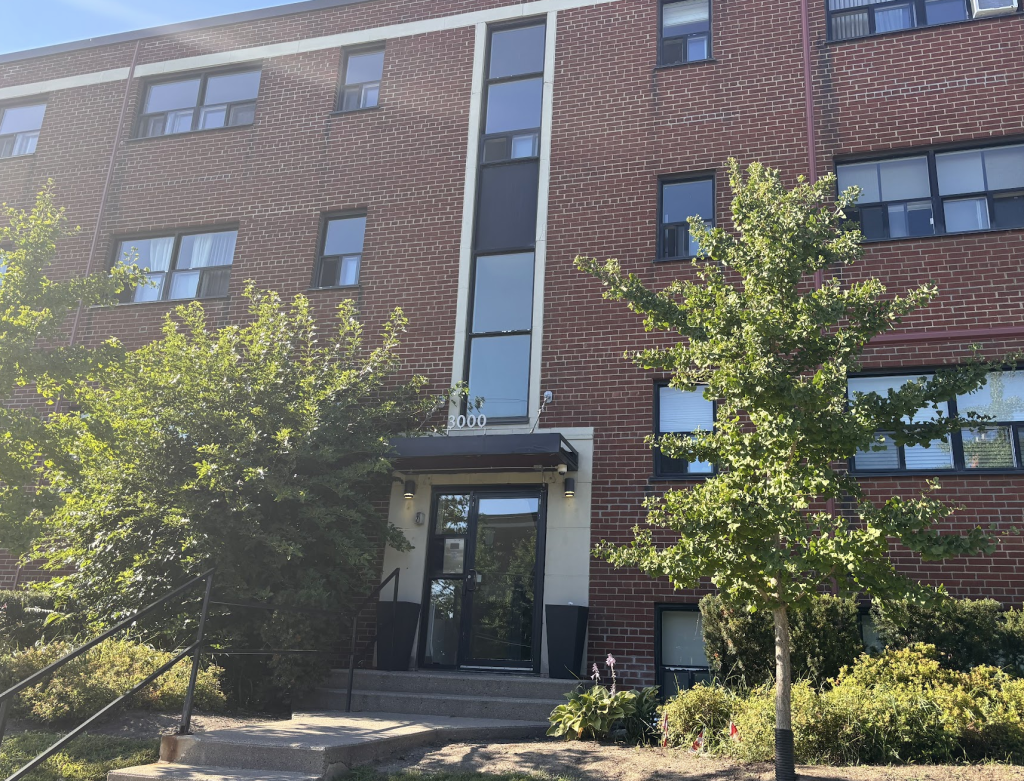
📸: Yara El Murr/The Green Line.
For 99 years after an acquisition, housing providers can’t charge monthly rent that’s higher than the Average Market Rent (AMR) for any unit, and should aim to maintain an overall average rent of 80% AMR.
The AMR for Toronto is published every year by the Canada Mortgage and Housing Corporation (CMHC), and currently sits at $1,763 for a one-bedroom apartment, which means an affordable one-bedroom unit should be around $1,410. Under MURA, housing providers can’t increase monthly rent above the yearly threshold set by the province: 2.1% this year and 1.9% for 2027.
Harris told The Green Line that he currently pays $2,037 per month in rent. This means he currently pays $627 more than the current affordable rent that applies under MURA and $274 above AMR.
Struggling with housing and jobs
Over his three decades in the workforce, Harris has juggled multiple career paths. He regularly picks up gig work as a sound and audio-visual (AV) technician, has experience in software and web development, and holds a degree in medical physics from Toronto Metropolitan University. In search of job stability, he recently completed a certificate in machine learning foundations from the University of Toronto’s Data Science Institute. Yet for years, Harris has struggled with precarious employment.
“Because the work that I’ve been able to find is so sporadic, I’ve never been able to really put a budget together because what’s the point when I don’t know how much money I’m going to make?” he says. “Like some months, I make five grand; some months, I make zero.”
In July 2022, Harris moved into his current one-bedroom unit at 3000 Queen St. E. after losing his previous housing and having couchsurfed for a while. Harris says he jumped at the first housing opportunity he could get, even if it meant rent — $1,915 at the time — was expensive for him.
The building wasn’t perfect. It had some pest and maintenance issues; the super wasn’t particularly pleasant or responsive to repair requests. But Harris and his partner Stone, who moved in with him in 2024, love their neighbourhood’s community.
📸: Yara El Murr/The Green Line.
While Harris looked for better jobs, Stone was also struggling to find stable income. She’d worked for more than a decade in corporate marketing before being “made redundant” in November 2022, and has been “feverishly” job hunting ever since.
As of October 2024, Stone has been developing an AI-powered personal wellness app, but she says she’s owed many months of unpaid wages because the project is unfunded. In the meantime, Stone has been picking up any work she can find as an actress, singer, dog walker and babysitter while living on Ontario Works, the provincial social assistance program that provides money for food, shelter and basic needs for people in financial hardship.
“I feel like I just throw resumes into the void,” she says. “We’re in a situation here in Canada where there are supposed to be jobs and there’s supposed to be all this opportunity.”
“I’m sorry, it’s not working for me,” Stones adds, explaining that she can’t contribute much towards rent.
Falling through systemic gaps
Harris has always struggled with rent, so he was excited to find out that Fred Victor bought his building several years into his tenancy. “I was really hoping that it was going to make the housing situation a lot less stressful,” he says.
In a letter dated Feb. 12, 2025, Fred Victor announced the building’s ownership change to tenants. “All current rent, parking, deposits, lockers will be honoured and charged the same amount as you are now paying at least until there is a yearly increase,” it says.
Since then, the building’s condition has improved, as Fred Victor staff are quick to address issues, according to Harris.
But, as stated in the February letter, rents have stayed the same — whether they’re affordable or not.
In April 2025, when Harris was earning around $1,400 a month, he asked Fred Victor’s building management and housing staff for work around the building in exchange for lower rent. In an email reviewed by The Green Line, staff told him, “Unfortunately, this is not something we can do.”
As tenants, Harris and Stone have been eager to contribute to their building’s community, offering to act as handypeople, build a community garden, cook and perform. But they say they felt stonewalled and excluded by management. “We want to help, and we need some help,” Stone says.
In May 2025, Harris asked Fred Victor about more flexible and equitable rent arrangements, pointing out that some neighbours paid almost half of what he does for a similarly sized unit. A neighbour who’s been living in a similar-sized unit for over two decades, and who didn’t want to be identified for privacy reasons, confirmed they pay about half of what Harris does to The Green Line.
In a response via email, Fred Victor staff said, “All rents with current tenants were set by the previous landlord, not by Fred Victor. Tenants who lived there prior to Fred Victor buying the building all have different rents. Going forward, rents for new tenants in the building will be calculated according to Affordable Housing guidelines.”
Harris found the reply disappointing and confusing. “I don’t understand what the argument against resigning a lease for a tenant who’s already there at the capped amount is,” he says.

📸: Yara El Murr/The Green Line.
For a few months in the summer of 2025, after losing regular gig work, Harris received enough EI, about $2,300, to cover his rent — though he was left with only 10% of his income to pay for food and other necessities, including internet for job searching.
The EI ran out in September, and Harris started receiving around $700 a month through Ontario Works. That’s when he started falling behind on rent.
In April 2026, Fred Victor served Harris with an N4 eviction notice for more than $12,000 in overdue rent. To avoid proceeding with an eviction, they came to an agreement through the Landlord and Tenant Board (LTB): Harris would start paying $150 in addition to his regular rent every month until the amount owed is repaid.
When work picked up in the summer, Harris says he paid more than $4,000 towards arrears to clear up his debt faster. But as gig opportunities dried up in August, he emailed Fred Victor staff again to ask if he could pay half of September’s rent on the first of the month and the other half later in the winter when he’d have more work.
“I am very sorry to hear that things are not going well, but unfortunately you need to abide by the payment agreement that was made through the Landlord and Tenant Board. It’s not a renegotiable agreement,” Fred Victor staff told Harris several days later in an email response reviewed by The Green Line. “If we don’t have the rent plus 150 by September 1, it’s a breach of the agreement and I would have to file with the LTB. I am sorry, but with over 8000 still owing, I will not be able to make any exceptions.”
When contacted by The Green Line, Fred Victor declined to comment, citing an obligation to preserve the privacy and confidentiality of their tenants. Staff shared a written statement instead.
“Fred Victor is committed to treating and working with the people we serve and house with dignity, respect and compassion. Part of that respect includes protecting their privacy regarding their personal circumstances. 3000 Queen St. E. has been a mixed-use building since 2023. The City of Toronto’s Multi-Unit Residential Acquisition (MURA) program has specific parameters,” the statement says. “We have been working directly with the people involved for an extended period of time, and remain committed to working toward a resolution.”
What happens next?
On Aug. 28, the day of their building’s BBQ, Harris and Stone reached their GoFundMe fundraising goal of $1,500 to cover September’s rent and keep their apartment at 3000 Queen St. E. a little longer.
But the threat of eviction still looms.
“We’re going to just have this boom and bust cycle again and again if nothing changes…until one of us or both of us find gainful employment,” Stone says.
As they both continue to job hunt, Harris and Stone still hope that Fred Victor will agree to reduce their rent to affordable levels.
Although publicly available descriptions don’t specifically lay out a mechanism for non-profit housing providers to lower the rent for tenants who already lived in purchased buildings, MURA bylaws clearly state units must be affordable.
In an email, the City of Toronto said, “Building acquisitions funded through MURA may contain units that are rented at both market and affordable rates at the time of acquisition. All homes in MURA buildings must provide affordable rents to income-tested households on tenant turn-over.”
But the City didn’t respond to The Green Line‘s question about whether and how existing tenants can have their rents reduced. It’s unclear what such a process would require, but the City does have tools to enforce affordability in MURA buildings.
“The City has some real teeth to enforce it through the way the bylaws are written to make it so that these non-profits that purchase these buildings are indeed actually charging affordable rent,” paralegal Wennekers says. “In general, the agreement is made conditional on that nonprofit providing affordable housing. If the nonprofit doesn’t, the City can revoke their tax exemption and that has happened.”
In 2025, the City of Toronto revoked the tax exemption of affordable housing located at 157 Jameson Ave., which St. Clare’s Multifaith Housing Society had been running under MURA.
“Whereas not all of the residential units at 157 Jameson Avenue currently fall within the definition of ‘affordable housing’ as the term is defined in the Municipal Housing Facility Bylaw 713-2024,” the bill that revoked the tax exemption states.

📸: Yara El Murr/The Green Line.
Wennekers declined to comment on Harris’ case and whether the same scenario would apply. Generally, though, she says the Residential Tenancies Act (RTA) bumps up against MURA “in some probably unanticipated ways.”
According to the RTA, leases must be preserved when a unit’s ownership changes. This rule, called security of tenure, is meant to protect tenants from evictions. When building ownership changes under MURA, providers are required to maintain previous tenancies. This creates a situation that could leave tenants stuck with rents above the affordable levels established by the City.
“This may be an opportunity to sort of educate people who are working in the offices of some of these non-profit housing providers,” Wennekers says, explaining that non-profit housing providers may not be aware that maintaining the same lease with tenants could contradict their commitments under MURA.
She adds that the security of tenure rule doesn’t prohibit landlord and tenant from signing a new lease if they both consent.
As he and Stone figure out how to maintain stable employment and housing, Harris hopes that the City of Toronto and housing providers will eliminate the barrier preventing sitting tenants from re-signing their leases at affordable rates. He argues it makes no sense to force an existing tenant to move out or face eviction — only to offer a lower rent for the next person who’d take the apartment over.
“I just think that this program is a well-meaning program, but it’s got a pretty huge gap in it. And you know, people fall into gaps, right?” Harris says.
Do you live in a MURA building?
Wennekers suggests — though this is general information and not legal advice — that Torontonians who live in buildings purchased under MURA check if their rent complies with the affordability levels set by the City.
“I think in some of these cases, it’s genuinely an honest oversight and there’s no harm in reaching out if that oversight has happened and saying, ‘Hey, I think there’s been a mistake here,'” she says.
Here are Wennekers’ tips:
- Do it in writing, be clear and stick to the facts; don’t speculate on motivations from the landlord.
- If this first step doesn’t work out, you can and should reach out to your local representative, especially when it comes to government-run and -funded programs.
- The next best step is to reach out to a community legal clinic to get specialized help in navigating the issue.
- Also, check out the Federation of Metro Tenants Association (FMTA), the Community Legal Education Association (CLEA) and local tenants’ associations.
Fact-Check Yourself
Sources and
further reading
Don’t take our word for it — check our sources for yourself.