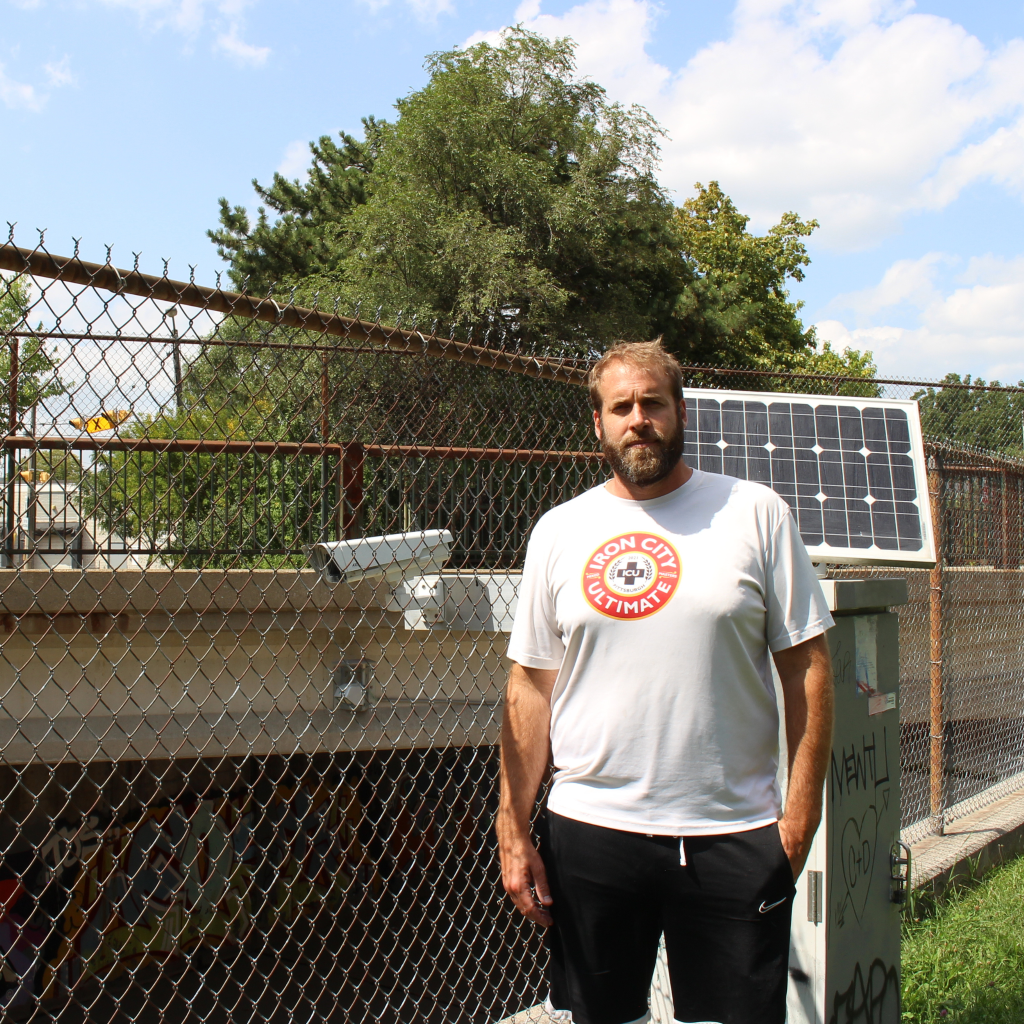

This article was produced as part of the Local Journalism Initiative.
Local residents are still demanding answers from the City of Toronto after staff held an information session last week about the first phase of the Rockcliffe Flood Mitigation Projects.
“We don’t get the respect or attention of the City,” says Rockcliffe-Smythe resident and Black Creek Alliance member Tanya Connors. “We’re told what’s going to happen in our neighbourhood. We’re not consulted.”
BECOME A GREEN LINE MEMBER TODAY

The west-end neighbourhood has experienced decades of flooding because it was built along the natural floodplains of Black Creek and Lavender Creek.
Toronto and Region Conservation Authority (TRCA) studies from 2014, 2020 and 2023 that look at the environmental impacts of flooding and past municipal flood protection measures in Rockcliffe-Smythe ultimately prompted the City of Toronto to propose the Rockcliffe Flood Mitigation Projects. The $300 million project is funded by the Government of Canada’s Disaster Mitigation and Adaptation Fund and the City of Toronto.
The City-led project, which has been years in the making, aims to reduce flood risk along Black Creek and Lavender Creek. The first phase focuses on replacing the Jane Street Bridge and Scarlett Road Bridge with wider structures. “The wider opening under the bridges will allow water to move through the channel more quickly,” according to the City of Toronto.
The next phases will replace the Rockcliffe Boulevard Bridge and widen the Lavender Creek culvert, among other changes.
While Rockcliffe-Smythe residents do want flood protection, some are expressing concerns over the project’s solution and whether it will actually help save their homes.
What seems to be the issue?
Multiple residents told The Green Line that they want the City of Toronto to move faster with the project, as it’s expected to be completed nearly a decade later in 2035. Others are raising concerns about how the TRCA’s solution doesn’t account for friction and changing water speeds, and want it re-evaluated before construction starts this fall.
Tim Mereu, a water resources engineer whose son used to live near Lavender Creek, is concerned that the modelling proposed in the TRCA’s assessment makes the water appear to be moving faster than it really is because it doesn’t include friction or change in water speed. Mereu says he raised his concerns with the TRCA and the City.
“It’s highly unusual,” he says. “I can’t think of another case where you’re going into a design with a solution that you should know doesn’t work.”
Mereu adds that the City should reconsider other options before it’s too late.
There are also concerns about the environmental impacts on Smythe Park, as the project involves removing trees and turning land into concrete. In response to The Green Line, Jennifer Graham Harkness, chief engineer and executive director of engineering and construction services for the City of Toronto, says they addressed these concerns.
“Fallen trees have been set aside for use around the Smythe Park medicine garden, for sacred fires and additional construction measures have been incorporated to strengthen wildlife protection,” she explains.
The City has described the Rockcliffe Flood Mitigation Projects as a major investment in protecting homes and businesses in Rockcliffe-Smythe. “The City remains committed to delivering long-term flood protection while balancing environmental, community and construction considerations,” says Graham Harkness.
What did residents learn at the City of Toronto’s information session?
On Aug. 18, the City of Toronto held a pop-up event at 501 Alliance Ave., the same building where two men nearly drowned in an elevator in 2018, to inform Rockcliffe-Smythe residents about the project’s first phase.
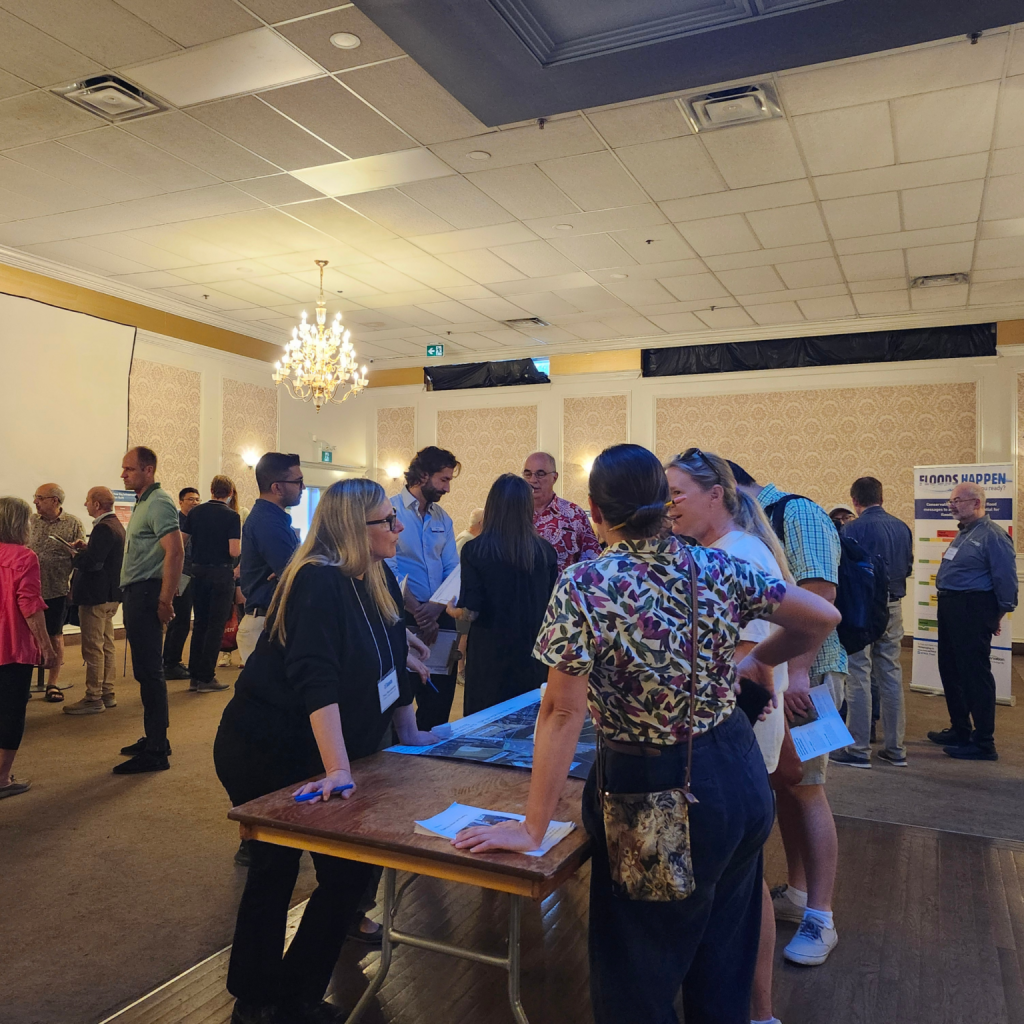
📸: Julia Lawrence/The Green Line.
According to the City, 38 people attended the event. “Community feedback has played an important role in this project from the beginning and continues to inform its planning and design,” says Graham Harkness.
Residents asked City staff about basement flooding and sewer backups, construction timing and sequencing, and traffic and community impacts.
Eric Swanson, a resident who attended the pop-up, shares Mereu’s modelling concerns. He says there’s a disconnect between the TRCA’s solution and what residents are actually experiencing during flooding. “If the model is telling you you need to do that, but real life says you don’t need to do that, what else is wrong with the model?” he asks.
Swanson and his family experienced a flood in July 2020, which filled their basement with water. Since then, Swanson has taken precautionary measures, spending about $100,000 on flood protection, including new sump pumps, swapping out his regular garage door for a special one from Germany that blocks water from entering his garage and replacing entry doorways with thicker options.
For Swanson, transparency from the City is as important as the project’s construction. He says residents should be able to see why the City’s solution is considered more reliable than other alternatives.
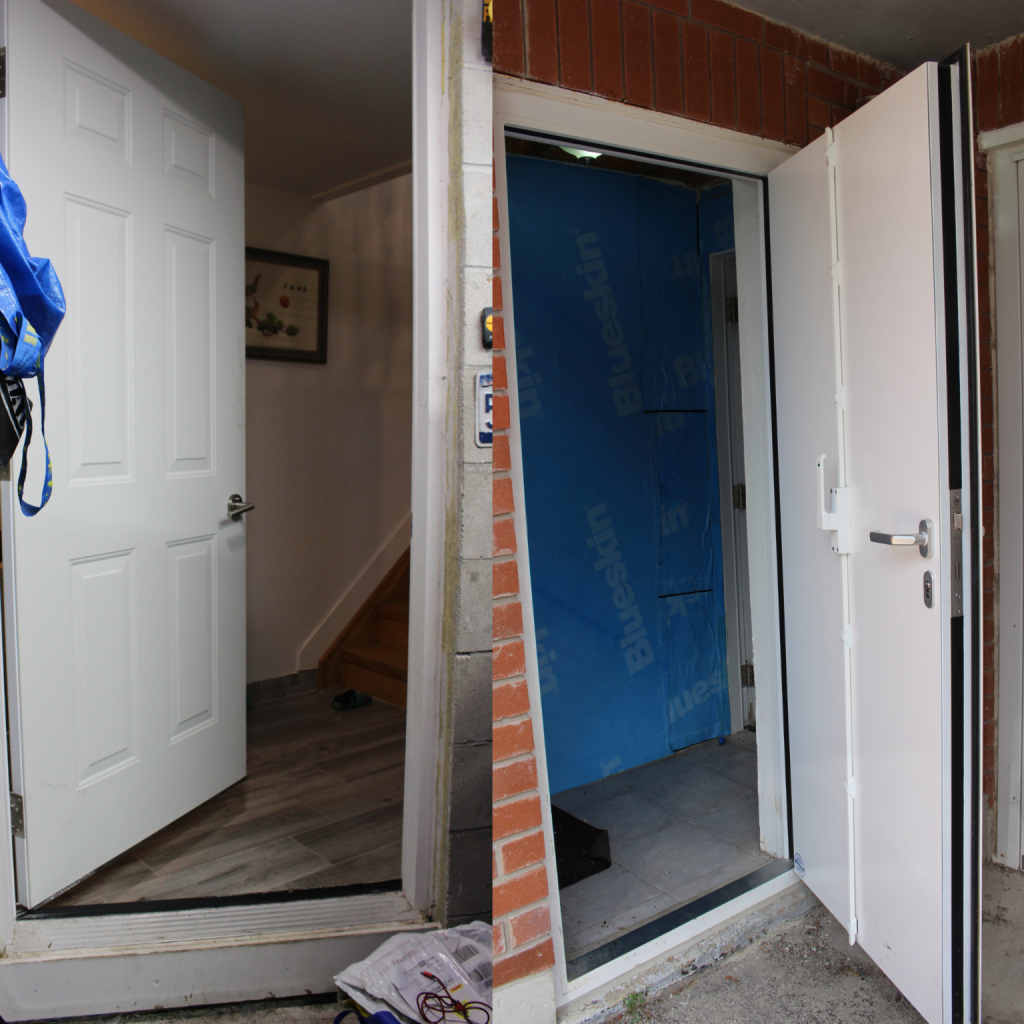
📸: Julia Lawrence/The Green Line.
Black Creek Alliance’s Connors, who has lived in Rockcliffe-Smythe for two decades, echoes Swanson’s concerns. “Where’s the integrity? Where’s the transparency? Where’s the accountability to the residents of this community?” she asks.
Connors adds that the community has not been given a sufficiently comprehensive picture of how the project will work.
What support does the City of Toronto provide residents while the project is in construction?
Lou Di Gironimo, general manager of Toronto Water, a municipal division responsible for drinking water, wastewater and stormwater management, says the City understands “how distressing the threat of flooding can be for residents.”
He told The Green Line that Rockcliffe-Smythe has additional support through the City’s Rockcliffe No-Fault Grant for Basement Flooding Damages Program. The Green Line previously reported that the $2-million annual grant has distributed just under $60,000 to 13 households so far.
Di Gironimo adds that the funding is intended to “support eligible homeowners uninsured for basement flooding, while longer-term flood mitigation work is underway.”
Some residents told The Green Line that they contacted York South-Weston Councillor Frances Nunziata for support regarding neighbourhood flood protection efforts and their concerns about the Rockcliffe Flood Mitigation Projects, but that she has not been responsive to their requests. The Green Line called and emailed Nunziata multiple times for comment, but received no response as of publication.
Are you a Rockcliffe-Smythe resident and want to share your perspective? Send an email to julia@thegreenline.to. Stay up to date on The Green Line‘s reporting by subscribing to our weekly story roundup newsletter.
Fact-Check Yourself
Sources and
further reading
Don’t take our word for it — check our sources for yourself.