

This article was produced as part of the Local Journalism Initiative.
What do you do when you feel like the City isn’t listening? You organize.
Since April 2026, Little Jamaica residents have been expressing their concerns over the City-led Little Jamaica & Oakwood Vaughan Planning Framework. Community members plan to present a petition against the framework at an upcoming City of Toronto Planning and Housing Committee meeting on July 16.
BECOME A GREEN LINE MEMBER TODAY
The planning framework is a planning tool that is supposed to guide transit investment, development interest and reflect community priorities.
The City states that the draft takes a number of directions, like centring the growth and needs of the neighbourhood, supporting culture and retail, space for music and general visual improvements (sidewalks, seating, landscaping, etc.).
The planning framework also identifies areas with ties to the community, “where the function and spirit of these spaces should be maintained and strengthened as the community grows and evolves.”
The four focus areas in the draft are the Dufferin and Eglinton apartment neighbourhoods, Vaughan Hub, Oakwood Vaughan Centre and Reggae Lane.
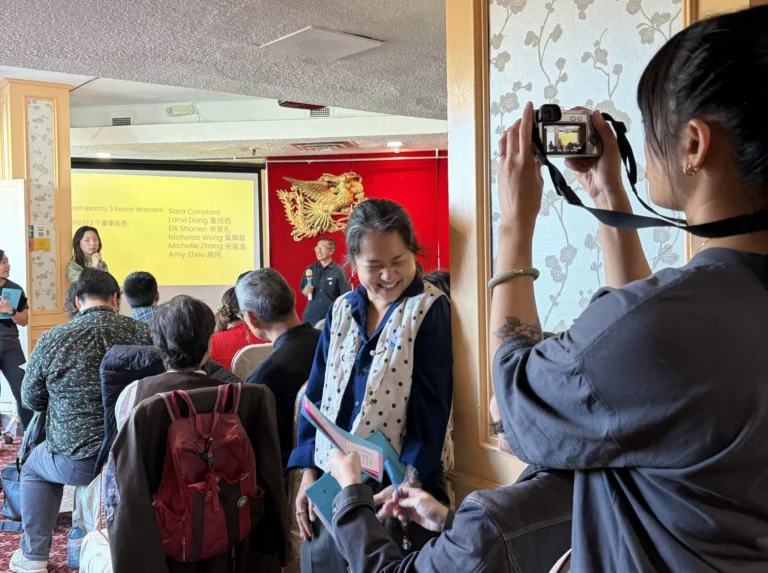
The Green Line attended a community meeting in Little Jamaica, where we heard that the residents wanted to be included earlier in the planning process.
At the meeting, attendees called for acknowledgment of anti-Black racism and exclusion of Black voices in the planning decisions made for Little Jamaica.
The community members felt there was a lack of public notice and engagement from the City to receive resident input.
Residents at the table also voiced that there was a lack of pathways for residents, businesses and grassroots organizations to participate meaningfully, such as City staff coming into businesses to chat informally rather than a distant online consultation.
Kumsa Baker, director of community engagement at Toronto Community Benefits Network, a collective that can impact development processes, says the process has felt like, “the community is on the outside looking in, versus kind of being at the table with the City as a partner in shaping what this framework could look like.”
One of the main concerns from the planning framework is how the boundaries for Little Jamaica have been changed.
It’s been shrunk to Eglington Ave. W., removing large residential areas.
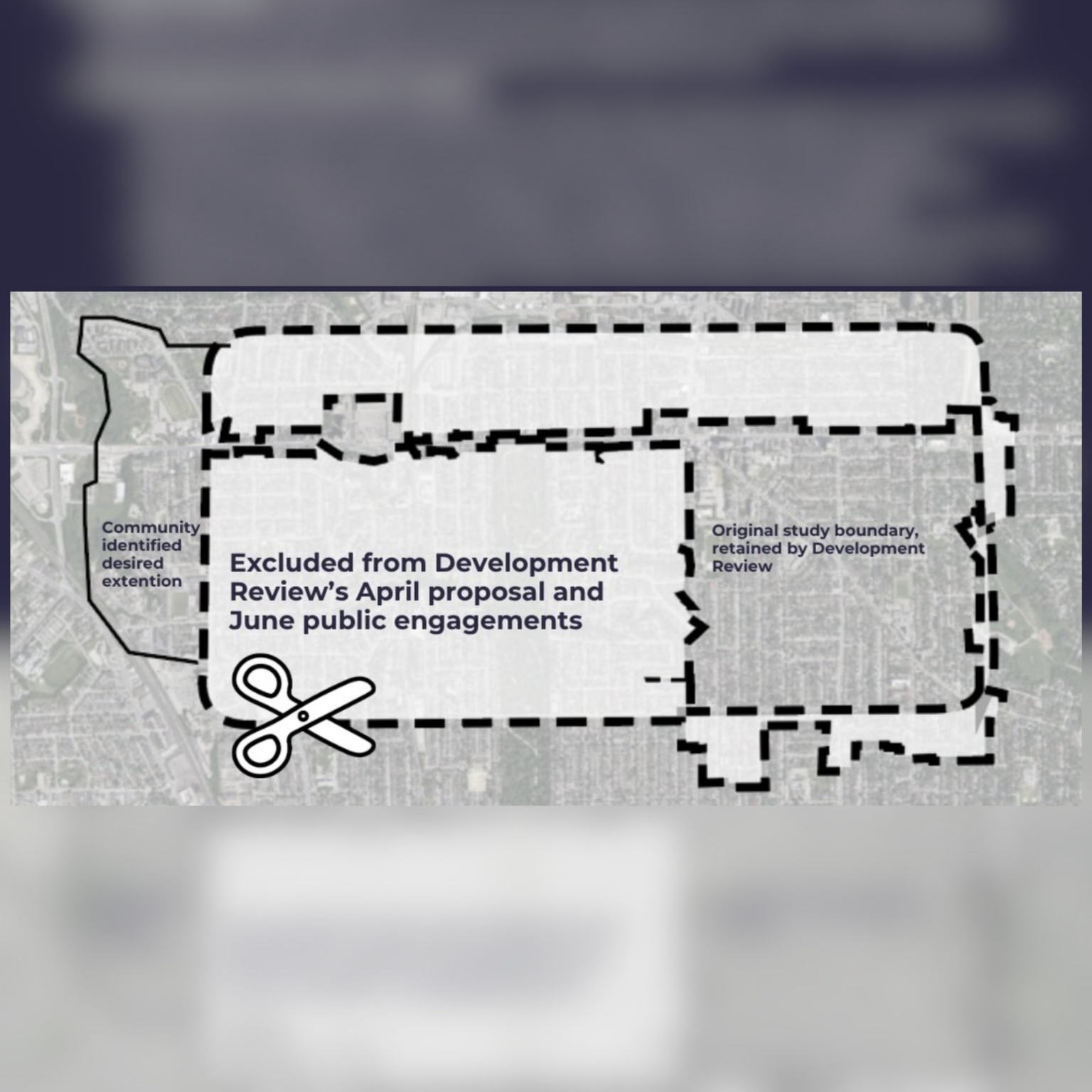
📸: Provided by Community in Public.
Sipo Maphangoh, the manager of Midtown Section, Toronto and East York District-North at Community Planning, says that “the current study area aligns with the boundary of the Little Jamaica Cultural District,” which was approved by City Council on June 24 as part of Toronto’s new Cultural Districts Program.
However, residents do not agree with the boundary changes.
Cheryll Case, Little Jamaica resident and founder of Community in Public, a non-profit community planning network, says, “removing those boundaries without a strong rationale in terms of how it’s supporting the broader objectives around addressing displacement and all actually makes folks more vulnerable, who are already vulnerable.”
When speaking with resident Shannon Spencer, she reflected on how hard residents fought to get Little Jamaica recognized by the City in 1969. “We protested through the streets.”
Spencer is one of the many residents excluded from Little Jamaica with the new boundaries.
“Seeing that people fought for the original boundaries…and then the city just coming and being like, ‘this is a smaller boundary that we’re working with here now’, kind of feels a little insulting.”
The former boundaries were a better representation of who is in the neighbourhood, she says.
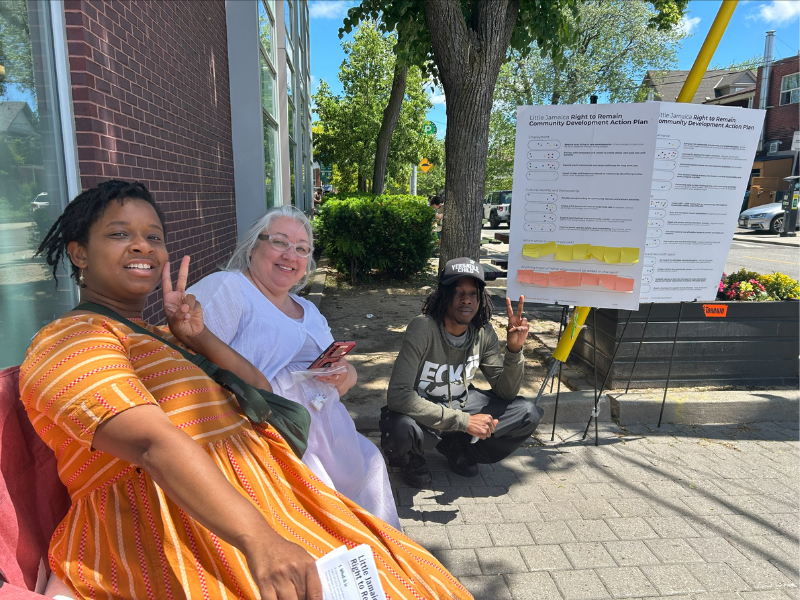
Case has been educating the neighbourhood on the planning framework through community pop-ups, meetings at local businesses and online engagement.
She says the neighbourhood is ready and waiting to collaborate with the City when it comes to the planning framework and other studies involving Little Jamaica.
“We’re looking at how to do more meaningful engagement because [the City] heard from the public that there’s a lack of trust in the process and the process is not meeting community needs,” she says.
All feedback received through public meetings, stakeholder discussions, online engagement tools, written submissions, emails and other channels is being reviewed and will be considered as part of the project, according to Maphangoh.
“A summary of consultation activities and key themes raised through engagement will be included in the final reporting for the Planning Framework.”
If you’d like to get involved, Community in Public has a community survey for those who visit, work and live in Little Jamaica to share their opinions. To stay up to date, Community in Public regularly posts updates on the matter on Instagram.
What’s next?
- Maphangoh confirmed that the project is in its final phase. “Staff are planning additional public consultation opportunities in fall 2026 to present the draft Planning Framework and receive further feedback before recommendations are finalized.”
- Case and other Little Jamaica residents will be tabling at the Little Jamaica Farmers Market by Fairbank station on July 5 if you’d like to stop by to learn more and support the neighbourhood.
- A petition signed by residents will then be presented to the City for action at the July 16 Planning and Housing Committee – Meeting 32 – TMMIS.
Fact-Check Yourself
Sources and
further reading
Don’t take our word for it — check our sources for yourself.

Join the conversation