
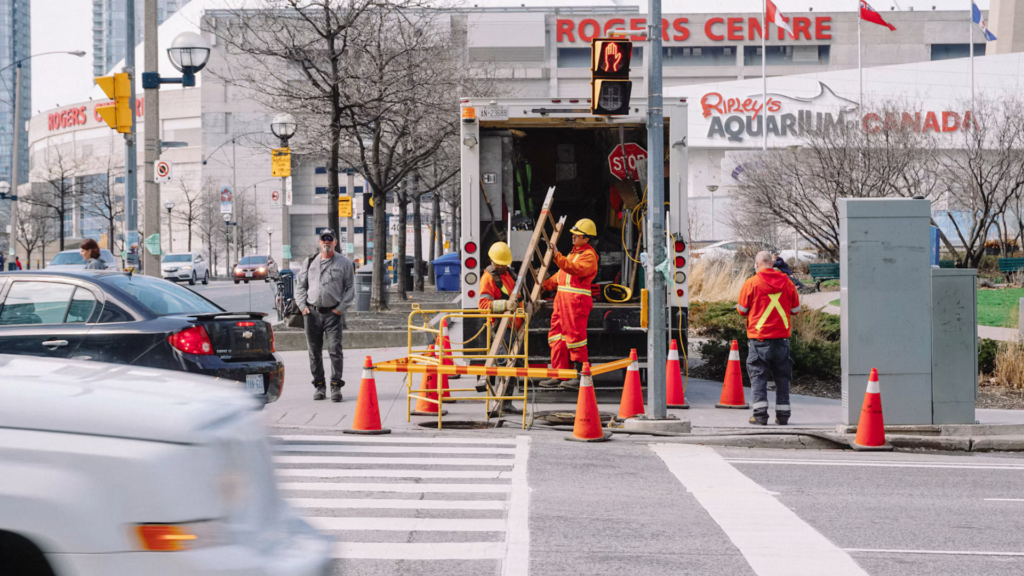

If you were a politician, how would you allocate the billions of dollars in city funding?
Last week, we talked about capital and operating budgets, sources of funding, help from the provincial and federal governments and so much more.
Now that we understand the basics of funding, we’ve got to understand where the money goes and who decides on those matters.
BECOME A GREEN LINE MEMBER TODAY
The City’s 2026 operating budget — which is the money that helps run things in the city on a day-to-day basis — is $18.9 billion. This money is invested into transit, emergency services, libraries, parks, shelters and social programs.
Then, we have the 2026-2035 capital budget and plan which is $63.1 billion and it’s spent on bigger investments, like housing, roads, public buildings and more.
There’s a whole process for how this funding is allocated.
Let’s break it down.
Where is the money going?
In 2026, the biggest chunk of the City’s operating budget goes toward cost-shared social programs like housing initiatives and cost-of-living relief, which account for about $4.94 billion, or 26.2% of the budget.
Transit gets about $3.03 billion, rate-supported programs, like parking authority and waste management, get $2.25 billion and police services get $1.71 billion.
Basically, a huge portion of the City’s money goes toward services you probably use on a daily basis — you just probably don’t realize it.
When you take the TTC, call 911, go to a library, have your garbage picked up, each one of these services takes up a chunk of the city’s budget.
Who decides where the money is going?
This is where things start to get a little more complicated. City staff do a lot of groundwork by preparing reports, analyzing costs, making recommendations and explaining what different options would mean for Toronto. We broke down what City staff actually do, so you can learn about that too.
Those reports go to a committee. If you want to check out how things become by-law or policy in Toronto, you can read our explainer.
The City has a few different committees that deal with different areas of city government. Standing committees look into things like economic development, infrastructure, planning, housing, licensing and other city matters.
I like to think of a committee as a group project that decides on where the club’s money is going to go. Flash back to university days where we decided if we had enough money to get snacks for the monthly events!
The only difference between my university days and the City of Toronto is that its budget is in the billions and its choices actually matter.
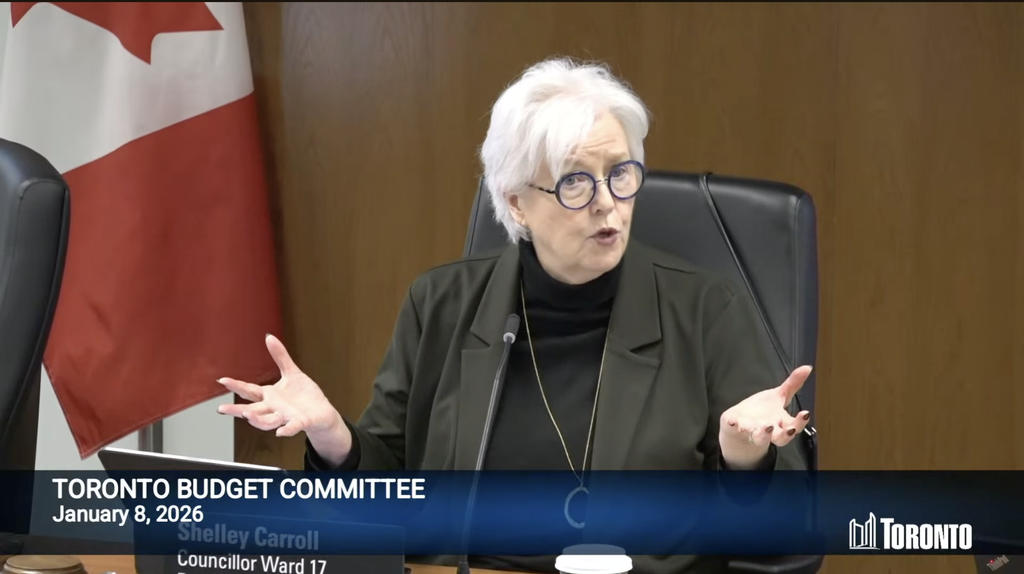
📸: Toronto City Council’s livestream on Youtube.
Then, there’s the Executive Committee. This committee is chaired by the mayor and plays an important role in looking at the City’s overall priorities, governance, financial planning and budgeting.
The committee typically considers reports and makes recommendations to City Council, but it’s not the final decision-maker.
The process typically looks like this:
City staff prepare a report → the Executive Committee considers it → the committee makes a recommendation → City Council considers it → Council votes → City staff implement the decision.
Sometimes the committee can make decisions without consulting City Council, but the general rule-of-thumb is that if it impacts the entire city, it goes through the entire chain of command.
Under Ontario’s current strong-mayor framework, the mayor proposes the annual budget, but Council can amend it. The mayor can actually veto certain Council amendments, while Council can override a mayoral veto with a two-thirds vote. If you’re curious to know about the mayor’s special powers or what a city councillor can actually do, you can check out our explainer about the mayor and councillors’ roles.
What about the public?
Toronto residents can participate in the budget discussion process by speaking at committee meetings. You can learn how to depute by checking out our guide.
You don’t have to wait until Council decides on something that affects your neighbourhood. Your involvement is possible earlier on — before a policy comes into effect.
Budgets and finances are made available and are required by law to be accessible for the public. You can learn about all the details of the 2026 budget here.
Overall, just know that when you see a headline that says Toronto is spending a certain amount of money on something, know that there are staff reports, committees, recommendations, public meetings and then, a vote before the money is spent.
Sometimes, investing more money into one sector of the city could mean less money for another.
That’s just one limitation to keep in mind before yelling at how your representatives are allocating budgets — and you should also remember the City of Toronto doesn’t have the ultimate authority over everything, we explain it here. But I’m not defending politicians, because it’s so important to hold them accountable.
Back to our very first question of the day: how would you divide the city’s money across all the different parts and services that need funding?
We’re actually going to give you that opportunity.
At our 2026 candidate debate happening on Thursday, Oct. 22 from 6 to 9 p.m., you’ll have the chance to play a Monopoly-inspired budgeting game with other attendees. Sign up for the free event over on our website.
Fact-Check Yourself
Sources and
further reading
Don’t take our word for it — check our sources for yourself.


Join the conversation