

TL;DR
- If you want to run in the next municipal election, start now.
- You must be a Canadian citizen, at least 18 and meet Toronto’s residency or property ownership requirements.
- You need at least 25 eligible endorsements and are encouraged to get more.
- Campaigning requires fundraising, financial recordkeeping and a dedicated team.
- Financial reporting obligations continue after election day.
The 2026 Toronto municipal election is over and you might’ve felt inspired to run for City Council. Before you do, there are a few things you’ve got to know.
Running for City Council can seem intimidating, especially if you’ve never been involved in politics. There’s paperwork to file, money to raise, volunteers to recruit and campaigning to do.
The City of Toronto has a page with information for candidates to prepare for campaigning. It lists resources, financial filing and more. But it can still be difficult to navigate and understand the website.
BECOME A GREEN LINE MEMBER TODAY
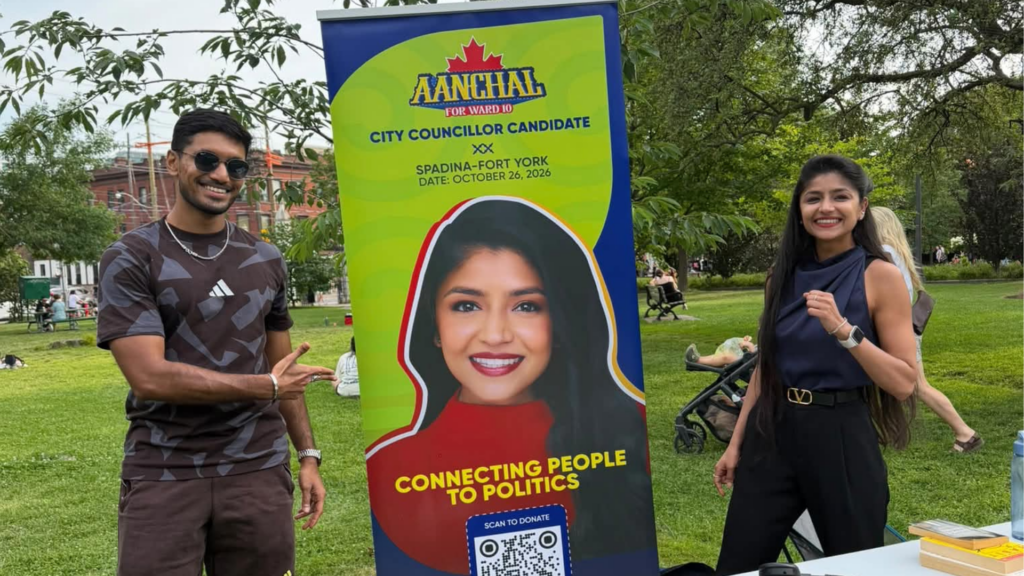
Aanchal Vashistha, a 2026 candidate for Ward 10 Spadina Fort-York, campaigned for the spot at City Council for the first time this fall. She’s an author and the founder of the non-profit Reach Out Together — a mental health organization.
Although she didn’t win, she says she came away with lessons about what it takes to run a campaign. Now, she wants other future leaders to know all the unspoken rules and strategies too, which is why her team reached out to The Green Line.
So here’s what you need to know based on her experience and the City of Toronto’s candidate information.
Make sure you’re eligible
Before you start using Canva to make your campaign posters, check to see if you can actually run.
Make sure you are:
- a Canadian citizen,
- at least 18 years of age,
- a Toronto resident, an owner or a tenant of land in the city, or the spouse of someone who owns or rents property in Toronto.
Register your candidacy
Before campaigning, you need to file a nomination with Toronto Elections. This includes submitting a completed form, providing acceptable identification, a $100 filing fee and at least 25 endorsements from Torontonians.
Vashistha said candidates are encouraged to get more endorsements, because the elections committee goes through them to make sure the signatures are from qualified people. The qualifications for an endorser are the same as the requirements for running for City Council.
Snap elections aside, the nomination period usually runs in the month of May before a general election and closes about two months before election day.
Build your campaign team early
A campaign involves more than a candidate and a few volunteers. Vashistha recommends identifying key roles before officially launching. That could include a campaign manager, researcher, fundraising manager and communications person — all of which were hats she had to take on herself while running for council.
“You will burn out if you do not delegate,” she said.
Vashistha said even allocating small tasks to people makes a difference. For example, canvassing in a condo building requires permission and time. Having someone responsible for those logistics can free up time for the countless other things that need to be done.
Get to know your community.
A social media presence can help introduce you to voters and connect with younger people, but Vashistha said that in-person outreach is crucial.
She organized Saturday meetups at Trinity Bellwoods Park where residents could discuss neighbourhood issues, complete surveys and ask questions. Her team also invited local businesses to invite people to the meetups.
Vashistha added that getting volunteers is a journey, and that most of the volunteers on her campaign team came from canvassing and other in-person opportunities rather than digital outreach.
“What I learned through this journey of recruiting volunteers is the ones that stuck with us were people that cared about my story,” she said. “That saw themselves in what I had experienced and my why. Why am I running for this? And the more I shared this, the more people came forward.”
Understand the financial rules and campaign costs
Campaigning is extremely important, but also very expensive. Printing flyers, brochures and other items come with high costs.
You might catch yourself saying you could keep to a digital-only approach, but that will only get you so far, said Vashistha.
You have to fundraise the money you use to campaign and can get disqualified for going over budget. As a candidate, there’s a separate budget outlined if you decide to self-fund in addition to raising funds. Candidates also have spending limits depending on the ward.
Before accepting donations or spending money, candidates must know about the rules. For Toronto council candidates, individual contributions are capped at $1,200 per person. Corporations and unions can’t donate.
The City offers a rebate program that allows eligible donors to receive part of their contributions back. For example, someone who donates $100 to a participating candidate can receive a $75 rebate. However, candidates that opt into the program have to submit audited financial statements regardless of the amount spent or raised.
Make sure to keep receipts and records from the absolute beginning. Campaign financial statements are required after the election whether you win or lose.
Get your platform ready
During the campaign, Vashistha conducted surveys with community members, in addition to the years of community work she’s done in the ward, to see what’s most important for residents.
“There are so many organizations, nonprofits, community groups, even condo buildings that have questions about your platform,” she said. “They’ll have questionnaires. I highly advise when you have your policies in place, you’ve done your research, have a document where you have every question you can possibly think about answered in advance, because what is going to come your way is wild.”
Know what happens after election day
Vashistha said that the responsibilities don’t end when the votes are counted.
All candidates must file a financial statement, even if they didn’t raise or spend money, and even if they withdrew their nomination.
For the 2026 election, the initial filing deadline is March 30, 2027. Candidates who raise or spend more than $10,000 must have their financial statement audited by a licensed auditor, and again, candidates participating in the City’s rebate program also need an auditor.
Financial statements are public and the names and addresses of contributors who donate more than $100 also become published online. Keep your records organized and consult an accountant or auditor earlier than you think you should.
When Vashistha was asked if she’d run again, she smiled and said, “It’s possible. I’m fired up. Like, I know this was a tough journey, but I think again, it was tough because I didn’t know.”
She wants other people to have the resources to face the challenges no one talks about.
For people that are considering running for City Council in the next municipal election, Vashistha has some advice.
“Start now. Start sharing what your values are, what you stand for. Start building a community now,” she said. “Attend those council meetings. Get yourself out there. Get to know people in politics. Build those connections. It starts from people who believe in you, people you know, people that are already doing it, people that have done it. So start today.”
Fact-Check Yourself
Sources and
further reading
Don’t take our word for it — check our sources for yourself.




Join the conversation