
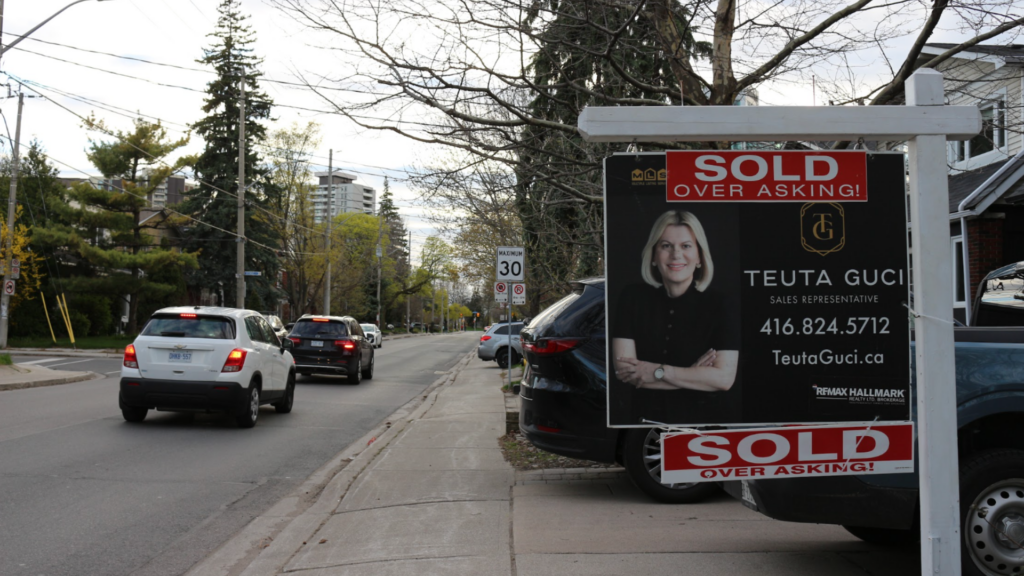

Five years after the pandemic housing boom, some Toronto homeowners face higher mortgage payments, falling property values and tighter budgets.
In its 2026 Financial Stability Report, the Bank of Canada (BoC) projected the remaining group of pandemic-era, five-year fixed-payment mortgages (about 12% of outstanding mortgages) would renew over the following 12 months, with payments rising by about 15% on average.
If you’re a homeowner worried about your upcoming mortgage renewal, this guide is for you.
BECOME A GREEN LINE MEMBER TODAY
Want to learn how we got here before you dive into next steps? Click here
In and around 2020, many Torontonians felt the pressure to buy houses and apartments more than ever because of low interest rates.
Toronto’s increasingly unaffordable and insecure rental market was a big reason why many households took on large, risky debt to secure a home of their own, according to Jeremy Withers, a senior researcher at New Housing Alternatives. He said weak rent controls and weakened tenant protections made renting feel less stable for many households.
Carolyn Whitzman, a senior housing researcher at the University of Toronto’s School of Cities, agrees many people seek ownership because renting can feel insecure. But she adds the sense of security can reverse when rising interest rates make payments unaffordable.
Market and speculative psychology also played a role, said Frank Clayton, a Toronto housing-market researcher. As prices climbed, buyers and investors expected them to keep rising, creating pressure to enter the market before prices rose even further.
Prices kept climbing as demand from investors and multiple-property owners surged, widening the gap between median household incomes and home prices, according to Withers.
Now, Torontonians who bought property between 2020 and 2022 face some financials challenges as the market adjusts and as property values decline, says Clayton. He explains this downturn isn’t unusual; it’s cyclical, and Toronto’s condo market was particularly vulnerable because it depended on presales.
Who’s affected?
Whitzman identified people on fixed incomes and those who bought homes when prices were at their highest as the most vulnerable. As home prices fall, some homeowners could find themselves owing more on their mortgage than their home is actually worth. This is known as negative equity, or being “underwater” on a mortgage.
Michael Boutros, an assistant professor of economics at the University of Toronto, explained that the money needed to cover higher mortgage payments has to come from somewhere. This means households may cut spending, dip into savings, borrow on credit cards or change their mortgage contract.
That’s why, if your mortgage is coming up for renewal, it’s important to understand your options, review your finances and figure out what makes the most sense for your situation.
Steps to renew your mortgage
First things first, do you understand all the financial jargon and terms you might come across?
If not, don’t worry. To make things easier, The Green Line put together a mortgage glossary to help you understand the terms, explore your options and make sense of the renewal process. Check it out here.
1. Start early.
A mortgage renewal isn’t just a rate-shopping exercise. It’s a household financial decision: a new payment has to fit alongside property taxes, utilities, food, child care, debt payments, savings and the unexpected costs of owning a home.
Experts, including mortgage broker Rakhee Dhingra and financial coaching and education manager Becky Western-Macfadyen of Credit Canada, recommend starting at least six months before the renewal date. That’s enough time to gather the documents you’ll need and build a renewal strategy that fits your circumstances.
Some questions you should consider:
- Do you know your mortgage’s maturity date, current balance or interest rate?
- How much have you paid toward the principal?
- What penalties might you incur?
These are all questions you should be able to answer before beginning the renewal process.
2. Build your financial photograph.
Before comparing rates, find out what your household can actually afford.
Western-Macfadyen calls this a financial photograph: a clear, current view of your household’s income, expenses, assets and debts.
Dhingra recommends beginning with a quick estimate, then checking it against the last three months of bank and credit card activity. The gap between what people think they spend and what they actually spend can be substantial.
Use the ABC method:
Analyze your finances
Start with a thorough cash flow analysis of the last three months. By thorough, we mean tracking every cent coming in and out of your pocket, bank accounts and credit cards.
Include credit card balances, loans, Canada Revenue Agency (CRA) payments, extracurricular activities and other recurring expenses.
Don’t forget upcoming obligations, such as university tuition, child care, retirement contributions, or caring for an elderly relative. And, of course, include an estimate of your new mortgage payment based on current market rates.
This exercise can be stressful, but remember you don’t have to do it alone.
If you need help, reach out to a mortgage brokerage, a trusted financial advisor or a credit counselling service, like Credit Canada.
Take a deep breath and examine your spending habits.
Here are three warning signs to look out for, according to Western-Macfadyen:
- You have no emergency repair fund. A roof leak, appliance failure, or condo special assessment shouldn’t become expensive unsecured debt.
- You don’t know your current numbers. If you can’t describe your income, debts, spending and savings, you can’t determine whether a new mortgage payment is sustainable.
- You’re not paying your credit cards in full. Using credit cards for groceries, utilities or other routine expenses can conceal a budget deficit while interest charges continue to grow.
Brainstorm possible changes
Your new mortgage payment might not fit within your current budget. If it’s the case, grab a big piece of paper and brainstorm ways to make it work.
Could you find another source of income? Spend less on going out? Rent out a room? Consolidate debt? Cut unnecessary expenses?
At this stage, no idea is a bad idea.
Change your spending habits
Just as importantly, look at your spending patterns.
Western-Macfadyen recommends a simple approach: notice, pause, choose.
Notice a spending habit, pause before repeating it and choose whether it still serves your financial plan.
3. Plan three to five years ahead and test your new payment.
At this point, you should’ve already estimated your new monthly mortgage payment based on current market rates.
Now, calculate the difference between your current payment and the anticipated new one.
For the next two months, set the difference aside.
The goal is to see whether you can comfortably absorb the higher payment, while sticking to your new budget.
If it works, continue to the next step.
If it doesn’t, head back to the brainstorming board and consider what else could change.
4. Get written terms from your current lender.
If your lender is federally regulated, the Financial Consumer Agency of Canada (FCAC) says it must provide a renewal statement at least 21 days before your mortgage term ends.
The statement must include your balance at renewal, interest rate, payment frequency, mortgage term and applicable fees.
5. Compare lenders and mortgage offers.
You don’t have to renew with your current lender.
Start contacting other lenders or a licensed mortgage professional a few months before your mortgage matures to explore your options.
Mortgage brokers can access multiple lenders, making them a useful starting point for comparing offers. However, if you approach a lender directly before engaging a broker, the broker may no longer represent you in the lender relationship.
That’s why it’s worth deciding early whether you want to work with a broker.
When comparing offers, consider the full mortgage terms and how they fit your financial plan, not just the advertised interest rate.
Dhingra recommends focusing on your overall financial strategy rather than simply securing the lowest interest rate.
Ask yourself:
- What will my new mortgage payment be?
- How much will I still owe in three to five years?
- Can my household absorb an unexpected expense?
6. Work out whether you need a straight renewal, or if you need to switch or change your mortgage.
Some questions to consider:
- Are you renewing with the same lender or considering switching?
- Do you want to extend your amortization to lower your monthly payment?
- What mortgage term works best for you?
7. Explore payment relief or restructuring if regular options don’t work.
What happens if you’ve reviewed your finances, compared lenders and adjusted your budget, but the new mortgage payment still doesn’t fit?
Depending on your circumstances, you may need to consider other options, like extending your amortization, selling, downsizing, moving into a multigenerational household, renting out a room or basement, increasing your income, consolidating debt or using a home equity line of credit (HELOC). Get creative!
These options involve different costs, trade-offs and eligibility requirements, so consider the long-term implications before deciding.
Extending the amortization period through refinancing can make monthly payments more manageable, according to Western-Macfadyen and Dhingra. However, Boutros warned that doing so can significantly increase the total interest paid over the life of the mortgage.
9. Escalate early and seek help when needed.
Don’t wait until you’ve missed a mortgage payment to ask for help.
If your budget shows a deficit, contact your lender as early as possible and ask what options are available.
Depending on your circumstances, your lender may discuss alternatives such as extending your amortization or temporarily adjusting your payments.
Lenders decide on a case-by-case basis, and relief isn’t guaranteed. That’s why early communication matters.
And remember, you can still seek financial guidance or assistance after signing your renewal agreement.
10. Sign deliberately and keep reviewing your plan.
Once you’ve selected a mortgage offer, carefully review the terms before signing.
Keep copies of your signed contract, payment schedule and any correspondence with your lender.
Then, schedule a household financial review every few months, particularly after a job change, income interruption, new debt or major home expense.
A mortgage renewal is an opportunity to reset your financial plan.
The best outcome is a mortgage that allows your household to meet its financial obligations today, withstand unexpected challenges and make progress toward the next renewal.
Fact-Check Yourself
Sources and
further reading
Don’t take our word for it — check our sources for yourself.




Join the conversation