
THE GREEN LINEPHOTO ESSAY
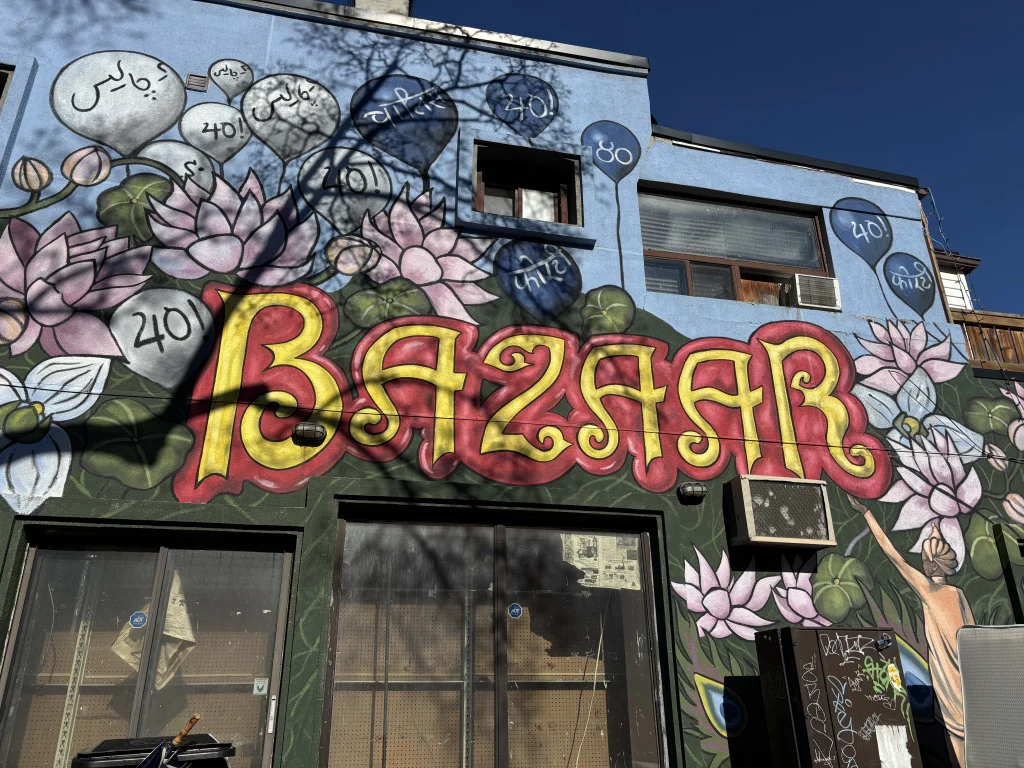
Embedded in colourful brush strokes, spray paint and intricate design across Toronto are tinges of many cultures — images that take you around the world while settling into the sides of buildings.
In Toronto’s Little India, artwork can be found on every corner. Whether it’s in a random alleyway or on the side of a restaurant, the South Asian imagery is consistent across the strip.
Next time you’re in Little India, perhaps picking up some takeout or sifting through cultural clothing, look out for these artworks.
The colourful, cultural district can be found on Gerrard Street East, primarily between Coxwell Avenue and Greenwood Avenue.
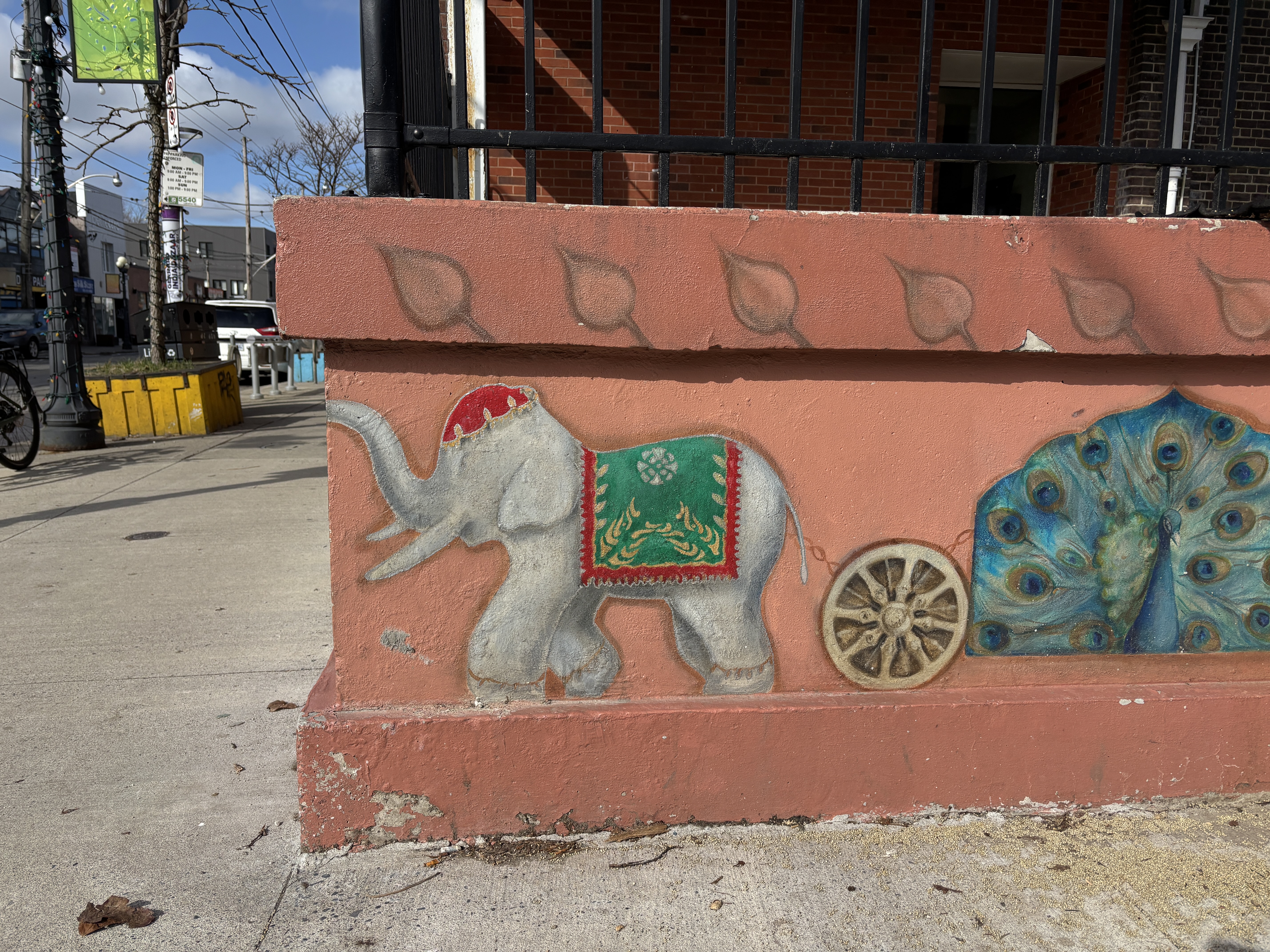
You can find this elephant, draped in red and green at 1432 Gerrard St. E. The elephant is widely recognized as a symbol of Indian culture, it appears in many artists’ paintings, sculptures and textiles and more to depict rituals, ceremonies and the military, according to Navina Najat Haidar, a curator at the MET Museum.
In Hinduism, Ganesha — the elephant god — is described as the “remover of obstacles,” according to the Hindu American Foundation. His head symbolizes wisdom, while his belly is described as “the cosmos.”
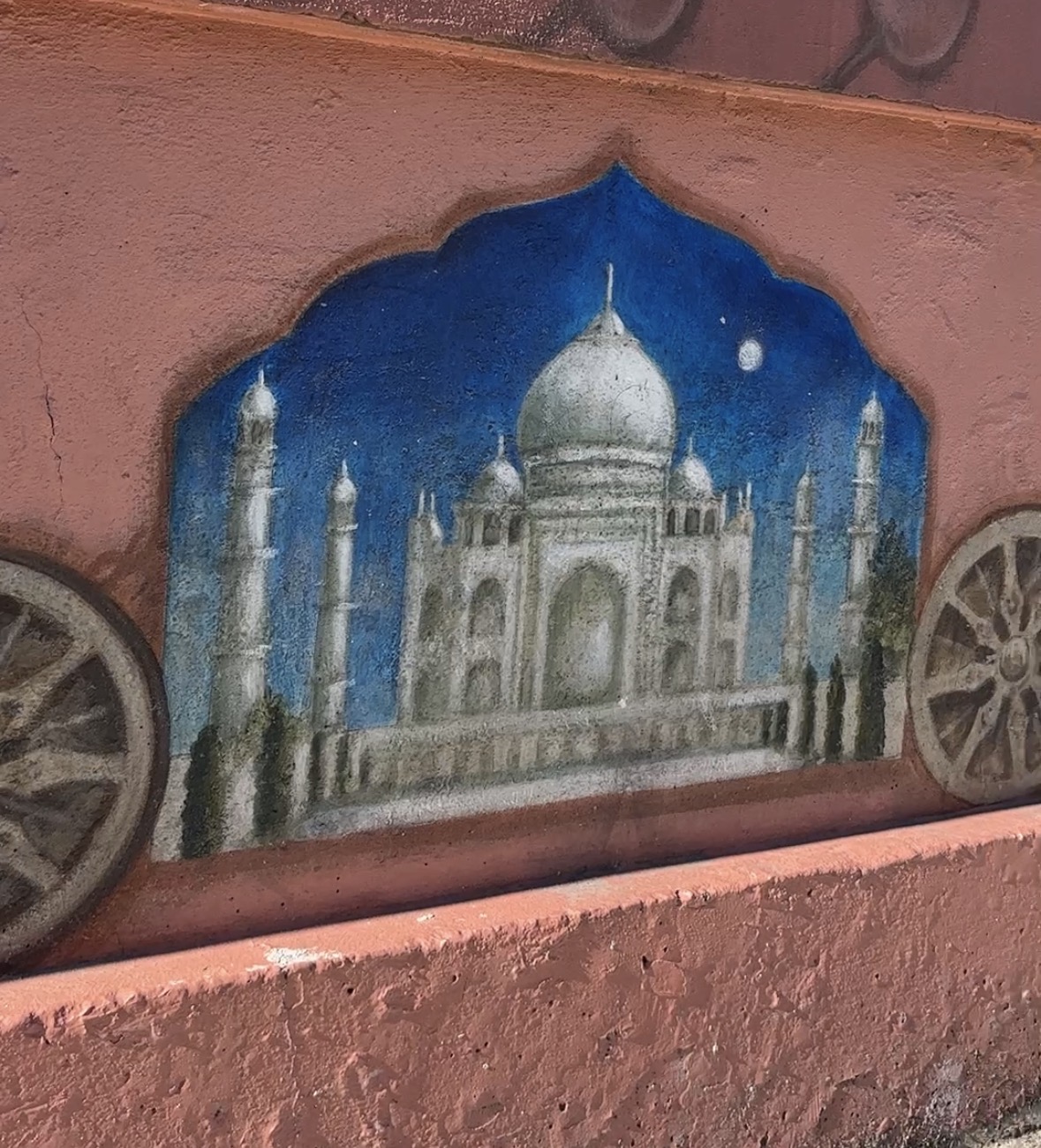
This depiction of the Taj Mahal is plastered in a bed of concrete slabs at 1432 Gerrard St. E. The United Nations Educational, Scientific and Cultural Organization (UNESCO) says the Taj Mahal’s construction in Agra was ordered by the Mughal emperor Shah Jahan. Its construction was made in memory of his favourite wife. UNESCO describes the white marble mausoleum as the jewel of Muslim art in India — a fact your own author (me) didn’t know.
Eleanor Roosevelt once said it “symbolizes the purity of real love.” The College Arts Association’s Art Bulletin describes the Taj Mahal as an evocation of Islamic heavenly visions. It’s also one of the seven wonders of the world.
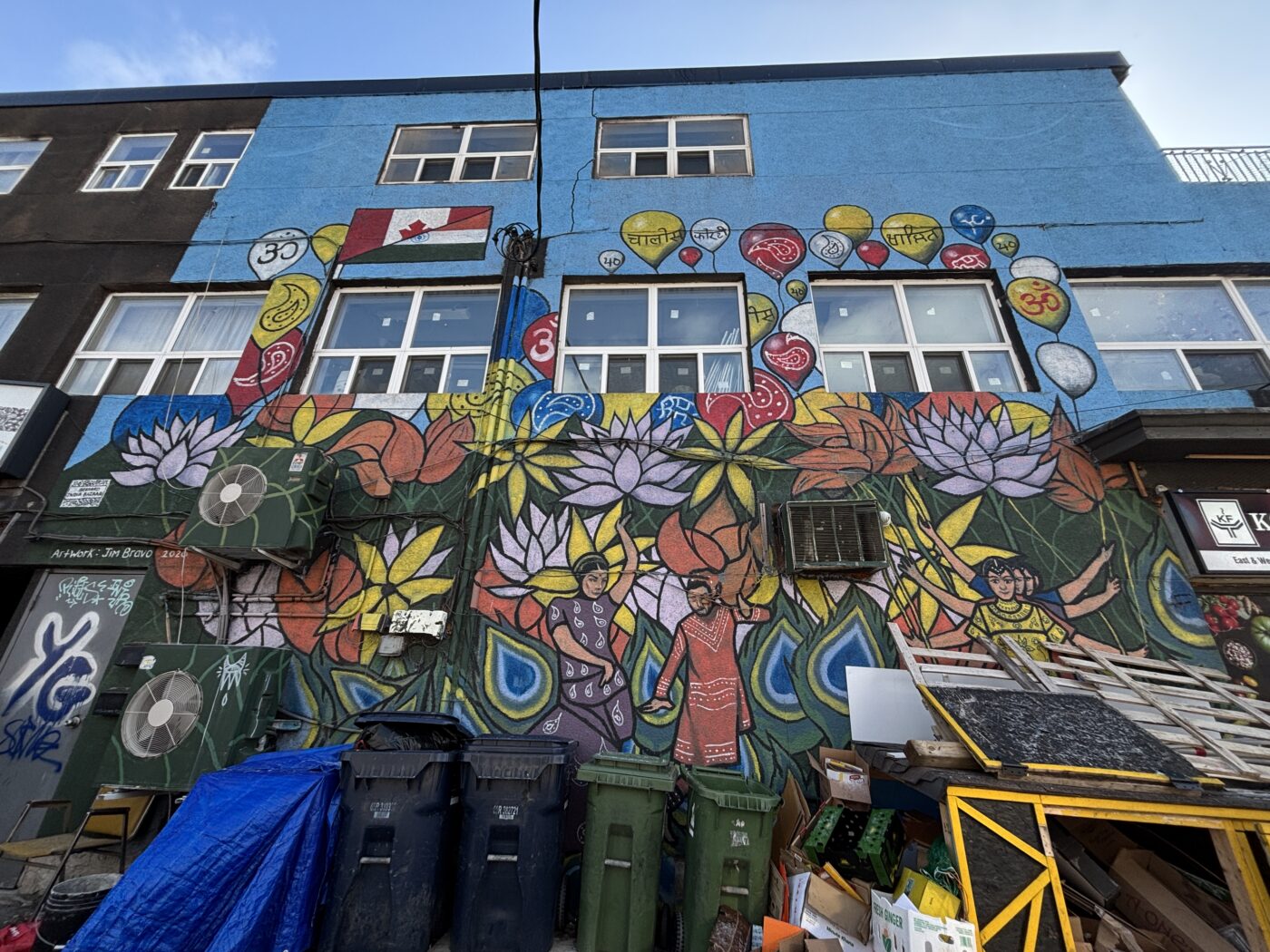
On the side of Kohinoor Foods, a South Asian food store located at 1438 Gerrard St. E., is a vibrant mural with flowers, dancers and an image of the Indian and Canadian flags merging into one. Countless research articles online note the importance of traditional Indian dance in diasporic communities. Traditional, classical dances, such as Bharatnatyam and Kathak, tell stories with poised footwork, while Garba and Bhangra are celebrations of land diversity.
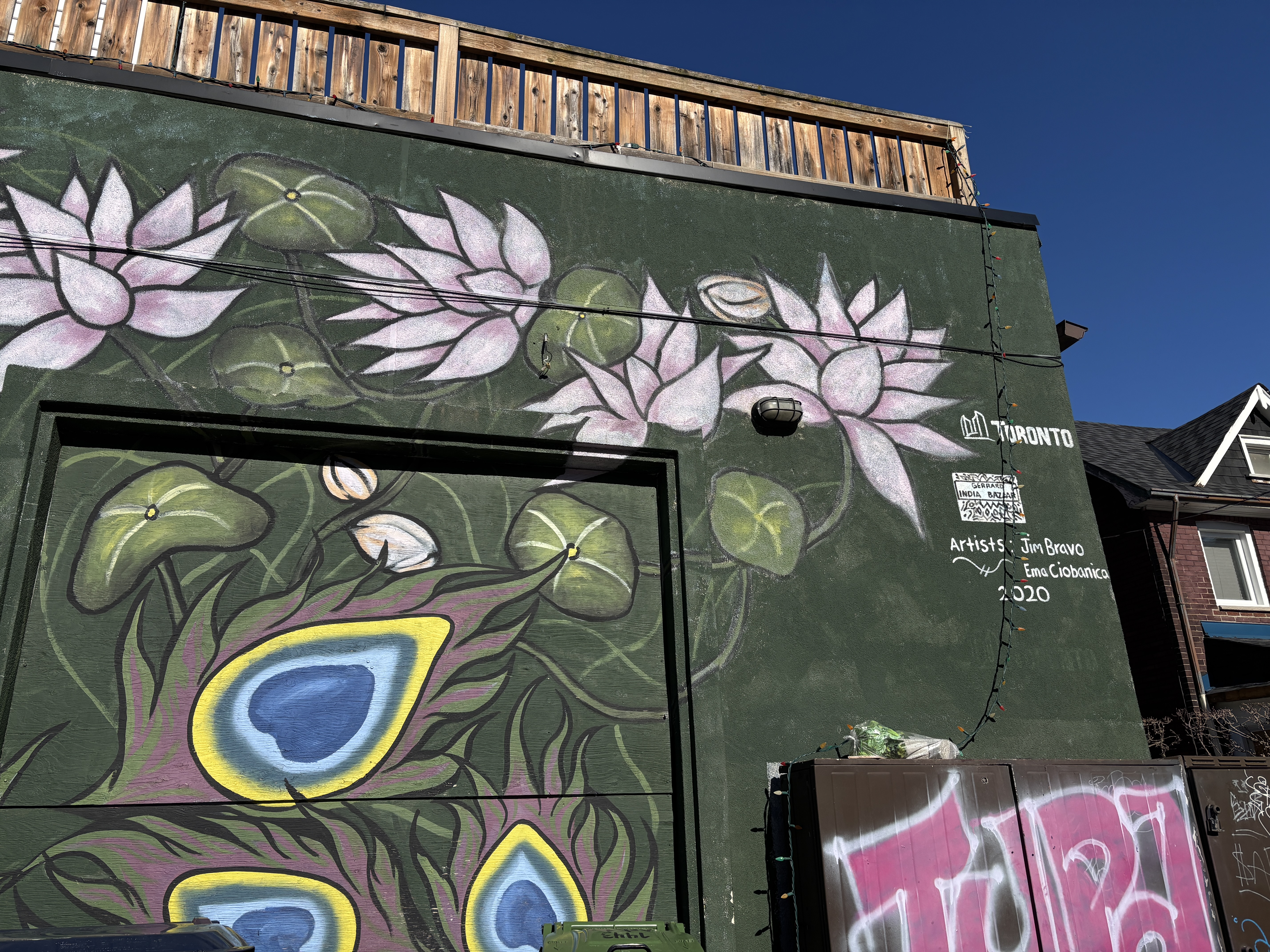
Murals across Toronto’s Little India draw on the lotus, which is often mistaken for a water lily. The flower is associated with beauty, prosperity and fertility and rises above murky water to bloom. It reflects diasporic identity, where tradition and resilience blooms too. You can take a look at this artwork on the side of Kohinoor Kitchen Ware located at 1443 Gerrard St. E.
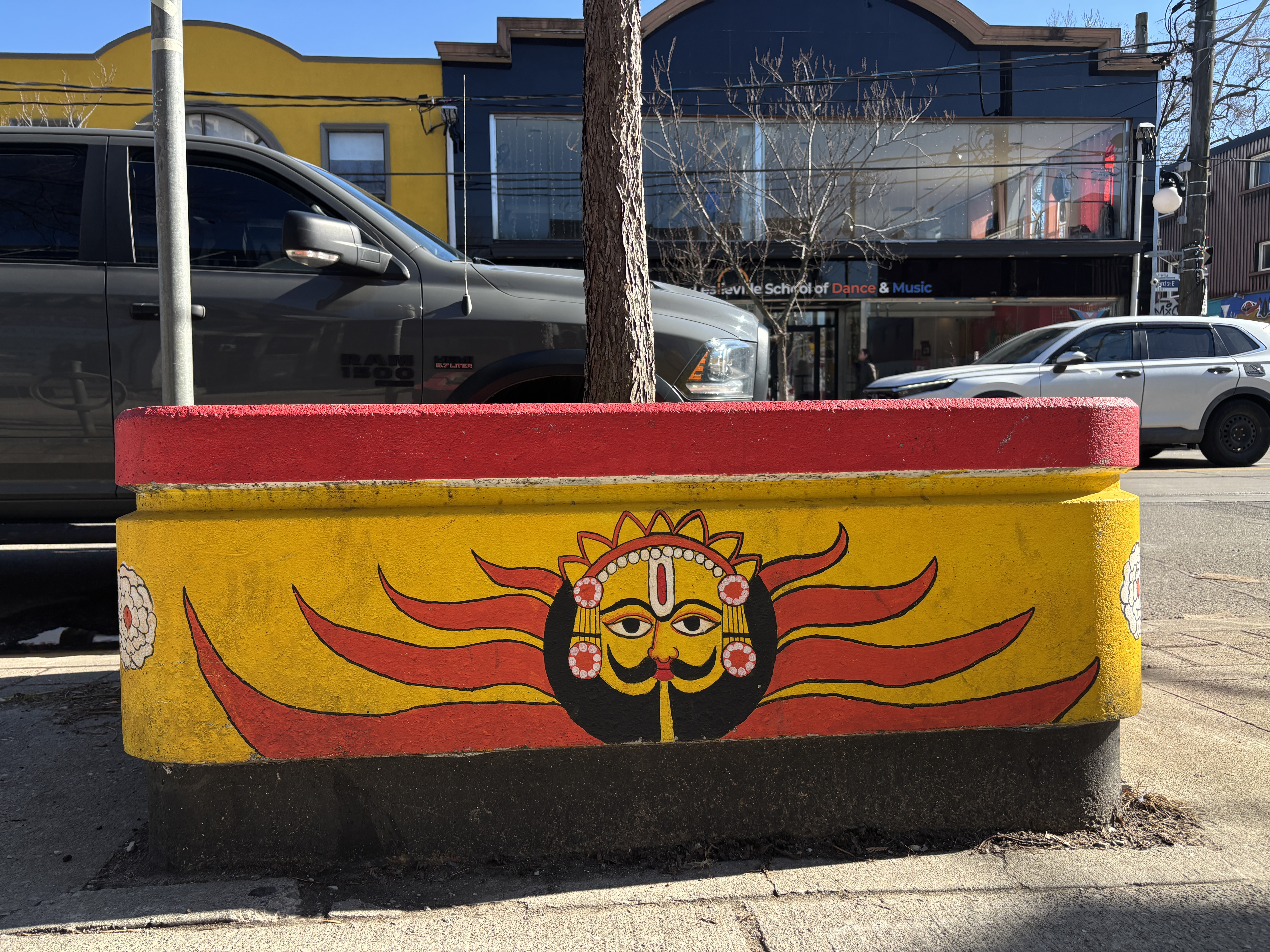
Indian folk art often blends stylized faces with symbolism. This mural, situated right in front of 1460 Gerrard St. E., showcases human features, with colours and designs that could be understood as sunshine rays. Surya, the sun god, stands for light, growth and cosmic energy.
The next time you see one of these murals, feel free to send us a DM on Instagram to show us.
Got cultural artwork in a different Toronto neighbourhood? Let us know so we can include it the next time.