

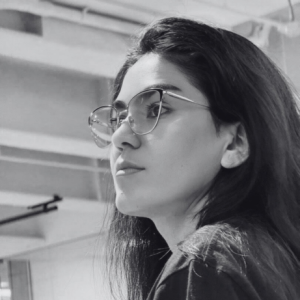
Ruth Alemayehu is committed to improving the city that raised her, none other than our Toronto.
As the urban health lead at Toronto Youth Cabinet and as a first-year student of the Health Systems Research graduate program at the University of Toronto, Alemayehu approaches questions of housing, health and community care through both lived experience and academia. Having grown up in rent-geared-to-income housing, she understands how deeply social conditions shape health outcomes, especially for youth and low-income families.
From speaking at City budget deputations to supporting youth-led advocacy, she’s part of a generation that recognizes that change is slow, collective and built through participation. In our chat, Alemayehu reflects on how Toronto’s strength lies in its civic infrastructure and talks about the responsibility residents have to engage with it. She shares what she’s learned through her work, and what it takes to push for real change in the city.
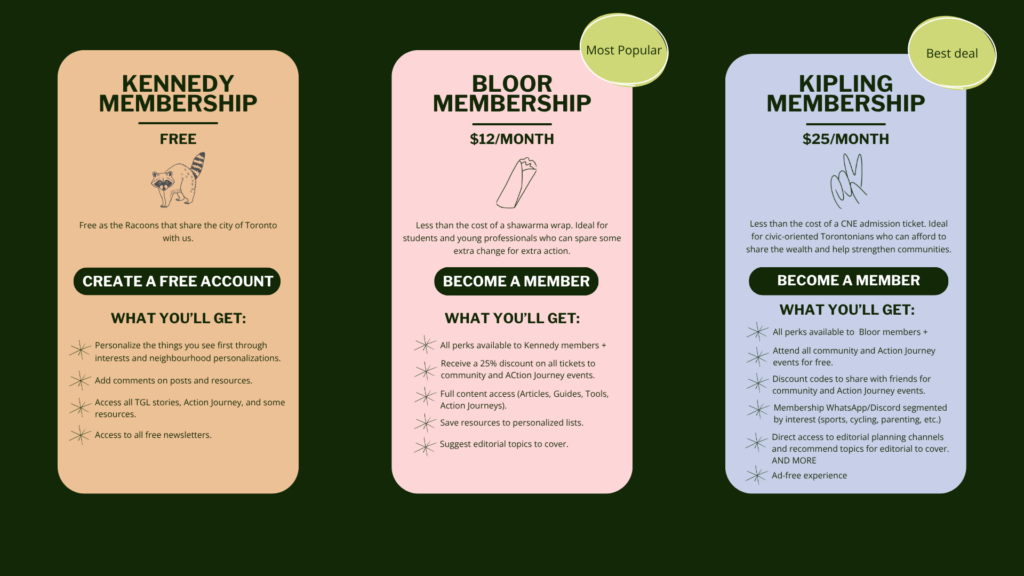
BECOME A GREEN LINE MEMBER TODAY
What’s something about Toronto that you’ve learned by paying attention closely, not through the headlines, but through lived experience?
How lucky we are to have a city that operates like this. I sometimes wonder how Toronto residents complain about the transit system or the amount of time they wait for a health-care appointment. But we’re so lucky to have a transit system and a health-care system.
There are always going to be cons and flaws to our Toronto, but I think if you compare it to other cities in Canada, I think we’re living very, very well. There are so many community services, diverse restaurants and things to do.
We still have our challenges in terms of having more support. But I loved growing up in the city and getting older, seeing how much there is here. I can’t imagine myself living anywhere else in Canada.

📸: Biology Students' Association/LinkedIn.
What experiences have shaped the community work you’re doing??
My mom came here as a refugee from Ethiopia, and she has schizophrenia. Since I was a kid, I saw her navigate the health system, try to find doctors who speak our language or try to find culturally sensitive care. So I grew up going to the doctors with her, and that was kind of what sparked my interest in health care culturally. I want to work to make the system better for future immigrants, refugees or people of colour.
My eldest brother ended up being in a shelter when we were young, and I saw that they don’t really support youth in terms of education, or making sure they’re on the right track.
I was 10 at the time. Honestly, that experience was a lot for me, but it makes me want to work harder. It makes me want to make a change in my community. It’s upsetting that it happened, but it’s something that I use to drive me every single day.
What do you think gets overlooked when people talk about making change?
Honestly, the amount of time that it takes to make change. I think a lot of times, we want to see change, but there’s a democratic process. There are policies and rules we have to follow. So, a lot of times we want to get things moving, but there are a lot of barriers and things we have to accomplish before those things can be seen in the real world.
A lot of young people feel discouraged because change feels slow, or like they’ll never see the results of their efforts. That feeling makes sense. But change takes time, and understanding how decisions are made — what steps come first, what comes next — makes the process feel less hopeless. When you can see the roadmap, it’s easier to stay motivated.
And most importantly, there’s power in numbers. One voice can feel small, but when more youth show up, things move faster. Our role isn’t to see every outcome right away; it’s to start the work, build momentum and make space for real change to happen. The more of us involved, the sooner that change comes.
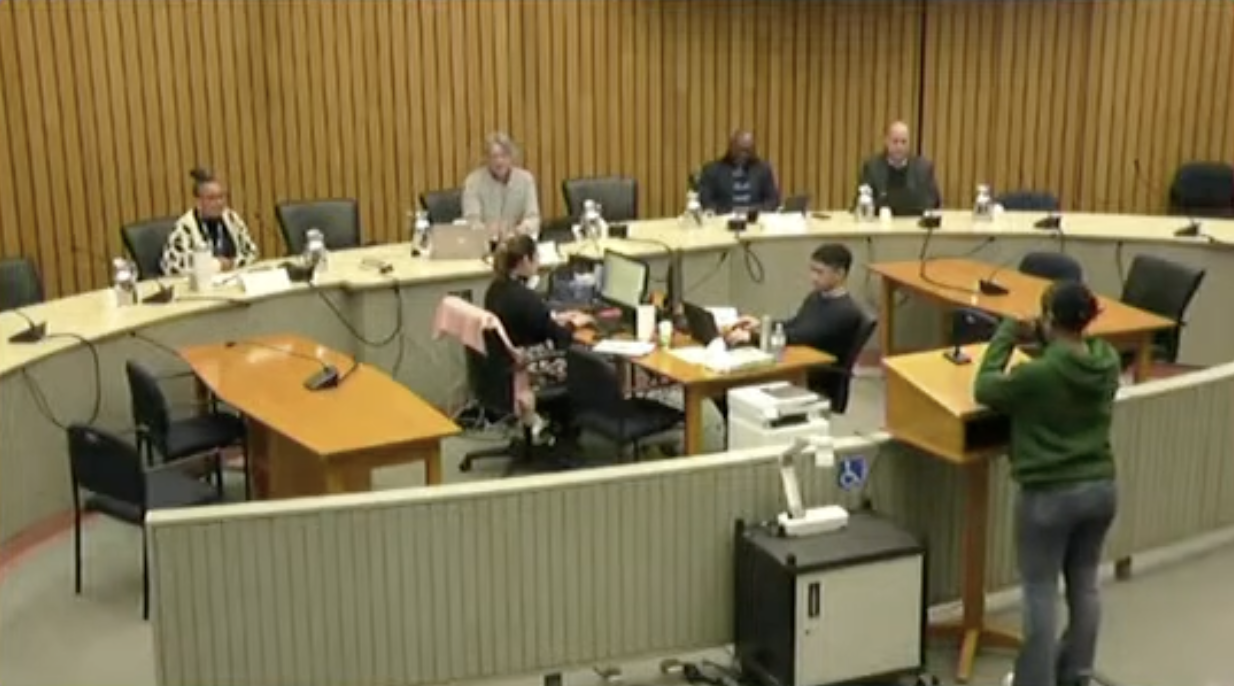
📸: Toronto City Council/Youtube.
You’ve spoken at the City of Toronto’s budget deputation. What did that experience teach you about how decisions are made in the city?
That was a great experience. A lot of times, as youth, we think our opinions don’t matter and adults are the ones making all the decisions. We don’t have to do anything and just watch.
When I was in the Toronto Youth Cabinet, it just showed me that no matter how young you are you can participate in civics, you can participate in government. We all have a voice. I saw how a lot of youth signed up for the budget deputations to speak.
The experience showed me that my voice matters too. And youth in Toronto, their voices matter too, so they should be able to speak on what they believe in and be able to advocate for what they think is right.
[Curious to learn more about how to make a deputation? Check out our guide on deputing, which includes tips from Alemayehu.]
In your deputation, you spoke about youth homelessness and transitional housing. What are you really advocating for, beyond the policy language?
Shelters are packed in the city. I spent a little bit of time working in the shelter advocacy space. By transitional housing, I mean having wraparound support like counselling, having employment support, all within the housing, where the youth live.
When I talk about transitional housing, I’m talking about not just having a home and a bed to sleep on, but also mental health support, food, education and nutrition education.
You’ve worked in data intelligence at Toronto Community Housing. How did that shape the way you think about public accountability?
I think having data on the issues that happen in Toronto is very important, because you can’t really do anything if you don’t have the evidence to make those decisions.
And if you’re not collecting the data, then how do you make data-informed decisions? So working there, I learned about data strategy that Toronto Housing is incorporating in the organization. I learned about the new pathways that they’re building to become more data informed. I got to do exploratory analysis on things.
It was a lot of fun, and it just shows you that our government should be collecting data, so that they can show, “we’re voting on this policy, because we have this data to support this policy.” But if we don’t have the data, how can you vote? How can you advocate for something?
You’ve also held leadership roles in Black student spaces. What have those roles taught you about resilience and community?
In terms of resilience, it taught me a lot, especially that you need to keep pushing and doing the things that aren’t there. Just because something doesn’t exist doesn’t mean that it can’t exist.
When I was in the Black community at my university in my undergrad, I started a mentorship program for Black students, because it was lacking and there was no support. I remember when I came to university, I was one of the few Black people in the science program. I’d be the only Black person in my laboratory. That was a big change for me because I grew up with a lot of Black people.
I saw that a space that supports me was missing. I thought that if something doesn’t exist, it doesn’t mean that it can’t be here. So, I started the mentorship program. It’s been running for three years now. After I graduated, it continued to support incoming Black students.
It pairs them up with upper-year Black students, gives them mentorship just to make sure that they feel included and to give them a feeling that they belong in the university, because there are a lot of times when I didn’t feel like I belonged.
So now, I’m hoping that the future generation can feel more comfortable and feel like they belong at school.
What would be your advice for other students or people who want to do similar work, but they don’t know how to start?
Something I would tell myself is: you don’t need to do something extravagant and crazy just because you think it’s the right thing to do.
I would start small. Start with your local community centre or like me, how I started volunteering at my church 10 years ago.That was my first time doing community work, and then I eventually moved on and tried new things.
But definitely start small, start local. If you’re in high school, there are a lot of high school clubs you can join. You can even start a club if there’s no club that resonates with you. You can always make your own. If you’re in college or university, same thing. There are a lot of community groups. Do anything in your area. If there’s a community centre, if there’s somewhere you’re passionate about, let the passion drive you.
Not to sound cliché, but when you follow your passion, that’s when you make the biggest impact.
I just kind of followed my passion. It’s been a bit wobbly. It wasn’t a straight line. I would go from housing, then politics and then science. But that was what I was passionate about. I just followed it, whether it’s straight or not.
How can readers support your work?
What I think everyone can do is vote. We’re really lucky to live in a country where we’re able to vote.
City of Toronto elections are going to happen this year. Do your research if you’re able to vote. If you wanna campaign and canvass for a politician that you think would do well in your community, go door to door, go knocking. Follow the news, follow different politicians. I think being involved is the best thing that you can do.
I personally follow Progress Toronto. They have an Instagram page, and it’s been really helpful. They do virtual workshops on how to make a deputation, things like that. I follow them because that’s my political beliefs, but obviously, there are many other ones that youth can follow depending on what they believe in.
Fact-Check Yourself
Sources and
further reading
Don’t take our word for it — check our sources for yourself.
Join the conversation