






These meeting notes are part of Documenters Canada, which is partly funded by the Social Sciences and Humanities Research Council of Canada (SSHRC). Learn more about our program here. The Green Line maintains full editorial independence to ensure journalistic integrity.
Toronto is gearing up for the 2026 FIFA World Cup and that includes its transit system too.
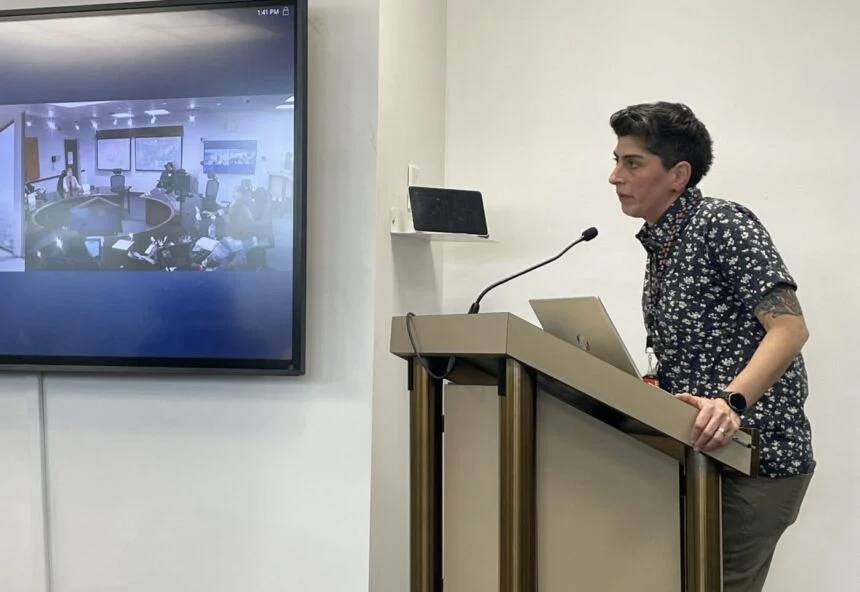
Accessibility has been a central issue as the city prepares for the games. On March 26, 2026, the Toronto Transit Commission’s Advisory Committee on Accessible Transit (ACAT) met to review its services during the World Cup and how they would impact riders with disabilities.
BECOME A GREEN LINE MEMBER TODAY
TTC staff said Toronto could see up to 45,000 people at matches, with additional crowds gathering at the FIFA Fan Festival near Fort York. Sho Kalache, project manager at the TTC, said transit could be many peoples’ first impression of Toronto.
To accommodate demand, service will increase on key routes such as Dufferin, King and Bathurst. All services are expected to be fully accessible in time for the FIFA World Cup. There will be additional shuttles operated on match days.
Some ACAT members raised concerns on how these plans will work in practice — including how to ensure services meant for people with disabilities aren’t being misused by people who don’t need the accommodations.
Sho said staff won’t be policing the use of these special services.
However, some service changes may impact riders. Staff said certain routes, like the 63 Ossington bus, may be diverted on match days. Stops near high-traffic areas, like Fleet Street, may also temporarily be removed to prevent overcrowding.
Staff said communication plans are still being developed.
Torontonians can attend the next ACAT meeting on April 30, 2026 to hear new details on what the City is doing to accommodate people with disabilities for the upcoming FIFA World Cup. People can attend to voice their concerns and feedback in-person or online.
DOCUMENTER’S POV
Francis Tomkins
As a disabled TTC user, I’ve been personally impacted by the continued construction at Islington Station — which promises to be a fully accessible station by late 2026 — including the removal of all escalators at the station. While this construction was communicated in advance, the communications plan left many neighbourhood residents not knowing about the proposed changes and about their accessibility options during the period of construction.
Tuba Sultani
As a resident of Toronto who uses the TTC daily, I’ve personally observed accessibility barriers related to the issues discussed in the meeting. For example, I often see elevators out of service at the Don Mills station. This can make it very difficult for people with disabilities to access transit. Additionally, during busy events, I’ve seen how overcrowding affects accessibility. Last summer at the CNE, I waited over 15 minutes for a bus that was full, and a woman using a wheelchair was unable to board because there was no space. This example relates to the concerns raised in the meeting about whether TTC services will be able to handle increased demand during the FIFA World Cup.
Dorsa Farzi
As a resident of Toronto, who frequently uses Bayview station, I’ve observed significant accessibility barriers during winter months. For example, the primary entrance is often not fully cleared of snow and the secondary entrance has a steep incline that makes it nearly impassable for anyone with mobility challenges.
Fact-Check Yourself
Sources and
further reading
Don’t take our word for it — check our sources for yourself.




Join the conversation