
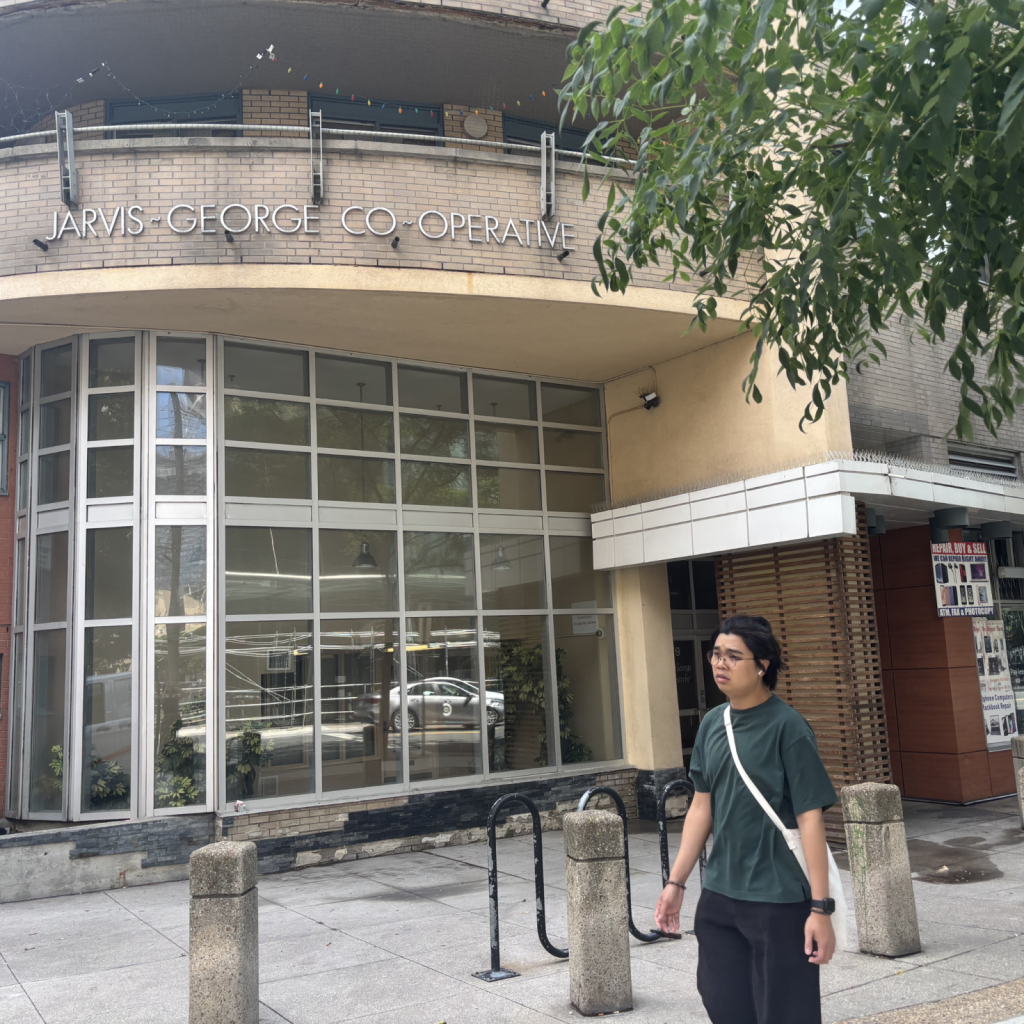

Toronto doesn’t have enough housing co-ops — and it’s not building enough.
There are 97 co-ops in the city…with only one vacancy in Moss Park as of July 9, 2026. (Except if you’re a student, you might be able to apply to a student housing co-op near Church Street and Gerrard Street.)
Based on data from the Canada Mortgage and Housing Corporation, only 33 co-op units have been completed in Toronto between 2006 and 2024: four in Scarborough in 2016 and 29 in Parkdale in 2011. That’s less than two units per year in the last two decades. Meanwhile, 236,988 condo units — more than 13,000 a year on average — were built in that timeframe.
Why are co-ops a good housing model?
People who live in a co-op are members, not tenants nor sole owners. Members have a say in how the building is maintained and run — they can collectively and democratically decide on budget, repairs and renovation projects. There are no landlords; each member has one vote, and every year, a board of directors is elected from the membership.
This setup helps keep co-ops affordable and stable.
In a co-op, what you pay per month is based on the cost of running the building, not on maximizing profit.
In Toronto, co-op units are around 35% cheaper than market rent — that’s about $450 less per month for a one-bedroom apartment and $500 less per month for a two-bedroom, according to research completed in 2022 by the Co-operative Housing Federation of Canada.
Many co-ops are also home to mixed-income communities, with some members benefiting from rent assistance or social housing programs.
You also don’t have to worry about evictions, renovictions, demovictions and rent hikes; members are only asked to leave if they break the co-op’s bylaws.
Since co-ops provide stable housing, people tend to stay in their homes for a long time, and because governance is collaborative, members can be engaged in their community and know their neighbours.
“There’s a sense of community in it that you rarely find in other places,” says Parastou S., a co-op resident who attended The Green Line’s housing Action Journey event in May.
Will there be new co-ops in Toronto?
Last year, the federal government announced $1.5 billion in funding for new co-op housing development through the Co-operative Housing Development Program (CHDP).
Through this initiative and with additional municipal funding, the City of Toronto broke ground on one of the first co-op developments in decades last November.
The project, called Kennedy Green, is currently under construction at 2444 Eglinton Ave. E. in Ionview, a Neighbourhood Improvement Area in Scarborough, where 62% of residents rent (higher than the city-wide average of 48%). Kennedy Green will consist of two co-op buildings with a mix of studios, one-bedroom, two-bedroom and three-bedroom apartments, totalling 612 units.
A bit further east in Scarborough Village, the City is collaborating with a not-for-profit developer, Options for Homes, to build The Cedars, a mixed-income project, with a 21-storey co-operative building with 245 below-market and rent-controlled homes. Twenty per cent of the units will be dedicated to residents supported by YWCA Toronto, which helps people facing gender-based violence, and Community Living Toronto, which focuses on people with intellectual disabilities. The Cedars will also include four residential towers and some townhomes with units for homebuyers.

📸: CreateTO.
As good as this news might be, that’s just two co-op projects versus a whole bunch of unaffordable luxury condo developments.
But it doesn’t have to be that way.
Toronto has almost 100 City-owned sites that are either housing-ready or may be unlocked for new housing. I think we’d be better off building co-ops, not condos, on them. I’m not the only one.
According to a 2024 survey, 61% of Canadians believe building non-profit and co-op homes should be a high priority.
Some housing advocates argue that building co-ops, not private developments, is a better solution to Ontario’s housing crisis.
“We must move beyond ineffective reliance on market forces and strategically invest in deeply affordable non-profit, co-op and other affordable housing solutions,” reads a 2025 report led by United Way Greater Toronto (non-government funder of community services in the GTA) and the Co-operative Housing Federation of Canada, with support from SHS, a housing research and policy firm.
How to join a co-op
You can explore options through the Co-operative Housing Federation of Toronto. There aren’t many vacancies, but many co-op communities have a waitlist you can join.
Don’t get discouraged if it’s long; sometimes you can get bumped up if the people ahead of you aren’t able to take up the spot. Since co-ops depend on housing charges for their capital budget, they often want someone who can move in immediately.
If you want a say in how the City should approve and build more co-op buildings, keep an eye on public meetings where development proposals might be discussed.
Even the Kennedy Green project had community consultation meetings as far back as 2021, with some opposition due to concerns around gentrification, density of affordable housing in Scarborough, traffic, parking, noise and shadows, as well as a petition in support in 2024.
If you want to learn about how to chime in on development projects in the city, check out these two guides:
- How to give the City of Toronto your input on local projects
- How to make a deputation at Toronto City Hall
If you want to stay in the know about public meetings, sign up for our Ripple Effect newsletter, where associate editor Aia Jaber dives into City Hall decisions and upcoming discussions.
Fact-Check Yourself
Sources and
further reading
Don’t take our word for it — check our sources for yourself.



Join the conversation