

This article was produced as part of the Local Journalism Initiative.
TL;DR
- Residents at 85 and 95 Thorncliffe Park Dr. are starting to receive notices of a 5.1% rent increase as they renew their leases — that’s because their landlord Morguard applied for an Above Guideline Rent Increase (AGI) at the Landlord and Tenant Board.
- The law allows landlords to apply for AGIs if they’ve paid for and finished significant renovations or upgrades, which is the case for the Leaside Towers.
- In general, tenants can fight AGIs by contesting the landlord’s application if there are outstanding maintenance issues or double-counted bills.
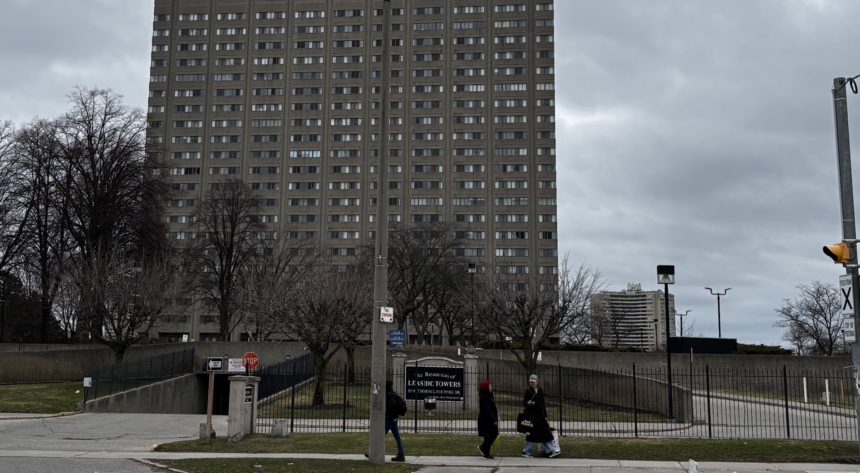
Leaside Towers residents in Thorncliffe Park are starting to receive notices of a 5.1% rent increase — even though the building is under rent control.
This spring, the Leaside Towers Tenant Association (LTTA) alerted members living in 85 and 95 Thorncliffe Park Dr. that the buildings’ landlord and real estate company, Morguard, applied for an Above Guideline Rent Increase (AGI). Tenants can expect notices as their leases are renewed throughout the coming months.
BECOME A GREEN LINE MEMBER TODAY

Why is the building’s rent increasing?
Currently, Ontario caps yearly rent increases at 2.1% for most units that have been in the rental market before Nov. 15, 2018 — which is the case for Leaside Towers. However, it allows landlords to apply for rent increases above the guideline if they’ve done significant renovations, repairs or energy-saving upgrades to the building. The Landlord and Tenant Board (LTB) reviews the application, sets a hearing date with the tenants and makes the final decision on how much the landlord can charge.
In its application to the LTB, Morguard justified the increase by citing work done for:
- Cladding due to deteriorated concrete.
- New ventilation and fire alarms, as they were at the end of their life and failing.
- Garage restoration and roof replacement because of leaks.
“Following significant investments made to the infrastructure and improvements to life safety systems at Leaside Towers, we have applied for an AGI. While the application is awaiting review, we have notified our residents to keep them up-to-date and to let them know what to expect,” a Morguard representative told The Green Line in an email. Morguard didn’t reply to our specific questions.
Jason Ash, co-chair of the LTTA, and Judith Scolink, a long-time resident who received the AGI notice, confirmed that the work listed above has been done or is ongoing.
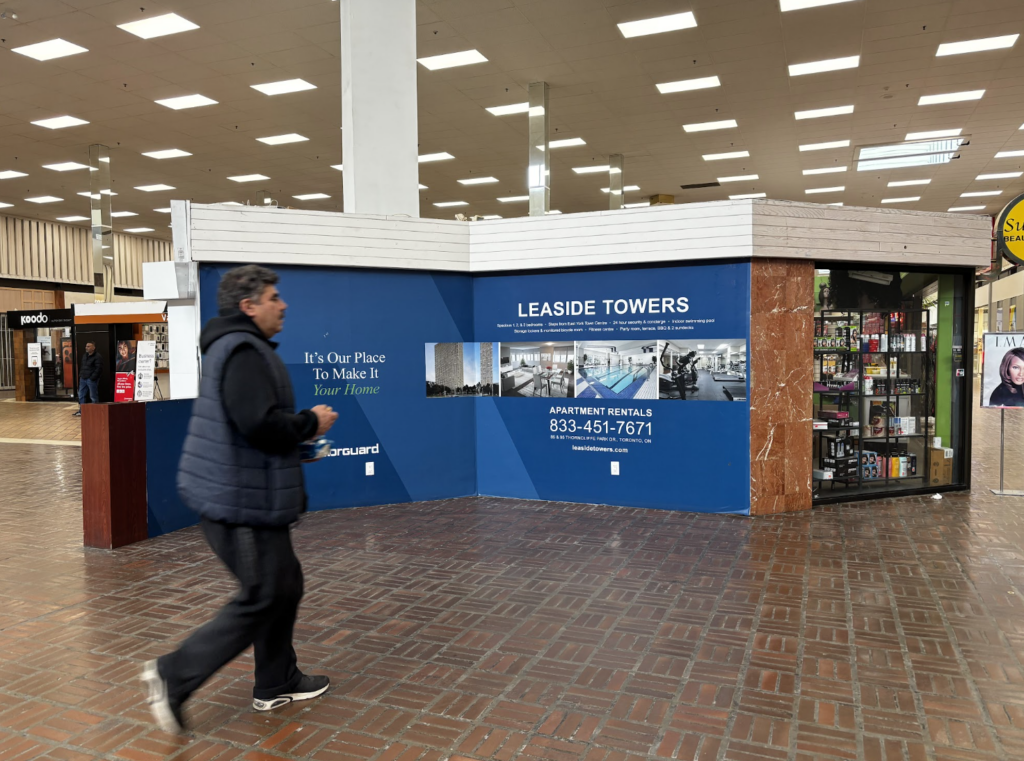
📸: Yara El Murr/The Green Line.
When do you have to pay the increased rent?
The rent increase hasn’t been approved yet, but if it is, it would apply to new or renewed leases starting June 1 — regardless of when the LTB approves it, which can take several months.
So, if a tenant renews their lease in July or September, then the new amount applies starting July or September. If the LTB approves the AGI in October, tenants who renewed their lease in July still have to pay the AGI amount starting from July.
If they paid extra and the increase isn’t approved, they’ll get a refund.
If the LTB approves the increase later, they’ll be in the clear if they paid, but could get in trouble if not.
“The landlord can try and evict you because of arrears. So that’s just kind of a catch-22. Legally, they’re not supposed to do that,” Yaroslava Avila Montenegro, of the Federation of Metro Tenants Association (FMTA), explains.
Can you fight a rent increase?
In cases like this, fighting the AGI is difficult — but still possible — according to Laura Anonen of the Don Valley Community Legal Services (DVCLS).
Tenants can present their case to the LTB to reduce or cancel the above-guideline portion of the rent increase (in this case, up to 3%) — or they can negotiate with the landlord outside the tribunal.
“We have seen cases around the city where they have been successful,” Anonen says, citing the success of the Toronto Tenant Union.
Last year, a group of Thorncliffe Park residents (who live a 10-minute walk away from the Leaside Towers) resolved an AGI dispute after years of a rent strike. Tenants facing AGIs along the Eglinton Crosstown were also successful in challenging their landlords at the LTB.
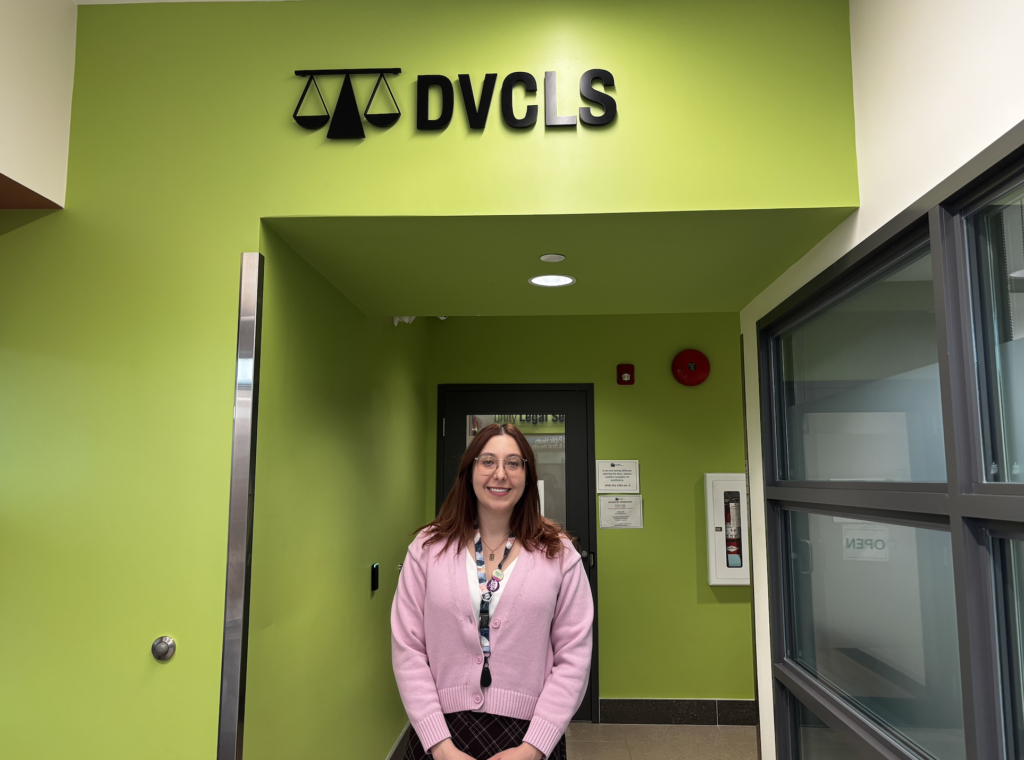
📸: Yara El Murr/The Green Line.
How to fight an AGI
To legally challenge an AGI at the LTB, tenants need proof that the landlord has neglected the building, deferred maintenance or left outstanding issues unresolved. Everything has to be documented, Avila Montenegro says.
Another way is to dispute the specific invoices for work the landlord has claimed to do in their AGI application. Tenants can request this documentation from the LTB or the landlord themselves, but they have to go through everything to put the case together.
“It’s up to the tenants, though, to make sure that all of the bills add up, that they’re not double-counting for things, because sometimes the landlord does tend to do that,” Avila Montenegro explains.
Some organizations can help:
- The FMTA has organizers who can go through the specifics of what an AGI is and the process you can expect. They can also help organize residents to push back against the AGI.
- The DVCLS in Thorncliffe Park can provide free legal advice and education to tenants. It can help book spaces, host meetings and print flyers.
- The Canadian Centre for Housing Rights is the only organization that could legally represent tenants at a hearing, but it’s not guaranteed, as resources are stretched thin. However, it can offer some legal guidance.
Tenants can also pressure the landlord outside the LTB, through rent strikes and public demonstrations.
What’s next for the Leaside Towers?
At Leaside Towers, LTTA already helps tenants navigate issues in the building. Ash says the association is looking into the details of the AGI application — about 1,400 pages of invoices and receipts.
“Quite a monumental effort will have to be undertaken to look through those, and then to understand, based on what the LTB’s guidelines are, if there is anything in there that shouldn’t be in there,” Ash says. The application could stand to scrutiny, but the LTTA will still make an effort to investigate it.
While residents and the LTTA attest that management has resolved maintenance issues, especially water penetration in the units, some think that the effort came too late.
“They were upgrades that should’ve been done a long time ago. So, they may not get credit for the whole thing at this point, and that would be one of the arguments to use against it (the AGI),” says Scolink.
As of June 2, Leaside Towers residents haven’t received a hearing date at the LTB yet — it might not be until 2027.
While they figure out what’s next, Ash reflects on a better systemic solution to AGIs across the city. He says that regulations should require landlords to maintain and improve their properties early and over time — it would cost less than completing repairs years later, he adds. He also says maintenance could be financed through landlords setting aside a budget from a small portion of rents over the years.
“You’re gonna have to replace boilers and windows and repair the exterior of the building, so that just seems to be a common-sense way to handle things,” he explains. “It’d certainly make relations better between tenants and property owners and probably save money in the long run for everybody.”
Fact-Check Yourself
Sources and
further reading
Don’t take our word for it — check our sources for yourself.


Join the conversation