

For immigrants hoping to settle permanently in Ontario, the path to a provincial nomination just changed.
Instead of applying through one of eight immigration streams based on factors such as work experience, education or job offers, prospective applicants will now have to navigate a new system designed to prioritize workers based on Ontario’s labour needs.
The province replaced the eight streams of its Ontario Immigrant Nominee Program (OINP) with the Ontario Workforce Priority Stream (OWPS) in its first phase of a broader redesign announced earlier this year.
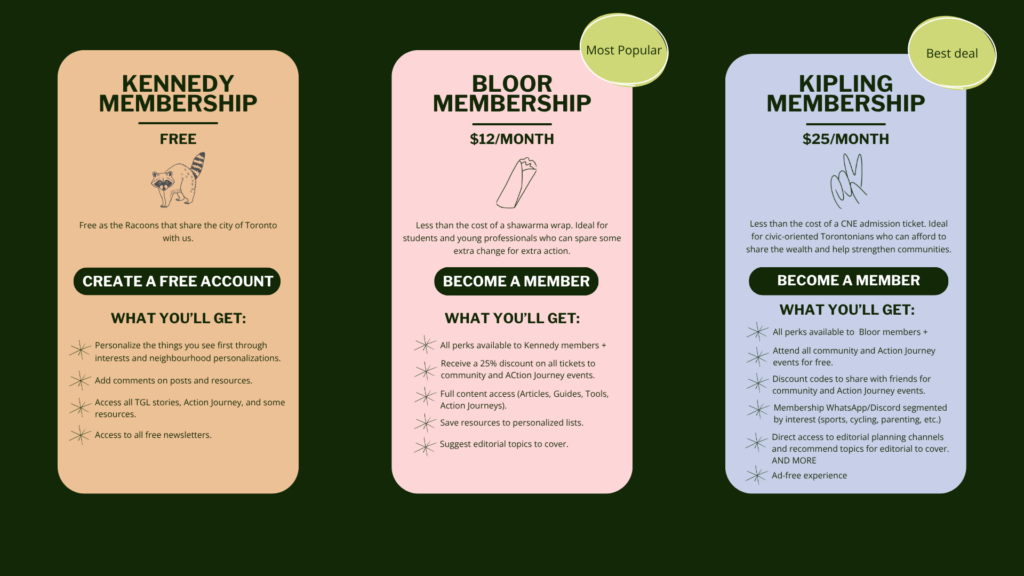
BECOME A GREEN LINE MEMBER TODAY
The changes only came into effect in June, when the website where candidates expressed interest in participating in the program closed. Last month, the Ontario government published the new eligibility criteria for the reformed program, with the Expression of Interest (EOI) system expected to open “later this summer.” You can view the complete timeline here.
All these new definitions and criteria that newcomers have to learn about and plan around add up. The immigration system is complex; that’s nothing new. But the burden that these changes place on immigration experts — and on the families and individuals living through them firsthand — is real.
These changes got me thinking: How can I keep up with the rules and understand all the legalese in new regulations without spending hundreds of dollars I don’t have on professional counsel?
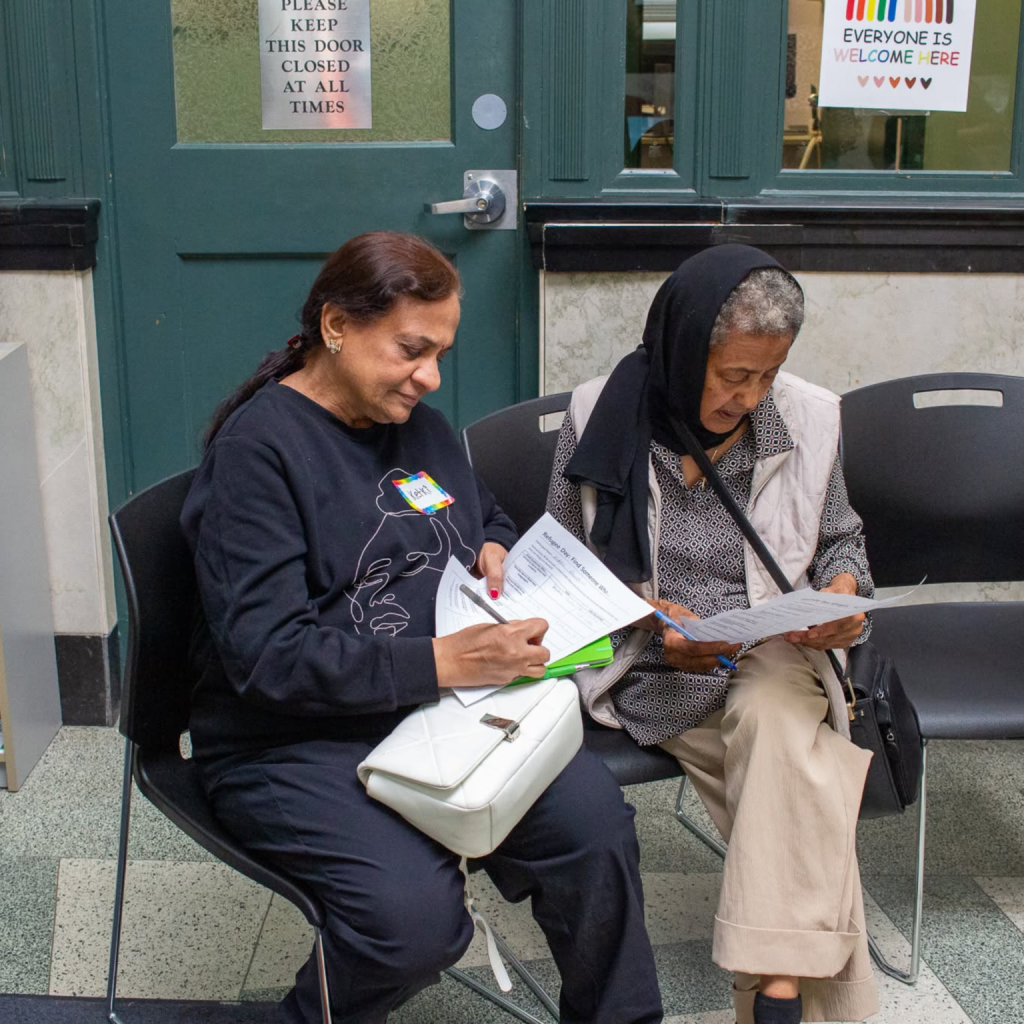
Luckily, there are free and low-cost options for legal help in Toronto. Legal clinics may not be able to answer every question or provide advice on every immigration pathway, but they can be a starting point for newcomers trying to make sense of an increasingly complex system.
From someone who can listen to your immigration questions and explain your options, to someone who can tell you where to start, help you choose the right pathway and even advocate for you, here are a couple of community legal clinics that may be helpful.
What are Community legal clinics?
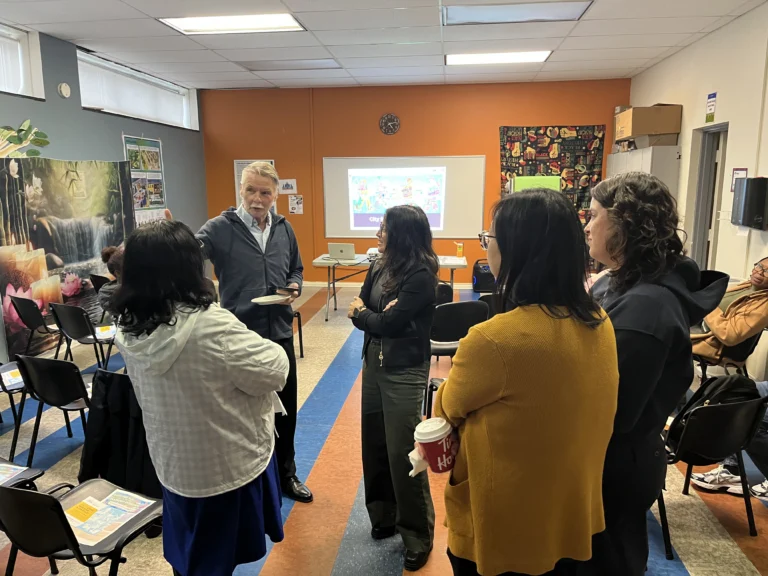
Legal clinics provide free services to people with low incomes (as established by Legal Aid Ontario), but each clinic has its own geographic catchment area and eligibility requirements. Find the clinic closest to you here and make sure you qualify for its services.
Many community legal clinics don’t provide services for immigration processes commonly used by economic migrants, such as Express Entry or provincial nominee programs. While a clinic may not be able to advise you on the specific program or pathway you’re pursuing, it may still be able to help with other immigration-related matters or refer you to an organization that can provide the appropriate support.
Here are a few options you can check out.
Centre for Spanish-Speaking People Legal Clinic
At 2141 Jane St., in the Oakdale-Beverley Heights neighbourhood of North York, this legal clinic serves all Spanish-speaking people in Ontario. It has one of the broadest catchment areas of the legal clinics on this list. You need an appointment, so before heading there, make sure to email info@spanishservices.org or call at 416-533-8545 on Monday to Friday between 9 a.m. and 5 p.m.
WoodGreen Community Services
WoodGreen has multiple centres across Toronto:
- 815 Danforth Ave.
- 650 Queen St East
- 219 Dufferin St.,
- 2206 Eglinton Ave. E,
- 2930 Lakeshore Blvd. W.,
- 444 Logan Ave.,
- 1533 Victoria Park Ave.
- 95 Wellesley St. E.
The supervising lawyers, law students and settlement counsellors work together to offer direct one-on-one legal information assistance, legal support and summary advice to newcomers, immigrants and refugees. Their areas of expertise are immigration, refugee and citizenship law. This can include guidance for preparing basis of claim (BoC) forms, ODSP appeal documentation, work permit renewals and sponsorship applications.
Excellent news for economic migrants in Toronto affected by the changes to OINP: WoodGreen confirmed in an email to The Green Line that it can help candidates regardless of their status, including individuals affected by OINP changes. “We can provide a document checklist for OINP and help them become OINP-ready through employment and skills development support,” said Qazi Hasan, director of the newcomer programs and services, in an email to The Green Line.
WoodGreen’s services are completely free, but you need to be living in Canada to access them, preferably in Ontario. The clinic’s staff can serve clients in 25 languages, but if your language isn’t one of them, don’t worry; they also offer interpretation services.
To schedule an appointment, you can book online, call the legal clinic at 416-645-6000, email info@woodgreen.org or visit one of its centres in person.
Parkdale Community Legal Services (PCLS)
If you live near Little Portugal, you can access free legal help at 1229 Queen St W. Its precise catchment area (the area you need to live in to access its services) is south of Bloor Street West, north of Lake Ontario, east of the Humber River and west of Ossington Avenue/Strachan Avenue.
Parkdale Community Legal Services can help you with areas such as housing, employment, immigration and social assistance. Its services include short consultations, legal assistance, in some cases even legal representation, ongoing casework and free community workshops.
If you or a person close to you need help, but need it in another language, staff can provide interpretation.
To access PCLS services, you’ll need to fill out this webform or you can also walk in to schedule an appointment. If you’re a homebody like me, it might be easier to just call from home while drinking coffee, tea or the beverage of your choice. I called them with some questions; the staff was friendly and helpful, and the wait time for pickup was just under one minute.
“We firmly believe that the individual problems that individuals face are not the fault of the individual but a systemic problem; we also organize to change the systems that harm our communities,” said Luisa Ortiz-Garza, migrants’ rights organizer at PCLS, in an email to The Green Line.
Don’t forget the clinic is closed on weekends and Wednesdays, and open on all other days from 9 a.m. to 5 p.m., with a lunch closure between 1 and 2 p.m.
Neighbourhood Legal Services (NLS)
If you live north of Lake Ontario, south of Bloor Street., between Yonge Street to the east and the Don Valley to the west, you can head over to 163 Queen St E. in the Downtown Yonge East neighbourhood for free legal services and assistance in topics such as housing and tenant rights, employment, social assistance and income security, immigration, human rights, notarizing and commissioning documents.
In its immigration practice, the clinic handles citizenship, humanitarian and compassionate applications, sponsorship and family reunification — areas that will be a common thread throughout this list of legal clinics.
Intake is online, and while you’re there, you might as well check its robust FAQ section powered by Steps to Justice. You can contact the clinic at 416-861-0677 or email general@nls.clcj.ca.
Kensington Bellwoods Community Legal Services (KBCLS)
If you’re in the vicinity of Trinity–Bellwoods, then the legal clinic located at 489 College St. is the one for you.
Make sure your main address is south of Bloor Street West, north of Lake Ontario, west of Yonge Street and east of Ossington Avenue and Strachan Avenue.
KBCLS can give you legal advice, help you fill out forms and in some cases, represent you at some tribunals and courts.
Its areas of expertise are: employment insurance, notarization, housing law, income security cases and social assistance. On immigration, it can provide summary legal advice on matters related to sponsorship, citizenship, humanitarian and compassionate applications, family reunification, permanent resident applications for protected persons and pre-removal risk assessments.
To access its services, make sure to fill out the online intake application or complete it in person. Once submitted, you’ll hear back from the intake coordinator in three to four business days with next steps or a referral if your case is outside its scope or area of expertise.
KBCLS also offers interpretation services through MCIS funded by Legal Aid Ontario.
Don Valley Community Legal Services (DVCLS)
This is another one I personally contacted via email and received a prompt and friendly response. It’s located in the East York neighbourhood of Thorncliffe Park at 45 Overlea Blvd.
It offers legal advice and information in many languages through a contract with MCIS Language Solutions to those who live south of the 401/York Mills Road, north of Lake Ontario and between Yonge Street and Victoria Park Avenue.
Immigration-wise, DVCLS’ portfolio of expertise is quite similar to the rest and ranges from permanent residence (PR) applications and work permits to temporary resident permits, PR card and citizenship applications.
Another highlight is that people without status in Canada can still access DVCLS’ services, but photo ID is required. Don’t forget to bring any other relevant documents for your case.
The clinic also recommends being careful when consulting AI, as “they’re not nuanced to the particular fact situation of the client and can cause real problems,” said Marjorie Hiley, executive director, in an email to The Green Line.
To access services, call 416-441-1764 ext. 1. DVCLS accept appointments only; no walk-ins. For more information on the intake process, visit https://www.donvalleylegal.ca/contact-us/
Jane Finch Community Legal Services
Jane Finch Community Legal Services is located at 1315 Finch Ave. W. in York University Heights. It’s open to all those living south of Steeles Avenue West, north of Falstaff Avenue Highway 400 and Highway 401 and between Keele Street to the east and the Humber River to the west.
Its areas of expertise include affidavits, notary, CPP, debt and consumer rights, EI, ODSP, OW and immigration law.
Along with the South Asian Legal Clinic of Ontario, it’s among the few that offer advice on consumer rights. On immigration law, it provides advice and legal assistance on matters such as sponsorship, humanitarian and compassionate applications, in-Canada permanent residence applications, and citizenship applications.
To access its services, call 416-398-0677.
Other notable mentions include the South Asian Legal Clinic of Ontario (SALCO), the HIV and AIDS Legal Clinic of Ontario (HALCO).
Also worth checking out are law schools, as most have their own legal clinic, with the University of Toronto and York University as examples. They’re well-trained students supervised by experienced professionals.
For some cases beyond the scope of Legal Aid Ontario, you might have to look for a pro bono consultant.
Beyond legal clinics, other organizations worth looking into are advocacy and support groups such as Migrant Workers Alliance for Change (MWAC), Migrant Rights Network and the FCJ Refugee Centre.
MWAC has chapters for student migrants, care workers, farm workers and other migrants, as well as general supporters or allies.
Currently on vacation and unable to respond to our request for comment, they are, however, using their social media to invite people to a mobilization on Sept. 20 demanding a renewal of work permits, an end to exploitation, a stop to deportations and status for all.
Still have questions or looking for a resource we missed? Email us at hello@thegreenline.to and let us know what you’re looking for. Your question could help shape our next resource guide.
Fact-Check Yourself
Sources and
further reading
Don’t take our word for it — check our sources for yourself.

Join the conversation