

When did Toronto lose its chivalry?
For a country known for its politeness, the most populated city doesn’t live up to its nation-wide reputation.
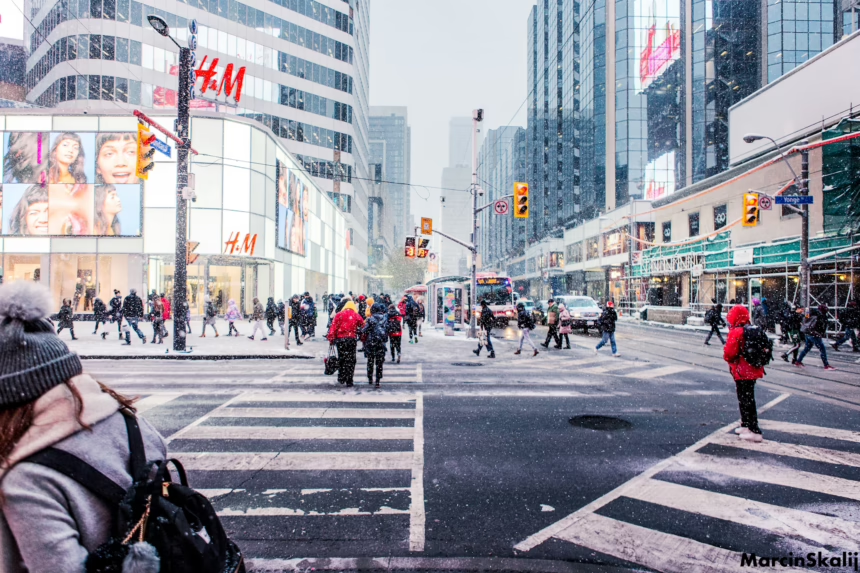
You’re crossing the street and a car inches forward before you’ve even hit the curb. You hold the door open for 30 people and no one says, “thank you.” People get off the bus and no one seems to acknowledge the bus driver that got you through Toronto’s rush hour.
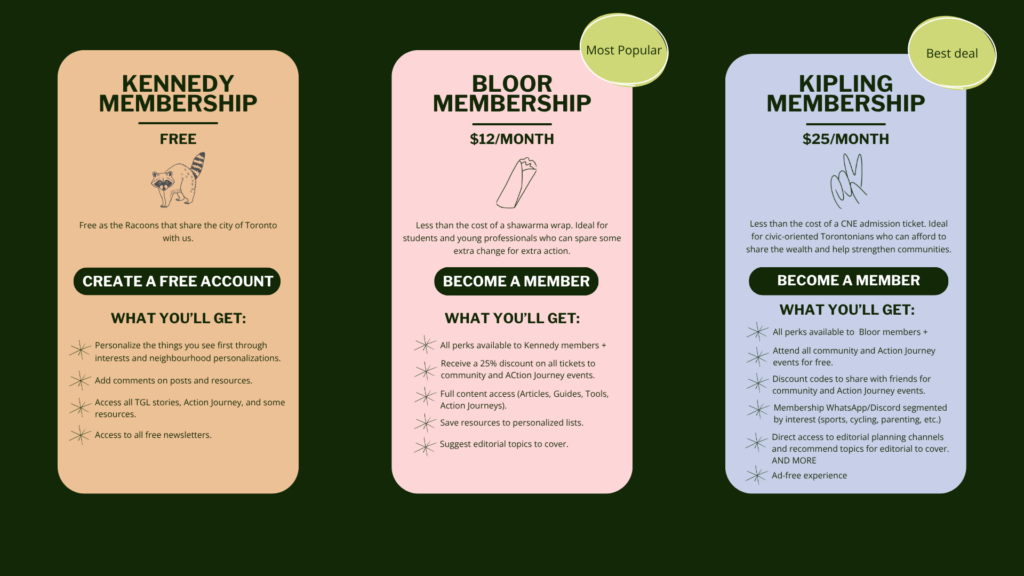
BECOME A GREEN LINE MEMBER TODAY
These things add up — and they chip away at the sense of community that would’ve made such an isolated city feel livable.
Canadians are finding themselves straying from our golden reputation of politeness, especially in public spaces like transit pathways, stores and on roads. Narrative Research, a market intelligence and research company, says it’s due to rising stress levels and the cost of living.
And we know how expensive Toronto can be.
The city’s first-ever report card on mental wellbeing — which was put together by the Wellesley Institute, a research and policy think tank — revealed that Torontonians are struggling the worst they’ve ever been. Financial challenges and a lack of social connection are credited for the mental health decline too.
When people feel disconnected, they stop acting like they’re part of a shared community.
Kindness begins to feel optional — as if we don’t even owe each other basic respect.
According to research, being nice to people is actually good for your health. It’s directly related to relationships satisfaction, life-meaning and mental health.
Not everyone will thank you but there are a few everyday ways to be kind and encourage others to do the same too.
How to spread kindness:
- Acknowledge people who serve the public, like TTC drivers and crossing guards.
- Slow down and hold the door open for someone or let other people board the TTC first.
- Put your phone away in shared spaces and be present, because community starts with awareness.
- Be the first to be kind.
- Treat public spaces as shared spaces.
Fact-Check Yourself
Sources and
further reading
Don’t take our word for it — check our sources for yourself.




Join the conversation