
Drag isn’t just performance. It’s a way to challenge how we see gender.
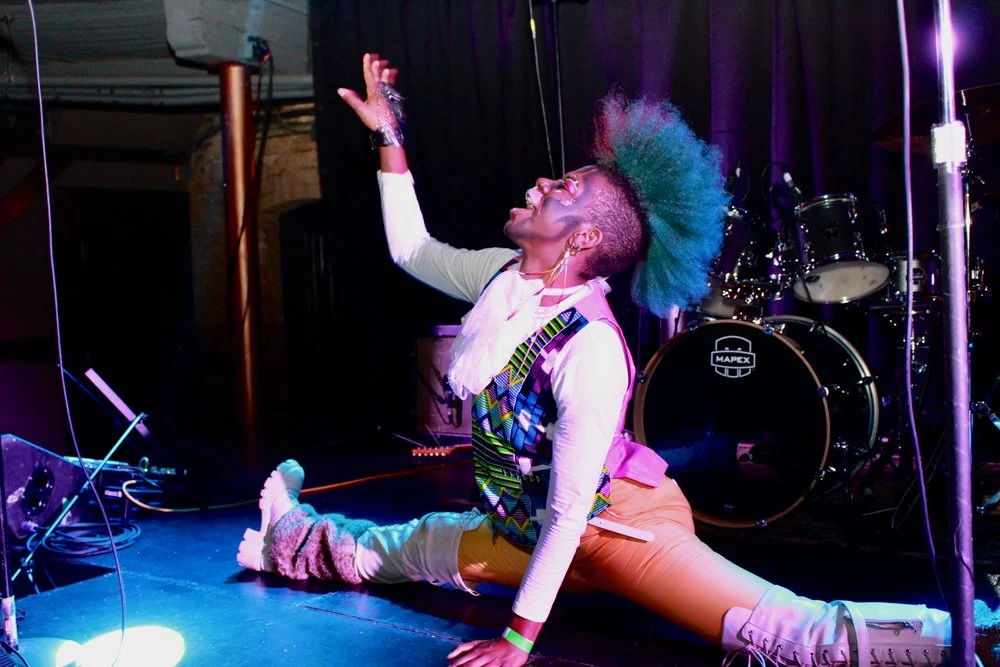
Our inaugural Changemakers newsletter features Halifax native Manny Dingo, a drag king who’s been in the scene for a decade, and who was one of the main acts for our Tune In event in May 2023.
It’d be a crime to not mention how decked out he was in person, looking like the love child of modern queer aesthetics and the dandiest of sapeurs. Manny rocked a matching two-tone pink-and-blue ‘stache and fro-hawk, as well as knee-high white boots and a pink petticoat that hid his patterned vest and billowy pirate blouse.
BECOME A GREEN LINE MEMBER TODAY
He won the love of the crowd and The Green Line team’s hearts with his performance of Lil Nas X’s “Montero,” so hopefully this Q&A gives you insight into this talented, unapologetic artist.
What attracted you to drag?
I do drag to express myself. And by expressing myself, I get to challenge people’s views. People make a lot of assumptions about me all the time and so my reason for dressing like a Black man is to challenge people’s ideals [while] also bringing in my own flair.
What do you think drag brings to those who are new to this scene and LGBTQ+ culture?
Drag is [often the first time] folks get to experience queer community in a very blatant way. We take up space and people know immediately that we are queer. Sometimes people get to question their gender and sexuality [while] also getting to open their minds up to [us]. At the end of the day, I think that drag challenges how we should see gender and how much space it takes up in our minds.
How does drag help you reflect on and explore your gender identity?
I find with a lot of drag performers that start and then don’t continue drag, it’s almost like they want to express themselves outside of gender norms to see where they fit. Sometimes they feel very comfortable where they were born and sometimes they end up transitioning. Drag may not work for them, but sometimes it does.
What can people who aren’t in the drag community do to support artists such as yourself?
Normalizing drag and the fact that it’s [an expansive] kind of artistic expression…I want to spotlight the safety that we have to provide to our queer and trans community right now with the current conversation about drag… So, I’m not gonna feel terrified to leave my house because I’m going to work. I want to make sure that the city is on my side and has my back.
This interview was edited and condensed for clarity.
Fact-Check Yourself
Sources and
further reading
Don’t take our word for it — check our sources for yourself.


Join the conversation