
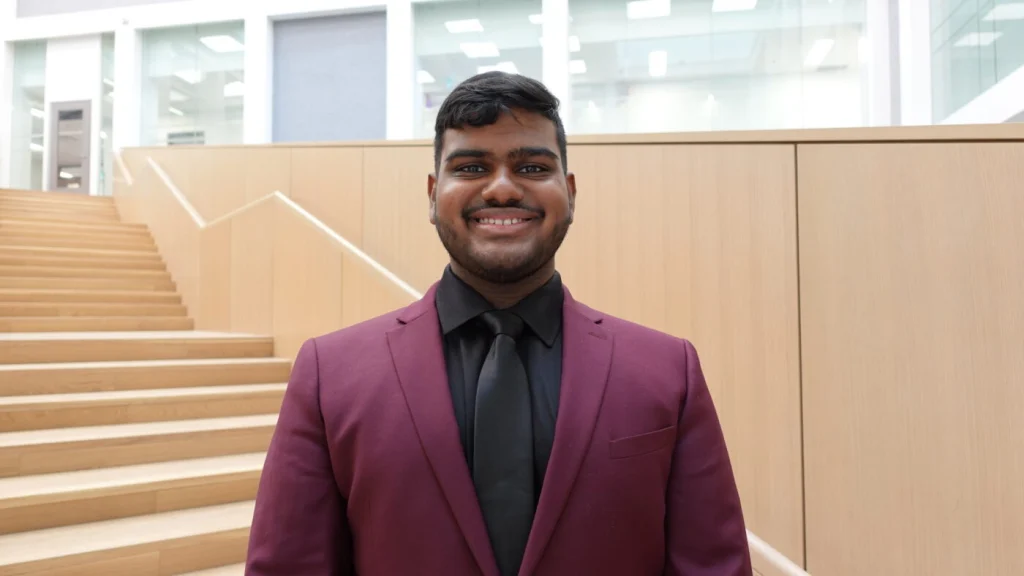

Bavan Pushpalingam is proof that young people can make a difference in the city.
He’s a fourth-year University of Toronto Scarborough (UTSC) student focused on public policy, research and community organizing, especially in food security and youth advocacy.
Pushpalingam uses his lived experience as a Tamil Canadian living in Scarborough to inform his work as he navigates volunteering in his neighbourhood and working in spaces such as the Ontario legislature.
BECOME A GREEN LINE MEMBER TODAY
His experience as a legislative page at the age of 13 shaped his interest in public policy and systems change. His work has led him to Ghana, Sri Lanka, India, Mexico and Colombia, where he worked with marginalized communities on issues related to land rights, agriculture and more.
He’s also the founder and current president of the Scarborough Hub for Innovation in Public Policy (SHIPP) — a think-and-do tank at UTSC that looks at systemic issues in Scarborough.
What would a more community-centred version of development in Scarborough actually look like, considering that you were raised there?
I think being super intentional about consultation. Even in the policy process, consultation exists, but it either exists at the midpoint of a project or it exists towards the near end of a project to approve a plan. I feel like that’s the wrong mindset. The consultation should be during the agenda-setting portion of a project, because the community is the one that’s actually experiencing this development, whether that’s a good development or a bad development.
And even when you’re consulting, why is it done so formatively? It’s essentially done not in order to incorporate our feedback or our suggestions, but it’s done to just mark a checkbox, like, “hey, we consulted with XYZ neighbourhood” and this is what they told us, but due to these constraints, we can’t do XYZ.”
And a lot of these consultations are extremely inaccessible. I know they’re being more intentional about it now, because we see them do a lot more evening sessions, which is great.
And even some of these consultations, like the way they’re structured, the language isn’t very accessible. And a lot of people’s first languages aren’t English. It’s not making any sense. I feel like, if people are going to really see systems of change within Scarborough, specifically around development, we need more concrete sort of changes in the procedure of doing these types of things.
City staff, or provincial staff, or federal staff, should work from that consultation that they took at the beginning to see what strategies and options they should lay out later on and then, get the approval of the community to do anything.
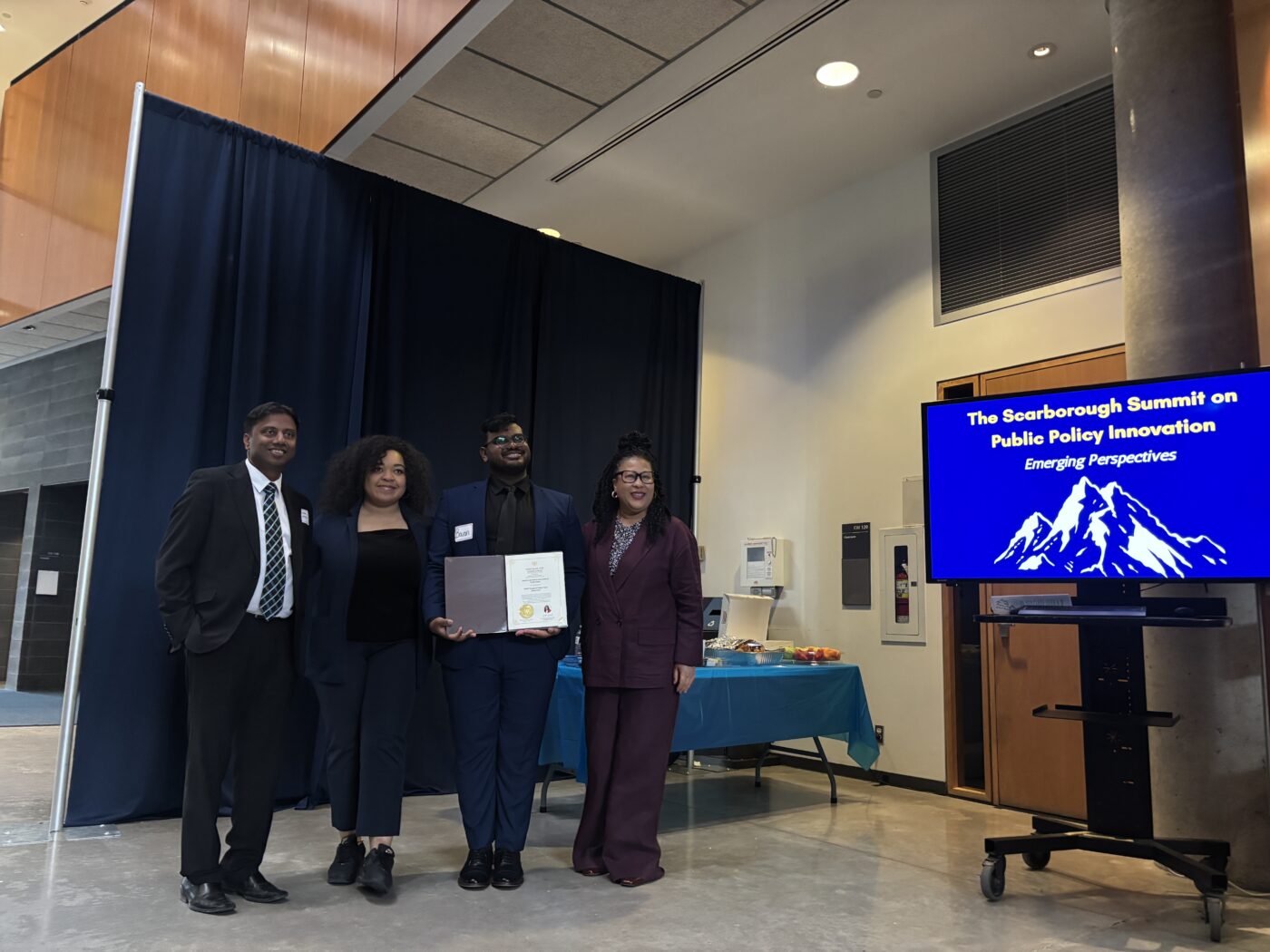
📸: Aia Jaber/The Green Line.
What’s something that young people bring to policy conversations that institutions often overlook?
The freshness, I would say. We bring on such a different way of thinking.
Even if you looked at how SHIPP is structured or how we think about SHIPP, it’s very holistic in nature — very intersectional. We bring so many different lived experiences to that conversation. So we’re entering these spaces and working within these bases.
I was even at a discussion yesterday at UofT and we were talking about the power of imagination. Why are we so afraid to imagine a new future — a new world that’s not bound by the constraints that we feel exist? Why are we so opposed to that idea? And I feel like that’s what youth bring.
We bring fresh, we bring bold, we bring imaginative ideas to the conversation. People are so scared to engage with that because it’s not the norm, but that’s the issue. We need to change the norm, because the norm hasn’t worked for so many people for so long.
Policymakers are quite risk averse if it doesn’t fit within the operational systems and processes of the organizations they’re working within. So obviously, there’s a constraint. So, hopefully, in the future, with a new public workforce or public service workforce that’s coming to the forefront, they’re imaginative, they’re changing these systems that have existed and have failed and they’re bringing new perspectives into the field by not being so bound by what traditionally has worked or not worked.
Do you have any tips or suggestions for other youth looking to get into the public policy system and want to know where to find the right opportunities?
People find [opportunities] on their phones. People find [opportunities] on LinkedIn now. There are so many things. So, I feel like in terms of getting involved, obviously, get connected with these spaces and groups that are doing it and they’re super easy to reach out to.
I think the next thing is also to find a niche or a community in what you’re doing.
For me, it was food security organizing in Scarborough. That’s where my roots are. That’s where I started.
Some people look at systems level change a little bit too broadly, so sometimes, you feel lost. But obviously there’s synergy in a lot of systems level organizing.
I work with a lot of people in public health and health equity. I work with a lot of people who do transport organizing because, you know, a big part of food security is all these interconnected dimensions.
So find a niche, find a specialty that you think you want to explore further. It doesn’t have to be permanent. It’s just something for you to explore. There, get involved with those groups. I know there’s a lot of good civic youth engagement groups.
All these other great organizations, even high schools like Equity Club, all of them do policy-related work. It’s just a matter of finding your community and doing that.
If a reader wanted to support your work, how could they do that?
I really do love when folks read my work or listen to when I speak at a conference or a presentation or something, or even just casually join in a conversation and try to build bridges.
A big part of my work is building bridges. So, if you’re doing something that’s similar to the work that I’m doing, or you know people who are doing the work that I’m doing, connect me with them and let’s see where we can build future collaborations — that would be phenomenal.
Even the organizations that I work with, in any capacity, if you can volunteer, or if you can support with a donation, or something like that, any way, shape, or form that really helps.
They can support SHIPP with resources or connections or opportunities.
Fact-Check Yourself
Sources and
further reading
Don’t take our word for it — check our sources for yourself.



Join the conversation