
Art has always been a mode of expression — transcending language and connecting people from different backgrounds.
For newcomers, refugees and immigrants, artistic activities can make integration easier, build belonging and foster connection, according to a research project by Toronto Metropolitan University’s Canada Excellence Chair in Migration and Integration and Toronto Arts Council (TAC). The report says arts-based programs provide culturally sensitive tools — including language learning, skill development, mental health services and community engagement — that help people navigate the challenges of moving to a new place.
Changemakers, like Antonio Arraut, believe in art as healing, growth and connection for newcomers.
BECOME A GREEN LINE MEMBER TODAY
Arraut is a Colombian writer, visual artist and arts administrator. In this conversation, he tells us all about Mask Your Story, an upcoming workshop series, where he hopes newcomers will come together to look inward, express what they’re feeling and connect with others.
Could you tell us a little bit about your journey as an artist here in Toronto?
I arrived here in Canada in 2022. I started the Arts Education and Community Engagement program at Centennial and started to connect with people in the art scenery. It was a slow process at the beginning, but then I was able to connect with people that were doing community arts. They showed me how to find spaces to show my art.
What draws you to community-centered art and storytelling?
I think storytelling is a powerful tool to connect with people and to create social tissue. I think that it’s a way to show people that there are stories out there that are worth hearing.
Storytelling is also a powerful tool that gives people the opportunity to share what’s inside — something that they know or have lived — with somebody else.
Can you tell us a little bit about your project, Mask Your Story?
In the Mask Your Story workshop, people basically start with a blank mask. Then, they put art on the mask using different tools. They can create a mask that reflects their own immigration story or story of healing or family history, whatever they want to say and basically put outside what is inside.
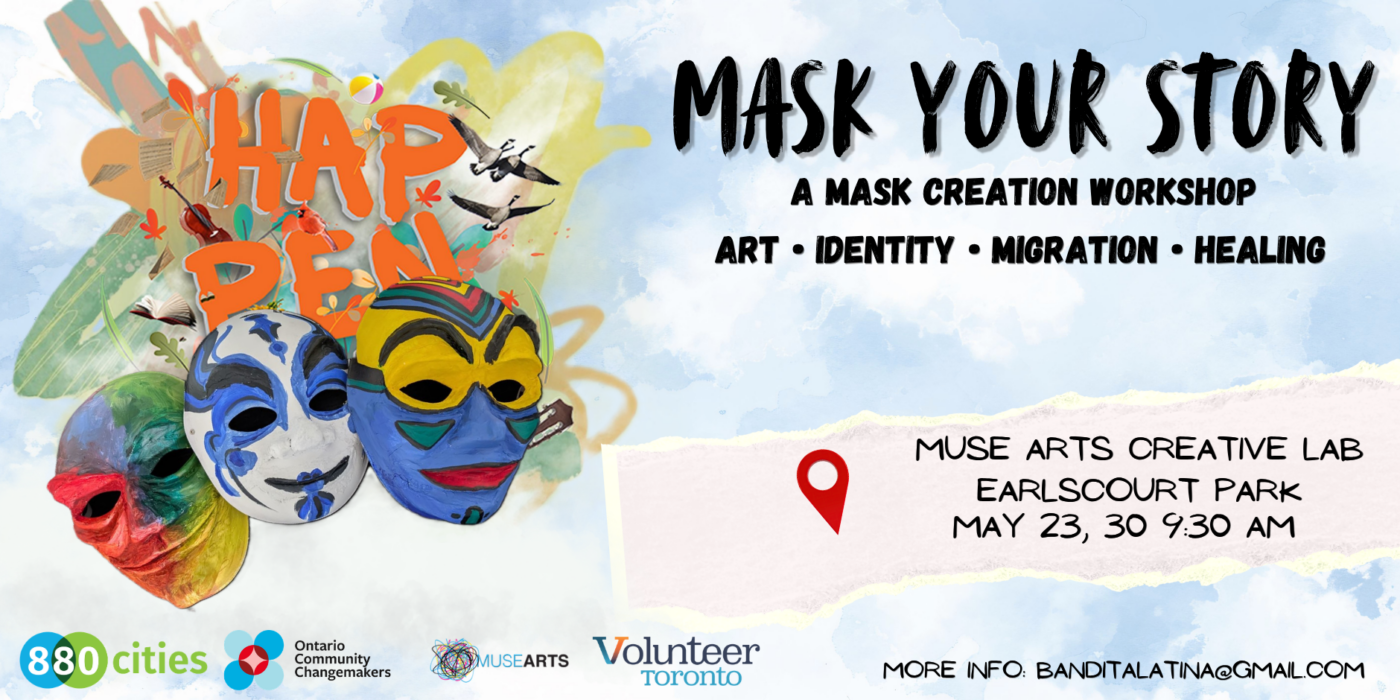
📸: Provided by Antonio Arraut.
What changes, big or small, do you think individuals can make in their daily lives that would lead to a stronger, healthier and more connected community?
I think that it’s important to stop and see what’s around you: the community that you’re living in, the people that you’re sharing the spaces with. I think if we take some time to see what’s around us, we’ll see that there are many stories that need to be shared, there are many people that are worth talking to, there are organizations where you can go and do meaningful work. So I think that slowing down is the key.
Any idea can be good to connect with somebody else. Doing a small tea party to share a space with people in your community is good enough to start. Just come up with an idea and don’t let it die. Just follow up.
For those inspired by your work, how can they directly support or get involved in initiatives like yours?
I think there are many ways to connect. There are many organizations that support initiatives like mine, including Volunteer Toronto, Muse Arts, Ontario Community Changemakers and 880 Cities.
And if you want to support my work, you can follow me on Instagram @tony.autor.
Fact-Check Yourself
Sources and
further reading
Don’t take our word for it — check our sources for yourself.
Join the conversation