When my mom immigrated from Kinshasa to Kitchener in the late ’90s, figuring out how to relate to her peers through music was a breeze. Whether it was through the radio, MuchMusic’s Top 10 segments or CDs she bought at Zellers, she had many accessible ways to understand mainstream Canadian teen culture.
If you wanted to go to an R&B show, you’d go to The BamBoo. If you wanted to mosh with your fellow goths, you’d go to Sanctuary. If you wanted to dance all night, then The Guvernment Complex had you covered.
But for Gen Z like me and younger generations? It’s not as simple to figure out where to find your people through music.
Most remaining venues today are non-denominational. Many don’t foster real community — and of course, the audience attending concerts is different.
I spent my youth dreaming of going to concerts in the city and having the time of my life. I was expecting a communal, unique, once-in-a-lifetime experience — but the reality is…unpredictable, to say the least.
In late 2022, I secured tickets to two of my favourite alternative artists, Kelela and serpentwithfeet. Both are rooted in a love for R&B, have undeniable vocals and are beloved amongst music critics. Despite going solo, I left Kelela’s show feeling as energized as I would after a catch-up session with friends. The passion of the crowd, their unapologetic dancing and expressive singing reminded me why concerts are worth it.
Sadly, serpentwithfeet’s show was the opposite, of no fault of his own. The audience sat still, no one bothering to even sway to the songs. It was so quiet that I could hear my off-key singing in a room of hundreds of strangers. I’d heard about the gamble of modern Toronto concerts and aloof audiences, but hadn’t experienced it until then. I left feeling awkward, disappointed and most importantly, lonely.
It’s hard enough feeling disconnected from others in general, but at a concert venue where you expected a communal experience with like-minded folks? A whole other beast.
What’s more, the cost of living is making it harder and harder to afford concerts in the first place.
Inflation has hit the resale market and made nabbing tickets for your favourite artist immeasurably harder. Even regular hangouts at bars are on the decline as nighttime spending dipped in 2024, according to data by Square, a business technology platform. According to the report, 62 per cent of people surveyed across Canada say, “Even with Happy Hour discounts, it’s still too expensive to go out.”
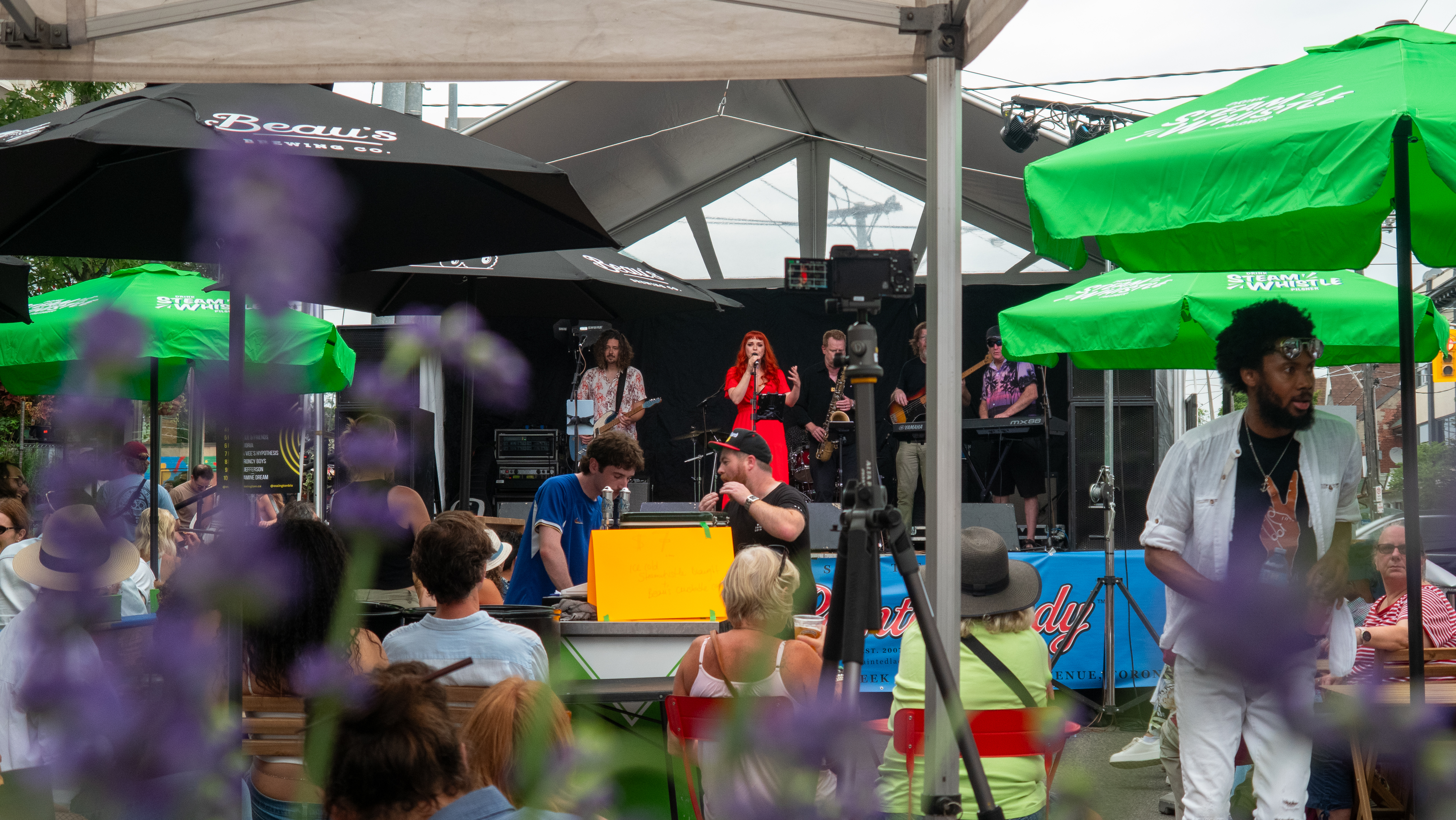
A band performs during OssFest 2025. 📸: Anthony Lippa-Hardy/The Green Line.
If you can afford it, where do you go?
The Queen Street West strip is no longer the cool hub it used to be — a place where you could chill at cafés decorated in local queer, punk art and glimpse celebrities on their way to an interview at MuchMusic.
You can Google or search TikTok, Reddit and Instagram for Torontonian artists and cheap venues, but that doesn’t stop the new class of gatekeepers from desperately trying to hide their musical safe space from the limelight.
Subcultures didn’t disappear, but they’re harder to pinpoint. The monocultures that once united folks across generations have come to pass, and in its place is an individualization of every aspect of our lives, including listening to music.
Yet Toronto’s youth music scene continues to thrive in spite of it all.
Gen Z still makes do, and they do it in style. Through DIY venues, tiered or PWYC tickets and nights filled with the sound of vinyl records and the snap of digicams, today’s youth have found their own way into crafting a thriving music scene.
How can you tap into it? Check out our feature to learn more about how fans, artists and organizers are building their musical communities.
Want to learn more about what shaped Toronto’s music identity? Read our Action Journey about MuchMusic.
Figuring out where all the cool people are enjoying live music is a hard task.
I’m a big music fan, but before researching this issue, I couldn’t tell you the first thing about the best spots for local music listening.
“It’s actually super easy when you know what you’re looking for,” says San Veliz, photographer and local music fan. “The internet’s always your friend. If you really want to take a stab at googling stuff — [whether it’s] Toronto jazz or Toronto punk — you’re gonna find so many options right away.”
Even as the concept of mainstream pop culture fades and subgenre communities wane, music continues to be a cornerstone for youth to connect with one another. In spite of a rapidly digitized world, local music organizers, artists and venues continue to bring young folks together IRL.
“People talk about the loss of culture and counter subcultures, especially the younger generation. They’re looking for community and they didn’t get to experience subcultures.”
Nicole Davis, Singer-songwriter and musician, Pizza Bush
How to tap into Toronto’s music scene: Tips from artists, organizers and fans
Music is a cornerstone of youth culture. So we asked local fans, artists and organizers how to tap into hotspots where you can find your sound and your people.
Akeem Oh, an American-Canadian singer/songwriter who recently moved to Toronto, performs at the Drake Underground on May 16, 2025. 📸: Anthony Lippa-Hardy/The Green Line.
It was a chilly November night when I first saw Akeem Oh take the stage. He was undeniable.
One of my favourite things about concertgoing is seeing the power of the performer — seeing how the tilt of a head or the tenor of a voice can sway an audience one way or another. Akeem Oh is one of those artists who excel at engaging a live audience.
By the end of his set, the initially timid audience of the Monarch Tavern formed a circle around Akeem after he hopped off stage, guitar in hand, and led us to sing his aptly titled song “Oh.”
If I’d left it to streaming, Akeem’s “FOMOTION” would’ve simply been another addition to my endless “Liked Songs” playlist on Spotify. But the magic of live performances and connecting with a crowd through music isn’t entirely lost on my generation.
Want to know how young fans and one of MuchMusic’s most popular VJs discover local talent?
Keep reading our feature story and watch our youth music culture feature video, linked below.
How to find Toronto’s best live music venues and festivals
Our engagement reporter Adele Lukusa compiled a list of venues and festivals where you can find a sound that resonates and a community that welcomes you.
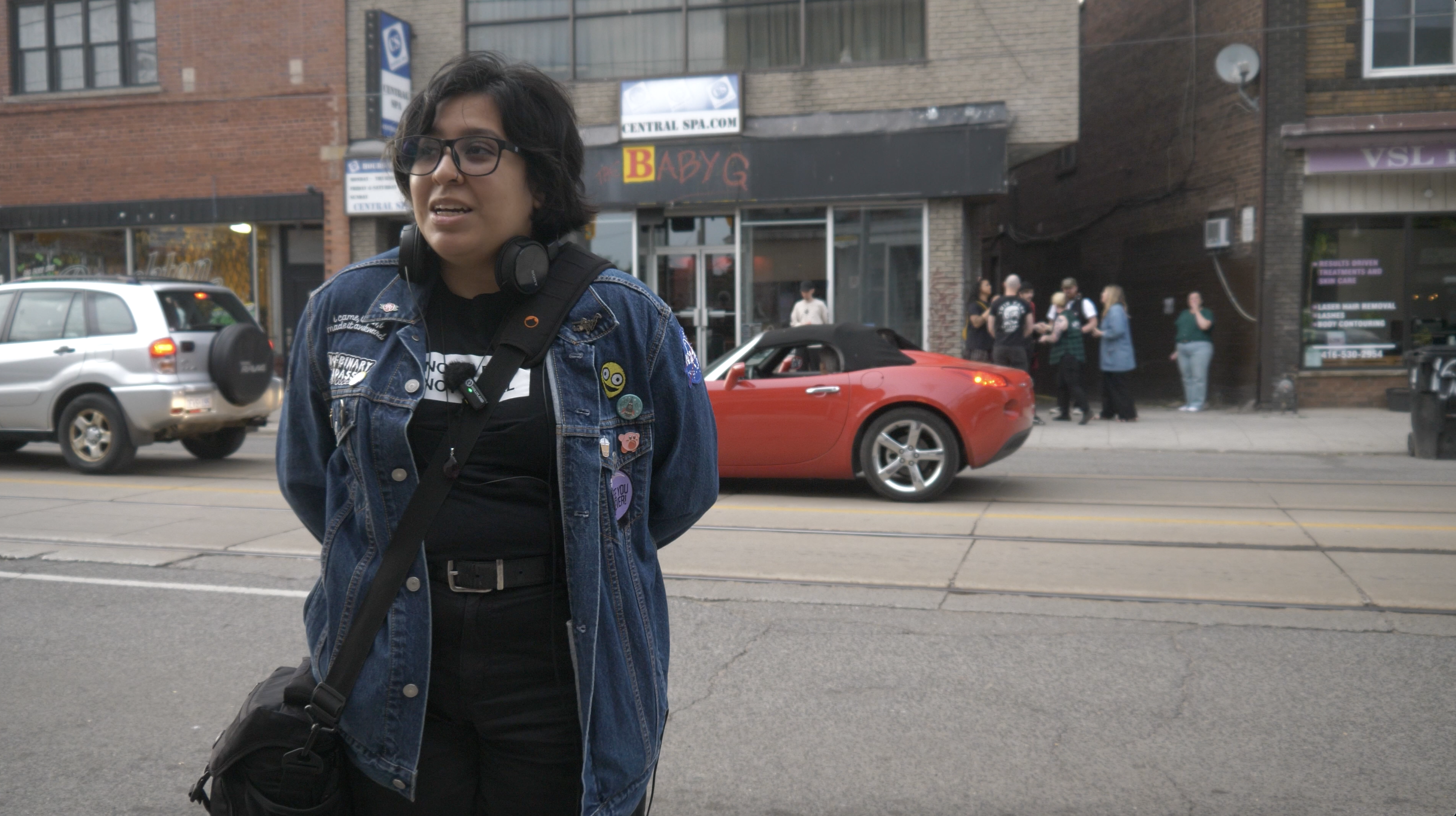
San Veliz, a local concert photographer and music fan, stands in front of The Baby G on Dundas Street West. 📸: Anthony Lippa-Hardy/The Green Line.
Looking to enjoy a night out while supporting local artists?
Searching for places where you can find great sounds and a welcoming community? We got you covered. We curated a list of grassroots organizations to check out, and updated our Third Spaces Map with music venues. Dive into our guide to explore!
Are you looking for music recommendations that highlight local artists?
Or maybe you want to learn more about local organizations that are working towards a better Canadian music economy? Check out these tools and stories by our team.
Here’s your chance to support the only independent, hyperlocal news outlet dedicated to serving gen Zs, millennials and other underserved communities in Toronto. Donate now to support The Green Line.
Sounds of Toronto: Exploring our city's youth music culture
A panel discussion, curated listening party and DJ dance party by The Green Line.
Thursday
Aug. 21, 2025
6 p.m. to midnight
254 Lansdowne Ave.
RSVP
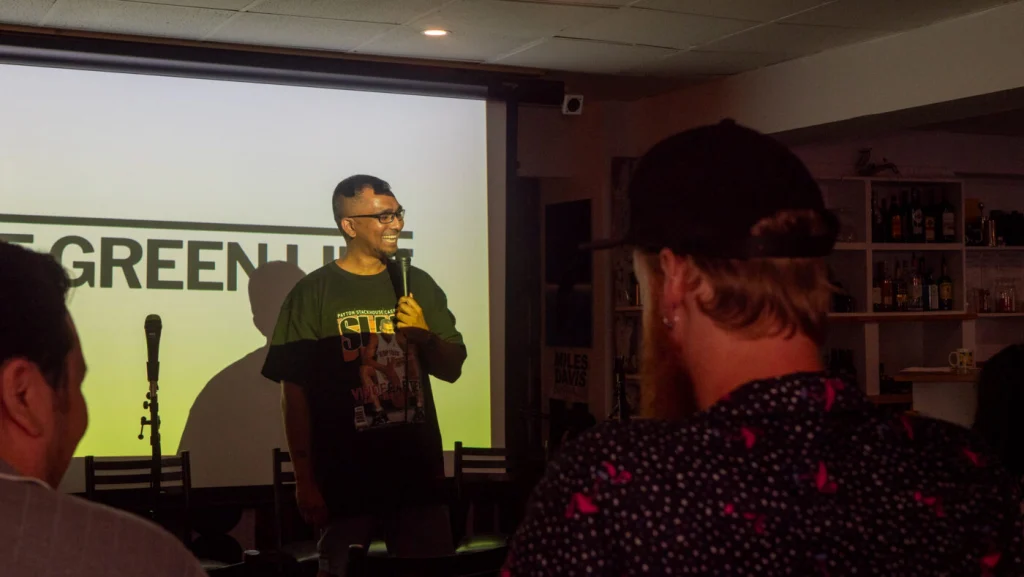
Hosted by comedian Danish Anwar, The Green Line’s August Action Journey event — Sounds of Toronto — is a one-of-a-kind night exploring Toronto’s youth culture through our evolving music scenes.
On Thursday Aug. 21, we’re taking over two floors at 254 Lansdowne Ave. for an evening of vibes and connection.
We’re starting with the screening of our short documentary on youth culture featuring iconic MuchMusic VJ, George Stroumboulopoulos.
Then, we’re hosting a panel featuring two local artists, one superfan and one music expert, followed by a listening party curated by the panelists, and ending with a DJ dance party!
Plus, we’re celebrating our third anniversary.
🗣️ Screening + Panel + Listening Party 📍 CONTXT by Trane (main floor) | 6-9 p.m. 🎤 Featuring singer-songwriter Ajuki, musician/singer Nicole Davis from Pizza Bush, local expert and co-founder of Wavelength Music Jonny Dovercourt and fan/photographer San Veliz. 🪩 DJ Dance Party 📍 BSMT 254 (downstairs) | After 9 p.m. 🎧 Music by DJ Presto, CHANG and pootwav.
Events are an essential part of our Action Journey. We want to empower Torontonians to take action on the issues they learn about in The Green Line — so what better way to do that than by bringing people together? From community members to industry leaders, anyone in Toronto who’s invested in discussing and solving the problems explored in our features is invited to attend. All ages are welcome unless otherwise indicated. Our only guidelines? Be present. Listen. Be kind and courteous. Respect everyone’s privacy. Hate speech and bullying are absolutely not tolerated. At the end of the day, if you had fun and feel inspired after our events, then The Green Line team will have accomplished what we set out to do. Any questions? Contact Us.
DJ Chang (left), DJ Presto (centre) and pootwav (right) play their music sets for the dance party at Sounds of Toronto. 📸 Lucas Bustinski/The Green Line.
Our community members brainstormed solutions for connecting with local music communities.
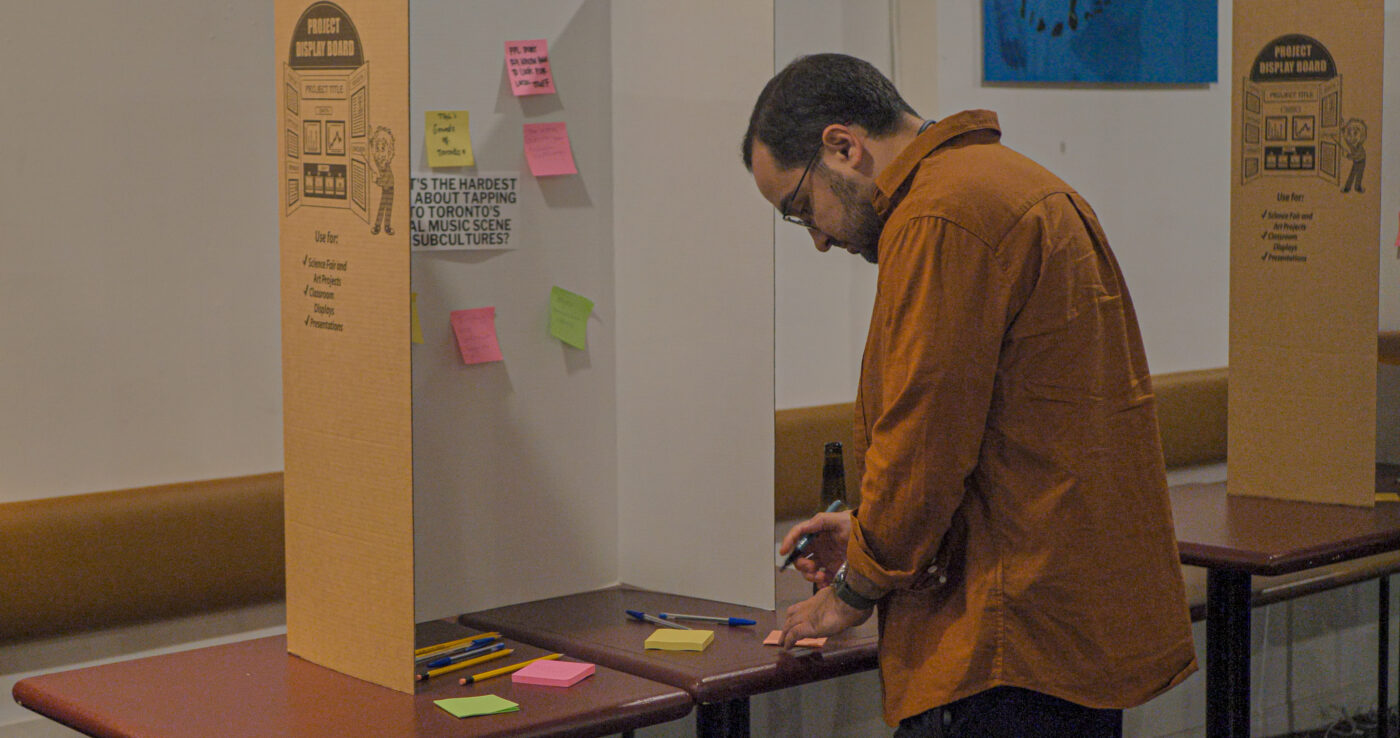
An event attendees writes his answer on Post-it notes for our engagement wall about finding your music community in Toronto. 📸: Lucas Bustinski/The Green Line.
SOLUTIONS
Learn about the strategies that worked for other community members facing similar issues.
GO OUT AND GET CURIOUS
Our panelists and event attendees all agree that Toronto has a lot to offer musically. Take a break from the arena shows and big-name venues and look into smaller local spots, says panelist and event photographer San Veliz. Ask your music-loving friends or your local record shop owners for their recommendations.
One attendee wrote on our engagement wall that what helped them build their community was finding the courage to go to interesting shows alone — and making new friends there!
SUPPORT LOCAL ARTISTS
Panelists and attendees at our events left many Post-it notes on our engagement wall to share how they’ve found their music community in the city. “I supported, followed, shared and liked their work. I created my own playlists and showed love,” one attendee wrote. “Support relentlessly, put yourself out there,” another added.
Whether it’s commenting on their posts, sharing their music, curating a playlist with their songs or buying tickets to one of their shows, showing up for Torontonian artists can go a long way. And if you hang around, you might even be able to have a solid conversation with the artists themselves.
DO IT YOURSELF
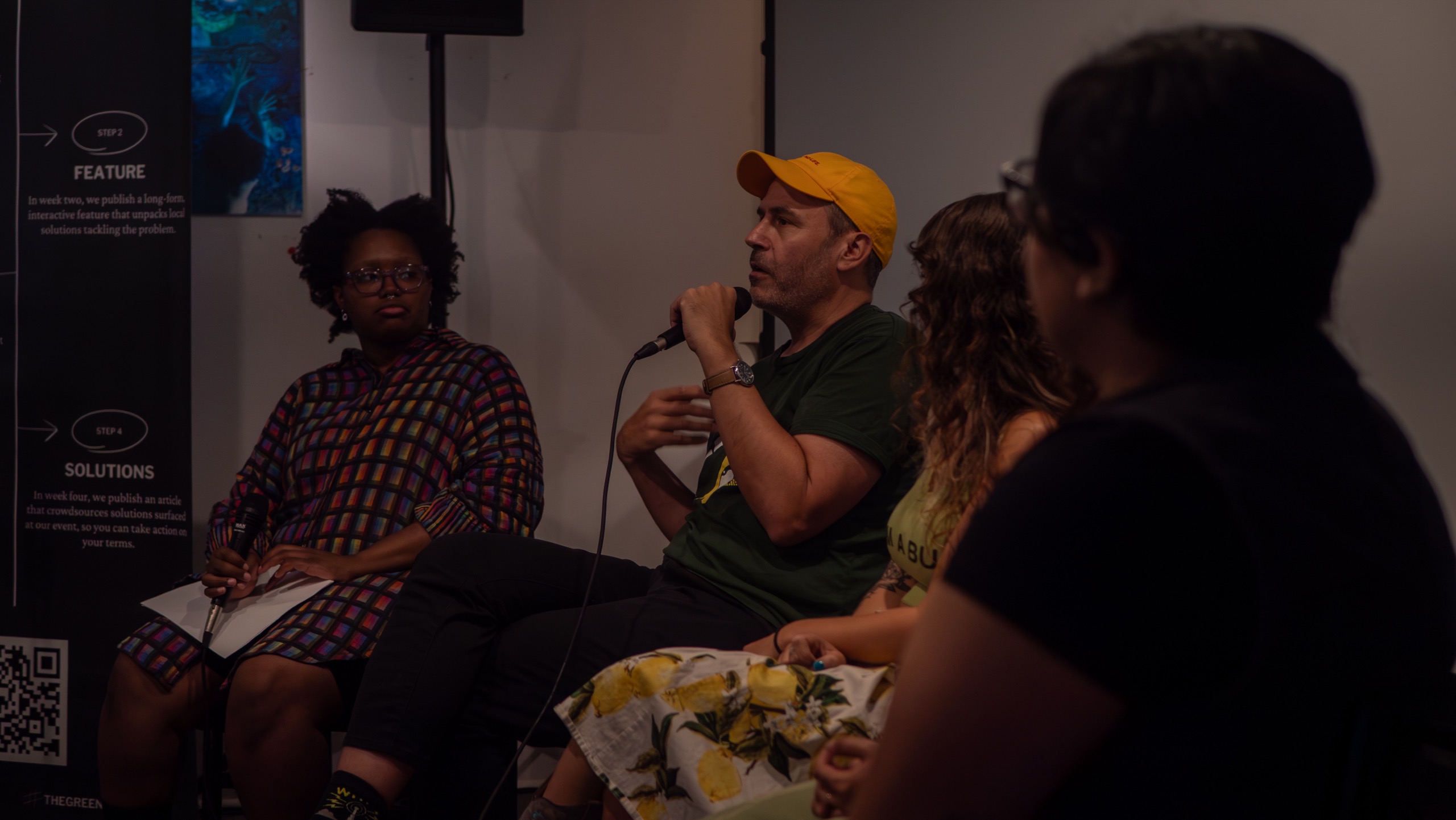
During our panel, Ajuki, artist and founder of Northbound TO, and Nicole Davis, band member of Pizza Bush, talked about how cliquey the music scene can be, especially when you’re not a man. Their solution? Create the spaces you want to be in. Whether you’re a neurodivergent punk rocker looking to perform or a queer R&B and hip-hop head wanting to put people on, there’s space in the city for your ideas to come to life. It takes some work, but it’s worth figuring out how to do it yourself — with the help of the community you build along the way.
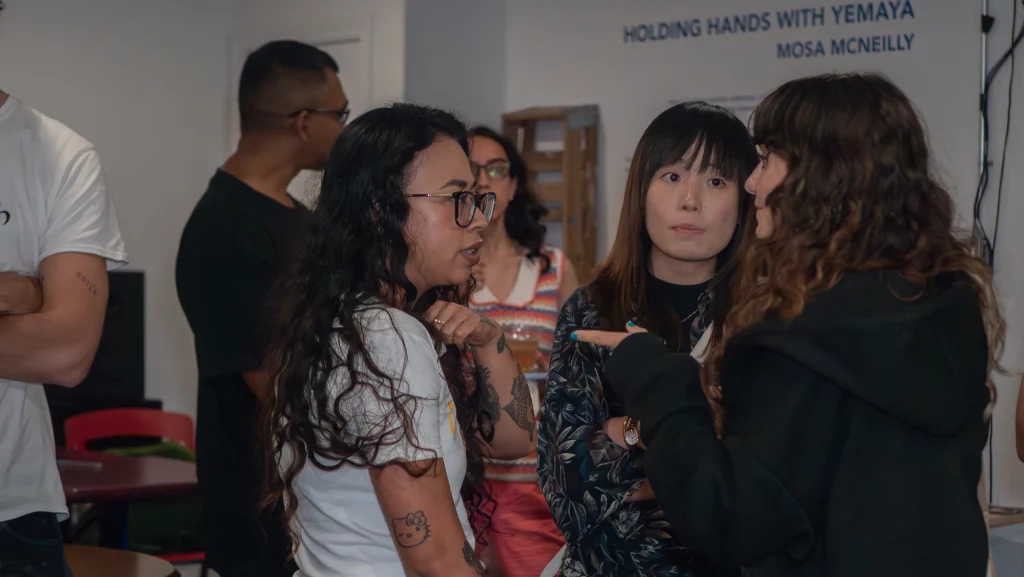
Artists Ajuki and Nicole Davis chat with attendees at our Action Journey event, Sounds of Toronto. 📸 Lucas Bustinski/The Green Line.Jonny Dovercourt, music expert and co-founder of Wavelength Music speaks at the panel Sounds of Toronto. 📸: Lucas Bustinski/The Green Line.
ACTIONS
Do something about the problems that
impact you and your communities.
Explore Toronto’s
Music Compass
The City of Toronto has a Music Compass that can guide you through each neighbourhood’s music venues, listening lounges and more.
Want to get a better understanding of all the live music events Toronto has to offer? Check out our guide on music venues and festivals for a curated list of places to visit.
The Green Line uses cookies so the site works, to remember your reading progress, and (with your consent) to understand which stories resonate. You can accept all, reject everything non-essential, or pick what you’re comfortable with. Privacy policy
Welcome back👋
New here or returning? Same flow. Drop your email — we'll handle the rest.




Join the conversation