
Step 1
Why it’s tough to start your own business as an underrepresented entrepreneur in Toronto

This explainer is part of our November Action Journey on inclusive entrepreneurship and innovation in Toronto, which was developed in partnership with Untitled Planning. The Green Line maintains full editorial independence to ensure journalistic integrity.
What’s it like to be an entrepreneur if you don’t come from money or privilege?
BECOME A GREEN LINE MEMBER TODAY
For many Torontonians who are from racialized, low-income, newcomer or other marginalized communities, the barriers are systemic. Challenges aren’t personal, they come from unequal opportunities, generational wealth gaps, discrimination and a shortage of programs that genuinely meet local needs.
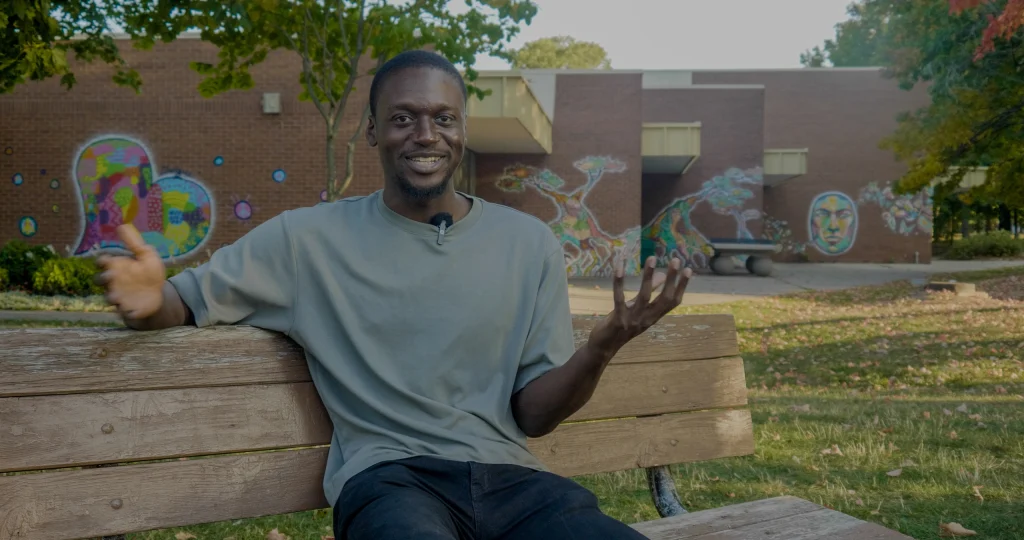
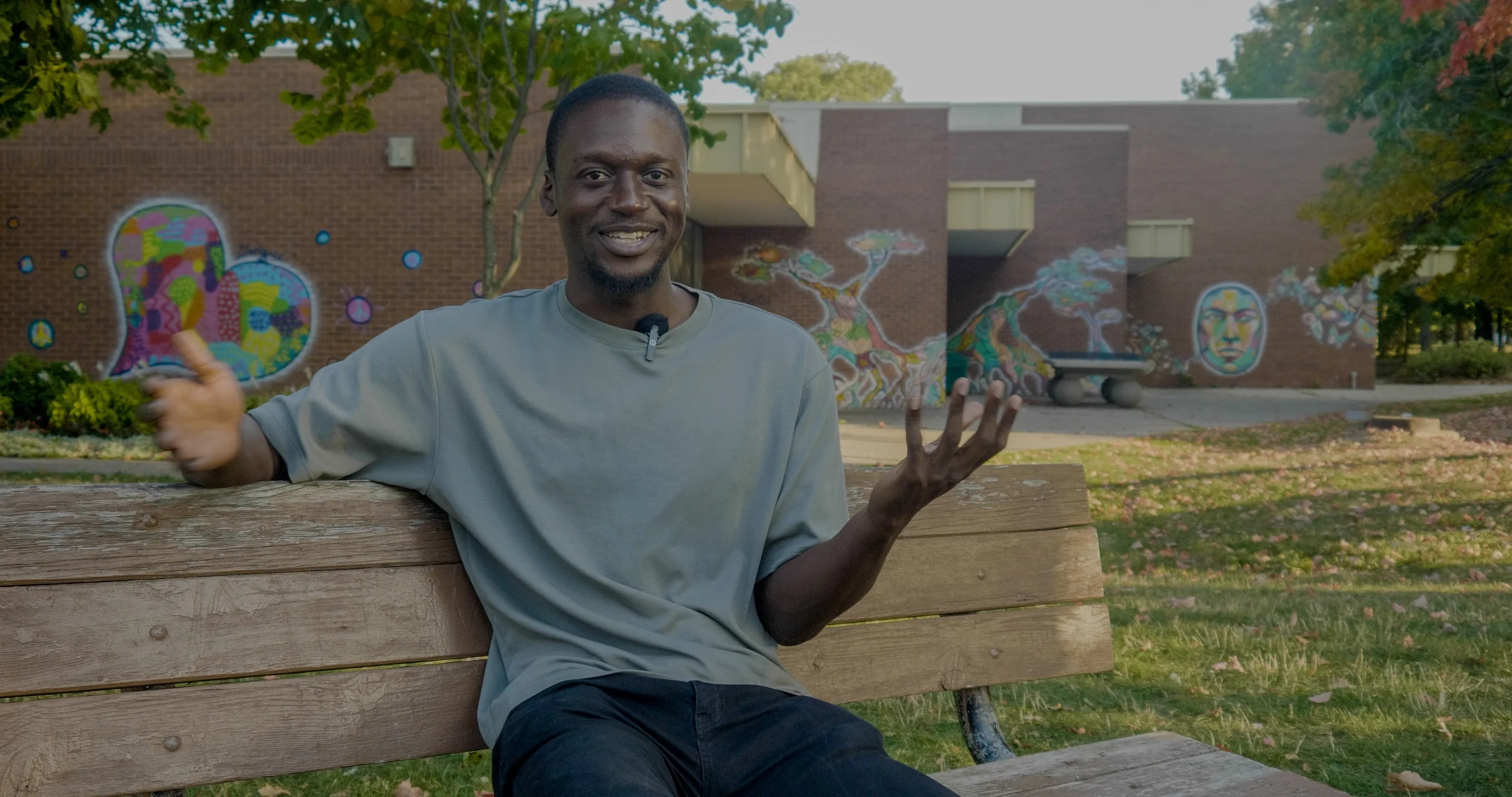
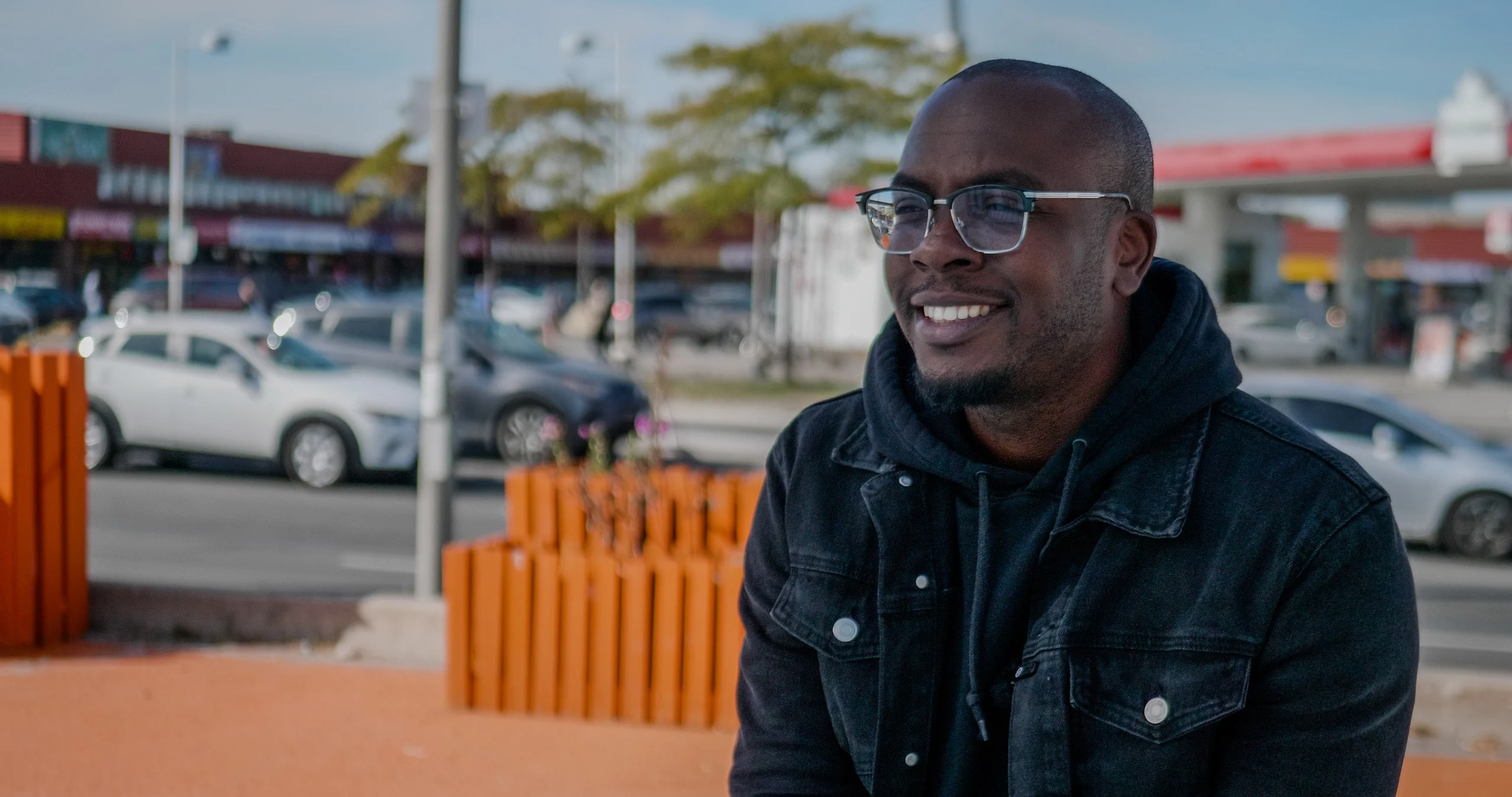
“It may be harder for an aspiring Black entrepreneur to get the capital they need…even if they have the best idea in the world,” says Kwasi Adu-Poku, founder of The Reach Series, a speaking and apparel social enterprise.
A 2021 survey commissioned by the African Canadian Senate Group found that systemic racism and the lack of access to capital and networks are the main barriers preventing growth and sustainability for Black-owned businesses. Out of the more than 300 Black entrepreneurs surveyed across Canada, 76 per cent said their race makes it harder to succeed.
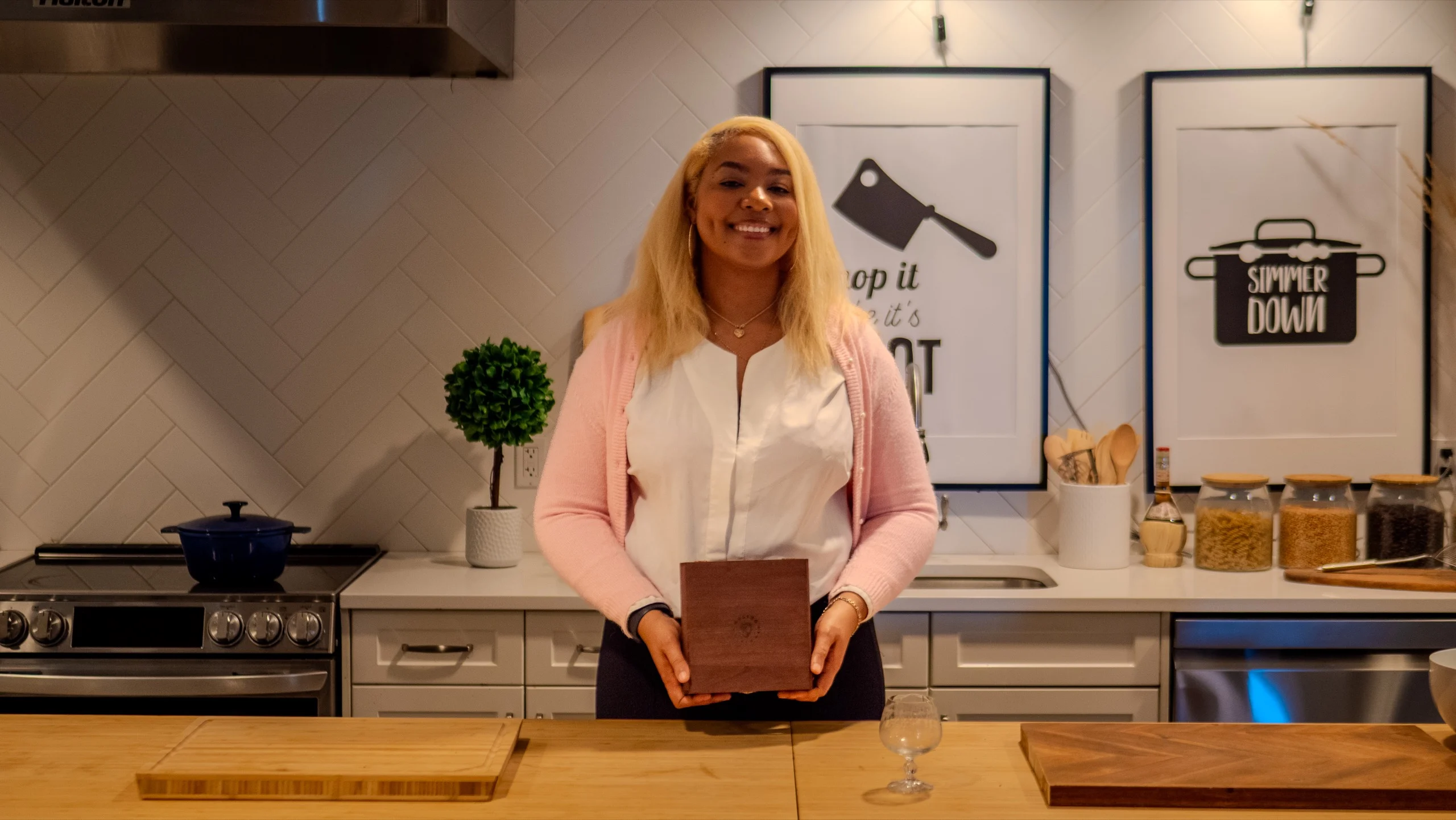
Bilqees Grant, co-founder of Helius Originals, a company specializing in food and drink smoker kits and accessories, agrees. She says one of the biggest barriers facing Black entrepreneurs is funding.
“It’s getting that startup [money] because it costs a lot more than people think it does to start,” she explains. “The disbursement of wealth isn’t centralized in the Black community. So, a lot of us are trying to build that generational wealth for our families.”
Adu-Poku and Grant both grew up in the Jane and Finch neighbourhood, one of the City’s Neighbourhood Improvement Areas (NIAs), which are those identified to receive support and funding for community development based on socioeconomic need. Jane and Finch also has a vibrant, long established Black community, with approximately 27 per cent of the residents being Black, compared to the Toronto average of 9.6 per cent.
Day-to-day financial stressors stand in the way of entrepreneurship for many people in the area, according to Olu Villasa, program manager at the Black Entrepreneurship Alliance (BEA).
In his conversations with Black residents in northwest Toronto, Villasa says he hears a lot of the same barriers come up time and time again. Chief among them are rent and transportation costs.
So far, the BEA has been offering business programming and consultations for entrepreneurs. Now, it’s planning and fundraising to build a mixed-use innovation hub called the Element Centre. Plans for this hub include affordable residential units because housing emerged as a crucial need for local entrepreneurs, according to a report for the BEA by Untitled Planning, an organization focused on community economic development, housing and innovation.
According to City of Toronto data highlighted by Untitled Planning, 56 per cent of Jane and Finch residents rent their homes, with 32 per cent relying on subsidized housing — both of which far exceed city averages.
Untitled Planning’s report highlights that the construction of transit infrastructure, such as the Finch West LRT, as well as big development projects like the Jane-Finch Mall, could displace local renters because it causes a surge in housing prices and demand.
Based on City of Toronto data, Untitled Planning’s report shows that the median income for renters in Jane and Finch is $40,141, below the city-wide figure of $45,385. It also highlights that “over 40 per cent of Black renters earn less than $20,000 annually, limiting their housing options and increasing vulnerability to displacement,” which also restricts their options for pursuing entrepreneurship.
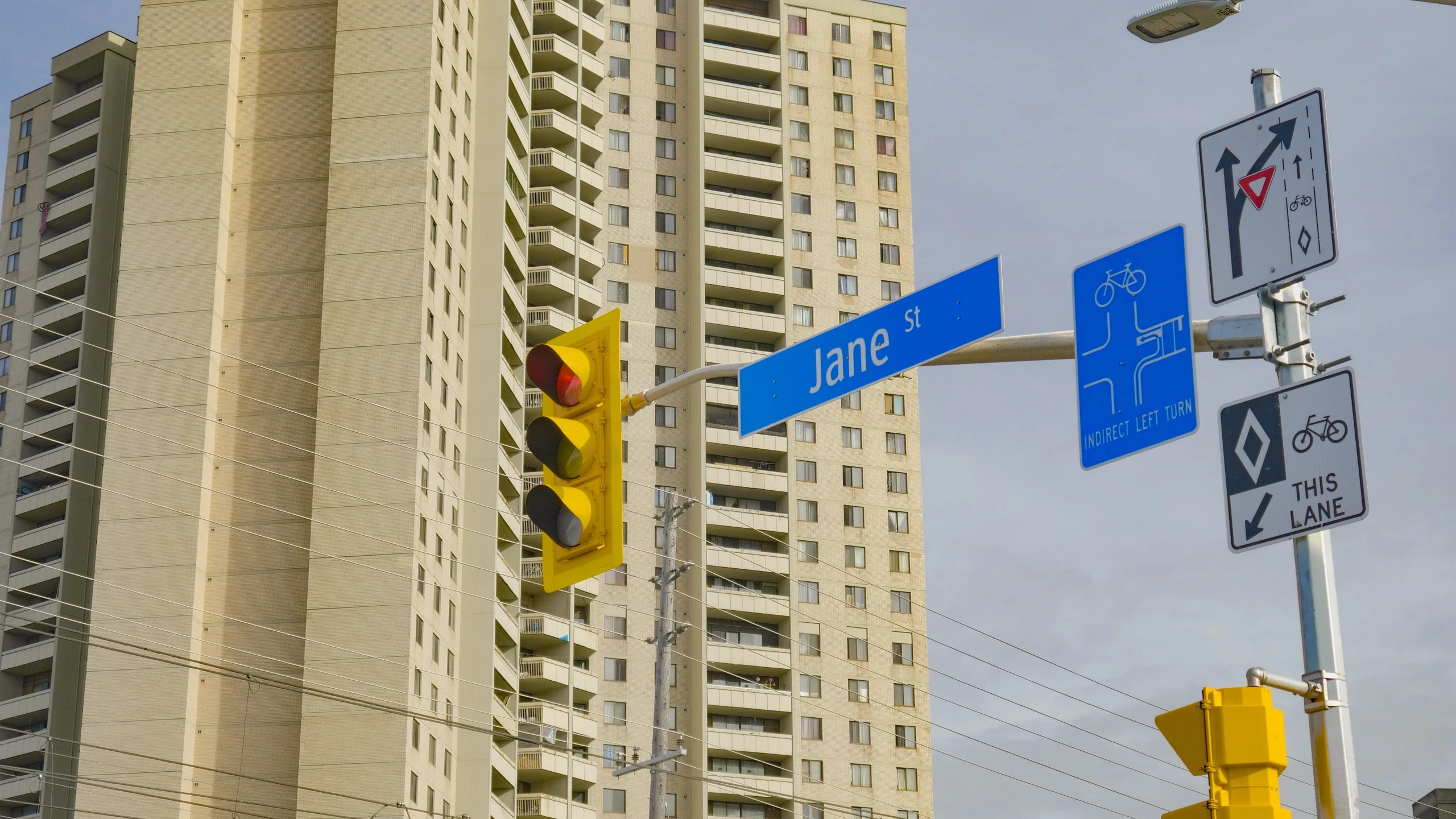
📸: Anthony Lippa-Hardy/The Green Line.
“Housing is a big barrier to why people don’t get into entrepreneurship or even stay in entrepreneurship,” says Alexandra Lambropoulos, co-founder of Untitled Planning. “Entrepreneurs don’t exist in a vacuum. They’re people first — they’re community members first.”
These issues aren’t just unique to Jane and Finch. Black Canadians make up 4.3 per cent of the population nationally, yet only 2.1 per cent of Canadian businesses are Black-owned.
“I might walk into a bank as a Black businessman and try to get a business loan, and you have to go through the roof, climb a tree — you have to go all over the place – in order to be qualified,” says Courtney Grant (no relation to Bilqees Grant) who opened his first restaurant, Caribbean Queen Jerk, in 2008.
Despite the number of Black businesses increasing in Canada, federal government data suggests they’re not meeting their full potential, tending to be smaller and have a lower rate of return on assets than other businesses.
One reason is the lack of resources in Black neighbourhoods, according to Villasa. While there’s a noticeable concentration of innovation infrastructure in Toronto’s downtown core, the northwest currently only has one hub: Jane and Finch’s BEA. Villasa says that historically, there’s been a lack of investment in social infrastructure in northwest Toronto.
“When I was growing up, we had one community centre and there was a whole bunch of youth, so it was really overused,” he explains. “There’s a lack of meeting spaces owned by the community. There [weren’t] a lot of third spaces…to meet together to converse.”
A lack of access to innovation infrastructure and funding affects marginalized groups beyond the Black community in Jane and Finch. Other NIAs across Toronto also have a low proportion of innovation infrastructure and a higher proportion of racialized residents, including Flemingdon Park and Thorncliffe Park in the east, and Golfdale-Cedarbrae-Woburn and West Hill in Scarborough.
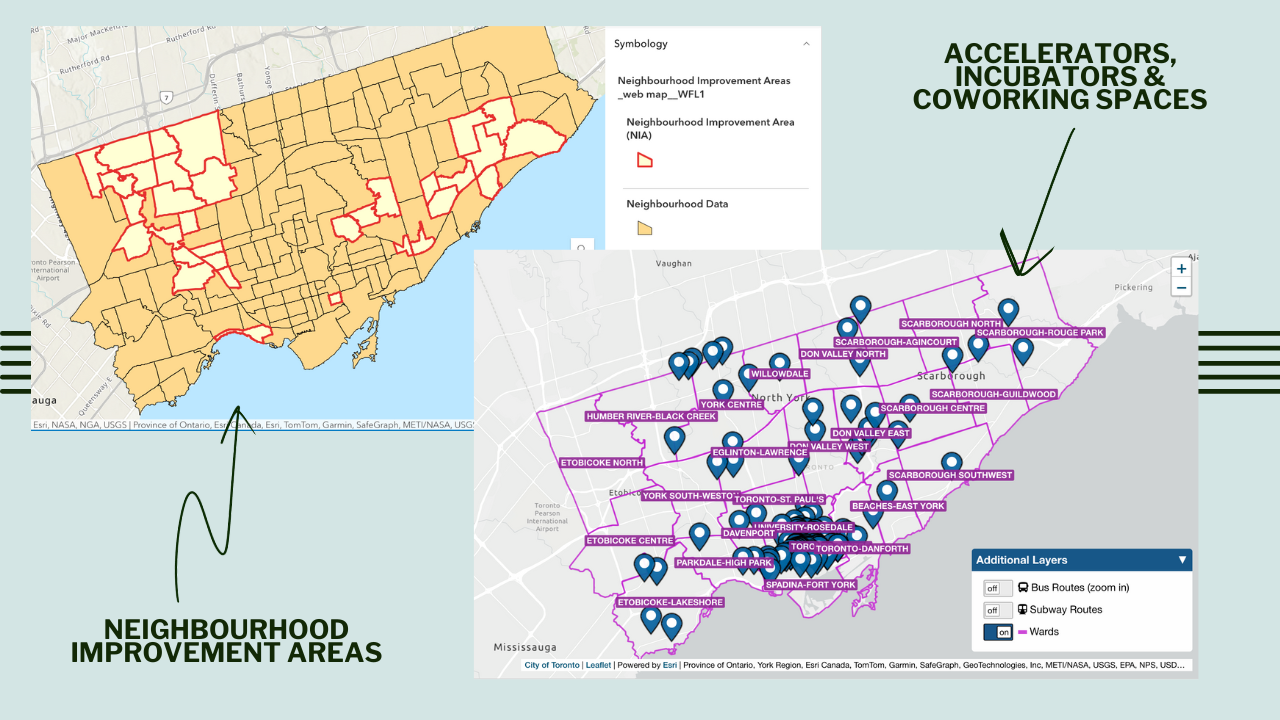
Even beyond geography, different marginalized identity-based groups often face similar systemic barriers.
According to a 2021 study from Toronto Metropolitan University, recent immigrants, particularly women, said funding was the most significant barrier preventing them from starting or scaling up their businesses in the Greater Toronto Area. It’s often due to a lack of credit history or their immigration status, which prevents them applying for federal funding. The study also identified language as an impediment, especially understanding official jargon, and proposed solutions such as funding for incubators and better language services.
Similarly, according to 2023 research by the Social Research and Demonstration Corporation, only 0.5 per cent of all small and medium-sized enterprises in Canada are majority-owned by people with a disability. Its findings suggest this group faces unequal access to formal educational and on-the-job learning opportunities that can affect their entrepreneurial pursuits. Researchers identified a lack of targeted business-related training programs and support as another barrier.
Why does this matter? Some experts say that diversity in the entrepreneurship world opens up many possibilities for marginalized groups. They argue it can foster community development by creating jobs, reinvesting profits and inspiring future entrepreneurs.
For our November Action Journey, we spotlight Black-led innovation initiatives in Jane and Finch, unpack how diverse entrepreneurship can benefit Toronto neighbourhoods, explore different models of community development and share tips for aspiring business owners.
With files from James Westman and Aia Jaber.

Join the conversation