Do you walk, bike, drive or take the TTC to get around the city?
For most people, it depends on the day or destination — and even the weather. But for one group, major roads are changing soon.
This spring, Toronto could lose three major bike lanes due to the “Reducing Gridlock, Saving You Time Act.” How many cyclists will be affected? Well, there’s a debate.
Ontario Premier Doug Ford and his Transportation Minister Prabmeet Sarkaria have said only 1.2 per cent of Torontonians use these bike lanes. Cycling advocates say that figure is flawed because it comes from a Toronto Metropolitan Area (CMA) census. The CMA includes suburban areas, from Burlington to Oshawa, and rural communities, from Caledon to Clarington, where cycling as a mode of commuting is far less common. The 1.2 per cent figure is also narrowly defined as using a bike to get to work.
A 2019 City of Toronto study that surveyed 1,516 adult residents tells the opposite story: A majority of Torontonians use a bike. Forty-four per cent of respondents reported being utilitarian cyclists (meaning they use a bike to get from A to B around the city) and 26 per cent of respondents reported being recreational cyclists (meaning they only bike for exercise and enjoyment.) This makes sense considering that 74 per cent of Torontonians surveyed said they owned at least one bike in their household.
On the other hand, according to the most recent census data from 2021, 61 per cent of Torontonians use a car, truck or van to get to work. As the title of Bill 212 makes clear, it’s intended to reduce gridlock and save time for drivers in Toronto. In a January press release, the provincial government cited a study from the Canadian Centre for Economic Analysis that said the economic impact of congestion in the GTHA is $10.1 billion, with an additional social impact of $34.6 billion. The press release did not, however, cite any evidence connecting existing bike lanes to increased congestion.
Since the bill was announced, roads have been painted as a resource that drivers and cyclists have to fight over, rather than share.
Last fall, Transportation Minister Sarkaria wrote in a Toronto Star op-ed, “A more reasonable bike lane policy would redirect cyclists to quieter streets and neighbourhoods, where they can get around quickly and safely without being jammed in next to cars and trucks.”
Whether you agree with Sarkaria’s sentiment or not, this will be the reality for cyclists without bike lanes.
Among the three bike lanes to be removed by Bill 212, Bloor Avenue has the longest history. The first section of the Bloor bike lane, from Sherbourne to Broadview, was installed in 2001 — all the way back during Mel Lastman’s tenure as mayor. This section notably provided cyclists with a bike lane to pass over the Don River via the Prince Edward Viaduct.
The Yonge Street dedicated bikeway is the newest major bike lane, having been installed in 2021. Most of the University Avenue bike lane was installed in 2020, with a short section south of Adelaide Street added in 2022.
A City of Toronto report last year estimated that removing the bike lanes would cost $48 million, in addition to the $27 million of lost investment from installing the bike lanes in the first place.
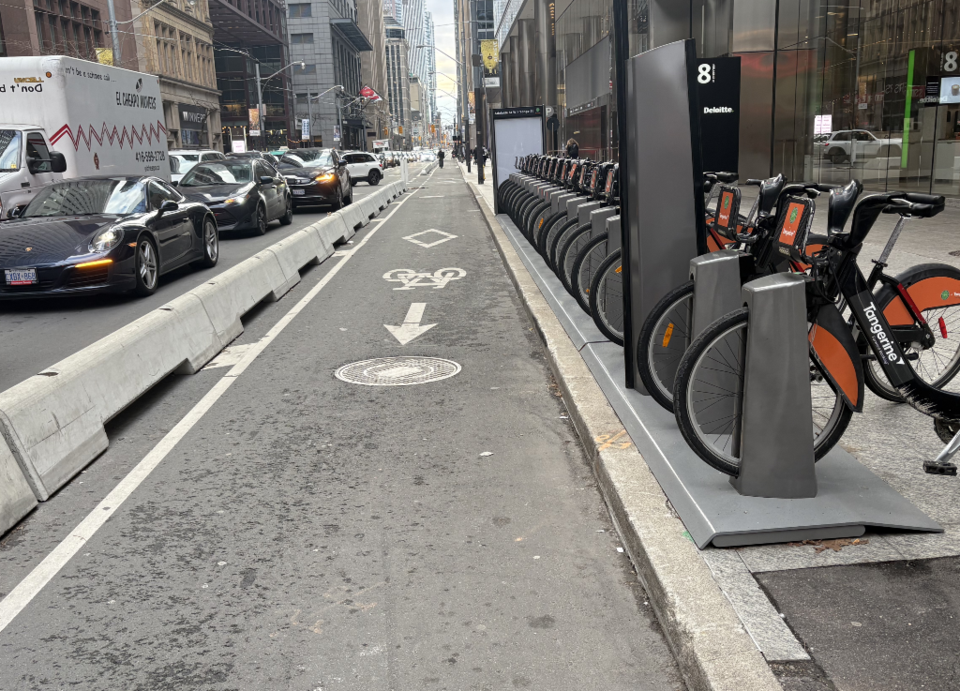
In total, cyclists would lose up to 25 kilometres of safe infrastructure if all three bike lanes are removed.
So, getting around quickly and safely with these bike lanes gone may not be as simple as it seems.
We mapped out how Toronto’s roads will change in the video, below.
Are you curious about the state of road safety for pedestrians and cyclists in Scarborough? Dive into our “Pedestrian Safety in Wexford” Action Journey to learn about all the risks, and possible solutions, for one of the city’s most dangerous intersections.
Last year, Toronto’s roads saw two setbacks for cyclists.
Three bike lanes in the city were set to be removed by Bill 212, and six cyclists were killed — the most in a year since the launch of the city’s Vision Zero program, a road safety plan focused on reducing traffic-related fatalities and serious injuries.
Four cyclists were killed on streets without dedicated bike lanes, one was killed when she was forced to exit the Bloor Street bike lane due to an illegally placed construction bin, and one was killed on Bayview Avenue, where a multi-use trail is available. Twenty-seven cyclists were seriously injured in 2024.
Bike lanes, cycling advocates argue, could have prevented many of these tragedies.
We can look at the Vision Zero data before and after the bike lanes were installed. But, this comes with one major caveat: while dedicated bike lanes protect cyclists, decreasing the chance of KSIs (people killed or seriously injured,) more cyclists likely started using these routes once they were installed, thereby simultaneously increasing the risk of KSIs along these roads.
Take the 5.2 km of bike lanes installed in 2020 along Danforth Avenue between Broadview Avenue and Dawes Road. Between 2008 (the first year for which Vision Zero data is available) and 2019, 10 cyclists were seriously injured along this stretch of road: an average of about one per year. Between 2020 and 2024 — after the bike lanes were installed — only one cyclist was seriously injured: an average of about one every four years.
Broadly speaking, progressives on City Council have supported bike lanes over the years, and conservatives have voted against them. Another division is geographic: downtown councillors have historically been much more supportive of bike lanes than their suburban counterparts. For example, last November, City Council voted 19-7 in support of adding a bike lane on Parkside Drive that would also remove a car lane. The seven councillors who voted no — Brad Bradford, Jon Burnside, Lily Cheng, Vincent Crisanti, Stephen Holyday, James Pasternak, Anthony Perruzza — either lean conservative within City Council, represent a suburban ward, or both.
Opponents of bike lanes argue that they cause traffic congestion and impede emergency vehicles. Forty businesses in Etobicoke filed a lawsuit for $10 million last month against the City of Toronto, Councillor Amber Morely and the city’s transportation manager, alleging “negligence and nuisance” by the city over the installation of bike lanes along Bloor Street West over the past two years.
It’s not the only instance in which bike lanes are being fought over in court. Last December, Cycle Toronto and two Toronto cyclists issued a notice of application in the Ontario Superior Court of Justice to challenge Bill 212. The notice claims the bill violates the Charter of Rights and Freedoms Section 7 clause, which guarantees “life, liberty and security of the person and the right not to be deprived thereof except in accordance with the principles of fundamental justice.”
The notice states there is no rational connection between reducing traffic congestion and removing bike lanes, and that the “seriousness of the increased risk of death or serious injury to cyclists is entirely disproportionate to that ostensible objective.”
While the notice seeks to have courts strike down Bill 212, it also seeks an injunction to prevent the removal of the bike lanes before the charter challenge is heard on April 16.
On Tuesday March 11, during the injunction hearing, internal emails, presentations and an engineering report done for the Ministry of Transportation were made public. Despite being heavily redacted, the documents essentially show that bike lanes improve road safety for all commuters overall, and removing them could increase the risk of collisions for all road users by 54 per cent.
The documents also cite research that shows bike lanes actually help with congestion, and removing them may not reduce it as Bill 212 suggests.
Michael Longfield, executive director of Cycle Toronto told The Green Line in an email that the content of these documents is no surprise. “What perhaps is a surprise is that the province has known all of this all along, and yet has continued to aggressively pursue this legislation and engage consultants like Stantec against the public interest of Ontarians,” he added.
On March 14, the Ontario Superior Court ruled against Cycle Toronto’s injunction, meaning that Bill 212 won’t be suspended yet and the provincial government could still remove the bike lanes before the court challenge.
While we wait and see how this ongoing legal challenge will play out, we need to acknowledge that we all share these roads, no matter how we choose to commute.
As we explained in Part 1, 70 per cent of Torontonians use a bike either to get around the city or for exercise, and 61 per cent of Torontonians use a motor vehicle to get to work. The TTC had a daily average ridership of 1.3 million in 2024, and 26.2 per cent of Torontonians use transit as their way to get to work according to the latest census. This means that most people in the city use all three modes of transportation.
That’s why our guides look past the divisions, and provide concrete information that’s useful for everyone’s safety.
“Just because it’s your right of way, it doesn’t mean that everyone is paying attention.”
Ronald Gomez, Learner's Academy Driving School
What alternate routes can cyclists take on Bloor Street, Yonge Street and University Avenue?
We mapped out the alternate routes that cyclists can take when the bike lanes are removed using Toronto’s Cycling Network Map.
David Shellnutt explains the safety risks on different cycling infrastructure in the city. 📸: Amartya Smaran/The Green Line.
Are you wondering where you’ll cycle if bike lanes get ripped out of major streets across Toronto?
We wondered that too. So, we went out and mapped alternate cycling routes using Toronto’s Cycling Network Map.
We chose the fastest alternate routes based on existing cycling infrastructure where possible — and minimal stretches of biking with traffic where needed.
The below example is an alternate route that takes you from Bloor Avenue to Davisville Avenue, at the start and end point of the Yonge Street bike line. It’s nearly three times longer in time (28 minutes) and twice the distance (6.7 km) than the route you’d take (11 minutes and 3.3 km) cycling on the to-be-ripped-off Yonge bike lane.
If you need to cycle west of Yonge street, or along the Bloor Street or University Avenue bike lanes, check out the rest of the maps we made in our guide.
SAFETY FOR EVERYONE: EXPERT TIPS FOR DRIVERS, PEDESTRIANS AND CYCLISTS
We spoke with a driving instructor, a pedestrian advocate and the Biking Lawyer about the best ways for any commuter to stay safe on the road.
A pedestrians, a driver and a cyclist on Yonge street. 📸: Amartya Smaran/The Green Line.
Are you tired of having close calls, perhaps even near-death experiences while walking, driving and/or biking in downtown Toronto?
Us too. That’s why we spoke with a driving instructor, a pedestrian advocate and the Biking Lawyer to get the most important safety tips to keep in mind when commuting in the city.
We compiled their answers in a three-part video series, and we summarized it all in a convenient guide that you can swipe through.
The Biking Lawyer David Shellnut gives us a step-by-step breakdown on dealing with car accidents, and how a clause in Bill 212 might limit cyclists’ legal recourse in case of injuries.
A pedestrian crosses the street. 📸: Amartya Smaran/The Green Line.
The worst question that can cross any commuter’s mind: What happens if you get hit by a car?
The looming removal of bike lanes makes cyclists dread this question even more.
Nobody likes to imagine this scenario — but, it’s important to be prepared.
Of course, your first step should be to be safe and check if you have any injuries that need immediate medical attention.
Now, if you want to take legal action, there are some steps to keep in mind. We asked David Shellnutt, founder of the Biking Lawyer LLP, for his expert advice.
We also explain a lesser known clause of Bill 212, which practically makes it so you can’t sue the provincial government if you’re injured on a road where bike lanes are removed.
This month, we’re partnering with TorontoToday, a new hyperlocal (and free!) news outlet in Toronto, to bring you more features so you can learn about road safety and bike lanes in the city.
Check out the stories, below.
‘Assume every driver is stupid’: How to teach kids to cross busy streets in Toronto
TorontoToday asked parents: How do you teach a child to safely cross the streets of Canada’s biggest city, and how do you know when they’re ready to venture on their own?
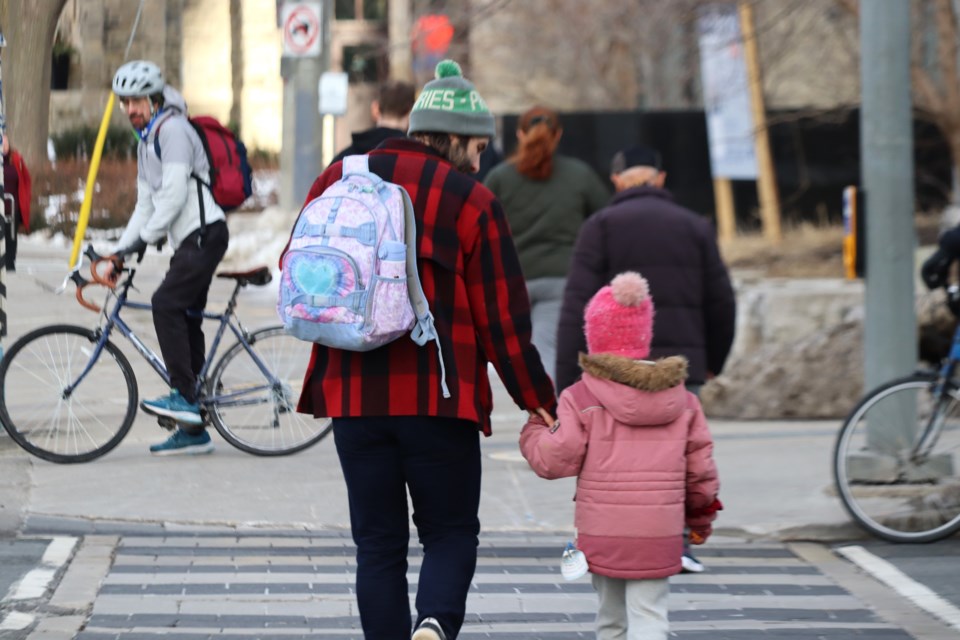
Brock Howes walks his young daughter across Avenue Road, a six-lane roadway that produces heavy traffic at St. Clair Avenue West. 📸: Alex Flood/TorontoToday.
While it might be sufficient in other cities, it’s a well-known fact that looking both ways before crossing the street in Toronto simply isn’t enough to guarantee one’s safety.
Pedestrians encounter traffic-packed roadways, narrow sidewalks and unpredictable motorists — and for kids, navigating the streets on foot can be especially intense.
For parents, the statistics for pedestrian collisions involving youth in the city can be alarming.
According to Toronto police, there were 1,693 reported motor vehicle collisions involving pedestrians in 2024, or 4.6 pedestrians struck each day — the most since 2019. Pedestrians 17 and younger were involved in roughly 10 per cent of those incidents.
Across the city, road safety advocates are pushing for reduced speed limits, more crossing guards and heavier penalties for dangerous driving.
In the meantime, parents are walking the streets with their kids and providing them with pointers in an effort to remain safe on sidewalks and crosswalks.
So, TorontoToday asked parents: How do you teach a child to safely cross the streets of Canada’s biggest city, and how do you know when they’re ready to venture on their own?
Read the rest of this story on TorontoToday, a new hyperlocal (and free!) news outlet in Toronto. Launched last October, TorontoToday’s nine-person news team takes a boots-on-the-ground approach to covering the people, places, events and information that make downtown Toronto such a unique and vibrant community. Sign up for TorontoToday’s afternoon newsletter The Tone here.
Lane wars: Some cyclists injured, frustrated with ‘erratic’ biking by food delivery couriers
Toronto cycling lawyer David Shellnutt is acting for two clients who suffered broken bones in accidents where food delivery couriers were allegedly biking while distracted.
Benjamin Luong said he fell off his bike in July 2024 after being struck by a distracted food delivery courier. Luong is pictured in Toronto on Feb. 28, 2025. 📸: Gabe Oatley/TorontoToday.
When commuter cyclist Benjamin Luong was hit in the bike lane last summer by a food delivery courier, he wasn’t mad, just disappointed.
Luong is a marketing professional who cycles to work downtown most days from Scarborough.
He said he doesn’t bike fast in the city core because it’s not safe. On a typical ride, he said he encounters many food couriers who appear distracted, staring at their phones while biking.
One evening last July, Luong said he was cycling home east in the Adelaide Street bike lane. He rang his bell to alert a courier up ahead that he was looking to pass but the delivery worker wasn’t paying attention, Luong told TorontoToday.
As Luong came up beside him, the courier moved to the left, clipping Luong’s handlebars and sending him off his bike and onto the sidewalk.
Though the Scarborough resident managed to escape the collision with only a scrape on his hands, others haven’t been so lucky.
Read the rest of this story on TorontoToday, a new hyperlocal (and free!) news outlet in Toronto. Launched last October, TorontoToday’s nine-person news team takes a boots-on-the-ground approach to covering the people, places, events and information that make downtown Toronto such a unique and vibrant community. Sign up for TorontoToday’s afternoon newsletter The Tone here.
Removing bike lanes will likely worsen gridlock, lead to more collisions: government documents
Engineering report prepared for the province estimates Queen’s Park’s plan to remove Toronto bike lanes could increase collisions by 54 per cent.
The Adelaide Street bike lane 📸: Allison Smith/TorontoToday.
Documents unearthed as part of a legal challenge show the Doug Ford government received expert evidence that planned bike lane removals could worsen traffic congestion in Toronto and lead to injuries.
In December, Cycle Toronto and two other plaintiffs launched a Charter challenge against the Progressive Conservative government’s Bill 212, the Reducing Gridlock, Saving You Time Act.
The bill directs Ford’s transportation minister to remove portions of the bike lanes along Yonge Street, Bloor Street and University Avenue.
Doing so would violate the Charter rights to life, liberty and security of the person, Cycle Toronto’s lawsuit alleges.
Read the rest of this story on TorontoToday, a new hyperlocal (and free!) news outlet in Toronto. Launched last October, TorontoToday’s nine-person news team takes a boots-on-the-ground approach to covering the people, places, events and information that make downtown Toronto such a unique and vibrant community. Sign up for TorontoToday’s afternoon newsletter The Tone here.
Do you want to learn more about specific road safety initatives and transit accessibility?
Check out these stories by our team.
Here’s your chance to support the only independent, hyperlocal news outlet dedicated to serving gen Zs, millennials and other underserved communities in Toronto. Donate now to support The Green Line.
Toronto's Bike lane removals: tips for staying safe
A community dinner and Story Circle hosted by The Green Line.
About the Event
Tuesday
March 25, 2025
6 p.m. to 9 p.m. ET
St. Stephen-in-the-fields church103 bellevue ave.
RSVP
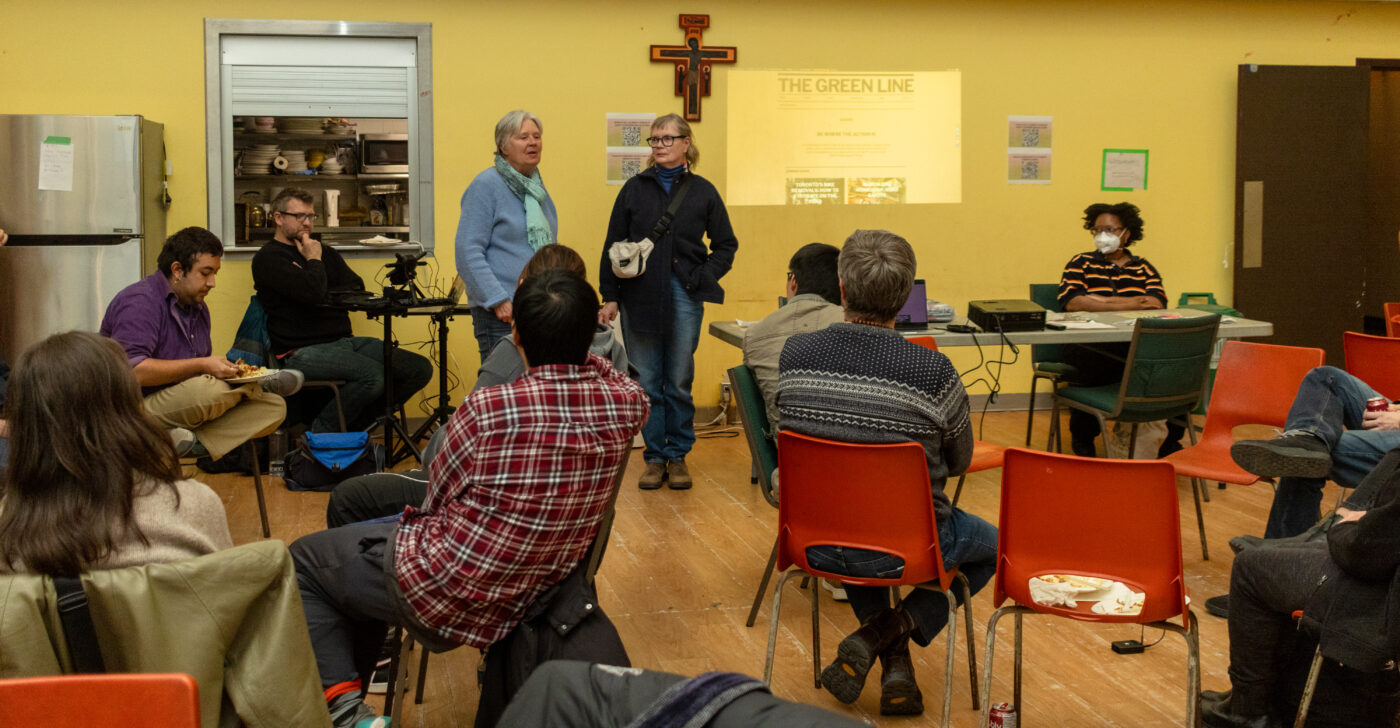
We’re partnering with St. Stephen-In-The-Fields church to host a community dinner and Story Circle in the Kensington-Chinatown neighbourhood on Tuesday, March 25 from 6 to 9 p.m. We’ll explore how, with the potential removal of major bike lanes, drivers, cyclists and pedestrians can stay safe.
Walk Toronto, Curbside Cycle, The Biking Lawyer David Shellnutt, Cycle Toronto and Friends and Families for Safe Streets will provide concrete tips for staying safe while commuting, and will also host resource tables with information you can take home.
Dinner and refreshments will be served by Asian Legend, so don’t miss out!
Our event is Pay What You Can, as we want to include as many Torontonians as possible in this conversation. For transparency, here’s a breakdown of our costs:
Venue rental: $50
Food and drinks: $300
Labour: $1,200
Venue rental: $50
Food and drinks: $300
Labour: $1,200
If you’d like to support our team in continuing to host community-focused events like this, we’d appreciate a contribution of $31 to help us fully cover operational costs. If this is above your budget, we’d appreciate a payment of $10. If that’s still a barrier to you joining us, you can contribute as much as you’re able (even $1!).
Events are an essential part of our Action Journey. We want to empower Torontonians to take action on the issues they learn about in The Green Line — so what better way to do that than by bringing people together? From community members to industry leaders, anyone in Toronto who’s invested in discussing and solving the problems explored in our features is invited to attend. All ages are welcome unless otherwise indicated. Our only guidelines? Be present. Listen. Be kind and courteous. Respect everyone’s privacy. Hate speech and bullying are absolutely not tolerated. At the end of the day, if you had fun and feel inspired after our events, then The Green Line team will have accomplished what we set out to do. Any questions?Contact Us.
Members of Walk Toronto’s steering committee share pedestrian safety tips. 📷📸 Amartya Smaran/The Green Line.
Event Overview
See what you missed
from our latest event.
Our community members brainstormed solutions for road safety in Toronto.
Compiled by James Westman.
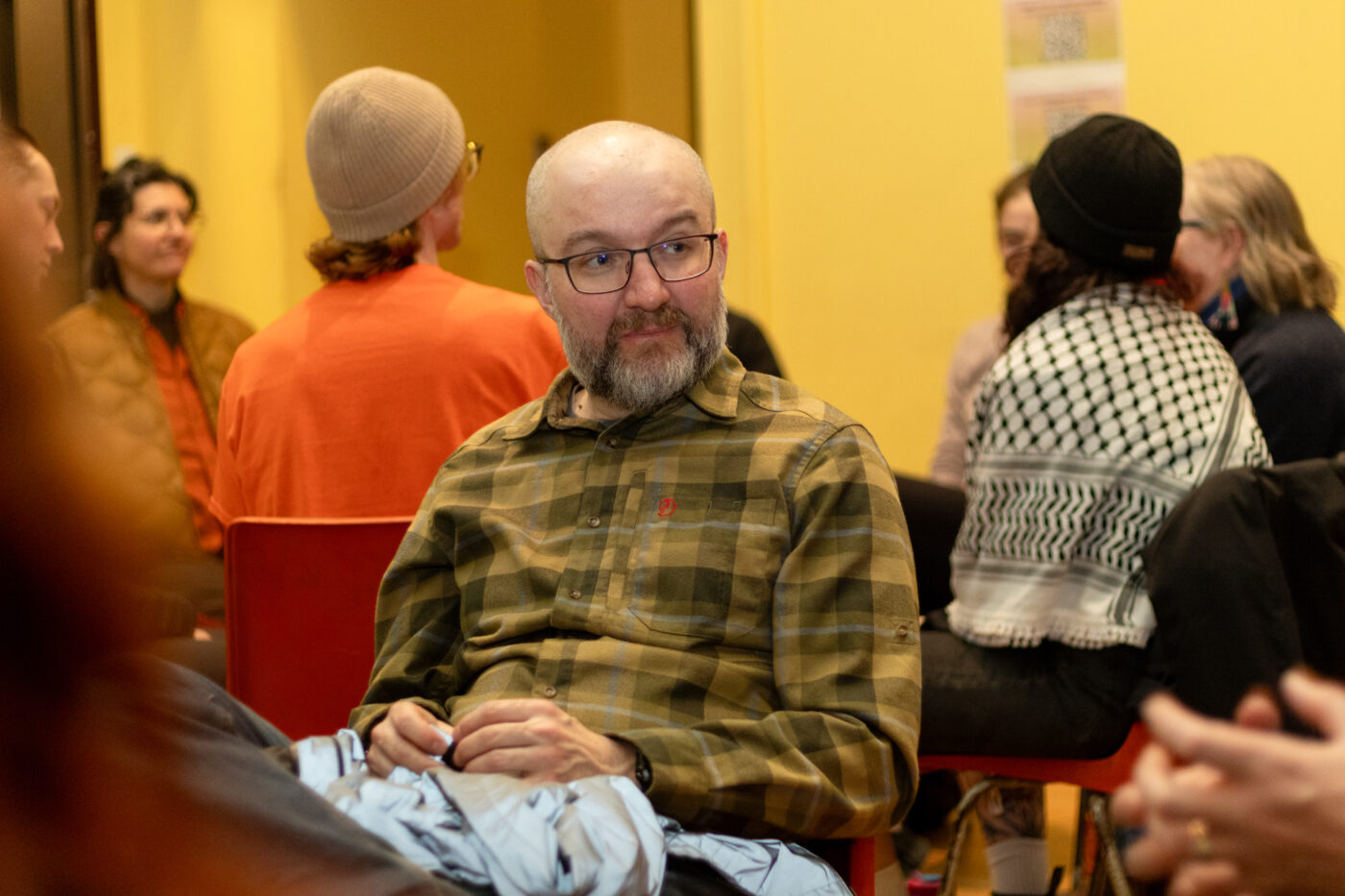
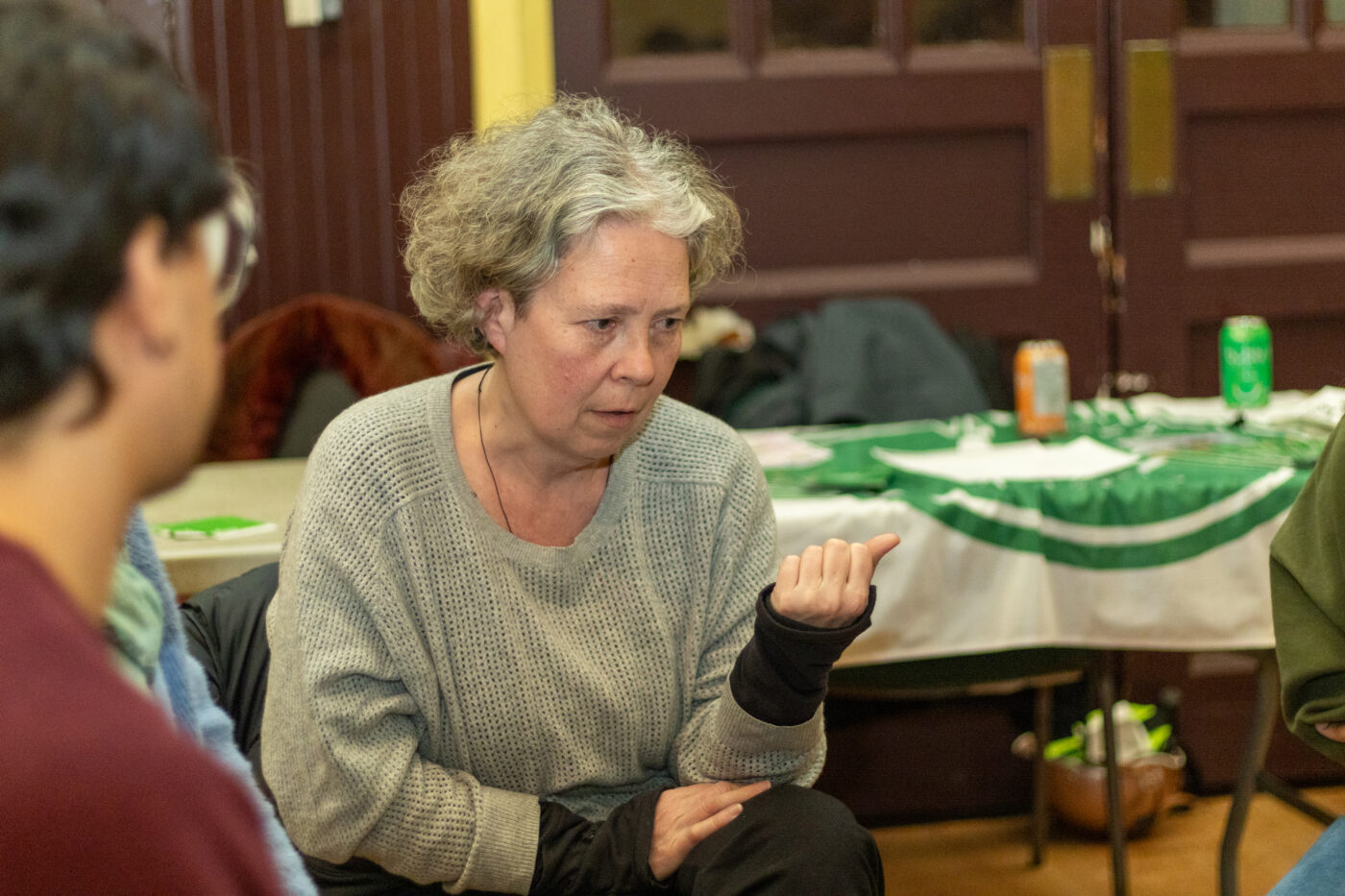
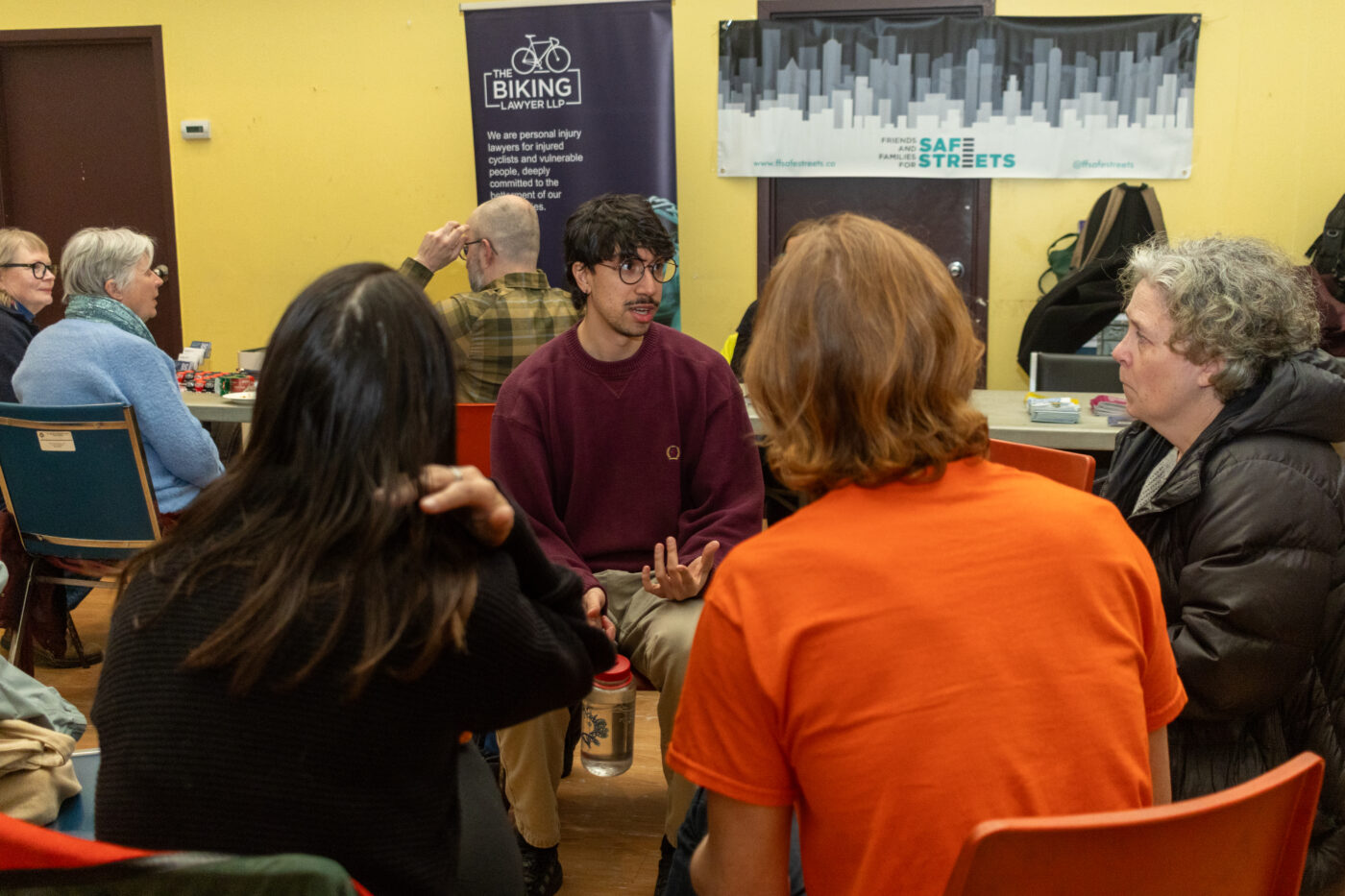
Event attendees share their commuting frustrations and changes they'd like to see in the city. 📷 : Amartya Smaran/The Green Line.Event attendees chat about their commuting challenges and resources they've used to navigate them during Story Circles. 📷 : Amartya Smaran/The Green Line.Event attendees chat about their commuting challenges and resources they've used to navigate them during Story Circles. 📷 : Amartya Smaran/The Green Line.
SOLUTIONS
Join the conversation
We value your privacy
The Green Line uses cookies so the site works, to remember your reading progress, and (with your consent) to understand which stories resonate. You can accept all, reject everything non-essential, or pick what you’re comfortable with. Privacy policy
Welcome back👋
New here or returning? Same flow. Drop your email — we'll handle the rest.





Join the conversation