Many thanks to our funders and community supporters for this project. The City of Toronto (Main Street Innovation Fund), Federal Economic Development Agency for Southern Ontario and the Riverside BIA.The Green Line maintains full editorial independence to ensure journalistic integrity.
The east-end neighbourhood of Riverside is home to more than 100 local indie businesses, over 4 acres of parkland and many historic local sites — including the famed De Grassi Street, which inspired the hit TV show Degrassi.
But food insecurity has become a significant problem in Riverside, which is located within South Riverdale. This is largely due to the neighbourhood’s intense gentrification and inflated cost of living in recent years.
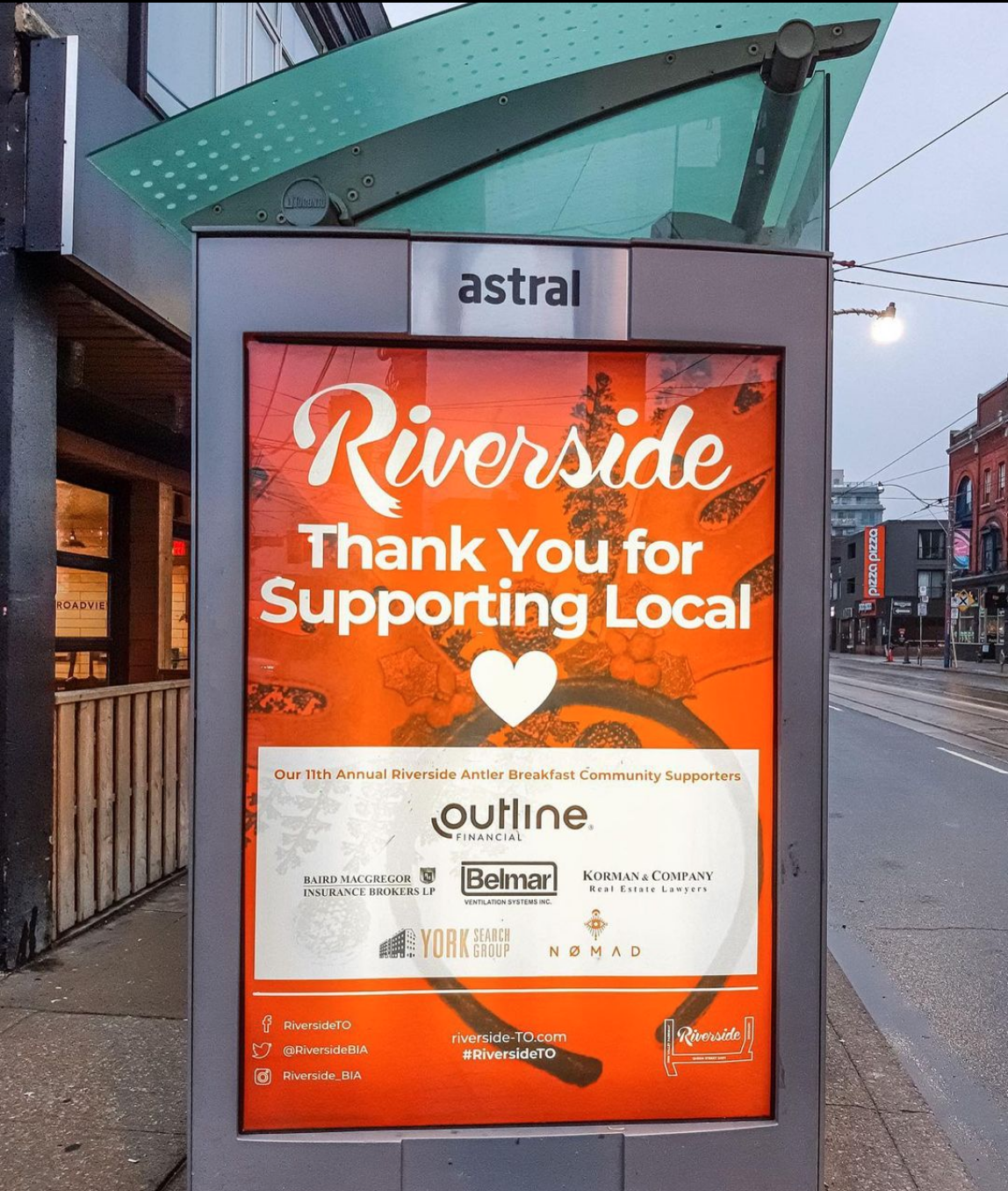
A bus stand sign thanks people for supporting Riverside's local businesses. 📸: Riverside BIA.
Three years of COVID-19 have also exacerbated the impacts of food insecurity, especially for working class residents, who have historically populated Riverside and the neighbouring Leslieville.
Gentrification, which is when the average income of a neighbourhood rises above the city average due to a large influx of wealthy residents and businesses, often results in the displacement of low-income residents who can’t afford the inflated housing costs.
In the broader neighborhood of South Riverdale in which Riverside is located, 16 per cent reported a personal income of less than $10,000, according to the 2016 Canadian census.
In the six years since then, the cost of living in Toronto has increased significantly. From August 2021 to August 2022, the cost of food rose 11 per cent — the largest increase Ontario has seen since September 1981.
: 2022 "Who's Hungry Report."
As a result, many Torontonians can’t access adequate, safe and nutritous food to eat.
According to the 2022 “Who’s Hungry Report” by the Daily Bread Food Bank, Central Toronto, where Riverside is located, saw 477,968 visits to the local food bank. That’s an 11 per cent increase since 2021. More broadly, nearly 1 in 5 Torontonians experienced food insecurity in 2021, according to Statistics Canada.
Food insecurity includes a wide range of experiences. It might look like a parent or guardian skipping meals so their child can eat, or someone who eats the same limited foods for every meal out of necessity.
This is especially true in gentrified communities because people living at or below the poverty line often don’t have enough money for things like food, healthcare and transportation after paying rent.
Daily Bread reported that 56 per cent of new food bank users skipped a meal to be able to afford something else.
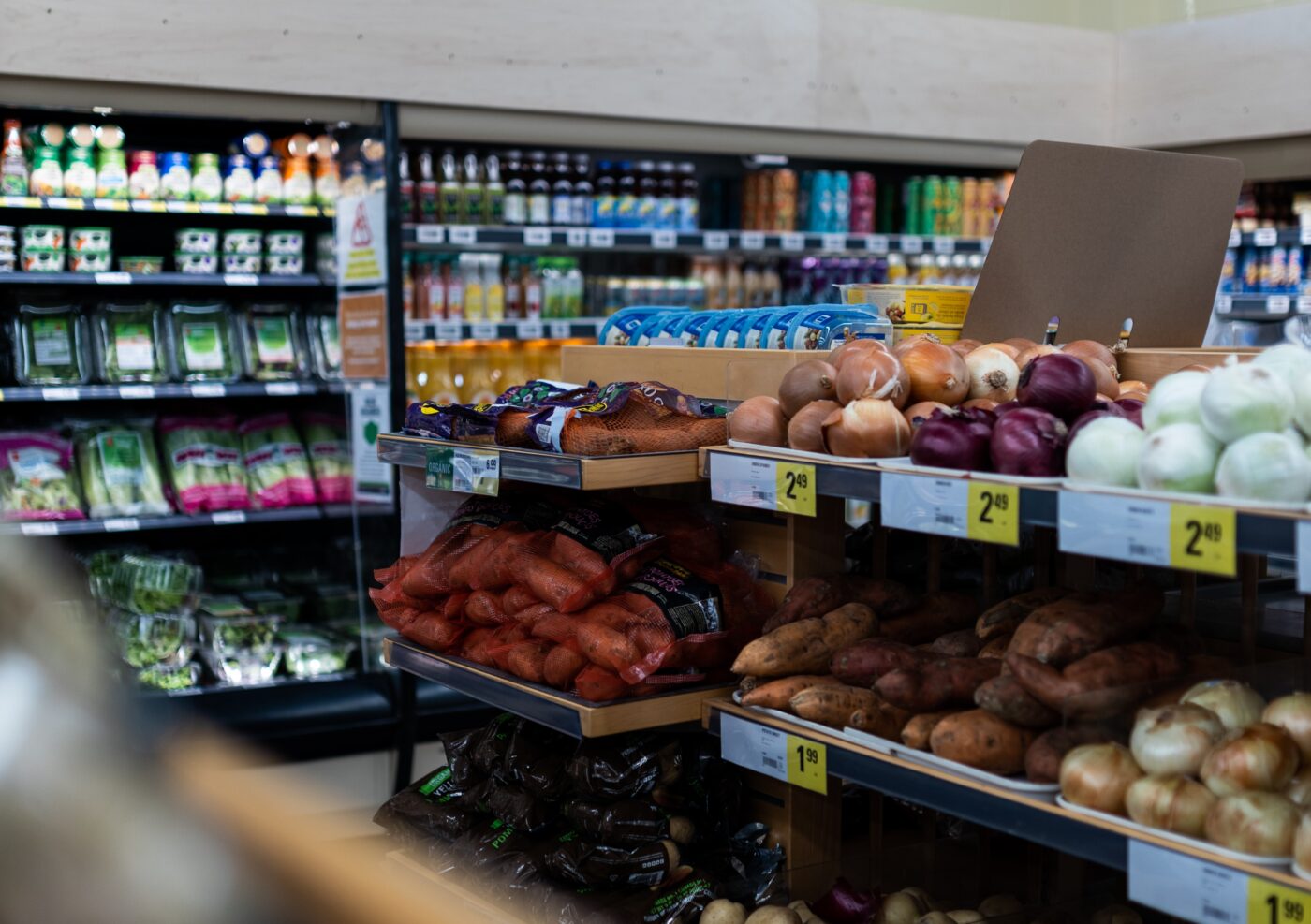
A grocery store display. 📸: Unsplash, Dillon Kydd.
In the long term, this can lead to chronic and sometimes adverse health conditions, including heart disease and diabetes.
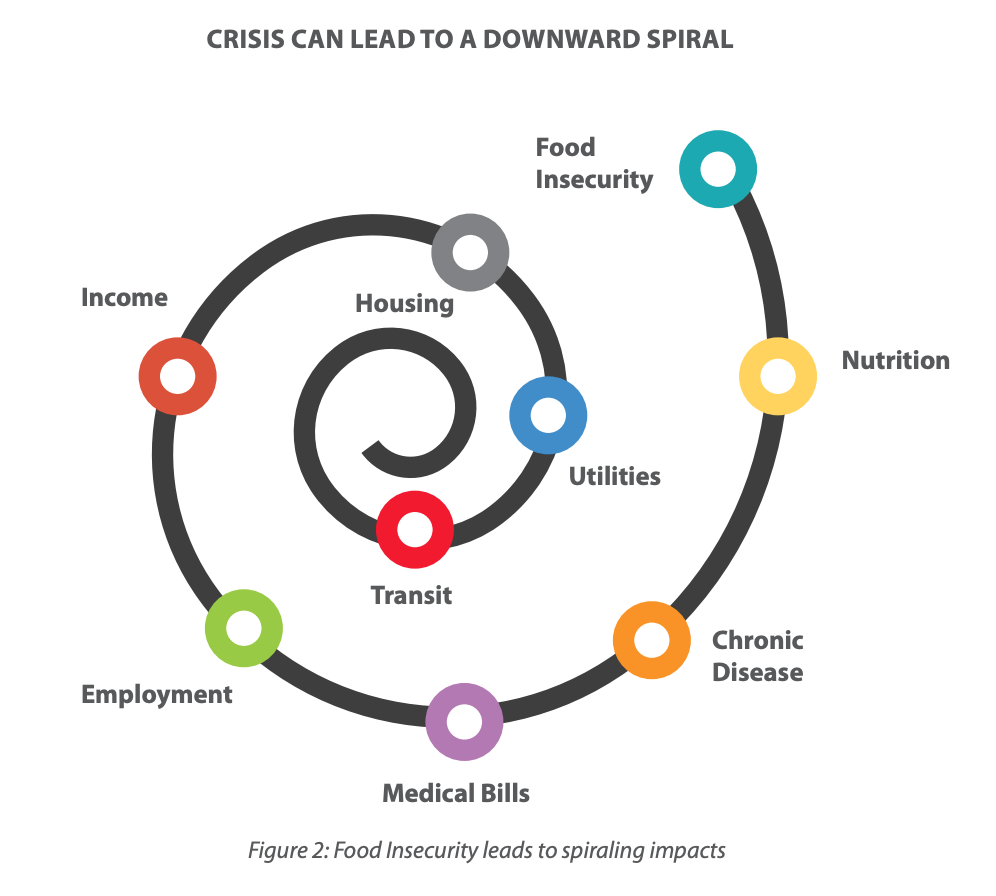
The “Who’s Hungry Report” describes a “downward spiral” that can occur due to food insecurity, from lack of nutrition and chronic disease to large medical bills and lack of adequate income.
Prolonged food insecurity can also negatively impact mental health. Seventy-one per cent of survey respondents to the “Who’s Hungry Report” said they “sometimes or always” felt depressed.
📸 The Queen Street Viaduct lit up at night. : riverside bia.
In 2022, the Daily Break Food Bank also reported that 71 per cent of existing food bank users and 60 per cent of new users reported low income as the reason for their food insecurity. The hardest-hit communities are the most underserved in Toronto.
Nearly 25 per cent of people surveyed in the 2022 “Who’s Hungry Report” said they depended on food banks because of their disability. Seventy per cent of people who were dependent on food banks in the last year were racialized.
People with disabilities lack affordable food options that are also physically accessible. Many food-insecure people aren’t able to access food that is greater than 1 km away from them.
Riverside has a number of food programs that offer low-barrier access to food, which we’llexplore in upcoming solutions-focused stories over the next few weeks.
For more information about food programs in Riverside, visit the Riverside BIA’s website.
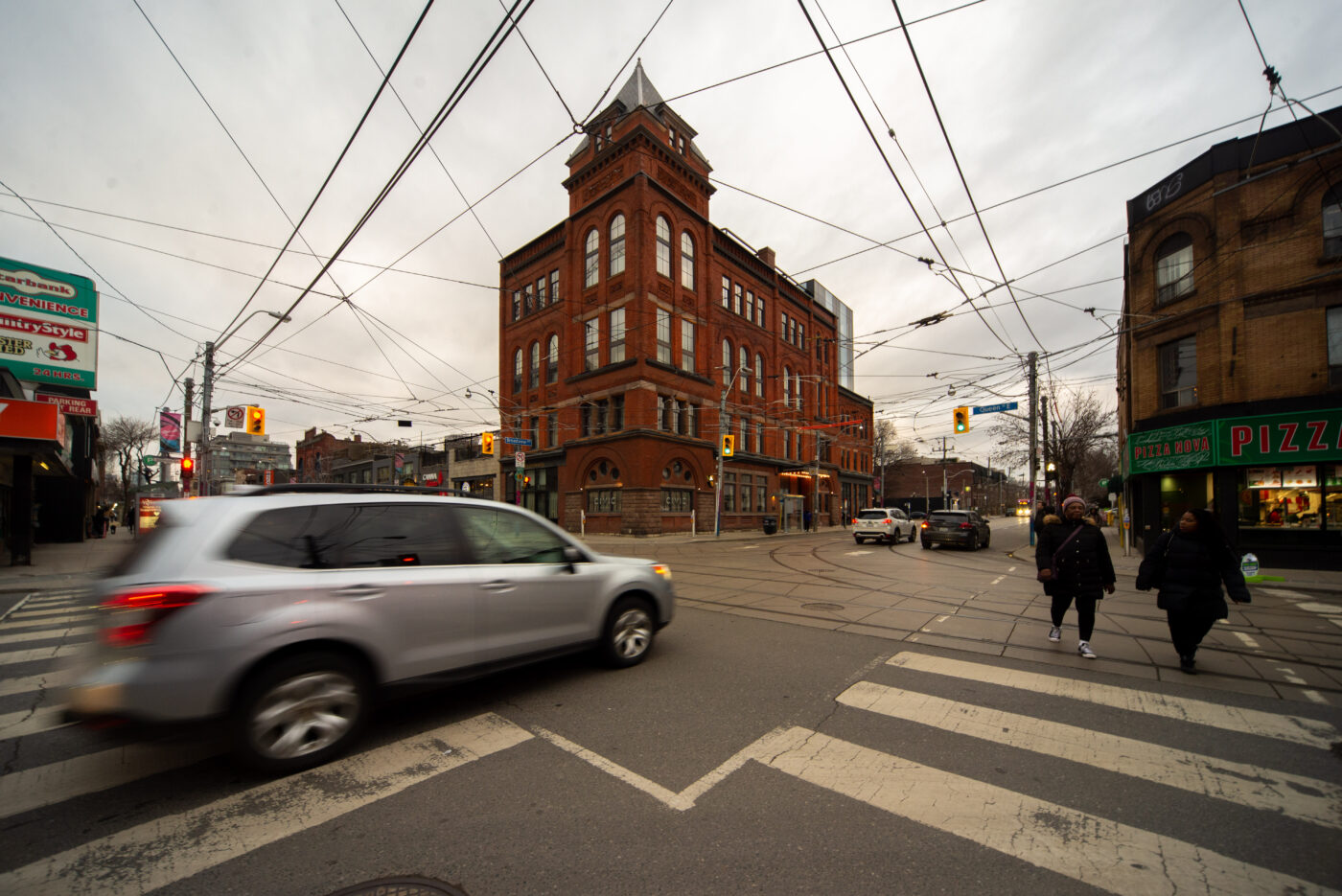
Broadview Avenue and Queen Street East is one of the busier intersections in Riverside.📸 ALOYSIUS WONG/THE GREEN LINE.
By the Numbers
Imagine a four-person family living in Toronto: two working adults supporting their two children, ages 8 and 14.
Although Statistics Canada considers them to be low-income, the parents want a better future for their kids, so they try their best to save and navigate life in a city that’s becoming more expensive by the day.
Combined, the cost of groceries and rent amounts to $34,128 per year, leaving $10,138 for other expenses. At this point, it’s still likely that the family will need to purchase clothes and school supplies for their children, pay for field trips and potentially save up for postsecondary education. Perhaps the parents need to buy two monthly TTC passes to get to and from work, which costs a total of $3,432 per year.
Factor in the cost of vision and dental care, prescription drugs, internet and phone plans, and suddenly, that remaining $10,138 disappears. Maybe the family has debts to pay, or one of the adults becomes ill and must stop working, further decreasing their disposable income.
Tally it all up, and the monthly costs for this family will easily exceed $4,000 — already beyond the family’s monthly income of $3,688.83 — and that’s without spending a dime on hobbies or leisure activities. No sports, no video games, no Netflix subscriptions, no trips to the movies or the museum.
At a glance, it wouldn’t seem like this is a common scenario in Toronto’s charming Riverside neighbourhood, located within the broader neighbourhood of South Riverdale.
Bordered by the downtown core on the west and the world-famous De Grassi Street on the east, a brief stroll through Riverside might give someone the impression that it’s economically affluent. The private residences are largely made up of well-maintained semi-detached houses, while the shops are beautifully decorated — both of which help make Riverside feel warm and welcoming. But when we dive deeper into the statistics, a more complicated picture emerges.
A brief glance at the economic realities in South Riverdale from its Neighborhood Profile Data raises no immediate cause for concern. (The City of Toronto does not collect data specific to Riverside.) South Riverdale households enjoy a median income of $76,000, which is $10,000 higher than the citywide average. The neighbourhood also boasts a lower unemployment rate, a higher proportion of home ownership, a lower number of dependents per income earner, as well as a smaller proportion of residents who struggle to pay for housing.
But upon further investigation, it becomes clear that there is a deep socioeconomic divide in South Riverdale. Eighteen per cent of households report incomes that place them within Canada’s top 10 per cent of households by income. They raise the neighbourhood’s median income significantly above the citywide average even while 18.7 per cent of their counterparts are considered low income. The financial reality of our imaginary family, above, is a best-case scenario for these low-income earners.
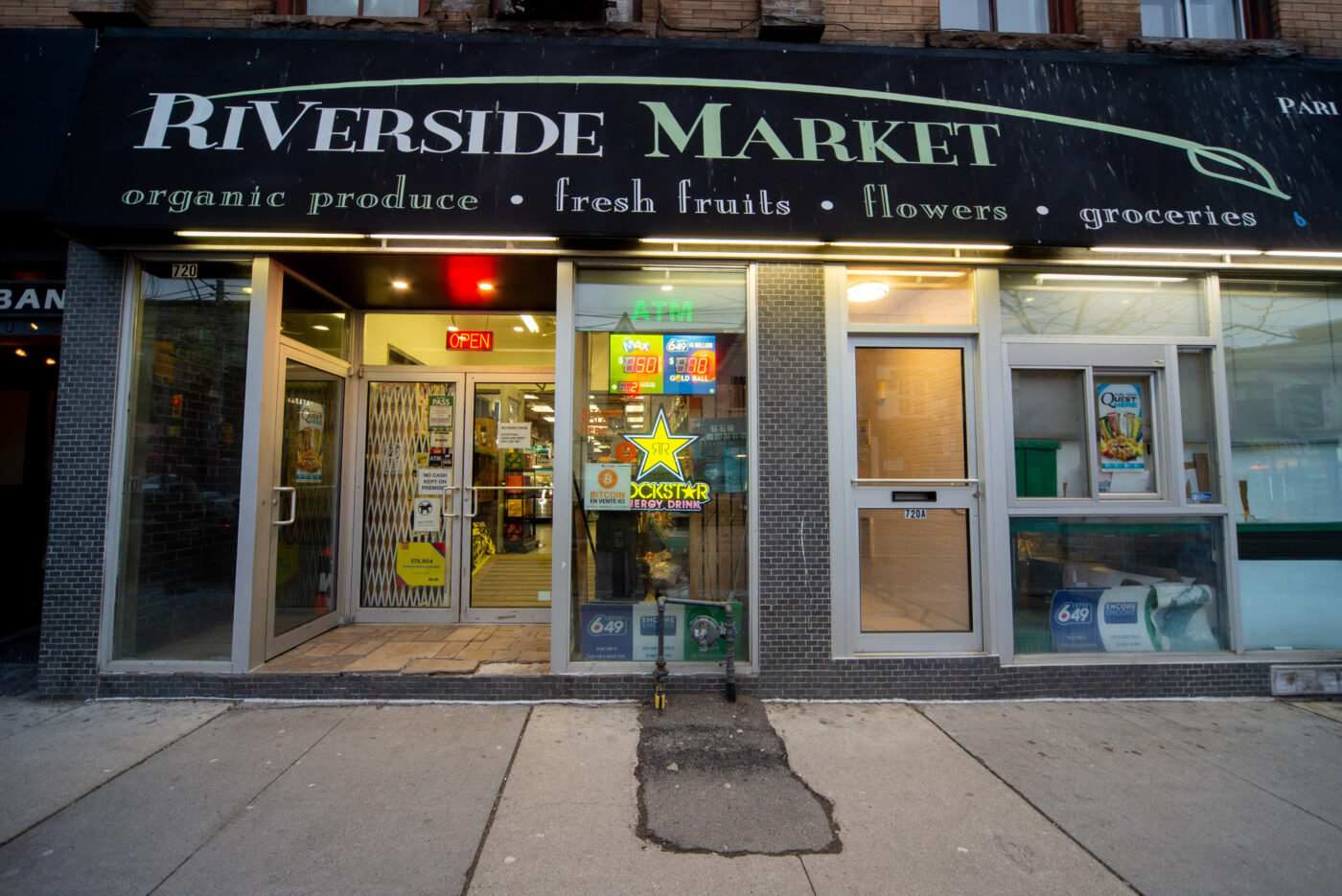
Riverside Market is one of six "Grocery and Variety" stores in Riverside listed by the Riverside BIA. 📸: ALOYSIUS WONG/THE GREEN LINE.
Grocery Store Shortage
Let’s return to that imaginary low-income family of four, and say that they live in Riverside.
Again, this family is looking to eat healthy, and make their own food, so they’d prefer to purchase their own groceries to make meals at home.
Unfortunately, in Riverside, they don’t have many options right now. The Riverside Business Improvement Area (BIA), which facilitates relationships between local businesses, commercial property owners and residents, lists six options under “Grocery and Variety” in the neighbourhood. One of these is an LCBO, and two are convenience stores that don’t sell much fresh food. There’s also one butcher shop. The two businesses that are dedicated grocery stores, BlessedLove Caribbean Grocery and Riverside Market, are a block away from each other. All of these options are clustered together on Queen Street East.
Remember that this family commutes on the TTC, and can’t afford a car to drive. They could make the trek to the nearby East Chinatown area, located just north of Riverside, where there are more affordable grocery options. This, however, means lugging everything back home by foot or transit. Instead, many residents will likely shop at one of the two convenience stores for essentials. But it’s often much harder to get healthy, fresh items at these stores.
So, what can this family do when they want to buy a broader array of healthier foods? Take transit, drive or rideshare to another store, or place an online order. But considering the associated costs, it’s more likely that after a long day of work, the parents will probably just opt to shop closer to home.
Despite their limited budget, this family and Riverside residents in general are vulnerable to the effects of gentrification, given their proximity to Toronto’s downtown core. When higher earners move into the neighbourhood and development accelerates, low-income individuals are increasingly forced to pay higher rents, leaving them with even less money left over to purchase food. This will disproportionately affect people 65 and older, who represent 30 per cent of the neighbourhood’s low-income earners, or 3,000 people.
Like much of Toronto, Riverside is in need of both short- and long-term solutions to address the systemic problem of food insecurity. The neighbourhood’s intense gentrification and lack of grocery stores leave many Riverside residents, especially low-income families like the one described above, with precarious access to healthy food.
Find the Riverside grocery store closest to you by clicking the link, below, and visit these local businesses.
The ‘forgotten population:’How Riverside’s food programs are supporting seniors
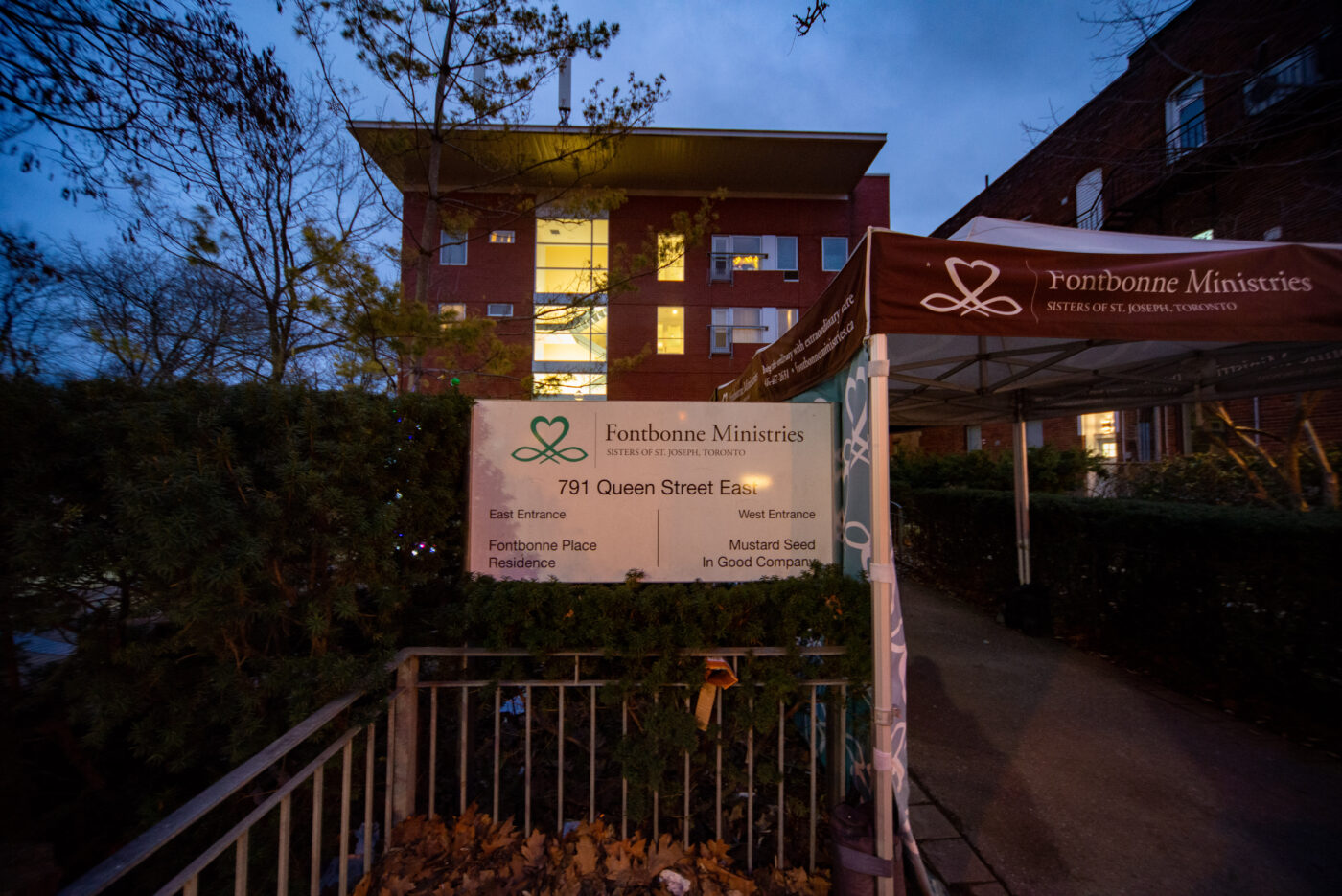
Mustard Seed operates at 791 Queen St. E., as part of the charity, Fontbonne Ministries. 📸: ALOYSIUS WONG/THE GREEN LINE.
Local food programs in Riverside, a small but culturally vibrant neighborhood located in the east end of downtown Toronto, say they’ve seen a surge of seniors experiencing food insecurity come to them for support in the past year.
With skyrocketing food prices and inflation coming on the heels of a pandemic where over 91 per cent of the people who died from COVID-19 in Canada were those aged 60 and over, seniors are struggling to access sufficient food or food of adequate quality to meet their basic needs. The Riverside food programs add that they also saw an increase in participants from other underserved populations, including people who are unhoused or precariously housed, people with disabilities and people of colour.
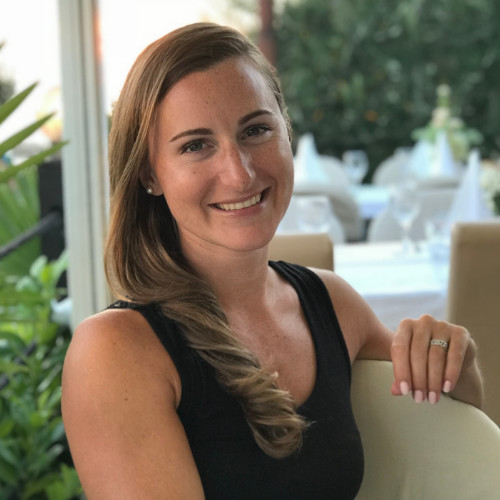
Jacqueline McKernan, program manager of Mustard Seed, which provides meals to food-insecure adults in South Riverdale, says its drop-in takeout lunch program has grown “significantly” from pre-COVID to now. McKernan adds that there’s been a wide range of Torontonians across different age groups who are receiving food from Mustard Seed’s program, especially seniors and people who work multiple jobs.
Jacqueline McKernan, program manager of Mustard Seed. 📸: Courtesy of Jacqueline McKernan/LinkedIn
“We were serving about 30 meals per day, every Friday, Saturday and Sunday. So, that’s about 90 [meals] for the three days. Now, we’re at about 110 meals per day,” she says, comparing the demand in March 2020 when the pandemic began, to today, nearly three years later after food prices increased 11 per cent from 2021 to 2022, according to the Daily Bread Food Bank’s “Who’s Hungry Report 2022.” What’s more, “Canada’s Food Price Report 2023” predicts a 5 to 7 per cent increase in food prices for 2023, which means Torontonians who are already struggling with food insecurity will be hit even harder this year.
Mustard Seed operates under the charity and social service organization Fontbonne Ministries, whose programs also focus on addressing housing insecurity and loneliness.
Jyoti Singh, executive director of Nellie’s Shelter, a women’s shelter that offers several community services including a weekly food program, says it served 60 women each week in March 2020. Now, the food program serves about double that number at 120 women each week. The majority of them are seniors, Singh added.
Jyoti Singh, executive director of Nellie's Shelter. 📸: Nellie's Shelter website.
Seniors are overrepresented in Riverside’s low-income population compared to the rest of Toronto. As higher income earners move into the neighbourhood and rents start to increase due to gentrification, people living on fixed incomes, like seniors, have little money left over for household necessities such as groceries after paying rent. (Read the previous article by Aloysius Wong and Amit Nehru for more on this issue.)
“I….feel like they’re the forgotten population,” Singh says about the uptick in senior women who Nellie’s has been serving. “If they’re housed, they’re going to prioritize keeping that housing; but they don’t have money for anything else, especially with inflation and living on a fixed income.”
Singh also points out that Riverside lacks a variety of food options that are both affordable and physically accessible to everyone. “To be able to travel far makes it very difficult [for seniors],” she explains. Torontonians with limited disposable income can’t just hop on the TTC to shop at a supermarket chain store further away, so they aren’t easily able to get the safe and nutritious food they need in Riverside.
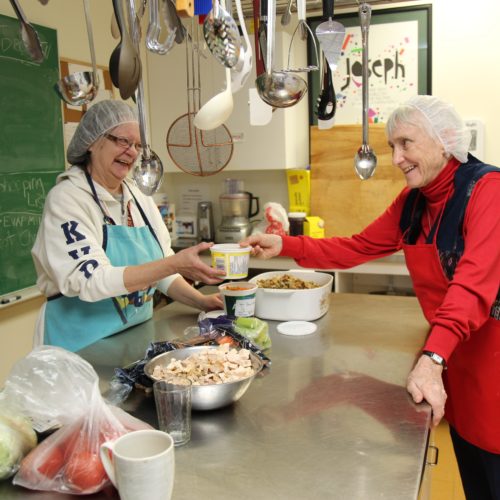
Food program offered at Fontbonne Ministries. 📸: Fontbonne Ministries website.
AnnMarie Marcolin, director of community programming and partnerships at Fontbonne Ministries, says it offers a variety of food programs that respond to this city-wide issue. For example, Mustard Seed’s Good Food Market provides fruits and vegetables at an affordable cost for those who have the resources to cook. Meanwhile, it hosts a take-out lunch program that runs on Friday, Saturday and Sunday for those who don’t.
“It’s not one size fits all,” Marcolin adds. “Access and security [is] based on the needs of the individual. Whether they can chew, whether they can cook, whether they want to stand in a line or not — those things are all really critical for us to consider around making sure that the program meets their needs and not ours.”
Both Mustard Seed and Nellie’s offer other community programs in addition to their food programs. Mustard Seed provides access to safe washrooms, foot care and haircuts, as well as programs that encourage well-being and creativity, such as knitting and mindfulness. Nellie’s, which hosts its food program in partnership with Mustard Seed, helps its participants meet other basic needs, such as treating cuts and scrapes. Many of the people who use Nellie’s services often ask for Polysporin, bandages and nail clippers, so they can keep themselves as “mobile as possible,” Singh explains.
She encourages those who are looking to support their fellow Toronotonians this winter to consider donating cash to local food programs, rather than directly donating food items, so the programs can give participants exactly what they’re requesting.
Want to support Fontbonne Ministries’ food programs? Visit its website to donate.
More money, less problems: The simple solution to food insecurity in Riverside
Food insecurity in Riverside is a complex problem with root causes ranging from poverty and gentrification to a lack of affordable options.
But experts say the solution is simple: Give people more money.
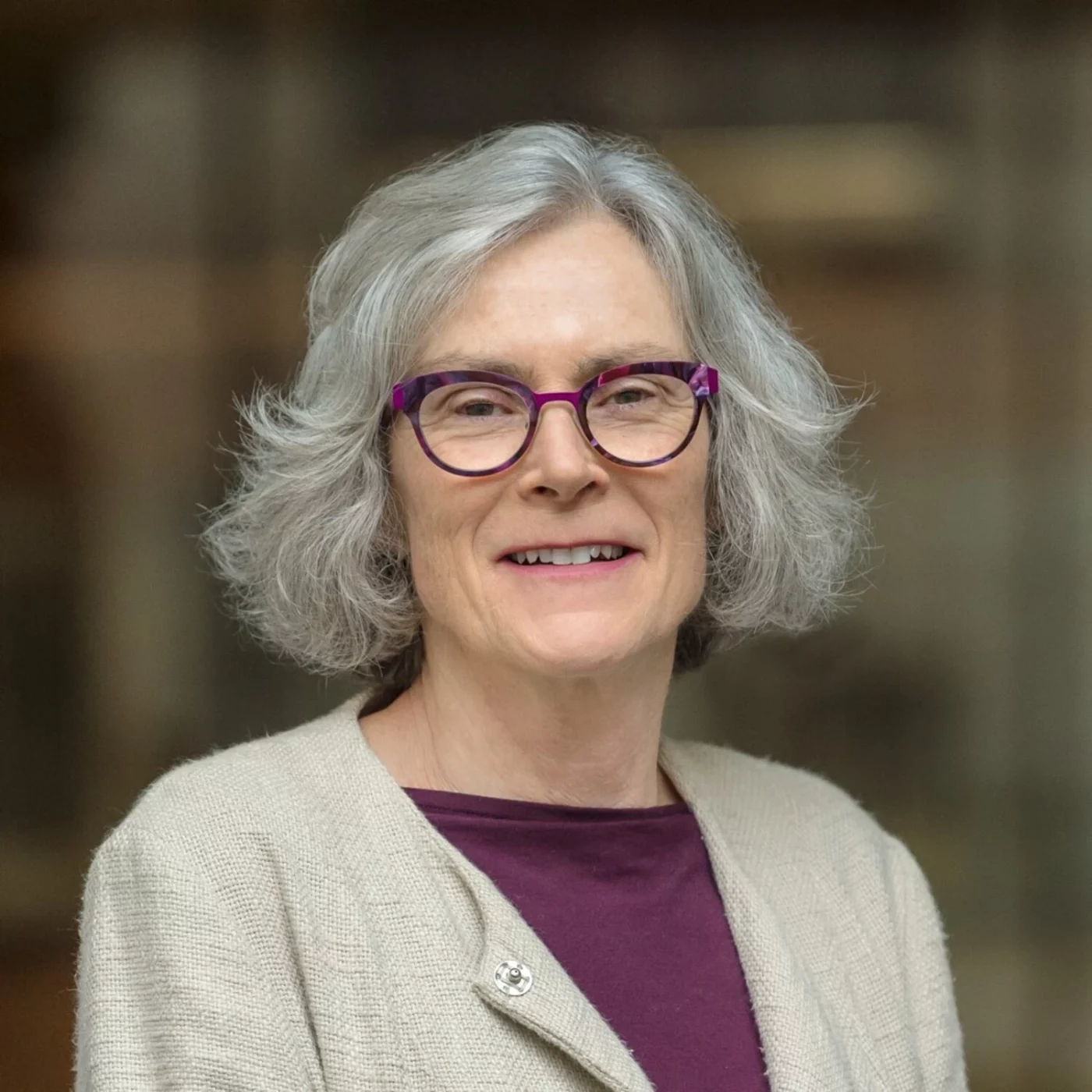
University of Toronto professors Valerie Tarasuk and Michael Widener, who research food insecurity in Canada and teach at the Dalla Lana School of Public Health, agree that both community initiatives and policy changes can help address this systemic problem. But they argue that in the long-term, food insecurity can’t be solved only through actions at the neighbourhood level.
SEEING ISN’T EATING
You might think that addressing food insecurity in Riverside is as simple as introducing a full-service grocery store — but it’s not.
Riverside has two dedicated grocery stores, so adding a third won’t help much, especially if locals can’t afford to shop there, according to Tarasuk who cites an example from the nearby St. James Town.
“The example that captured the problem of food insecurity well for me was a building in south St. James Town, [the neighbourhood near Sherbourne and Wellesley Streets]. The building had a Food Basics, a large discount supermarket, on its main floor and a high-rise building above it,” the professor of nutritional sciences explains.
“Despite the proximity of a cheap grocery store, the levels of food insecurity among residents of the building were very high. Living above a grocery store did not help them, as they did not have the money to shop there. The only way they would have benefited from living there would have been if they were hired by the store, or if they were willing to steal food.”
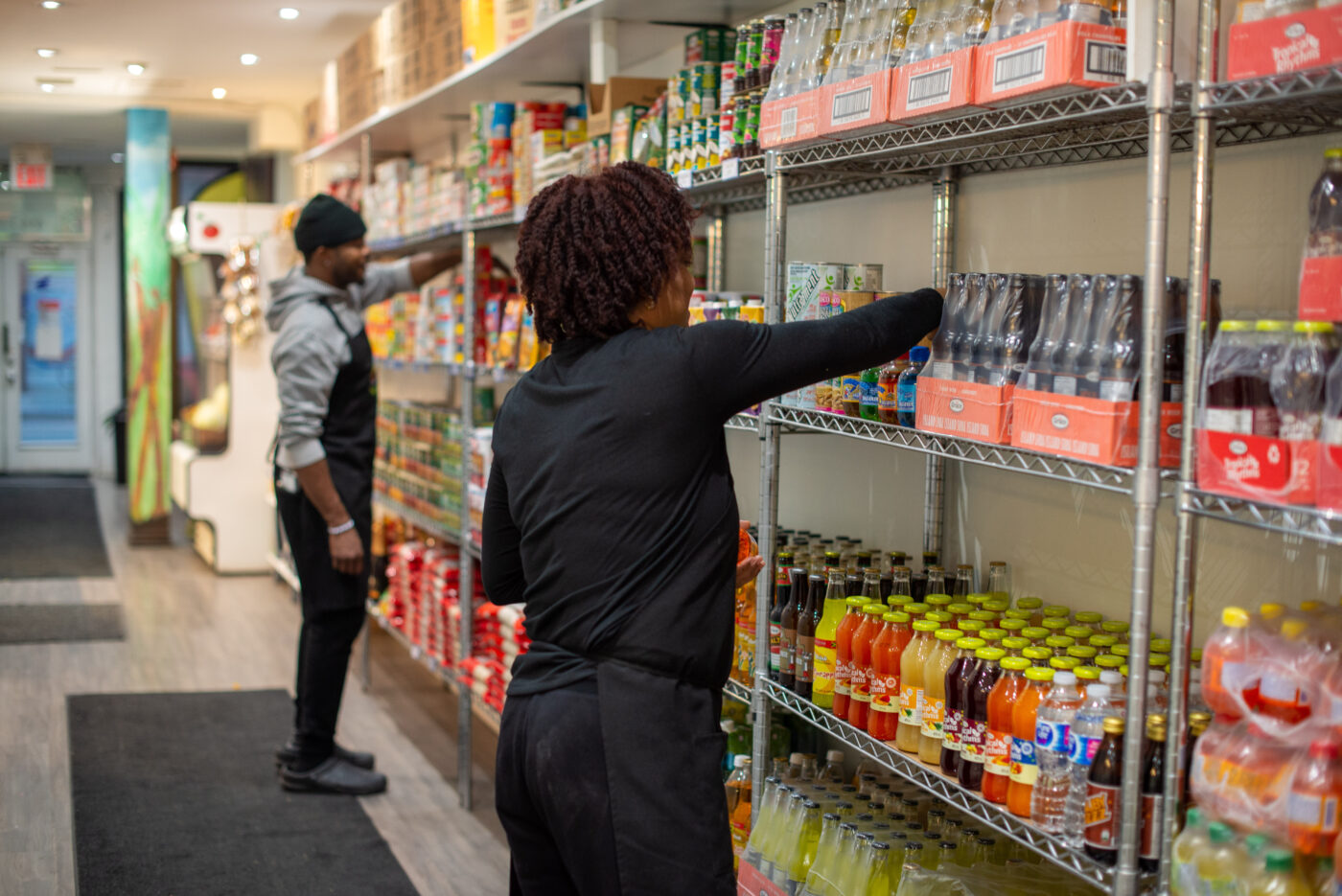
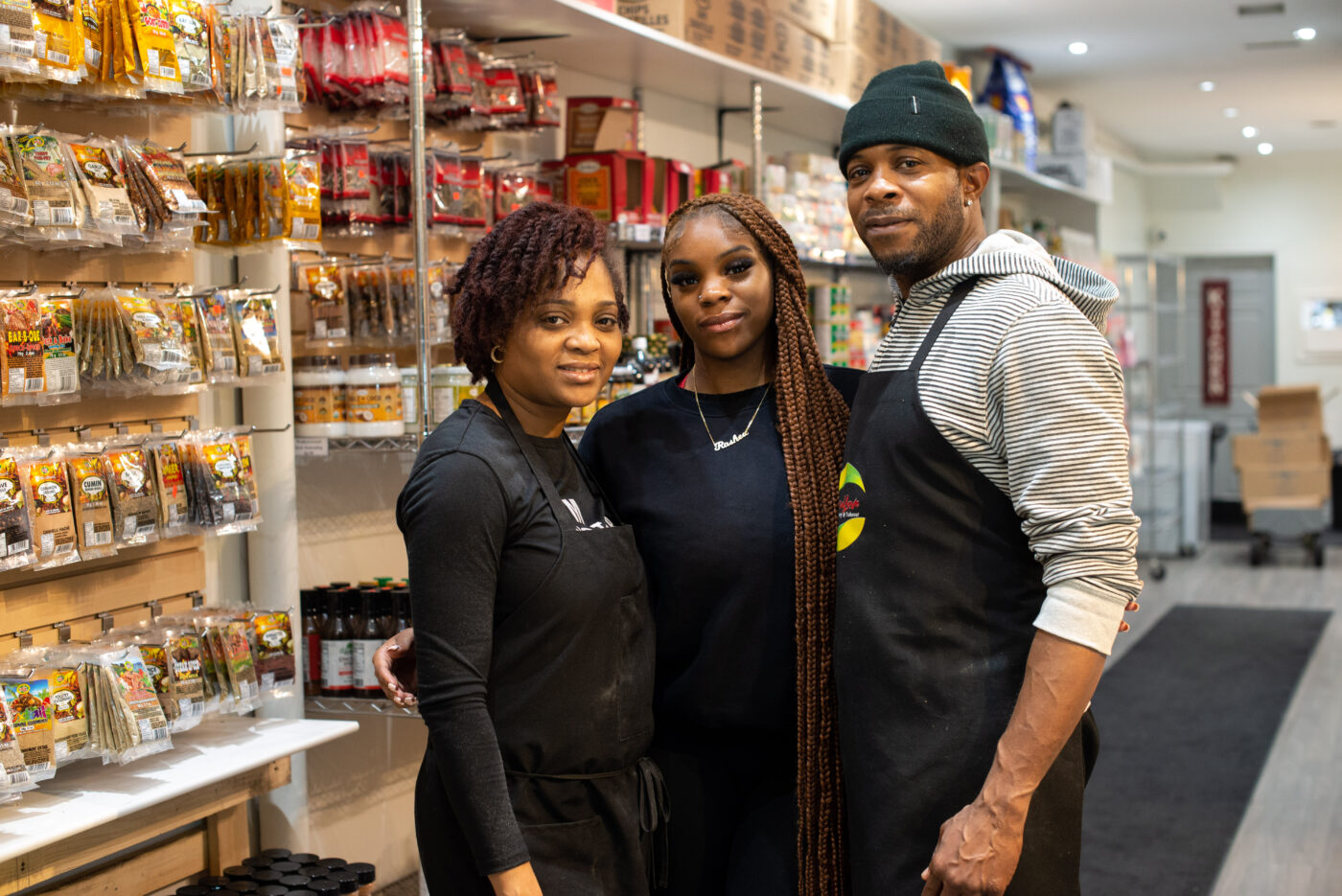
Suzette Saunders (right) and her husband Ricardo Cunningham (left) stock the shelves of their family-owned grocery store, BlessedLove Caribbean Market. They run the store independently with the help of three of their four daughters. 📸: ALOYSIUS WONG/THE GREEN LINE.
Many Torontonians find that they’ve blown beyond their household budget after paying rent and other bills like heating and water, Tarasuk adds. Whether the closest grocer is a minute or an hour away makes little difference when you don’t have enough money. Either way, healthy food remains out of reach for many low-income households.
That said, she says mom-and-pop grocery stores like Riverside’s Blessed Love Caribbean Market are uniquely positioned to provide savings since independent businesses can stock their shelves at a lower cost by purchasing produce more cheaply in smaller quantities at local markets and buying whatever supermarkets overstock at a discount. This allows them to sell their items at lower prices.
MONEY, MONEY, MONEY
Ultimately, though, both Tarasuk and Widener argue that improving access to nutritious food requires putting more money in people’s pockets. This can be achieved by expanding government benefits, or by improving access to quality jobs that pay fair wages. But they say there needs to be collaboration between the federal, provincial and municipal governments to enact the policy changes necessary to make these goals a reality.
University of Toronto nutritional sciences professor Valerie Tarasuk. 📸: UNIVERSITY OF TORONTO WEBSITE.
Tarasuk highlights how benefits, such as Old Age Security (OAS) and the Guaranteed Income Supplement (GIS), have protected seniors from food insecurity and precarity. These programs were associated with a 15 per cent drop in food insecurity for eligible citizens, according to PROOF, a research program led by Tarasuk that studies effective policies to reduce food insecurity in Canada.
“If you’re on welfare…and you turn 65, your income is going to be more than doubled,” she says. “It will be indexed to inflation, which through periods like this one are a very important thing.”
The transition from manufacturing to service jobs in Toronto over the past decade has also worsened the impacts of food insecurity, according to Tarasuk. Service jobs tend to be short-term or part-time, and generally aren’t unionized, forcing many of these workers to live paycheque to paycheque. “[These] people don’t have benefits and they don’t have job security,” she explains.
In addition to increasing the number of jobs, Tarasuk underscores the importance of ensuring that the quality of available employment — in terms of wages and benefits — is as high as possible.
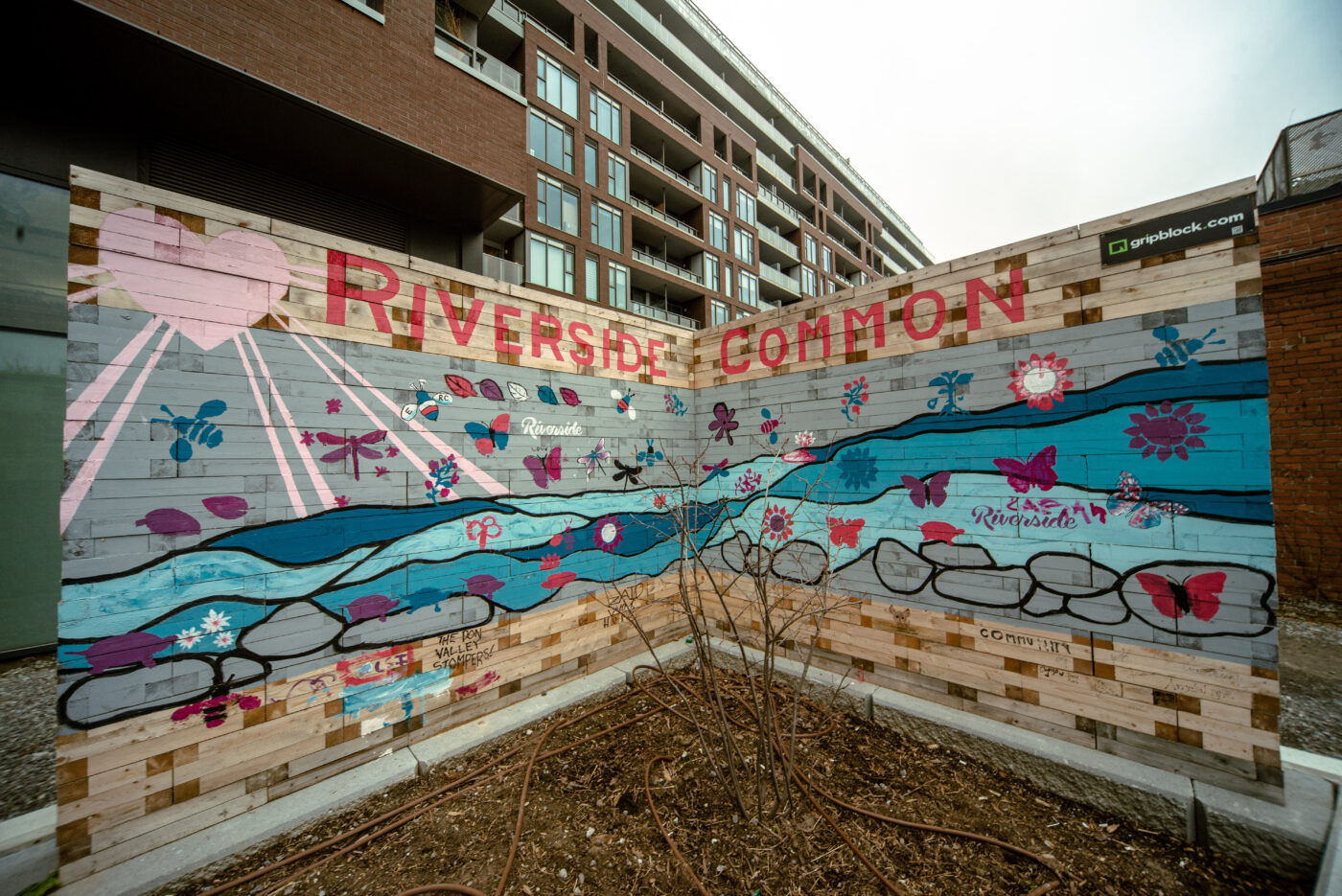
Community art at Riverside Common Park, located at the corner of Queen Street East and Baseball Place. 📸: ALOYSIUS WONG/THE GREEN LINE.
One organization that strives to bolster the neighbourhood economy is the Riverside Business Improvement Area (BIA).
“One of our biggest roles is to direct people the way that a concierge would in a mall, but for a neighbourhood,” executive director Jennifer Lay says, adding that the BIA helped local businesses stay afloat during the pandemic by sharing grant information, and by developing programming that attracted visitors and customers. In 2022, for example, Lay commissioned local artists to create nearly 3,000 square feet of murals in Riverside.
Both Tarasuk and Widener say community programs meant to improve employment opportunities for unemployed Torontonians and low-wage earners can also help tackle food insecurity in Riverside. Woodgreen Community Services, for example, helps youth, newcomers and unhoused Torontonians find meaningful employment and skills training.
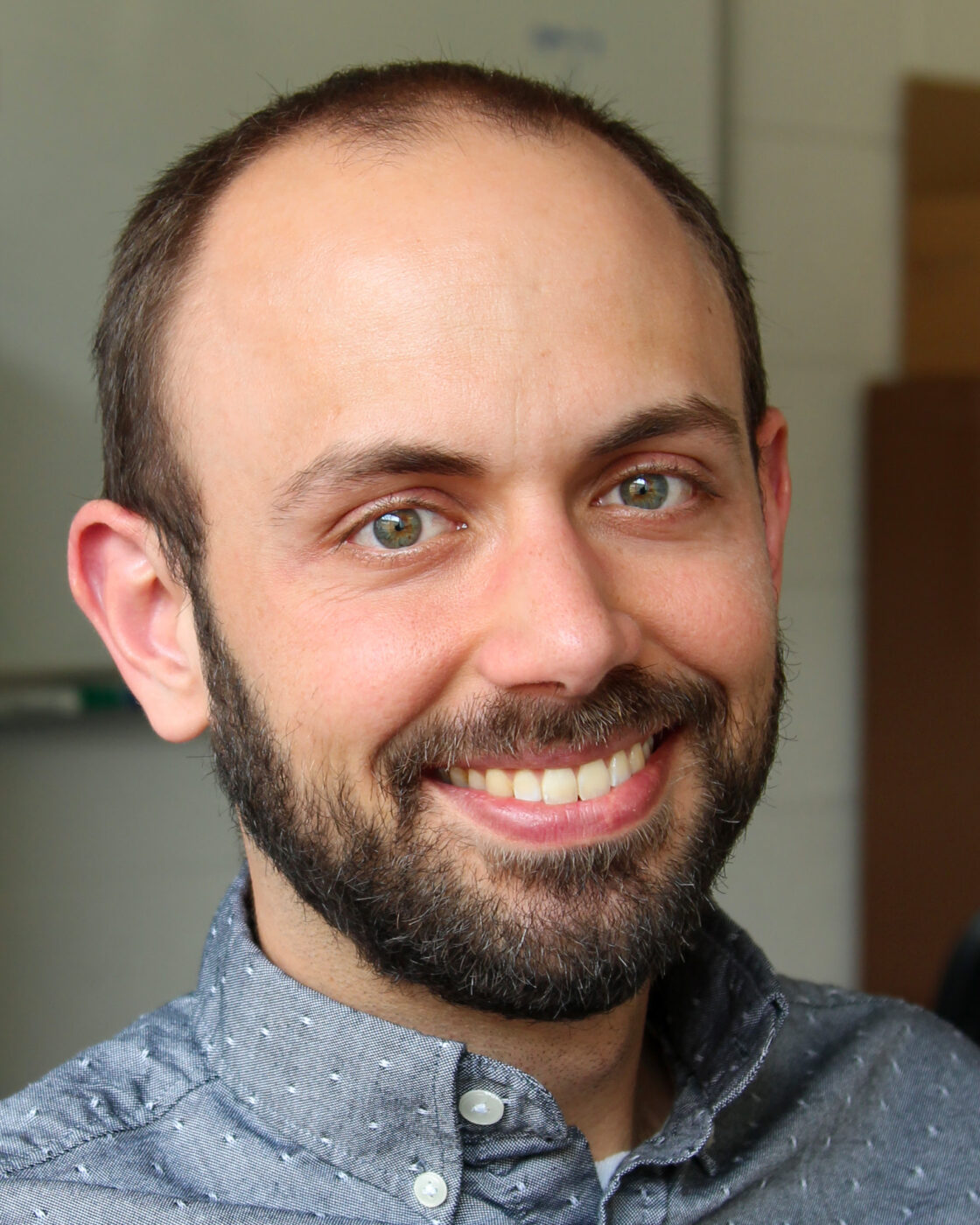
Michael Widener is the director of health studies at the University of Toronto. He's also a professor of geography and epidemiology, as well as the Canada research chair in transportation and health. 📸: Provided by Michael Widener.
Eight per cent of households in South Riverdale, the broader neighbourhood in which Riverside is based, can’t speak English or French. So, Widener, a professor of geography and epidemiology, suggests making these services available in Mandarin and Cantonese — the two most commonly spoken languages besides English in South Riverdale.
Widener also highlighted the gender dynamics behind food preparation, and how this contributes to undue burdens on women. His research found that grocery shopping, preparing meals and other caregiving tasks are disproportionately shouldered by women who often sacrifice their personal well-being when fulfilling these roles. This creates additional stress on women who are already anxious about putting food on the table and making ends meet.
Want to bring your business to Riverside? Find out how by visiting the Riverside BIA website.
HOW Riverside FOOD SUPPLIERS ARE COPING WITH INFLATION AND SUPPLY CHAIN SHORTAGES
Suzette Saunders (left) and Ricardo Cunningham (right) are the married co-owners of BlessedLove Caribbean Grocery and Takeout in Riverside. Rashea (middle) is one of their four daughters who helps out at the store. 📸: ALOYSIUS WONG/THE GREEN LINE. Local food suppliers in Riverside are finding innovative ways to work around inflated food prices and supply chain shortages that have plagued independent businesses since the beginning of the COVID-19 pandemic nearly three years ago.
Canada’s high inflation is being “driven by high demand for goods and services coupled with growing significant production constraints,” according to the Canadian Federation of Independent Businesses (CFIB)’s research report “Small businesses are feeling the squeeze of inflation.” As a result, small businesses have had to increase their prices to accommodate rising costs and to remain in business during the pandemic. The situation worsened in 2022 due to consecutive interest rate hikes made by the Bank of Canada in an attempt to curb inflation. The CFIB cites an increase in transportation costs and a lack of product availability as the main drivers of inflationary pressures for small businesses.
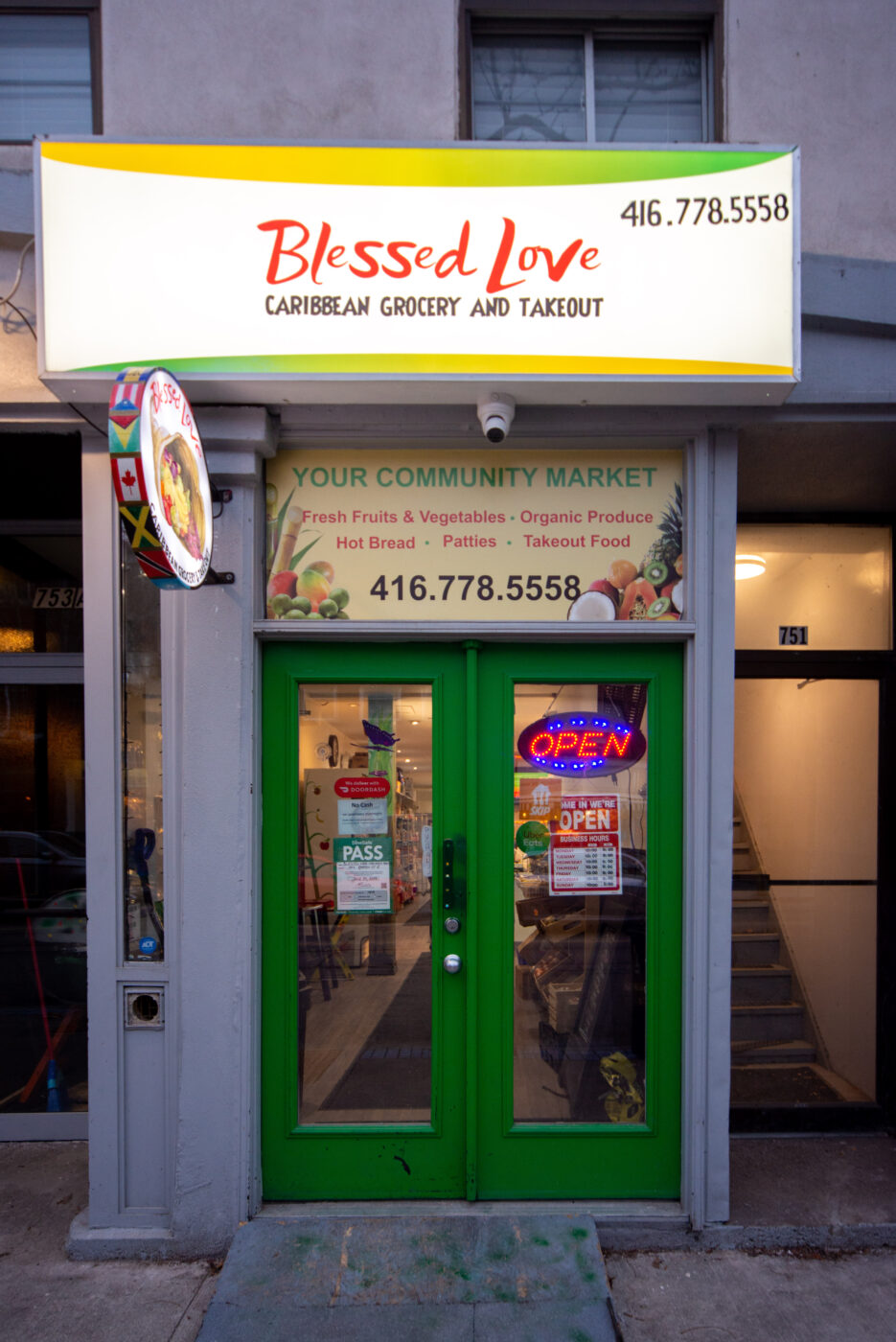
BlessedLove Caribbean Grocery and Takeout's storefront at 753A Queen St. E. 📸: ALOYSIUS WONG/THE GREEN LINE.
BlessedLove Caribbean Grocery and Takeout is an independent Riverside business that opened in June 2022. Operating from a little storefront on 753A Queen St. E., BlessedLove’s shelves are stocked with bottled curry sauces and marinades, spices, herbs as well as fresh produce like sugarcane. As part of their takeout menu, BlessedLove offers traditional Caribbean meals such as jerk chicken, oxtail, callaloo, and ackee and saltfish.
Ricardo Cunningham, who co-owns the store with his wife, Suzette Saunders, says they’ve struggled to get their business off the ground. “We have to find different ways [for] how to combat inflation, high prices…because it’s hard to pass that price on to our customers. A lot of customers don’t have money to spend as [they] did prior to the pandemic,” he explains.
In order to work around inflation and supply chain shortages, Cunningham buys products in bulk from different suppliers. For example, he’s able to sell water for $1 per bottle because he’s buying more in bulk, which helps keep the price point down — an approach the grocery store is taking with all of its products.
But Cunningham says supply chain shortages have also posed challenges to buying in bulk because many of the products sold at BlessedLove are imported. So, the suppliers he frequents have less stock than usual. “I’m able to actually navigate [supply chain issues] by going through different suppliers, and just pick up a bare minimum of some of the stuff that I really need until I get my full shipment,” he explains.
“We’re just trying to keep the prices for hot meals at a very minimal [cost] where we’re not going to lose, but at the same time the customers are happy. But it’s tough.”
Ricardo Cunningham, Co-Owner, BlessedLove Caribbean Grocery and Takeout
To further support locals looking for cheap eats, BlessedLove offers meal bundles for $5 each as part of their popular takeout menu.
“During these times, it’s tough for people right? So we started creating bundles for the kids…a patty, a coco bread and a drink for $5,” Cunningham says. “We’re just trying to keep the prices for hot meals at a very minimal [cost] where we’re not going to lose, but at the same time the customers are happy. But it’s tough. I’m hoping that [inflation] will end soon.”
In comparison, at the McDonald’s closest to Riverside in Gerrard Square Shopping Centre, the most affordable “happy meal” options cost $5.29 plus tax, while the cheapest “burger meal” for adults — a double cheeseburger, medium fries and Coke — costs $8.69 plus tax.
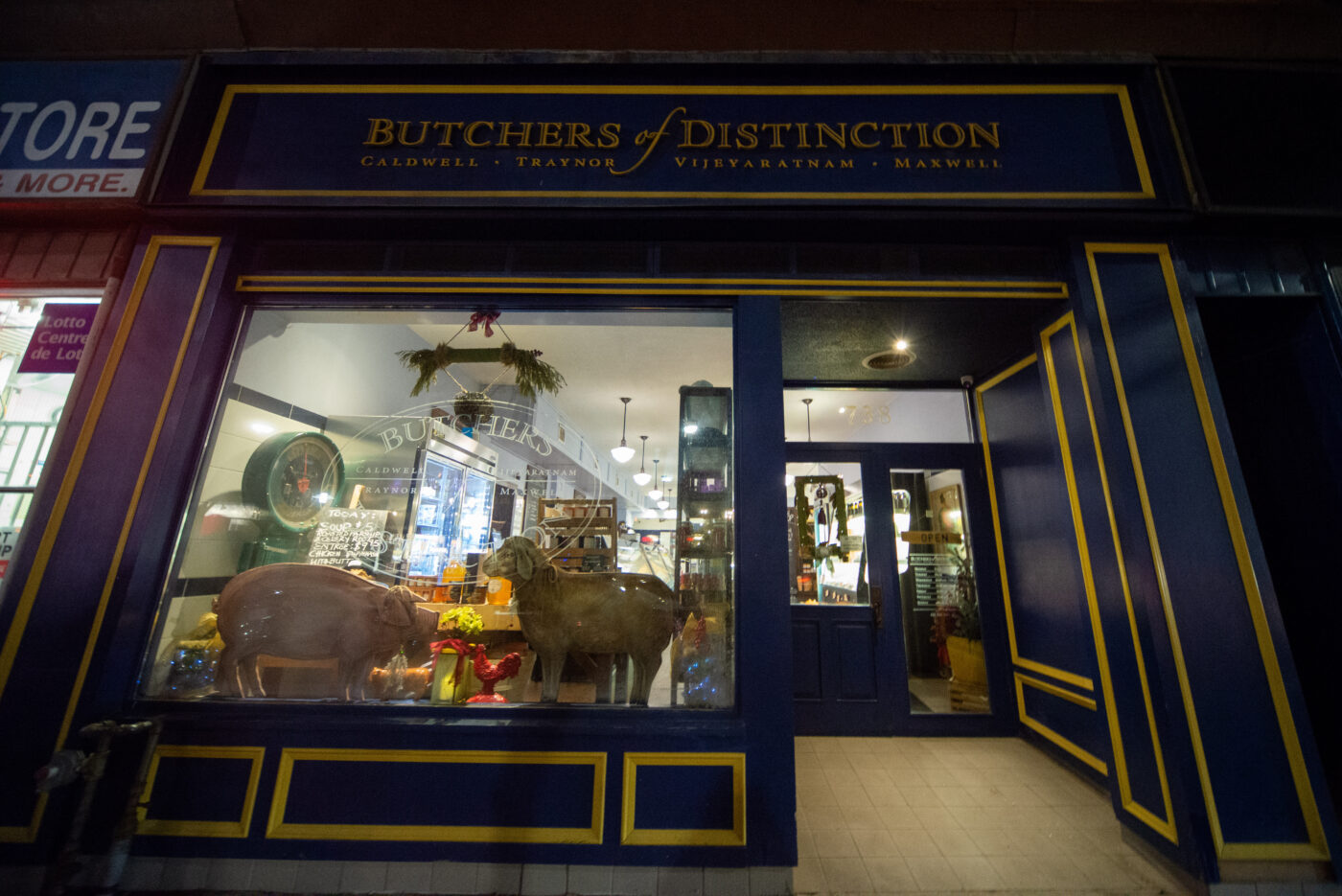
Butchers of Distinction's storefront at 738 Queen St. E. 📸: ALOYSIUS WONG/THE GREEN LINE.
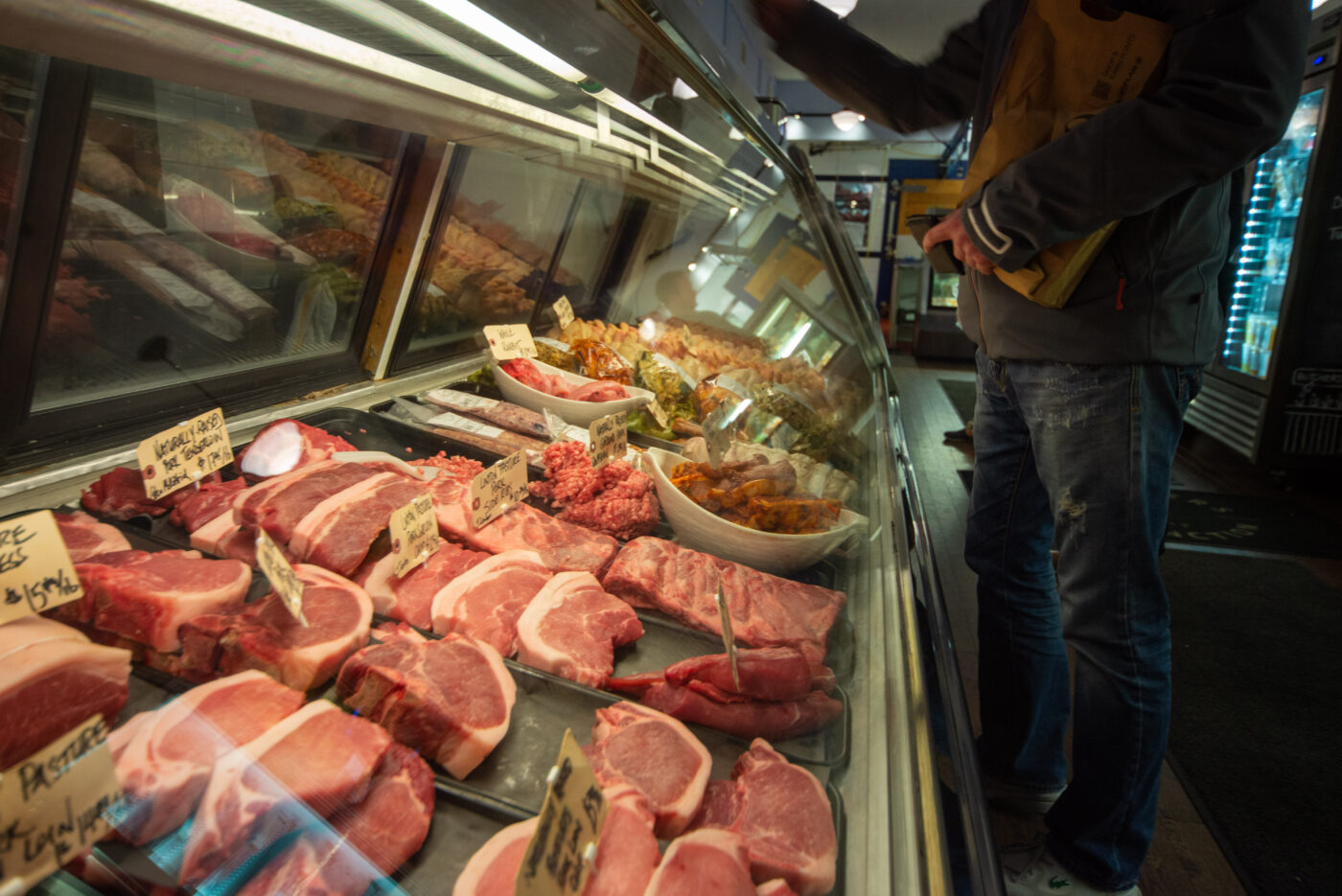
Right across the street from BlessedLove, Butchers of Distinction at 738 Queen St. E. is a meat specialty shop that sells produce such as beef, pork, chicken and lamb sourced from Ontario farms. Head butcher Steven Pierce says prices have gone up about 50 to 150 per cent since the pandemic began.
To cut down costs, Pierce buys whole animals or sections of whole animals from local farms rather than individual cuts of meat, so they quantify price by the pound. “When you’re talking about even a raise of 75 to 80 cents per pound, over the grand scheme of things, it’s a lot of money for us,” he explains.
In order to work around inflation, Pierce says Butchers of Distinction had to get creative with their product offerings. For example, the shop makes all of their sausages in-house, which helps minimize costs because it doesn’t have to outsource from other suppliers.
Butchers of Distinction offers a selection of produce, including beef, pork, chicken and lamb sourced from Ontario farms. 📸: ALOYSIUS WONG/THE GREEN LINE.
He and his team also had to figure out how to use secondary cuts of meat, like flank steak, that often don’t contribute as much to recuperating costs as larger cuts like the tenderloin or ribeye do. One way Butchers of Distinction has been doing this is through their “value added” products such as dry-aged burgers and meatballs, which Pierce explains help to both increase the amount of meat yielded from the animal and to “maximize return on less popular cuts of meat.”
The “value added” products at Butchers of Distinction have been an “increasingly important (and popular) section of our business,” Pierce added in an email response.
The butcher shop has been largely able to avoid supply chain issues because most of their produce is from local farms. “When we go directly to the farmer, we can control exactly what we get when we get it, but we can also control what feed the animal gets, what quality,” Pierce says.
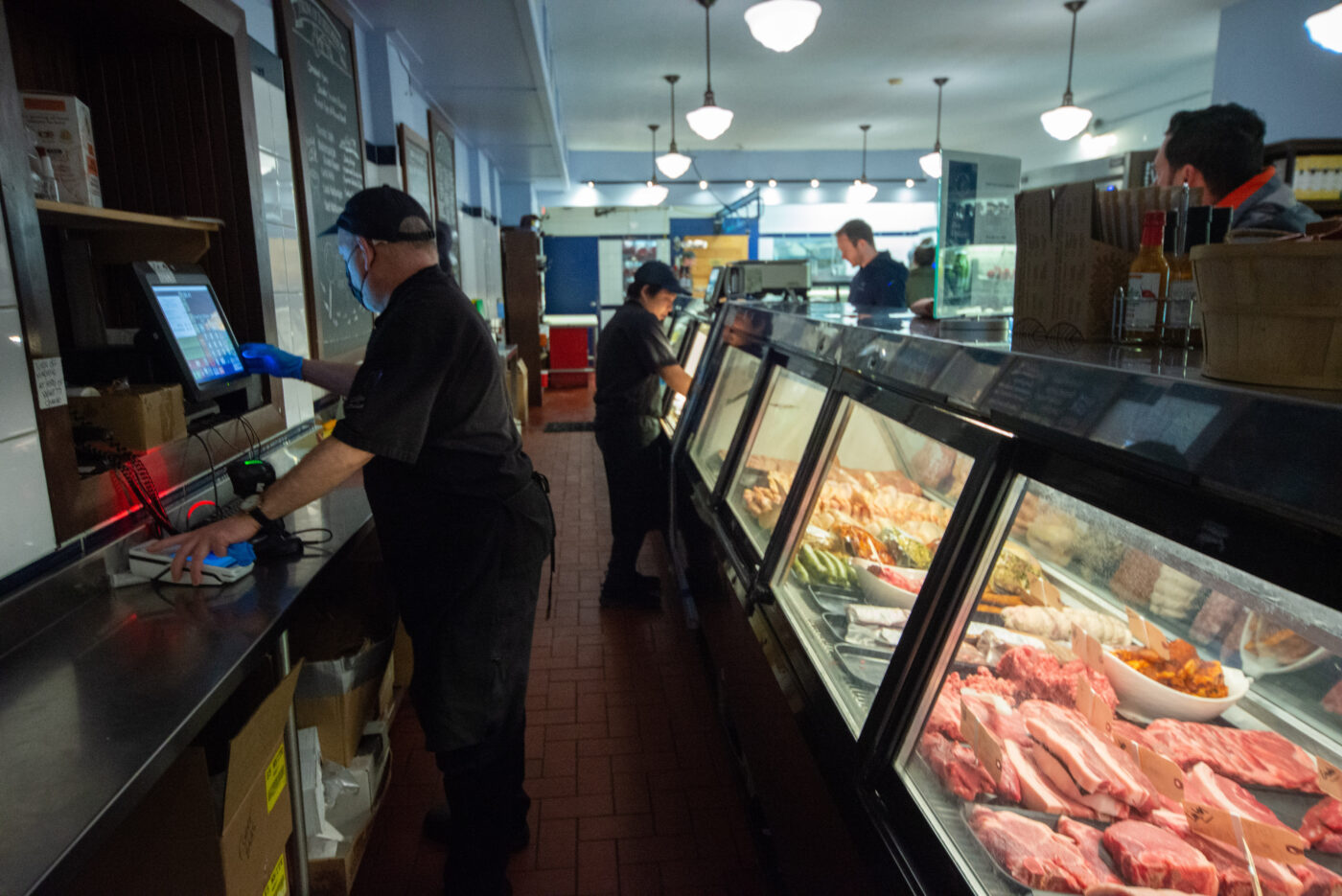
Butchers of Distinction staff serving customers. 📸: ALOYSIUS WONG/THE GREEN LINE.
Both Butchers of Distinction and BlessedLove say they’re trying their best to stay afloat while still doing right by their customers.
“We’re not going to quit. We’re not in business to quit. Quitters don’t win and winners never quit,” Cunningham says. “So we’ll do our best to keep fighting it and hopefully, you know, things get better in terms of finance.”
Want to visit and buy from food suppliers in Riverside? Check out the link, below.
Lettuce Ain't Cheap and Neither Are Wraparound Services at Riverside Food Banks
Riverside food banks are uniquely positioned to provide additional or “wraparound” services like addictions counselling and primary healthcare because they directly interact with the neighbourhood’s most vulnerable residents.
But frontline workers say they don’t have the resources to adequately deliver these services.
“Food banks were created to be a temporary solution, not a permanent one,” says Diane Dyson, interim vice-president of research and advocacy for the Daily Bread Food Bank. She adds that the charity was established in 1984 to serve the growing number of Canadians struggling to access food due to the economic recession in the early ‘80s.
But while food banks seem like they’d be an ideal place for many Riverside residents to get other types of support, they’re not well-equipped to handle the added burden, according to Dyson.
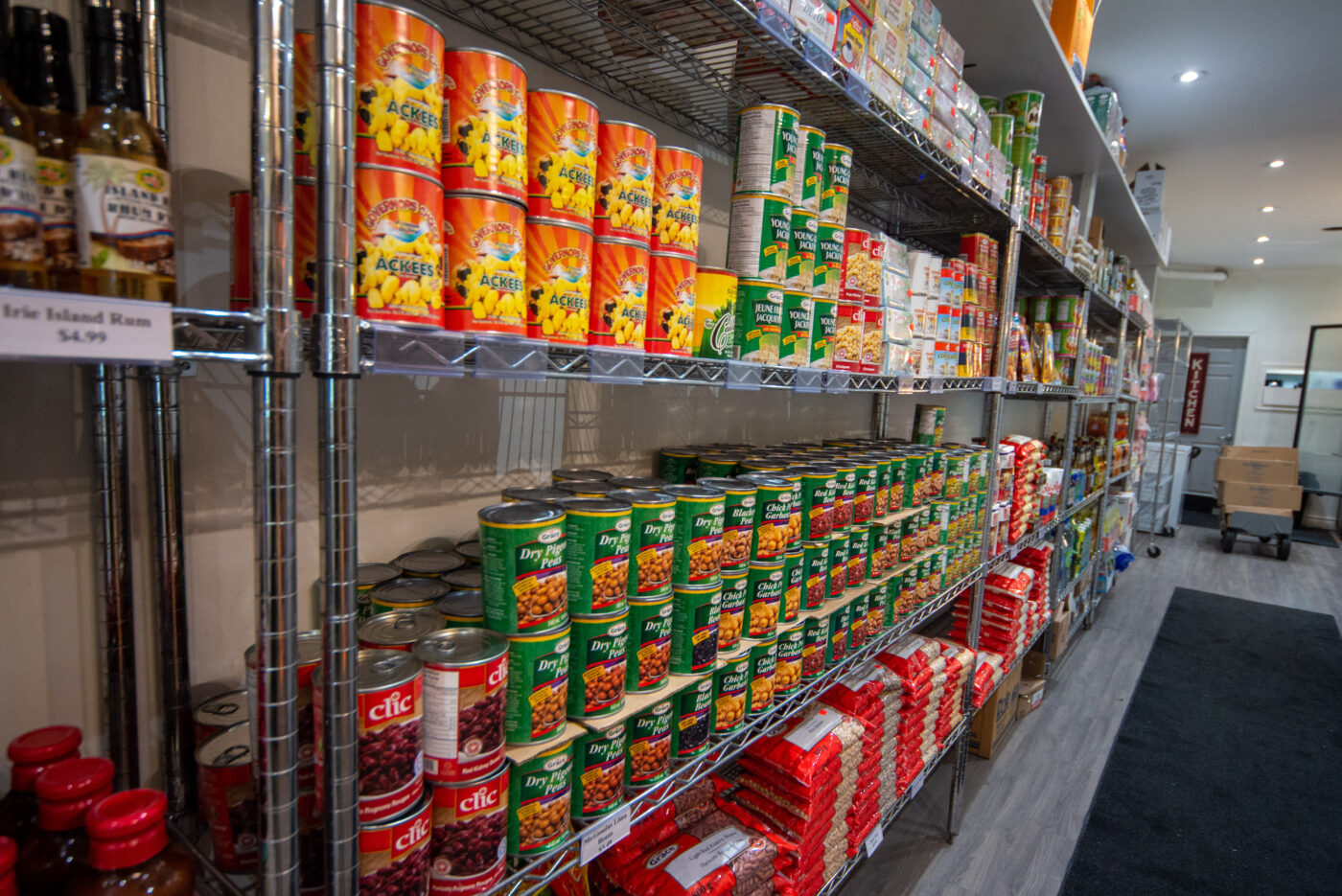
Canned goods for sale at BlessedLove Caribbean Grocery and Takeout. 📸: ALOYSIUS WONG/THE GREEN LINE
The Daily Bread Food Bank’s 2022 “Who’s Hungry Report” says people struggling with food insecurity can experience a “downward spiral” that leads to a lack of nutrition and chronic disease, then eventually large medical bills and inadequate income. Prolonged food insecurity can also negatively impact mental health. Seventy-one per cent of survey respondents to the report said they “sometimes or always” felt depressed.
“Once you’re having problems with food, then you might be having problems with rent — you’re going to be having problems in other ways,” says Toronto-Danforth city councillor Paula Fletcher, who wants Riverside food banks to expand the number of services they provide.
TOO MUCH ON
THEIR PLATE
Not only has food insecurity increased since the 1980s, it’s gotten much worse over the past few years since the COVID-19 pandemic hit Toronto.
“People are getting squeezed harder and harder every month,” says Peter Tabuns, the MPP for Toronto-Danforth and interim leader of the Ontario NDP. “Over the last two years, the demand for food bank services has gone up dramatically. Until action is taken by the government that’s really substantial, this problem is not going to go away.
“It’s not going to be solved, and will result in a lot of misery.”
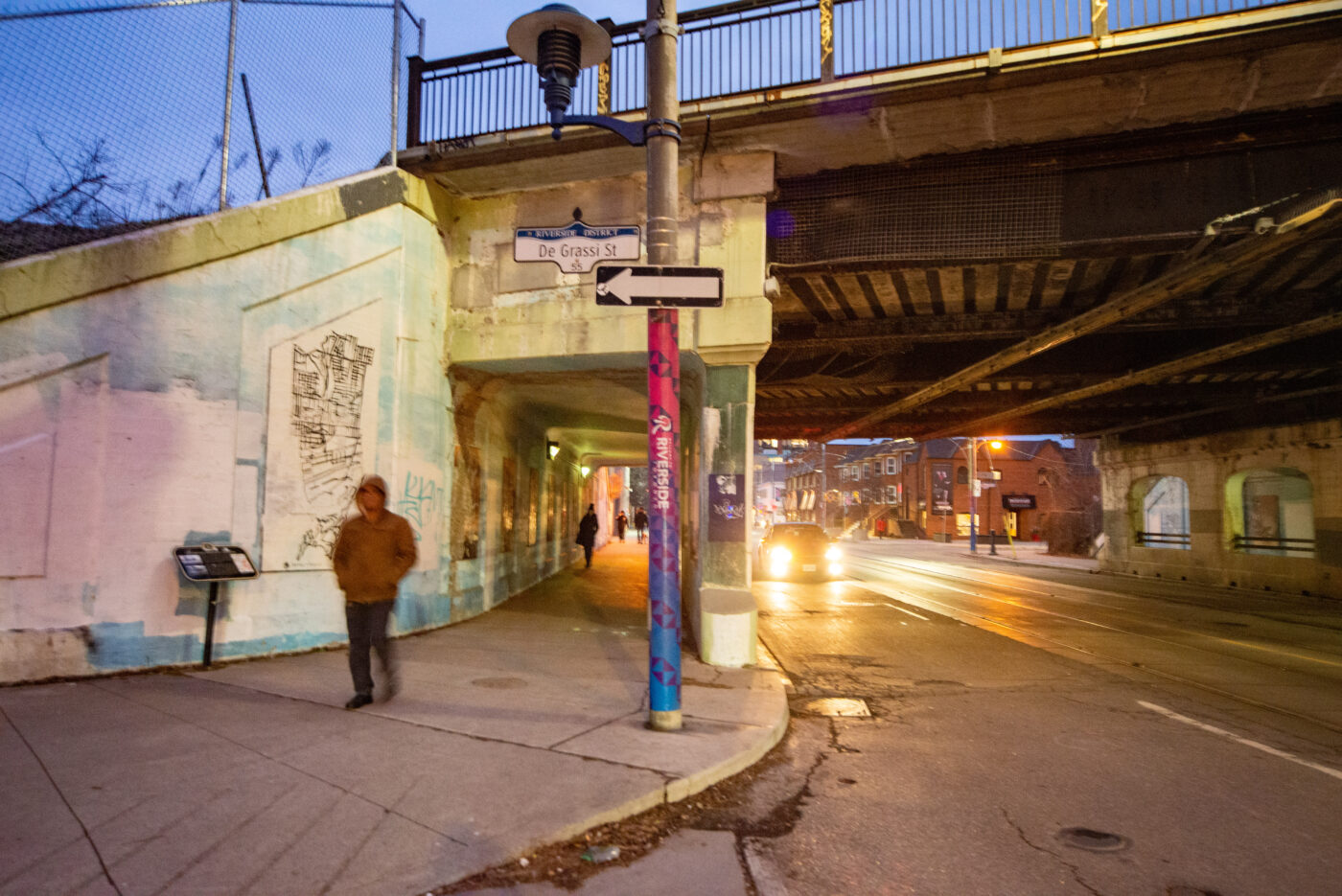
Locals cross through the railway underpass at De Grassi Street and Queen Street East. 📸: ALOYSIUS WONG/THE GREEN LINE.
Despite being one of Canada’s largest food banks, the Daily Bread Food Bank doesn’t receive government funding. Instead, it’s mostly supported by volunteer labour, and is entirely financed through charitable donations, Dyson explains.
Wraparound services are now available at some Daily Bread Food Bank locations, she adds. But its Riverside operation, which is hosted in the basement of St. Ann’s Parish at the intersection of Gerrard Street East and De Grassi Street, doesn’t.
“One of the stress points that’s happening right now is that almost all [food banks] are on volunteer power. And volunteers, especially a few years into this pandemic, are really tired because they are now serving often two or three times the number [of meals] that they used to pre-pandemic,” Dyson says, adding that volunteers are already overworked.
CAN’T HEAL HUNGRY
Toronto Public Health addresses food insecurity in Riverside through the South Riverdale Community Health Centre (SRCHC).
But Rhiannon Thomas, program coordinator of the centre’s Counterfeit Harm Reduction Program, says it doesn’t have enough financial support to do so effectively.
“We always try to provide food because most of the people that are coming to our doors are food-insecure,” explains Thomas. “People can’t come and get health education and talk about their health if they can’t focus because they’re hungry.”
She adds that SRCHC provides social workers, harm reduction services, primary healthcare and educational programs for managing chronic illnesses such as diabetes. These are the kinds of wraparound services Fletcher says she hopes to introduce at food banks in her ward.
But ultimately, Thomas says, establishing a dedicated food bank or adding more wraparound services at SRCHC — while necessary to address the needs of Riverside’s most vulnerable community members — isn’t feasible.
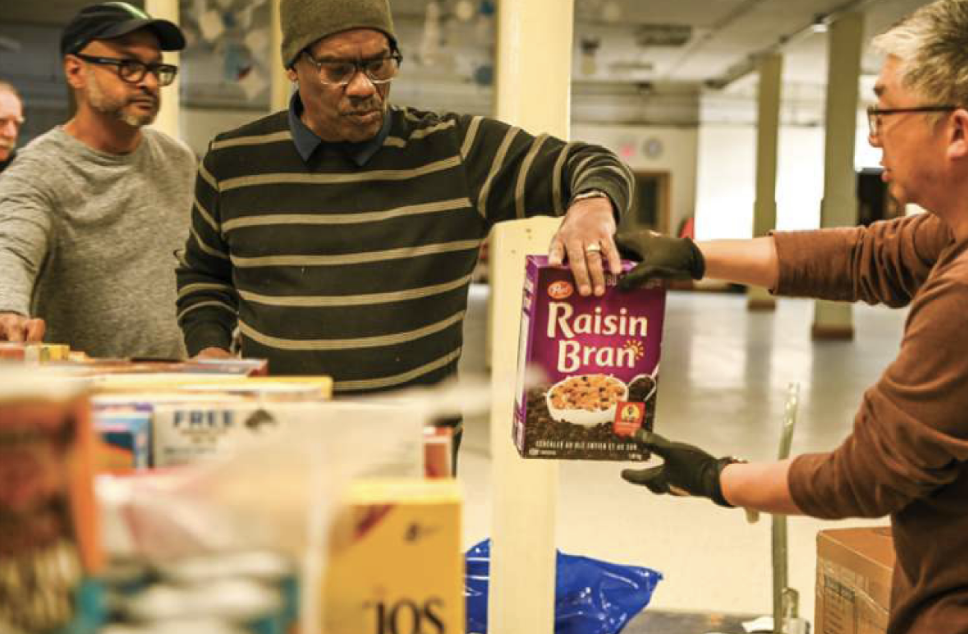
Volunteers sort food donations at St. Ann's Parish in the neighbourhood of East Chinatown, which is next to Riverside. 📸: St. Ann's Parish website
Thomas notes that she and her colleagues have been pushing for more funding for 20 years without action from elected officials; but they’re still expected to provide more services without additional resources.
“We are losing people to poverty-related illness and not having access to healthcare, especially preventative healthcare,” she explains. “The same things that we’ve been advocating for — for years — are things that we’re continuing to have to advocate for. Sometimes you hear about new government funding, but it is such a small amount compared to what we need.
“It often feels like you are banging your head against a wall, and then just watching people be poor, be hungry, be houseless.”
Want to volunteer at or donate to the South Riverdale Community Health Centre? Click the link, below, to provide support.
Rowing Upstream: Building on today's momentum to tackle food insecurity in Riverside
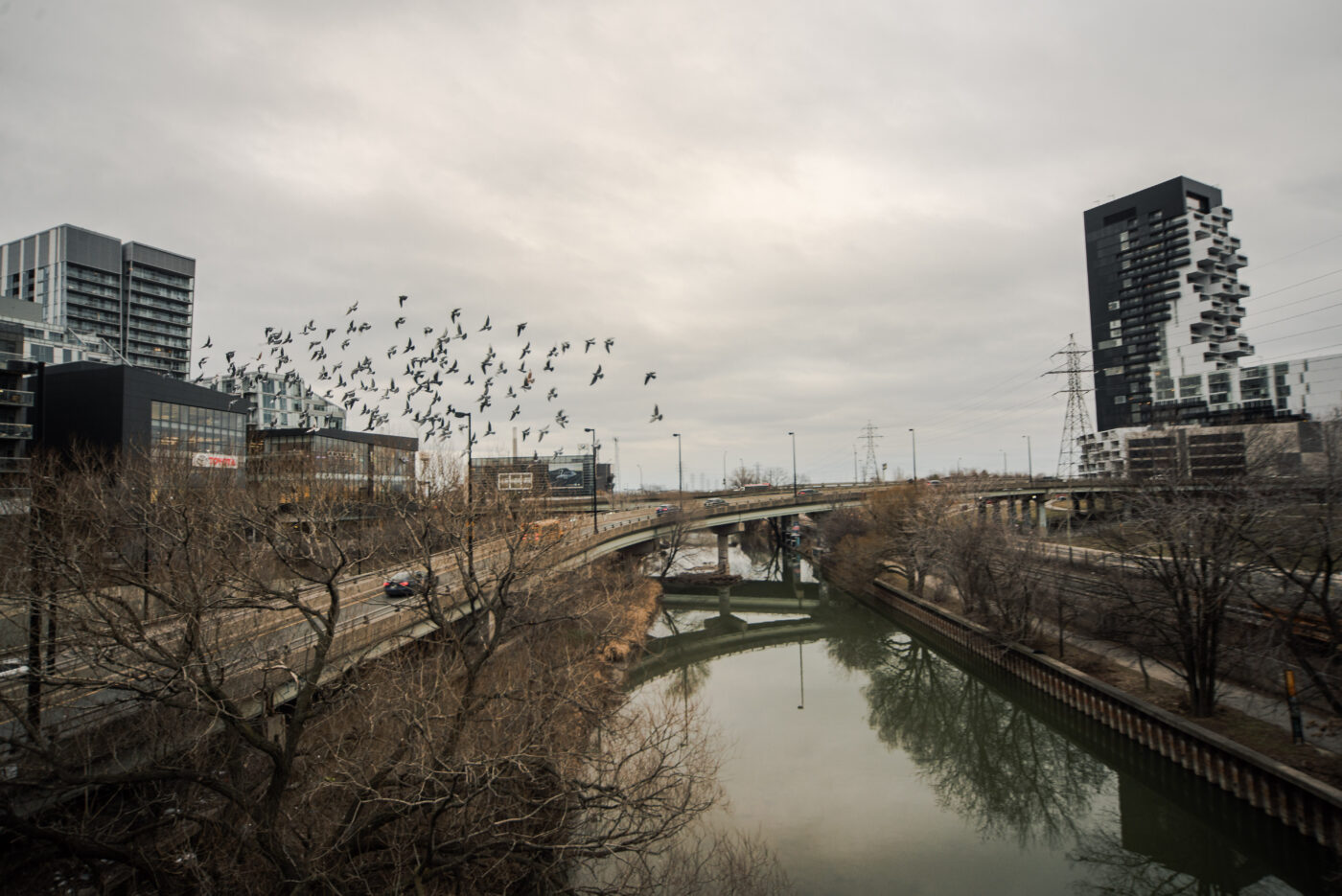
The Don River as seen from the 'Time and A Clock bridge,' located at the border of Riverside on Queen Street East. 📸: ALOYSIUS WONG/THE GREEN LINE.
Food insecurity in Riverside is a problem that can be easily overlooked by those unfamiliar with the neighbourhood and its residents.
Situated in the broader neighbourhood of South Riverdale, data suggests that the average income of local residents is actually higher than the city-wide average.
But a closer look reveals a deeper divide. Income inequality in Riverside is more pronounced than in the rest of Toronto. There are also more residents in this neighbourhood compared to the rest of the city who don’t speak either of Canada’s official languages, English or French, and therefore struggle to access key services.
What’s more, seniors in South Riverdale disproportionately experience poverty, with 30 per cent of residents 65 and over considered low-income — nearly double the city-wide average of 18 per cent. Programs like Fontbonne Ministries’ Mustard Seed do their best to keep this “forgotten population” afloat while also addressing other issues seniors face, including housing insecurity and loneliness.
At the corner of Munro Street and Queen Street East, a sports mural pays "tribute to the longstanding history of sport" in Riverside. 📸: ALOYSIUS WONG/THE GREEN LINE.
There’s much more work to be done, and many of these community leaders stressed that the short-term solutions currently in place can’t last forever. They say long-term systemic change in both Riverside and other Toronto neighbourhoods requires government policy that addresses the root causes of food insecurity.
These families will need help to survive and thrive in our city — from elected officials and community leaders, yes, but also from local businesses and fellow residents. Every one of us. Because at the end of the day, there should only be one side of Riverside: a Riverside that’s liveable for everyone.
Here’s your chance to support the only independent, hyperlocal news outlet dedicated to serving gen Zs, millennials and other underserved communities in Toronto. Donate now to supportThe Green Line.
A community event and marketplace hosted by The Green Line and the Riverside BIA.
About the Event
Wednesday
Feb. 1, 2023
6 p.m. to 9 p.m. ET
Ralph Thornton Community Centre765 Queen St. E.
RSVP HERE
Find the perfect gift, dance to live music and experience Riverside, an east-end gem in downtown Toronto. You’ll also get to discuss community action on food insecurity in the neighbourhood, and help brainstorm local solutions. With the support of the City of Toronto (Main Street Innovation Fund), the Federal Economic Development Agency for Southern Ontario and the Riverside BIA, The Green Line is hosting a marketplace event featuring 20 local vendors, live music and community conversations about food insecurity in Riverside. RSVP now for our in-person event.
Events are an essential part of our Action Journey. We want to empower Torontonians to take action on the issues they learn about in The Green Line — so what better way to do that than by bringing people together? From community members to industry leaders, anyone in Toronto who’s invested in discussing and solving the problems explored in our features is invited to attend. All ages are welcome unless otherwise indicated. Our only guidelines? Be present. Listen. Be kind and courteous. Respect everyone’s privacy. Hate speech and bullying are absolutely not tolerated. At the end of the day, if you had fun and feel inspired after our events, then The Green Line team will have accomplished what we set out to do. Any questions?Contact Us.
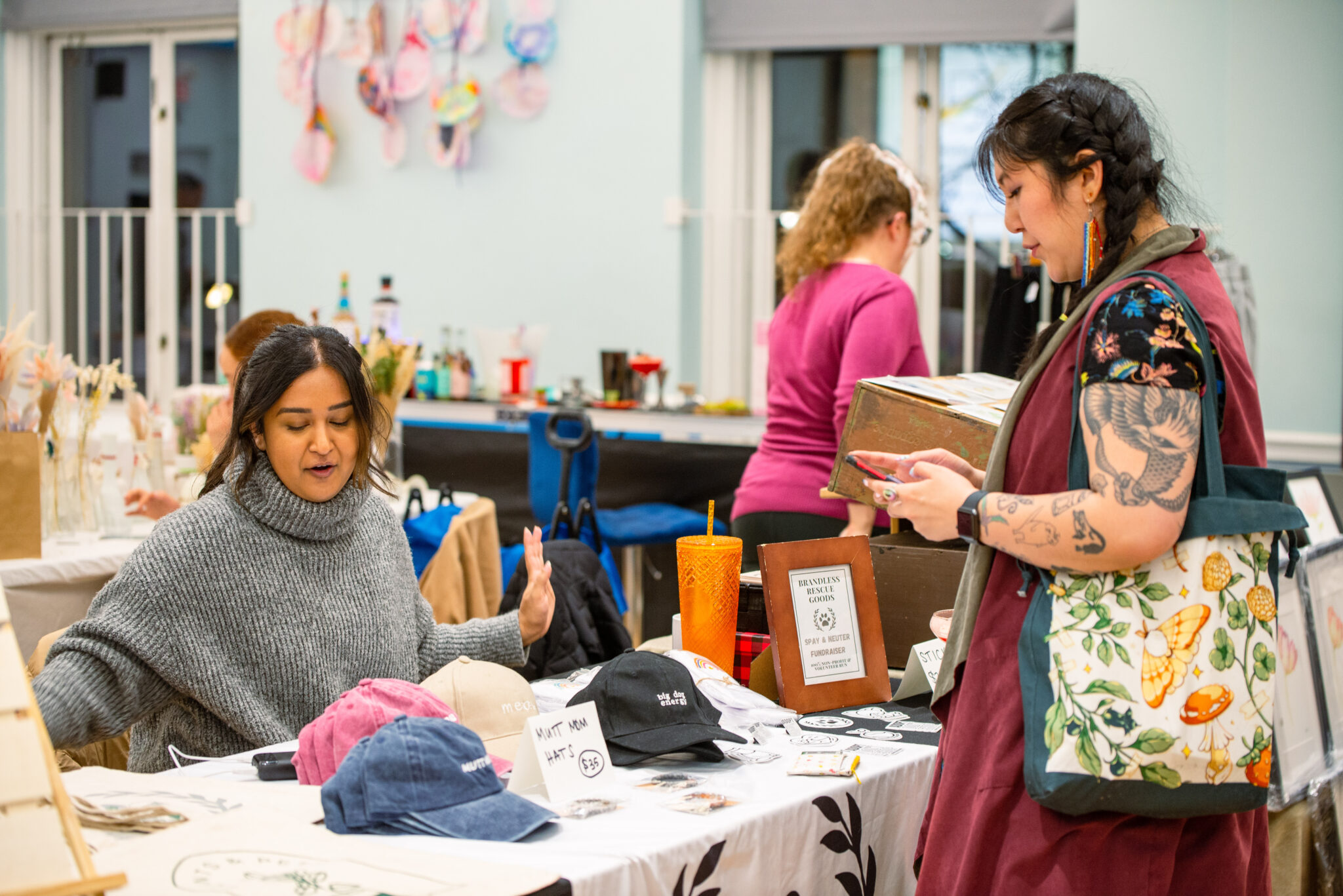
Tarika Auckbaraullee of Brandless Rescue Goods describes her merchandise to customer Erin Kang at our Riverside Winter Marketplace.📸 ALOYSIUS WONG/THE GREEN LINE
Event Overview
See what you missed
from our latest event.
Our community members brainstormed solutions for tackling food insecurity in Riverside.
Compiled by Alex Treadaway.
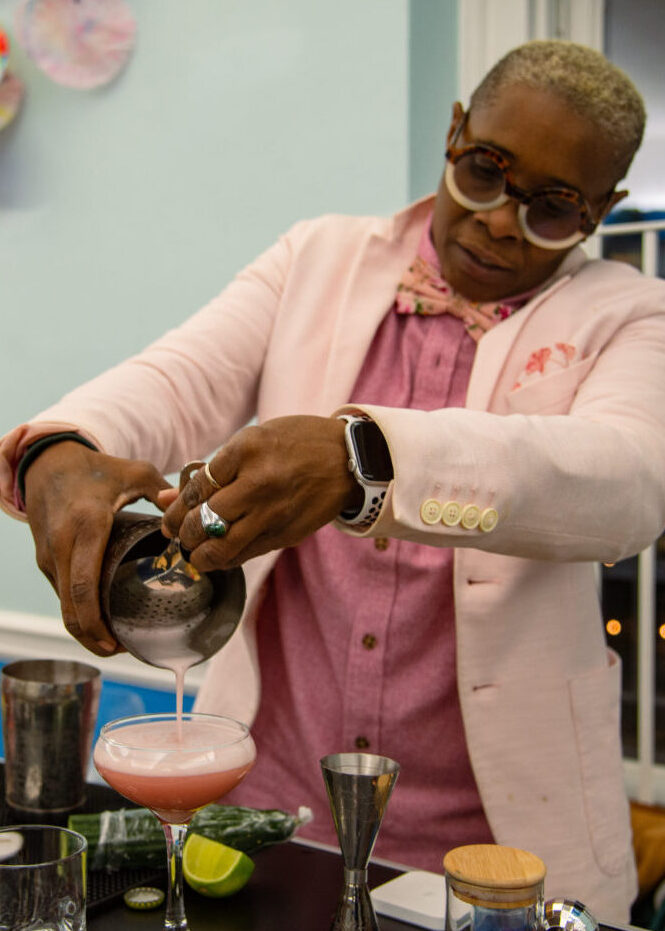
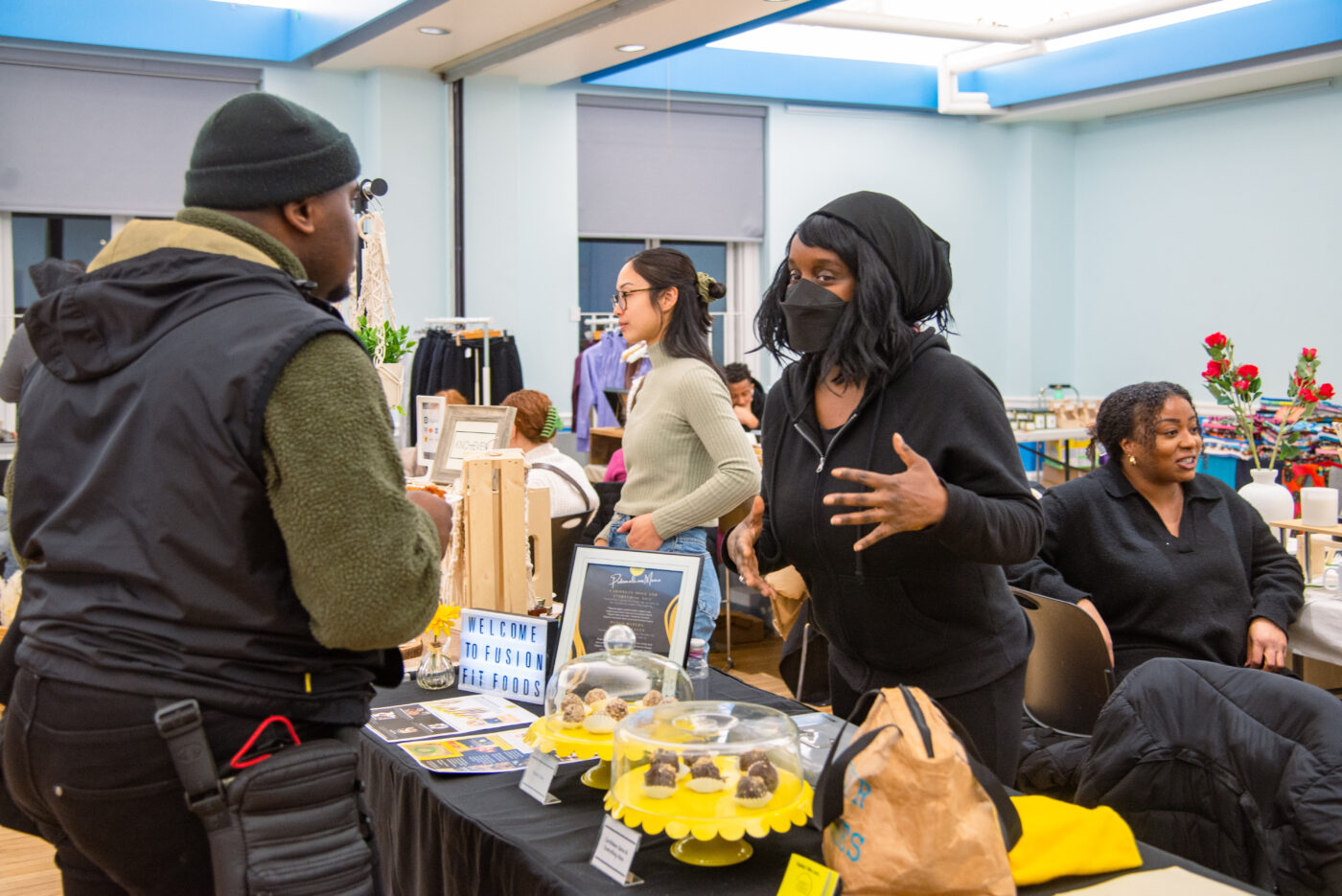
Mighloe performs at our Riverside Winter Marketplace event. 📸: ALOYSIUS WONG/THE GREEN LINEGail Lynch of ZERO DRY Cocktail Bar prepares a non-alcoholic cocktail at our Riverside Winter Marketplace. 📸: ALOYSIUS WONG/THE GREEN LINEA local vendor interacts with a customer at our Riverside Winter Marketplace. 📸: ALOYSIUS WONG/THE GREEN LINE
SOLUTIONS
Discreet food programs
Event attendee and neighbouring Leslieville resident Nicole Giradin suggests that residents centralize resources in the heart of the Riverside by setting up food drop-off points and community fridges. This, Giradin says, would give anyone in need round-the-clock access to food without stigma.
Community gardens and cooking groups
To ensure healthy food is widely available and affordable, event attendee Christine Martin emphasizes the importance of community gardens and cooking groups. Although she encourages Torontonians to grow and cook their own produce, Martin says mutual-aid options like community gardens and cooking groups are especially helpful for those who can’t afford to take transit or drive to buy their groceries.
Pay-what-you-can and discounted groceries
Local business owner Penelope Kwong suggests that pay-what-you-can and discounted food options — often offered by grocery stores and restaurants via social media — would help Torontonians find a diverse range of food items at affordable prices.
ACTIONS
Do something about the problems that
impact you and your communities.
Host aCommunity Fridge
Community Fridges Toronto is a mutual-aid initiative that helps build, maintain and support community fridges across the city to improve equitable access to food. Host a community fridge in your neighbourhood, or donate to another community fridge.
Visit local pay-what-you-can, community-led food programs, such as Moss Park Market at 260 Queen St. E., a year-round produce market that’s a 15- to 20-minute walk away from the heart of Riverside.
Apps like Too Good to Go offer a variety of discounted food options that are sold by local restaurants, grocery stores and businesses at a third of the original price. Not only does this reduce food waste, it’ll also help you buy the groceries you need within your budget.
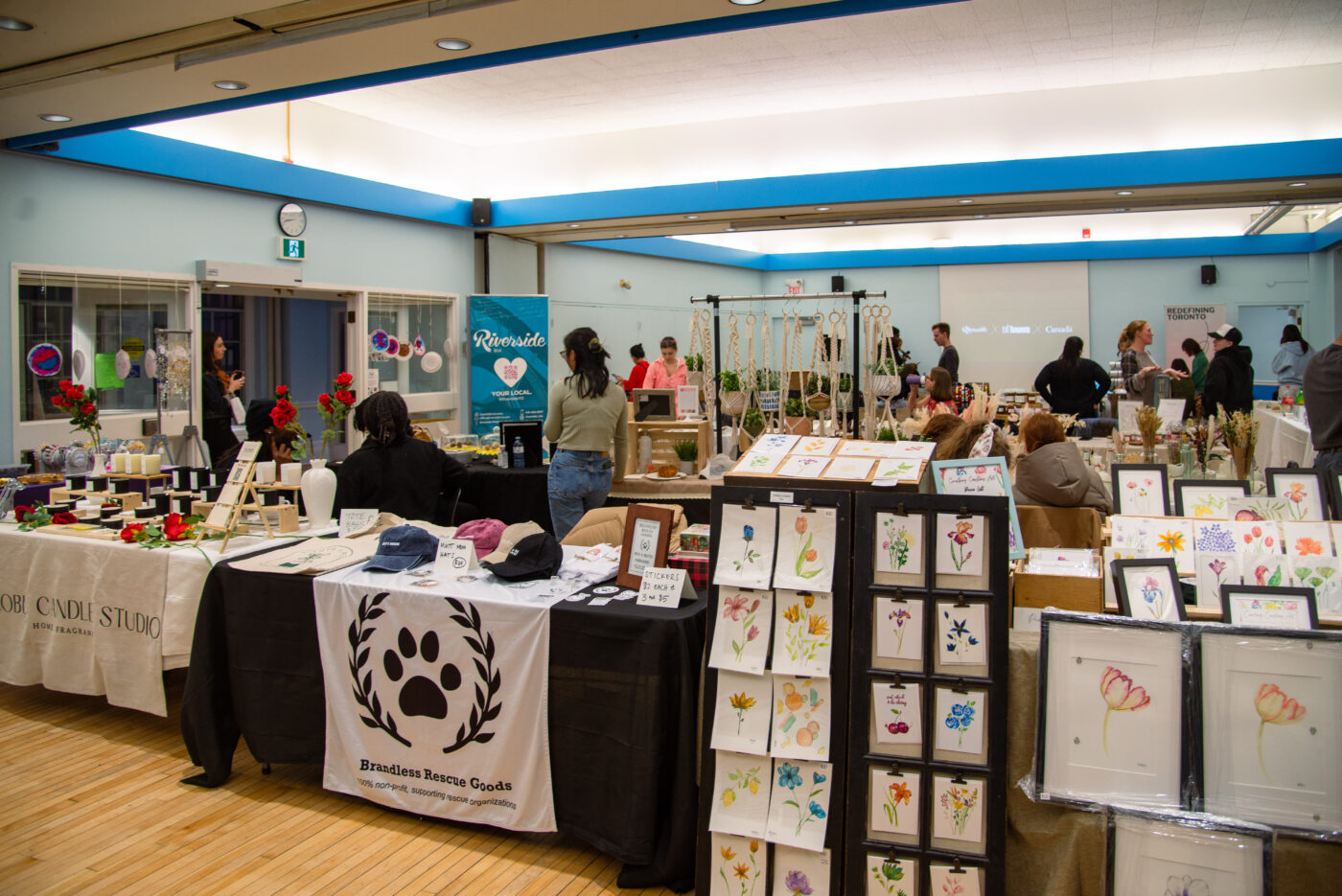
Local residents check out vendors at our Riverside Winter Marketplace. 📸: ALOYSIUS WONG/THE GREEN LINE Supporting The Green Line means supporting Toronto. Join our membership program today, so you can redefine our city as you see it.
The Green Line uses cookies so the site works, to remember your reading progress, and (with your consent) to understand which stories resonate. You can accept all, reject everything non-essential, or pick what you’re comfortable with. Privacy policy
Welcome back👋
New here or returning? Same flow. Drop your email — we'll handle the rest.







Join the conversation