Right now, we’re in “a brewing civil war among men about masculinity,” says Jake Stika, co-founder of Next Gen Men, whose mission is to change how the world sees, acts and thinks about masculinity.
On one hand, Stika says, groups like his want to expand the definition of masculinity to be more inclusive. On the other hand, there are others that want to preserve and validate the status quo.
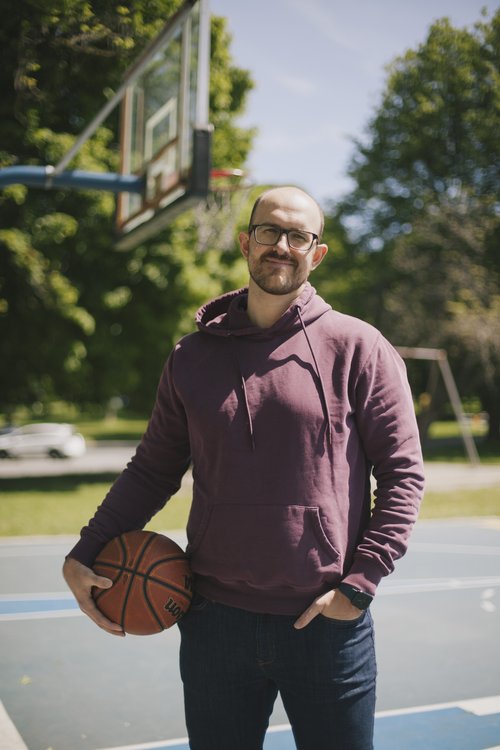
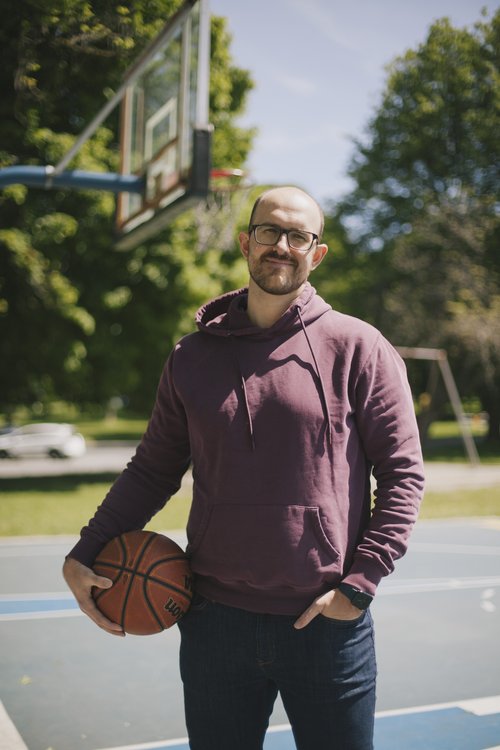
Next Gen Men co-founder Jake Stika. 📸: Next Gen Men.
Indeed, in 2022, Canadian research company Ipsos found that one-third of men in the country believe that traditional masculinity is “under threat.” The recent rise in popularity of influential, but controversial, personalities such as Andrew Tate and Jordan Peterson have further fuelled this idea. Such influencers resonate with younger male audiences, feeding the narrative that “manning up” defines their masculinity.
In 2008, psychology professors at the University of South Florida introduced the concept of “precarious manhood.” They suggested that a boy conquers boyhood and reaches manhood when he has proven — through outward, approval-seeking acts — that he is “manly” enough. However, he is often seeking this approval from a society that rewards acts of aggression, autonomy and violence with status and validation. According to the professors, he must seek this approval continuously, creating a cycle of constant pressure and in turn developing an unstable concept of his own masculine identity.
“[We’re in] a brewing civil war among men about masculinity.”
JAKE STIKA, CO-FOUNDER, NEXT GEN MEN
“[We’re in] a brewing civil war among men about masculinity.“
JAKE STIKA, CO-FOUNDER, NEXT GEN MEN
Jay C., a former inmate at the Toronto South Detention Centre who spoke to The Green Line for our long-form feature on precarious masculinity, is currently rebuilding his life after his release. He says the accessibility of Toronto’s “streets” is what led him to start selling drugs and ultimately to his arrest for possession of a loaded firearm. Making money from dealing drugs was the easiest way for Jay to assert his masculinity, as he says it gave him the appearance of having status and autonomy. “[People] all look you up from head to toe, and decide whether you have your shit together or you don’t,” he explains.
For Jay and many other men, it takes work to acknowledge that living in constant fight-or-flight mode as a result of this pressure is due to the fear of being perceived as weak by society. This stigma means that these men are less likely to recognize their own mental health issues or seek help. In extreme cases, it can lead to suicide.
📸 : Samuel Rios/Unsplash.
An estimated 4,500 Canadians die by suicide each year, with suicide rates three times higher among men than women, according to 2022 statistics from the Public Health Agency of Canada. Meanwhile, 2020 data from Statistics Canada suggests suicide was the 10th leading cause of death for men in Ontario; in comparison, it was the 15th leading cause of death for women.
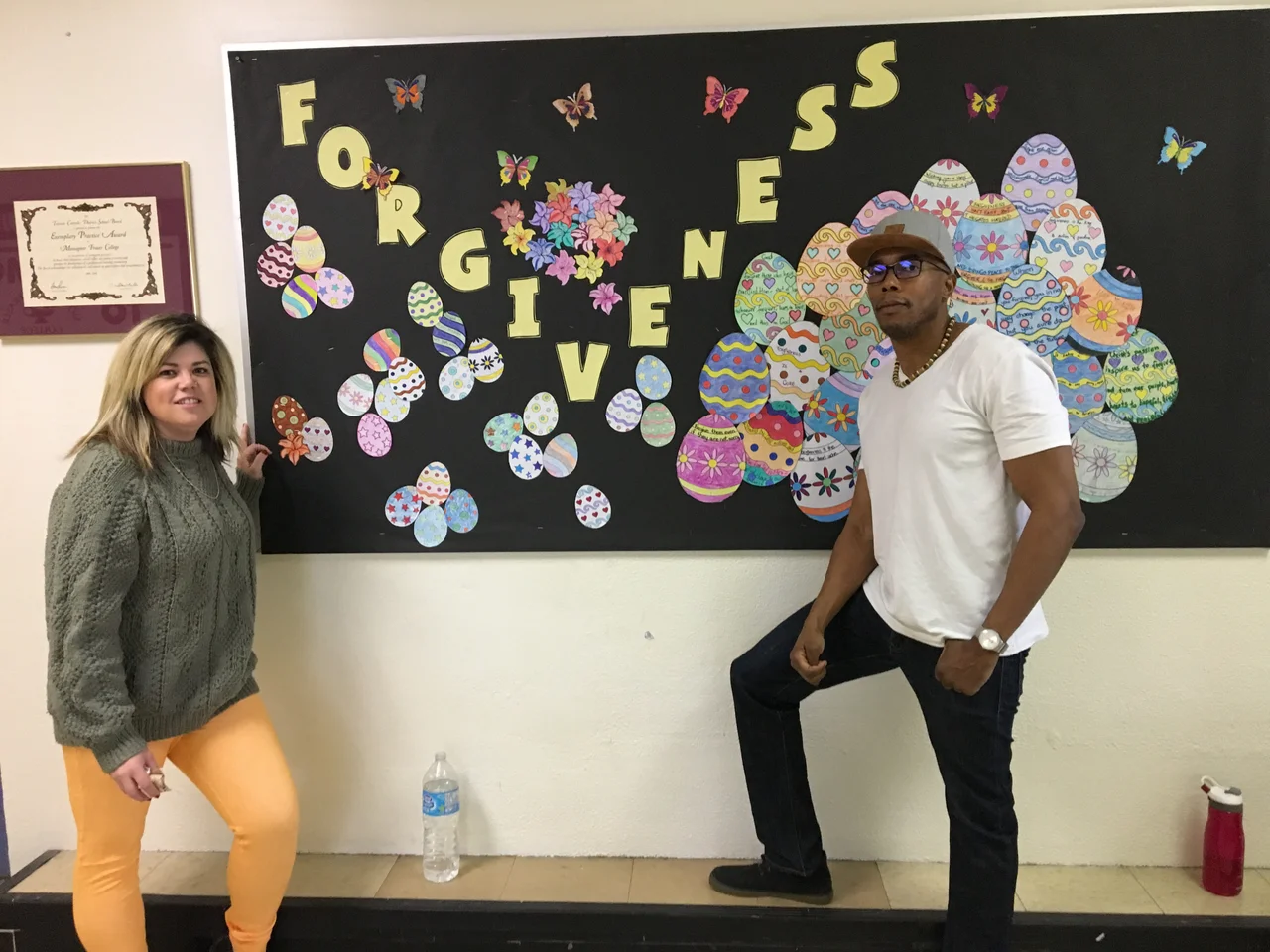
During Jay’s time in Toronto South, he learned about The Forgiveness Project (also known as F-YOU) through a facilitated program for inmates. F-YOU is a Toronto-based non-profit organization that creates spaces for men to express, label and ultimately process their emotions in healthier ways. “Some of the guys we work with don’t have the language to understand, or describe how they felt or how they’re feeling,” explains founder Tara Muldoon.
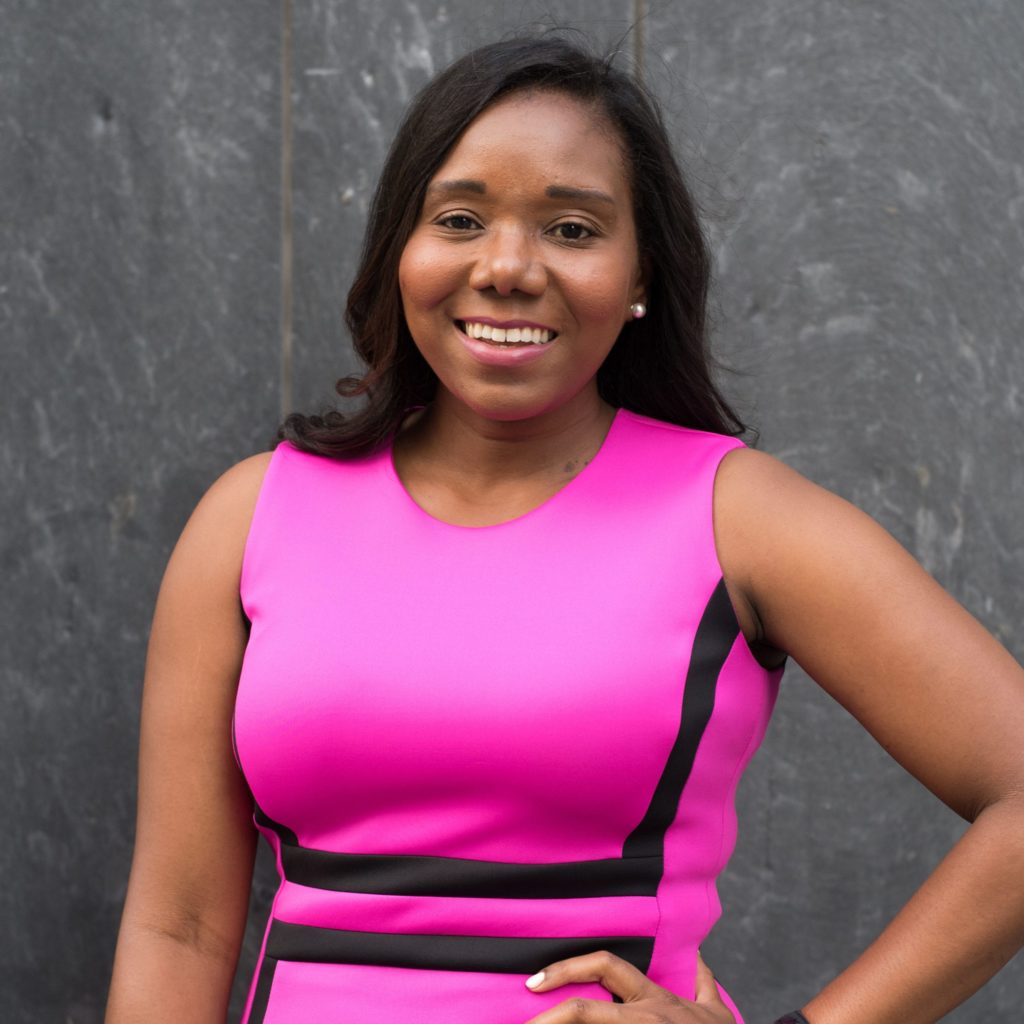
The Forgiveness Project founder Tara Muldoon stands next to artwork related to her organization (pictured left). 📸: The F-YOU Project
But positive masculinity is all about prioritizing genuine vulnerability, says Brett Ing, a former youth program coordinator at Next Gen Men. In other words, instead of being a defect of their manhood, identifying personal struggles and negative emotions actually empower men.
Today’s stories lead to tomorrow’s solutions, so sign up for our newsletter to take action on the issues you learn about in The Green Line.
If you’ve ever taken the Lakeshore West GO train to or from Union Station, you’ve likely seen the Toronto South Detention Centre, an imposing beige, brutalist building located just north of the tracks.
The maximum-security remand institution houses men awaiting trial.
Jay C., who requested anonymity as he works to rebuild his life after release, ended up inside these walls after a downtown Toronto melee where shots were fired. Police swarmed the scene, and Jay was arrested for possession of a loaded firearm.
“It’s kind of a real dog-eat-dog [environment]. Either you’re gonna turn into a super savage, or you’re just going to fold and be somebody’s doormat,” he recalls about his time in what’s colloquially called “The South” by inmates. “It’s just where you fit in that spectrum.”
Jay, 37, spent 33 months inside. From lack of shower access to concern about their relationships outside, inmates were constantly under high stress.
“You’re already at your wits’ end and it doesn’t take much for another inmate to test you,” he explains. “If you don’t step, then you’re the soft one. And then the next thing you know, they’ll be taking your dinner.”
Jay, a Black man, insists he wasn’t a “statistic,” and that there was “nothing super traumatic” about his childhood. Growing up, he was an average high school student and lived with both parents at home. Instead of trauma or a lack of opportunity that led Jay to dealing drugs, he attributes it to a rough patch in his life when people close to him started dying.
“The streets are there,” he says, repeating the phrase to emphasize its easy access and looming influence. “Yeah, the streets are there.”
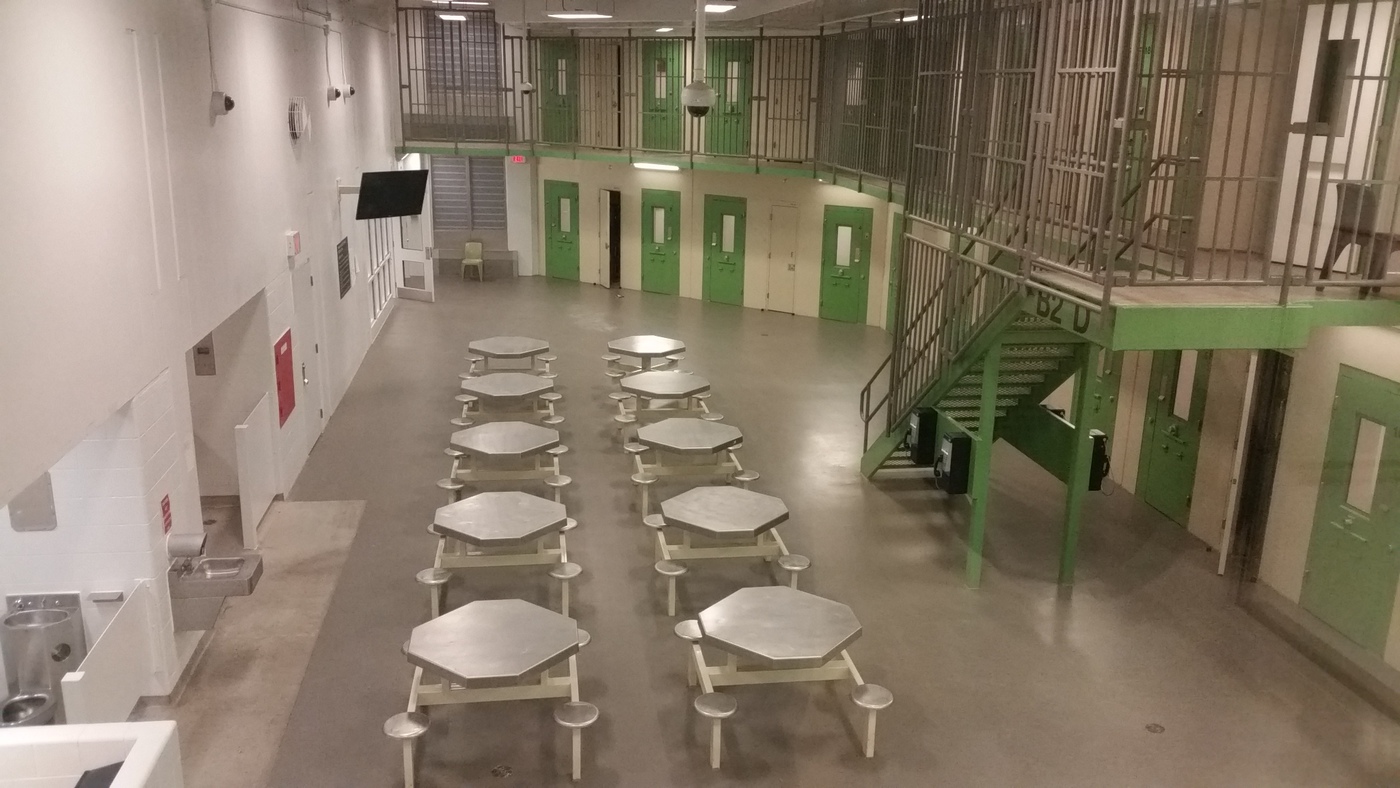
The interior of the Toronto South Detention Centre. Pictured is the dayroom, which includes a television, cells and metal communal tables with chairs bolted to the floor. 📸: LOBO SECURITY CONSULTING WEBSITE.
Selling drugs was the fastest and easiest way for Jay to keep up appearances. “[People] all look you up from head to toe, and decide whether you have your shit together or you don’t,” he explains. “Certain times, I made $12,000 on a phone call. There’s some people who don’t even make $10,000 to $12,000 on their tax returns, or in three or four months.”
“[People] want to give off that ‘I made it, I came from nothing, I am something’ impression.’”
Drug dealing was a risky investment that delivered a high return, so it seemed like the best option for Jay to assert his manhood. But this desire to be someone who “made it” in Toronto was so strong, that Jay risked his own freedom and ultimately paid the price.
“It’s kind of a real dog-eat-dog [environment]. Either you’re gonna turn into a super savage, or you’re just going to fold and be somebody’s doormat.”
JAY C., FORMER INMATE AT TORONTO SOUTH DETENTION CENTRE
“It’s kind of a real dog-eat-dog [environment]. Either you’re gonna turn into a super savage, or you’re just going to fold and be somebody’s doormat.”
JAY C.
FORMER INMATE AT TORONTO SOUTH DETENTION CENTRE
FREE MEN AREN’T FREE
Outside the walls of Toronto South, free men are similarly — though to a lesser degree — in constant competition with each other for perceived scarcity.
They’re competing for fame, status, money, power and beautiful women. A man’s ability to climb up this social hierarchy determines whether or not he “earns” these prized possessions.
Jake Stika is co-founder of Next Gen Men, a nonprofit group in Toronto whose mission is to change how the world sees, acts and thinks about masculinity. Stika, 34, says there’s “a brewing civil war among men about masculinity.” On one hand, groups like his want to expand the definition of masculinity to be more inclusive. On the other hand, there are others that want to preserve and validate the status quo or make the definition even more restrictive.
Indeed, in 2022, Canadian research company Ipsos found that one-third of men in the country believe that traditional masculinity is “under threat.” The recent rise in popularity of influential, but controversial, personalities such as Andrew Tate and Jordan Peterson have further fuelled this idea.
NEXT GEN MEN CO-FOUNDER JAKE STIKA. 📸: PROVIDED BY NEXT GEN MEN.
“We heard from a lot of educators and parents [who said], ‘Hey, my son is back to school. There’s this Andrew Tate guy and he’s a misogynist, and my son is listening to him. What do we do?’” Stika explains. Tate is a professional kickboxer-turned-internet personality who, among other things, is best known for telling boys to “man up.” He’s also called out what he and his supporters describe as the ultra-feminization of boys and men in a politically correct culture (Tate is currently under house arrest in Romania on allegations of human trafficking, rape and forming an organized crime group.)
And then, of course, there’s Toronto-based psychology professor-turned-media personality Jordan Peterson who’s been touring through Canada and the United States on his Beyond Order tour. Peterson has branded himself as an intellectual cowboy who refuses to be cancelled by the establishment.
Tate and Peterson are just two prominent figures in the “manosphere,” a term used to describe an online space promoting a view of masculinity that often frames women in an adversarial or inferior way. The problem with positioning masculinity in a false-binary debate — “blue pill” versus “red pill,” left against right, woke or anti-woke — is that it takes attention away from finding feasible solutions to these very issues.
Men are in a perpetual state of precarity, where they’re constantly having to “earn” their manhood. The manosphere gains its influence from tapping into men’s fears about failing to rise up the hierarchy — one which defines their very being. Failure to rise often leads men to withdraw or become very aggressive. Indeed, a disproportionate amount of men commit suicide, and they’re also overrepresented among the homeless and prison population.
: ANEESA BHANJI.
Peterson acknowledges the issues afflicting men, but attributes this to the biological price that comes with being a man; in other words, he believes they’re just as likely to be disproportionately successful as they are to be failures. To the fury of some people, Peterson accepts and legitimizes the perceived naturalness of this hierarchy.
Although Stika and others argue that men’s disproportionate representation in positions of power confirms the existence of patriarchy, Peterson argues these inequities are due to biological differences. The New York Times referred to Peterson as a “custodian of the patriarchy,” but in his eyes and to those of his followers, they’re more concerned about thriving within the confines of our current social reality than radically transforming it. Simply put, Peterson wants individuals to play and succeed within the existing rules of the game without changing them.
Former University of Toronto psychology student Jessica Aun, 32, took three of his courses from 2009 to 2013. “[He’s a] very scientifically-oriented guy,” she recalls. “I think he still is at heart. He really focuses on evidence-based data and learning, and using that to guide decisions.”
Loading this Instagram post pulls content from Meta and may set cookies. Tap below to show the post — or open it directly on Instagram.
Aun confirmed he would appeal to reason and use longstanding theories like the Big Five personality traits — extraversion, agreeableness, openness, conscientiousness, neuroticism — to partially explain different outcomes between males and females.
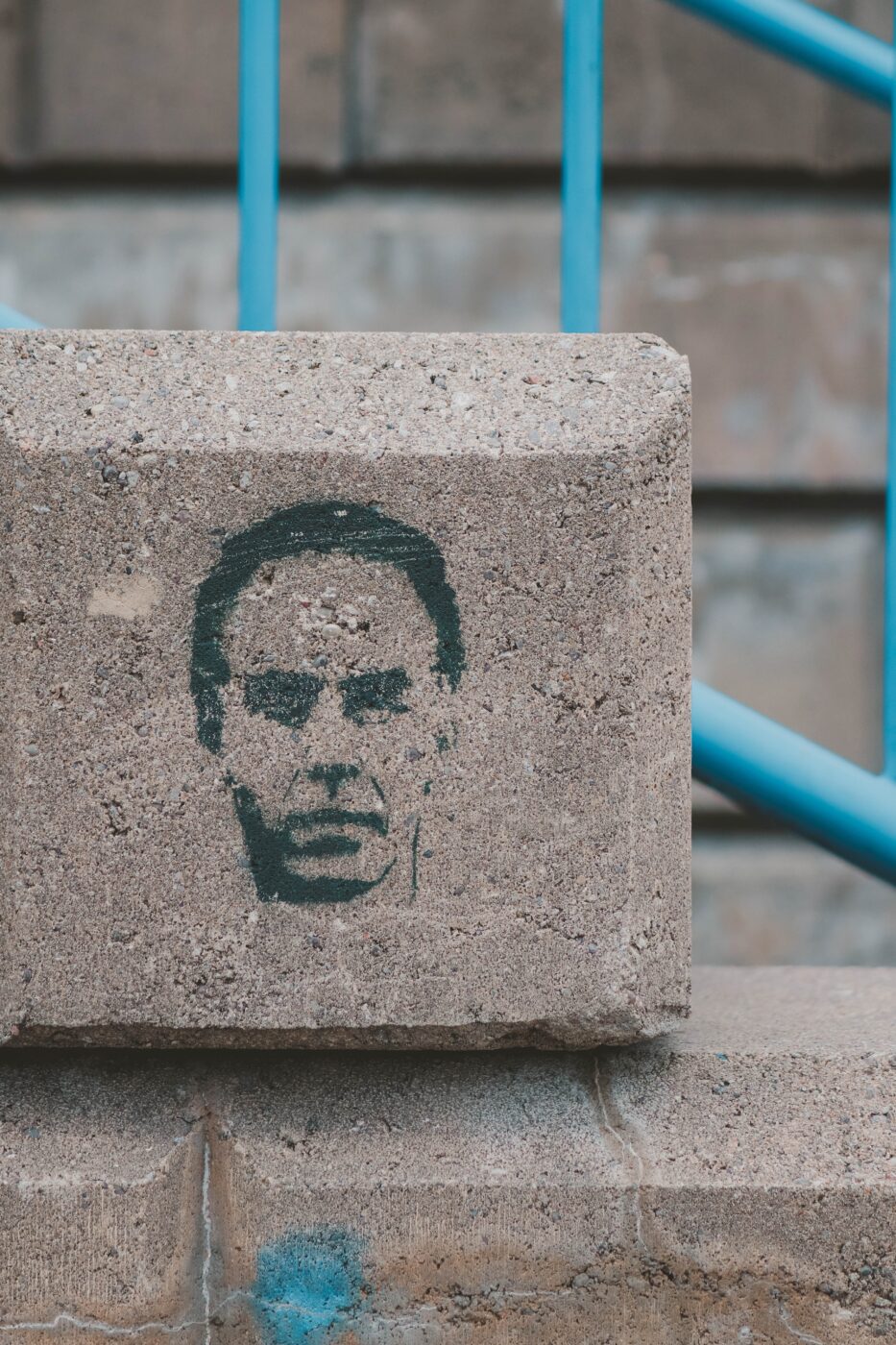
Image of Jordan Peterson spray-painted on concrete stairs in Toronto. 📸: Tungsten Rising/Unsplash.
After his controversial stance on Canada’s gender identity rights Bill C-16 and subsequent rise to fame, Peterson renounced his tenure from what he considered a “woke” institution. To his supporters, Peterson asserted his masculinity by refusing to be “bullied” by the University of Toronto, which they saw as being increasingly intolerant of the psychologist’s views. To his detractors, however, he’s a woman-hating, disinformation-peddling pseudo-intellectual with a dangerous God complex who’s ruining the minds of boys and young men.
But Aun’s embrace of Peterson’s teachings show a more nuanced reality. As a woman of East Asian descent who attended public high school in Scarborough, she doesn’t represent the caricature often attributed to Peterson’s fanbase: a white, cisgender heterosexual man who identifies as an incel. Culture-war debates are divisive, but it’s sometimes more important to uncover why a particular idea — however controversial — resonates with so many people than condemning them outright. Aun reminds us that there can even be points of agreement: People have problems and need to learn how to manage them effectively.
For Jay, these basics helped transform his life.
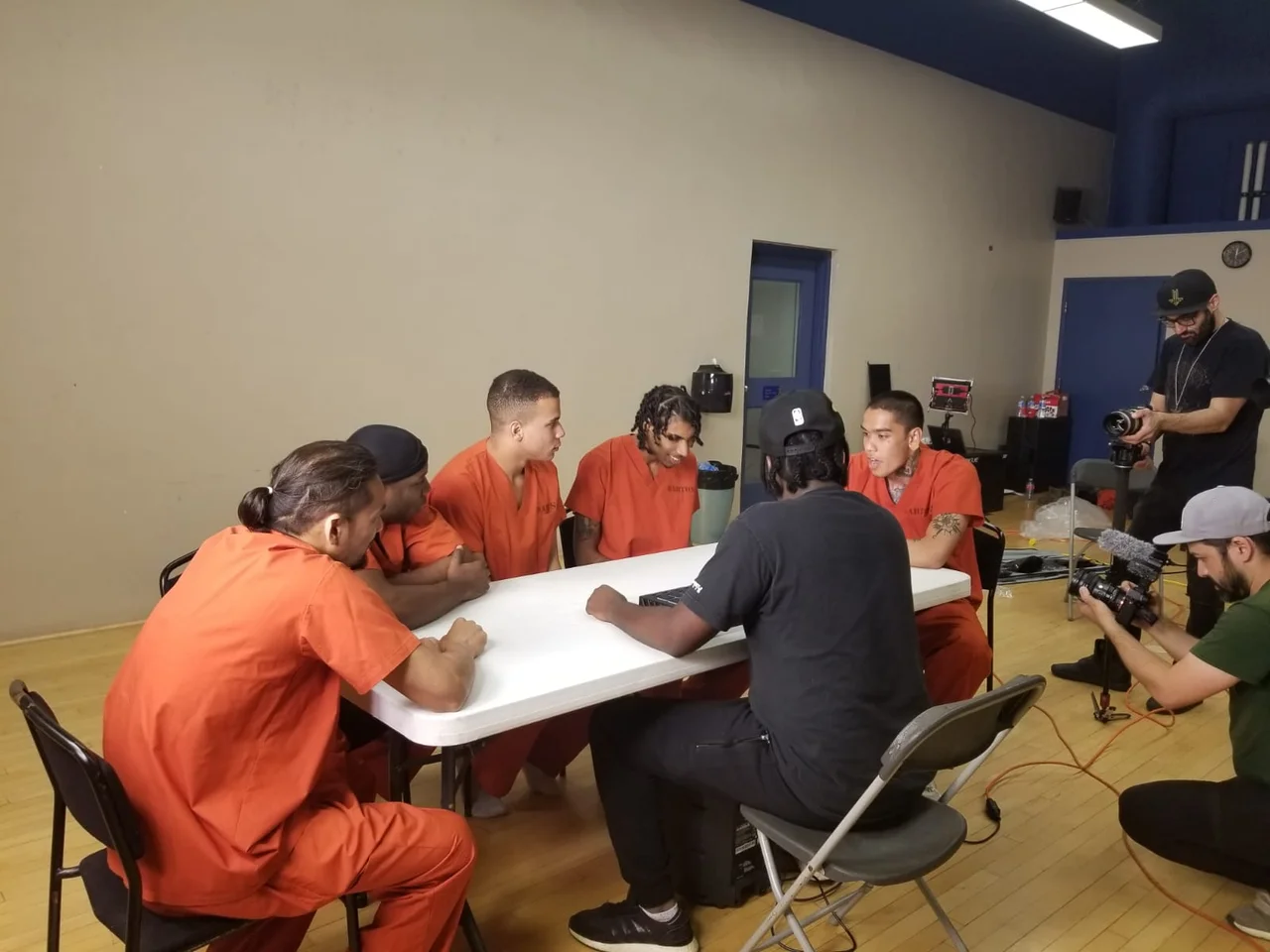
A CONVERSATION AMONG MALE INMATES THAT'S FACILITATED BY THE FORGIVENESS PROJECT TEAM. 📸: THE FORGIVENESS PROJECT WEBSITE.
HURT PEOPLE HURT PEOPLE
Inside Toronto South, Jay heard about a beat-making program and got FOMO after seeing his fellow inmates participate.
So, he decided to give it a try.
Facilitated by The Forgiveness Project (also known as F-YOU), the program created a space that encourages men to voice and label their emotions. The non-profit was founded by Tara Muldoon, a rape survivor who says she found healing in exploring forgiveness after she was raped.
Equipped with the understanding that “hurt people hurt people,” Muldoon, who’s in her late 30s, wanted to teach restorative processes inside the carceral system by encouraging men to identify their emotions. “Some of the guys we work with don’t have the language to understand or describe how they felt or how they’re feeling,” she explains.
Jay shares this experience, as he felt he couldn’t display certain emotions out of fear he’d be perceived as weak. From his life on the streets to his time in jail, Jay’s nervous system got accustomed to constantly being on the defence. Most of the time, the only acceptable emotion he felt was anger. But F-YOU helped break down some of Jay’s emotional walls, and got him into a new mindset outside of that limited emotional range.
“When men start to recognize the broad range of their emotions and start to validate them as that — that they’re human…I think that’s when that shift starts to happen,” says Snjezana Pruginic who worked as a therapist at F-YOU from 2017 to 2020.
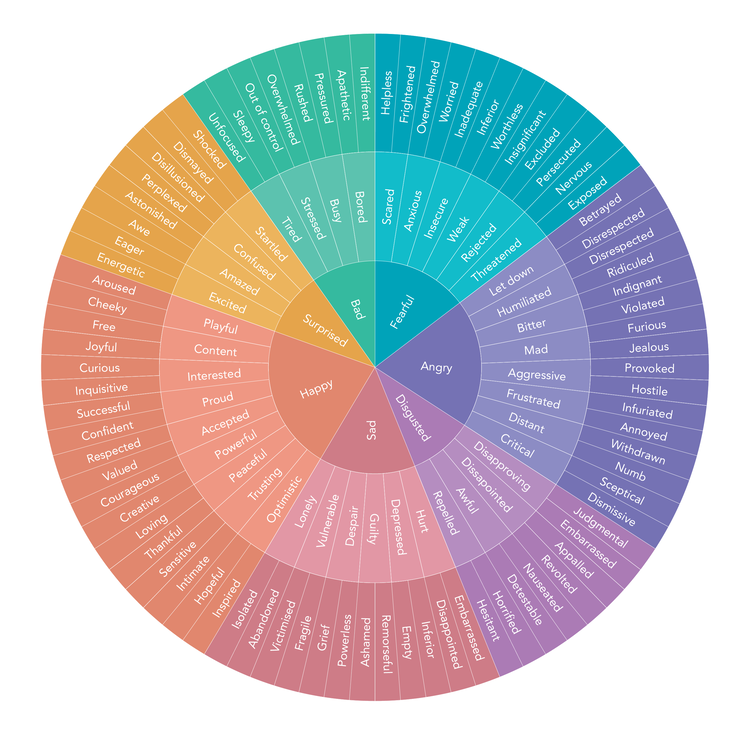
THE FEELING WHEEL. 📸: CALM APP.
Muldoon refers to “the tool of language,” which expands a person’s insight by expanding their vocabulary. “Some people might roll their eyes at this, but we’ve been using a feeling wheel” to get men to identify their emotions, so they can better understand themselves and their circumstances, she says.
Jay credits F-YOU for arming him with the skills to de-escalate tense situations, but he more so cherishes the bond he developed with other men and staff. The program had such a profound impact on him that he was willing to speak to The Green Line about it.
“It’s gotten to the point where I’m even speaking to you about [this],” he told me. “Three years ago, [if] somebody would have asked me to do this, I would’ve said, ‘Fuck no.’”
But many men, including Jay, don’t take the initiative to deal with their emotions. “It doesn’t happen until external circumstances usually force one to see it,” Pruginic says, adding that men don’t generally seek help until some form of tragedy — divorce, bankruptcy, death, jail, among others — forces their hand.
Interview clip of Snjezana Pruginic.
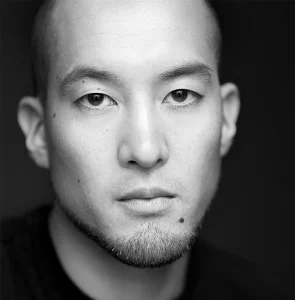
: Teru Ikeda.
Recently, F-YOU has been bringing former inmates to speak at Toronto-based high schools to prevent boys from going down the wrong path. Meanwhile, Next Gen Men has hosted an after-school boys’ group, which challenges the “man box” that people like Jay often feel confined to. The nonprofit created a space where boys could openly discuss topics like gender-based violence and men’s mental health.
These difficult, but vital, conversations about masculinity are primary prevention techniques that help decrease social isolation and produce more substantive relationships, according to Stika. In extreme cases, when boys and men are punished without primary prevention, the consequences can lead to prison or death.
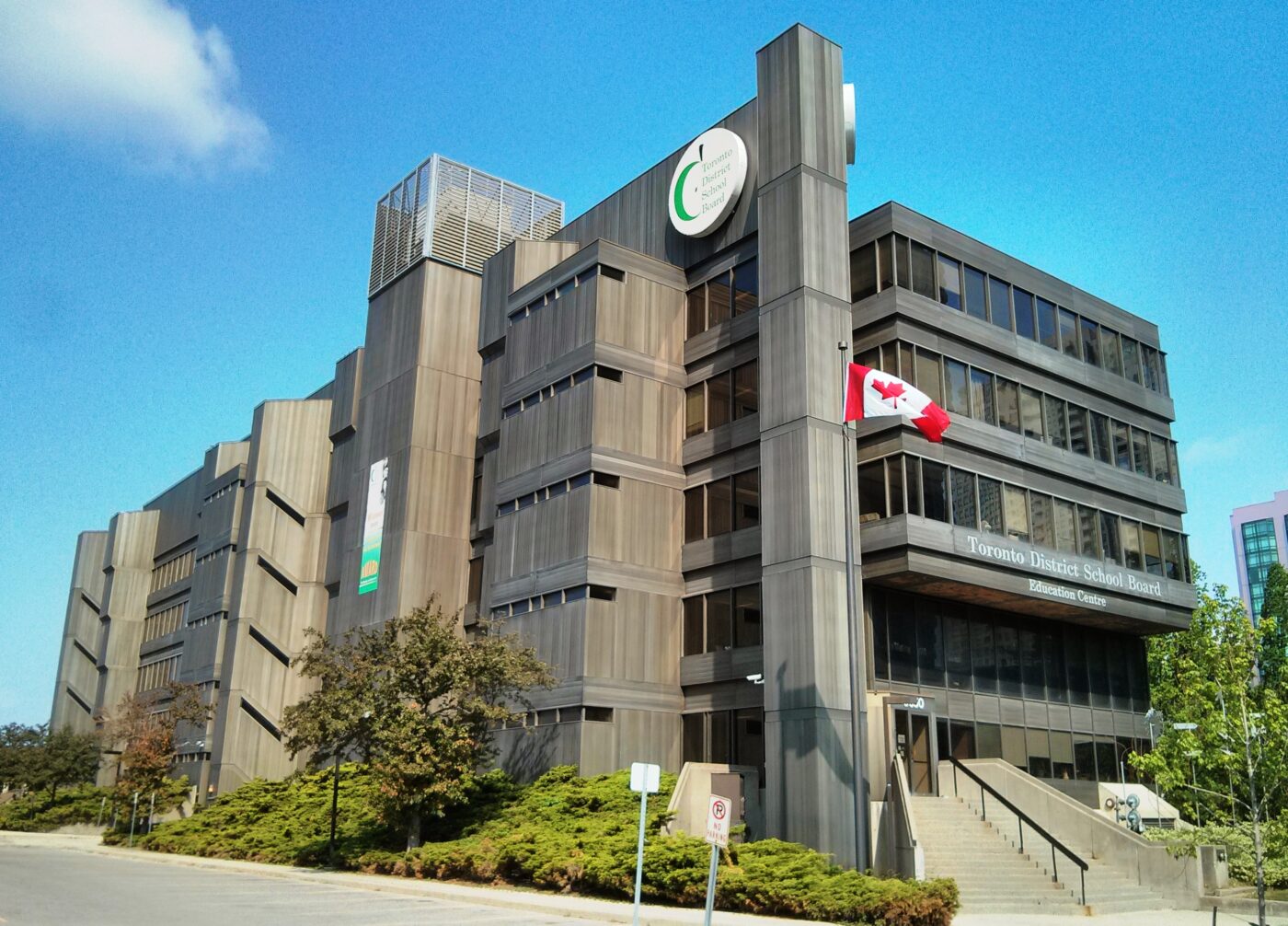
The Toronto District School Board building at 5050 Yonge St. in North York. 📸: WIKIMEDIA COMMONS.
BOY, CANCELLED
School policies focused on penalizing or “cancelling” students who are already at risk does little to help their situation, according to former TDSB York West trustee Tiffany Ford.
The 40-year-old, who chaired close to 100 expulsion and suspension hearings from 2014 to 2018, made a motion during her term to get race-based data on the impacts of suspensions and expulsions.
“I always wondered how many students actually went [to alternative schools],” she says about those who were expelled from all schools in the TDSB. “We learned that half of them didn’t go back to the school system.”
Ford adds that when she attended Westview Centennial Secondary School in Jane and Finch, the majority of disciplined students were predominantly young Black men (though Ford says when she served as trustee, her ward had low expulsions and became a model for how other wards could ensure equitable outcomes for all students). Ford recalls fellow students being expelled for a “fresh start” in a new school rather than being kept at their current school, when The Safe Schools Act came into effect in 2001, the same year she graduated. Former Premier Mike Harris instituted the policy under his zero-tolerance approach to student misconduct.
FORMER TDSB YORK WEST TRUSTEE TIFFANY FORD. 📸: YORK UNIVERSITY WEBSITE.
At first glance, dialing up the consequences for an undesirable action may seem like it’d deter the person from committing it. But research suggests that punishment via suspension or expulsion, and isolating a student for poor behaviour, only sweeps the problem under the rug.
According to the latest Correctional Service of Canada report on high school graduation rates among inmates, 75 per cent of offenders in federal custody on their first sentence said they didn’t finish high school, which means a disproportionate amount of boys who fall through the cracks of the public education system end up in jail or prison. This phenomenon is often referred to as the “school-to-prison” pipeline.
Muldoon confirms that regret is a common theme that surfaces in F-YOU’s creative writing program. Many men dropped out as boys because they couldn’t read properly, or because they needed to care for their mothers. She says they felt a lack of support, and believes schools are not “prepared or educated or capable of taking on the complexities of a student.” She adds, “I think the home life and everything as a student needs to be…taken in an entirety, not just their educational level.”
Such data-driven policy changes have helped more boys stay within the school system. University of Toronto criminology professor Anthony Doob, who co-authored The Will to Change: Lessons from Canada’s Successful Decarceration of Youth, found that from 1997 to 2015, there was an overall reduction of incarcerated youth by 73 per cent. Most of the reductions were youth sentenced into custody.
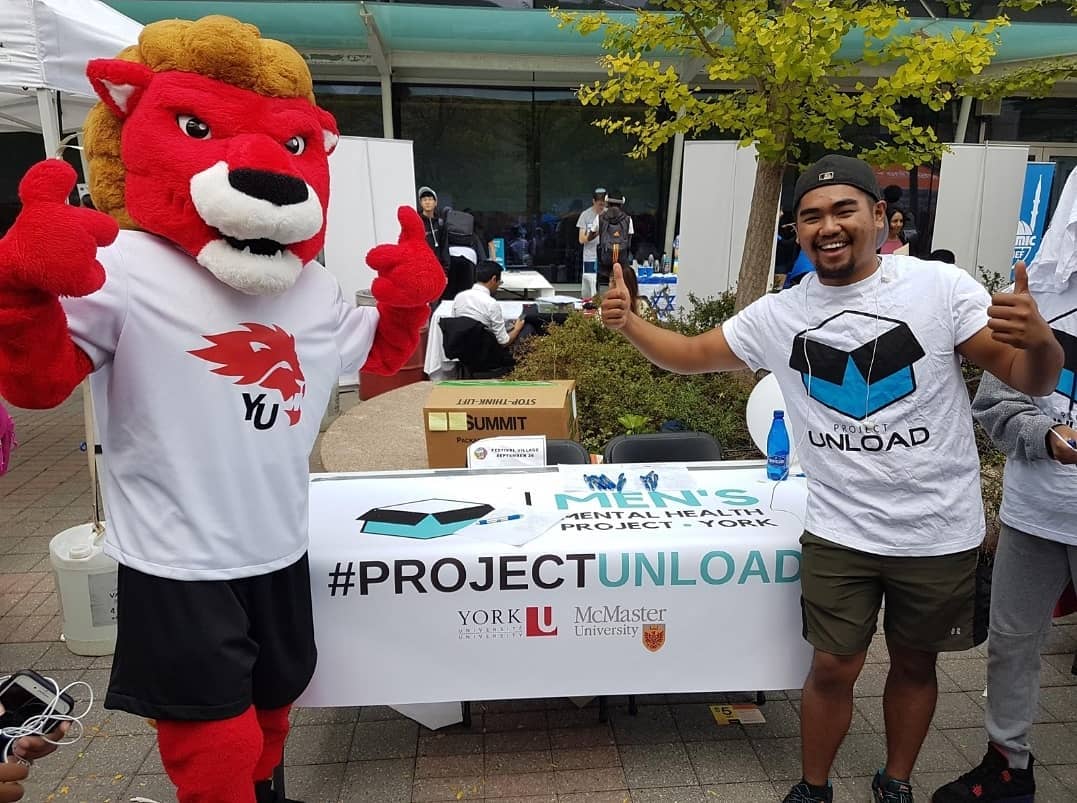
AN UNLOAD CANADA MEMBER PROMOTING THE STUDENT GROUP AT YORK UNIVERSITY, ALONGSIDE YORK'S MASCOT, YEO THE LION. 📸: UNLOAD CANADA FACEBOOK PAGE
FAILING YOUNG MEN
Adolescence is a difficult transition period for many, and the same was true for York University student Davoud Farzin who had a philosophical and inquisitive mind.
But Farzin, then 18, couldn’t find spaces where he could air out his anxiety or concerns about his future. Close friend Pouya Tajalli, 26, recalls that Farzin was deeply concerned with existential questions like the meaning and purpose of life.
One day, Tajalli casually scrolled through his social media feed. He stopped in his tracks after seeing people post “R.I.P. Davoud.”
“At first, I was so confused. And I just didn’t know what to think,” Tajalli explains, recalling that he didn’t want to know how or why. “What I heard from other individuals was that he passed away [due] to suicide.”
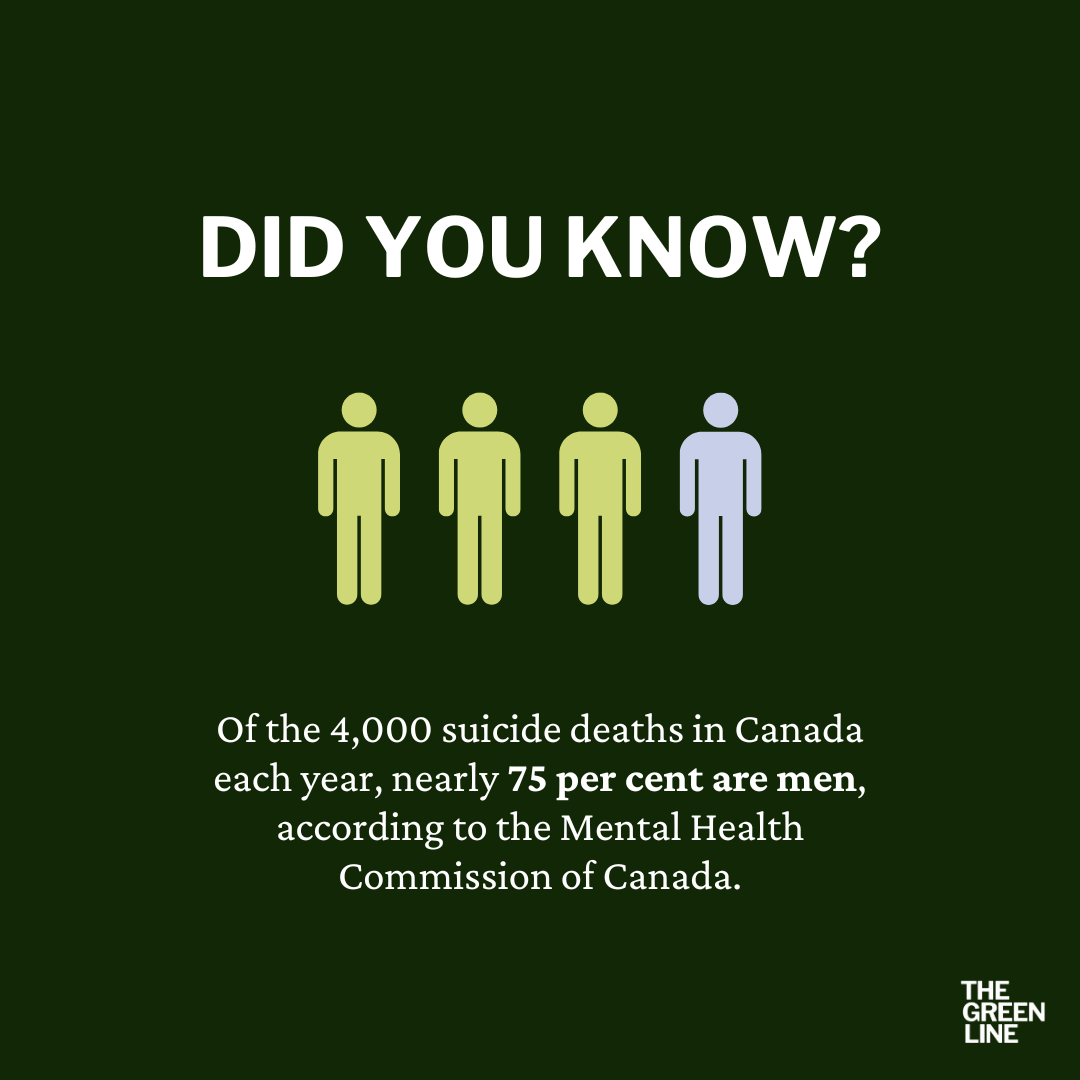
Tajalli and Farzin’s friendship grew as they excitedly brainstormed and planned the launch of a community initiative together. But after Farzin’s sudden death, Tajalli was inspired to change their initiative into one that focuses on mental health especially since nearly 75 percent of the estimated 4,000 suicide deaths in Canada each year are men, according to the Mental Health Commission of Canada.
“I realized that there was a lack of focus on men’s mental health in particular,” Tajalli says. “There [were] so many organizations at the time — Jack.org, Active Minds — all these organizations are talking about mental health as a whole…but none [were] actually specifically focusing on men’s mental health.”
So, Tajalli doubled down and launched Unload Canada. “I came to the realization that I can…make his story something that can be inspiring,” he explains. Tajalli didn’t want Davoud’s story to end with R.I.P.s and condolences as “Davoud deserved more — way more — than that.”
What Tajalli didn’t foresee, however, were the challenges he came up against when he tried to start conversations among other men, in honour of his late friend.
“No one was showing up,” he says. “As soon as it came to guys talking with guys, no one would show up. It would literally be just me and some execs, and then we’d be wondering what’s up.”
Men’s mental health is still stigmatized because our culture says men cannot and should not display weakness. To get them to open up, the Unload Canada team realized they had to initiate conversation first. So, Tajalli experimented with conversational prompts, which encouraged participants to stand in a particular line depending on how they felt about a certain statement. The lines are divided into: Strongly Agree, Agree, Neutral, Disagree, and Strongly Disagree. This was a great icebreaker, he explains, because “[choosing where to position] themselves on the lines was doing the talking for them.”
Although Unload Canada doesn’t provide professional services, it complements existing mental health services on university and college campuses. As a result, Tajalli says, his organization fills the “missing middle” for students who need to express their anxiety, but aren’t able or ready to see a counsellor.
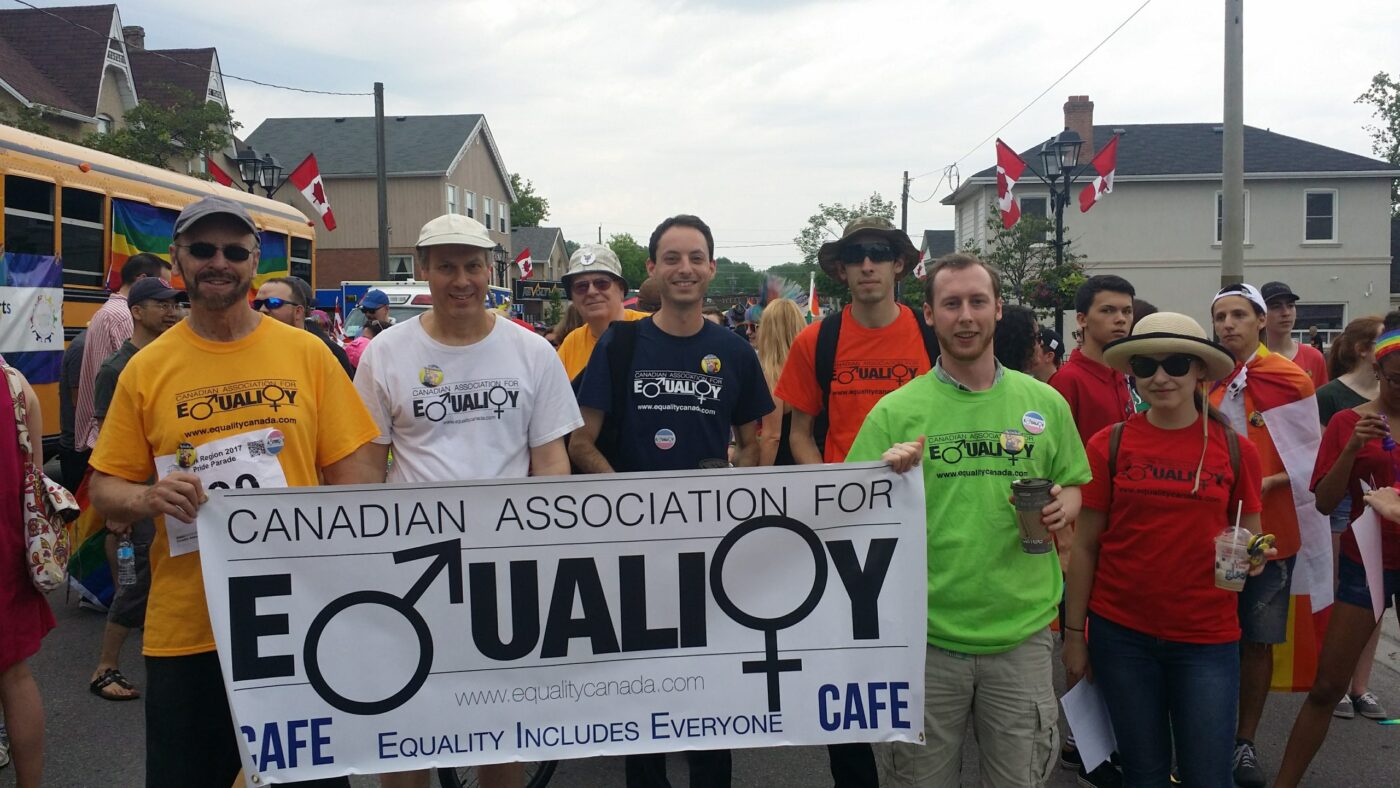
Canadian Association for Equality members marching at a Pride Parade in 2017. 📸: Canadian Association for Equality website.
GROWTH MINDSET
But not all men gravitate towards support groups that reinforce healthy emotional management, like Unload Canada and Next Gen Men.
Geoffrey Stone, for example, joined the controversial Canadian Association for Equality (CAFE) after watching a YouTube video that presents a sympathetic view of men attending a University of Toronto lecture from controversial American political scientist Warren Farrell, a leading figure of the men’s rights movement. One woman protester repeatedly yells, “You fucking scum!” to an attendee.
Stone, 40, says the video reminded him of an earlier experience he had in high school. He recalls a normal school day being interrupted by an assembly of what he calls “radical feminists.”
“We were being intensely pressured. It was almost like a bootcamp,” Stone explains. “And I was like: What is going on here? When people are pressuring you to believe something, you just know something’s going on here, right?”
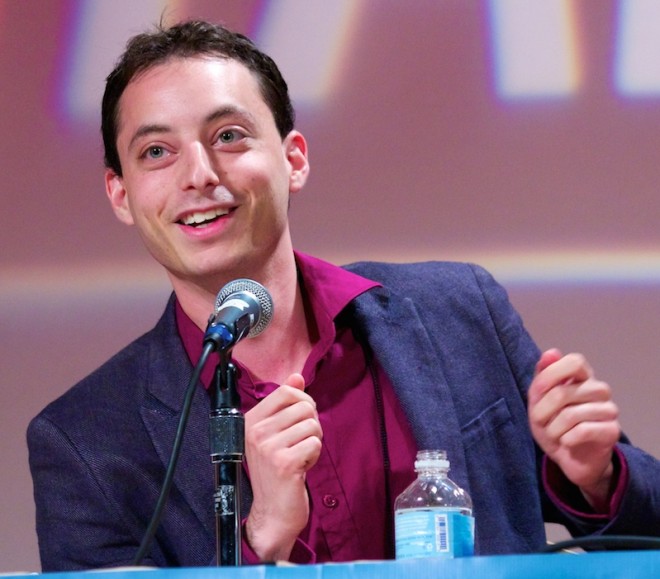
Canadian Association of Equality founder Justin Trottier. 📸: Dean Baird/Creative Commons.
Founded in 2011 by Justin Trottier, CAFE is often considered a men’s rights group, though the organization denies this (it became a registered charity in 2014). Stone gravitated towards CAFE for the same reasons many other members did: They often felt isolated for their perspectives, and found an online “tribe” they connected with. Today, Stone says he’s no longer part of CAFE due to internal politics and division in the organization, and because he’s focused on new interests he’s developed since 2012.
CAFE has courted controversy since its founding, as it’s historically attracted people who support the men’s rights movement — also known as “menists.” The movement rejects the concept that men are privileged relative to women; some consider men and women to be equally harmed by sexism, while others say men are increasingly oppressed in favour of upholding “female privilege.” Trottier drew widespread media attention in 2014 when CAFE petitioned against TTC’s ban on manspreading, calling it “sexist.”
“I find that it is a giant impediment to getting things done to be merely interested in how people identify or label themselves,” he says, commenting on his frustration with how public discussions about solutions to men’s mental health issues become entrenched in the culture wars.
Interview clip of Justin Trottier.
: Teru Ikeda.
In 2014, Trottier founded a drop-in centre called Canadian Centre for Men and Families (CCMF), a frontline service agency that provides counselling, support groups, legal clinics, parenting programs for fathers and mentorship for young men. CCMF has been accredited by Legal Aid Ontario, and it also opened Canada’s first emergency shelter for fathers and their children fleeing from domestic abuse. Seventy to 80 men participate weekly in CCMF’s Nexus Recovery program, which is designed specifically for those who’ve been victims of family violence, according to Trottier. Program graduates or participants who are further along in their healing journey can become facilitators.
Trottier says he now avoids politically charged discussions of gender as CCMF’s “focus is identifying where people are suffering and doing something about it,” and acknowledges it “might seem very naive, but that is what guides us.” He adds, however, that there needs to be significant reform to make Canadian legislation and public policy more gender-inclusive. Trottier also credits feminism for creating a generational change in the way men view gender roles and themselves.
“Men have grown up with changing, more fluid, gender expression [and] norms,” he explains. “Feminism has [broken] down barriers that have kept men and women in their respective roles.”
As existing inequities get addressed, the brewing culture war Stika mentioned will continue. But he remains optimistic despite pushback against recent progress that this city, country and broader society have made.
Interview clip of Jake Stika.
: Teru Ikeda.
“When I was the age of a lot of the youth that we work with, I was an absolute idiot,” he admits. “There was nobody out in my school. If I thought of someone who was transgender, I probably would have used a slur. Feminism had never crossed my mind. And all of these boys know all of those things and more at that age now.”
But hard conversations need to happen early, and sometimes, that’s all boys and men need to kickstart their healing. Practically speaking, though, there’s a common challenge affecting all of these programs: Many say they can’t measure prevention as a direct impact of a program, which makes it challenging to get ongoing funding and support. The impact of Next Gen Men in preventing violence, murder or rape, or The Forgiveness Project in decreasing recidivism, for example, are difficult to prove.
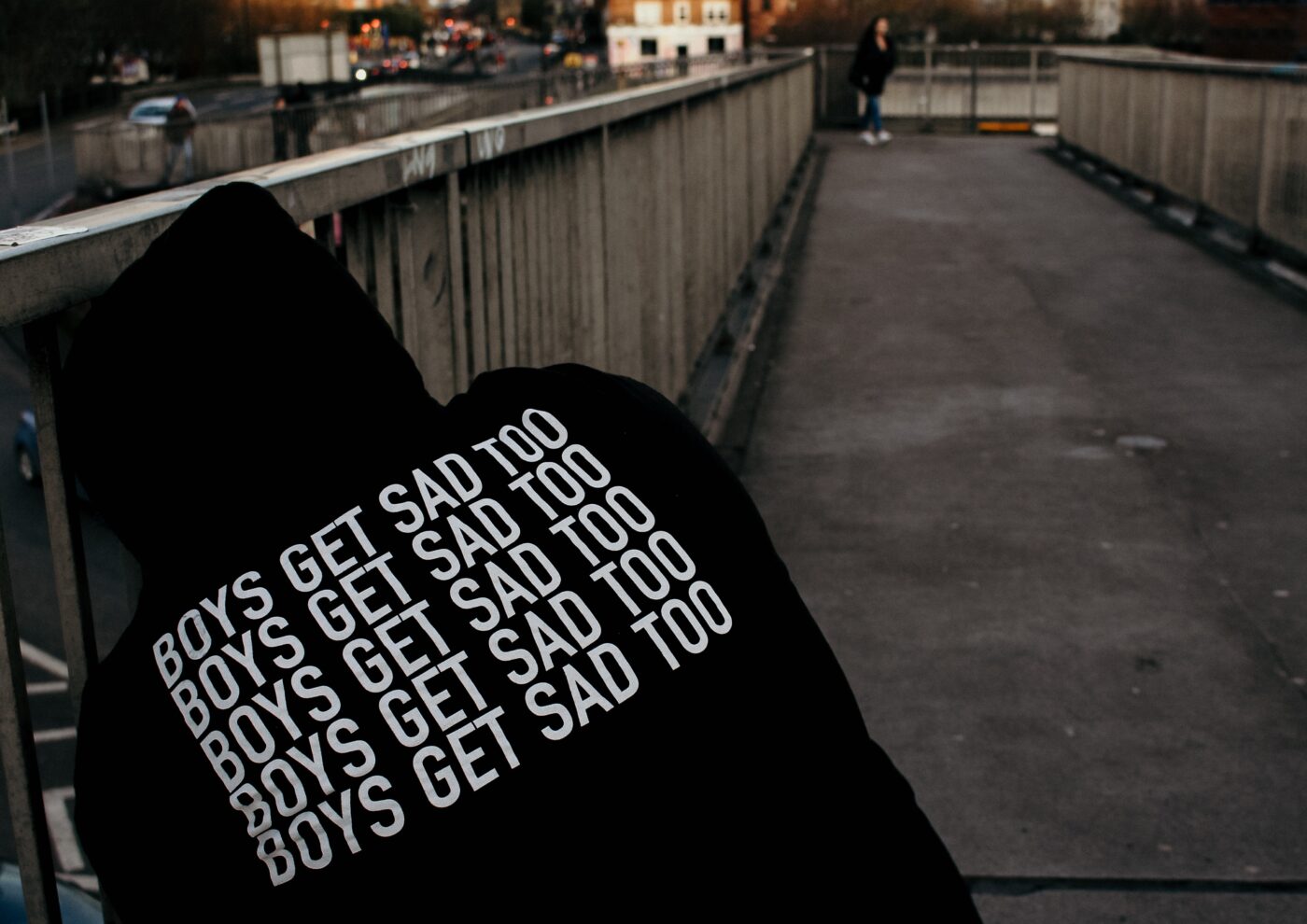
Unidentified person wearing a black hoodie with the line "Boys get sad too" written five times in all capital letters on the back. 📸: Nathan McDine/Unsplash.
SUPPORT SYSTEMS
Improvement is rarely linear, so F-YOU ensures people like Jay have a support system; that way, they can set goals, celebrate wins and be held accountable, according to Muldoon.
“We work under the model that every person being released…should have one consistent, caring adult, and we try to be that,” she explains.
Change can be difficult because there’s an initial sense of loneliness when one severs ties from their former community. This alienation causes some to revert back to old habits, but Pruginic says incarcerated men who create “the smallest shifts in their environment have more breathing room to succeed.”
Jay simplifies this idea even further. “It’s exposure, right?” he explains. “If you hang around people who are like ‘Oh shoot, kill, kill, sell drugs’ — that’s what you’re going to be on.”
“It’s exposure, right? If you hang around people who are like ‘Oh shoot, kill, kill, sell drugs’ – that’s what you’re going to be on.”
JAY C., FORMER PARTICIPANT IN THE FORGIVENESS PROJECT PROGRAMS
“It’s exposure, right? If you hang around people who are like ‘Oh shoot, kill, kill, sell drugs’ — that’s what you’re going to be on.”
JAY C.
FORMER PARTICIPANT IN THE FORGIVENESS PROJECT PROGRAMS
Even for men who are in a different situation from Jay’s, their chances of success in programs dramatically improves when they are in community. For Stika, it took co-founding Next Gen Men with two others to help him move away from the traditional masculine script. “When we have these conversations about boys and men, it’s not apart from conversations about women, girls, and trans and non-binary individuals,” he says. In other words, it won’t be enough for men to want to change, as the rest of society will also need to change its perception of masculinity — and depending on who you ask, our perception has changed too little, too much or not at all.
The emotionally charged tug-of-war about what masculinity is and what it should be will continue. But without this debate, we’ll simply inherit and perpetuate the status quo, as boys and men like Farzin and Jay continue to swim in the precarious waters of manhood.
Here’s your chance to support the only independent, hyperlocal news outlet dedicated to serving gen Zs, millennials and other underserved communities in Toronto. Donate now to support The Green Line.
REDEFINING MASCULINITY: WHAT DOES IT MEAN TO BE A MAN IN 2023?
A community gathering and event hosted by The Green Line, Next Gen Men and BGC East Scarborough.
About the Event
Tuesday
May 30, 2023
5 p.m. to 8 p.m. ET
MAAT CENTRE62 ORCHARD PARK DR.
RSVP
Last year, research company Ipsos found that one-third of men in Canada believe that traditional forms of masculinity are “under threat.” This statistic sums up a brewing culture war that pits people who support “traditional masculinity” against those who are challenging this framework. That’s why The Green Line is inviting action-oriented community members like you to brainstorm local solutions to address precarious masculinity in Toronto. RSVP now for our in-person event.
Events are an essential part of our Action Journey. We want to empower Torontonians to take action on the issues they learn about in The Green Line — so what better way to do that than by bringing people together? From community members to industry leaders, anyone in Toronto who’s invested in discussing and solving the problems explored in our features is invited to attend. All ages are welcome unless otherwise indicated. Our only guidelines? Be present. Listen. Be kind and courteous. Respect everyone’s privacy. Hate speech and bullying are absolutely not tolerated. At the end of the day, if you had fun and feel inspired after our events, then The Green Line team will have accomplished what we set out to do. Any questions?Contact Us.
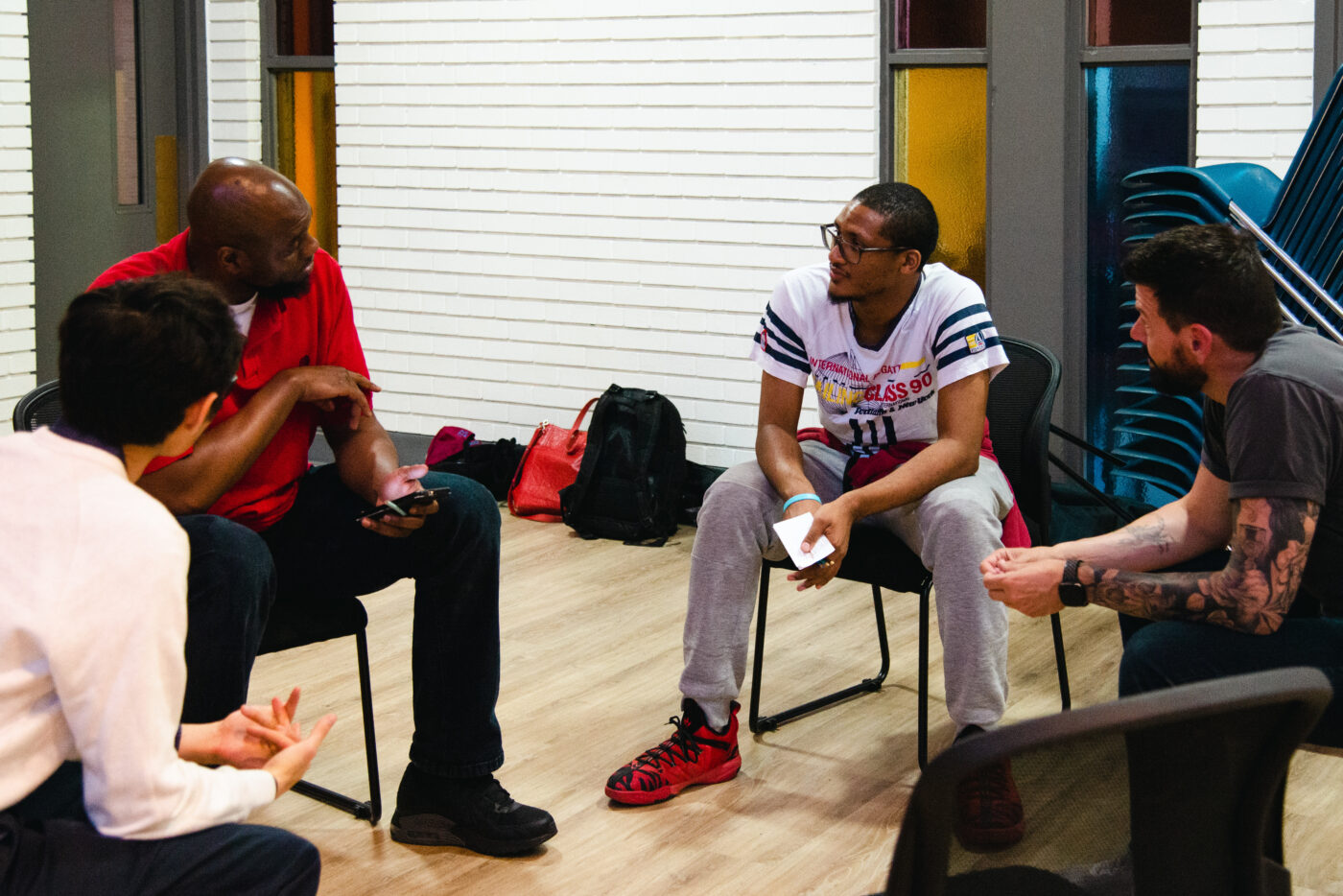
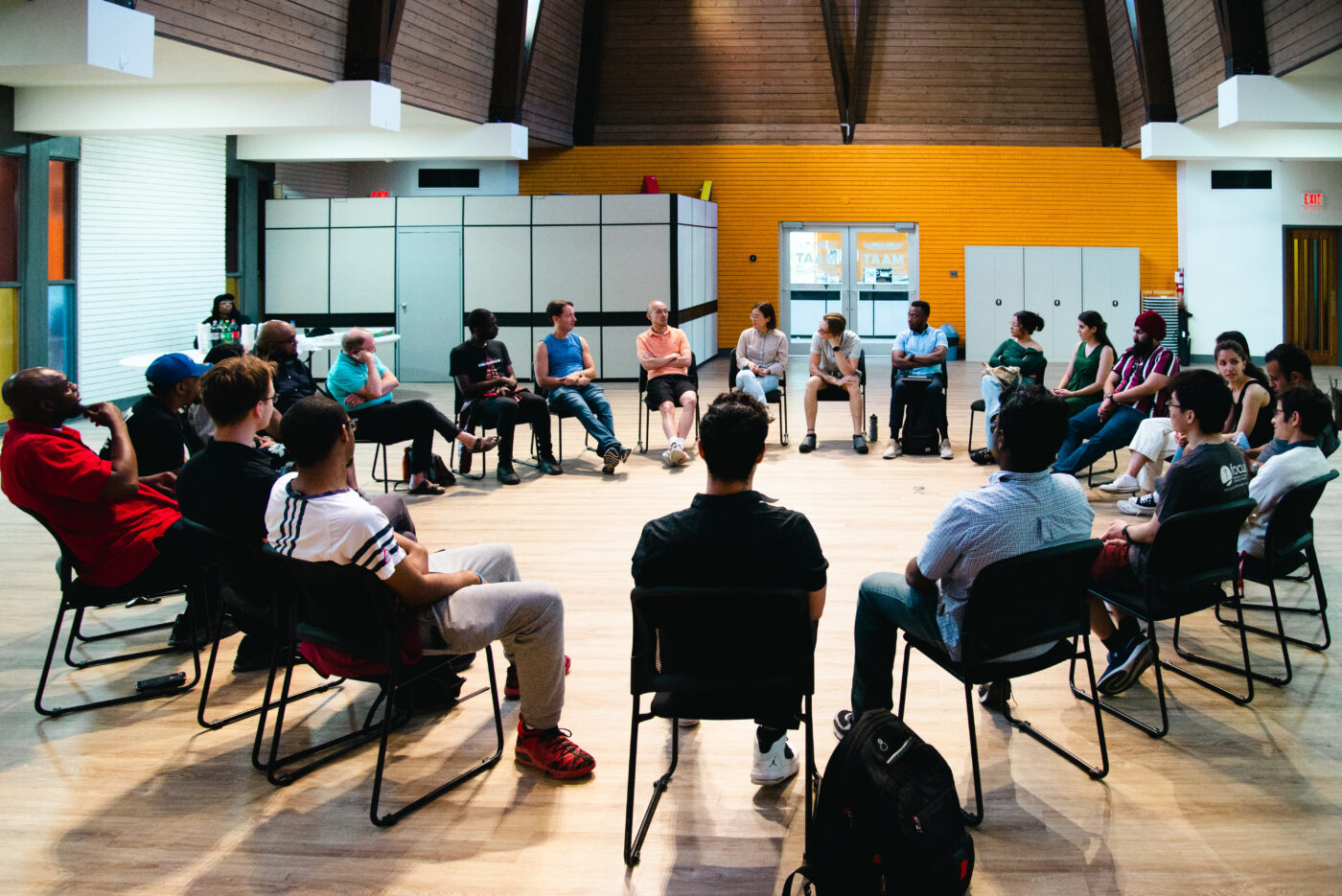
Attendees DISCUSS INFLUENCERS, FRIENDSHIPS AND WHAT IT MEANS TO BE A MAN DURING STORY SHARING at our May Action Journey event on Tuesday, May 30, 2023.📸 JULIA LAWRENCE/THE GREEN LINE.
Event Overview
See what you missed
from our latest event.
Our community members brainstormed solutions for addressing precarious masculinity in Toronto.
Compiled by Lanxin Jiang.
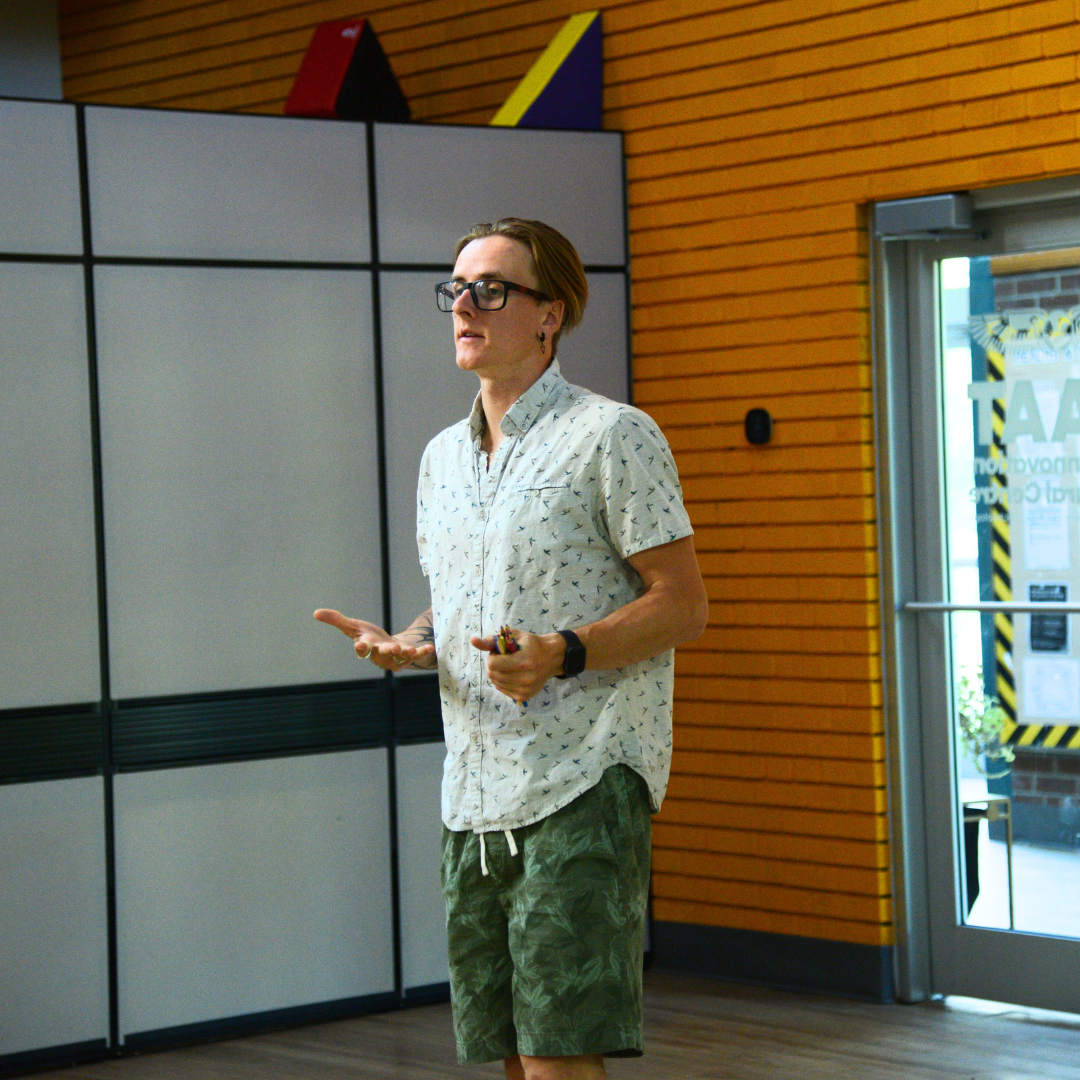
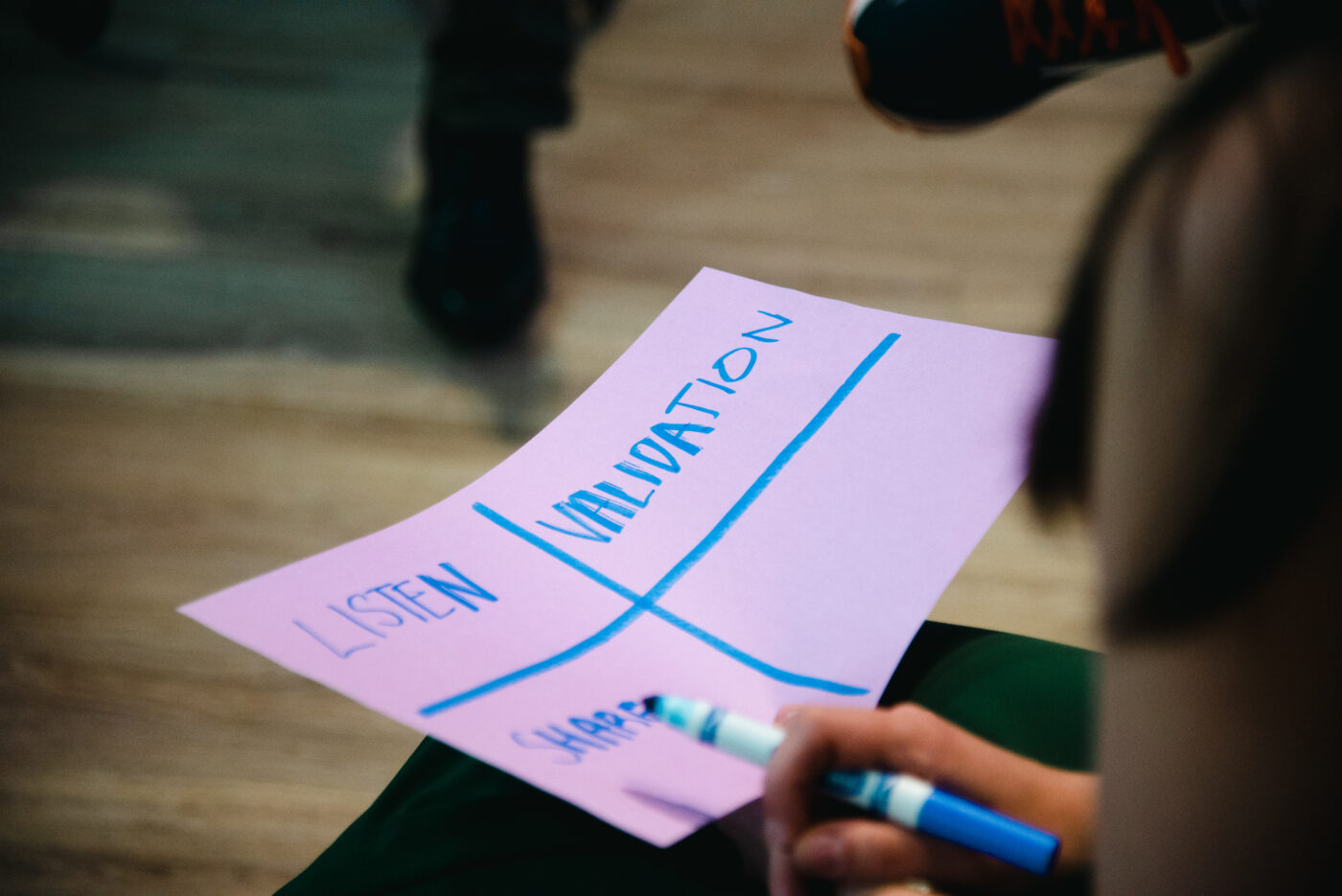
Event facilitator and Next Gen Men youth program manager Jonathon Reed. 📸: JULIA LAWRENCE/THE GREEN LINE.An exercise that explores status quo pressures around masculinity, facilitated by Next Gen Men's Jonathon Reed. 📸: JULIA LAWRENCE/THE GREEN LINE.Attendees share group findings and their perspectives on what it means to be a man at our May Action Journey event on Tuesday, May 30, 2023. 📸: JULIA LAWRENCE/THE GREEN LINE.
SOLUTIONS
Join the conversation
We value your privacy
The Green Line uses cookies so the site works, to remember your reading progress, and (with your consent) to understand which stories resonate. You can accept all, reject everything non-essential, or pick what you’re comfortable with. Privacy policy
Welcome back👋
New here or returning? Same flow. Drop your email — we'll handle the rest.




Join the conversation