

Step 1
How Global Ties Shape Local Politics in Toronto's Diverse Democracy
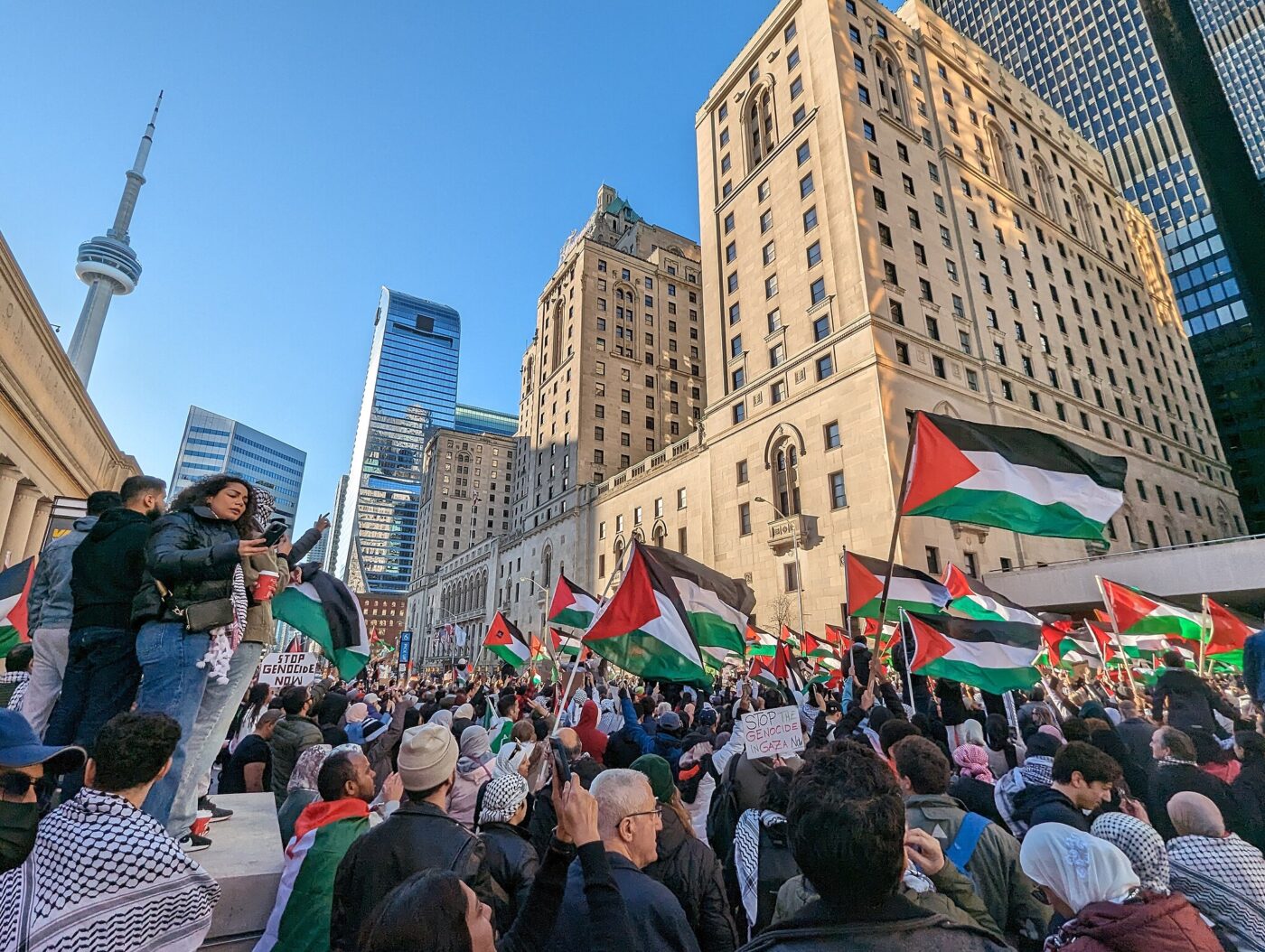

By many metrics, Toronto is the most diverse city in the world.
A BBC Radio analysis in 2016 found this was the case after London, England’s Mayor Sadiq Khan claimed his city was the most diverse. Nice try, London.
Toronto is much more diverse than Canada on average, with nearly 1.3 million immigrants living in Canada’s largest city, according to the 2021 City of Toronto census. Immigrants make up 23 per cent of the Canadian population, but Toronto has more than double that at 47 per cent. The top three birth countries of immigrants here are the Philippines at 10.3 per cent, China at 10.1 per cent, and India at 7.9 per cent.
With such a large immigrant population comes many different diasporic communities. But what, exactly, is a diaspora?
People who are diasporic have three main attributes, according to Rima Berns McGown, a former lecturer in diaspora studies at the University of Toronto and former Beaches-East York MPP. First, they “have settled, or been resettled, outside the place they once considered home.” Second, diasporic people balance a connection to their adopted country with a connection to their original homeland, whether “mythic” or real. And finally, within the adopted country, they balance a connection to their diasporic community with a connection to society at large.
In Toronto, these balancing acts are on display in diasporic electoral politics at the federal, provincial and municipal levels.
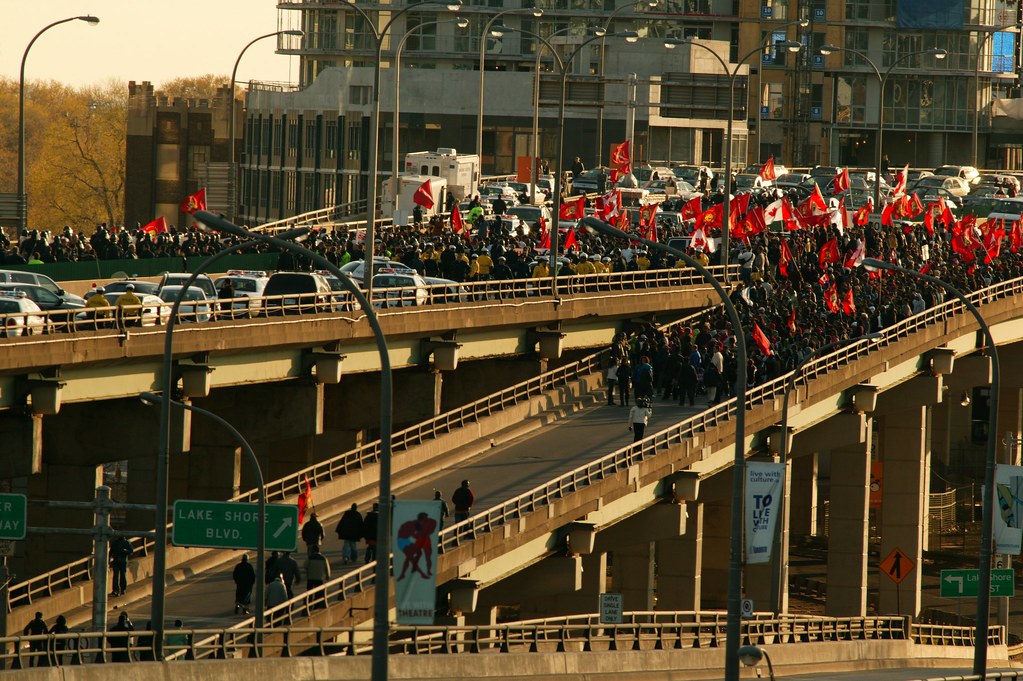
📸 TAMIL PROTESTERS BLOCKADE THE GARDINER EXPRESSWAY IN MAY 2009. : 松林 L.
In May 2009, for example, members of the Tamil diaspora shut down part of the Gardiner Expressway to protest what they called a genocide in their homeland of Sri Lanka. Ten years later, to mark the anniversary of the end of the civil war in Sri Lanka, then-mayor John Tory proclaimed May 18 as Tamil Genocide Remembrance Day.
More recently, protests over Israel’s assault on Gaza (which, full disclosure, I have participated in), have been taking place weekly in Toronto since early October.
Israel’s attack began after a Hamas-led attack on Oct. 7, during which over 1,200 people were killed, including more than 33 children. Over 250 people were then taken hostage from Israel into Gaza — a violation of international law — with an estimated 133 remaining. Israel’s military has killed more than 34,500 people in Gaza, including over 14,500 children, and not including over 7,000 people reported missing or under rubble. There are 1.7 million internally displaced people and 1.1 million people facing catastrophic levels of food insecurity in Gaza, according to the UN. The International Court of Justice ruled in January that it was “plausible that Israel’s acts could amount to genocide.”
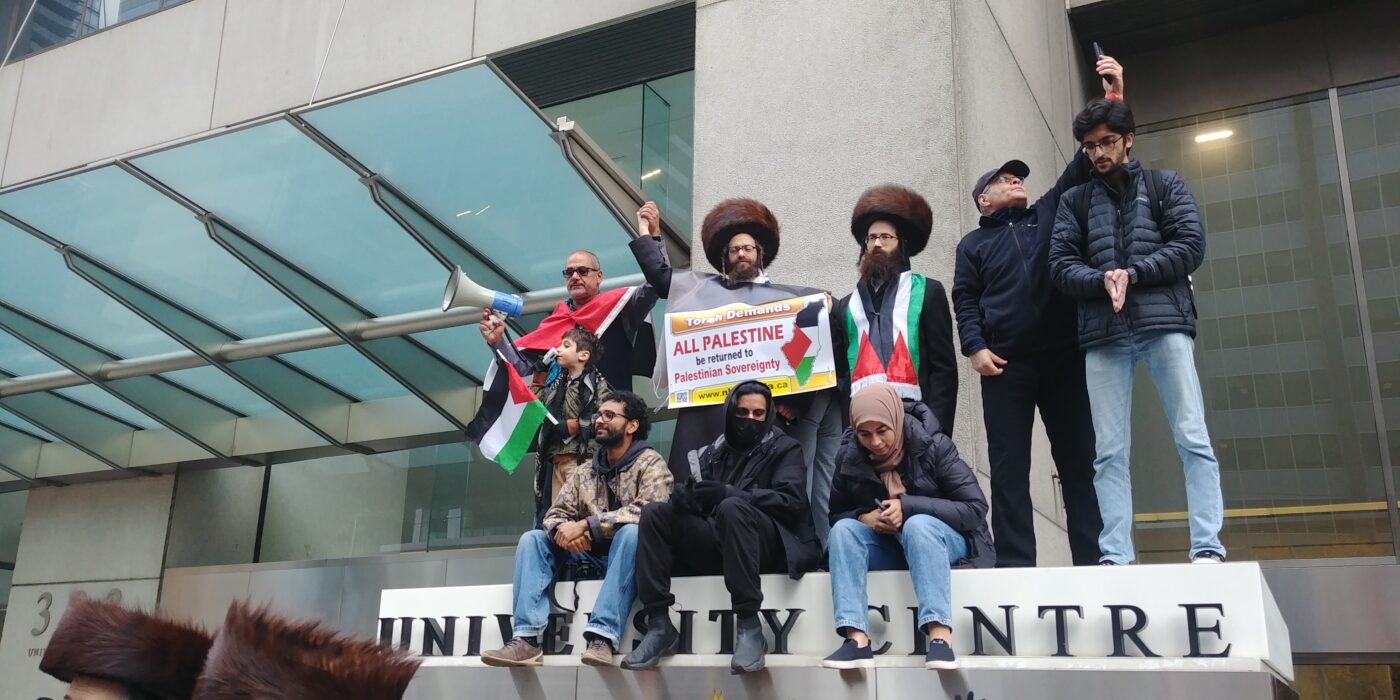
📸: JAMES WESTMAN/THE GREEN LINE.
Rarely do pro-Palestine and pro-Israel protesters meet, but in March, members and allies of the Palestinian and Jewish diasporas counter-protested each other on opposite sides of the street outside the Beth Avraham Yoseph of Toronto synagogue near Bathurst Street and Clark Avenue in Thornhill.
Meanwhile, two of Toronto’s largest diasporas are currently wrestling with politics from their homelands, including possible foreign interference — ultimately impacting politics here in the GTA.
The Samara Centre for Democracy measured online abuse received by candidates in the 2021 federal election, 2022 provincial and municipal elections and last year’s mayoral by-election, among others.
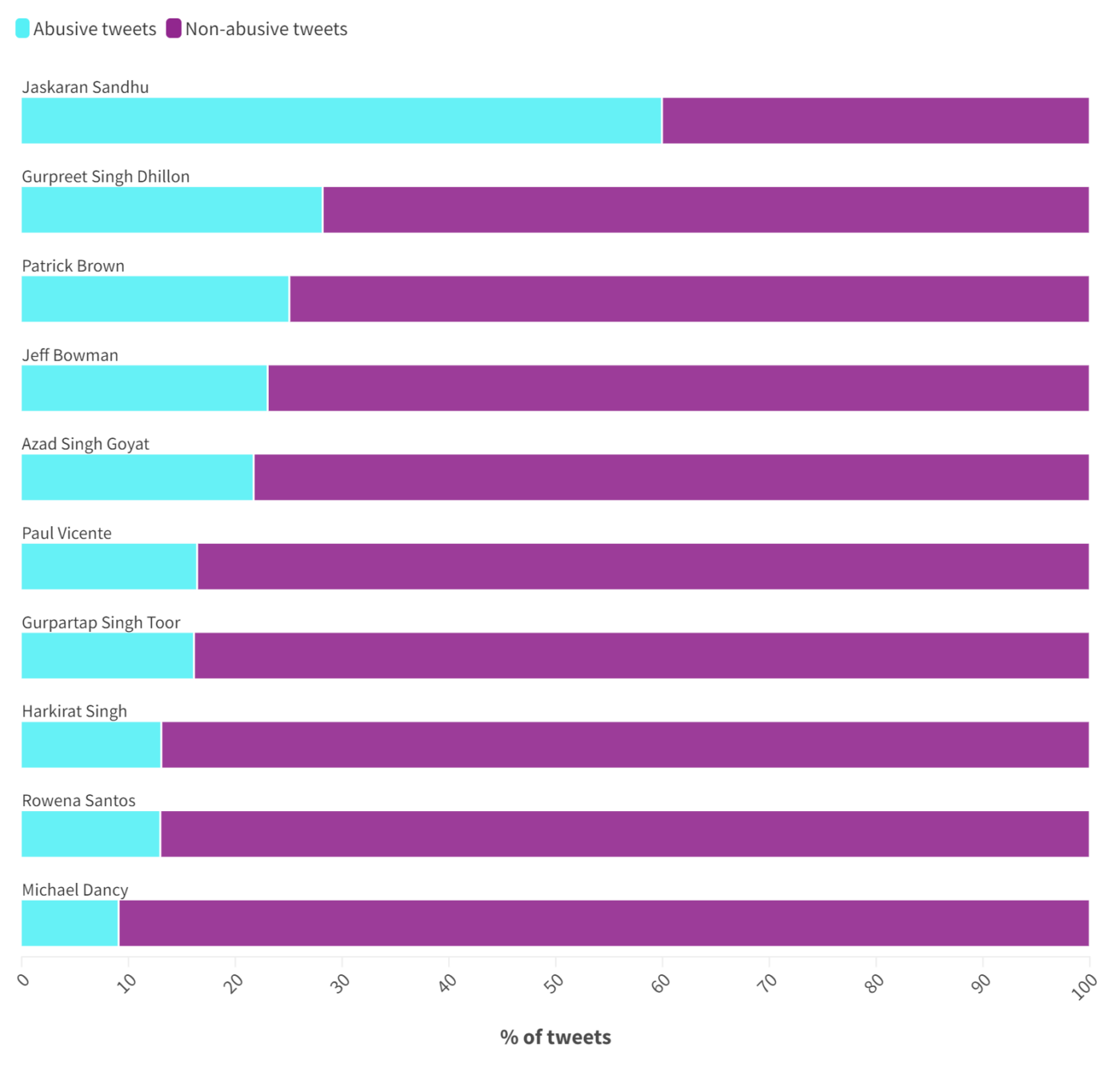
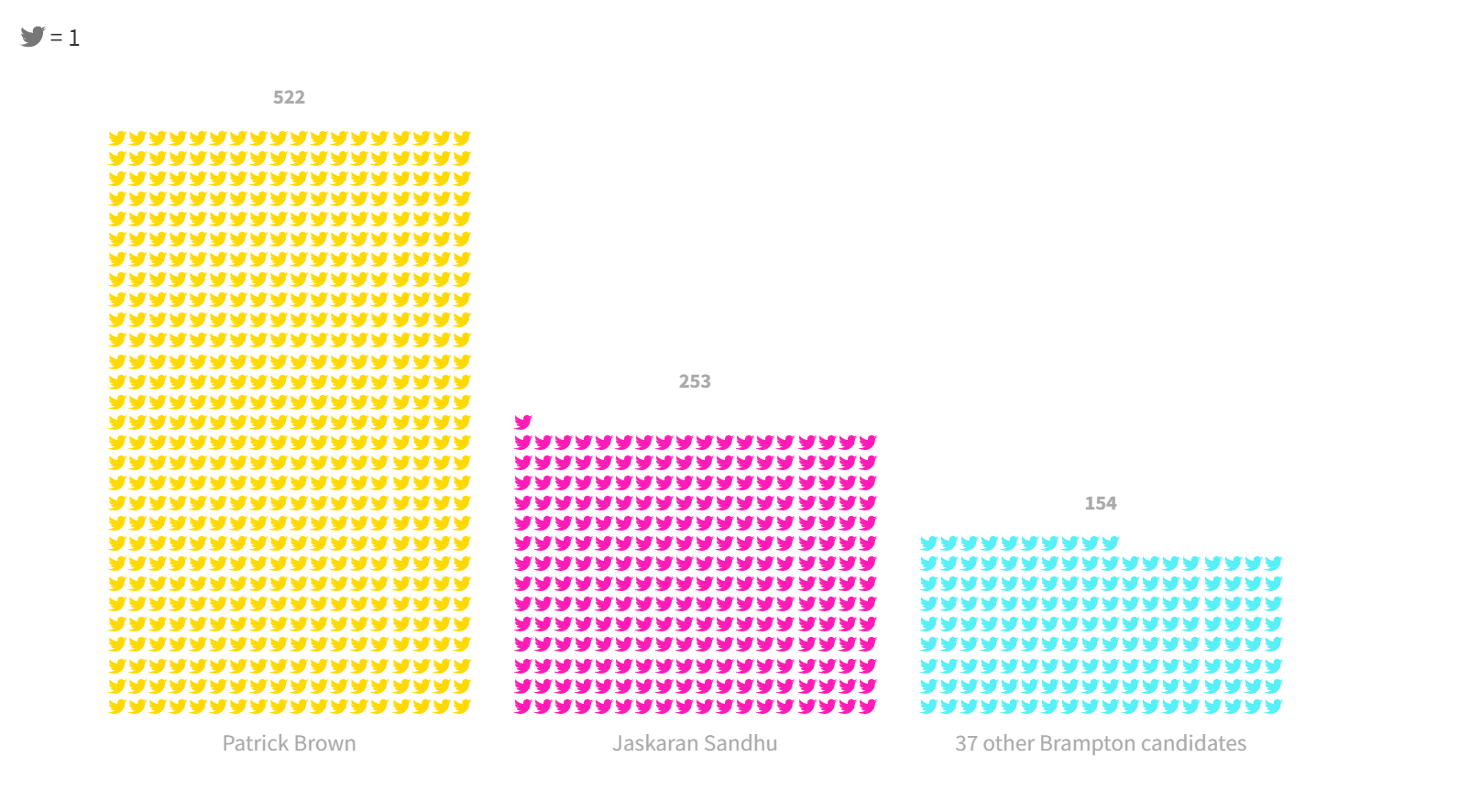
It found that first-time city councillor candidate Jaskaran Sandhu faced tweets that were abusive in nature almost two-thirds of the time in the 2022 Brampton municipal election. Sandhu promotes self-determination for Sikhs in India, and many of the abusive tweets targeting him were related to this advocacy.
Meanwhile, Mayor Olivia Chow was on the receiving end of anti-East Asian racism during last year’s by-election when she was repeatedly and baselessly accused online of allegiance to the Chinese Communist Party.
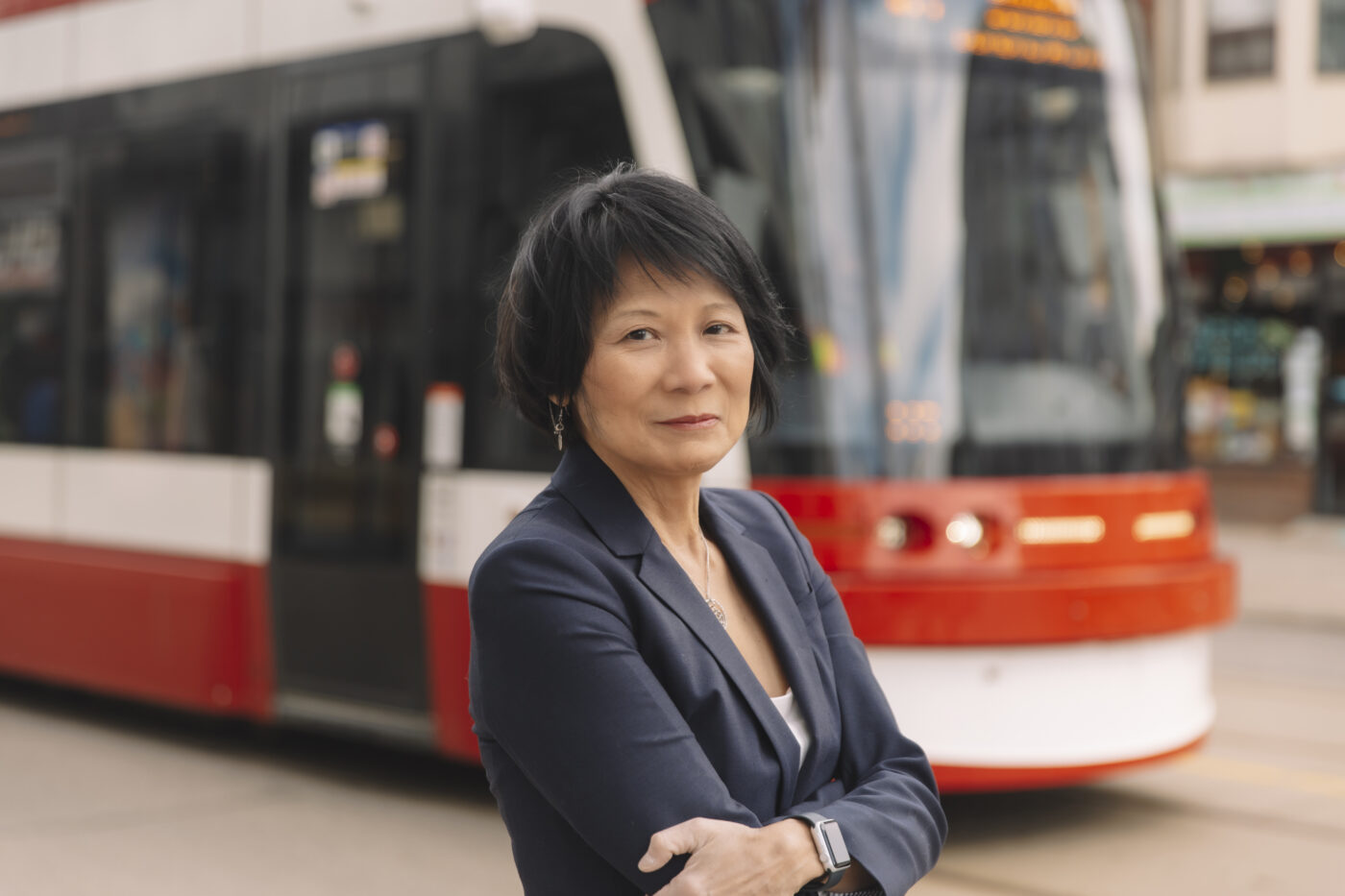
📸: PROVIDED BY OLIVIA CHOW.
Chow’s election as Toronto’s first racialized mayor, first East Asian mayor and first mayor from the Chinese diaspora was a huge step forward for diasporic communities. But Toronto still has a long way to go.
It’s important to note that not all diasporic communities are racialized. Berns McGown’s definition includes Scots as well as Ugandans, for example. “Scots are at the very centre of the dominant Canadian society, but…many still wallow from time to time in diasporic nostalgia,” she explains.
However, as Berns McGown writes, Canada’s population is increasingly “made up of visible minorities — visible in terms both of colour and dress, whose religion, ethnicity and worldview appear to provoke more of a challenge to the European Judeo-Christian status quo.” This appears to make racialized people “more ‘diasporic’” and “more ‘othered’” in relation to Canadian society, she continues.
This “othering” is evident in the representation gap between our city’s racialized diasporic population and its representatives at the federal, provincial and municipal levels. Fifty-six per cent of Toronto’s population is racialized, yet at the federal level only 48 per cent of Toronto’s MPs are racialized, representing an eight point gap in representation between the population and the legislature.
Meanwhile, only 44 per cent of Toronto’s members of provincial parliament are racialized, representing a 12-point gap. The biggest gap in representation is at the local level. Only 32 per cent per cent of Toronto city council is racialized, representing a significant 24-point gap.
METHODOLOGY: DATA BASED ON OFFICIAL PARLIAMENTARY/PARTY/CAMPAIGN BIOGRAPHIES, SOCIAL MEDIA ACCOUNTS, NEW ARTICLES, AND PHOTO AND NAME ANALYSIS 📊: JAMES WESTMAN/THE GREEN LINE.
At the same time, immigrants with Canadian citizenship for fewer than 10 years were 11 per cent less likely than Canadian-born citizens to vote in the last federal election, according to Statistics Canada. This is an obstacle to full participation in democracy — something Toronto continues to struggle with after a 37 per cent voter turnout in last year’s mayoral by-election and an abysmal 30 per cent voter turnout in the 2022 municipal election.
On top of this, nearly half a million people without Canadian citizenship live in Toronto as of the latest 2021 census. While they pay taxes like citizens do, they have no influence over how their tax dollars are used.
How can the representation gap be closed? Erin Tolley, the Canada Research Chair in gender, race and inclusive politics at Carleton University, writes that while there’s no shortage of racialized Canadians seeking office, “their presence declines at each stage of legislative recruitment.” In other words, Tolley says our political parties are to blame.
But she adds that while political parties are one of the biggest hurdles to political representation, they’re also able to encourage inclusion. Just as political parties helped to increase the representation of white women through “proactive, targeted recruitment and selection,” Tolley writes, they can do the same for racialized candidates — and increase representation from diasporic communities.
Today’s stories lead to tomorrow’s solutions, so sign up for our newsletter to take action on the issues you learn about in The Green Line.
Step 2
OPINION: The Digital Battleground Shaping Toronto's Civic Future
This op-ed was a collaborative project between The Green Line and The Samara Centre for Democracy. Please RSVP to attend our panel event and mixer, here.
Immigrants now make up almost a quarter of Canada’s population — the largest share in our country’s history, according to Statistics Canada.
The number of children of immigrants (second-generation Canadians) is also increasing. Youth under age 15 with at least one parent born outside of Canada has grown from 26.7% in 2011 to 31.5% in 2021. In Toronto, nearly half of the population is immigrants.
📸: SAMARA CENTRE FOR DEMOCRACY.
Terms like “Caribbean-Canadian” reveal the complex, varied identities that come with being a part of immigrant or diaspora communities in Canada. Current technology, particularly social media platforms and family group chats, facilitates strong and continued connections between communities across borders. As a result, politics from beyond and within Canadian borders are now increasingly interwoven.
On one hand, it’s much easier to stay connected and engaged with news from our countries of origin. On the other hand, there’s rising concern that nefarious actors can now access and influence beyond their national borders, reaching into local communities in Canada. This could have serious implications for civic participation and the health of our democratic culture.
“47% of Canadian social media users say they stay away from political discussions out of fear of being criticized”
SABREENA DELHON, CEO, SAMARA CENTRE FOR DEMOCRACY
“47% of Canadian social media users say they stay away from political discussions out of fear of being criticized”
At the Samara Centre for Democracy, our SAMbot project has measured online abuse received by candidates in Canadian elections. To date we’ve analyzed over 3.7 million tweets received by over 1,100 candidates across 12 elections at federal, provincial and municipal levels.
We have published three in-depth reports with our analysis and shared these findings in over 35+ media interviews and at 35+ invited presentations for professional and general public audiences.
Our analysis has quantified the dire working conditions of the digital campaign trail where threats, identity attacks and sexually explicit content abound. These conditions affect not only who runs in politics — but who stays. There’s also an impact on the electorate; our research has found that 47 per cent of Canadian social media users say they stay away from political discussions out of fear of being criticized.
In addition to examining the state of the political conversation online, our SAMbot work has also indicated the need to investigate potential foreign interference in our local politics. Typically, conversations about election interference beyond our borders focus on federal politics. However, SAMbot’s analysis of recent Toronto and Brampton elections point to the vulnerability of local democracies, as well, perhaps because municipal elections have lower voter turnout and receive less media coverage than federal or provincial races; this makes it easier for malicious actors to fly under the radar.
📸: Samara Centre for Democracy.
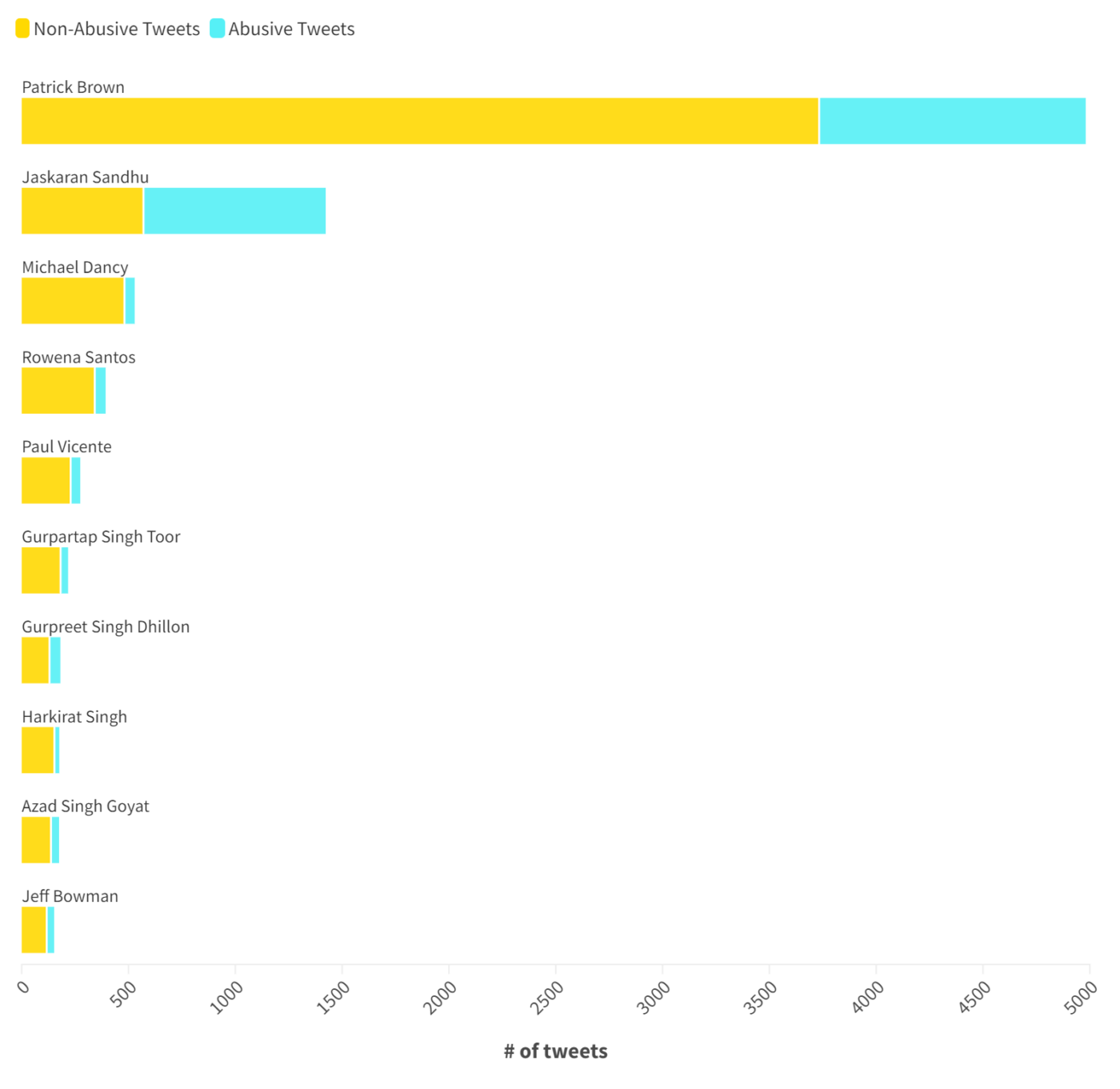
We tracked candidates in the 2023 Toronto by-election, and found that Olivia Chow — who was ultimately elected mayor — received the second-highest volume of abusive tweets. This vitriol included accusations of being aligned with the Chinese Communist Party. It’s a form of “red-tagging,” which is a long-running scare tactic used to discredit individuals by labeling them communists working against the state, specifically due to their ethnic identity or country of origin. The prevalence of this type of anti-East Asian racism online has real world consequences; since the start of the COVID-19 pandemic in 2020, reports of offline anti-East Asian hate have soared.
In SAMbot’s analysis of the 2022 Brampton election, we found that over 80 per cent of tracked identity attacks were directed at just two candidates: incumbent mayoral candidate Patrick Brown and first-time city councillor candidate Jaskaran Sandhu. Three out of every five (60%) tweets received by Sandhu were abusive.
📸: Samara Centre for Democracy.
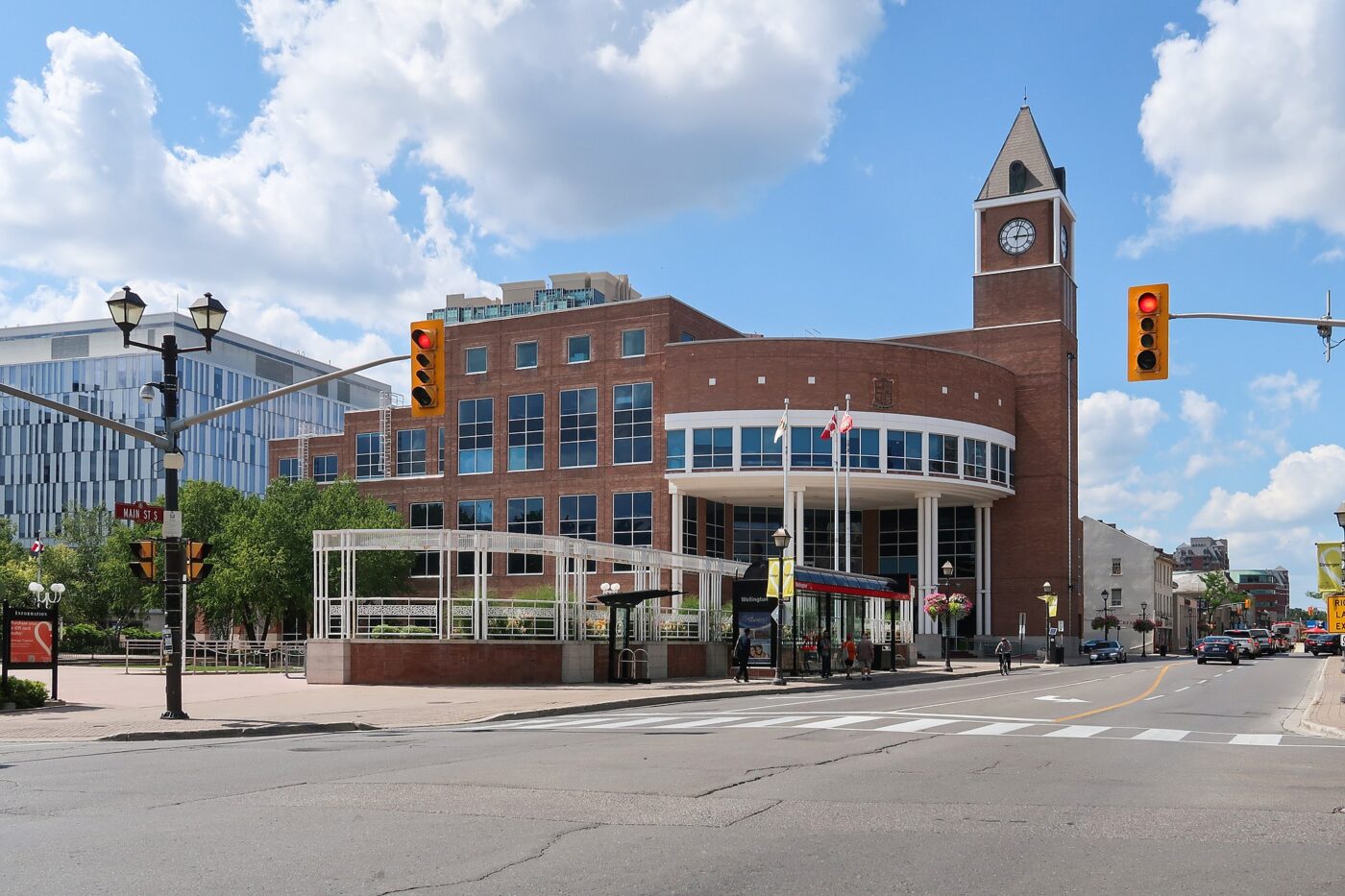
This matters because Sandhu, who did not get elected, is a co-founder of Baaz News, a news outlet that reports on issues relevant to Canada’s Sikh and Punjabi diaspora. He’s an advocate for the self-determination of Sikhs in India and a vocal critic of India’s Prime Minister Narendra Modi’s growing authoritarianism. Many of the identity attacks directed at Sandhu were related to his support for Sikh self-determination in India. He openly discussed what it was like to be on the receiving end of attacks that he believes came from bots in India, and shared that those who expressed support for his candidacy online also received attacks.
📸: Canmenwalker/OPENVERSE.
These examples from Chow’s and Sandhu’s experiences on the digital campaign trail suggest that online hate targeted at diasporic communities in Canada may pose a serious threat to participation in our democracy. The sense of surveillance and the potential interference of foreign governments in our local politics may scare off potential candidates from running in elections — not to mention Torontonians from diasporic communities from participating in civic activity at all, both online and offline. This has serious implications for representation and participation in our democracy from groups that make up a significant portion of the Canadian population.
The data shared here shines a light on the distinct challenges faced by different diasporic communities in our city. Protecting our local democracies against the challenges of the 21st century means thinking about how technology is shaping different communities’ experiences with Canadian politics, and developing solutions that protect Canadians like Chow and Sandhu in their efforts to represent and serve their communities.
OPINION: The myth of upward mobility amid immigrant health decline in Toronto
This op-ed was a collaborative project between The Green Line and The Conversation Canada. Please RSVP to attend our panel event and mixer, here.
📸: LittPro Inc/unsplash.
Immigrant health research frequently refers to the notion that immigrants are generally healthier than people born in Canada, but that immigrants’ health worsens with time compared to those born in Canada.
Worsening health over time has been attributed to a number of factors including an unexpected lack of social mobility after immigration. The story often goes that immigrant parents willingly make these sacrifices for the good of their children, with the widespread assumption that emphasizing good grades and higher education among the next generation will make their sacrifices worth it. But recent research finds that this lack of social mobility extends into the second generation.
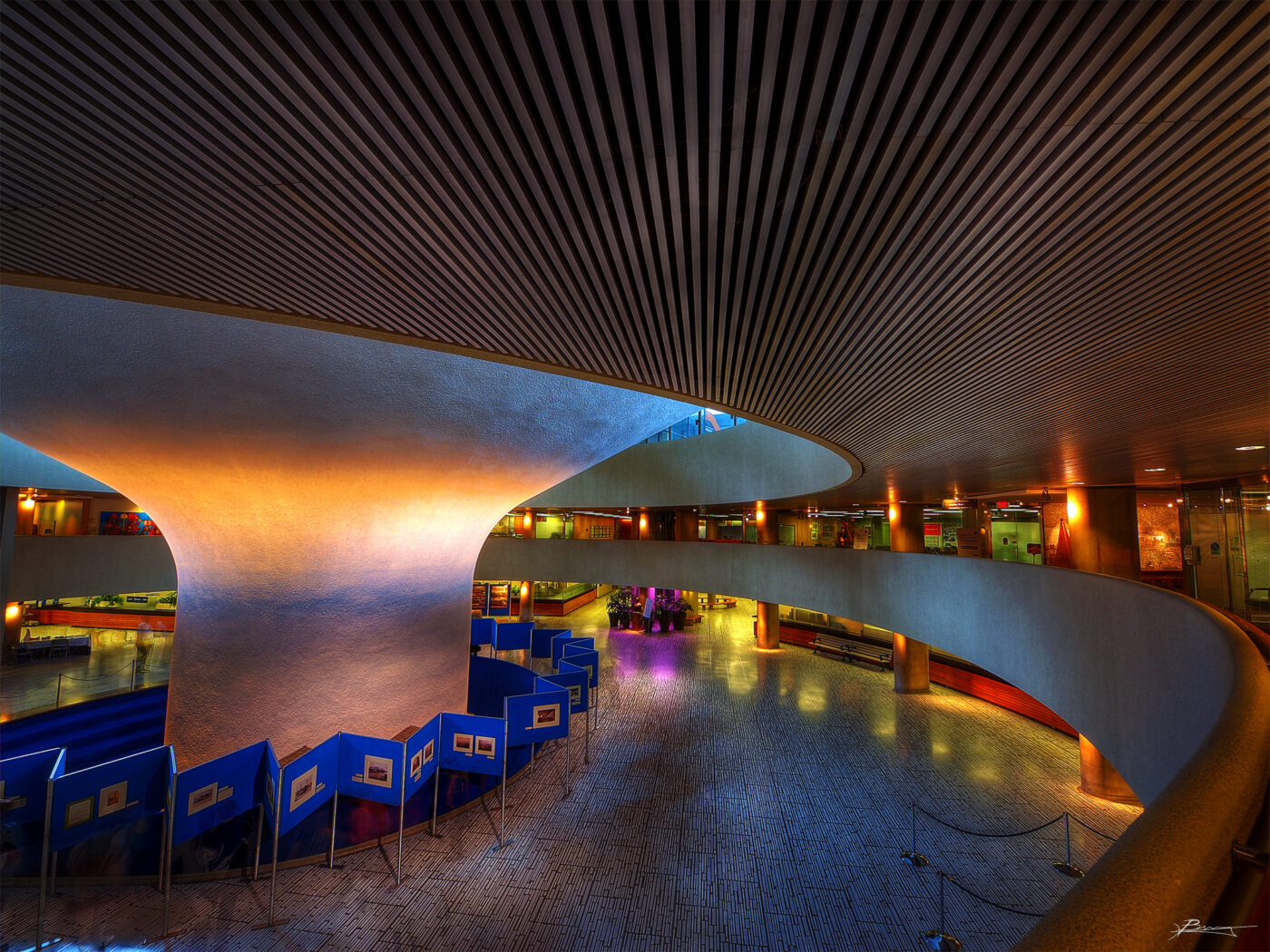
📸 THE LOBBY OF TORONTO CITY HALL. : paul bica/FLICKR.
As someone who’s spent more than a decade conducting immigrant and refugee health research, there’s a growing contingent of researchers who recognize that immigrants in Canada have extremely diverse identities and experiences, all of which affect their experiences with the structural and social determinants of health; that, in turn, shapes health and health care access, and ultimately challenges the notion that immigrants are a monolith with identical health and social trajectories.
This “healthy immigrant effect” and the upward social mobility of subsequent generations are commonly believed theories in academic circles, but I fear these ideas have caused the nuanced needs of immigrant and diasporic communities to be over-simplified, dismissed and even neglected by policymakers.
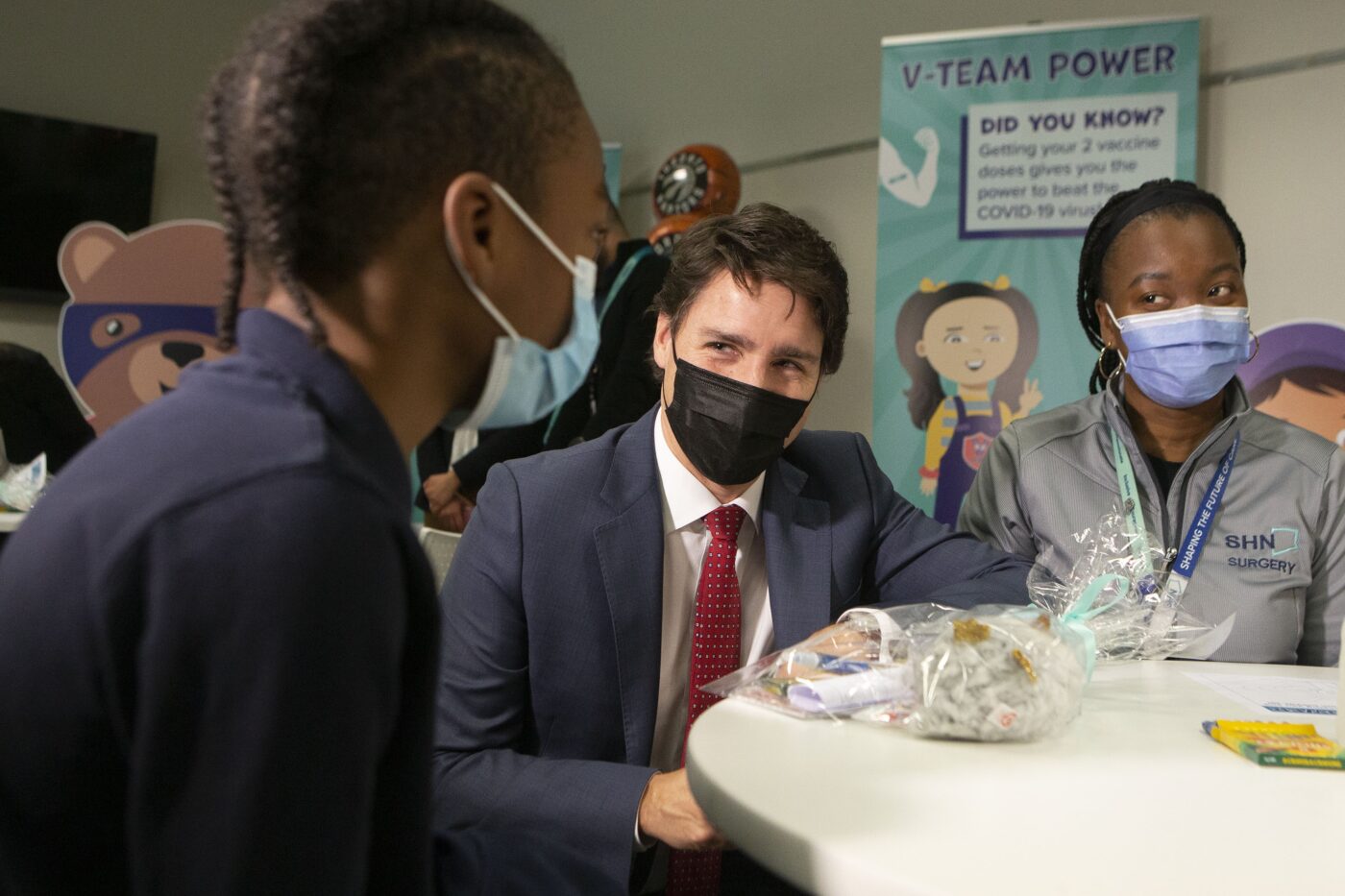
📸 Prime Minister Justin Trudeau chats with Rashuan Robinson, 11, and his mother Tamara Brown after Rashuan received his COVID-19 vaccine at Centenary Hospital in Scarborough's Morningside neighbourhood on Friday, Dec. 10, 2021. : hailey.sani/openverse.
HIT HARD
The legacy of this neglect became painfully clear in the early days of the COVID-19 pandemic amid a litany of reports about how long-term care workers, taxi drivers, food processors and other essential workers who came to Canada as immigrants were falling victim to the virus.
Statistics have since backed up these reports. Toronto Public Health, the first health unit in Canada to collect race-based data during the pandemic, found racialized Torontonians (including mostly immigrants but also those in the racialized diasporic communities) were much more likely to be infected or hospitalized due to COVID-19. One upcoming study found that before high-population COVID-19 vaccine coverage was achieved, immigrants in Ontario — particularly those from Central America, Jamaica, parts of South Asia and East Africa — were much more likely to be hospitalized or die from COVID-19 than other residents in the province.
The major contributing factors likely relate to a combination of a mismatch between their education and the jobs they end up getting, and employer discrimination, which leads to immigrants being overrepresented and trapped in essential, low-wage precarious work. These jobs have a higher risk of exposure to COVID-19, and don’t provide employer-paid sick leave.
“RACIALIZED AND LOW-INCOME CANADIANS ARE THE LEAST LIKELY TO REPORT HAVING A PRIMARY-CARE PHYSICIAN.”
Thankfully in Ontario, a provincial government focus on equitable vaccine distribution, as well as innovative strategies like Toronto’s Community Health Ambassadors program, implemented by immigrant-serving community organizations, led to a remarkably equitable two-dose vaccine rollout and equally remarkable reductions in hospitalizations and deaths, according to the upcoming study.
But considering the subsequent elimination of many of these programs and policies, which were all put in place to address barriers to vaccination for immigrants and their higher exposure to COVID-19 — due, in part, to the absence of employer-paid sick days — it’s possible that once again immigrants are bearing the brunt of the still-circulating and -mutating virus.
Policy neglect is also responsible for the current primary-care crisis across Canada, with pre-pandemic inequities becoming further entrenched by the COVID-19 pandemic.
Racialized and low-income Canadians are the least likely to report having a primary-care physician, while family doctors nearing retirement have a larger number of patients who face multiple social barriers to health and health care access; both affected groups are likely made up largely of immigrant and diasporic communities.
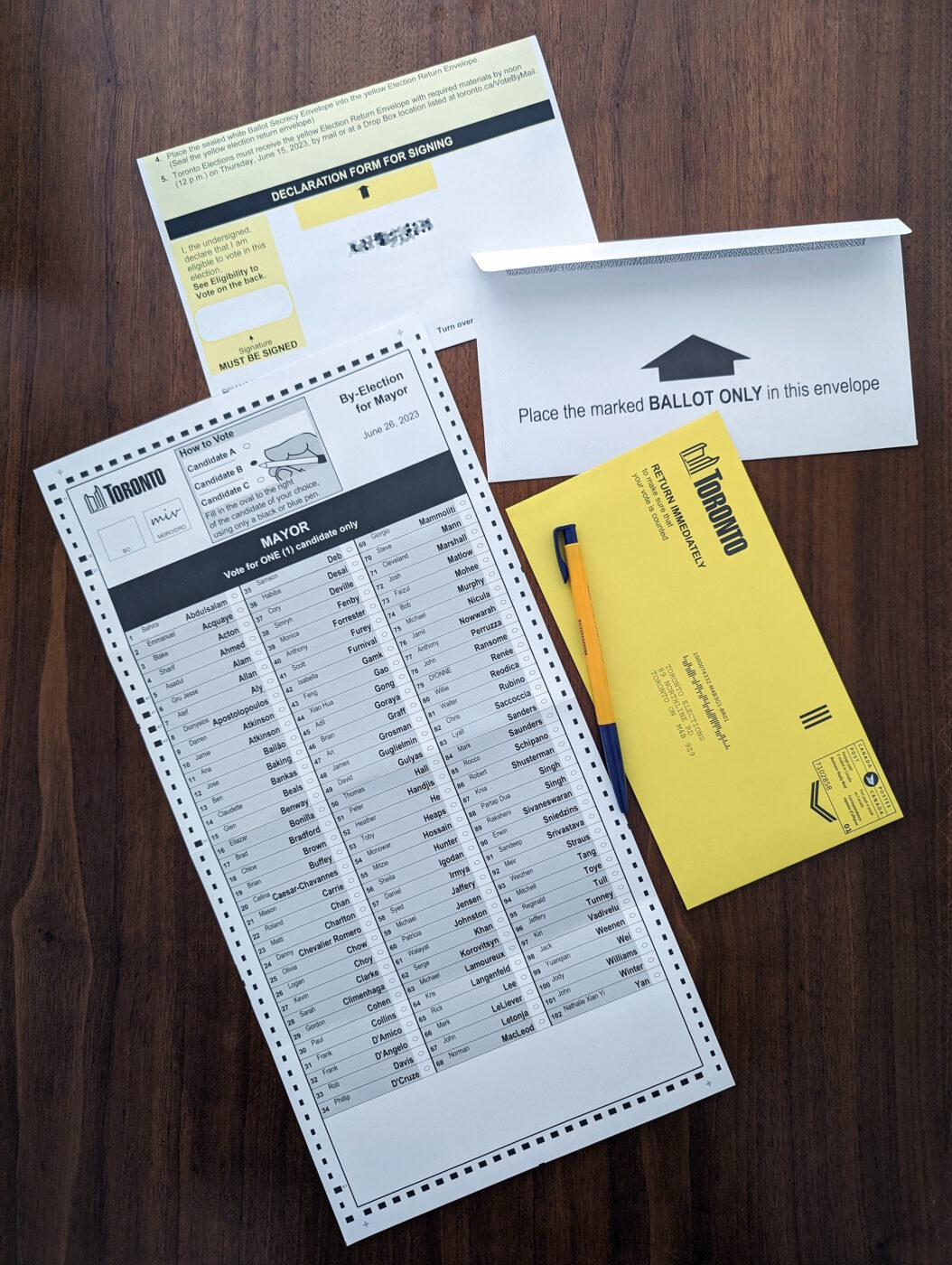
📸: Sikander Iqbal/Openverse.
IMPORTANCE OF ELECTIONS
So how can the health and well-being of immigrants — widely praised as being the engine of Toronto’s, and more broadly, Canada’s economy — and subsequent generations be prioritized?
First, at a minimum, our elected officials should engage meaningfully and respectfully with immigrants from all walks and stages of life, and avoid stoking xenophobic sentiments among the public.
Second, based on the fact that immigrants with Canadian citizenship — particularly those who’ve been in Canada for fewer than 10 years — are less likely than Canadian-born residents to vote in federal elections, there must be civic engagement initiatives connecting immigrants’ priorities with specific political platforms coupled with “Get Out the Vote” campaigns.
Immigrants who are not yet citizens can’t vote in elections at any level of government, so they have no influence over how their tax dollars are spent. That voter gap should be addressed immediately, particularly given the large numbers of permanent and temporary residents who’ve made Toronto and other Canadian cities their home in recent years.
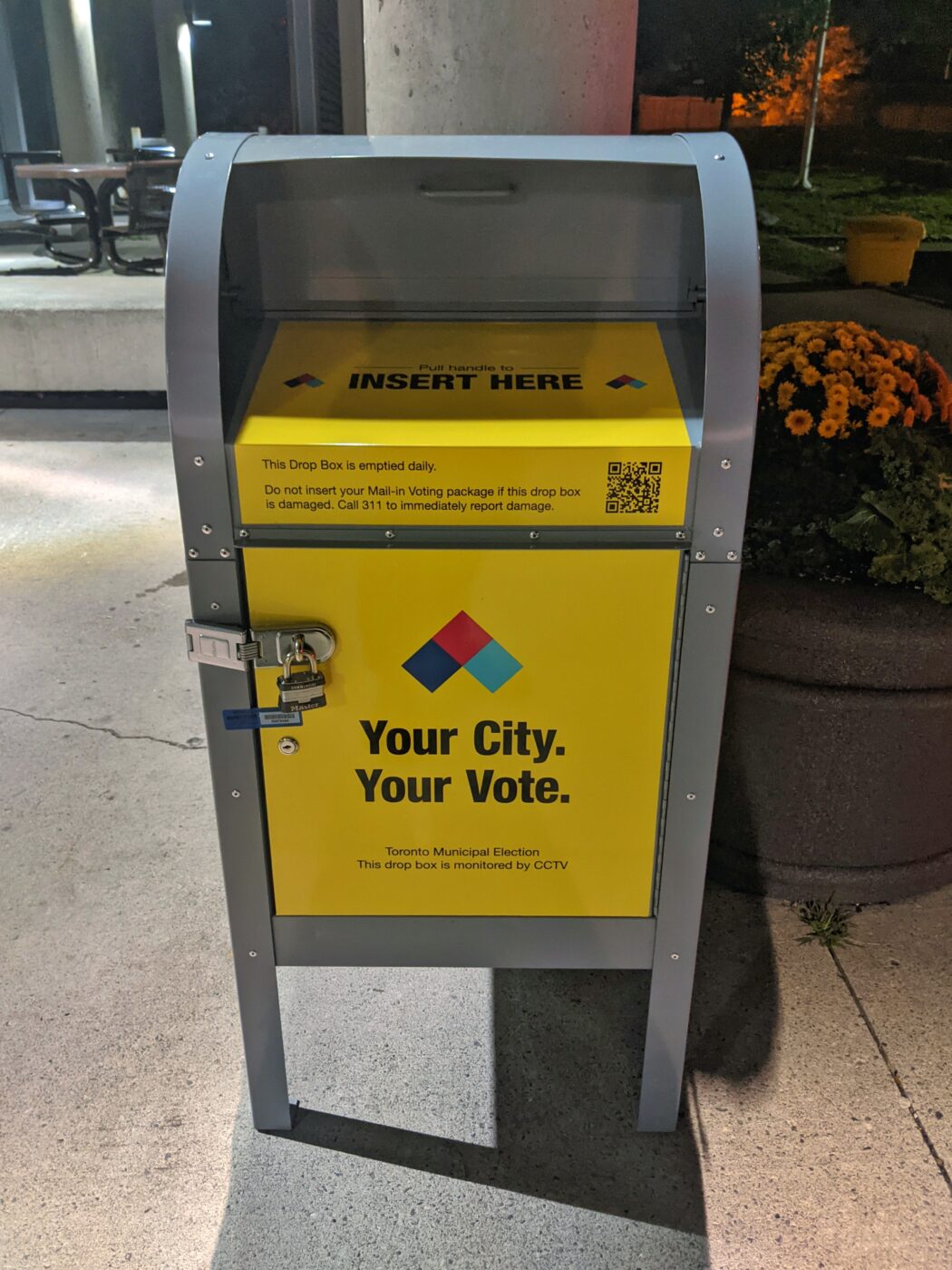
📸: Sikander Iqbal/Wikimedia Commons.
Right now, it seems these groups of potential future citizens are good enough to fill labour gaps and contribute their time, money and tax dollars to the Torontonian and Canadian economies. But they’re not good enough to have their voices and needs recognized and considered in the political decision-making that governs their everyday lives and futures.
The false notion of the healthy immigrant effect and assumption of upward social mobility among the second generation has been reinforced through a lack of recognition of the diversity of identities and experiences of immigrants in Toronto and beyond. These assumptions may have led policymakers to neglect the health and health-care needs of immigrants.
Addressing long-standing inequities in immigrant and migrant voter participation in Canada may finally help shine a spotlight on the social and economic hardships that immigrant and diasporic communities have faced for decades, not to mention the adverse impact on their health and health-care access.
OPINION: New commission sheds light on how diasporic communities are impacted by foreign interference
This op-ed was a collaborative project between The Green Line and The Conversation Canada. Please RSVP to attend our panel event and mixer, here.
Among the few countries that the commission examined, the People’s Republic of China was found to be “the foremost perpetrator” of foreign interference.
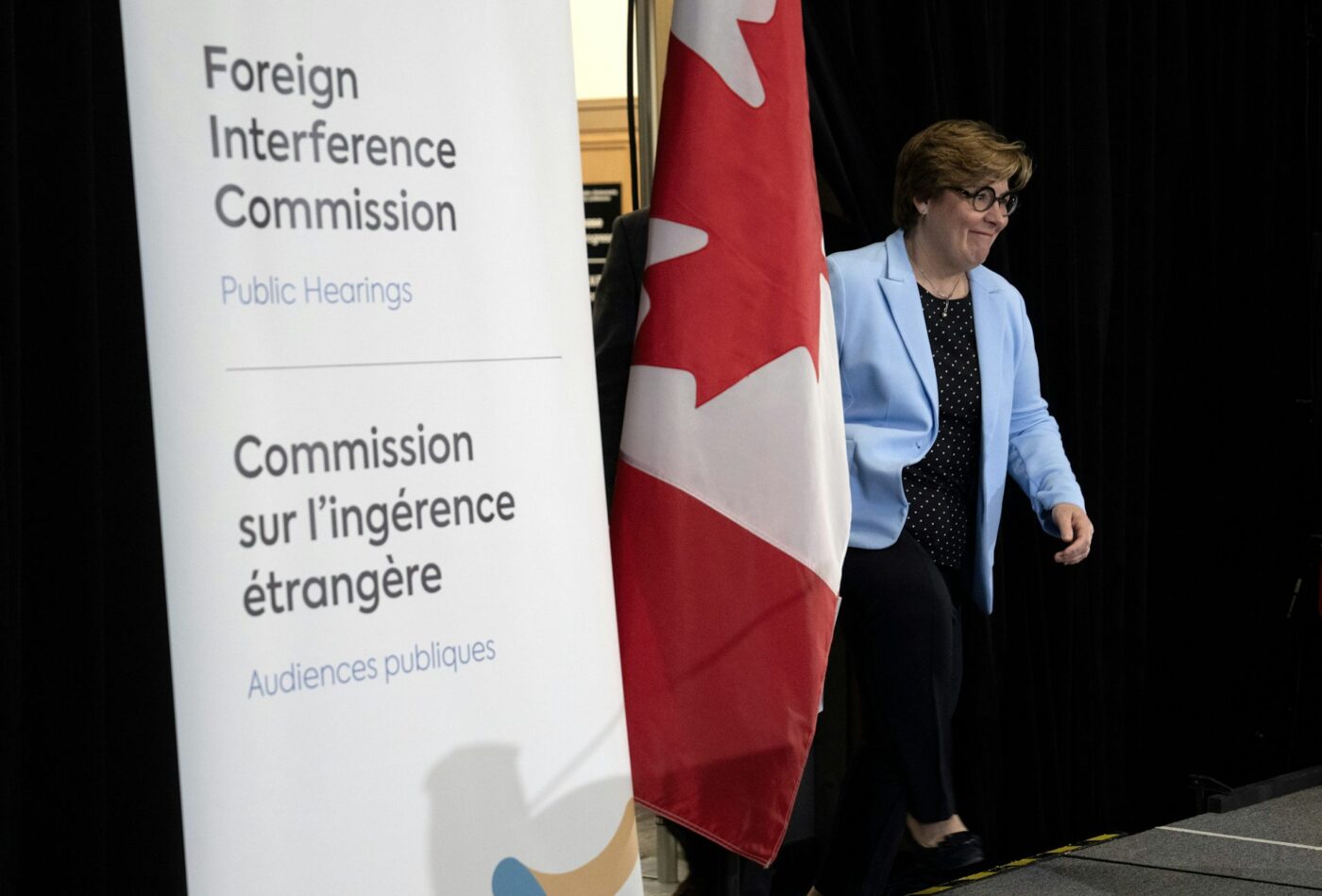
📸: Adrian Wyld/The Canadian Press via The Conversation Canada.
The federal government established the Public Inquiry into Foreign Interference in Federal Electoral Processes and Democratic Institutions, led by Justice Marie-Josée Hogue, in September 2023.
In Canada, foreign interference is defined as “harmful activities undertaken by foreign states or their proxies that are clandestine, deceptive, or involve a threat to any person to advance the strategic objectives of those states to the detriment of Canada’s national interests.”
These threats and activities of state or non-state entities foster polarization, distrust and erode faith in democratic systems.
Hogue’s initial report found that foreign interference occurred in both of the last two federal elections — held in 2019 and 2021 — and is expected to continue.
In contrast to former Governor-General David Johnston’s separate report on foreign interference, the commission made public the bulk of security and intelligence reports during the first stage of the hearings. Most of these documents were declassified and unredacted.
China is the biggest culprit
Among the few countries that the commission examined, the People’s Republic of China was found to be “the foremost perpetrator” of foreign interference.
Its sophisticated, pervasive and persistent activities target government officials, electoral candidates, political organizations and diaspora communities.
With billions of dollars poured into its global operation, China expends significantly more resources on foreign interference-related activities than any other country.
The commission’s Stage 1 hearings featured a panel of diaspora community representatives who have been affected by foreign interference and transnational repression. Together with witness statements from members of Parliament and an ex-MP who dealt with foreign interference, a diaspora perspective emerged from this initial phase of the commission’s hearings.
In her report, Hogue noted some diaspora communities are disproportionately affected by foreign interference. Targeted by China in its transnational repression efforts, five groups — dubbed the “Five Poisons” by Chinese authorities — particularly bear the brunt: Falun Gong adherents, Uyghurs, Tibetans, supporters of Taiwan and those advocating for democracy in mainland China and Hong Kong.
It was chilling to hear Mehmet Tohti from the Uyghur community tell the commission about a threatening phone call from Chinese state police announcing the death of his mother and two sisters in his homeland. Grace Dai Wollensak from the Falun Gong community broke into tears when she recounted 25 years of foreign interference and transnational repression in Canada.
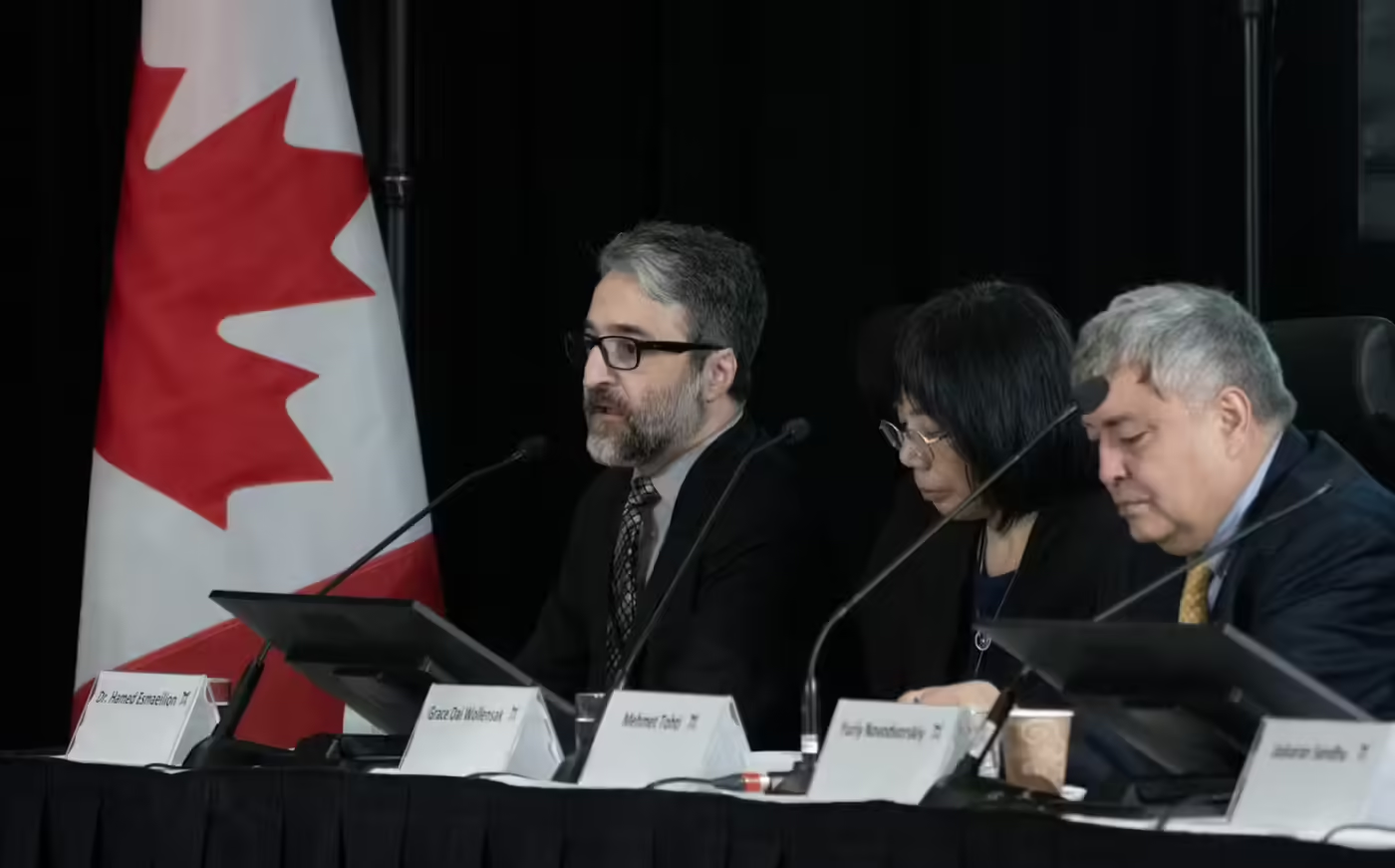
📸: Adrian Wyld/The Canadian Press via The Conversation Canada.
Chinese Reach
Hogue’s report validated the Chinese diaspora group’s lived experiences and their observations about China’s power and motivation to silence dissidents, amplify Chinese Communist Party narratives, control public opinion and sow discord in diaspora communities.
Through its United Front Work Department, an entity under President Xi Jinping’s direct command aimed at shaping international discourse and orchestrating transnational repression, China manipulates democratic institutions to serve Communist Party interests by using rewards and punishments.
Via friendly community organizations or trusted contacts working on behalf of China, the United Front Work Department co-ordinates its foreign interference activities via Chinese embassies or consulates to target activists, dissidents and politicians.
The commission heard that Chinese diaspora members face frightening overt and covert tactics from Chinese consulates, dissuading them from full participation in Canadian public life if they don’t align with China’s interests.
While Hogue determined that foreign interference didn’t determine which party formed a government in either 2019 and 2021, results in certain ridings may have been impacted. For instance, misinformation and disinformation campaigns targeted former Conservative Party leader Erin O’Toole and Kenny Chiu, a former MP from British Columbia, due to their criticisms of China’s human rights record.
Hogue recognized that foreign interference in the last two elections has tarnished Canada’s electoral ecosystem, compromising some voters’ rights to make independent choices. That’s a detriment to democracy.
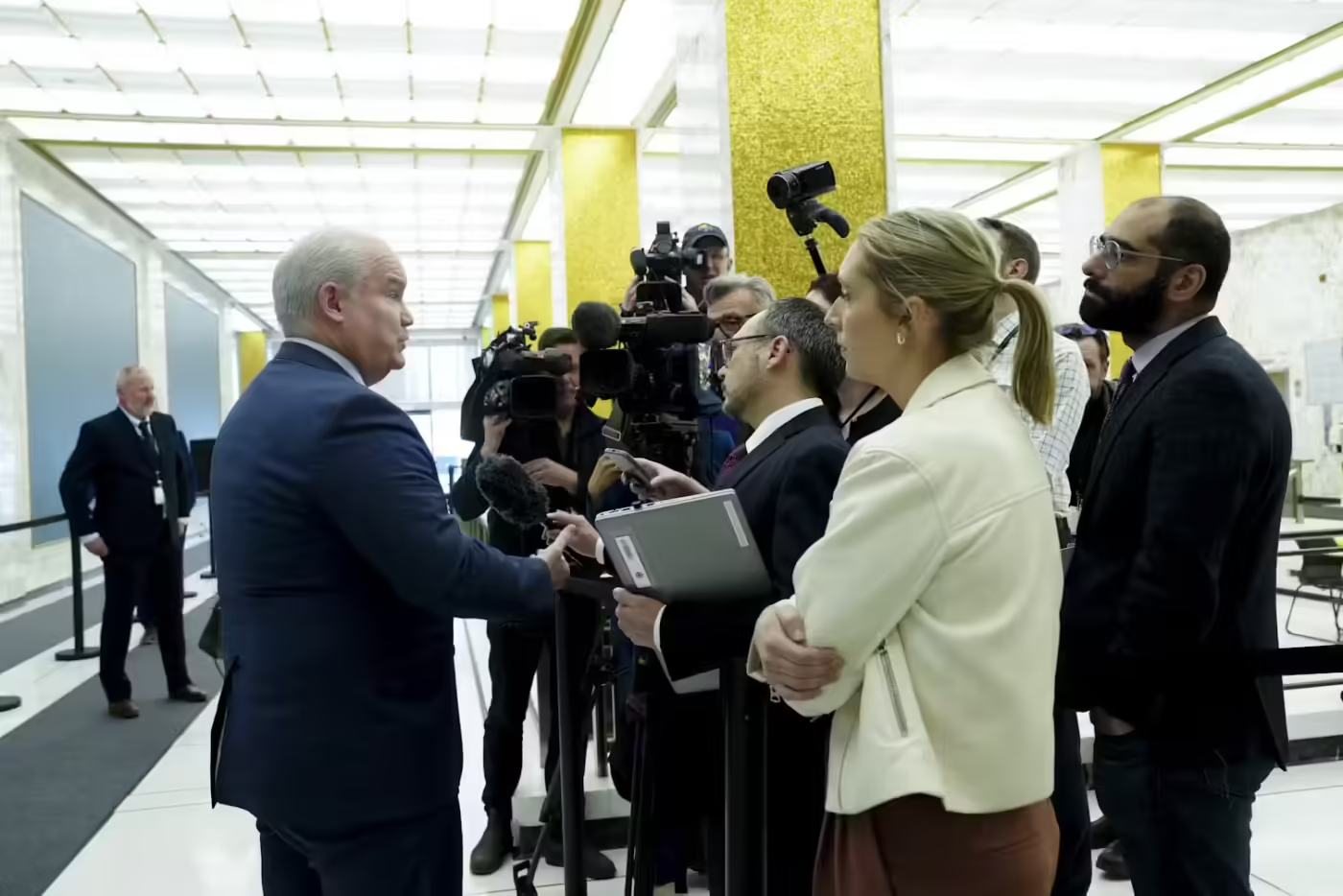
📸: Sean Kilpatrick/The Canadian Press via The Conversation Canada.
Lacking Protection
From a diaspora perspective, protection from foreign interference and transnational repression is of utmost importance.
As revealed in Hogue’s initial report, there were obvious communication gaps among related government departments and agencies during both election periods. There was also a lack of co-ordinated effort and attention to specific warnings about foreign interference that were provided by security and intelligence agencies like CSIS before and during both election campaigns. Diaspora communities were left unprotected because there were no warnings.
Diaspora communities have been failed by the government’s efforts to address foreign interference. The government and political parties have seemingly only been concerned about the political implications and consequences, and not the harm caused to diaspora communities.
Ample intelligence reports on foreign threat activities have reached monitoring bodies like the Security and Intelligence Threats to Elections SITE Task Force and the panel of five senior public servants tasked with monitoring foreign interference and issuing public warnings if they felt there was a threat to the integrity of the vote. The Prime Minister’s Office was notified about these reports.
But the commission heard no incidents were found to have warranted a public statement.
This is likely because protocols on what does warrant a public statement do not reflect the realities of diaspora communities. There was also a probable under-reporting of cases and evidence because diaspora community members lack access to public information, like tip lines, because they’re only available in English and French.
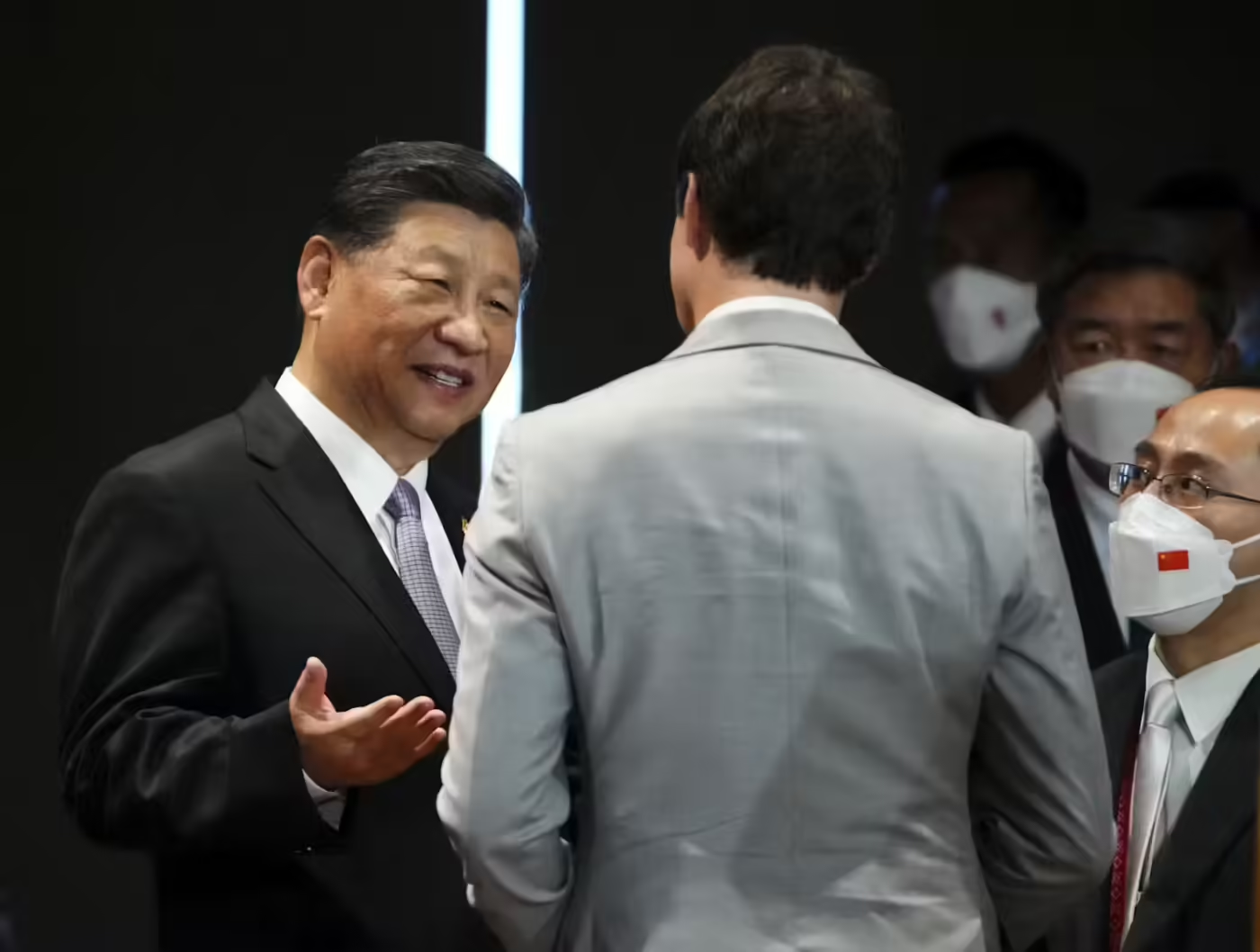
📸: Sean Kilpatrick/The Canadian Press via The Conversation Canada.
Raising Awareness
Despite the fact that the commission’s mandate in Stage 1 was confined to the last two general elections, there may now be greater public awareness of the damage foreign interference has done to Canada’s democratic system.
The commission heard about several disturbing incidents, including the transfer of $250,000 for suspected foreign interference-related purposes, the Chinese consulate’s involvement in transporting international students to a nomination contest in the Toronto riding of Don Valley North and the ostracization of vocal MPs perceived as threats by China. But they’re only the tip of the iceberg.
Hogue’s initial report did not mention the struggles of diaspora communities because the members of those communities weren’t sworn in as witnesses — they appeared at the Stage 1 hearings to raise awareness and provide context. They will likely appear as witnesses in the next phase of hearings, and their lived experiences should augment the intelligence reports and widen the scope of understanding about the threats and activities of state entities and their proxies in Canada.
Hogue has warned that foreign interference will not stop and indeed may become more intense in the future. The perspectives of those from diaspora communities on how to stop foreign interference can help strengthen Canadian democracy.
Here’s your chance to support the only independent, hyperlocal news outlet dedicated to serving gen Zs, millennials and other underserved communities in Toronto. Donate now to support The Green Line.
Step 3
LOCAL DEMOCRACY AND DIASPORA
A panel event and mixer hosted by The Samara Centre for Democracy and The Green Line.
About the Event
Thursday May 23, 2024
5:30 p.m. to 7 p.m. ET
SAMARA CENTRE33 Prince Arthur Ave.
Global politics hit home in a distinct way for Torontonians. As our city’s immigrant communities have continued to grow, with over 50% of our population born outside of Canada, geopolitics and municipal politics have become deeply interwoven in Toronto’s social fabric. In partnership with The Samara Centre for Democracy, our event will look at how diasporic politics shape our local democracy, and explore hopes, solutions and concrete steps for managing this complexity. Featuring panelists Jaskaran Sandhu (State Strategy, Baaz News), Cheuk Kwan (Toronto Association for Democracy in China) and Ryan Singh (Indo-Caribbean Association). RSVPs now for our in-person event.
Events are an essential part of our Action Journey. We want to empower Torontonians to take action on the issues they learn about in The Green Line — so what better way to do that than by bringing people together? From community members to industry leaders, anyone in Toronto who’s invested in discussing and solving the problems explored in our features is invited to attend. All ages are welcome unless otherwise indicated. Our only guidelines? Be present. Listen. Be kind and courteous. Respect everyone’s privacy. Hate speech and bullying are absolutely not tolerated. At the end of the day, if you had fun and feel inspired after our events, then The Green Line team will have accomplished what we set out to do. Any questions? Contact Us.
Step 4
DIASPORIC DEBATE AND DIALOGUE
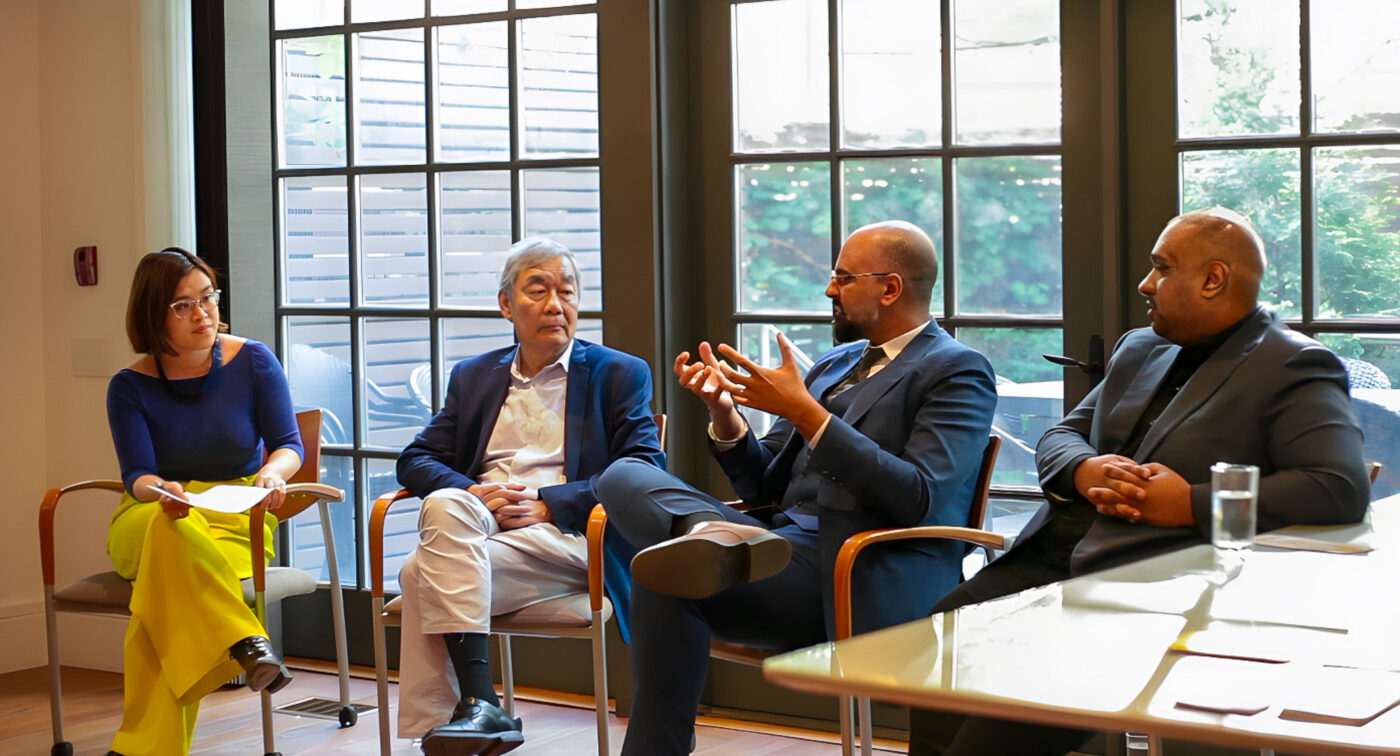
Event Overview
See what you missed from our latest event.
Our community members brainstormed solutions for getting diasporic communities more involved in local politics. Compiled by James Westman.

📸: ANTHONY LIPPA-HARDY/THE GREEN LINE.
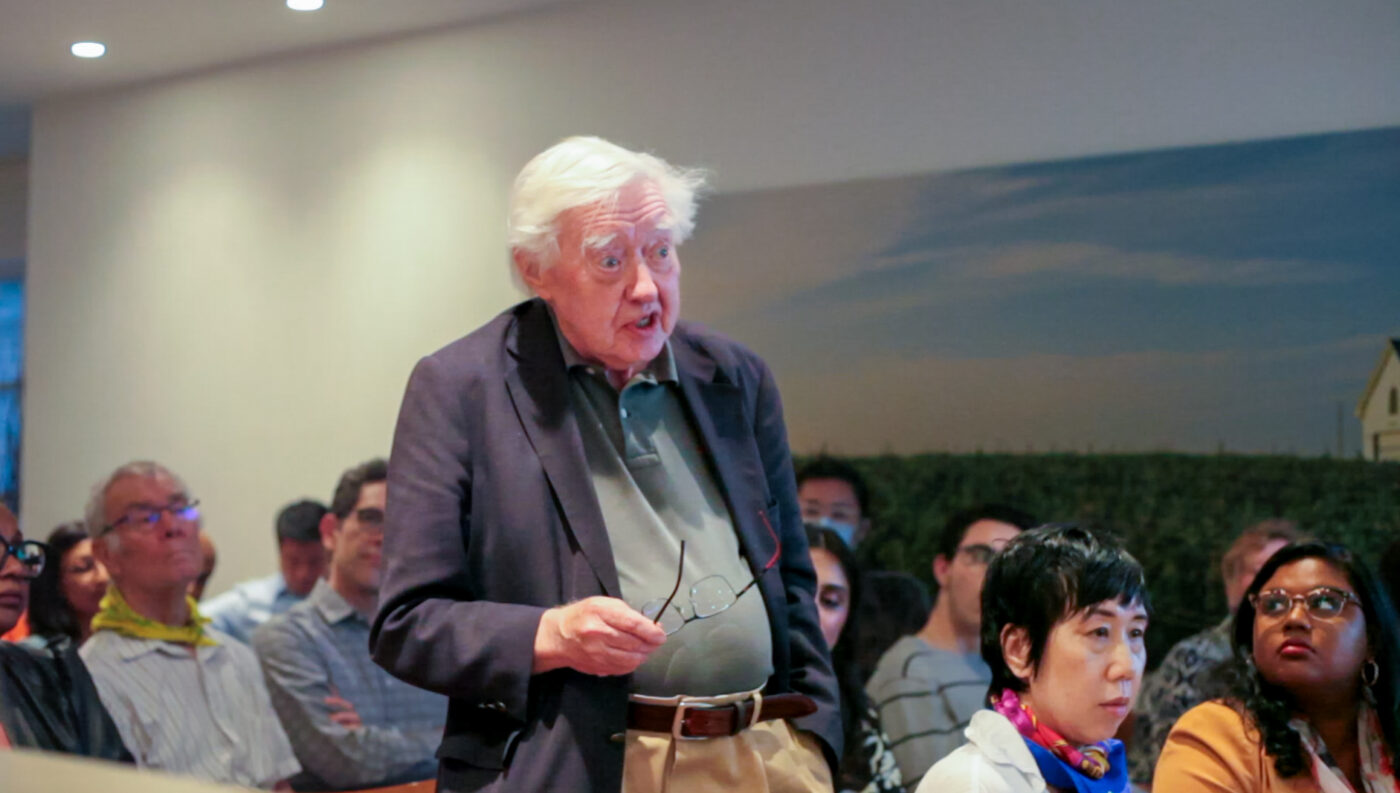
📸: ANTHONY LIPPA-HARDY/THE GREEN LINE.

📸: ANTHONY LIPPA-HARDY/THE GREEN LINE.
SOLUTIONS
COMMUNITY-BUILDING
The number one response from event participants revolved around one word: community. Attendees said community within and between diasporas can be built anywhere, including ethnic and religious centres, fundraisers, galas, civic institutions and diasporic-centred newsletters. “People from our diaspora community go to church whether or not they believe in God because it is a space to network and find information and exchange solutions,” said Sebastian Tansil, a member of the Indonesian and Chinese diasporas.
LANGUAGE TRANSLATION
Translate, translate, translate! This was the second most frequent solution proposed by attendees. “Sadly, the language barrier may be too great for some older folks to connect with local politics. Civic institutions can try to help by reaching out to people in their native languages,” said Hans Xu, a member of the Chinese diaspora (and The Green Line staff member).
ACCESSIBLE CIVIC PARTICIPATION
The onus is on civic institutions to encourage political participation of diasporic communities, participants said. “Translate things. Host things at multiple times to improve accessibility. Disclose notes for decisions made by decision-makers in an accessible space,” said Chun He, a member of the Chinese diaspora. Participant Citlalli Rios, a member of the Mexican diaspora, said it is only when immigrants need to pass a citizenship test “that we worry about their civic duties or their civic obligations or citizen rights.” Civic education for immigrants shouldn’t begin and end with citizenship, and additional programming could be implemented by both the government, as well as the non-profit and corporate sectors, Rios added.
CROSS-DIASPORIC NETWORKING
Event attendees stressed the importance of networking with and learning from the successes of other diasporic communities, saying that members of European diasporas have an important role to play in this. “Most [white] Canadians [outside] of the big cosmopolitan cities don’t have a non-white friend,” said participant Citlalli Rios, a member of the Mexican diaspora. “How can you relate to someone that is not looking like you?”
ACTIONS
Do something about the problems that impact you and your communities.
Promote Civic Participation
Our event partner hosts panels, issues reports and provides teaching resources about protecting democracy and boosting civic participation.
Mentor Diasporic Writers
This organization supports emerging writers through mentorship and professional development, with the aim of redefining the “mainstream” to properly reflect Canada’s diversity.
Learn About Diasporas
This University of Toronto centre contains helpful academic literature on diasporic communities, and occasionally hosts topical events.
Join Our Community
Continue the conversation with other Green Line community members.
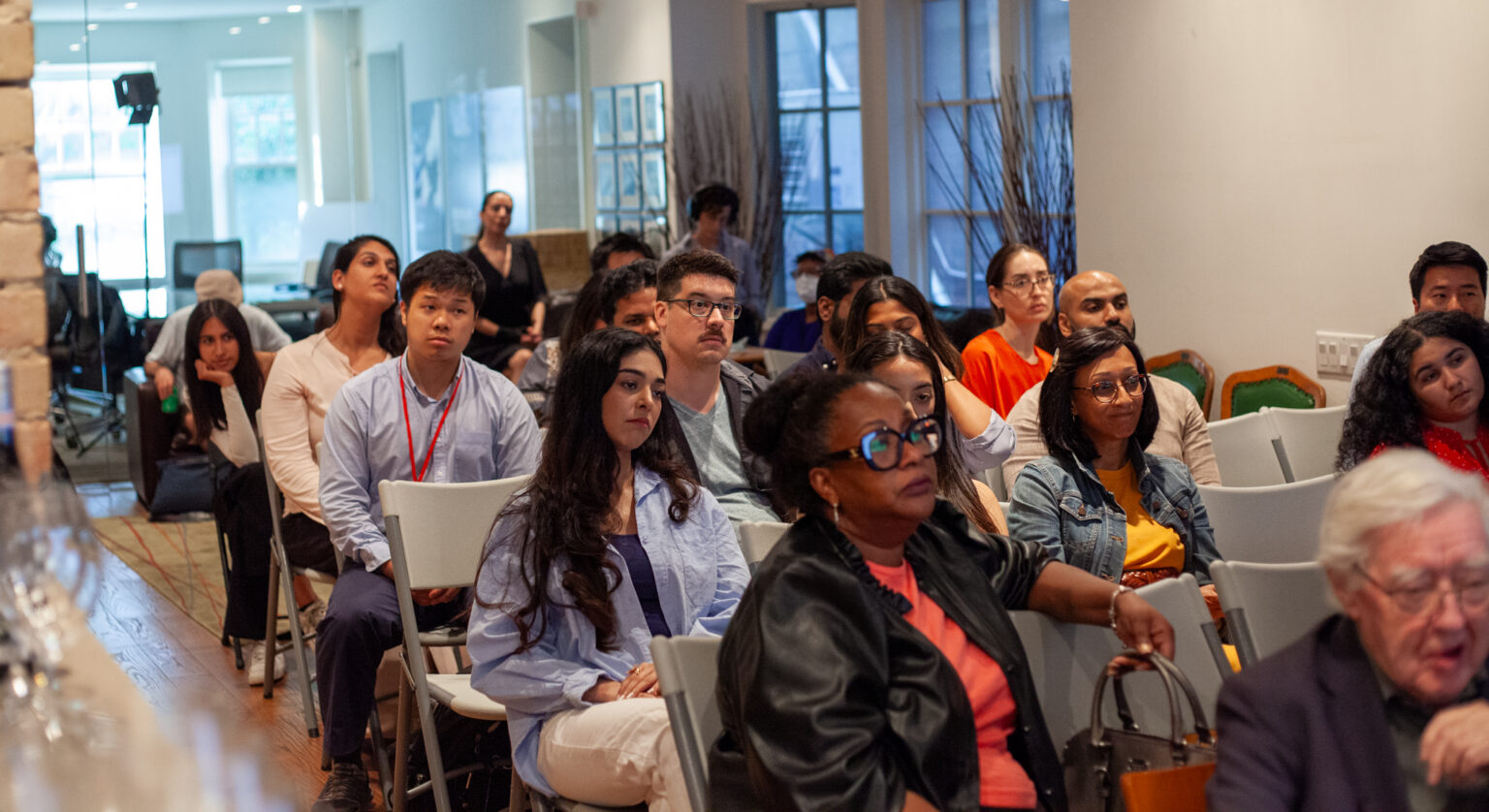
📸: ANTHONY LIPPA-HARDY/THE GREEN LINE.
Supporting The Green Line means supporting Toronto. Join our membership program today, so you can redefine our city as you see it.
Recovered content — please review and place
These blocks were present in the previous version of this post but were dropped during content migration. Move each to its correct place in the article and delete this note when done.
Jaskaran Sandhu is one of Canada’s top political and community organizers, with deep experience in public affairs and public relations. A successful campaigner across all levels of government and the political spectrum, Jaskaran brings a unique perspective to government, stakeholder and media relations. A lawyer by training, he has served as the senior advisor to Brampton’s Office of the Mayor, as the executive director of the World Sikh Organization of Canada and as a senior consultant at a national public affairs agency before launching State. Jaskaran is also the co-founder of Baaz, a digital news outlet of record for the global Sikh and Punjabi communities.
Welcome back
New here or returning? Same flow. Drop your email — we'll handle the rest.
Join the conversation