Toronto’s stand-up comedy scene would look very different today without Yuk Yuk’s and The Second City.
In 1976, comics Mark Breslin and Joel Axler opened a comedy club called Yuk Yuk’s in Yorkville, just three years after famed Chicago-based improv theatre troupe The Second City established its roots in Toronto. These two establishments were essential to stand-up finding its place in Toronto, an artform popular in the United States for decades that had finally crossed the border and caught on in the ‘80s. Comedy on radio and television has an extensive history in Toronto and Canada broadly, but stand-up is still pretty new with only several decades under its belt.
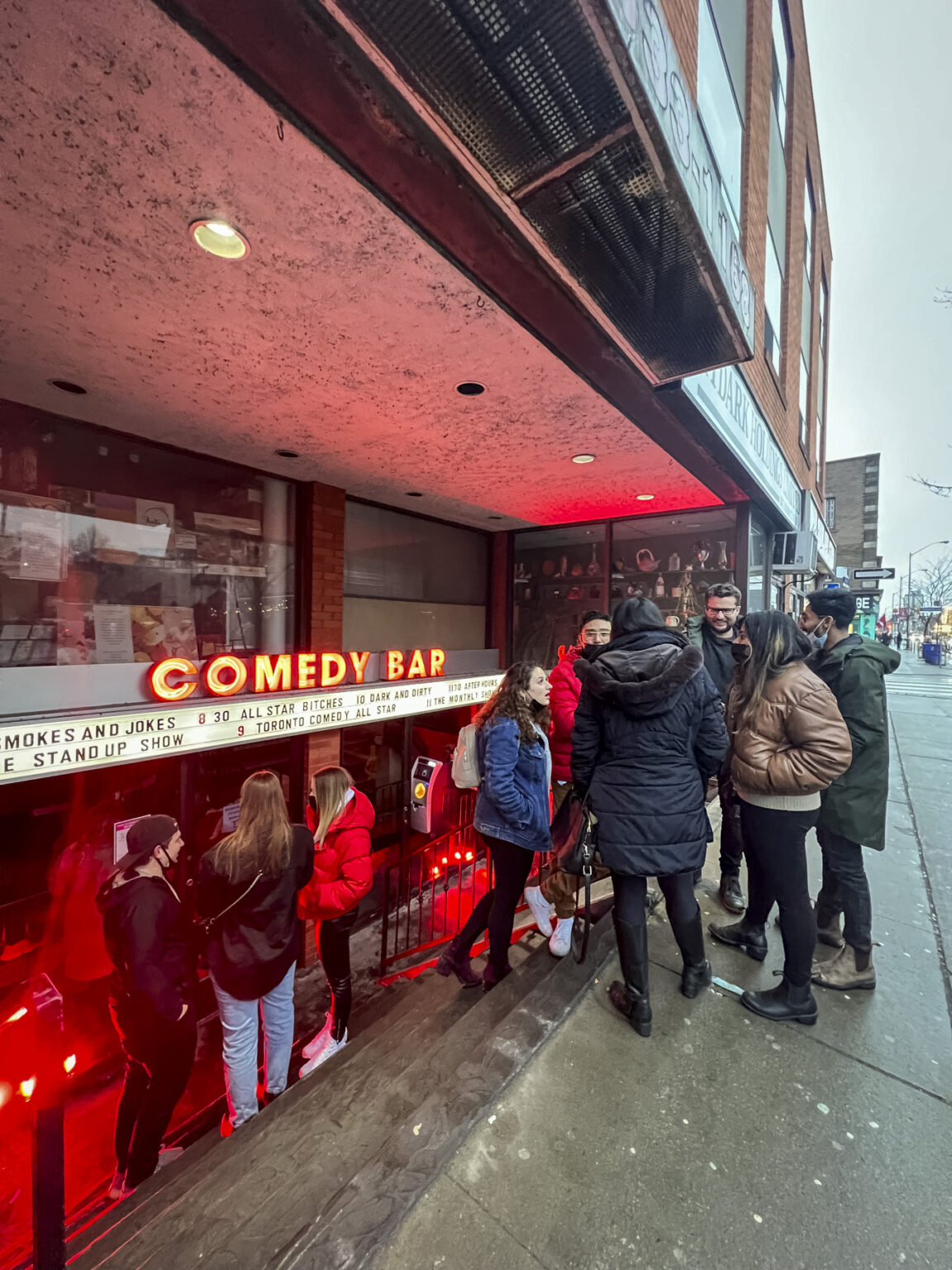
Beyond Yuk Yuk’s, which is now an international chain, there are now countless other comedy-focused venues in the city, including Comedy Bar, Backroom Comedy Club, The Corner Comedy Club and more.
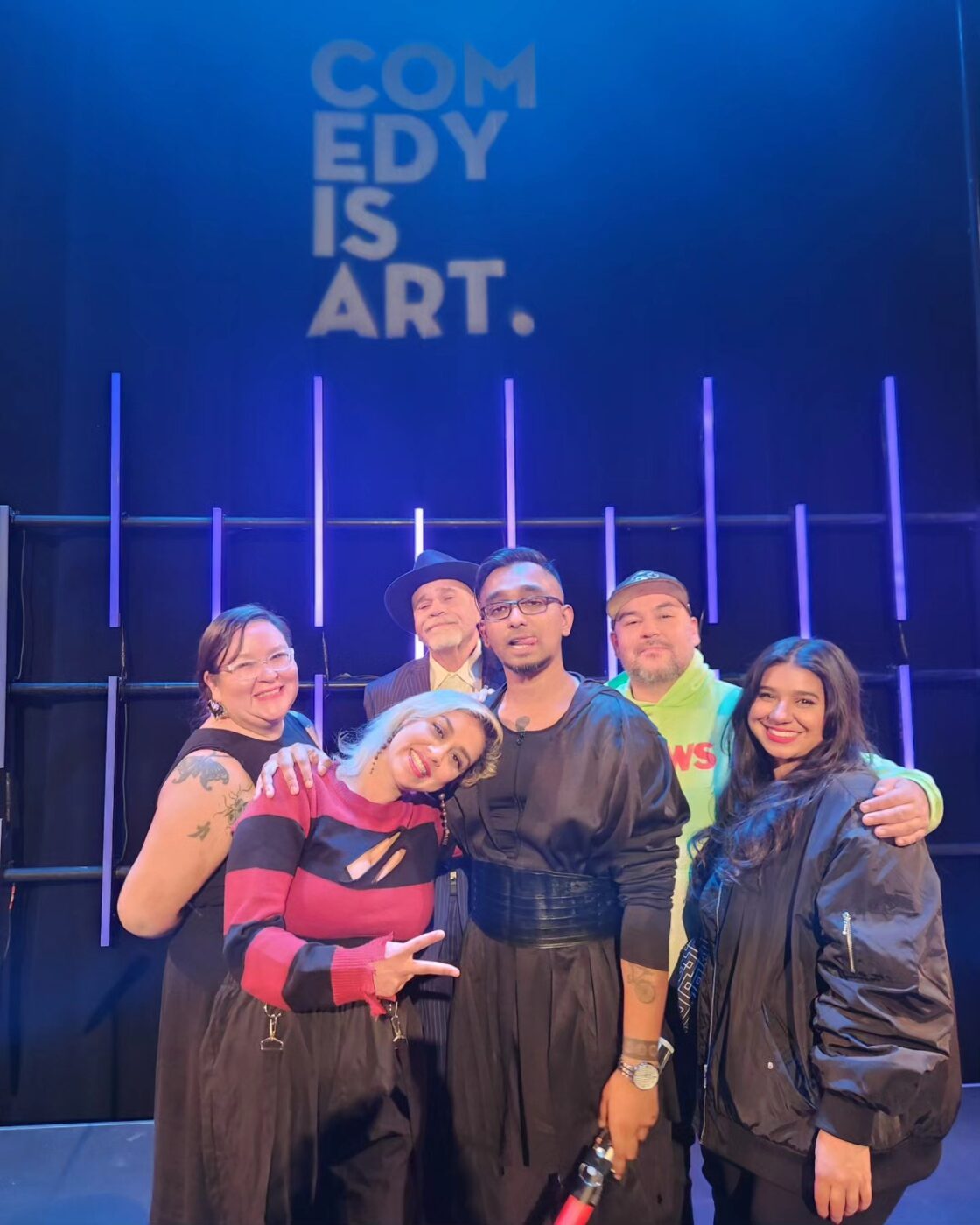
Rush Kazi (second from left) and Danish Anwar (centre) with fellow comedians at the Comedy Is Art Festival hosted at The Theatre Centre in Liberty Village. 📸: Danish Anwar/Facebook.
But despite our flourishing stand-up comedy ecosystem, Toronto is better known for other artistic exports — from musicians like The Weeknd and Drake, to movie-related events like the Toronto International Film Festival. When the average comedy fan thinks of comedic hotspots, many other North American cities like New York City and Los Angeles come to mind first over Toronto.
That’s evident in institutions like Montréal-based Just For Laughs (JFL), the largest comedy festival in the world and a non-profit that produces and distributes comedy programming worldwide.
“DESPITE OUR FLOURISHING STAND-UP COMEDY ECOSYSTEM, TORONTO IS BETTER KNOWN FOR OTHER ARTISTIC EXPORTS.”
“DESPITE OUR FLOURISHING STAND-UP COMEDY ECOSYSTEM, TORONTO IS BETTER KNOWN FOR OTHER ARTISTIC EXPORTS.”
Although the organization provides comics with visibility across Canada and beyond, in practice, JFL has received criticism for prioritizing international comedians over homegrown talent. From 2017 to 2023 (except 2020 and 2021 when the Toronto festivals didn’t occur), not a single comedian featured on the headline roster for Toronto was Canadian. Apart from Trevor Noah (South Africa) and Ronny Chieng (Malaysia), every headliner was from the U.S.
What’s more, in 2019, Sirius XM announced that the Canada Laughs channel, which featured uncensored Canadian stand-up and sketch comedy, would be rebranded as Just for Laughs Radio after the two companies struck a partnership. Up until that point, the channel had aired exclusively Canadian content, with residuals going directly to homegrown talent. But the rebranding would’ve reduced the amount of broadcast time available to Canadian comics because archival materials (which would also be open to American and other international comedians) would’ve been permitted. After local comediansdecried the move, Just for Laughs committed to airing 100 per cent CanCon. But the company is still embroiled in controversy after launching its own record label, which would air Just for Laughs tracks over independently produced tracks by Canadian comics.
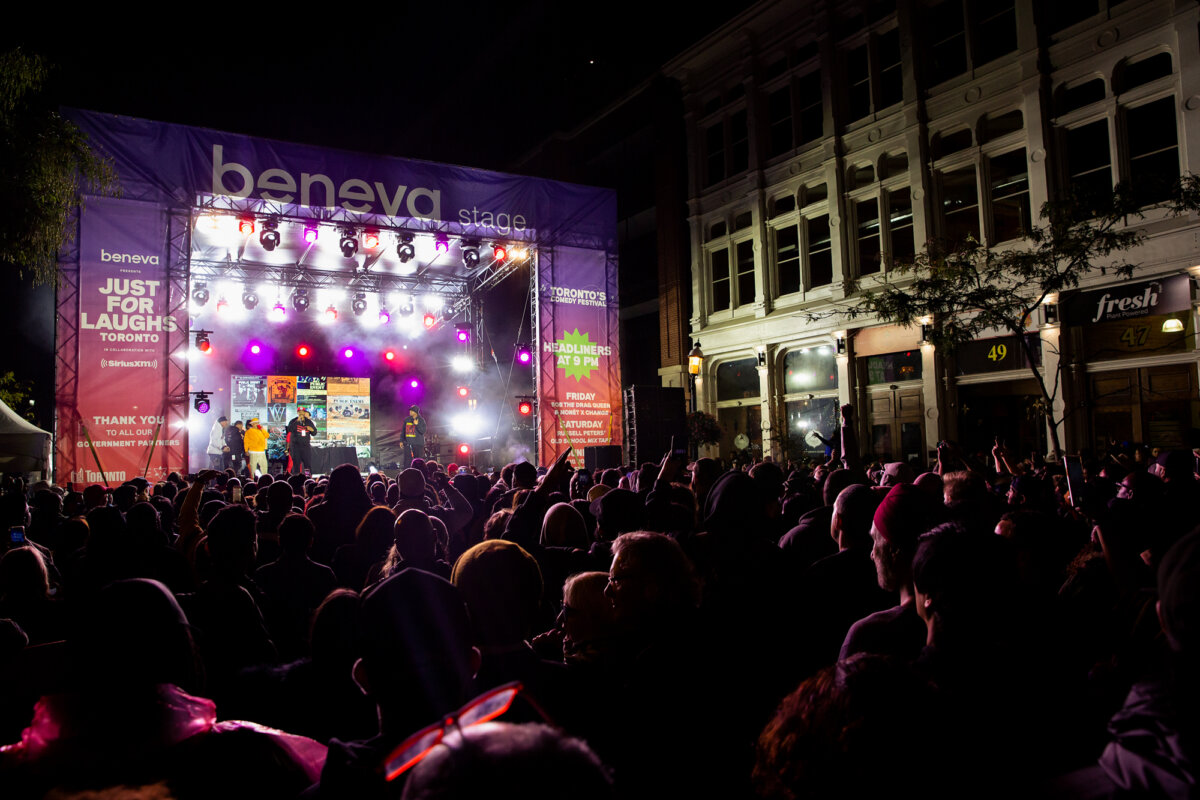
A crowd watching performers at the Just for Laughs Toronto Comedy festival. 📸: Just for Laughs Toronto.
Finding sources of consistent income is more important now than ever for comedians here, as Toronto marks its second year as Canada’s most expensive city. Torontonians across the city are feeling the impact of higher costs of living — and comics are no exception. Their income was hit hard by the pandemic lockdowns and after-effects of COVID-19. In response, some got creative, hosting sets and sketches over Zoom, in comedy clubs with plexiglass partitions and at secret outdoor shows. But the scene has slowly but surely recovered, in part because of the growing popularity of comedians of colour.
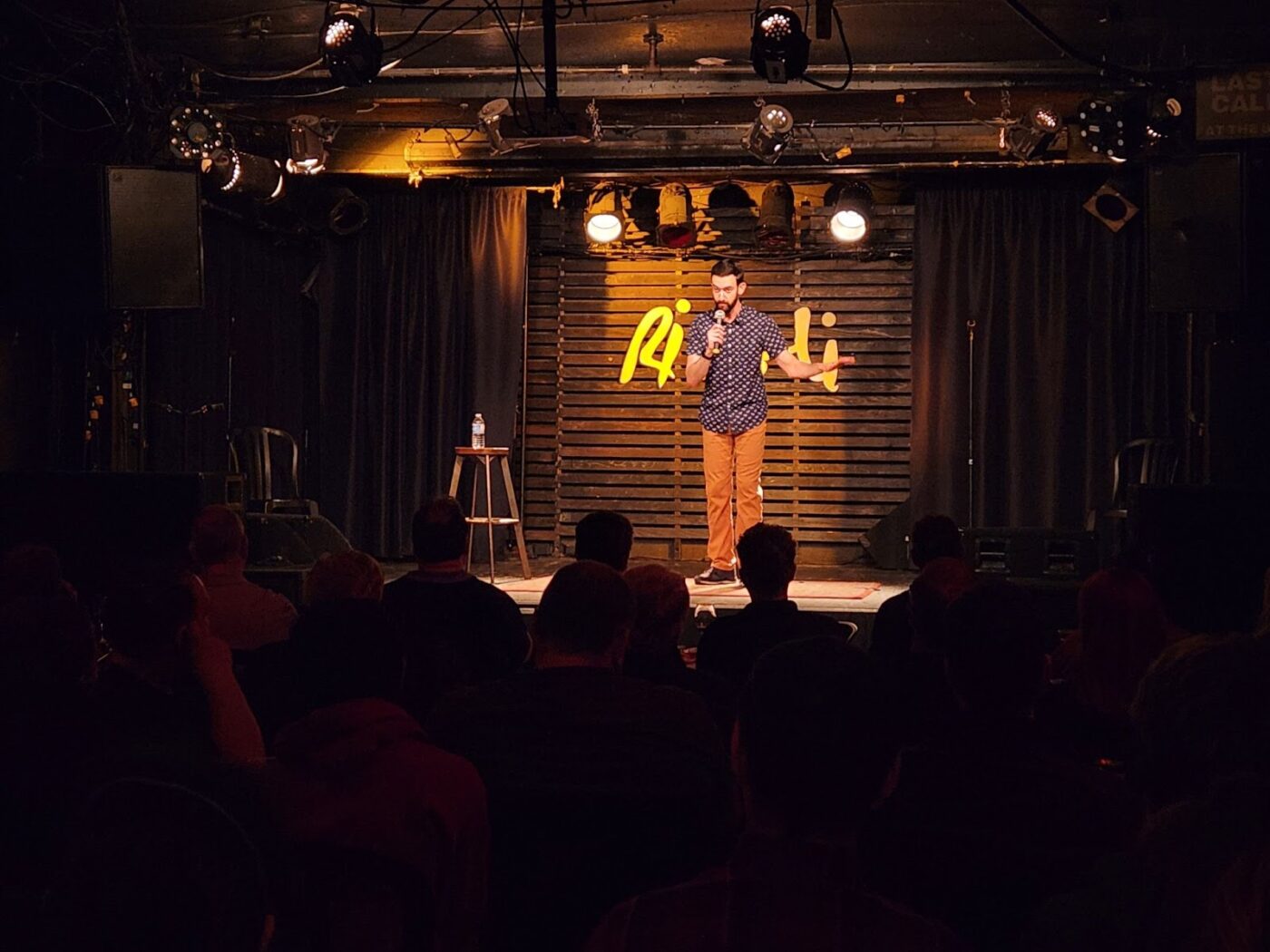
Stand-up comedian Justin Shaw performing onstage at a Yuk Yuk's comedy club in Wellington Place. 📸: Yuk Yuk's/Twitter.
This isn’t entirely new, as racialized comics have been carving out a space for themselves for a while, most notably at the end of the aughts. But they really started taking off in the early 2010s, with the growing popularity of shows like Danish Anwar’s Your Hood’s A Joke battle series and Rush Kazi’s Laughter Luau open mics.
Today, there are more inclusive comedy showcases in the city than ever, including Black-owned comedy club The Comedy Lab and The Melting Pot, which features comedians of colour.
Toronto’s comedy ecosystem has grown exponentially since the ‘70s, but what’s next in store for this lively community?
Today’s stories lead to tomorrow’s solutions, so sign up for our newsletter to take action on the issues you learn about in The Green Line.
NO LAUGHING MATTER:WHY TORONTO'S COMEDY SCENE IS MUCH MORE THAN IT SEEMS
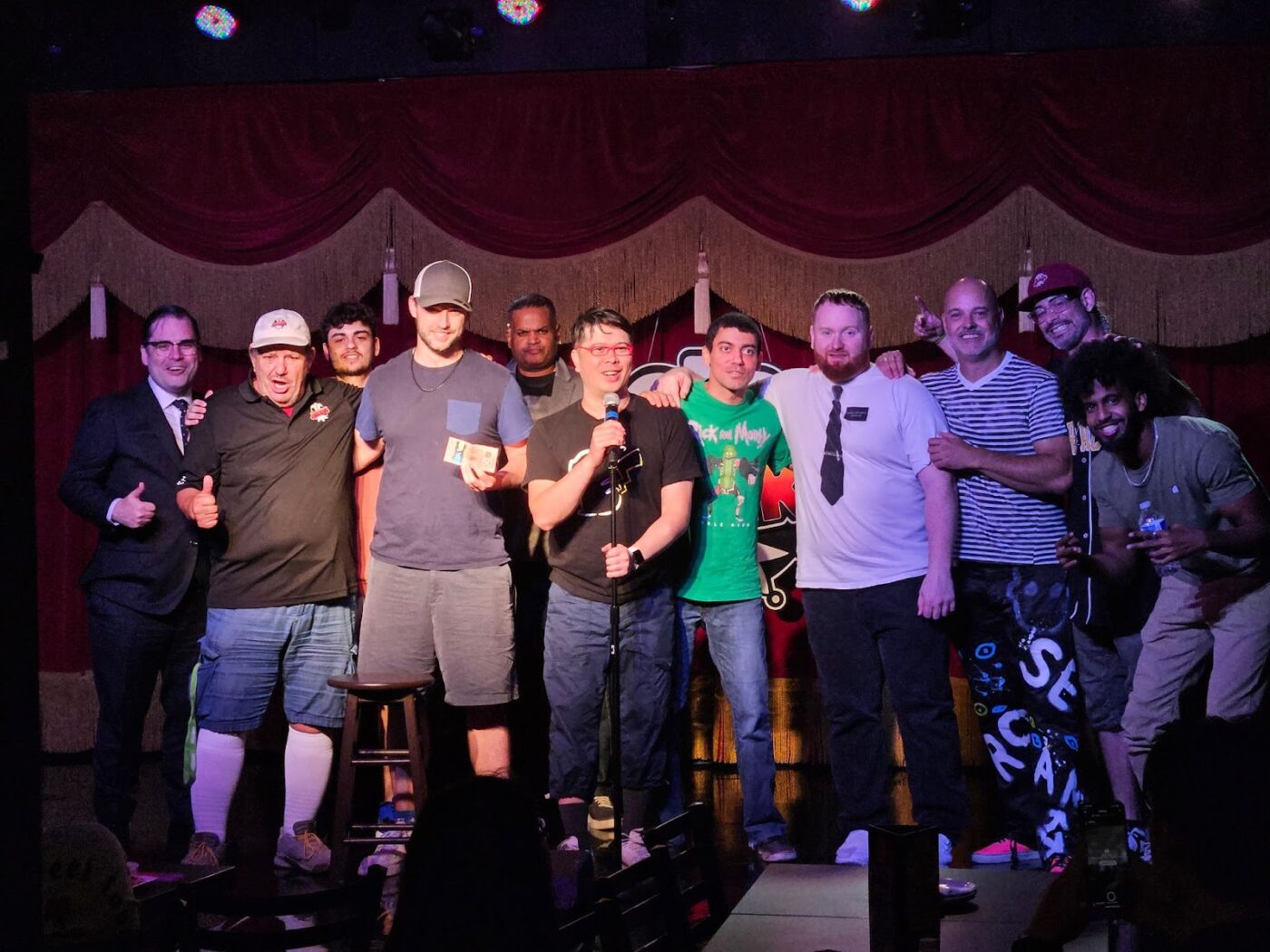
Comedians who performed as part of Jokers Theatre and Comedy Club’s open mic night, called the Rising Stars Competition, stand together on stage on Aug. 22, 2023. Host Vong Sho (centre) holds the mic stand, while. Nathan Steiman stands in the background (third from the left).📸 RYAN ZEITZ.
OPEN MIC, OPEN DOORS
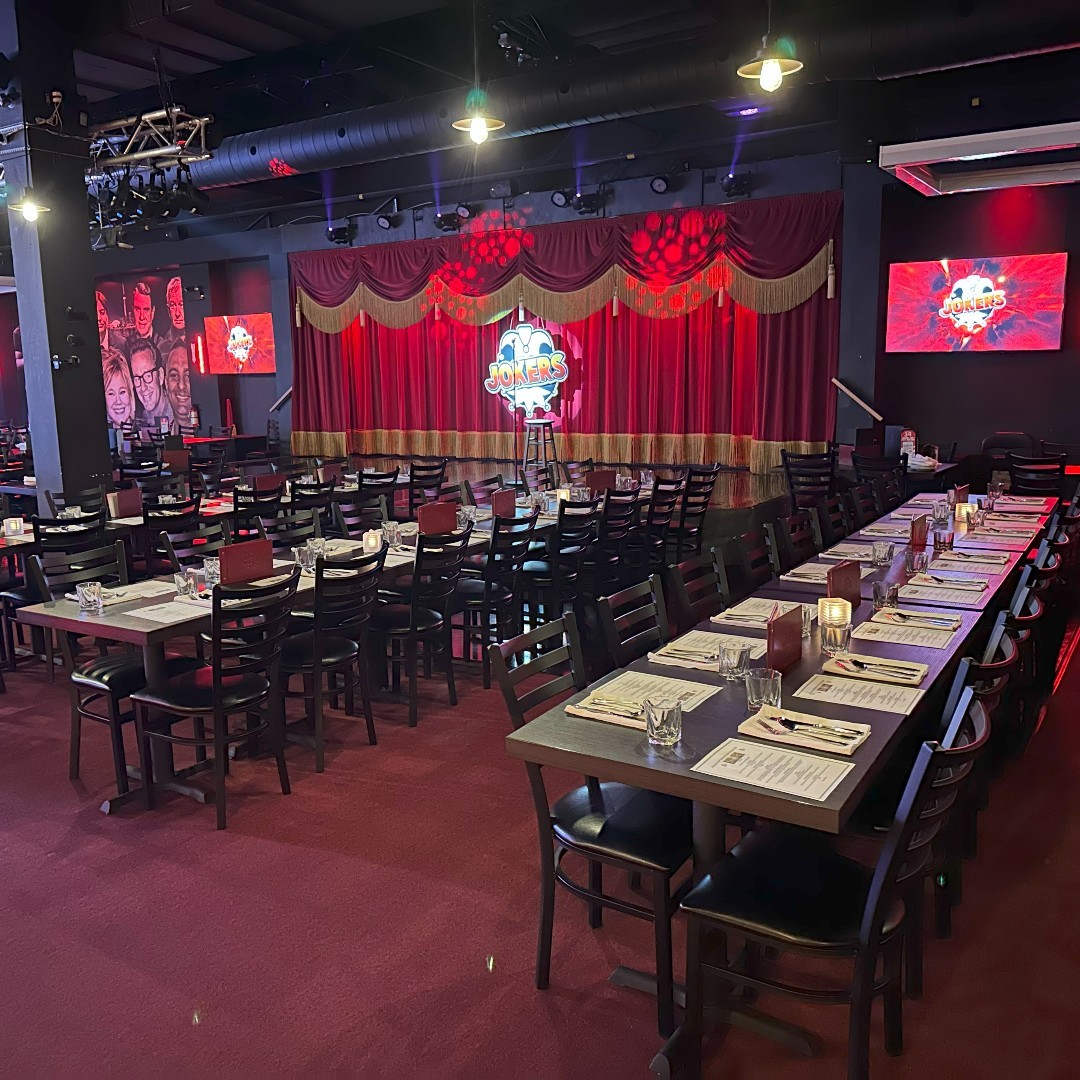
It was 8:30 p.m. on a Tuesday night, and I was sitting at the shiny new bar of Jokers Theatre and Comedy Club in Richmond Hill, while surveying its sprawling, open concept layout.
With enough room to swing a dead cat (had the hostess let me bring mine in), Jokers was a decidedly unstereotypical comedy club save for the crowd’s laughter and ever-flowing booze. While sipping on my beer between chuckles, I had the same thought most funny people do when they see a stand-up comedy set: I could do that.
I was there to check out the Rising Stars Competition, a weekly open mic event hosted by Toronto comedian Vong Sho. The 42-year-old, who also founded RICE: Asian Comedy Showcase and Comedy Cares, described the competition as a space for both amateur and professional comedians to try out material, and to gauge whether or not a bit lands based on audience response. The open mic experience is essential for new and old comedians alike, or as Sho puts it: “If you can’t test out your material at an open mic, where are you going to test it out?”
Seating at Jokers Theatre and Comedy Club in Richmond Hill. 📸: Jokers905Club/Instagram.
But wait. Before we go further, let’s take a step back.
My name’s Scott Martin, and I’m an aspiring comedian in Toronto. I began writing for The Beaverton in early 2019, and my work immediately took the world of satire by storm, making me a global household name (as you know from my portrait already framed in your home). Four years later, with my comedy prowess more than established, I wanted to learn first-hand how that lesser-known style of comedy — stand-up — worked in Toronto. And what better way to learn than to attend an open mic night?
Not to perform, of course. I’d already conquered the written word, so it’d be unfair for me to dominate the stand-up scene, as well. Which is the only reason I didn’t participate. I want that to be clear. Okay? Okay.
Open mic nights are the first stop for aspiring comics, and according to those I interviewed, an integral part of Toronto’s comedy scene. They give an opportunity for newbies to take the stage for the first time and for seasoned vets to try out new material, certainly, but open mics also provide a network and community that help comedians develop their craft.
“my work immediately took the world of satire by storm, making me a global household name (as you know from my portrait already framed in your home).”
SCOTT MARTIN
“my work immediately took the world of satire by storm, making me a global household name (as you know from my portrait already framed in your home).”
SCOTT MARTIN
“Especially when you’re first starting off, [open] mics are really the only way to kind of get stage time,” said Ryan Zeitz, a tall lanky white guy with a beard who took the stage shortly after I walked in, and doesn’t resemble me in the slightest. “There were so many to the point where like, you could do like two or three in a night, every night, if you were going to pop around the city.”
“If people like your stuff, then somebody might reach out to you and say, ‘Hey, I booked this show at Comedy Bar or in this cafe.”
Zeitz added, however, that there are significantly fewer open mics in Toronto since the COVID-19 pandemic impacted local comedy clubs.
Loading this Instagram post pulls content from Meta and may set cookies. Tap below to show the post — or open it directly on Instagram.
Later on that evening, after Zeitz and two other performers finished their sets, Sho introduced Nathan Steiman who took the stage for the first time ever at Jokers. As he does with all rookies, Sho urged the crowd to chant Steiman’s name before his set began. Like most comedians, however, the 24-year-old’s journey started with the obsessive jotting down of bits — well before his first performance. But even after Steiman had enough material, he still dragged his feet.
“I went there a few times, actually, without performing,” he explained. “They have a lottery spot on their website; I wasn’t ballsy enough to just sign up. So I decided to just show up, and maybe if I hit a lot of them, then it’s time to go up, you know?”
Despite regularly attending Jokers’ open mic nights, it still took two weeks of just thinking about signing up before Steiman finally pulled the trigger. But once he did, he made the most of his experience by asking seasoned comics for advice on how to improve. “What I’m going to do is just keep going up,” Steiman said.
And keep going up is exactly what more experienced comedians like Justen Williams have done in their careers.
“I’ll be hitting every open mic that I can,” Williams, 29, said in a phone interview. ”You write every day and then you take what you think are good prospect jokes, and try them out at open mics.”
The Mississauga native, who won fan favourite that night at Jokers, started doing stand-up in 2014 before turning it into a full-time career in 2019, having toured across Canada, the U.S. and Europe. With a new show coming up in December, Williams is now testing his material with audiences at open mics in Toronto.
Beyond helping him gauge audience reaction, they also opened pathways to other job opportunities in entertainment, including a four-episode role on Two Brothers, a new Canadian TV drama.
“It was just free stuff at the [beginning of my television career], but comedy led to that,” Williams said. “And that led to where I am now, on Bell TV and Amazon. It’s been a pretty good run.”
While Williams and other comics took turns standing in the blinding stage lights to entertain the crowd at Jokers, the return of live comedy — especially in a brand new club — hung in the back of my mind.
In many ways, Toronto’s comedy scene is still reeling from the pandemic. In early 2020, the Ontario government implemented public health measures that shut down “non-essential workplaces.” The initial order mentioned “all theatres, including those offering live performances of music, dance and other art forms, as well as cinemas that show movies.”
These art forms were hurting — and stand-up comedy was no exception.
“There is no question that the pandemic was an absolutely cataclysmically bad, apocalyptic-level event for anybody in the live entertainment business,” said Mark Breslin, founder of Yuk Yuk’s comedy club chain and CEO for 47 years. “I had 14 clubs. Four of them closed completely and did not reopen.”
The City of Toronto acknowledged the difficulties that the music and live events industry sustained in September 2020, writing at the time that “operators or owners are struggling to pay fixed costs.”
Although Toronto’s comedy industry was certainly impacted, it’s still unclear to what degree. When I requested financial reports for live venues from 2020 to 2022, the City of Toronto’s Economic Development and Culture Division said it didn’t have specific numbers. Instead, the division directed us to Destination Toronto, but the tourism information bureau didn’t have data either, so it referred me to the Canadian Association of Stand-up, Sketch and Improv Comedians (CASC). The association also failed to provide numbers, and instead responded by sending me a December 2020 survey conducted by Nordicity, which describes barriers and opportunities for Ontario-based comedy performers at the time. It found that only 7 per cent of Canadian comedy creators were able to monetize their online comedic content.
Sho, for example, was severely impacted by the pandemic. “The drop was basically 100 per cent,” he said in an email. Without a comedy album and with his career relying almost entirely on live shows, Sho had to ride out COVID’s early years with the revenue he received from performing a self-produced stand-up show taped pre-pandemic at CBC’s Glenn Gould studio, “which brought in half of what I’d need to survive in a year.”
Everyone I interviewed for this article agreed that while Toronto’s comedy industry is recovering, it still hasn’t reached pre-pandemic levels in terms of audience attendance and revenue. Some commented on the mass exodus of “middle” talent (i.e. those who are neither amateurs starting out nor professionals making a living doing comedy) who left the industry when COVID lockdowns made it more challenging to earn income.
Indeed, Breslin notes that YukYuk’s in general continues to fall short of its 2019 revenue levels, though it has recovered somewhat from the nadir spurred by COVID’s earliest years, with the company opening three new clubs in the past 18 months. Still, he doesn’t see the industry as a whole recovering for about two more years.
“The thing isn’t over yet, and I think that’s really important,” Breslin said. “Now, you’re hearing about new variants, and what are we going to do about that?”
Beyond the pandemic, other, more positive changes have emerged in Toronto’s comedy scene — notably the increased racial diversity of performers. It’s a fact that was impossible to ignore when all the comics at Jokers lined up on stage Tuesday night to take a group photo.
At the Rising Stars Competition, which was hosted by Sho, a Thai-Canadian, there were several comedians of colour, including one who joked about comparing his experiences as a Black man to his friend’s experiences as a gay man. But looking back even a decade ago, it wouldn’t have been surprising to see a sea of white men on stage.
This diversity isn’t notable in 2023, but in the early 2010s, the comedy landscape would’ve looked very different.
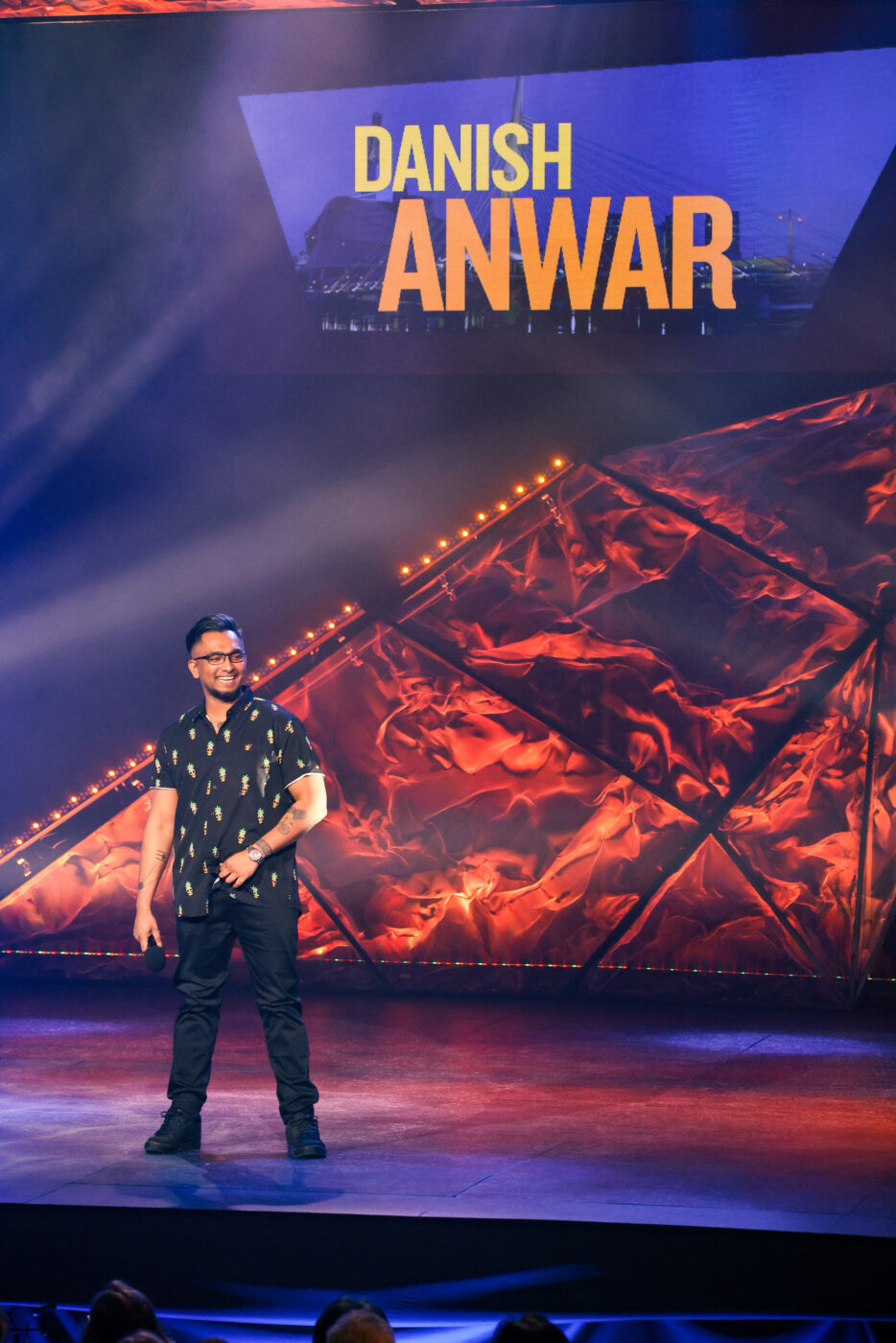
DANISH ANWAR PERFORMING AT THE Winnipeg Comedy Festival IN OCTOBER 2023. 📸: Leif Norman.
DIVERSITY HIGHER
In the early 2010s, our cultural landscape was dominated by precursors to the divisive, inflammatory politics we see today.
Anwar, 38, has seen the diverse evolution of Toronto’s comedy scene first-hand. He’s won awards for his stand-up work, and created Your Hood’s A Joke, a show where two representatives of two different “hoods” go head-to-head in a roast battle. (Anwar has also collaborated with The Green Line in a comedic capacity before. Disclosure done: I’m a good journalist.)
Recalling his start in comedy in 2011, Anwar said that Toronto’s scene obviously wasn’t as diverse as it is today, but the cultural shift pushed him to take the leap.
“That was when the Occupy movement just exploded; we had just come out of the Great Recession,” he said. “You could see that there’s more multicultural, diverse people joining stand-up, but it wouldn’t come to the top. You would really see that at the amateur open mic level, like a lot.”
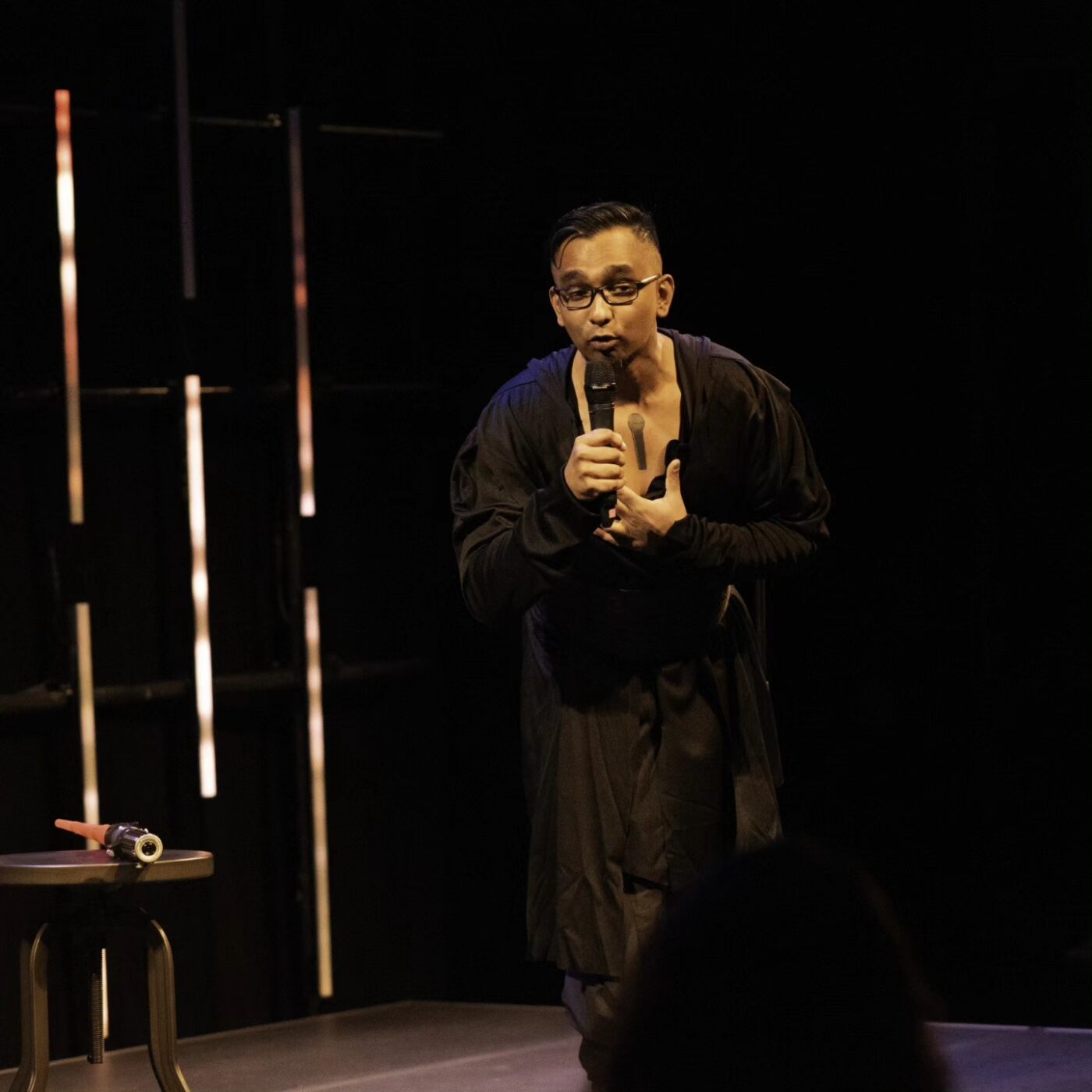
DANISH ANWAR PERFORMING AT THE COMEDY IS ART FESTIVAL IN OCTOBER 2023 AT THE THEATRE CENTRE NEAR DUFFERIN STREET AND QUEEN STREET WEST. 📸: HAO NGUYEN.
After more than a decade in the business, Anwar said he now regularly sells between 500 to 600 tickets doing five shows a month, including two at Yuk Yuk’s and three at the Comedy Bar near Ossington Avenue and Bloor Street West. This, of course, doesn’t include zero tickets sold in 2020. While Anwar “sold out” almost every one of his shows in 2021, he pointed out that the reduced venue capacities factored into those numbers, as a sold-out show at 50 per cent capacity isn’t the same as a packed venue. The comedian says he’s bounced back since then, but emphasized that he might be an outlier among peers. “I’m doing a lot better than I was pre-pandemic,” he said in an email, adding that the racial and gender diversity of his shows definitely helped, though persistence was actually the biggest factor in his outlier status since lockdowns reduced the local comedy scene’s talent pool.
“A lot of people straight up quit. People that I thought had a lot of talent and were doing really well in their careers,” he explained. “Something during the pandemic changed their minds.”
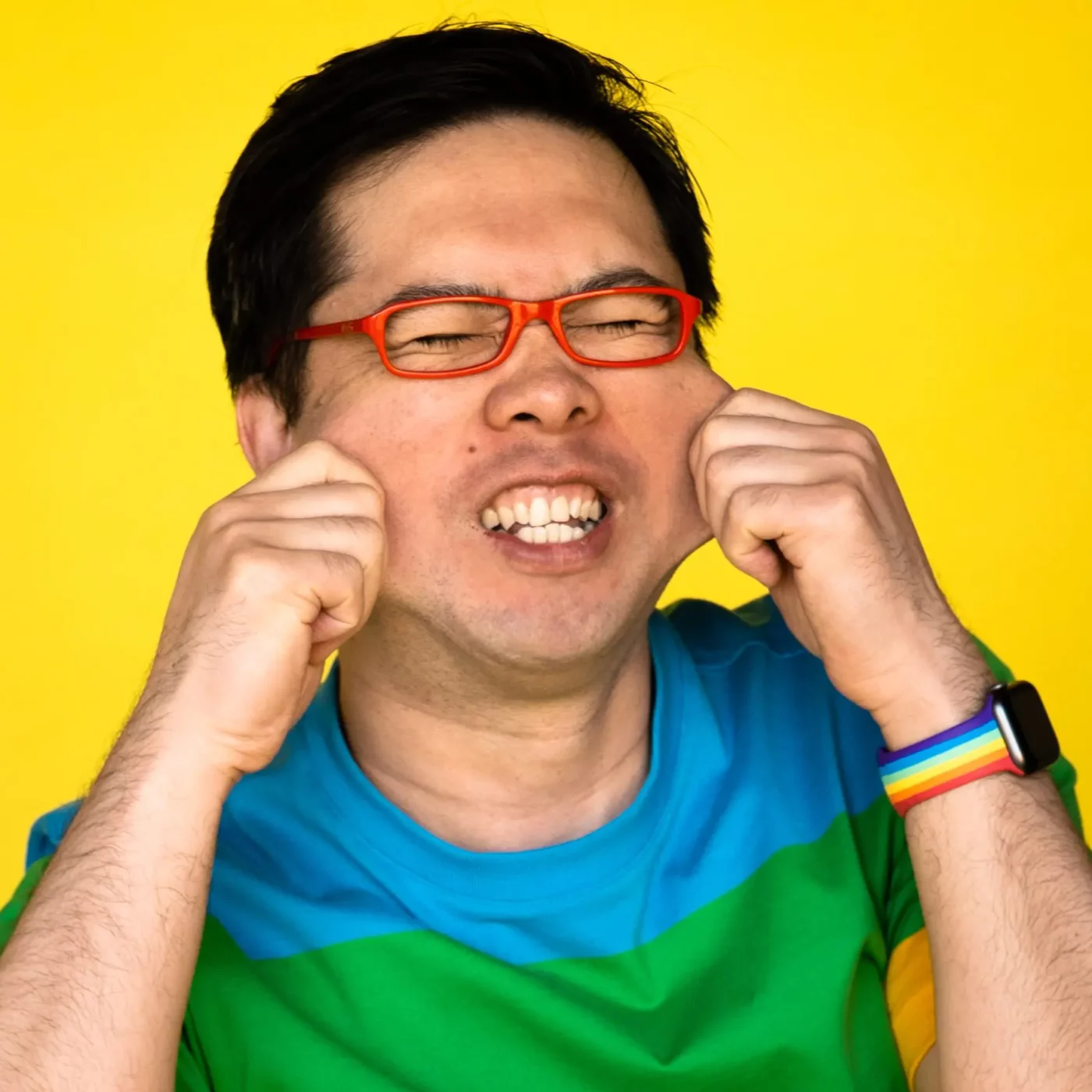
HEADSHOT OF TORONTO-BASED COMEDIAN, RUSH KAZI. 📸: RUSH KAZI'S WEBSITE.
Anwar isn’t the only one who thought the Toronto comedy scene was ripe for change in the early 2010s.
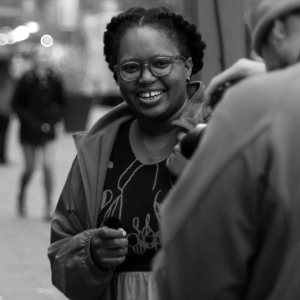
Rush Kazi, who identifies as South Asian and Muslim, has been doing live comedy in Toronto for more than a decade. She’s produced shows since 2012, performing at venues such as Just For Laughs and Toronto Fringe Festival, and she released her comedy album About Time in 2022 to critical acclaim.
Kazi’s family moved here from Montreal early on in her life. Between 1992 and 2015, she spent time living in different neighbourhoods across the city. “I moved around all over Toronto, with most of my years in Etobicoke/Rexdale,” she said in an email.
As a child, Kazi would participate in the popular annual CHIN International Picnic, which featured performances from various ethnic groups; Indian, Bangladeshi, Ethiopian communities each had their own stages. Kids would usually sing, but at 8 years old, Kazi decided to get up and tell a joke instead. Her next big aha moment happened in her teens, when Russell Peters performed in the cafeteria at Martingrove Collegiate Institute in Etobicoke. “That guy’s pretty cool,” she thought at the time.
“One of the most common reasons I wouldn’t get on a show is because they already had a minority in it….We were seen as a specialty, right?”
DANISH ANWAR
Peters’ influence on stand-up comedy globally, much less here in our city, can’t be overstated. His style broached the topics of race and culture in a uniquely Toronto way. In one early special, a bit on what Peters stereotypically describes as Chinese and Indian approaches to bargaining specifically referenced Pacific Mall in Markham. Though commenting on a touchy subject, his delivery and jokes revealed an intimate knowledge of the communities he was referencing, which is why so many Torontonians embraced his humour at the time.
White people, of course, don’t come out unscathed. In his 2008 special “Red, White, and Brown,” Peters accuses them of being the only group of people who consider being called “cheap” an insult. Somehow, he even nailed my experience by impeccably nailing the condescension I would face whenever I picked up leftovers at office parties, or saved money by walking somewhere instead of driving.
His style paid off. In 2013 and 2016, Peters was ranked by Forbes as one of the world’s highest paid comedians. Kazi is far from the only comedian who mentioned Peter’s influence on her after he exploded onto the scene in the 2000s. Steiman, after performing at his first open mic at Jokers, says he was “first introduced into comedy” by Peters.
But the story of how Toronto’s comedy scene diversified goes beyond Peters inspiring comedians of colour to take up the mic and start telling jokes.
There was still hard work ahead for comics like Anwar, who wanted to carve a path for comedians of colour like himself to reach the top. Having worked in sales since he was 16 years old, Anwar says he knew how to market his work.
In the beginning, he reached thousands of people from cities such as New York, Los Angeles and Barcelona by hosting comedy livestreams in conjunction with the Occupy movement before it collapsed. From 2012 to 2013, he took the same digital-forward approach, and began purchasing Facebook and Google ads for his comedy shows.
“I started using social media ads when they were unknown by businesses and disliked by users,” he said in an email. “It took a while to figure out the nuances, but that early advantage has persisted to this day.”
Anwar’s DIY attitude has continued to today, as he wanted to take the reins of his career and do things his way. In particular, he had a strong desire to tackle systemic problems, like climate change and the role of banks in society, in his stand-up comedy. Unsurprisingly, systemic challenges arose outside of Anwar’s on-stage routine, too.
“One of the most common reasons I wouldn’t get on a show is because they already had a minority in it,” he explained. “We were seen as a specialty, right? Like, literally as a specialty act like a fiddler or a magician that you bring in on your corporate event because all the minorities have the same jokes?”
Anwar says he realized the only path forward was to book his own shows, so he began renting out Comedy Bar in 2013 to host shows featuring comedians of all backgrounds. Between that year and 2018 is when he saw the biggest evolution in Toronto’s comedy scene.
Despite this racial diversification, stand-up in Toronto still struggles with discriminatory practices. A December 2020 analysis of Ontario-based comedy content creators by Nordicity found that, while age was far and away the biggest factor in discrimination, racism, sexism and anti-2SLGBTQI+ sentiment was also prominent. Of those who reported facing discrimination, 42 per cent said it was on the basis of their gender identity, 27 per cent cited race or ethnicity, and 15 per cent faced bigotry due to their sexual orientation.
Besides these explicit examples of discrimination, the scene also suffers from something I call “pronoun fever,” which involves jokes about men identifying as helicopters and the number of letters in whatever 2SLGBTQI+ acronym du jour.
Kazi mentioned this phenomenon in our interview. When she hosted Laughter Luau, an open-mic night at the now-closed Hawaii Bar in Dovercourt Village from 2012 to 2022, one of Kazi’s goals was to try and foster talent from different racial and gender backgrounds by setting up rules to push back against these types of easy jokes that punch down.
“Racist, sexist, Islamophobic, anti-semitic — we’re not going to allow that shit, right? We’re just not going to allow you to be ableist as fuck for no reason,” she explained. “We have comedians in wheelchairs and communities with mental illness. It was supposed to be a safe space for a lot of people.”
Kazi kept Laughter Luau running over Zoom during the pandemic’s early days, so she could reach her goal of running it for a decade. But once Hawaii Bar was sold to a new owner, she decided she’d done enough. “I don’t think I ever want to run an open mic again. I did my time,” she said.
HEADSHOT OF TORONTO-BASED COMEDIAN VONG SHOW. 📸: VONG SHOW'S WEBSITE.
Sho, the comedian who hosted Jokers’ open mic night, emerged in Toronto’s scene long after his comedy career began. He started out in Calgary’s club scene, but after doing the circuit there, Sho realized that most people were buying tickets to comedy shows because they recognized names like Just For Laughs or because it was known as a comedy venue, not because they wanted to see a specific comic. “Most of the time they show up, they don’t even know who you are — even if you’re headlining,” he said, adding that’s especially the case for working comedians in Canada.
So after moving to Toronto, he made it a priority to book his own shows, like Anwar did. But Sho, who’s since become recognized for his comedy showcases focused on 2SLGBTQI+ comedians and those from Asian backgrounds, says the diversity of the audience members is more interesting to him than that of the performers. One observation he noted, which other comedians I interviewed shared, was that Torontonians (and Canadians broadly) almost need permission to laugh. Sho says audience diversity helps with that.
“If I do a gay joke, and the gays laugh first, then the rest of the audience — you almost see a wave of laughter,” he explained. “I almost have to give each joke more time between [deliveries] because you’ll see people not laugh at first, until the people I’m making fun of are laughing.”
It’s clear that Toronto’s gains in the past decade couldn’t have happened without a concerted effort to push for more diversity. But there’s one barrier to the local comedy scene that doesn’t have an easy solution: the United States of America. The comedy juggernaut is right next door, and as the most famous Canadian comedy legends show, its influence looms large — perhaps, for some, too large.
THE U.S. FACTOR
The comedic connection between the U.S. and Canada didn’t start with The Second City, but it’s impossible to tell the story of Canadian comedy without it.
Second City’s Toronto location opened in 1973, branching off its original spot in Chicago. Since then, the improv and sketch comedy theatre has become a source of talent for the massively popular Saturday Night Live and the iconic SCTV. World-renowned Canadian comedians Dan Aykroyd, John Candy, Rick Moranis, Mike Myers and Colin Mochrie count themselves as alumni of the institution.
But Second City has been embroiled in labour troubles for more than a year, and only recently reached a deal. Comedy instructors voted to unionize the Toronto location, and formed a local chapter of the Association of International Comedy Educators (AICE). The negotiations for their first contract lasted over 600 days, with both sides finally reaching an agreement on Sept. 1 of this year.
“Toronto winds up being a bit of this satellite company that doesn’t get a lot of attention. So people can get lost in the mix.”
PAUL BATES, COMEDY INSTRUCTOR, SECOND CITY
The role that Second City’s comedy instructors play in fostering Toronto talent is instrumental. Zeitz, who performed at Jokers’ open mic night, began his comedy career in 2019 by taking Stand-Up Level 1 classes there. Still, Zeitz said Second City’s instructors taught him a lot of valuable lessons about comedic theory and structure, and even provided advice outside of class.
Paul Bates, an actor and comedy instructor at Second City, currently serves as the interim vice-president of AICE Toronto. His career began after he joined the theatre’s touring company in the late 1990s doing improv and sketch shows. Bates, 49, started working at the company as a performer and as a director of some main stage shows before eventually becoming a comedy instructor.
“I personally have been working for 20 years. I’ve never seen a raise in my life,” he said during the summer, when talks were still ongoing. “The rates that they offer as a starting rate to their employees are actually lower than they were in the ‘90s.”
That changed as part of Second City’s new labour agreement, with contract negotiations raising the minimum rate of pay at the Second City Training Center — but not by much, according to Bates who says the starting rates are now just equal to what they were in the ‘90s.
Still, the deal included a wage structure that finally aligns with similar institutions such as Socap Comedy. This amounts to a 25 per cent increase in pay for all union members. “All in all, it’s a solid first contract that we think will make everything easier for employees and management alike,” Bates added.
A crowd of people inside The Second City Toronto venue in Harbourfront. 📸: SECONDCITYTO/INSTAGRAM.
One of the issues that plagued negotiations was the disconnect between Toronto and Second City’s Chicago headquarters. Bates said this dynamic added a layer of difficulty between the union and management. “Toronto winds up being a bit of this satellite company that doesn’t get a lot of attention. So people can get lost in the mix,” he explained, adding that negotiations went on as long as they did because the union rarely got “more than a day every few months” to sit down and work out a contract. The Second City did not immediately respond to a request for comment.
AICE members voted to ratify the contract on Sept. 1. The resulting deal was called “a big step for comedy educators at The Second City” by Lisa Merchant, interim president of AICE Canada.
Although a settlement was finally reached, one wonders how different the process would’ve been if Second City was built in Toronto from the ground up. Our city does, however, have a homegrown alternative as an example: Bad Dog Theatre.
Originally named Theatresports, Bad Dog opened its doors here in 1982. It’s no slouch in the comedy department, either. The theatre counts Colin Mochrie, Kids In the Hall, Mike Myers and even Keanu Reeves among its notable alumni. Bad Dog is also a registered non-profit, which is why artistic director Alia Rasul says it focuses its efforts on the surrounding community. “We’re artist-run. So every single person who is a manager or a director at Bad Dog is also a comedian,” she explained.
Now located in Kensington Market, Bad Dog made $13,000 in corporate workshops last year, but reinvested the money to the point where it’s now increased that number tenfold. Although Bad Dog workers aren’t unionized, the theatre claims that it pushes to compensate their teachers and performers as best it can, from raising the costs of classes, to by bringing on financially savvy board members who can guide its business strategy better.
The general understanding among comics pre-pandemic was that when someone performs an improv show, money isn’t expected in return.
“Prior to the pandemic, a really big show that sells out, it’s like, ‘Wow, you’re gonna get paid 20 bucks,’” Rasul explained. “Then a normal show is like, ‘If you’re lucky, you’ll get paid five.’”
“We’re pushing to pay people more,” she said, adding that Bad Dog is trying to ensure that each comedian who performs for them gets paid $100 per hour.
Only one other entity in Toronto reaches the same level of recognition as Second City when people think of comedy: Just For Laughs.
Just For Laughs is a massive brand for comedy in the city and Canada broadly. Its world-famous festivals in Montreal and Toronto, which receive regular funding from the Canadian government, are hubs of economic activity. In 2021, in the context of public health lockdowns, the feds announced they would provide $1.7 million over the course of that year and throughout 2022 to help support Just for Laughs. In July of this year, the government announced it would provide a further $800,000 to help support the festival in Montréal.
There’s no denying that Just For Laughs supports comedy in Canada, but the festival’s priorities don’t appear to be bringing local comics to the forefront.
In early 2019, Sirius XM announced that the Canada Laughs channel, which featured uncensored Canadian stand-up and sketch comedy, would be rebranded as Just for Laughs Radio after the two companies struck a partnership. Up until that point, the channel had aired exclusively Canadian content, with residuals going directly to homegrown talent. But the rebranding would’ve reduced the amount of broadcast time available to Canadian comics because archival materials (which would also be open to American and other international comedians) would’ve been permitted. This led local comedians to decry the move, with some saying the change threatened their livelihoods.
In response, Just For Laughs committed to airing 100 per cent CanCon — but that wasn’t the end of the controversy. Later in November 2019, the company launched its own record label, and began spinning Just for Laughs tracks instead of independently produced tracks by Canadian comics.
The Canadian Association of Stand-up, Sketch and Improv Comedians released a statement in January 2020 that criticized the deal on behalf of its members. Among CASC’s many concerns, it said some comedians weren’t being paid for their performances, despite their work airing on the Sirius XM Channel’s Just For Laughs Canada. Simon Rakoff told The Globe and Mail that his conversations with other comedians “indicate a drop of about 90 per cent in earnings from play on the station.”
Beyond the CanCon controversies, Just for Laughs’ festival headliners disproportionately favour comedians from the U.S, though the majority of performers overall are Canadian. In fact, from 2017 to 2023 (except 2020 and 2021 when the Toronto festivals didn’t occur), not a single comedian featured on the headline roster for Toronto was Canadian. Apart from Trevor Noah (South Africa) and Ronny Chieng (Malaysia), every headliner was from the States. Just For Laughs did not respond to multiple requests for comment.
In an email statement, Just For Laughs said its festival lineups “consistently celebrate the talent of Canadian artists” and that the headliners “are chosen for their wide appeal and fan base.”
The company also provided data that shows most of the comedians performing at Just for Laughs’ festivals are Canadian. It said 50 out of 94 total performers (53 per cent) were Canadian at the 2018 JFL Toronto festival, while 102 of 160 performers (64 per cent) were Canadian in the 2023 Toronto festival lineup.
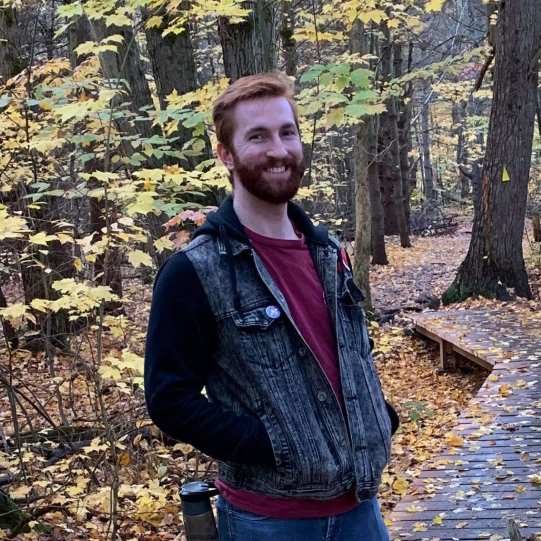
Toronto-based comedian Ryan Zeitz began his comedy career in 2019 by taking Stand-Up Level 1 classes at The Second City in Toronto. 📸: PROVIDED BY RYAN ZEITZ.
The pull of American comics on the Canadian stage, and Toronto more specifically, hangs over the local comedy scene.
But our city perseveres in fostering homegrown talent, with Toronto-based comedians and industry workers saying the local scene is unlike anywhere else in the world.
That’s in large part due to the sheer diversity of Toronto’s population, as there are many different audiences for every style of comedy, according to Sho, who hosted Jokers’ open mic night. “There’s enough of a population that you can do more specialized shows, and there’s enough of a population that you can actually still fill out a venue,” he explained.
Much like Toronto’s varied audiences, Kazi of Laughter Luau says there are multiple avenues for aspiring comedians to improve and hone their craft, a sentiment that Bad Dog Theatre’s Rasul agrees with.
“Toronto is such an exciting hub for comedy,” she said. “Some of the best comedians in the world are trying their stuff out in bars and comedy stages all across Toronto.”
The breadth and depth of Toronto’s comedy ecosystem means it attracts the best homegrown talent from across Canada and its multicultural makeup enables comics to experiment with more varied audiences compared to other North American cities, according to Anwar of Your Hood’s A Joke. But what gives local talent the biggest edge is that Toronto comedians tend to prioritize craft over ego, he adds.
“People aren’t really trying to be stars,” he explained. “They’re trying to be good stand-up comedians first.”
Anwar is also hopeful about the prospect of evolving labour rules for comedians, and says improvements can happen if performers organize for collective action, perhaps even creating a stand-up union. Although representative organizations like CASC and the Foundation for Canadian Comedy (CANCOM) exist, Anwar believes the best solution is for working comics to form a united front.
“I’m hoping…there could be something like that — some kind of system to help out vulnerable people in the community who may be getting pushed out because you know, there’s a lot of toxic pockets,” Anwar explained.
With AICE Toronto securing a deal with Second City, Bad Dog pushing for better pay, and comics slowly but surely recovering from the pandemic’s earliest days, solutions for a stronger Toronto comedy scene are within grasp of those who dedicate their lives to the craft.
Now, only one question remains: Could I do this? That’s a no-brainer, and another thing’s for sure: By writing about the stand-up comedy ecosystem in Toronto, I’ve once again proven that I’m Canada’s most indispensable comic in all mediums. In the end, isn’t that all that matters?
Here’s your chance to support the only independent, hyperlocal news outlet dedicated to serving gen Zs, millennials and other underserved communities in Toronto. Donate now to support The Green Line.
A comedy roast battle and afterparty hosted by The Green Line and the Riverside BIA.
About the Event
Saturday
Nov. 25, 2023
7 p.m. to LATE
QUEEN GARDEN CAFE771 Queen St. e.
RSVP
Party with The Green Line at an outdoor comedy show under the stars in Riverside’s Queen Garden Cafe, featuring 4x Canadian Screen Awards winner and Kim’s Convenience star Andrew Phung! You love us for our hyperlocal, community-driven reporting about Toronto’s neighbourhoods, so what better way to highlight our city than a blockbuster event packed with local talent that’s renowned worldwide? Buy tickets now for our in-person event.
Thank you to our sponsors!
Events are an essential part of our Action Journey. We want to empower Torontonians to take action on the issues they learn about in The Green Line — so what better way to do that than by bringing people together? From community members to industry leaders, anyone in Toronto who’s invested in discussing and solving the problems explored in our features is invited to attend. All ages are welcome unless otherwise indicated. Our only guidelines? Be present. Listen. Be kind and courteous. Respect everyone’s privacy. Hate speech and bullying are absolutely not tolerated. At the end of the day, if you had fun and feel inspired after our events, then The Green Line team will have accomplished what we set out to do. Any questions?Contact Us.
SPOTLIGHTING TORONTO'S TRAILBLAZING STAND-UP SCENE
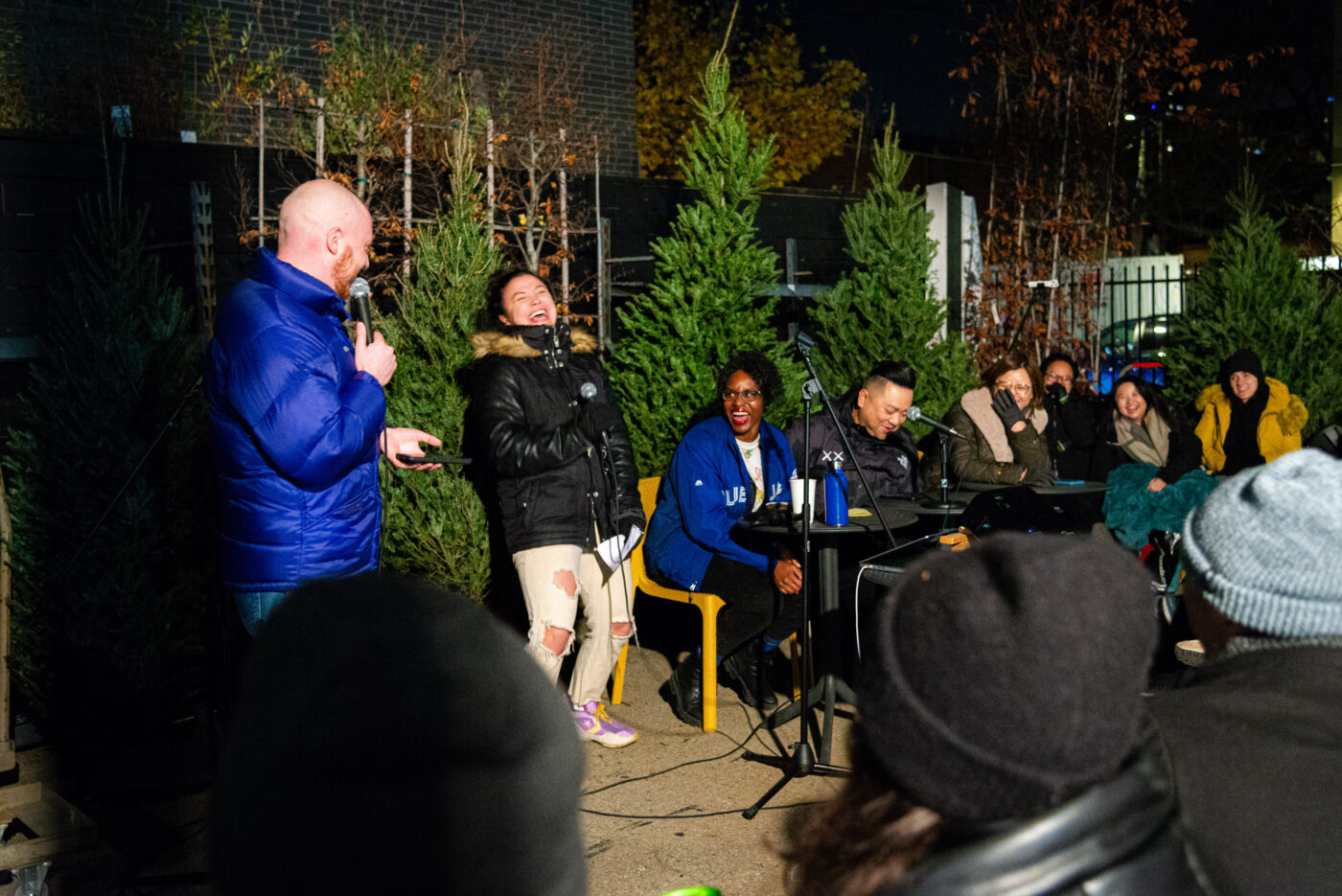
COMEDY ROAST BATTLE COMPETITORS REPRESENTING RIVERDALE, DAN JAMES (PICTURED FAR LEFT), AND LITTLE ITALY, KARI JOHNSON (SECOND TO LEFT), DUKING IT OUT AS JUDGES ZILLAH FERGUSON (MIDDLE), ANDREW PHUNG (SECOND TO RIGHT) AND THE GREEN LINE EDITOR-IN-CHIEF ANITA LI (FAR RIGHT) ASSESS THE PERFORMANCES.📸 ALOYSIUS WONG/THE GREEN LINE.
Event Overview
See what you missed
from our latest event.
Our community members brainstormed solutions for supporting Toronto’s comedy scene.
Compiled by Lanxin Jiang.
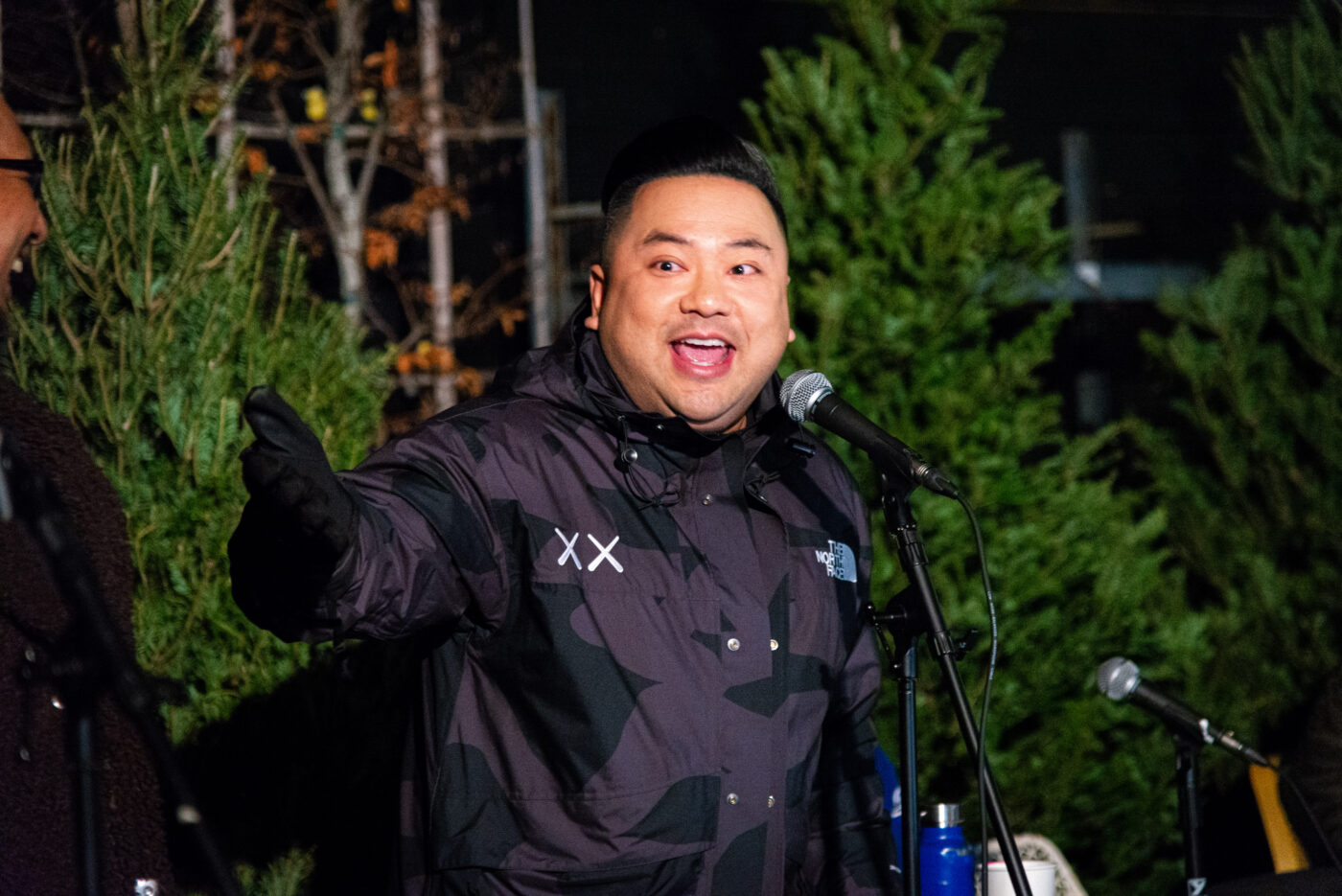
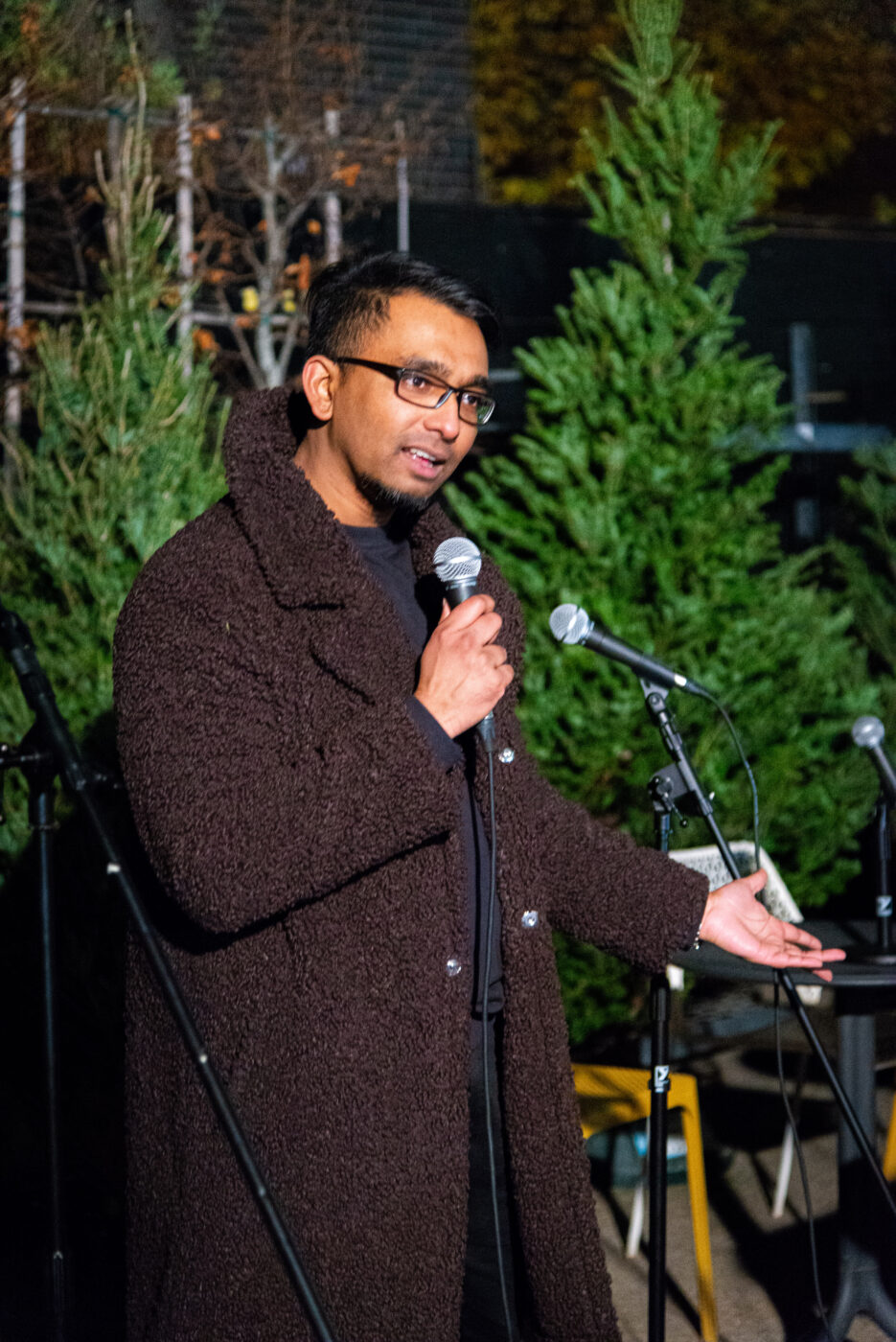
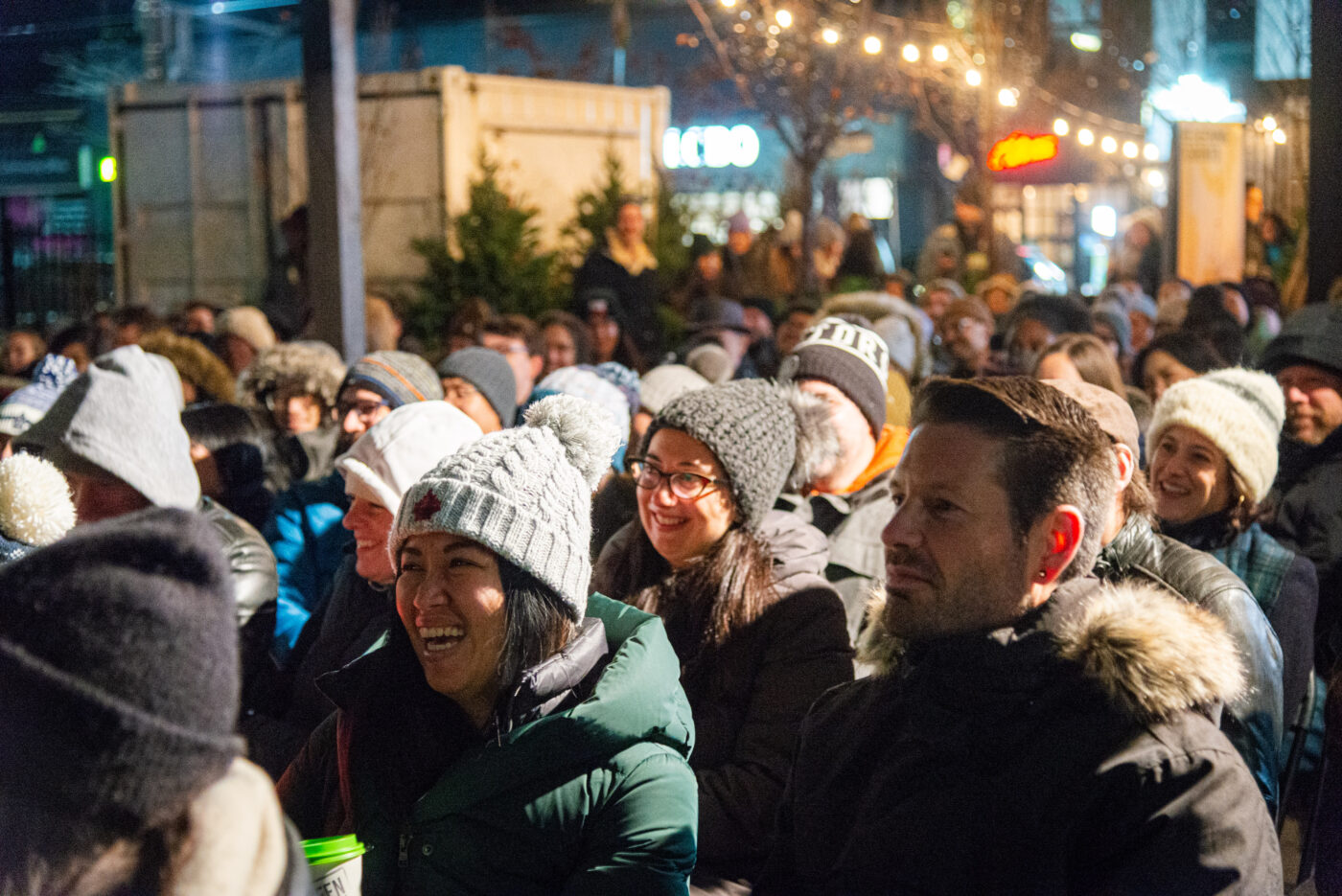
COMEDIAN ANDREW PHUNG OF KIM'S CONVENIENCE AND RUN THE BURBS, OUR EVENT HEADLINER AND JUDGE, SPEAKING TO THE AUDIENCE. 📸: ALOYSIUS WONG/THE GREEN LINE.COMEDIAN AND EVENT HOST DANISH ANWAR SPEAKING TO THE AUDIENCE. 📸: ALOYSIUS WONG/THE GREEN LINE.A crowd of people laughing during The Green Line's roast battle event, Your Hood's A Joke, at Queen Garden Cafe in Riverside on Nov. 25, 2023. 📸: ALOYSIUS WONG/THE GREEN LINE.
SOLUTIONS
Join the conversation
We value your privacy
The Green Line uses cookies so the site works, to remember your reading progress, and (with your consent) to understand which stories resonate. You can accept all, reject everything non-essential, or pick what you’re comfortable with. Privacy policy
Welcome back👋
New here or returning? Same flow. Drop your email — we'll handle the rest.







Join the conversation