In its “Vital Signs” report last year, the Toronto Foundation said 37 per cent of Torontonians are lonely three to four days of the week, while only 28 per cent of the rest of Canada feel that way.
What’s more, although 91 per cent of Torontonians reported having at least one close friend or family member to lean on and talk to, only 30 per cent said they “always have people to depend on” — a 13 percentage point drop since 2018, according to the Toronto Foundation and Environics Institute for Survey Research‘s joint study on the city’s social capital in 2022.
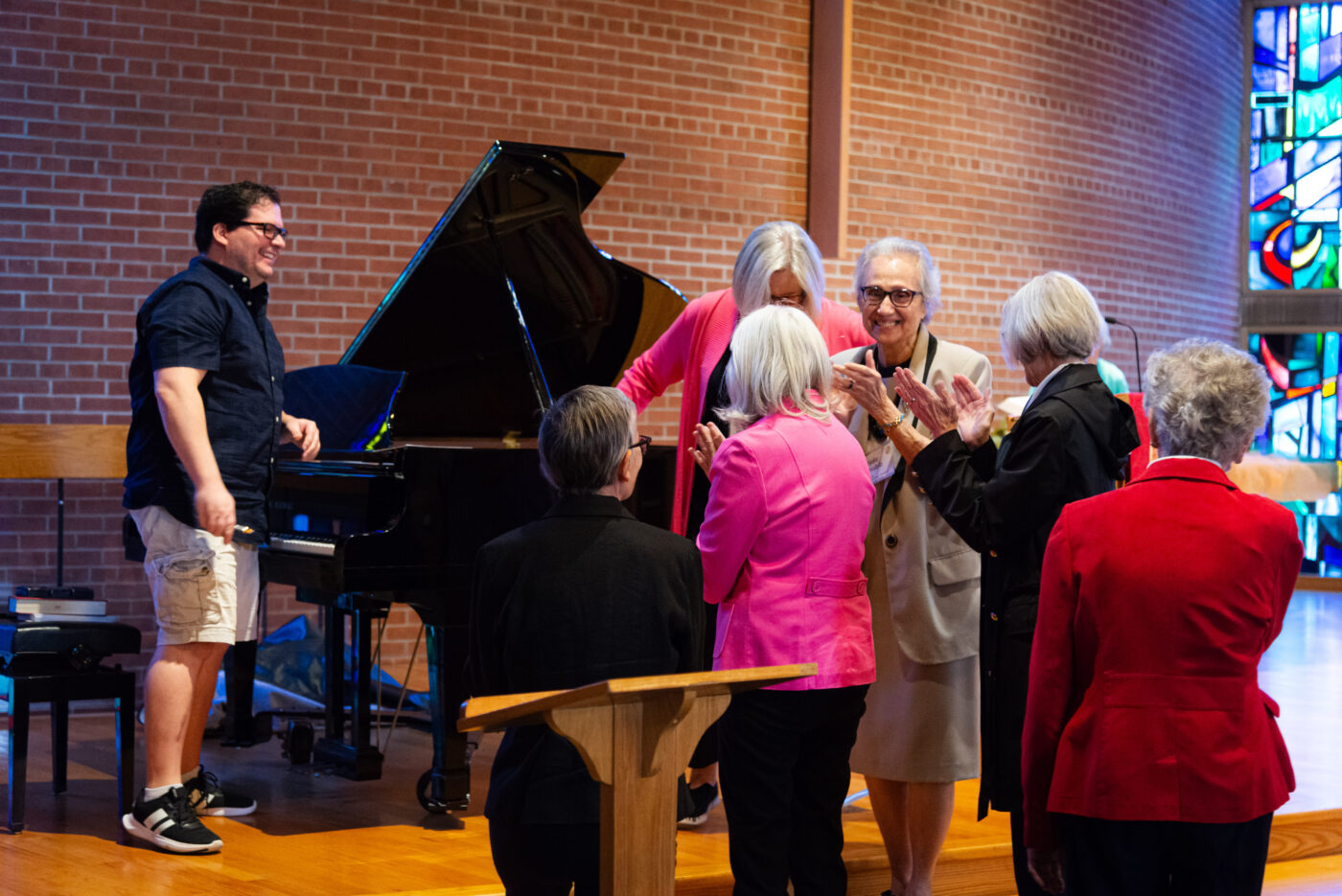
After the Sunday service at Donway Covenant United Church near Don Mills Road and Lawrence Avenue East, community members sing "Happy Birthday" to Scott Pietrangelo, the church’s music director, on Sept. 8, 2024. 📸: Aloysius Wong/The Green Line.
While most Torontonians reported participating in or being a member of some type of group, religious organizations seem to have the most stable number of participants. The number of Torontonians involved in groups such as church choirs, youth groups and other faith-based programming hasn’t changed much between 2018 and 2022, dipping from 20 to 18 per cent.
Unfortunately, other organizations can’t say the same. When it comes to unions, sports leagues, and education-, hobby- or culture-based groups, all have seen a decrease in participation by at least 8 percentage points during that same time period.
“37 per cent of Torontonians are lonely three to four days of the week, while only 28 per cent of the rest of Canada feel that way.”
TORONTO FOUNDATION
“37 per cent of Torontonians are lonely three to four days of the week, while only 28 per cent of the rest of Canada feel that way.”
TORONTO FOUNDATION.
With numbers like that, it’s easy to understand why our freelance feature reporter and self-described “heathen” Jay Cockburn says that the only places to commune in Toronto ask you to “pay or pray.” So with that, he took a chance with churches.
But for those searching for community who aren’t willing to take a chance on faith spaces, where can they go for free? Toronto has hundreds of parks, community centres and libraries open to the public, as well as a growing number of privately owned publicly accessible spaces or POPS, but that doesn’t always mitigate the growing cost of social outings for the average Torontonian.
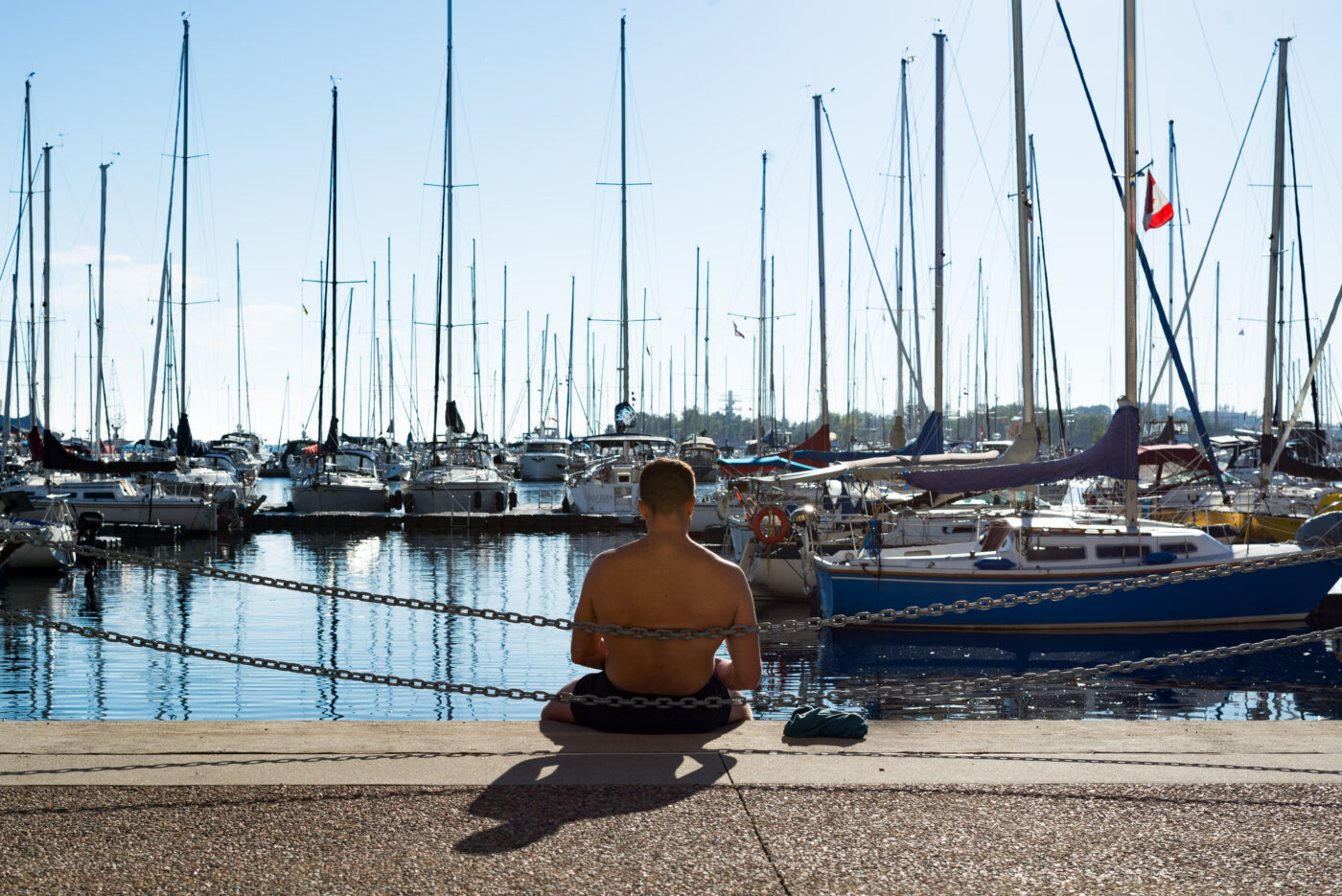
A man sits alone by a Toronto harbour in the afternoon on Sept. 30, 2024. 📸: Aloysius Wong/The Green Line.
Indeed, single working adults in Toronto would have to make over two times Ontario’s minimum wage of $16.55 per hour, full-time, in order to thrive, according to Wellesley Institute’s “Thriving in the City” report released earlier this year.
“Thriving,” as defined by the institute, is composed of nine factors such as shelter, professional development, transportation and social participation.
Social participation encompasses hobbies, gift-giving, outings, dinner with friends, travelling, streaming services and phone plans — all of which come to a sum of over $7,000 per year, though it varies depending on the person. For example, a thriving Torontonian would have to spend around $900 a year if they just want to go out once a month to a Blue Jay’s game or Cineplex theatre and then have a casual dinner at, say, Osmow’s or Shake Shack.
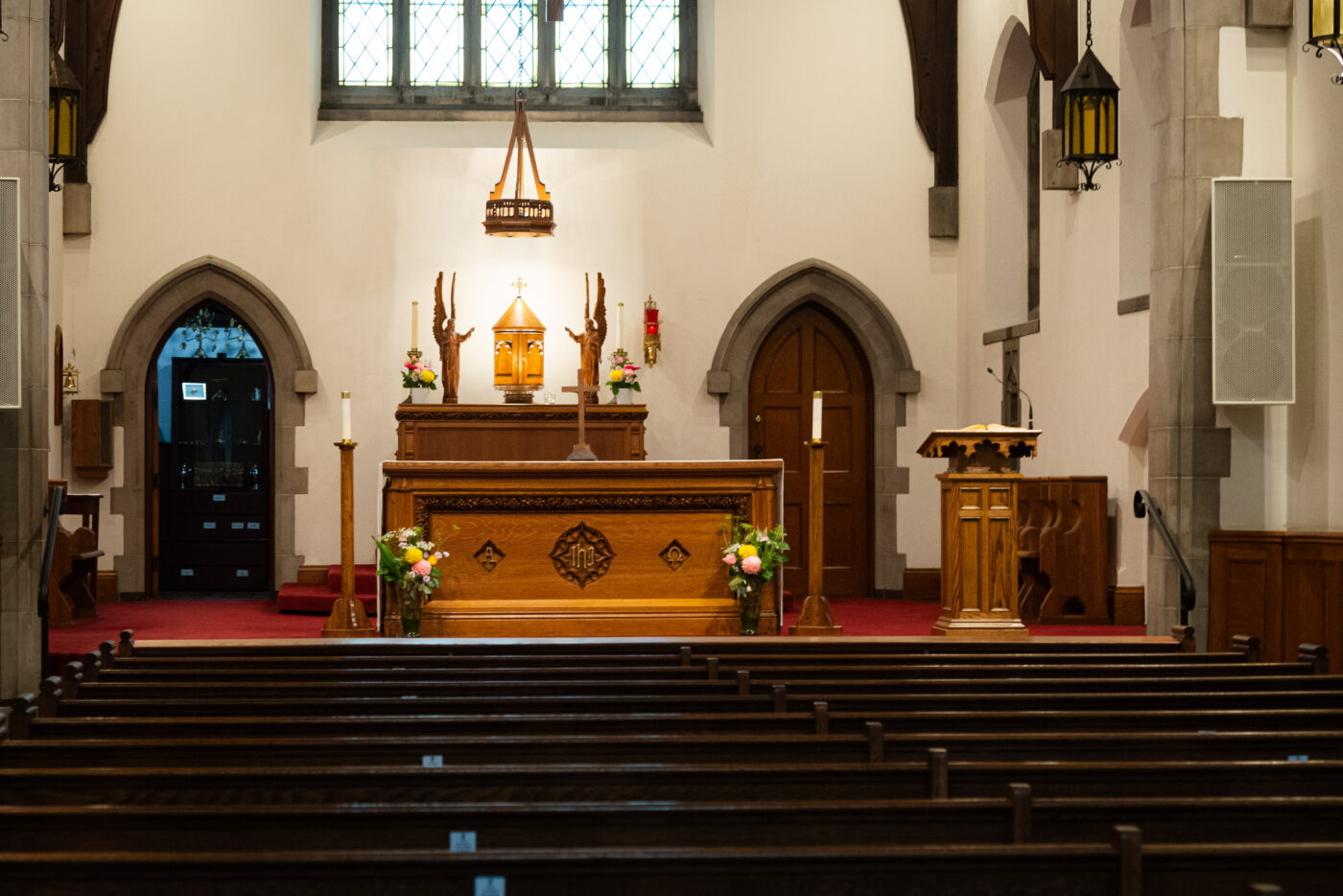
Inside St. John Henry Newman Catholic Church, a parish situated within the University of Toronto, the altar and tabernacle are lit up in preparation for Sunday evening Mass on Sept. 8, 2024. 📸: Aloysius Wong/The Green Line.
One avenue for affordable in-person events has become local church buildings, which aren’t only for those of faith anymore, as they now provide space for arts, sports, educational and other organizations to host their programming. According to Faith and the Common Good’s 2020 survey on the state of faith buildings in Ontario, 60 per cent of groups in Toronto surveyed said that if it wasn’t for these places of worship, they would not have an affordable space to offer in-person programming.
The report also estimates that a third of faith buildings in Ontario are in danger of closing, which in Toronto is largely due to developers converting them into condos. As the cost of living in the city rises and Torontonians’ social circles grow smaller, faith spaces are an accessible and affordable entry into community.
If we lose these physical spaces, then where can the faithful and faithless alike gather, without cost?
Today’s stories lead to tomorrow’s solutions, so sign up for our newsletter to take action on the issues you learn about in The Green Line.
Confessions of a Godless Church-Goer: Can I Find Community Without Belief?
Our freelance feature reporter Jay Cockburn stands in the Donway Covenant United Church as the community gathers for a Sunday morning service on Sept. 8, 2024.📸 Aloysius Wong/The Green Line.
It’s 5 a.m. on a breezy Sunday morning in September and I, a third-generation atheist, am having a minor freak-out about what to wear to mass.
My parents aren’t religious, and my maternal grandparents weren’t religious either. There was no priest or reverend at grandma’s funeral, just a celebrant and a furnace. One of my earliest memories is of asking my mother if there’s a God. We were getting into the car outside my grandparent’s house.
“That’s for you to decide” was her reply.
I figured if that decision was left up to me, a child, then that was pretty good evidence of a lack of a god.
So, like most kids, I inherited my parents’ (lack of) religious beliefs and settled into comfortable atheism.
Perhaps atheist is too strong of a word; my relationship to religion has always been more apathetic than that. I’ve approached my lack of religion the same way most of my religious friends approach their own beliefs: they show up to mass at Christmas and maybe occasionally, guiltily, say a few hungover Hail Marys on a Sunday. I’m no Dawkins-esque anti-church proselytiser — just a lazy atheist.
That’s not unusual in Toronto. According to the 2021 census, 30 per cent of Torontonians are heathens like me. Having no religion is now the most common belief system, if you can call it that.
A decade earlier, the Catholics were the top statistical dog with that same share: 30 per cent. The godless were well behind with just over a fifth of the population at 21 per cent. In 10 years, those numbers have nearly switched; Catholics now make up just 24 per cent of Torontonians.
“Why can’t we take that church ethos and apply it to the city itself? Where are our free-to-access, all-weather public spaces?”
JAY COCKBURN
“Why can’t we take that church ethos and apply it to the city itself? Where are our free-to-access, all-weather public spaces?”
JAY COCKBURN
Those stats were in my mind when I read a report about loneliness in Toronto. We’re a city where our separation from community has become so stark that it can be measured. Toronto Foundation’s 2023 report, “Toronto Vital Signs: The Power of Us” suggests that the number of Torontonians with six or more close friends has halved in a decade, from 57 to 28 per cent. We’re withdrawing from social circles and community engagement, and the result, the report says, is that over a third of Toronto’s adults say they feel lonely three or four days a week.
That makes us the loneliest major city in Canada.
Loading this Instagram post pulls content from Meta and may set cookies. Tap below to show the post — or open it directly on Instagram.
When I met The Green Line’s editor-in-chief Anita Li for coffee, that’s what we ended up talking about (well, that, and our shared love of Star Trek). Toronto has lots of things going for it, but there are vanishingly few spaces where you can meet people without having to pay or pray.
But what about the “pray,” we wondered? Perhaps we’ve ignored the social side of religion. Perhaps I was wrong to write off church.
Perhaps I should go to mass.
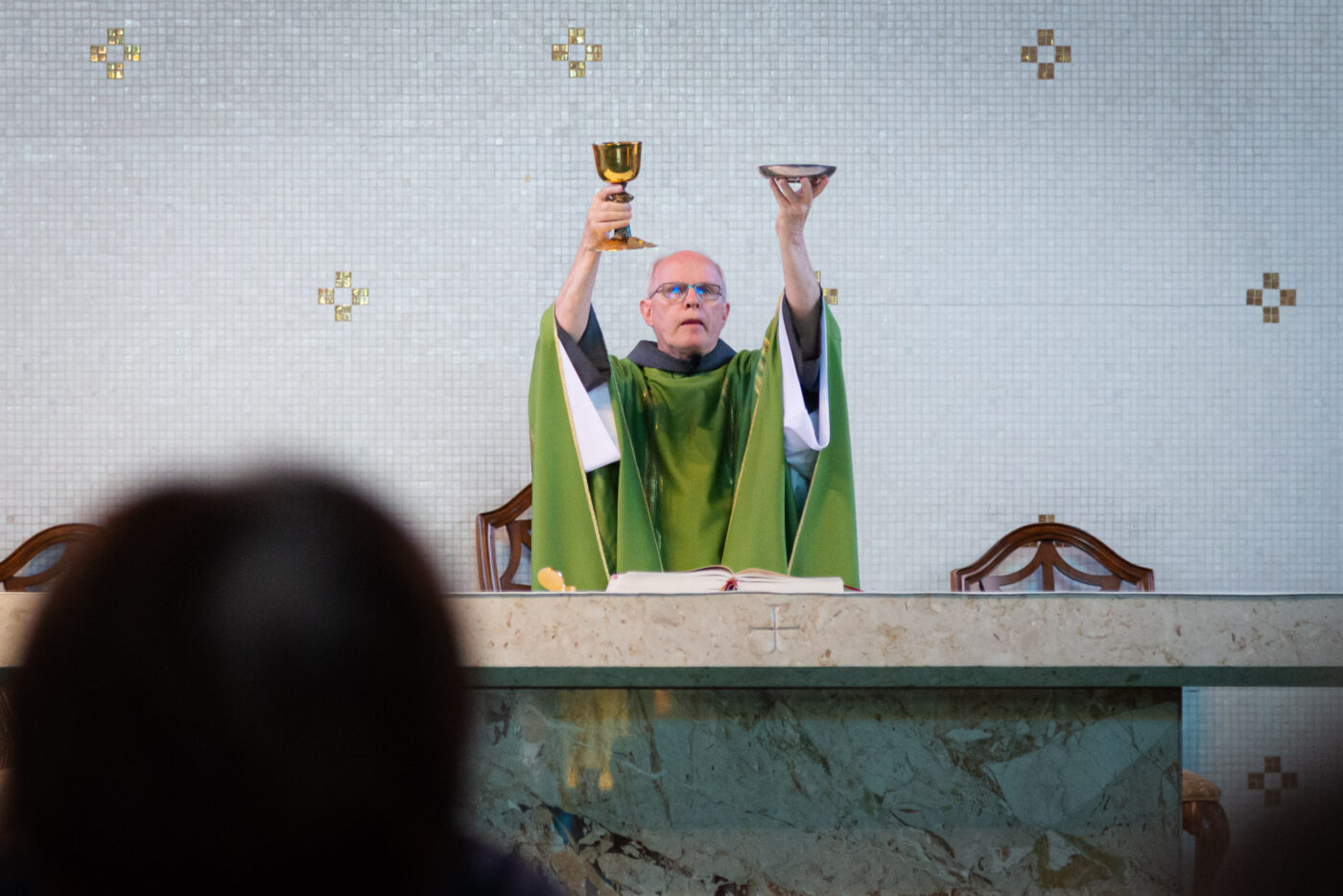
Fr. Tom Reist celebrates the Eucharist during the 8:30 a.m. Sunday mass at St. Bonaventure's Parish on Sept. 8, 2024. 📸: Aloysius Wong/The Green Line.
So, when a long forgotten “wear your Sunday best” bubbles up through my slumber like an anxiety alarm clock, I find myself wide awake before the sunrise, nervously scanning the Catholicism subreddit.
There are posts with titles like, “Be a man and dress up for mass.” But I only own one suit and it’s at the dry cleaners. Black jeans and a white dress shirt will have to do.
When I arrive at St. Bonaventure’s Parish in Don Mills, it’s 8 a.m. I’m met by my religious tour guide, Dr. David Bruce.
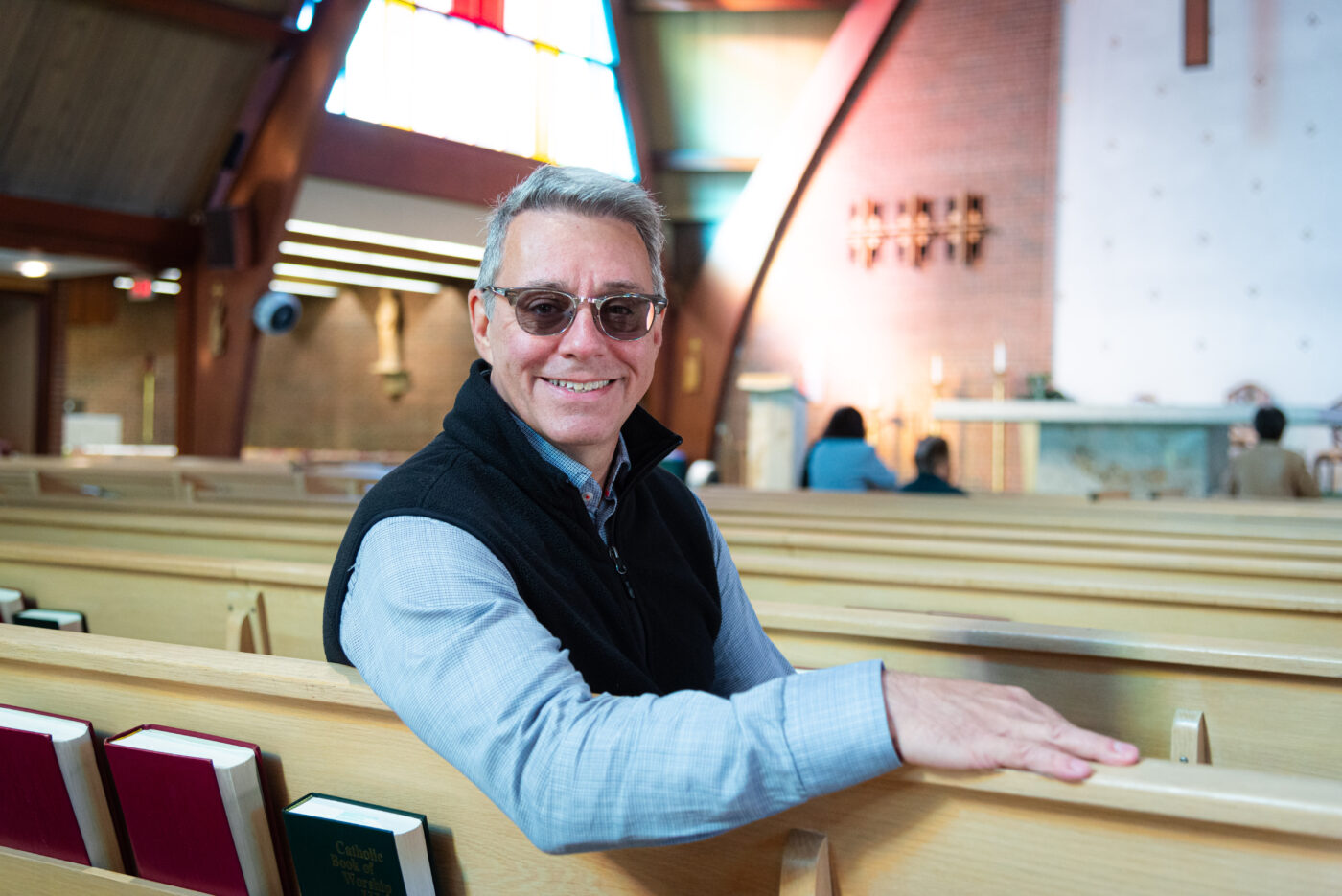
Dr. David Bruce, a former United Church pastor with a PhD in theology who converted to Catholicism, sits inside the St. Bonaventure’s Parish after Sunday mass. 📸: Aloysius Wong/The Green Line.
With a beaming grin on his clean-shaven and bespectacled face, David guides me into the church for a quick tour before mass begins. As he drops to his knee and crosses himself on the threshold, I awkwardly wonder if I should be doing the same. The photographer with me, Aloysius Wong, assures me I don’t have to. Thank you, Anita, for surrounding me with knowledgeable Catholics.
David eagerly points out statues of Mary, Jesus’ mom, and St. Francis of Assisi before showing me to a seat and demonstrating how to operate the knee thing. I’m sure it has a name, but my inability to name the piece of wood that folds down so I can kneel during prayer feels illustrative (Photographer’s note: It’s just called a kneeler). I’m grateful for the guidance because, frankly, I feel a bit out of place.
But the music is soothing and the building is beautiful. I can see why you’d find peace here on a Sunday morning. There’s a stillness to the church, a peaceful permanence that I can feel in the air, undisturbed by the quiet chatter of the congregation filing in. A baby coos in the back. Small nods of recognition pass between regulars and whispers of “Hi! Nice to see you again!”
Mass begins with a reassuring rendition of the hymn “All Are Welcome.” I wonder if they chose it just for me.
David, with his PhD in theology, paraphrases the Lutheran pastor Dietrich Bonhoeffer: “If a Christian community does not sing together, it is not a Christian community.”
Much like a music festival or a Jays game, I can feel what he means by that. “That kind of communal swell, vocal expression, physical resonance with what’s going on has been a key part of the Christian community ever since the beginning,” David explains to me.
But unlike a festival or a game, it didn’t cost me a single dollar to enter, and I’m not expected to drink. This isn’t raucous — it’s a peaceful blooming in my chest. My shoulders drop, and the knots in my back ease. I’m an awful singer, but luckily David has both the enthusiasm and the ability to carry us both.
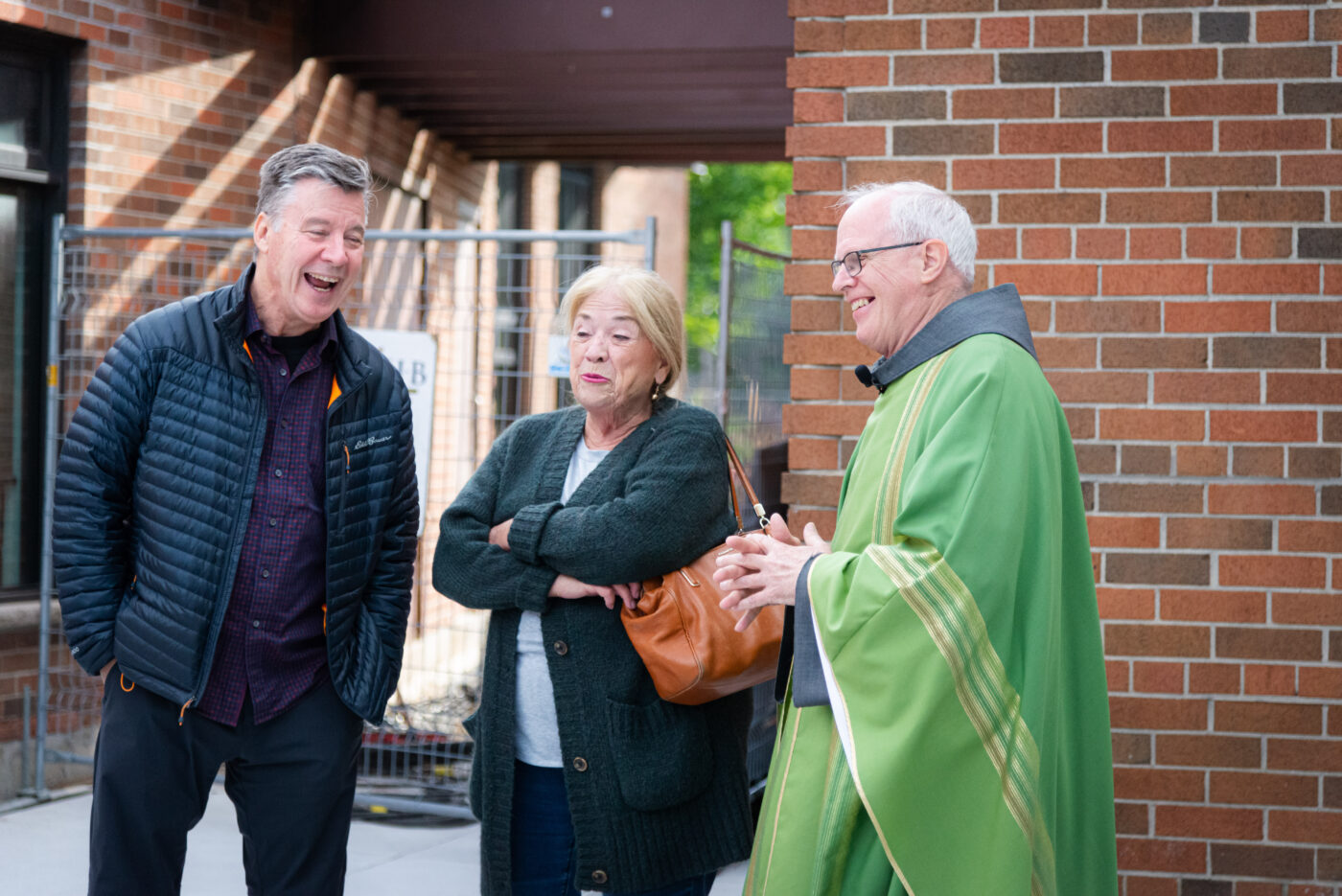
Fr. Tom Reist catches up with parishioners after Sunday mass on the morning of Sept. 8, 2024. 📸: Aloysius Wong/The Green Line.
I don’t know the call-and-responses that everyone here repeats by rote. Every time the priest utters, “Peace be with you,” I miss my cue. Is the response, “With your spirit, too?” I feel awkward again. I’m not quite getting the comfort that I imagine others here get from being a part of something bigger, knowing the same things, feeling the same feelings. When it’s time to stand and eat the Body of Christ in the form of communion wafer I am excluded. David Bruce kindly (but unsubtly) stays seated with me, the unbaptised. He advises me.
It would only be a small sin if I partake.
Ultimately, I’m an outsider, looking in. A voyeur, unsure of whether or not I should wear a suit or a trench coat to match my religious peeping.
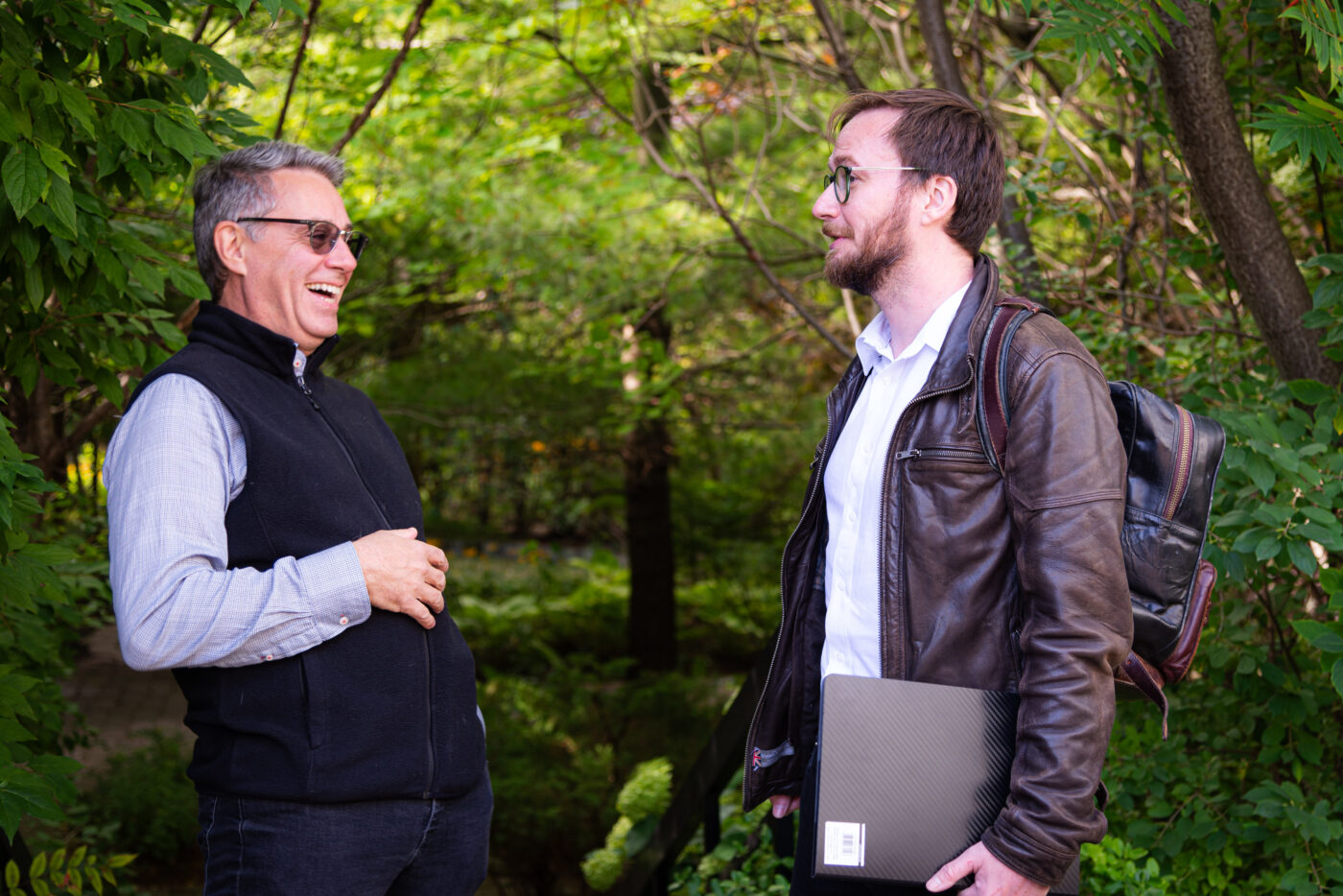
Dr. David Bruce guides Jay Cockburn around the garden outside St. Bonaventure’s after Sunday mass on Sept. 8, 2024. 📸: Aloysius Wong/The Green Line.
One of the parishioners performs a reading; it’s James 2:1-5. “Suppose a man comes into your meeting wearing a gold ring and fine clothes, and a poor man in shabby clothes comes in. If you show special attention to the man wearing fine clothes…have you not discriminated among yourselves, and become judges with evil thoughts?” he says.
I suppose I could’ve gotten away with a t-shirt then.
Father Tom Reist meets me outside in his Franciscan robes. He exudes calm.
“Mass is necessarily a community affair,” he explains. “It ends with, ‘Go live the gospel. Bring what we’re celebrating in here, out there.’ It’s almost like breathing…in and out.”
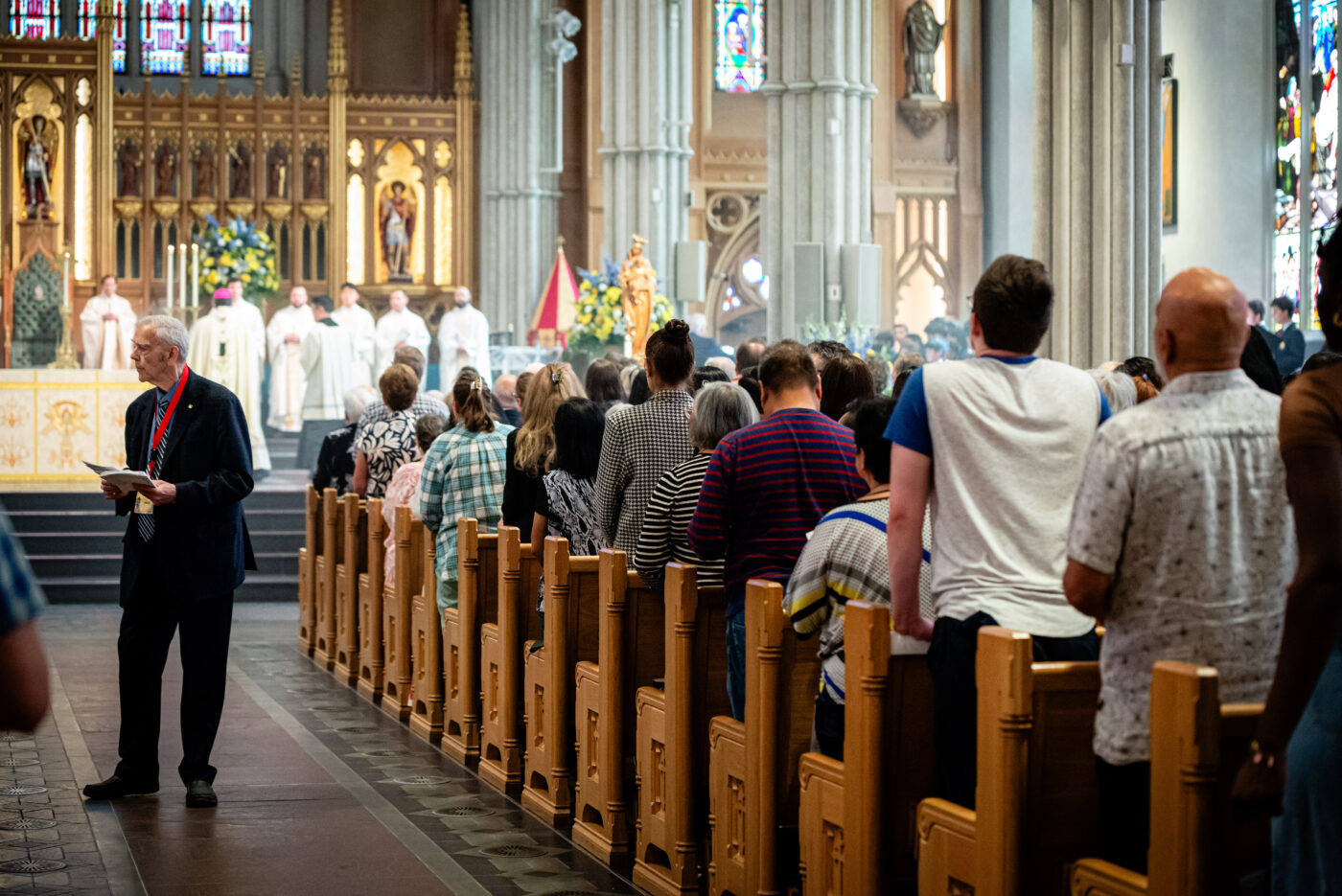
Hundreds of Catholics celebrate mass at St. Michael’s Cathedral Basilica to commemorate the feast day of St. Michael, the patron saint of Toronto, on Sept. 29, 2024. 📸: Aloysius Wong/The Green Line.
Now I’m starting to think about what “community” really means.
It’s not just having friends — I’ve felt incredibly lonely in my life even while having more than that magic number of six close friends (I’m not sure why that’s the cutoff in the Toronto Foundation report). But having a community, to me, means being a part of something bigger. Community means interacting with people you might not count as part of your family or inner social circle, but who are still important to you.
For me, that means saying hi to my neighbours and occasionally sitting on the porch and having a drink together. It means feeling a pang when the old guy across the street stops appearing on his porch to yell, “One way!” at misguided cars, cigarette in hand. It means going to the local pub (so sue me, I’m British).
I can see some of that at mass here. Yes, the church hosts social gatherings in the form of “coffee mornings” after the service, but it’s the small interactions that are a product of regular attendance, which create this sense of community. A whispered “Hi, how are you?” is small talk, yes, but small talk is important. It welcomes you, saying “I recognize you. You’re one of us.”
Statistics from Toronto Foundations' 2023 "Vital Signs" report. 📊: Toronto Foundation.
That recognition only comes from going to the same place regularly. For the people here, that’s a church. For others, it’s a mosque.
Like Steven Zhou, who says, “Community building is one of the foundational obligations of all Muslims.” For Zhou, an immigrant from China who converted to Islam, community is inherently spiritual.
“Real community…is where people come together to experience the sacred,” he adds.
Steven converted to Islam several years after finding himself surrounded by Muslim friends when protesting the treatment of Muslims following 9/11 during his undergrad days at university. He says he was attracted to the progressive political debates that Islamic scholars have, and depicts the religion as nerdy and intellectual.
“[Communal worship] is a kind of almost mystical spirituality that everybody shares and if you don’t experience that together on a regular basis in a robust, grounded way that you truly believe and can justify, then you don’t have community.”
STEVEN ZHOU
It seems community came first for Steven, then God followed. Still, he believes that you can’t have community without communal worship.
“It’s a kind of almost mystical spirituality that everybody shares and if you don’t experience that together on a regular basis in a robust, grounded way that you truly believe and can justify, then you don’t have community,” he explains. “You have something close.”
I’m not sure I agree personally, but we’re getting close to the ephemerality of community — that indefinable thing that swells in your chest. I say to Steven that I have at least come close to those religious feelings at concerts and sports events.
“The oneness behind everything is an objective truth to me. It’s not a wispy feeling that lasts however long Anthony Kiedis and whoever sings, right?” Steven says.
At least we both agree there’s nothing uplifting about a Red Hot Chili Peppers concert.
Dr. David Bruce explains how he designed the logo for the Donway Covenant United Church to incorporate the map of the area. 📊: Aloysius Wong/The Green Line.
Perhaps I’m not going to find community in a place that is inherently a little exclusionary. I can’t force myself to believe in one God, even if I can see the beauty in communal worship.
I can try again in a different church, though — one that’s even had an atheist minister and that my guide David Bruce knows well.
Before he was a Catholic, David was a United Church pastor. In fact I’ve heard he’s kind of a big deal in the United Church network in Toronto.
“I won’t come into the United Church with you…it would be distracting, I’m kind of a celebrity there,” he says with some minor embarrassment, though I get the sense he enjoys saying it just a little.
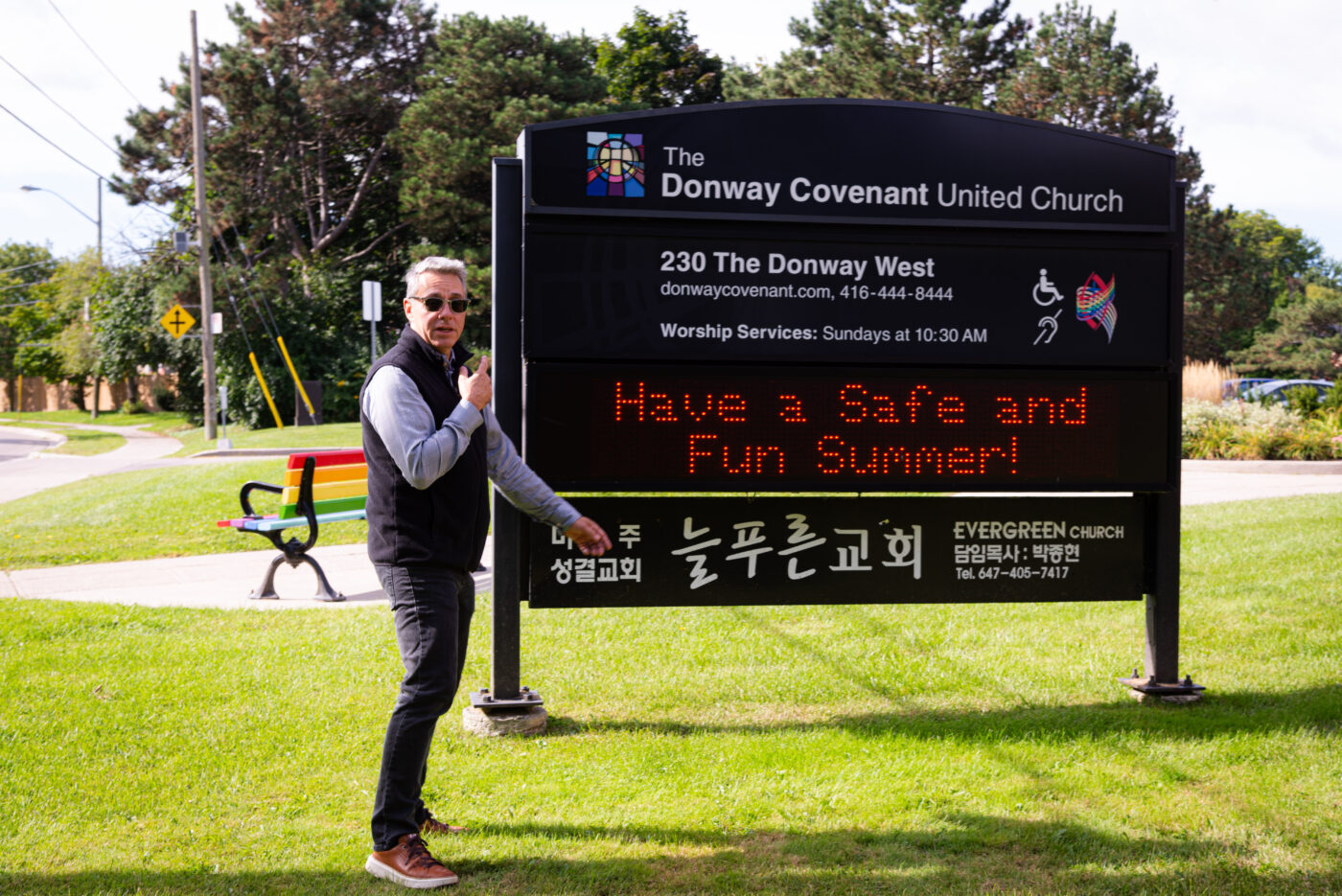
The United Church is sometimes referred to as the church of none-of-the-above. The fading sign outside has rainbow flags painted on. This is an overtly progressive place, so a soft lefty like me immediately feels welcome.
“Most of the key volunteers — the people who made it able for there to be a church there [at the Donway Covenant United Church] — were actually not believers.“ David explains. He adds that half would attend Sunday service because they liked the people, and whether or not there was a God didn’t really matter to them; in fact, most of the congregation, he says, gave no historical credibility to anything in the Bible.
“[So], when people heard that I was leaving the church, I heard the scuttlebutt behind me. ‘Oh, so he’s really like a closet conservative.’”
“I just wanted a bit of Jesus in my diet.”
Members of the Donway Covenant United Church gather for fellowship after the Sunday morning service on Sept. 8, 2024. 📸: Aloysius Wong/The Green Line.
On this Sunday morning in September, though, that wasn’t my experience of the church.
Everyone I asked did believe in God, but knowing that believing wasn’t necessarily a requirement made me feel like I wouldn’t be so much of an outsider, especially compared to the Catholic Mass I attended earlier.
I arrived at the Donway Covenant United Church at the friendlier time of 10:30 a.m. to attend service. Strangers say hello to me and regulars have name tags to identify themselves. The chatter as I sit down is lively and the atmosphere less sombre than the Catholic mass earlier that day. A congregation member tells Aloysius where he can get the best shots, and we’re invited to fellowship time, which will happen after the service.
The service itself references the plight of refugees and coincidentally, the same passage from James during the Catholic Mass is read, though this one runs longer. The Catholic reading, however, stopped before the part that explicitly mentions the rich exploiting the poor. I am once again reminded that I could have gotten away with a t-shirt.
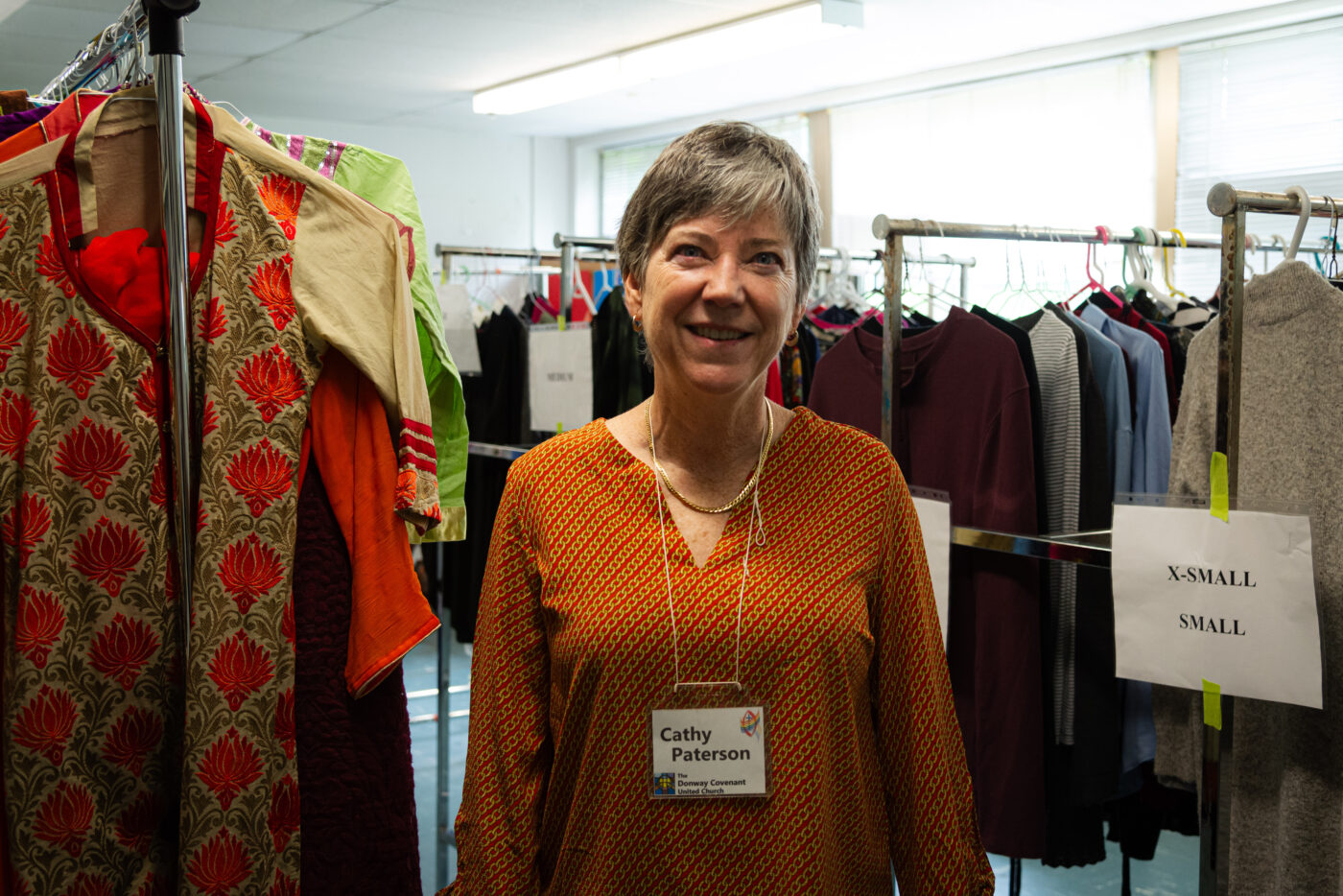
Cathy Paterson, treasurer for the Donway Covenant United Church, shows rooms full of donated goods for newcomers, and emphasizes that the initiative is a community effort. 📸: Aloysius Wong/The Green Line.
Cathy Paterson, the Donway Covenant United Church treasurer, is eager to show me how they’ve filled an entire school with donations for newcomers to Canada. Every room is packed with clothing, cookware and kids toys. It’s really impressive. Sorting through the donations, and getting them to families is a huge task.
When I ask Cathy if she hopes the newcomers the church is helping will join their congregation, she laughs. “No, they’re Muslim!” It’s not a laugh of dismissal, but rather a laugh that implies: Why would I expect something from people I’m helping?
As we’re talking, there’s raucous laughter from congregation members sipping coffee and eating cake at the table behind us. I can tell that for the members, who are mostly seniors due to this church’s location in an aging neighbourhood of the suburban Don Mills, it’s a valuable opportunity to socialize weekly.
For the United Church community, outreach is a core part of their faith.
“I think this congregation does its best to embrace those that are lonely by being welcoming and including them” Rev. Lorrie Daly-Price says.
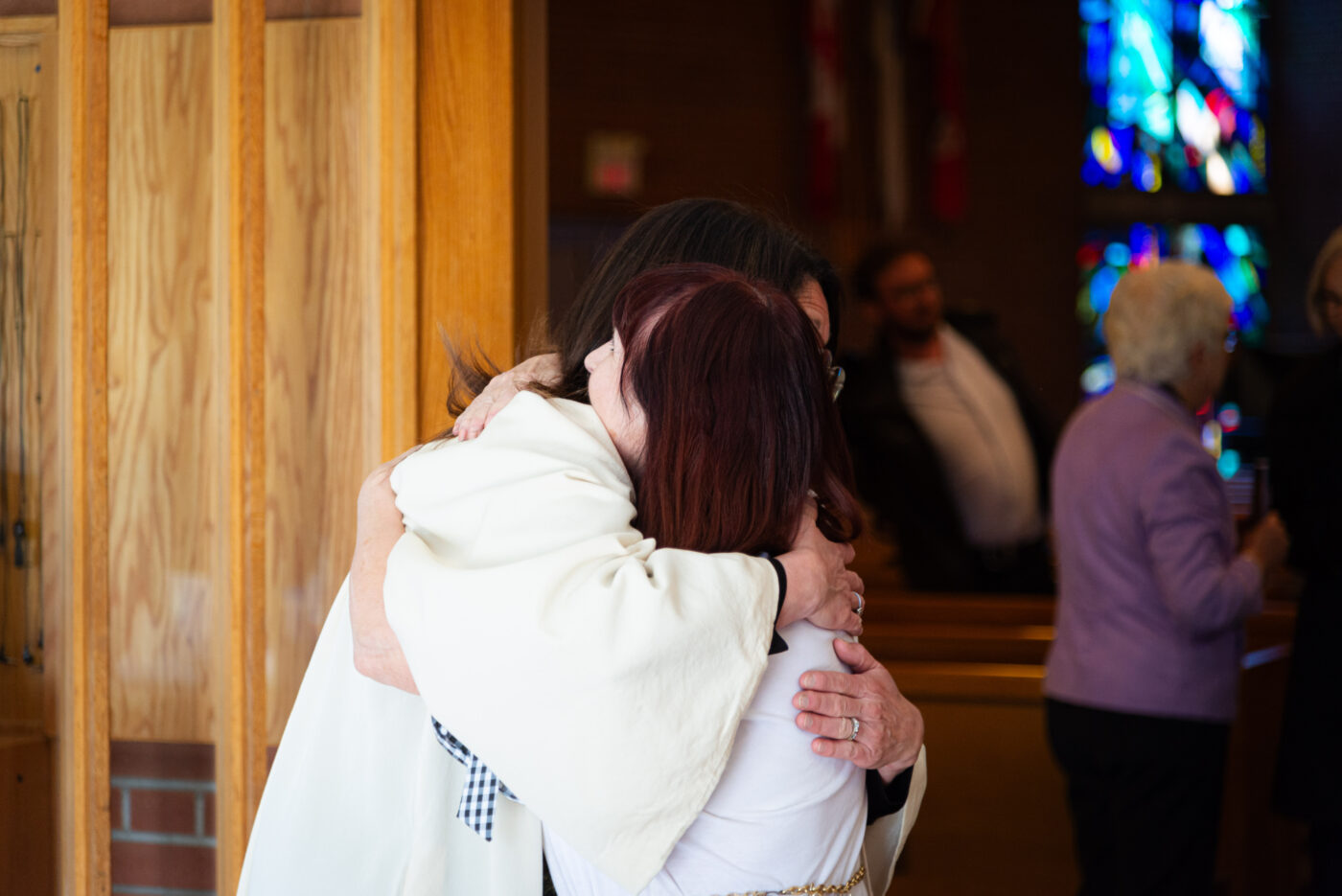
Rev. Lorrie Daly-Price embraces a community member of the Donway Covenant United Church after the Sunday morning service on Sept. 8, 2024. 📸: Aloysius Wong/The Green Line.
Lorrie went to an evangelical school for her undergrad, specifically graduating with a Bachelor of Religious Education and later received a Master of Divinity from Emmanuel College, but tells me she was drawn to the way that community-building is at the heart of the United Church’s interpretation of Christianity.
“It was more about… joining with others than it was about literally reading the Bible and what it said,” she explains. “So, I found that you could live the message more by being a United Church person.”
It is easy to speak to people here, and the community does seem to go deeper than just socializing. One congregation member told me a story about how they took strength from the church community after they were diagnosed with cancer.
“That’s what this church does, too,” retired clergywoman Vivian Yarwood says. “They pray for each other. They telephone. They send cards to support. It’s part of the community.”
“I think this congregation does its best to embrace those that are lonely by being welcoming and including them.”
Rev. Lorrie Daly-Price
The Donway Covenant United Church welcomes everyone with unbridled enthusiasm because a belief in the importance of community is at the core of their religion. There’s a deliberateness to their community: the name tags they wear, the donation drives. Yet the scheduled fellowship time feels anarchic and raucous. Listening back to my interview tape, my own conversations are occasionally drowned out by cackles of joy at the jokes told at nearby tables.
Maybe we need more of that in Toronto: deliberate attempts at friendship, instead of finding excuses to be around people in the form of sports leagues and alcohol consumption.
Still, I don’t think I’m going to go back to the United Church. Sorry, Rev. Lorrie. I loved visiting, but I was still a visitor. I’m sure I’m welcome as a non-believer, but I would feel like a fraud.
The unforced conversations I’ve had and the easy laughter during fellowship time are ringing in my ears as I return to my home in Cabbagetown. The annual Cabbagetown Festival is happening and the contrast with my faith-based experiences earlier couldn’t be more stark. Between stalls for small local startups like Scotiabank and Freedom Mobile, there are endless options to buy a $15 meat stick. Despite Cabbagetown being packed with people, no organic conversations happen. There are few places to sit that aren’t part of a business expecting customers.
It’s busy, but I feel lonely in my own neighbourhood.
Rev. Lorrie Daly-Price speaks with community members of the Donway Covenant United Church after the Sunday morning service on Sept. 8, 2024 📸: ALOYSIUS WONG/THE GREEN LINE.
So, I wonder: Why can’t we take that church ethos and apply it to the city itself?
Where are our free-to-access, all-weather public spaces?
Churches like the United Donway Covenant Church are disappearing. In fact they’re planning to tear it down, and replace it with an apartment building that includes a small space for worship in the basement.
When I ask treasurer Cathy Paterson why they’re redeveloping the land, she replies simply, “Survival.”
If churches are retreating and Torontonians are shifting away from God, then we need to find ways to create community in our public spaces without them. Otherwise, we’ll all end up lonely.
Hostile by Design: How Toronto’s Public Spaces Reflect a City That Doesn’t Welcome You
From the concrete expanse outside College Park to the noise-polluted corner at Parliament and Bloor, Toronto’s design choices keep people moving, not gathering.
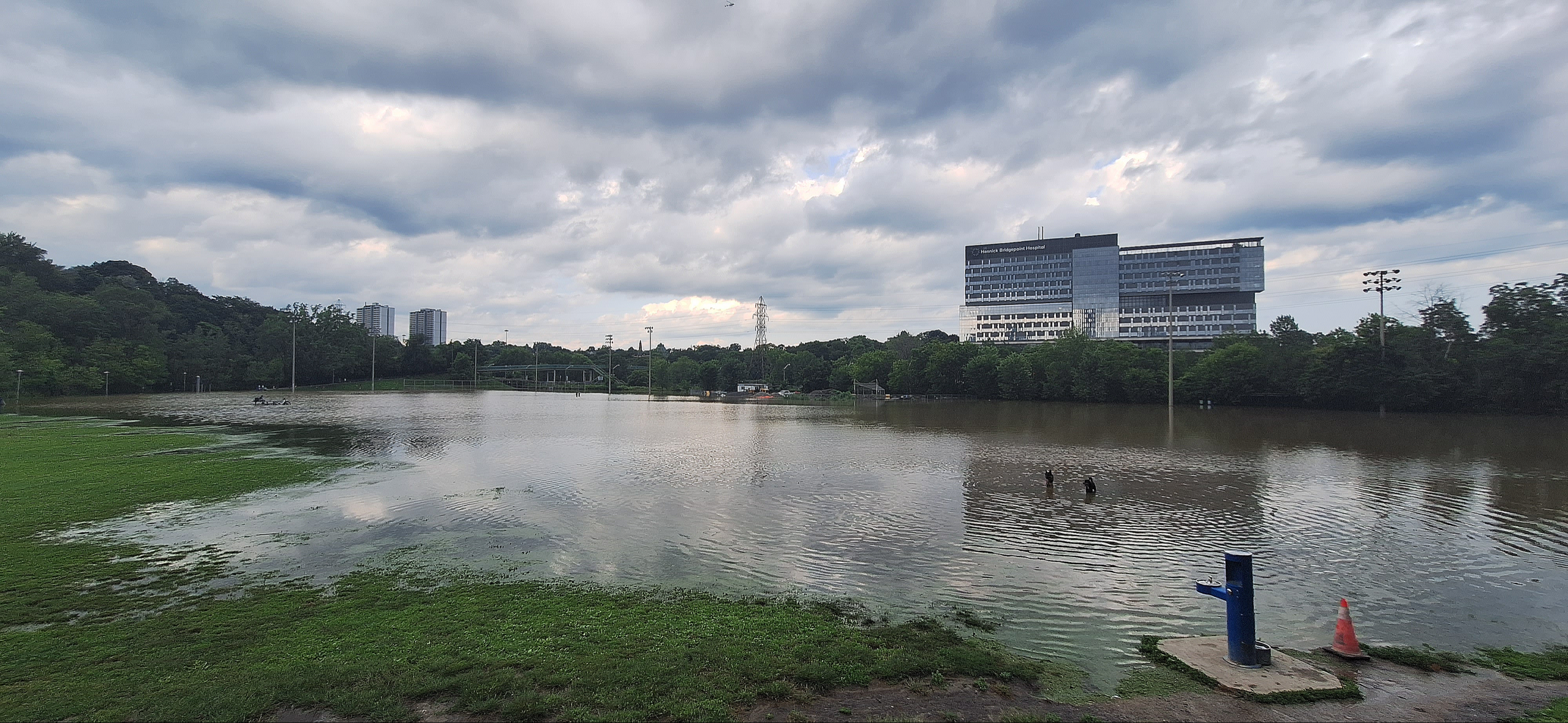
Riverdale Park West under water after Don Valley Parkway flooded on July 16, 2024. 📸: JAY COCKBURN/THE GREEN LINE.
When I look in Toronto’s park-shaped mirror, I have to admit that I don’t feel particularly inspired. Our public spaces can veer into the openly hostile. Take the exterior of the shopping mall College Park at College and Yonge Streets, for example. There’s a wide expanse of concrete that would be perfect for arts installations, seating and even an outdoor café. Instead there’s a single planter, complete with metal bumps, to ensure nobody can lie down or skateboard along the edges. No seating, no reason to stay.
Here’s your chance to support the only independent, hyperlocal news outlet dedicated to serving gen Zs, millennials and other underserved communities in Toronto. Donate now to support The Green Line.
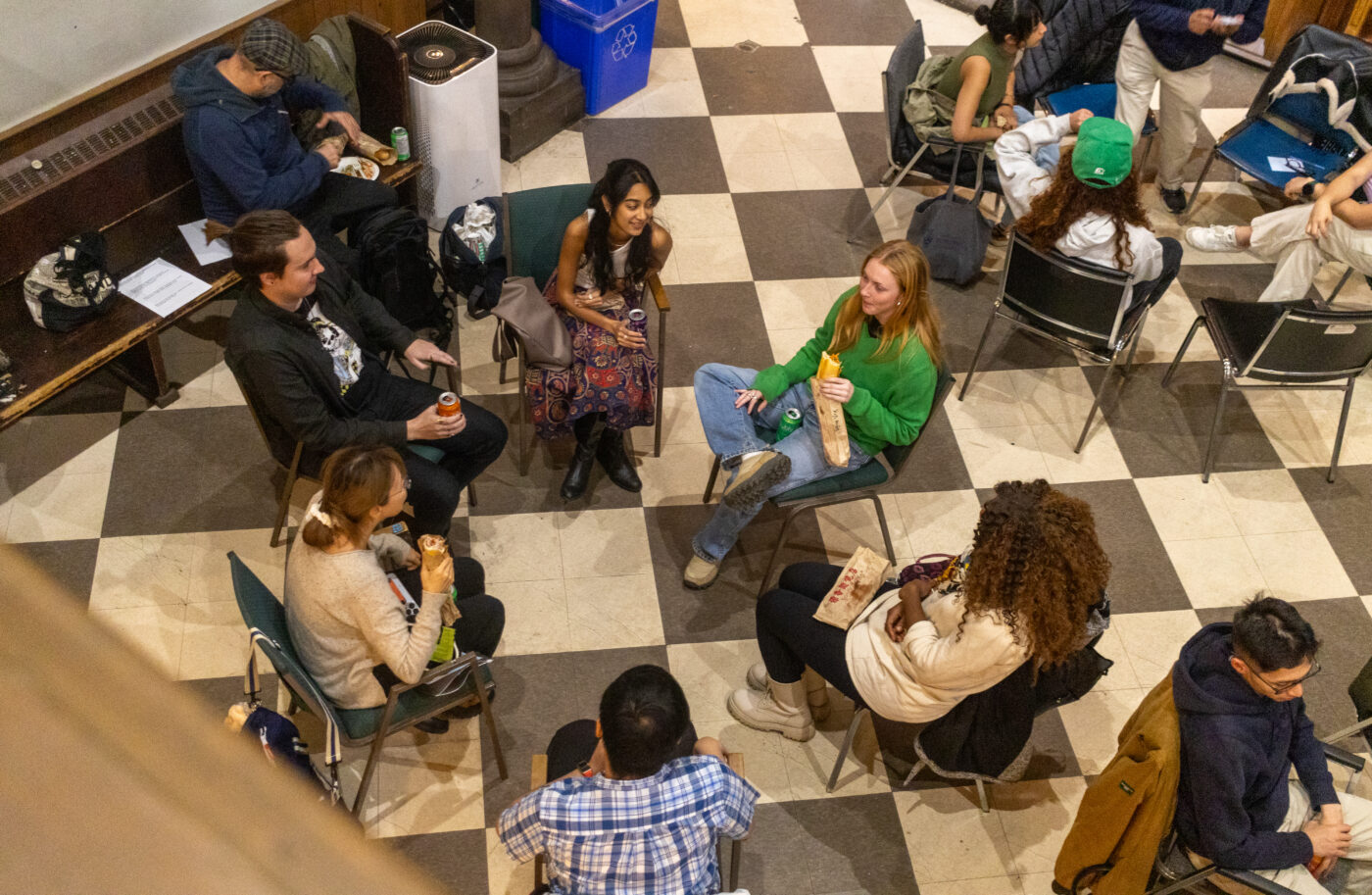
A community meal and Story Circle hosted by The Green Line.
About the Event
Tuesday
Nov. 26, 2024
6 p.m. to 9 p.m. ET
St. Stephen-In-The-Fields Church103 Bellevue Ave.
RSVP
We’re partnering with St. Stephen-In-The-Fields church to host a community meal and Story Circle in the Kensington-Chinatown neighbourhood. Join us on Nov. 26, 2024 from 6 to 9 p.m. to talk about how to find and build meaningful community in a city that doesn’t stop to connect or even breathe. Dinner and refreshments will be provided, so don’t miss out! RSVP now for our free in-person event before spots fill up. Donations are appreciated.
Events are an essential part of our Action Journey. We want to empower Torontonians to take action on the issues they learn about in The Green Line — so what better way to do that than by bringing people together? From community members to industry leaders, anyone in Toronto who’s invested in discussing and solving the problems explored in our features is invited to attend. All ages are welcome unless otherwise indicated. Our only guidelines? Be present. Listen. Be kind and courteous. Respect everyone’s privacy. Hate speech and bullying are absolutely not tolerated. At the end of the day, if you had fun and feel inspired after our events, then The Green Line team will have accomplished what we set out to do. Any questions?Contact Us.
Attendees share food and conversation during our Action Journey event about building meaningful community in Toronto.📸 AMARTYA SMARAN/The Green Line.
Event Overview
See what you missed
from our latest event.
Our community members brainstormed solutions for building meaningful community in Toronto.
Compiled by Adele Lukusa.
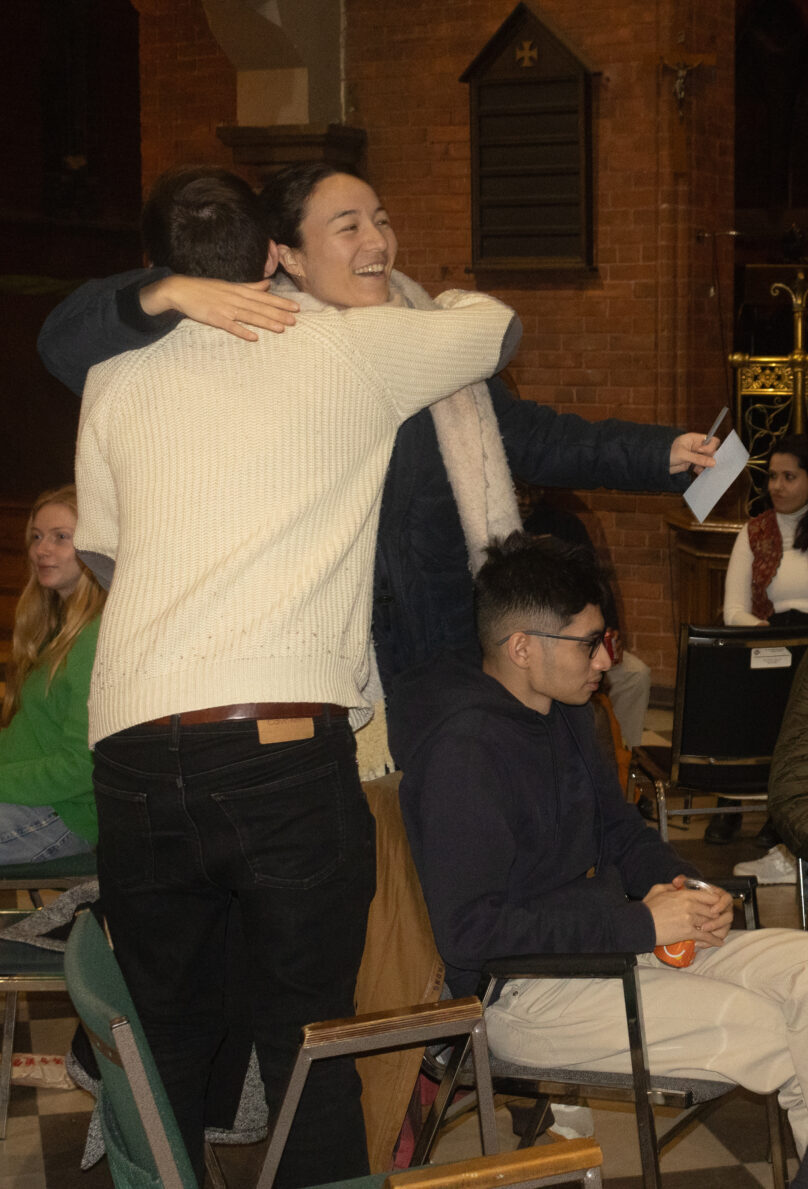
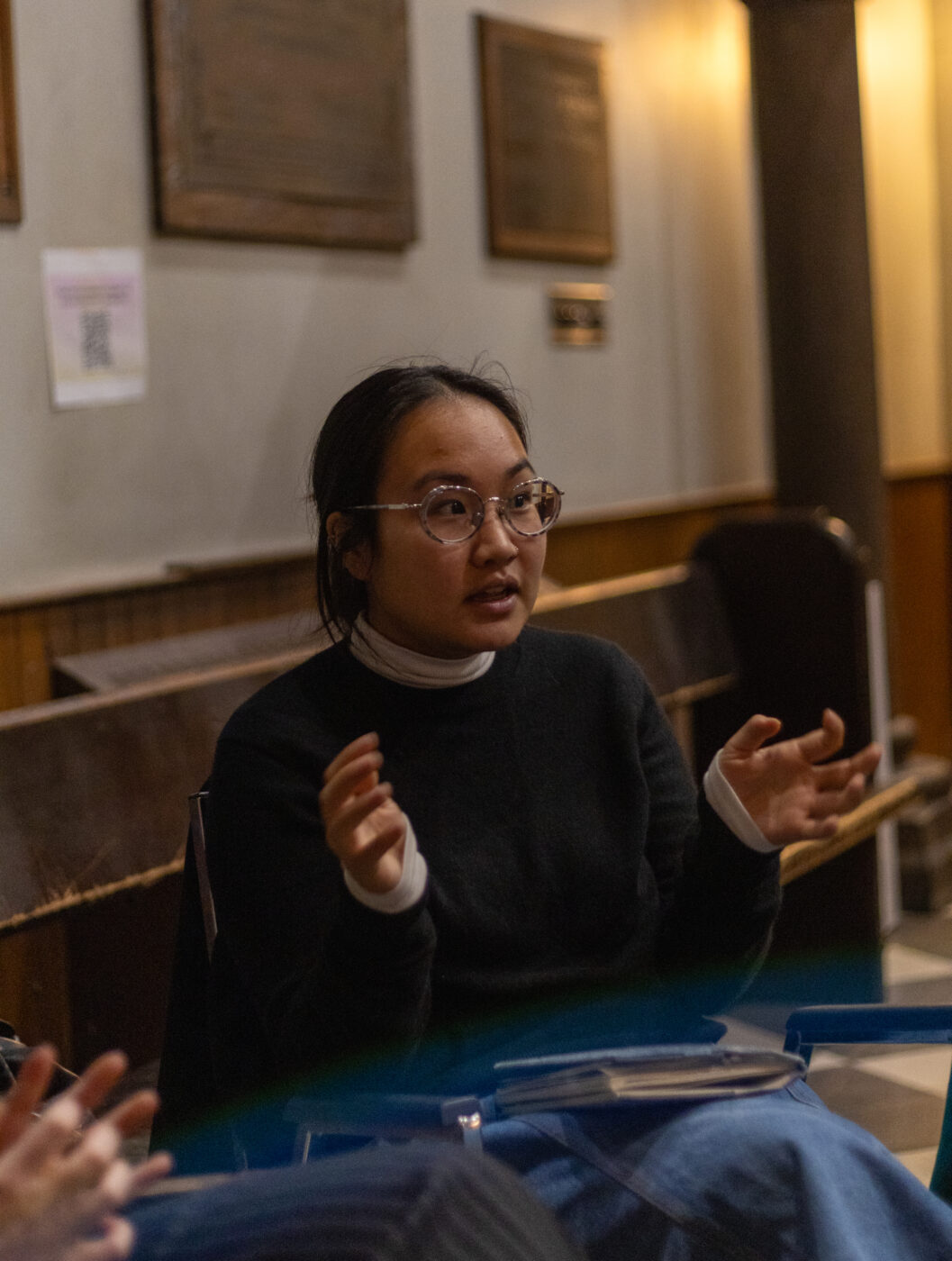
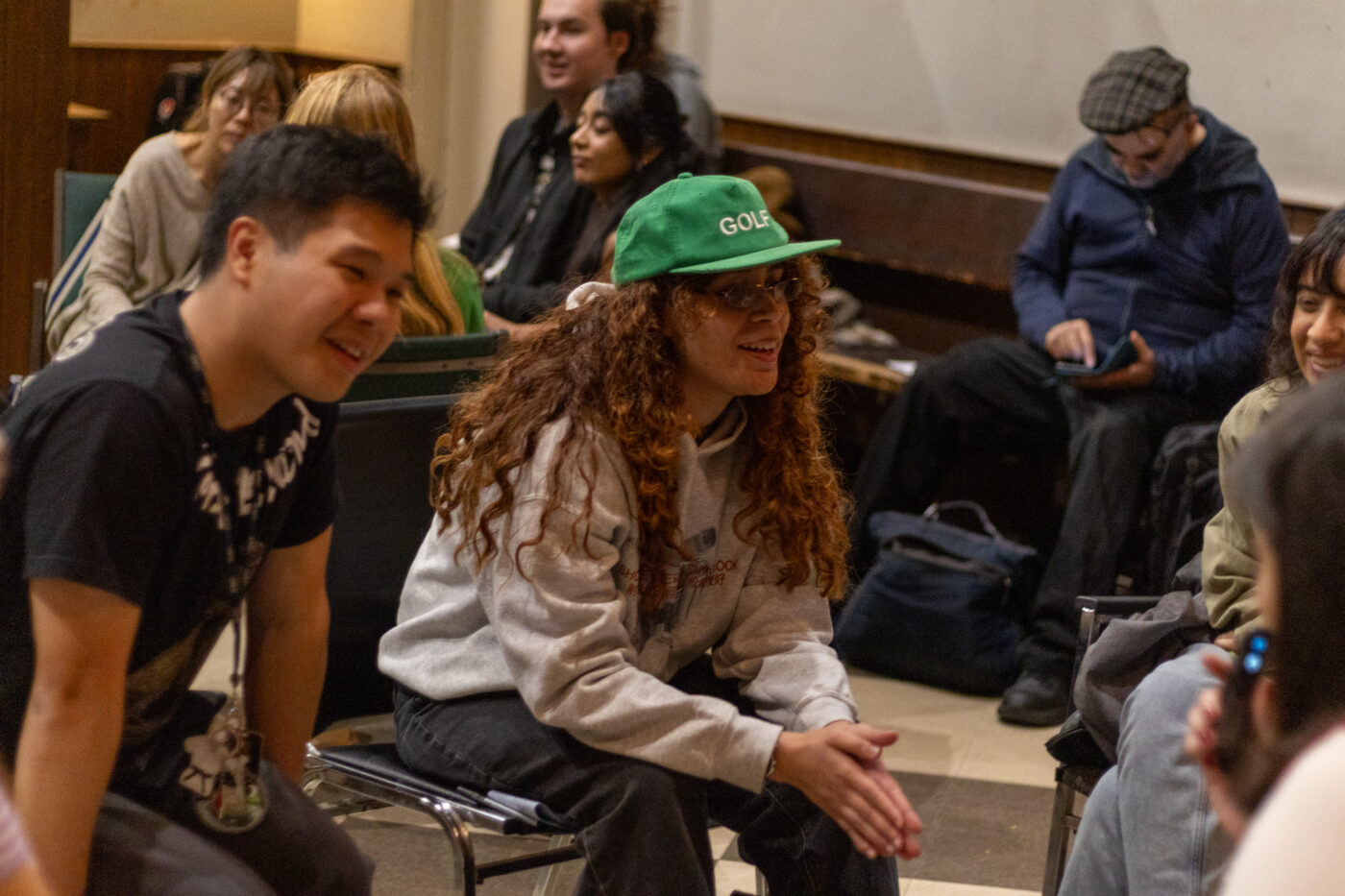
Attendees met up with old friends and connected with potential new ones during our Action Journey event. 📸: AMARTYA SMARAN/The Green Line.Attendees share their experiences and the challenges they faced when trying to make friends in the city. 📸: AMARTYA SMARAN/The Green Line.Attendees brainstormed ways to build meaningful community in toronto during story circles. 📸: AMARTYA SMARAN/The Green Line.
SOLUTIONS
Join the conversation
We value your privacy
The Green Line uses cookies so the site works, to remember your reading progress, and (with your consent) to understand which stories resonate. You can accept all, reject everything non-essential, or pick what you’re comfortable with. Privacy policy
Welcome back👋
New here or returning? Same flow. Drop your email — we'll handle the rest.





Join the conversation