

- 2-Spirited People of the 1st Nations program coordinator Nate Muir says that there are multiple food teachings and traditions out there. “Keep an open mind, always. There are events and workshops happening all the time, start following the agencies on social media to stay informed.”
- If you’re curious about Indigenous foodways, follow chef Taylor Parker, who regularly hosts The Indigenous Food Lab with The Depanneur and keep an eye out for Tea n Bannock re-opening in the spring.
- Scarborough Environmental Alliance (SEA)’s co-founder Krissan Veerasingam’s advice for people who want to start their own community-building initiatives is to use food to start, but cater to people’s experiences and needs to sustain. “If you’re just starting something from scratch, food is a great way to get people out and socializing.”
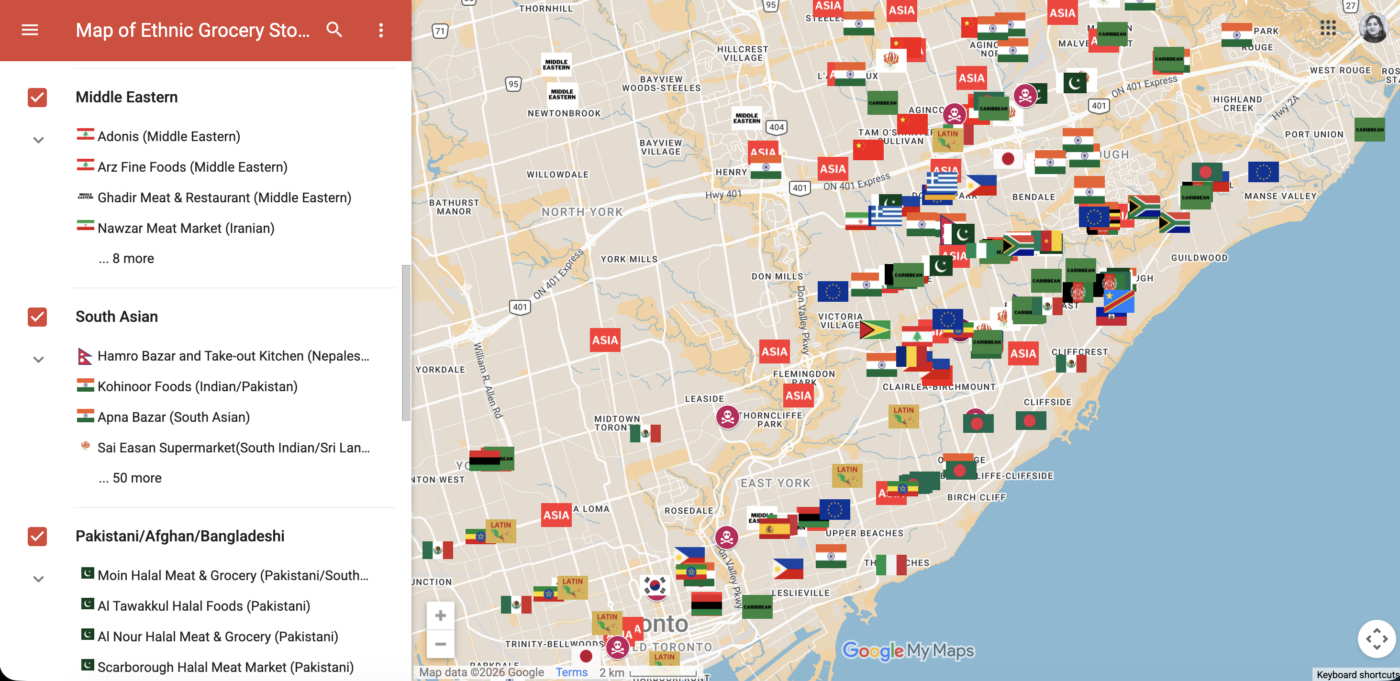
- If you want to explore diaspora specific ingredients, check out SEA’s Map of Ethnic Grocery Stores. You can also check out its event programming.
- Teresa Lobalsamo wants people to use her Italian Canadian Foodways project as inspiration to create their own. “Here’s Italian food and how it shapes our culture. Now use that as inspiration to explore your own foodways, your own history and your own areas of study.”
📸: Yara El Murr/The Green Line.
When my family first arrived in Canada a few years ago, I began to notice a particular expression on my mother’s face.
It wasn’t sadness nor fear; it was a kind of suspension, as though she were living slightly outside of herself.
I saw it when she tried to communicate with someone and waited for me to interpret and in grocery stores, where every label felt foreign. I tried, in the ways daughters do, to soften the distance. I took her to places that resembled fragments of home. I pointed out small similarities, hopeful they might anchor her. But nothing restored the fullness of her spirit.
BECOME A GREEN LINE MEMBER TODAY

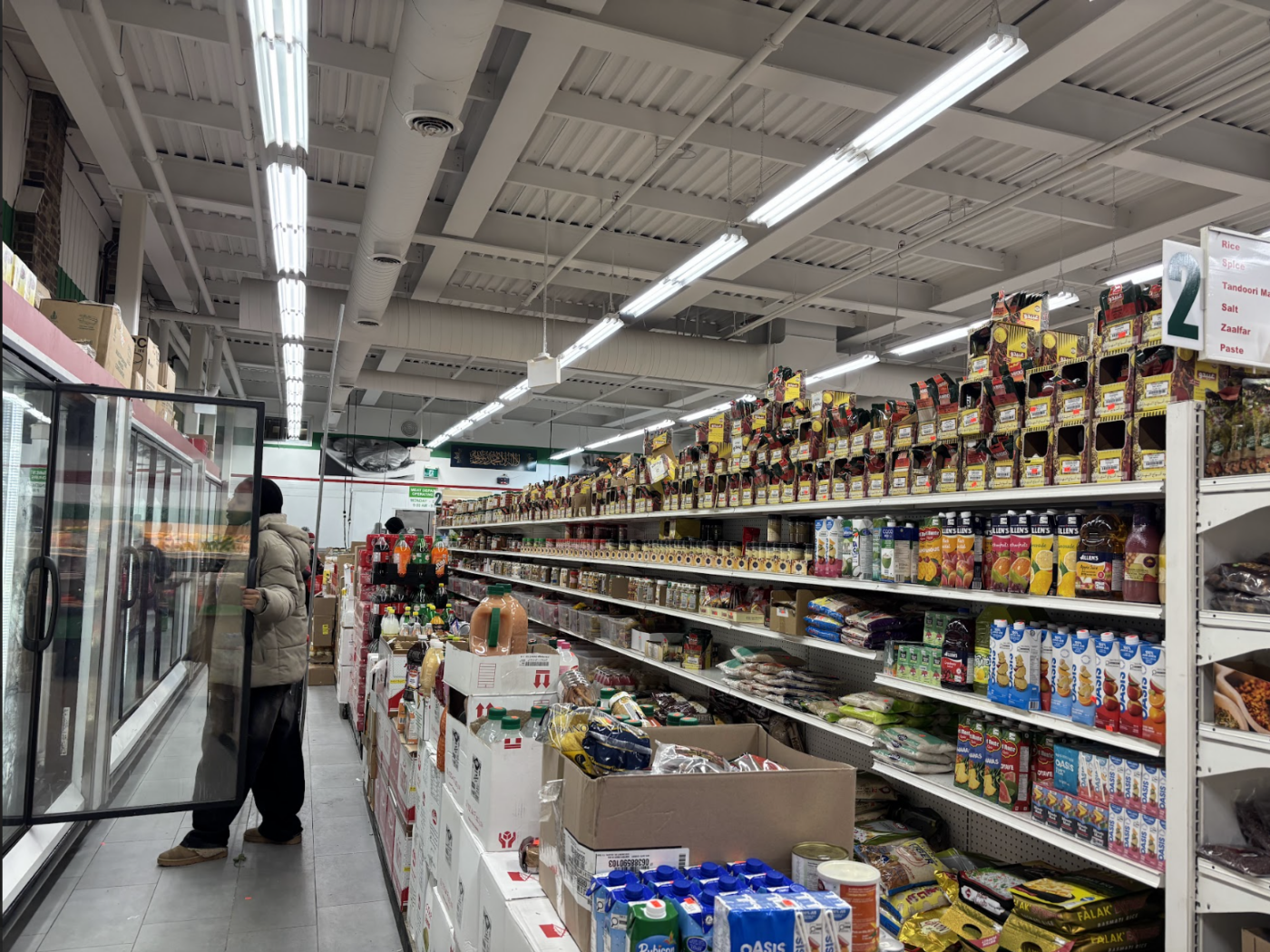
Until the afternoon I took her to Kabul Farms, an Afghan supermarket in Regent Park.
The moment she stepped inside, something shifted. She didn’t wait for me to guide her. She didn’t need me to interpret labels or ask for help. She walked in and knew exactly where everything was, as if the aisles had been arranged from her own memory.
She moved through the store with the excitement of a child walking into a new space. “Look,” she said, holding up a bottle of doogh, a salted yogurt drink. She pointed to the naan, the kind of bread she used to press against the walls of the hot tanoor, an ancient cylindrical clay oven, back home. She showed me the rice brand she had always bought, the spices she blended by instinct, the ingredients that carried entire histories in their scent.
In that grocery store, I saw how powerful access to food from home can be. For someone who has had to leave everything behind, food isn’t just nourishment, it’s memory, dignity, identity.

📸: Yara El Murr/The Green Line.
My mother isn’t alone in this experience. Toronto is a city built on movement and migration, where Indigenous nations, newcomers and immigrant communities bring together dozens of cultures. Today, the city is home to over 240 ethnic groups, its residents speak more than 180 languages and nearly half of its population was born outside Canada, representing communities from every continent.
Toronto’s food scene often reflects this diversity. Our local food places — from restaurants to grocery stores to community programs — help people preserve culture, build community and feel at home.
Mapping ethnic food spaces in Scarborough
Scarborough is one of the most ethnically diverse corners of Toronto. Its communities have roots stretching across East and South Asia, the Caribbean, the Middle East and Europe. Its neighbourhoods are home to grocery shops that carry ingredients from around the world.
It was within this landscape that Krissan Veerasingam found the inspiration to launch the “Map of Ethnic Grocery Stores” — a project by Scarborough Environmental Association (SEA), a grassroots organization he co-founded in 2022 with his wife, advocate Fizza Khaled, and other residents.
For Veerasingam, a born-and-raised Scarberian with immigrant Tamil parents, food is a cornerstone of culture.
“Food is something that can create connections, something that can be centered to build community, because it’s so universal,” he said.
“Growing up here in Scarborough, sharing food at the lunch table was how many of us connected with each other’s cultures,” Veerasingam added.
📸: Provided by Damian Baranowski.
In this context, the map plays a double role. First, it was meant to facilitate intercultural exchange by helping Torontonians explore locally-owned stores from different cultures.
“I created the grocery map to encourage folks to visit these hidden gems that are walking distance from where they live, as alternatives to the big box grocers and to help protect these unique aspects of Scarborough,” Veerasingam explained.
In parallel, it helps newcomers find and share familiar ingredients that can be comforting when they’re homesick.
“Having access to these foods allows communities to carry a piece of home with them and share it with others here,” Veerasingam said.
A study on Food Entrepreneurship and Community Resilience in Scarborough–Agincourt highlights how food spaces strengthen community bonds and resilience, not only within Scarborough but across Toronto. Ethnic restaurants and food retailers function as more than places to eat, they act as cultural hubs, gathering spaces and informal community centres.
Teresa Lobalsamo, an associate professor of Italian Studies at the University of Toronto, agrees. She says restaurants should be considered cultural landmarks.
“Think about the challenges people face when they come to a new country. Learning a new language, starting a business, feeding their families. Many of these food establishments, especially the older ones, were created to meet those very needs,” Lobalsamo said.
“People didn’t open them to become rich or famous; they opened them to work, to take pride in what they created and to serve others — much like inviting someone into your home.”
Food entrepreneurs surveyed in the Scarborough–Agincourt study described their establishments as “meeting places,” where people access culturally appropriate foods, celebrate milestones, host events and strengthen social networks. The research also found that many businesses actively invest in their local communities. Some volunteer time and resources to host events, including intergenerational programming, such as workshops where elders can share recipes and food histories with youth.
Knowledge and skill sharing is one of SEA’s main beats; and naturally, these activities often intersect with food culture. For example, through environmental programming, Veerasingam works with gardeners who run community farms all over Scarborough. Many of the gardeners are immigrants who had some agricultural experience before moving to Canada.
“Places like this provide opportunities for people to grow different varieties and share the knowledge of growing unique fruits or vegetables with the wider community,” he said.
In one community garden in Malvern, he’s seen seniors and youth work together. “It’s an opportunity for intergenerational exchange, intercultural exchange — and that sort of experience combats social isolation, which is very prevalent in Toronto.”
Beyond the work of local advocacy groups such as the SEA, Scarborough is home to a range of diaspora events and programs that turn public spaces into sites of culinary exchange. The Asialicious Carnival, held in Scarborough North, showcases Asian street food vendors, small businesses and live culture performances. Almost weekly, the city is bustling with similar events, many tied to diasporas rooted in different neighbourhoods, from Little Italy to Little Jamaica.
Documenting diasporic food across Toronto
While Toronto is celebrated as a top food destination, from bustling farmers’ markets and family-run bakeries to vibrant ethnic restaurants tucked into every neighbourhood, this richness comes with fragility.
Many of the establishments that define Toronto’s food landscape face constant pressures: rising rents, a cost-of-living crisis, changing demographics and since 2020, the economic shock of the COVID-19 pandemic.
In Scarborough-Agincourt, 60 food establishments have permanently closed since 2017. Across Canada, 7,000 restaurants went out of business in 2025, according to a new study from Dalhousie University. This underscores both the vulnerability of these enterprises and the cultural loss that accompanies their closure.
“When a restaurant disappears, it’s not just the menu that is lost — our exposure to other cultures disappears, too,” said Teresa Lobalsamo, the professor of Italian studies.
“What could be worse than losing the opportunity to learn and to taste? To me, one of the best ways to show respect for another culture is to share a dish that they pride themselves in or that they consider to be a part of them and their culture. So what a sad state it would be, if we don’t have the opportunity to experience this kind of diversity across our tables.”
Lobalsamo has long studied food and diaspora. Through the Italian Canadian Foodways project, she examines cuisine as a defining marker of cultural identity, community and belonging. Her research emphasizes the importance of documenting and preserving diasporic culinary traditions, especially during times of crisis, when local businesses are vulnerable and the cultural imprint of immigrant communities risks being lost.

📸: Provided by Teresa Lobalsamo.
“I wanted to create a permanent space for [the culinary contributions of Italian-Canadians], a space that honours the restaurants, bakers and food makers who changed how Italian food is perceived here, abroad,” she explained.
Through her online archive, she memorializes eateries that started food crazes that are uniquely Italian-Canadian, like San Francesco Foods’ veal sandwich. Its ingredients have a foot in Italy, Lobalsamo explains, but its preparation is palatable to local taste. The restaurant, now shuttered, had been around since 1954.
Lobalsamo hopes her students come to see food as more than just feeding the body. By teaching Italian culture through its cuisine, she illustrates how food intersects with every part of life — what we study, read and experience. She wants the exploration of Italian foodways to inspire students to reflect on their own traditions and the role food plays in their lives.
Across Toronto, a growing number of events and programs highlight the richness of diasporic food cultures. In the heart of downtown Toronto, The Depanneur hosts weekly community dinners and hands-on workshops led by Toronto-based chefs from around the world, inviting guests to learn the stories and techniques behind traditional recipes.
In a city where many food events spotlight immigrant experiences, The Depanneur also stands out as one of the few dedicated food spaces that regularly includes Indigenous chefs and programming on its schedule — a reminder that conversations about diaspora and cultural exchange must also make room for the first foodways of this land.
Honouring Indigenous cuisine
Toronto sits on the traditional territory of Mississaugas of the Credit, the Anishnabeg, the Chippewa, the Haudenosaunee and the Wendat, with roughly 70,000 residents identifying as Indigenous.
There isn’t a precise count of specifically Indigenous restaurants currently open in the city. Many establishments that once offered authentic Indigenous culinary experiences in Toronto, including Pow Wow Cafe, NishDish and Kūkŭm Kitchen, are no longer operating. Others like Tea N Bannock are downsizing and relocating.
Despite the limited dedicated venues, Indigenous communities continue to preserve and reclaim culinary traditions.
When restaurants close, chefs and practitioners from these establishments continue to share their knowledge and skills through catering, pop-ups and other initiatives. For example, chef David Wolfman, a First Nations chef, educator and storyteller shared his expertise with students at George Brown Polytechnic’s Chef School and general audiences through the Cooking with the Wolfman show and cookbook.
Another example is “Indigenizing Our Kitchen,” a program offered by 2-Spirited People of the 1st Nations organization. Program coordinator Nate Muir, who’s a member of the Mohawk Nation of Six Nations of the Grand River, explains that “Indigenizing Our Kitchen” was created to revive and share traditional recipes, especially healthy ones that were lost due colonization and residential schools.
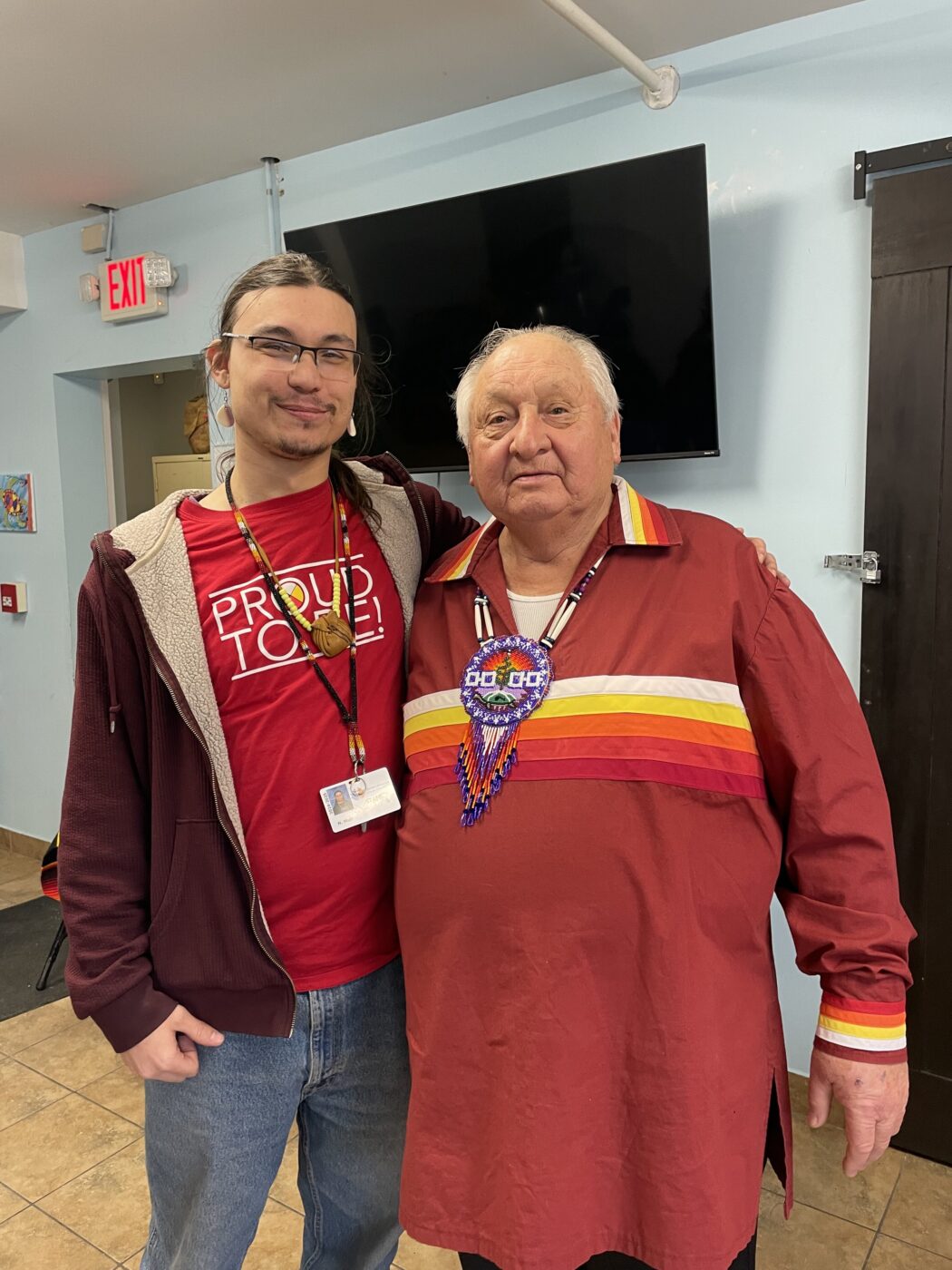
📸: Provided by Nate Muir.
“We’ve lost so many dishes that we don’t even know their names,” Muir said with a sigh. “It’s really important to talk about them, to share our knowledge about these foods, these recipes and where they came from.”
That’s why the program focuses on traditional foods: wild rice or manoomin, venison, buffalo and native tubers, including different types of potatoes and leeks and onions, as well as berries and many different kinds of fish.
For Muir, a dish reminicent of home back in Six Nations is the Three Sisters’ soup: corn, beans and squash. It’s intimately tied to family and emotional wellbeing. “You can have the worst day imaginable, but then you go to grandma’s house, and she has a nice bowl of soup just ready for you, right? It changes everything.”
This soup is also a living testament to Indigenous teachings.
“The way we grow [corn, bean and squash] together goes back to our creation stories. Each plant supports the others. The beans add nitrogen to the soil, which is crucial. The squash spreads outward, shading the ground and keeping weeds at bay, while also cycling nutrients back into the earth.”
Many Indigenous dishes tell stories of nature and enclose rich agricultural knowledge; and the 2-Spirited People of the 1st Nations is intent on sharing them. In addition to “Indigenizing Our Kitchen” series, the organization hosts “Food Tells Stories,” a kid-friendly version at its local EarlyOn centre.
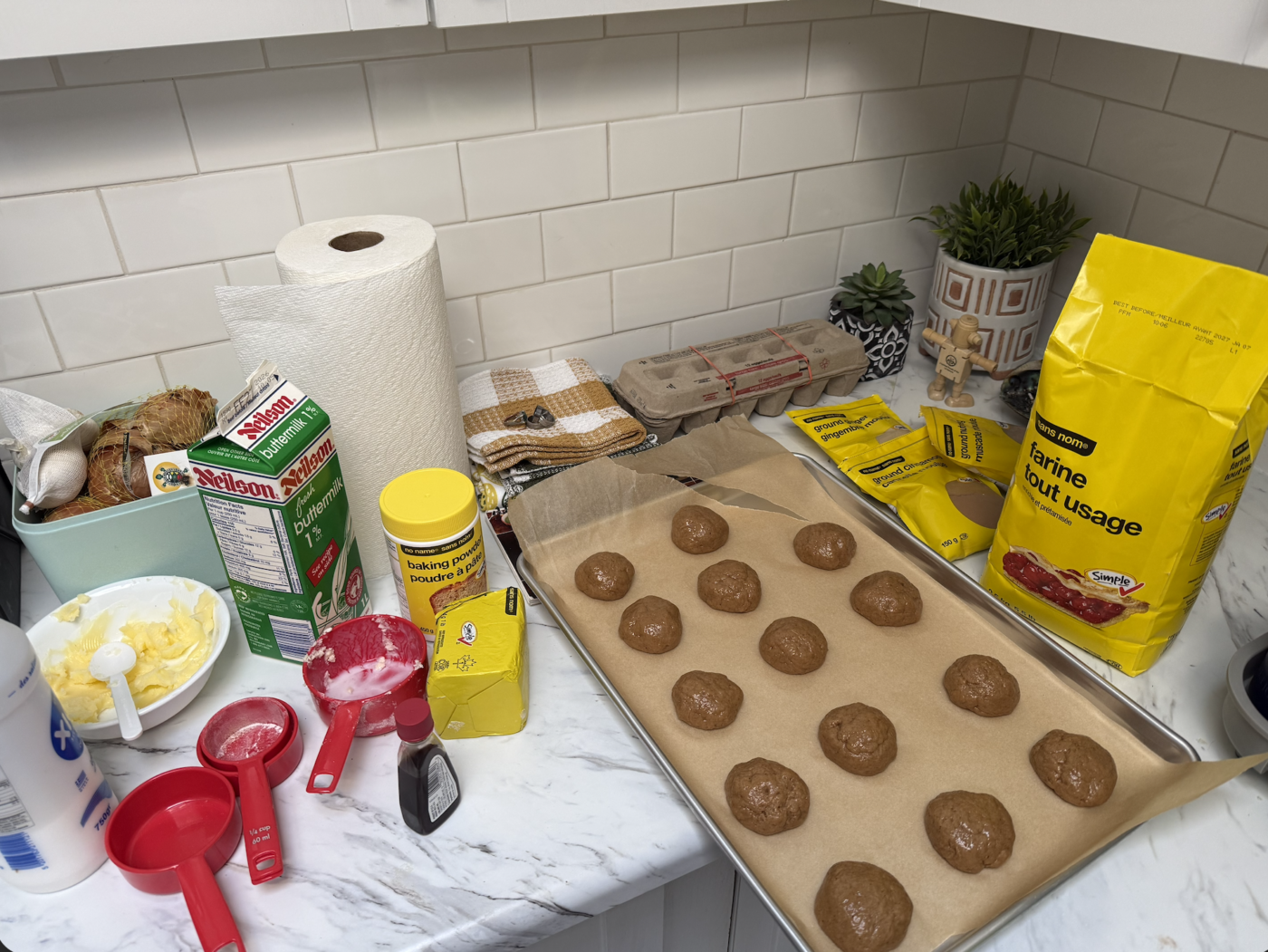
📸: Rukhshana Ahmadi/The Green Line.
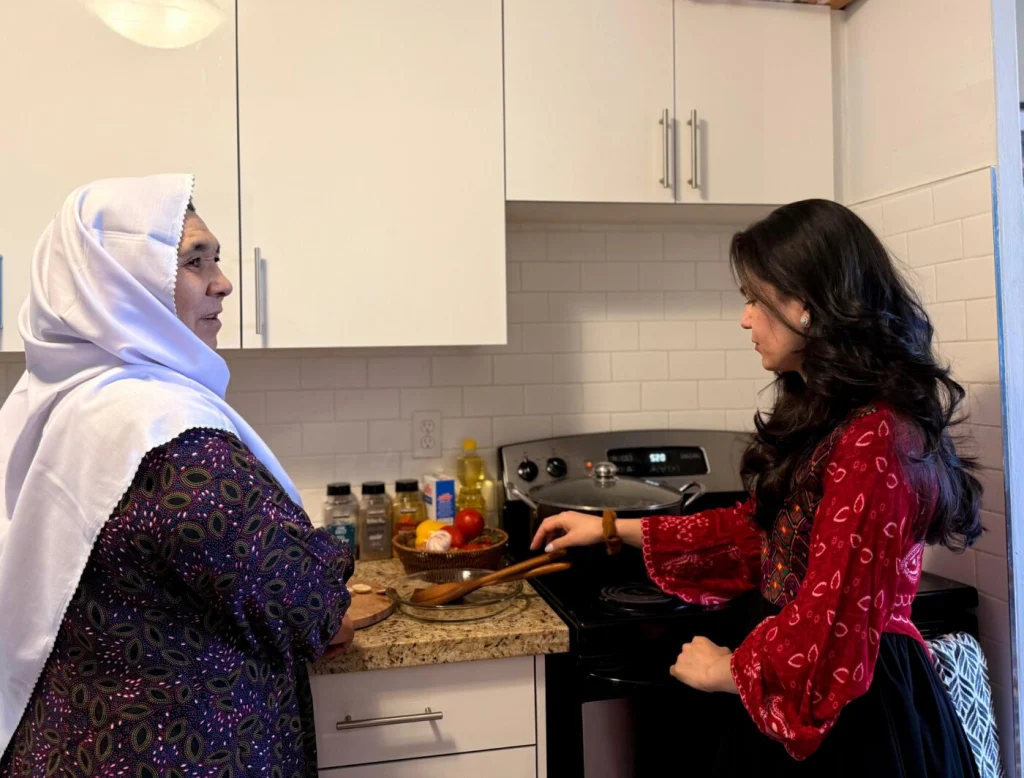
As part of a recent cooking event in East York, chef Jessica Reynolds guided participants in baking nuya, also known as Indian cookies. I watched Reynolds knead dough, pressing her palms into flour and water. The recipe itself is simple: butter, sugar, eggs, flour, salt, cinnamon, nutmeg and buttermilk.
“The whole point of ‘Indigenizing Our Kitchen’ is that very often we have a lot of these things in our cabinets without even realizing it and where it comes from, right?” says Muir. The significance goes beyond the universality of the ingredients.
Nuya is traditionally prepared for New Year celebrations and community gatherings, where families come together to share stories while cracking the cookies.
In all programming, eating together is key. It’s a ritual of remembrance, a way to hold and transmit history.
Like in many collectivist cultures around the world, you don’t get to just sit by yourself and eat, Muir says. “They put you at a table with a whole group of people, and that’s kind of the point. You spark up conversation while you eat. And that, that’s kind of the idea behind community building, right? We build on ideas and concepts over food.”
Listening to him, I think again of my mother in the kitchen. Her hands moved with quiet certainty, measuring spices without ever writing anything down. She was passing something forward, too. Not just recipes, but resilience. Not just flavours, but a way of enduring.
I think of the nights when we used to gather to make samanak for Nowruz, stirring the pot together, singing and dancing as we welcomed the coming of spring. We weren’t just preparing a special dish to mark a new season; we were honouring our connection to the earth, to renewal and to one another. In that small kitchen, food became memory, survival and celebration all at once, a reminder that despite the long winter and everything we had endured, we had made it to spring together.
It was never just about the dish. It was about who we were and how food carried us forward up to this day.
Fact-Check Yourself
Sources and
further reading
Don’t take our word for it — check our sources for yourself.

Join the conversation