

THE GREEN LINE
DOCUMENTERS NOTES
Toronto's plan for affordable housing near transit — and its provincial limitations
The City of Toronto held a a public information session on Inclusionary Zoning to discuss the new policy and to listen to residents' questions and feedback.

Construction near the Mount Dennis Station along the Eglinton LRT route.
 : Anthony Lippa-Hardy/The Green Line.

MORGAN MIYA
Curious luddite who firmly believes that community is everything and works towards keeping her neighbourhood of Little Jamaica healthy. Loves to travel the world within Tkaronto.

Mary Newman
British-Canadian journalist with a decade’s experience producing for the BBC and CBC. Hails from Robin Hood country so naturally hates wealth inequality and loves organized labour. Now resides in the dog paradise of Roncesvalles.
Nov. 28, 2025
These meeting notes are part of Documenters Canada, which is partly funded by the Social Sciences and Humanities Research Council of Canada (SSHRC). Learn more about our program here. The Green Line maintains full editorial independence to ensure journalistic integrity.
Living near transit often comes with steep rent prices.
To help address this issue, the City introduced its Inclusionary Zoning Policy in August 2025, requiring new developments near major transit stations to include affordable housing.
On Nov. 6, City staff held a public information session to update residents on major amendments, and to listen to their questions and feedback.
Several amendments are now on the table, including a major change imposed by Ontario that would bring the City in line with the Province’s Inclusionary Zoning rules — reducing the required affordability period from 99 years to just 25.
If you have questions about the policy, you can reach out to Christine Ono at Christine.Ono@toronto.ca.
To submit comments or register for the next Planning and Housing Committee meeting on Dec. 3, you can email phc@toronto.ca.
Our Documenter's local perspective:
Documenter Morgan Miya says Little Jamaica, where she lives, would benefit from the Inclusionary Zoning Policy given the impact of the Eglinton Crosstown construction, and the amount of new developments that have been built or will be built around stations in the neighbourhood.
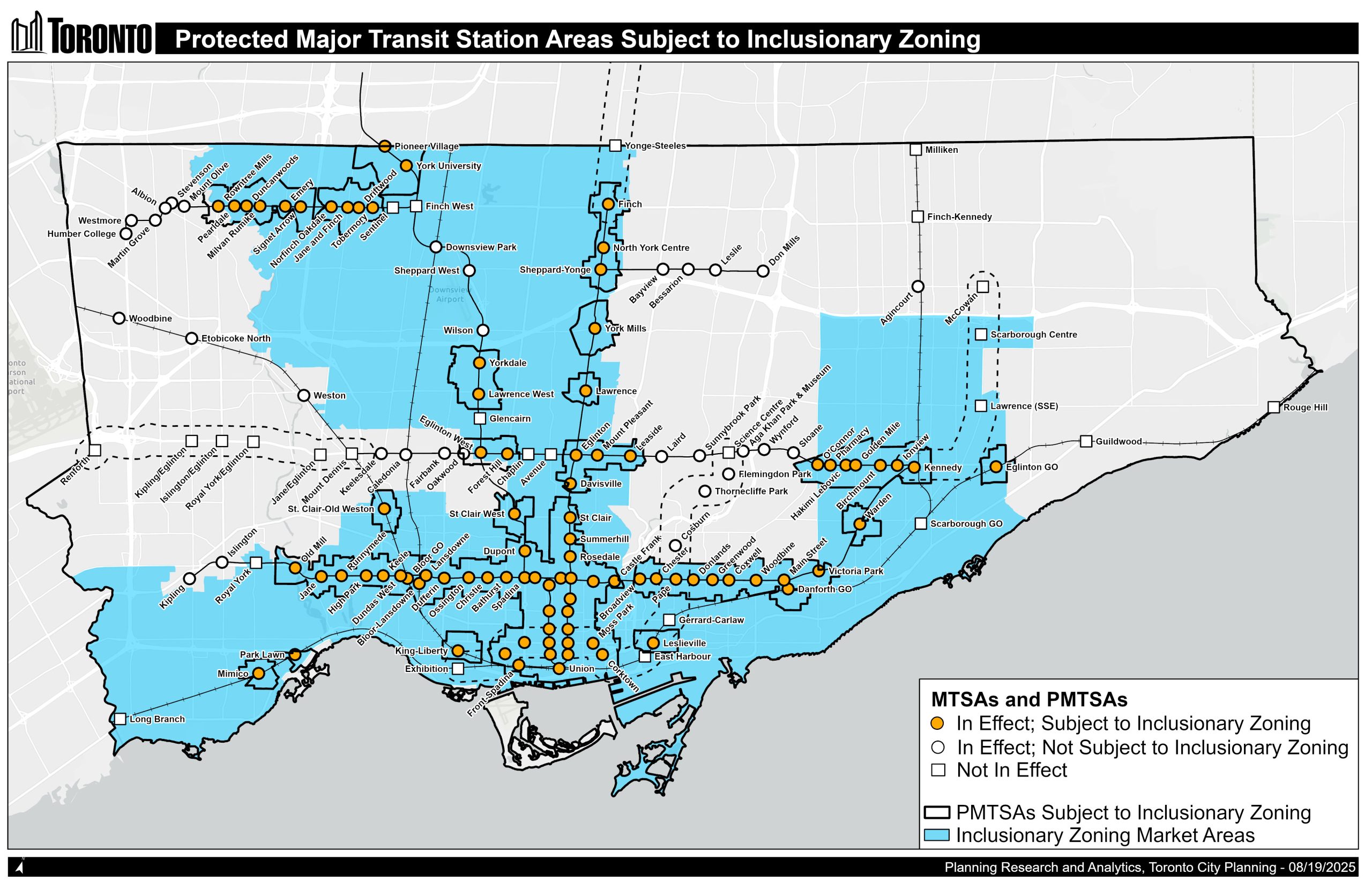
Inclusionary zoning applies to developments located in both Minister-approved Protected Major Transit Station Areas and Inclusionary Market Areas, which are outlined in this map. Most of Little Jamaica doesn't fall in the current boundaries of areas that would benefit from the policy.
Fact-Check Yourself
Sources and
further reading
Don't take our word for it —
check our sources for yourself.
Care about our city, but don't know how to make it better? Sign up for simple, step-by-step guides to solving problems in your neighbourhood — one small action at a time.