


THE GREEN LINE'S
CHANGEMAKER INTERVIEW
How to shape your neighbourhood's future: Lessons from Moss Park Coalition's Ahsen Bhatti
For our January 2026 Changemaker interview, we spoke with community worker Ahsen Bhatti about community-driven planning, equitable development and how anyone can help build a better city.
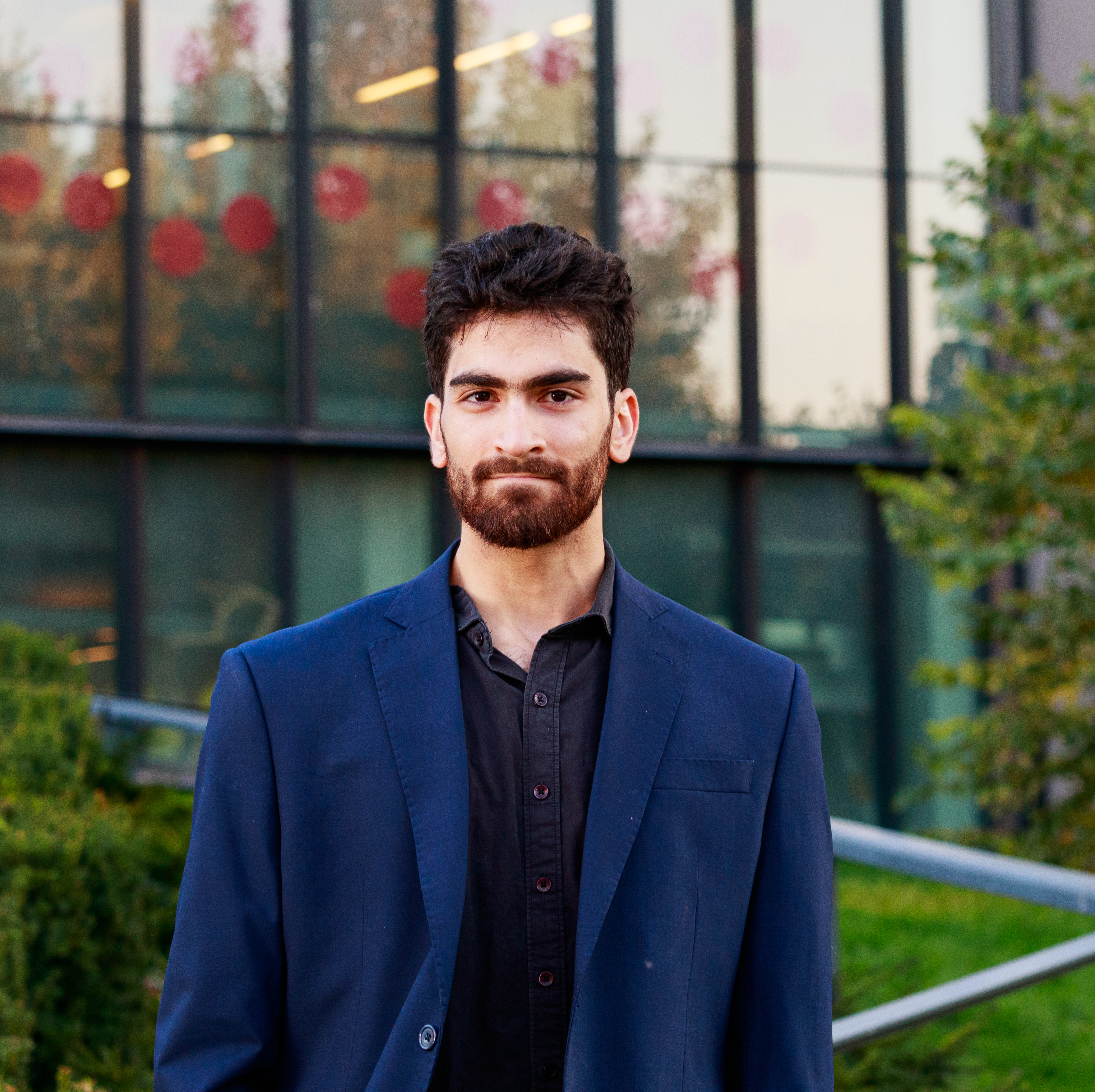
Portrait of Ahsen Bhatti.
 : Provided by Jack Simon.

Rukhshana Ahmadi
Afghan-Canadian writer, passionate storyteller and advocate for education, human rights and justice for all. Member of PEN Canada’s Writers in Exile Program and TMU journalism student. Can usually be found enjoying good food and good books, while admitting, quite openly, that she’s terrible at finding good music.
Jan. 16, 2026
Ahsen Bhatti’s path into urban policy didn’t begin in City Hall or a planning office.
His work started on the ground, volunteering at Building Roots, a hyperlocal food organization in Moss Park. From there, he started working with the Moss Park Coalition, and then the Toronto Community Benefits Network, all while finishing his political science degree at the University of Toronto.
He’s deputed at the City of Toronto's Executive Committee to advise on budget allocations for Social Development Plans and he’s negotiated with Metrolinx to integrate community benefits into the Ontario Line plans.
If you've ever wanted to get involved in your neighbourhood, Bhatti can show you exactly how.
You’ve worked alongside policymakers, planners and grassroots organizers. How do you navigate those different spaces while keeping community voices at the centre?
One issue I identified early on is that often, when people are working in areas of social development or equitable planning, there's not as much centralization of community voices as there should be. My work sits at the intersection of policy and planning, and then also, community development.
I recently completed a fellowship with CP Planning, which is a social planning organization. I learned about a lot of incredibly successful urban strategies that are happening in neighbourhoods like Mount Dennis, Birkdale and Regent Park. I learned about how urban planners and policymakers in those neighbourhoods worked alongside local community leaders to design strategies that ensured that development could happen without displacing existing residents in marginalized communities.
It's incredibly important to centralize those kinds of community voices, so that people can talk about their lived experiences and you can really ensure that the policies you're developing or the plans you're developing are really addressing people's issues at their core.
I did a research study with the School of Cities at the University of Toronto earlier in 2025. We did a Community Needs Assessment, where we conducted a survey and learned from the community what their priorities are.
And we put that into the form of a report, and presented it to the local government to say, “this is what the community's really looking for. These are the things that they really want to be prioritized in policy.”
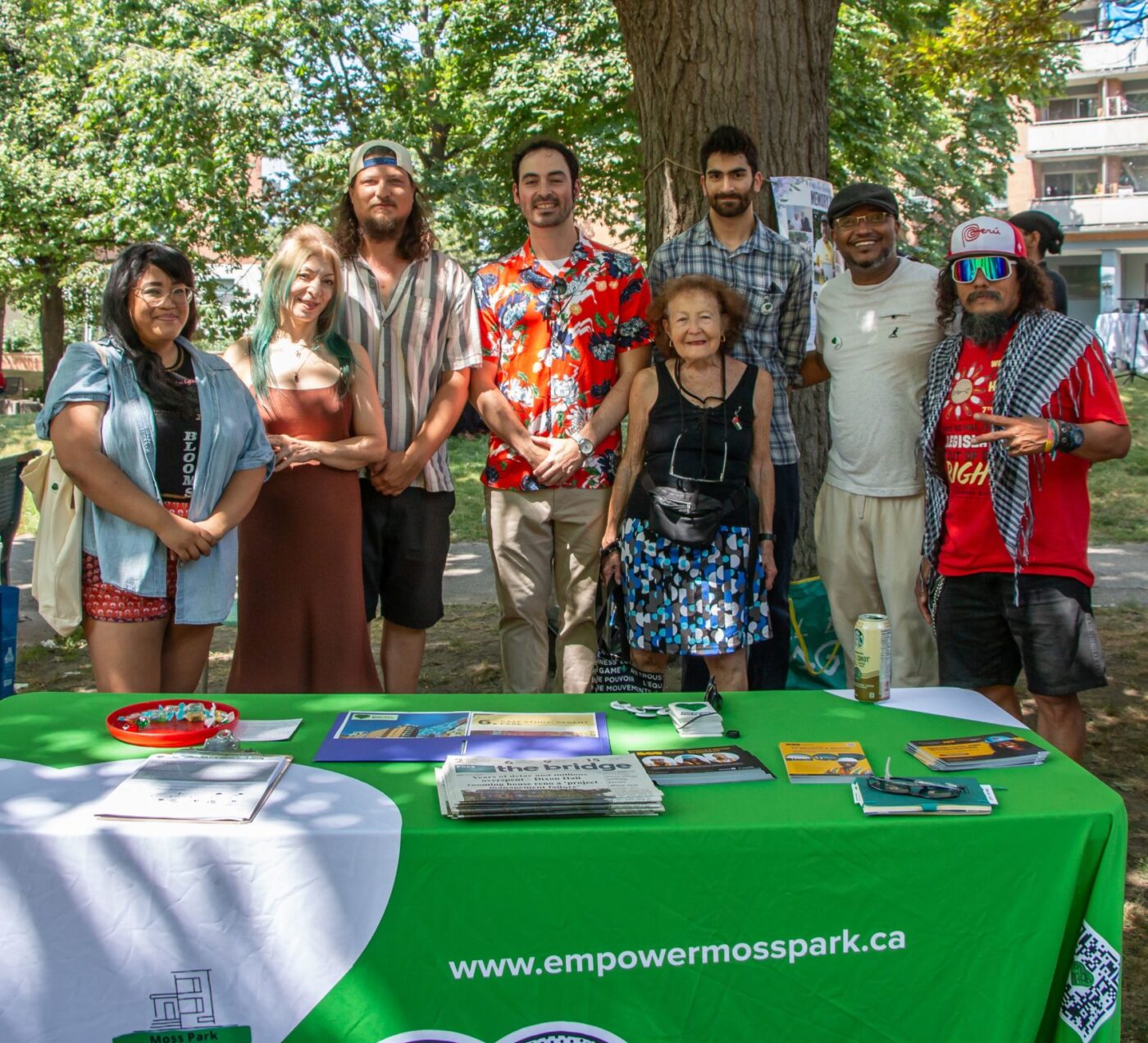
Members of the Moss Park Coalition, including Ahsen Bhatti, during the 2025 Moss Park Festival last summer.
: Provided by the Moss Park Coalition.
How do you ensure that research on displacement and development translates into real world changes?
A lot of people can agree that something should be done about food insecurity, or something should be done about the lack of affordable housing. It's difficult for those kinds of changes to be implemented without data to back them up.
When we conducted our survey, we were able to put those things into real world numbers — and show that many people said: “We have a need for affordable housing. That's our number one priority.” It was incredibly useful to really demonstrate how large that need is.
Then alongside that, we could provide actionable insights into solutions. We could provide recommendations of what could be done, based on what we'd heard from the community.
What role do people play in shaping a more just and livable neighbourhood, even if they don't see themselves as activists?
It's not a matter of having to be an activist. I think it's a matter of identifying where your passions lie, where your interests lie and also seeing what problems you're having.
For example, housing affordability…it's not just affecting lower-income communities. It's affecting people across the board, people who make decent money, who can't afford to live in the city anymore because prices for rent and prices for buying a home have gone through the roof.
I think it's a matter of looking at what sort of personal problems you're having in terms of being able to afford basic rent or groceries and then, seeing what can be done about it.
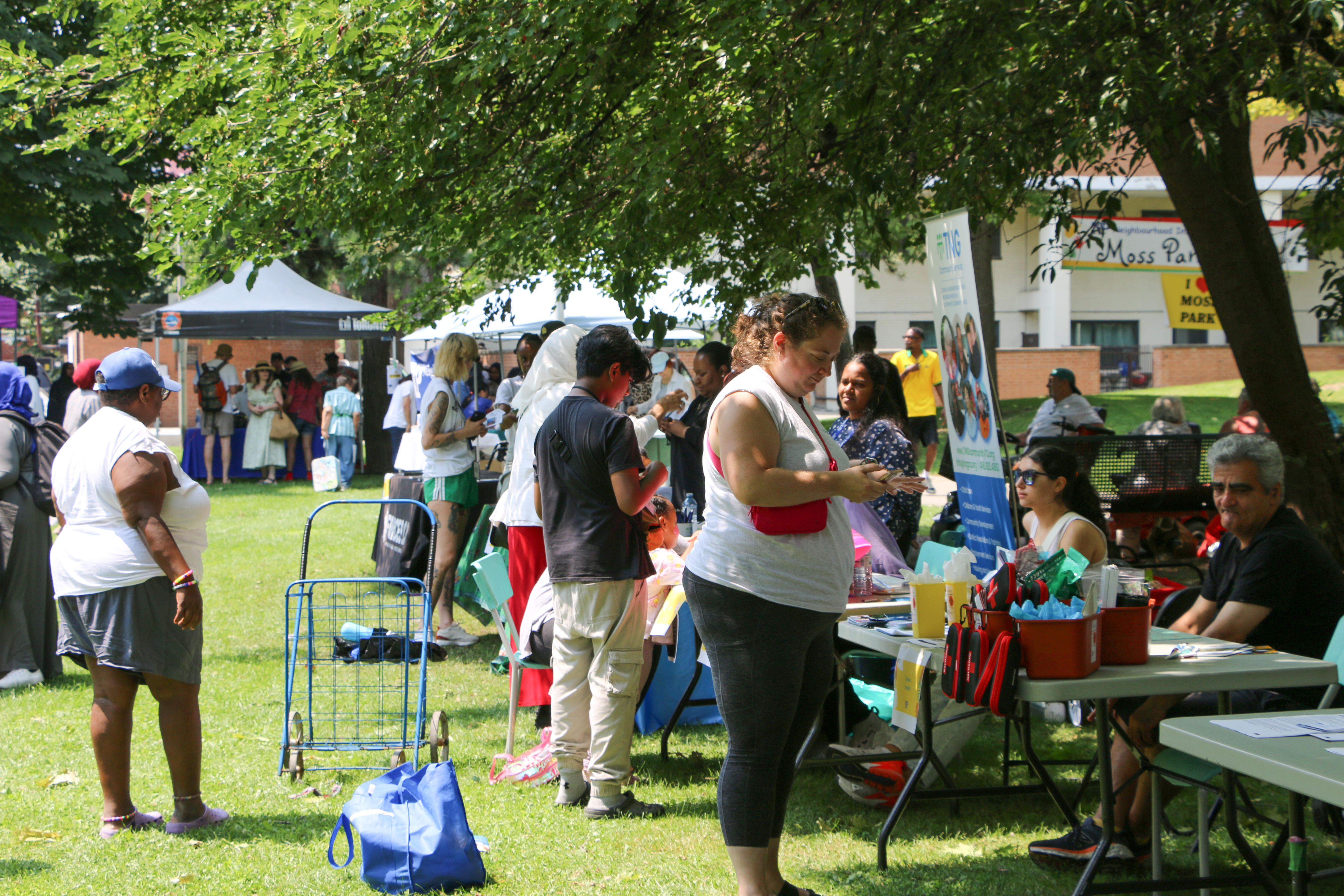
Volunteers and residents mingle during the 2024 Moss Park Festival.
: Provided by the Moss Park Coalition.
I don't think you necessarily have to be an activist to want to do something to resolve those issues. I think anybody can just be a concerned citizen who wants to ensure that his family has enough money to retire on and can just say, "something has to be done about bringing the rent down."
What advice would you give people who want to make their neighbourhood better, but don’t know where to start?
It can be very daunting to see these massive systemic problems and issues around the lack of equity or affordability or sustainability. But I think it's incredibly important for people to be involved in their local community.
In your ward, in your neighbourhood, in your community centre, there are all these issues which can be addressed and they just need that kind of push. They just need that kind of energy and time commitment for somebody to say, “I've identified this problem. What can be done about it?”
I think people in Toronto are very lucky because there's already this large number of organizations that are doing work around these areas, and they want people to be engaged with them.
Every kind of skill is needed. So if somebody's coming from a marketing background or a computer science background or a business background, there are non-profits out there that need all those skills.
People can get involved at any level they want. But I think that it's incredibly beneficial to just be grounded in the real world, in the community, especially in a city like Toronto, which can be very alienating.
It's just a matter of going out there and seeing, what's in my neighbourhood? How can I get involved?
Thinking of 2026, what changes do you hope to see in Toronto and where do you see your role in helping make them happen?
In terms of my neighbourhood of Moss Park, we've made a lot of great progress on the Metrolinx piece, food insecurity, land protections and community safety. There's going to be new affordable housing developments very soon in the neighbourhood, so I'm really excited about all those things that we're working on.
And looking at the city as a whole, I think that we’re definitely trending in a positive direction.
I have more and more people coming up to me from all walks of life, from all kinds of backgrounds, asking me what can be done, how they can contribute. I think that's amazing. That kind of galvanization of people and communities, where people are more and more inspired to push for change, is incredibly inspiring to me.
So yeah, no matter what happens at the provincial or the federal level, I think here in Toronto, we have a great opportunity right now to ensure that we’re building a city that caters to the needs of all kinds of people from all kinds of backgrounds.
I think our city can be as equitable and affordable as possible, and that’s something everyone has the opportunity to work toward. It really comes down to being willing to take that step and to push for the kinds of changes people want to see in the world.
How can readers support the work you do?
- Building Roots in Moss Park is taking new volunteer applications in February 2026.
- Here2Help, an organization that does crisis intervention in Moss Park, is always looking for donations for basic necessities.
- I’d definitely recommend for students and youth to connect with the Toronto Community Benefits Network, since they have their own Youth Policy Table, which provides some great opportunities to contribute to community-oriented policy.
- The Neighbourhood Information Post holds Community Connect events every Tuesday or Thursday at 12 p.m., and is planning an Information Fair on April 23.
- To learn more about the space of socially-oriented urban planning, CP Planning is a great organization with a call to action that people can sign to support community leadership in neighbourhood planning.
- Lastly, the Moss Park Coalition Instagram page is a great resource to learn about what’s going on in Moss Park and different initiatives that are in progress.
Fact-Check Yourself
Sources and
further reading
Don't take our word for it —
check our sources for yourself.
Care about our city, but don't know how to make it better? Sign up for simple, step-by-step guides to solving problems in your neighbourhood — one small action at a time.